
12 Best Places To See Flowers In Europe (2026)
Discover the 12 best places to see flowers in Europe, from Dutch tulips to Provence lavender. Includes 2026 bloom dates, costs, and expert travel tips.
On this page
12 Best Places To See Flowers In Europe (2026)
Europe transforms into a living canvas every spring, offering everything from manicured estate gardens to wild mountain meadows. We have spent years tracking the continent's most spectacular blooms to bring you this definitive list for the 2026 season. According to figures from Insight Vacations, major sites like Keukenhof plant over seven million bulbs annually. This guide covers every destination with current 2026 pricing, bloom windows, and transport details.
Timing is the single most critical factor for a successful flower trip. A warm February can push Dutch tulips two weeks early; a cold March delays the bluebell peak. We recommend bookmarking local bloom trackers for each site and always keeping a backup plan — indoor conservatories or fixed-date festivals — in case outdoor conditions disappoint. For the rural inspiration that lies beyond city gardens, check our best flower fields to visit in Europe guide.
Free guide: Europe's Festival Calendar
A month-by-month map of Europe's unmissable festivals — with the best dates to visit each and a local tip you won't find in the guidebooks.
12 Best Places To See Flowers In Europe (2026)
The following destinations represent the gold standard for horticultural excellence across the European continent. Many require advance booking, especially for peak dates in April and May. We have noted the best time of day to visit to avoid the largest tour groups, and typical costs based on 2026 projections.
- Keukenhof Gardens in Lisse, Netherlands
- This world-famous park features over seven million hand-planted bulbs across 32 hectares of vibrant displays.
- Entry costs roughly €20 per adult; the park opens daily from 08:00 to 19:30 from mid-March to mid-May.
- Take the Keukenhof Express bus from Schiphol Airport for the easiest direct access to the main gate.
- Arrive before 09:00 to photograph the iconic windmill without heavy crowds blocking your view.
- Consult our Keukenhof tulips guide for a deeper look at the 2026 garden themes.
- Lavender Fields of the Valensole Plateau, France
- Rolling purple hills define the landscape of Provence during the peak summer bloom from late June to mid-July.
- Most fields are free to view from the roadside, though local farm shops appreciate small purchases.
- Visit the plateau near the village of Valensole for the densest and most fragrant lavender rows.
- Bees are extremely active in the fields during midday; early morning light also provides better photography conditions.
- Our lavender fields Provence guide includes specific GPS coordinates for the best photography spots.
- Hallerbos Bluebell Forest near Brussels, Belgium
- The forest floor turns into a shimmering purple carpet when millions of wild bluebells bloom in mid to late April.
- Access to the public forest is free and it is open 24 hours for hikers.
- Take a local train from Brussels to Halle and use the dedicated shuttle bus during the bloom period.
- Stick strictly to the marked paths to avoid crushing the delicate and slow-growing bulb structures.
- Mainau Island on Lake Constance, Germany
- Known as the Flower Island, this botanical paradise features a Baroque palace surrounded by Mediterranean flora.
- Daily tickets cost approximately €25 and the island is open from sunrise to sunset year-round.
- Ferries run frequently from Konstanz and Meersburg directly to the island's private pier.
- The Italian Rose Garden is particularly stunning during the late June peak flowering period.
- RHS Chelsea Flower Show in London, UK
- This prestigious event showcases cutting-edge garden design and rare floral species at the Royal Hospital Chelsea in May.
- Tickets range from £45 to over £120 per person and typically sell out months in advance.
- The show is easily reached via the Sloane Square tube station on the District and Circle lines.
- Book as soon as tickets go on sale in autumn — 2026 dates fall in the third week of May.
- Wild Poppies in the Val d'Orcia, Italy
- Tuscany's green wheat fields are dotted with bright red wild poppies during the month of May.
- Viewing these natural displays is free and best enjoyed by driving the scenic roads near Pienza and San Quirico d'Orcia.
- Early morning light provides a soft glow that makes the red petals stand out against the rolling green hills.
- Combine your visit with our guide to sunflower fields in Tuscany for a summer return trip.
- Madeira Flower Festival in Funchal, Portugal
- Funchal celebrates spring with elaborate flower carpets, parades, and wall-to-wall floral decorations throughout May.
- Main parade viewing stands require paid tickets, but most street displays are free to the public.
- The city centre becomes a pedestrian zone filled with the scent of tropical and temperate blooms.
- Visit the Flower Market at Avenida Arriaga to see locals in traditional dress selling exotic proteas and birds-of-paradise.
- Akureyri Botanical Gardens in Northern Iceland
- This remarkable garden thrives just south of the Arctic Circle, showcasing rare high-latitude flora that no mainland European garden can replicate.
- Entry is free for all visitors; gates stay open daily from 09:00 to 22:00 in summer.
- The garden sits on a hill overlooking the fjord, a short walk from downtown Akureyri.
- The blue poppies — Meconopsis betonicifolia — are a rare highlight of the July collection and almost never seen at lower latitudes.
- Patios of Córdoba during the Festival, Spain
- Local residents open their private, flower-filled courtyards to the public during this competitive May festival, a UNESCO Intangible Cultural Heritage event.
- Most patios are free to enter, though a small tip for the owners is customary.
- The historic San Basilio neighbourhood contains the highest concentration of award-winning floral displays.
- Expect long queues at weekends; visit on a weekday morning for the most relaxed experience.
- Monet's Garden in Giverny, France
- Walk through the real-life inspiration for the famous Water Lilies paintings in this meticulously maintained garden in Normandy.
- Adult admission is approximately €12; the house and gardens are open daily from 09:30 to 18:00, April through October.
- Trains run from Paris Saint-Lazare to Vernon, where a shuttle bus waits to take visitors to Giverny.
- The wisteria over the Japanese bridge usually blooms in early May, creating a purple canopy that is the most photographed spot in the garden.
- Istanbul Tulip Festival in Sultanahmet, Turkey
- Istanbul plants roughly 30 million tulips across its parks each April to celebrate the flower's historical Ottoman roots.
- Emirgan Park and Sultanahmet Square offer the most impressive free displays throughout April.
- The massive flower carpet in front of the Blue Mosque is a must-see for photography; the T1 tram makes navigating between sites easy.
- Arriving early in April catches the freshest blooms; the festival runs the entire month but peak colour is typically the first two weeks.
- The Flower Carpet of Brussels, Belgium
- Every two years the Grand Place is covered in a massive tapestry made of over 500,000 begonias — one of Europe's most spectacular fixed-date floral events.
- Viewing from the ground is free; balcony tickets for a bird's-eye view cost about €8.
- The event lasts only four days in mid-August, so confirm the official 2026 dates carefully before booking travel.
- Evening light shows transform the carpet into a glowing work of art after sunset, making the late session worth staying for.
European Bloom Calendar: Month-by-Month Guide for 2026
Knowing which flowers peak in which month prevents the most common planning mistake — arriving at a destination a fortnight too early or too late. The table below maps each destination in this guide to its optimal bloom window. Note that wildflower-dependent sites (bluebells, poppies) can shift by one to three weeks depending on winter temperatures, while fixed-date festivals run on a set calendar regardless of weather.
- February–March: Almond blossom in Mallorca; daffodils across southern England and Wales; magnolias in the Netherlands from early March.
- April: Tulips at Keukenhof (peak mid-April to early May); cherry blossoms in Bonn and Amsterdam; Hallerbos bluebells (mid to late April); Istanbul Tulip Festival (all month, peak first two weeks); Royal Gardens of Laeken open for three weeks in Brussels.
- May: Wild poppies in Val d'Orcia, Tuscany (early to mid-May); Patios of Córdoba festival (first two weeks of May); Madeira Flower Festival; RHS Chelsea Flower Show (third week of May); wisteria at Monet's Garden in Giverny (early May).
- June–July: Lavender on the Valensole Plateau, Provence (late June to mid-July); Akureyri Botanical Gardens in Iceland peak in July; rose season at Mainau Island and Parc Bagatelle in Paris (June, see below).
- August: Brussels Flower Carpet (mid-August, every two years — confirm 2026 edition); dahlia fields in the Netherlands; heather moorlands in Scotland and the Veluwe, Netherlands.
- September–October: Late roses and dahlias at Mainau Island through October; autumn wildflower meadows in the Swiss and Austrian Alps before the first frosts.
For cherry blossom specifically, read our where to see cherry blossom in Europe guide, which maps the bloom city by city. The Alps wildflower season — July in the higher meadows — is worth noting for hikers: once the snow recedes above 1,500 metres, gentians, edelweiss, and alpine roses create colour at altitudes no garden can match. Always monitor a dedicated bloom tracker for your specific destination, because year-on-year variation of two weeks is completely normal.
Weather-Dependent vs. Fixed-Date Events: Which to Book First
Not all floral experiences carry the same planning risk. Understanding this distinction before you book flights could save your trip. Fixed-date events — Chelsea Flower Show, Istanbul Tulip Festival, Córdoba Patios, Madeira Flower Festival, and the Brussels Flower Carpet — run on a set calendar regardless of weather. Book these first, then build your itinerary around them.
Weather-dependent blooms are a different calculation. Hallerbos bluebells can peak anywhere from mid-April to mid-May depending on how cold the previous winter was. The Val d'Orcia poppies follow the same logic: a warm spring in 2026 could push them forward by two weeks compared to 2025. Keukenhof is partly weather-dependent for its outdoor fields, though the indoor pavilions run on the fixed park season. For these sites, we recommend booking refundable accommodation and checking specialist bloom trackers (Hallerbos has its own forecast website; Keukenhof publishes weekly photo updates) in the two weeks before your departure.
The safest strategy: anchor your trip on a fixed-date event, then choose one weather-dependent site nearby as a secondary stop. Combining the Córdoba Patios (fixed, early May) with a drive through the Tuscany poppy fields (weather-dependent, early to mid-May) is a natural pairing that keeps the risk manageable.
How to Visit Flower Fields Without Damaging Them
The growth of social media has created real pressure on flower sites across Europe. Lavender rows get trampled for the perfect photograph. Bluebell floors in Hallerbos are compacted when visitors leave the marked paths. Tulip fields in the Netherlands are private farmland — walking into them for a photo destroys crops and can result in fines. These are not theoretical risks; several popular sites have introduced timed entry or barriers specifically because foot traffic damaged the plants.
The practical rules are straightforward. At Hallerbos, stay strictly on the signed trails — the bluebells grow on fragile bulbs that take years to recover from a single footprint. In Provence's lavender fields, shoot from the access tracks between rows rather than entering the crop. Tulip fields outside Keukenhof are almost always private: if there is no signage or pathway inviting visitors in, photograph from the road only. Resist the temptation to pick flowers; it is illegal in most national parks and ruins the display for everyone else.
Keukenhof and other ticketed gardens operate at high visitor density, so photograph during the first hour after opening when light is soft and crowds are thin. The best images of Monet's Water Lily Pond are taken before 10:00 — after that the reflection becomes contested. For lavender in Provence, the golden hour before sunset produces the warmest tones without the bee-flight risk of midday. Respecting these sites means they remain accessible for future seasons, and it results in better photographs too.
Parc Bagatelle in Paris: A Rose Garden Most Tourists Skip
Most visitors in Paris default to the Tuileries Garden, which — while historic — is more gravel paths and geometric hedges than flowers. The Parc de Bagatelle in the Bois de Boulogne is far more rewarding for flower enthusiasts. It hosts the International New Rose Competition in June each year, with over 10,000 rose bushes across more than 1,200 varieties on display. Entry costs around €6 and crowds are a fraction of the main tourist sites.
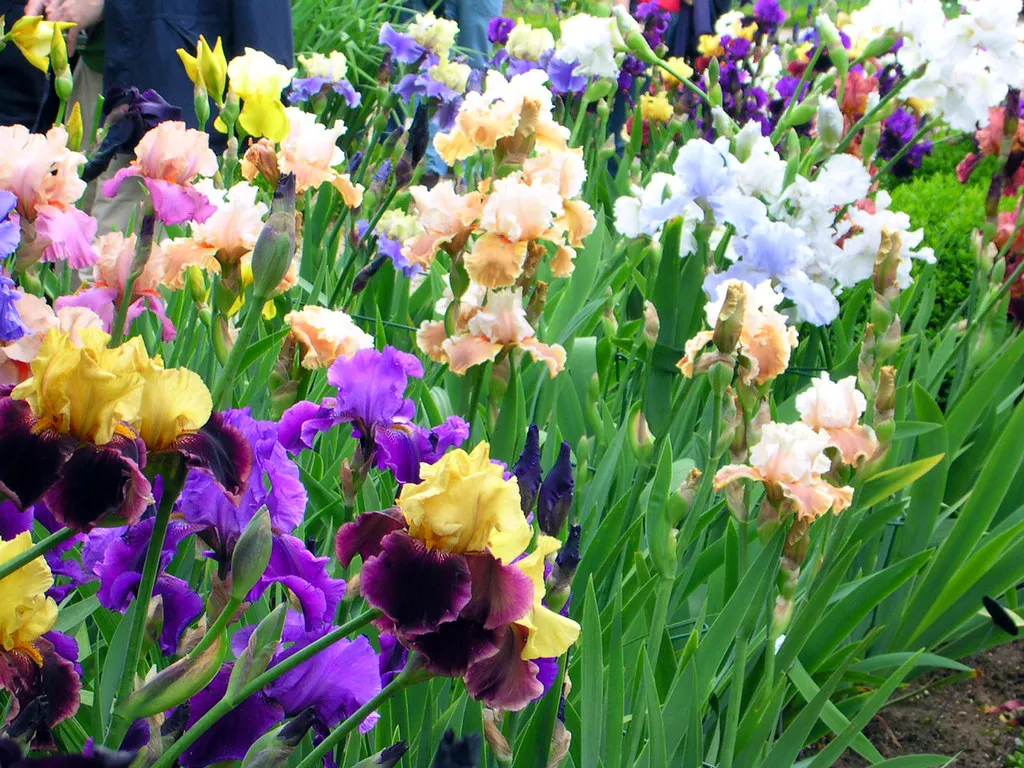
The Roseraie (rose garden) peaks from late May through June, overlapping with the tail end of the Giverny wisteria season and the start of Provence lavender. This makes Paris a useful transit hub for a multi-stop floral itinerary: fly into Charles de Gaulle, spend a morning at Bagatelle, then catch a train to Vernon for Giverny, and continue south to Provence. The park also features irises (April to May) and waterlilies on its central pond. Visiting on a weekday morning means you will likely share the garden with local retirees and the occasional professional photographer, not tour groups.
Frequently Asked Questions
Which country in Europe is most famous for flowers?
The Netherlands is widely considered the floral capital of Europe due to its massive tulip industry and the Keukenhof Gardens. France and the United Kingdom also hold high status for their lavender fields and world-class flower shows like Chelsea.
What is the best month to see flowers in Europe?
May is generally the best month for flower lovers as it marks the peak for tulips, poppies, and the Córdoba patios. April is ideal for early spring bulbs and cherry blossoms, while July is the best time for lavender.
Are the lavender fields in Provence free to visit?
Most lavender fields in Provence are located on private farmland but can be viewed for free from public roadsides. We recommend visiting the Valensole Plateau where many farmers allow respectful photography in exchange for supporting their local shops.
Visiting Europe for more than one festival? See our complete guide to festivals and events in Europe.
Europe's floral landscapes offer a unique way to experience the continent's natural beauty and cultural heritage. From the meticulously designed rows of Keukenhof to the wild poppy fields of Tuscany, there is a bloom for every traveller and every budget. We hope this 2026 guide helps you time your visit perfectly to catch these fleeting moments of colour. Remember to book transport and tickets early, as the most popular displays attract visitors from all over the globe.
Whether you are a professional photographer or a casual nature lover, these twelve locations provide endless inspiration. Travel with respect for the local environment and the horticulturalists who maintain these sites. For more detailed planning, explore our lavender bloom timing guide to ensure you don't miss the purple harvest, and our tulip fields Netherlands guide for options beyond Keukenhof. Happy flower hunting across Europe this season.
Explore More Festival Guides
Keep planning with our other in-depth festival guides across Europe.
- 5 Best Ways to Experience the Almond Blossom in Mallorca
- 17 Best Flower Fields and Expert Travel Tips for Europe
- Cherry Blossom in Amsterdam
- 7 Essential Tips for the Cherry Blossom in Bonn
- Cherry Blossom In Stockholm
- Keukenhof Tickets and How to Visit
- Keukenhof Tulips Guide
- 10 Things to Know About Lavender Fields in Hvar Croatia
- Visiting the Cotswold Lavender Fields
- Lavender Fields Provence
- Lavender Fields Provence Guide
- 10 Lavender Fields Provence Photography Tips for Professional Results
- 10 Best Ways to Experience Lavender Fields Provence Tours
- Lavender Fields Provence
- 10 Best Areas and Hotels to Stay Near Provence Lavender Fields
- 7 Essential Tips for Sunflower Fields in Andalusia
- Sunflower Fields in Tuscany
- 7 Best Ways to See Tulip Fields in the Netherlands Beyond Keukenhof
- When To Visit Keukenhof
- 15 Best Places to See Cherry Blossom in Europe
Free guide: Europe's Festival Calendar
A month-by-month map of Europe's unmissable festivals — with the best dates to visit each and a local tip you won't find in the guidebooks.
You might also like


Continue reading
More guides you'll find useful


