7 Best Ways to See Tulip Fields in the Netherlands Beyond Keukenhof
Discover how to see the Dutch tulip fields beyond Keukenhof. Our guide covers the best show gardens, farm visits, cycling routes, and photography tips for 2027.
On this page
7 Best Ways to See Tulip Fields in the Netherlands Beyond Keukenhof
Seeing the endless rows of colorful blooms is a dream for many travelers visiting the Netherlands. While Keukenhof Gardens is world-famous, the surrounding countryside offers a more authentic and quiet experience.
Exploring the tulip fields Netherlands beyond Keukenhof allows you to see working farms and vast floral horizons. This guide covers the best spots for photos, local farm visits, cycling routes, and how to turn a morning in the fields into a full coastal day in 2027.
You can avoid the heaviest crowds by heading into the Bollenstreek region or the northern provinces. The key distinction to understand before you go: production fields are private farmland, while show gardens are the legal, photography-friendly alternative.
Free guide: Europe's Festival Calendar
A month-by-month map of Europe's unmissable festivals — with the best dates to visit each and a local tip you won't find in the guidebooks.
Tulip Fields vs. Keukenhof: Understanding the Difference
Keukenhof is a massive, professionally designed park that showcases over seven million bulbs in creative displays. It feels like a floral museum with paved paths, manicured lawns, and themed indoor pavilions. Entry runs roughly €18 per adult, with €6 for parking — and queues on peak weekends can stretch an hour.
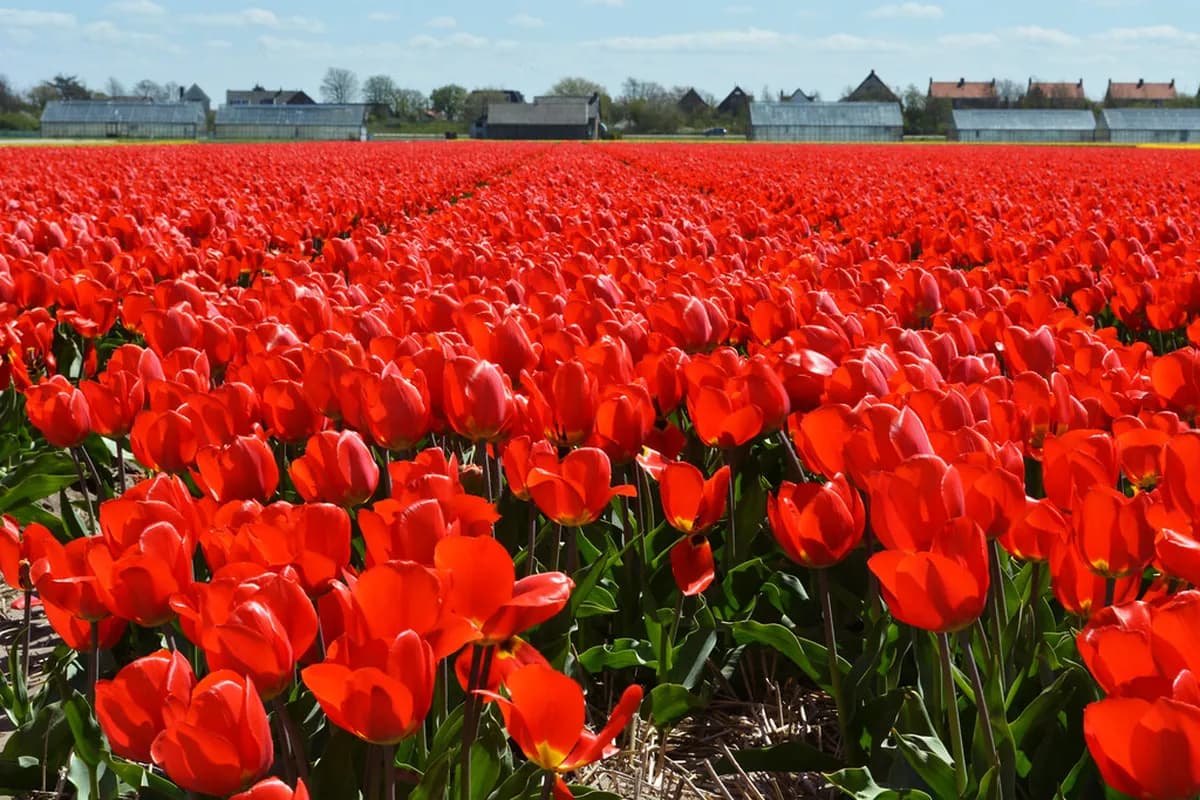
In contrast, the commercial tulip fields around Lisse and Hillegom are active production sites where farmers grow bulbs for global export. These fields stretch toward the horizon in straight, monochromatic lines of red, yellow, and purple — a completely different visual from Keukenhof's curated beds.
It helps to know that there are actually two kinds of flower farms in the Netherlands. Some grow bulbs for sale to gardeners worldwide; others grow cut flowers for the retail trade, usually in large greenhouses. The vivid fields you see from the roadside in spring are almost always bulb farms — and because the flowers are never destined for a vase, they stay on the stem longer, giving you a wider viewing window.
Most production fields are private property and strictly off-limits for walking. Show gardens are the perfect middle ground: they allow you to step among the flowers legally, often with dedicated time slots for photography.
Top Tulip Farms and Show Gardens to Visit
Three show gardens dominate the conversation among photographers and families visiting in spring 2027, each with a distinct atmosphere and price point.

De Tulperij, located in Voorhout just 5 km from Keukenhof, is the most authentic. It is a genuine family business — farmer Daan and his wife personally guide visitors through the growing process. Entry to the greenhouse and show garden is free, but to take photos inside the tulip fields you need to book a timed ticket in advance: €10 per person (adults and children 4–12 both pay the same rate). Each slot gives you 45 minutes in the field with a small group. The farm is open daily from 09:00 to 17:30, running from around 18 March to 9 May 2027. Advance booking is essential because slots sell out fast in mid-April.
Tulip Experience Amsterdam, near Lisse, combines an indoor museum with an outdoor show garden and a tulip-picking station. It suits visitors who want education alongside their photos. The garden is open until 21:00 on Saturdays — the best window for golden-hour photography with noticeably thinner crowds than the afternoon peak.
The Tulip Barn in Hillegom is the most accessible option if you are traveling without a car. It sits within walking distance of Hillegom train station and has a relaxed atmosphere that works well for families and visitors with dogs. Entry is approximately €8 per person, and the grounds are less structured than De Tulperij, which gives you more freedom to wander.
How to Get to the Tulip Fields from Amsterdam
Reaching the flower region from Amsterdam is simple and takes about 40 to 60 minutes by public transport. The Bollenstreek sits approximately 40 km southwest of Amsterdam, making it an easy half-day or full-day trip from the city.

By train, the most convenient option is to travel from Amsterdam Centraal to Hillegom or Sassenheim. Hillegom station puts you within walking distance of The Tulip Barn, making it the best no-car route in the region. If you are heading to Lisse or De Tulperij in Voorhout, take a train to Leiden Centraal and then pick up bus line 90 toward Lisse — the journey takes around 20 minutes from Leiden and stops close to the main farm areas. This Leiden-to-Lisse bus connection is frequently overlooked in general guides but it is one of the cheapest and most direct public transport routes into the heart of the Bollenstreek.
If you prefer a guided option, the Keukenhof Express bus runs directly from Amsterdam RAI and Schiphol Airport during peak season. These buses are practical if you plan to combine Keukenhof with the surrounding fields in a single day. Full-day guided tours departing from Amsterdam at 08:00 or 08:30 also exist, bundling a tulip farm visit, Keukenhof entry, and a 1-hour windmill cruise from around €87.50 per person.
Consider visiting the cherry blossom in Amsterdam before heading out to the countryside. Combining different floral experiences makes for a full spring itinerary without doubling back.
Best Ways to Explore the Bollenstreek
The Bollenstreek is best experienced at a slow pace. Cycling is the most traditional Dutch method and the most flexible — you can stop wherever a field catches your eye without worrying about parking.
Bike rentals in Lisse or at the main train stations typically run €10–15 per day. The well-marked Flower Route guides you through the most scenic stretches, and it connects to De Tulperij via the purple cycling path from Keukenhof Gardens. This makes it easy to plan a morning in the fields followed by a garden visit in the afternoon.
For those who want weather protection and GPS navigation built in, the Electric Renault Twizy tour offers a different experience. These two-seat micro-EVs come with a pre-loaded route and an audio guide explaining the landscape. A two-hour session costs around €85. It is a genuinely fun option on overcast spring days when cycling in the rain loses its charm.
Electric scooters are a third option if you want to cover more ground across a larger area. Local rental shops charge approximately €35–50 per day. You can find many best flower fields to visit in Europe along quieter back roads that buses never reach, and a scooter gives you access to those narrower lanes.
Photography Etiquette: Can You Walk Into the Fields?
Respecting the land is vital for maintaining the beauty of the Dutch countryside. Walking into production fields can spread soil-borne diseases that destroy bulbs and ruin a farmer's entire season. Millions of euros in damage are caused each year by visitors who ignore the signs.
Farmers have become increasingly vocal about the impact of tourists seeking the perfect photo, and many now install fences or ropes to keep visitors on the road. The The Guardian documented this growing tension in a widely-read piece that prompted more farms to restrict access entirely.
You can still get strong photos from the public road or cycling path. Standing at the field's edge with a longer focal length creates the impression of depth and fills the frame with color. Early morning light — before 08:00 in April — also means fewer cars on the narrow field roads and a cleaner background.
If you want to take close-up portraits or need to stand among the flowers, book a timed slot at a show garden like De Tulperij. These businesses welcome photographers and the €10 field ticket is well worth it for the legal, unhurried access you get within your 45-minute window.
Planning Your Visit: Peak Bloom and Timing Tips
The timing of the bloom shifts every year depending on winter temperatures. As a general guide, mid-April to the first week of May is the most reliable peak window for tulips across the Bollenstreek. Daffodils and hyacinths arrive earlier, typically from late March, filling the air with a heavy floral fragrance that signals spring has started.
Use the Tulip Festival Amsterdam Flower Map to track the live bloom status of specific fields. This tool, known locally as the bloemencradar (flower radar), lets you search by area and flower type so you can target exactly where the colors are most vibrant on any given day. It is the single most useful planning tool for this kind of visit and is updated regularly during the season.
If you plan to visit in 2027, mark April 17 in your calendar — the annual Bloemencorso flower parade departs from Noordwijk and travels through Lisse, Hillegom, Bennebroek, Heemstede, and ends in Haarlem. The parade route passes directly alongside many of the best fields and creates a once-a-year combination of marching floats and peak-bloom color. Grandstand tickets for a VIP tour from Amsterdam run around €159 per person, but roadside viewing along much of the route is free.
On weekends during peak season, Lisse can become extremely congested. Mid-week visits, particularly on Thursdays, tend to be noticeably quieter. If you must visit on a weekend, aim to arrive before 09:00 or after 16:00 when the tour bus crowds thin out.
Pair the Fields with the Coast: Noordwijk and Katwijk
One of the best decisions you can make is to build a full-day itinerary that combines the tulip fields with a coastal lunch or dinner. Noordwijk and Katwijk are both within a 10–15 minute drive of the main field areas, and both have beach clubs and seafood restaurants right on the sand.
Noordwijk is the closer of the two. The beach is wide and flat, lined with beach clubs that draw locals on sunny spring days. Fish sandwiches from the food trucks near the waterfront viewing platforms are a popular quick lunch — the Dutch term for these is Fischbrötchen, and the prawn and cooked fish versions are the safer choice for unfamiliar palates. If the sun is out, the terrace seating at the beach clubs fills quickly, so arriving before 12:30 gets you a spot without a wait.
Katwijk sits a few kilometers south along the coast and has a slightly quieter atmosphere than Noordwijk. The restaurants here are well-rated but fill up fast on weekends — booking a table in advance is strongly recommended if you plan to head there for dinner after a day in the fields. The small square in nearby Noordwijkerhout, with its church and school tulip displays, is worth a five-minute detour on the way between the two towns.
The coastal pairing transforms what might otherwise be a two-hour garden visit into a proper full day out. It is a combination that surprisingly few general tulip guides recommend, despite the fact that the beach adds real variety and a natural endpoint to the day.
Beyond Lisse: Exploring Other Dutch Tulip Regions
While the Bollenstreek is the most famous region, other areas offer even larger tulip expanses with far fewer visitors. The Noordoostpolder in Flevoland province is home to the country's longest tulip route, stretching for miles across reclaimed polder land with almost no tourist infrastructure around it.
This northern region feels much more spacious and unhurried than the area around Lisse. You can drive for miles and see nothing but vivid stripes of color against a flat horizon — no tour buses, no selfie crowds, no fences. The scale is harder to photograph well but genuinely impressive in person.
The Kop van Noord-Holland, near the coast north of Alkmaar, features one of the largest continuous flower bulb areas in the world. It is a longer drive from Amsterdam than the Bollenstreek — plan for a full day rather than a half-day if you head that far north.
If you enjoy floral travel across the continent, our guide to the Keukenhof tulips covers the garden in detail and pairs well with a countryside day in the fields. Visiting both gives you the full spectrum of the Dutch tulip experience, from the curated to the completely wild.
Frequently Asked Questions
Where can I see tulips other than Keukenhof?
You can visit show gardens like De Tulperij in Voorhout or The Tulip Barn in Hillegom. These locations allow you to walk through the flowers legally. You can also cycle the Bollenstreek flower route to see many production fields from the roadside for free.
Can you walk in the tulip fields in the Netherlands?
You should never walk into commercial production fields because it damages the bulbs. Instead, use designated show gardens where visitors are welcome to take photos. This protects the farmers' crops while still giving you the perfect floral background for your pictures.
What is the best way to see the tulip fields without a car?
The best way is to take a train to Hillegom station and rent a bike nearby. Many show gardens are within a short cycling distance from the station. You can also find more tips in our Keukenhof tickets and how to visit guide for transport help.
Are there free tulip fields near Amsterdam?
Viewing the fields from the public roads or cycling paths is free of charge. However, entering the fields for photos usually requires a ticket at a show garden. These small fees help farmers maintain the paths and provide facilities for visitors.
Exploring the tulip fields beyond the main gates of Keukenhof offers a rewarding and authentic adventure. Whether you choose to cycle the Bollenstreek flower route or book a timed slot at De Tulperij, the vibrant colors will leave a lasting impression.
Remember to respect the local farmers by staying on the paths and using designated show gardens for your photos. This ensures that the beautiful tradition of the Dutch tulip season continues for years to come.
Consider ending your day with a sunset dinner on the coast at Noordwijk or Katwijk — both are within 15 minutes of the fields and provide a perfect seaside finish to your floral journey.
Free guide: Europe's Festival Calendar
A month-by-month map of Europe's unmissable festivals — with the best dates to visit each and a local tip you won't find in the guidebooks.
You might also like


Continue reading
More guides you'll find useful


