Lavender Fields Provence: When to See the Bloom (2026 Guide)
Plan your trip with our guide on when to see the lavender fields in Provence bloom. Covers peak dates for Valensole, Sault, and Luberon, plus harvest tips.
On this page
Lavender Fields Provence: When to See the Bloom
The best time to see the lavender fields in Provence is from mid-June to mid-July. This short window offers the most vibrant purple colors before the annual harvest begins. Last updated March 2026.
Many travelers dream of seeing the endless purple rows under the warm French sun. Timing your visit perfectly requires understanding the different altitudes across the region. Lower areas like Valensole bloom much earlier than the mountain fields of Sault. This lavender fields Provence guide helps you navigate these regional differences.
Planning ahead is essential because the bloom varies slightly every year based on rainfall. Temperatures in summer often reach 28–34°C / 82–93°F during the peak afternoon hours. A strong wind called the Mistral can also affect the clarity of your photos. Our guide ensures you catch the purple waves at their absolute peak beauty.
Free guide: Europe's Festival Calendar
A month-by-month map of Europe's unmissable festivals — with the best dates to visit each and a local tip you won't find in the guidebooks.
The Lavender Season in Provence: A Month-by-Month Timeline
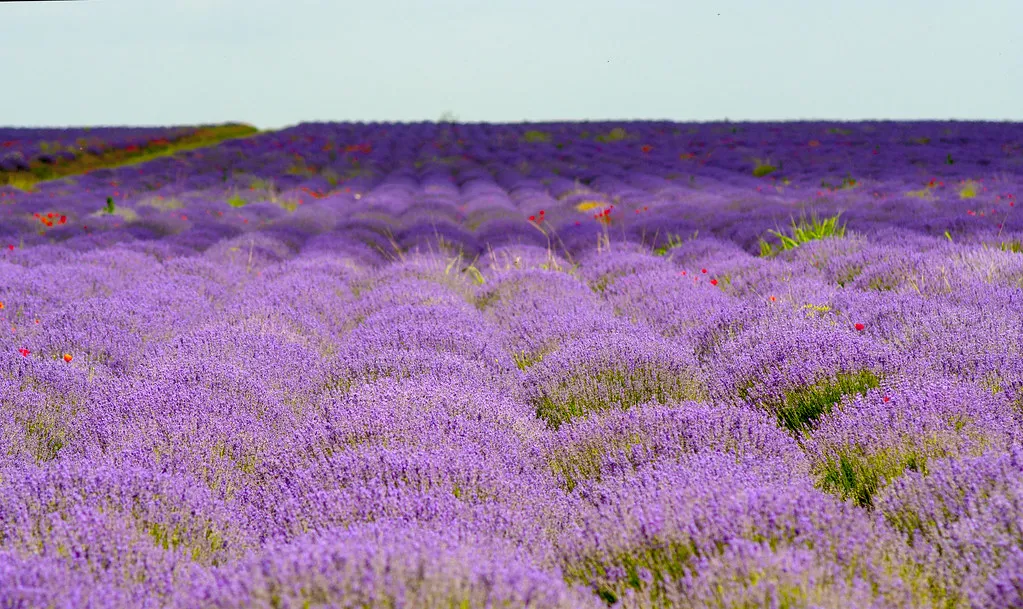
The cycle begins in early June when the green buds start to turn a light grey-blue. By mid-June, the fields in the lower Luberon valley begin to show their true colors. Most visitors find that the third week of June is the start of the prime window. You will see the first signs of the best places to see flowers in Europe during this time.
July is the most popular month for tourists and professional photographers alike. The first two weeks of July offer the deepest purple hues on the Valensole Plateau, with low-altitude fields peaking around July 1–15. Daytime temperatures usually hover around 30°C / 86°F during this peak period. Be prepared for large crowds at iconic spots like the Abbaye de Sénanque and the Valensole village roundabout.
Late July marks the transition from blooming to harvesting in most low-altitude areas. Farmers often begin cutting the lavender as soon as the oil concentration is high enough. If you arrive after July 20, you should head north toward the village of Sault. High-altitude fields remain purple much longer than those in the valley floors, with Sault typically peaking mid to late July.
August is generally considered the end of the lavender season for most of Provence. The famous Sault Lavender Festival takes place on August 15 to celebrate the final harvest. Remaining fields often look grey or brown as the flowers dry out in the sun. Check local social media tags and tourism office updates to confirm whether any high-altitude rows remain standing before you travel.
| Region | Altitude | Peak Bloom Window | Harvest Starts |
|---|---|---|---|
| Valensole Plateau | ~300 m | Late June – mid-July | Late July |
| Luberon Valley | 400–500 m | Late June – early July | Early August |
| Sault Plateau | 700–900 m | Mid-July – early August | Mid-August |
| Drôme Provençale | 400–600 m | Early–mid July | Late July |
Regional Bloom Variations: Valensole, Luberon, and Sault
The Valensole Plateau is the most famous region for seeing the lavender bloom. Its low altitude of around 300 metres means the flowers peak early, usually between June 20 and July 15. You will find the largest, most symmetrical fields in this specific geographic area. The plateau is car-centric: the best views come from pulling off the D8 road between Valensole village and Manosque and walking to the edge of the rows.
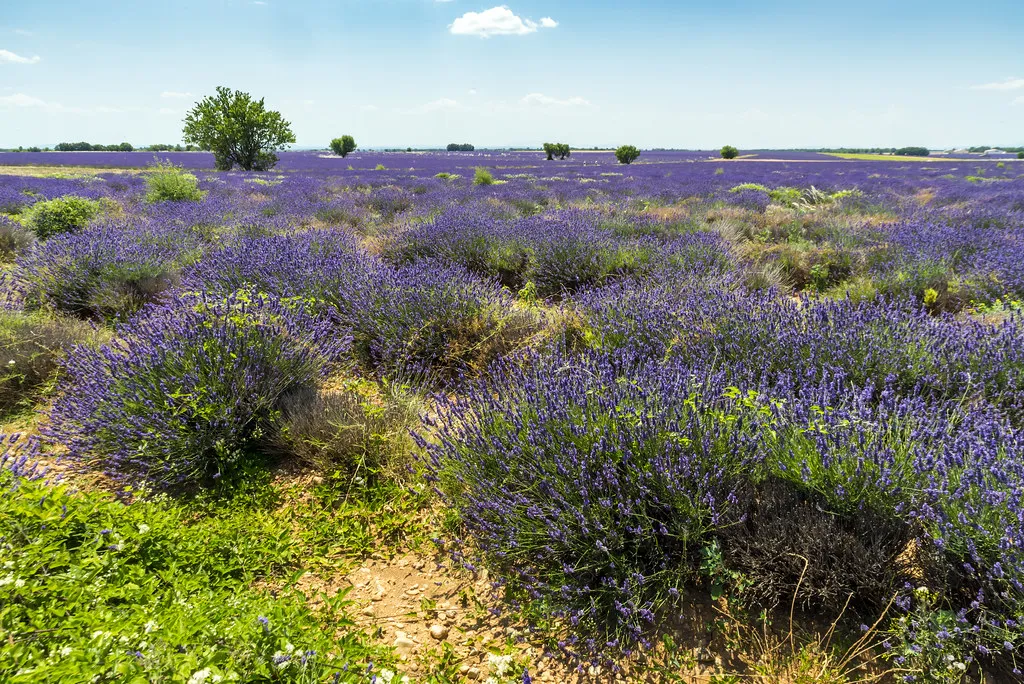
The Luberon Valley offers a more varied landscape with stone villages and vineyards alongside lavender patches. Fields here are often planted near historic abbeys and farmhouses rather than in vast monoculture blocks. Expect the bloom to peak in late June or very early July. The Claparèdes plateau between Bonnieux and Saignon is a reliable spot, as is the approach road down from Bonnieux toward Goult.
Sault sits at a higher elevation of about 700 to 900 metres above sea level. This altitude difference of roughly 400 metres delays the bloom by nearly three full weeks compared to Valensole. While Valensole is being harvested, the fields around Sault are just reaching their peak purple. It is the single best destination for travelers arriving in the second half of July. Explore the lavender fields Provence best fields Valensole and Sault for exact coordinates and field access points.
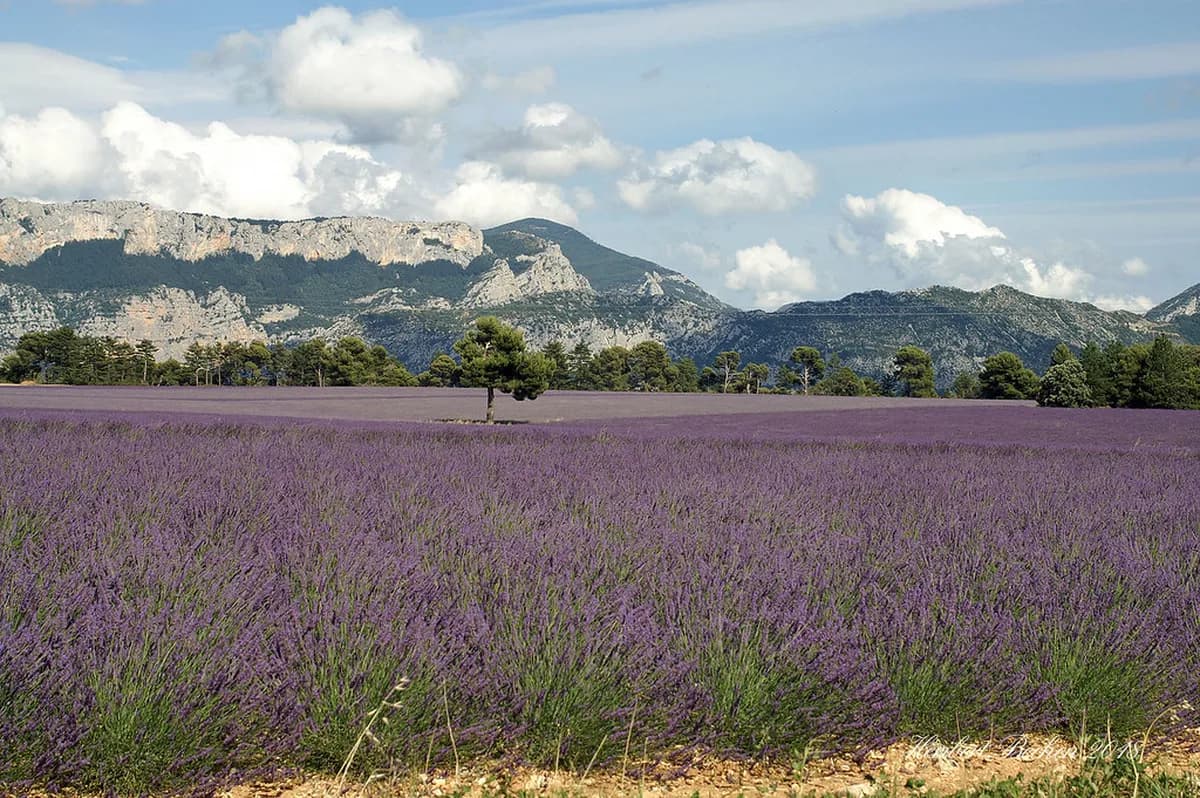
Drôme Provençale is a northern region that remains a well-kept secret among many travelers. The lavender here grows on rolling hills against a backdrop of dramatic mountain peaks. Blooms in this area typically last until the end of July or early August. It offers a more rugged and less commercial experience than the southern plateaus, with far fewer tour buses at viewpoints.
Iconic Spots: Chemin des Lavandes, Abbaye de Sénanque, and Terre Ugo
The Chemin des Lavandes in Sault is a 4-kilometre walking loop that takes approximately one hour and forty minutes to complete. It follows a signed footpath through open fields above the village with panoramic views over the valley. This is the most pedestrian-friendly lavender experience in Provence — a genuine contrast to the roadside-and-car approach that defines Valensole. The trail is free, clearly marked, and accessible from the Sault village centre; start at the main car park off the D942.
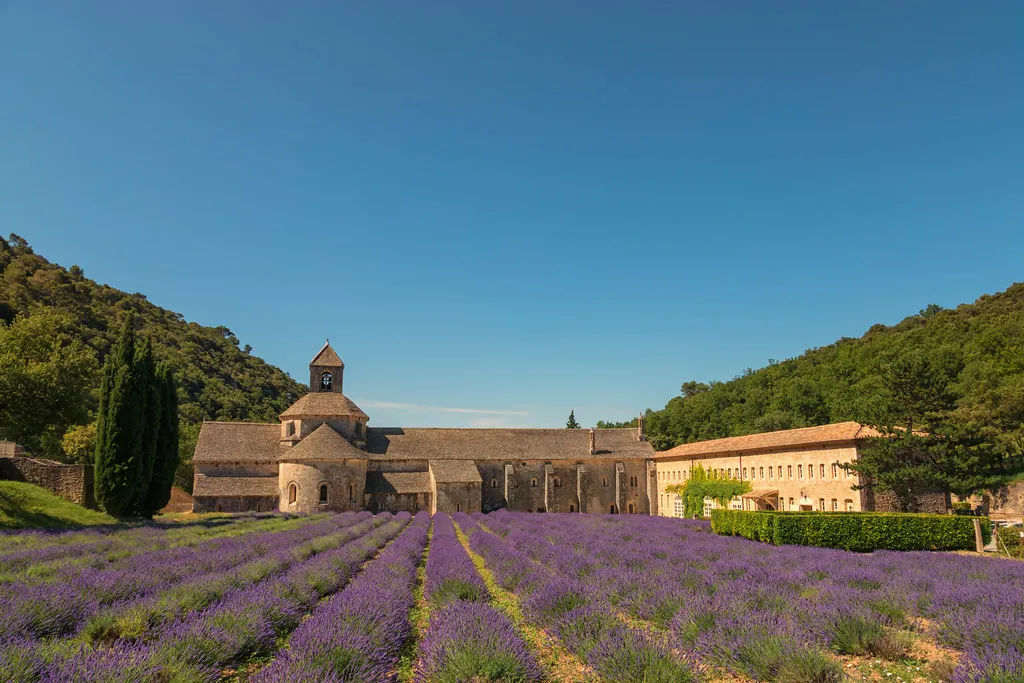
The Abbaye de Sénanque near Gordes is arguably the most photographed lavender scene in France. A 12th-century Cistercian abbey sits surrounded by parallel rows of lavender in a narrow valley, and the composition is as striking in real life as in any travel magazine. Access is limited: the abbey is private and functions as a working monastery, so arrive early (before 08:30) to photograph before the tour buses arrive around 09:30. The lavender rows here are small but the backdrop is unmatched anywhere in the Luberon.
Terre Ugo near Pertuis, east of Aix-en-Provence, offers a managed "lavender park" experience rather than an open agricultural field. Entry costs around €5–8 per adult and the property includes guided walks, a distillery demonstration, and a boutique selling local oils and honey. It is a good option for visitors with young children or limited mobility who want a guaranteed field experience without navigating rural roads. The bloom here peaks slightly earlier than the plateaus, typically in mid-June to early July.
The Harvest Warning: A Field Can Disappear Overnight
One fact that surprises many first-time visitors is how quickly the harvest moves. A field that was fully purple on Monday can be completely cut and baled by Wednesday morning. Farmers monitor oil concentration daily and make the harvest decision based on weather and ripeness — not tourist schedules. This is especially true on the Valensole Plateau, where large mechanical harvesters can clear a field in a single afternoon.
The most reliable way to verify field status before you drive hours to a location is to check the Instagram tag for the specific village (search #Valensole or #Sault) the day before. The local Sault tourism office also publishes a bloom calendar each season at the Maison du Tourisme on Place de l'Europe — it is updated every few days during peak July. If you arrive after July 20 and find Valensole already cut, pivot immediately to Sault: it typically holds its bloom for another three to four weeks.
There is also a botanical distinction worth knowing before you visit. Most of the large commercial fields in Valensole grow lavandin — a hybrid of true lavender (Lavandula angustifolia) and spike lavender. Lavandin produces higher oil yields and has a stronger, slightly sharper scent. True fine lavender grows at higher altitudes and is the plant you find around Sault and in the Drôme. Both are visually very similar in the field, but the fragrance difference becomes obvious at a working distillery.
Practical Logistics: Getting Around the Lavender Fields
A rental car is by far the most practical way to see the lavender fields in Provence. The best fields are spread across rural plateaus and unmarked farm roads that no bus route serves. Pick up a car at Avignon TGV station, Marseille Provence Airport (MRS), or Aix-en-Provence — all three give good access to the main lavender regions. Budget at least two full driving days if you want to cover Valensole, the Luberon, and Sault in a single trip.
For those who prefer not to drive, guided day tours from Avignon and Aix-en-Provence operate throughout July. See the lavender fields Provence tours from Avignon and Aix page for operator comparisons, pickup times, and prices. Most tours run from late June to early August and include two to three field stops plus a distillery visit. Book at least two weeks ahead in July — seats sell out quickly at peak bloom.
A logical driving route from south to north runs Manosque → Valensole (D8) → Riez → Forcalquier → Sault (D950). Allow a full day for this loop with stops. If you add the Luberon, divert west from Riez toward Apt, then loop through Bonnieux and Gordes before heading east to Sault. The total circuit is around 200 kilometres and suits a two-night base in either Apt or Sault itself.
Where to Stay Near the Lavender Fields
Accommodation fills quickly in July across all price brackets — book at minimum six to eight weeks ahead for peak bloom dates. The best base depends on which region you want to prioritise. For Valensole, the village of Moustiers-Sainte-Marie offers charming gîtes and small hotels within fifteen minutes of the plateau. For the Luberon, Lourmarin and Bonnieux both have good independent hotels and self-catering properties at varying price points. Full accommodation options are covered in the lavender fields Provence where to stay guide.
For the Sault plateau, staying in Sault village itself puts you within walking distance of the Chemin des Lavandes and saves long morning drives from more distant bases. Smaller chambres d'hôtes in the area cost around €80–140 per night in July. Luxury options in the Luberon include the 5-star Coquillade Provence Resort & Spa, set among vines and lavender fields near Gargas, from approximately €350 per night in peak season.
Self-catering villas and bastides give the most flexibility for early morning field visits and picnic lunches. July temperatures regularly exceed 32°C by early afternoon, so a property with a pool is worth the premium. Book platforms like Airbnb and Abritel carry large inventories across all three main regions; filter for the nearest village to your priority fields rather than just the department.
Beyond the Fields: Distilleries, Markets, and Lavender Cuisine
It is important to distinguish between Fine Lavender and the more common Lavandin when visiting distilleries. Fine lavender grows at high altitudes and is used for high-quality perfumes and medicinal oils. Lavandin is a hybrid plant that produces more oil and has a stronger scent. Many distilleries around Sault and the Luberon offer free tours during the harvest weeks — Les Agnels near Apt (Route de Buoux, 84400) is one of the oldest family-run producers and well worth a visit.
The Lavender Museum (Musée de la Lavande) in Coustellet near Gordes is open year-round and covers the full history of lavender cultivation, distillation, and trade in Provence. Entry is around €7 for adults. It is a useful stop if rain interrupts a field visit or if you want context before heading to the plateaus. The museum also runs a boutique with a wide selection of AOC-certified lavender oils produced locally.
Lavender appears across Provence's food scene in ways that go well beyond sachets and soap. Local markets in Apt (Saturday) and L'Isle-sur-la-Sorgue (Sunday) sell lavender honey, lavender-infused biscuits known as navettes, lavender syrup for drinks, and dried flower bunches at prices far lower than tourist boutiques. A few restaurants in the Luberon incorporate fresh lavender into salad dressings and ice creams — look for it on menus at farm-to-table spots between July and early August.
Essential Tips for Respectful and Successful Visiting
The lavender fields are working farmland, not public parks. Local farmers have become increasingly frustrated with visitors who walk deep into the rows, trample plants, or pick flowers for photographs. Stay on the outer edge of the field or on clearly marked paths. Never walk between rows without the farmer's explicit permission. The damage from a single careless visit can affect a farmer's yield for the following year.
Photography etiquette matters more than most visitors realise. The golden hours — 06:30–08:30 and 19:00–21:00 — produce the best light and carry the lowest crowd risk. At midday, fields are packed and the harsh overhead sun flattens the color. Arrive before sunrise at Abbaye de Sénanque if you want an unobstructed shot. Carry a polarising filter if you shoot on a camera with interchangeable lenses; it cuts glare and deepens the purple significantly.
- Visit on weekday mornings to avoid weekend crowds and parking queues at Valensole village.
- Bring a reusable water bottle — most viewpoints have no shade or nearby shops, and July temperatures exceed 30°C by 10:00.
- Wear closed-toe shoes: bee populations are dense in the fields, and the soil rows are uneven underfoot.
- Check local Instagram tags (#Valensole, #Sault, #Luberon) the day before your visit to confirm current bloom status and whether harvest has begun.
- Book lavender fields Provence photography tips research ahead — composition spots and access points change slightly each year as farmers rotate crops.
Frequently Asked Questions
When is the absolute peak for lavender in Provence?
The absolute peak usually occurs between June 25 and July 15. This window covers the best blooms in Valensole and the Luberon. High-altitude Sault peaks slightly later in mid-July.
Can I see lavender in Provence in August?
Yes, but only in high-altitude areas like Sault. Most other regions are harvested by late July. The Sault harvest festival on August 15 marks the end of the season.
Is it free to visit the lavender fields?
Most fields are private farmland but visible from public roads for free. Always respect the plants and do not trespass deep into the rows. Some managed sites charge a small entry fee.
Seeing the lavender fields in bloom is a highlight of any trip to southern France. By timing your visit for late June or early July, you ensure the best views. Remember to check the altitude of your destination to avoid missing the peak colors.
Respecting the local farmers and the environment helps preserve this beauty for future years. Provence offers a sensory experience that goes far beyond just the purple landscapes. Enjoy the fragrance, the sunshine, and the unique culture of this beautiful French region.
Free guide: Europe's Festival Calendar
A month-by-month map of Europe's unmissable festivals — with the best dates to visit each and a local tip you won't find in the guidebooks.
You might also like


Continue reading
More guides you'll find useful