Lavender Fields Provence Guide: 7 Essential Tips & Locations
Plan your trip with our Lavender Fields Provence Guide. Discover the 7 essential tips for timing, the best Valensole locations, and a perfect one-day itinerary.
On this page
Lavender Fields Provence Guide: 7 Essential Tips & Locations
Walking through the purple landscape of southern France remains a top bucket list item for many global travelers.
Our lavender fields provence guide helps you navigate the vast plateaus and hidden valleys of this iconic region.
You will find the best blooms between late June and early August depending on the specific altitude of the fields.
Careful planning ensures you catch the vibrant colors before the local farmers begin their annual harvest.
Free guide: Europe's Festival Calendar
A month-by-month map of Europe's unmissable festivals — with the best dates to visit each and a local tip you won't find in the guidebooks.
When is Lavender Season in Provence?
The timing for the purple bloom depends largely on the altitude and the weather patterns of the current year.
Most fields on the Valensole Plateau begin to turn purple in late June and reach peak beauty by mid-July.
You should check the lavender fields provence bloom schedule to align your flights with the peak flowering window.
Weather conditions in early spring can shift the start of the season by a few days each year.
- Valensole Plateau: blooms start late June, peak July 1–15, harvest begins mid-July (altitude ~500 m)
- Sault Plateau: blooms start early July, peak late July, harvest mid-August (altitude 800–1,500 m)
- Luberon Valley: follows a similar arc to Valensole but fields are smaller and more scattered among villages
- Drôme Provençale: blooms early to mid-July at mixed altitudes, with significantly fewer visitors than the main plateau
The first two weeks of July are the safest window if you can only visit once. Avoid arriving after July 20 at lower elevations — many Valensole fields are already partially harvested by then, and rows can look half-bare from the road.
One critical date to mark: July 14 is Bastille Day. French public roads around small villages fill with local traffic and some rural lanes close for festivities. Plan to be settled at a base town rather than driving between sites that afternoon.
Best Lavender Fields in Provence: Valensole to Sault
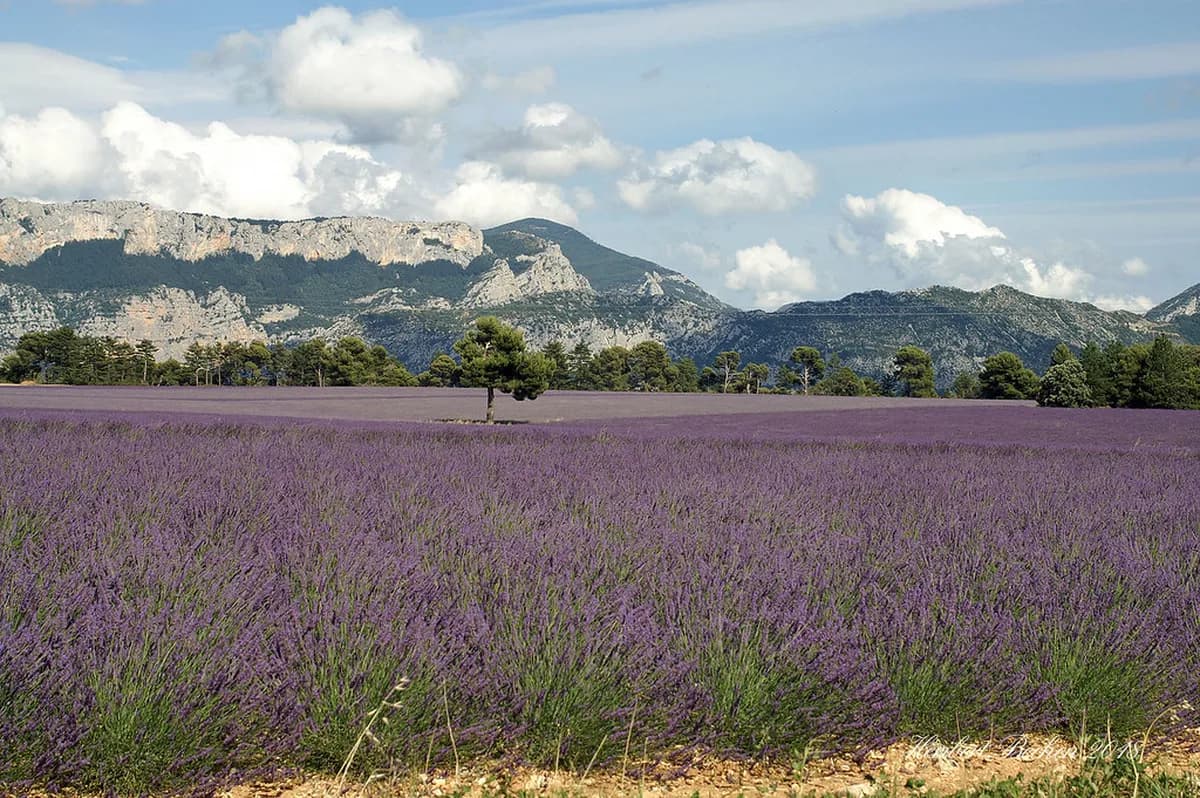
Valensole is the most famous region because it offers the massive, rolling hills that appear in popular travel photos.
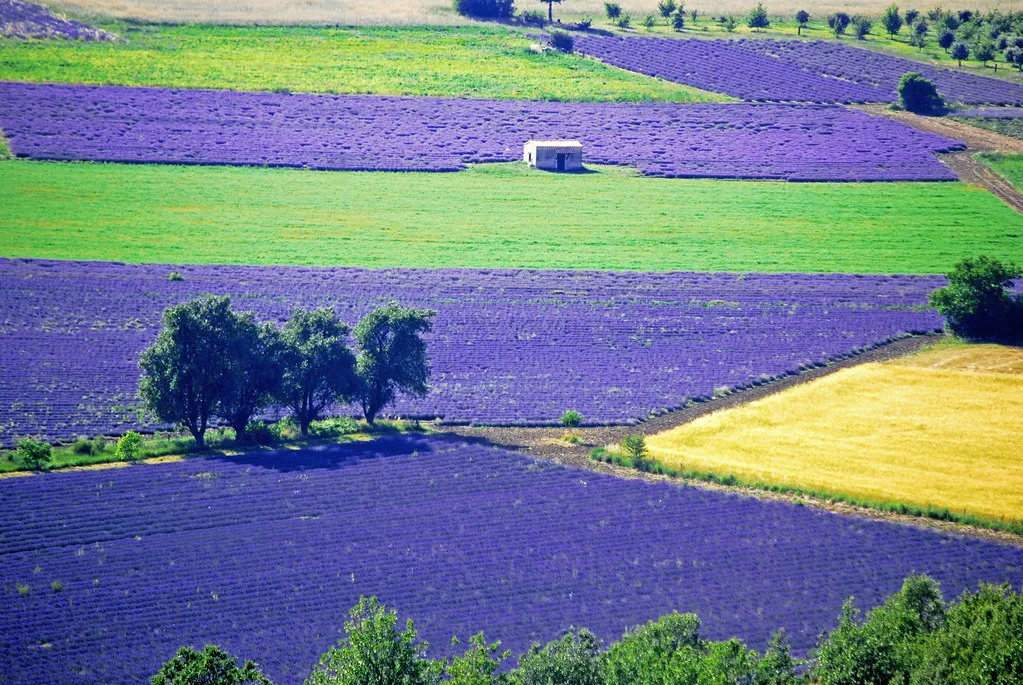
The rows here are perfectly straight and stretch toward the horizon for a truly dramatic visual effect. The farm at Lavandes Angelvin near the village of Valensole is a good anchor point — it has a shop, open fields, and sunflower plots nearby that are equally photogenic.
If you arrive later in the summer, head toward the Sault Plateau where the flowers bloom much later. Sault is sometimes called the "capital of lavender" among growers, and the surrounding hills feel wilder and less stage-managed than Valensole.
This higher elevation produces true lavender (Lavandula angustifolia), which is smaller and more fragrant than the hybrid varieties found elsewhere. The Luberon Valley, home to villages like Gordes and Bonnieux, adds a third dimension: smaller fields framed by stone architecture, ideal for combining a market visit with a short walk between rows.
- Valensole Plateau — lavandin hybrid, iconic long rows, very high crowds, near Manosque
- Sault Plateau — true lavender, wilder landscape, moderate crowds, near Mont Ventoux
- Luberon Valley — mixed varieties, village scenery, high crowds near Gordes, near the Abbaye de Sénanque
Drôme Provençale: The Fourth Region Most Visitors Skip
Bordering northern Provence, the Drôme Provençale is one of the most underrated places to see lavender fields in France. Villages like Grignan, Dieulefit, and Nyons sit at the center of a network of scenic routes through wild fields, without the tour buses or large car parks of Valensole.
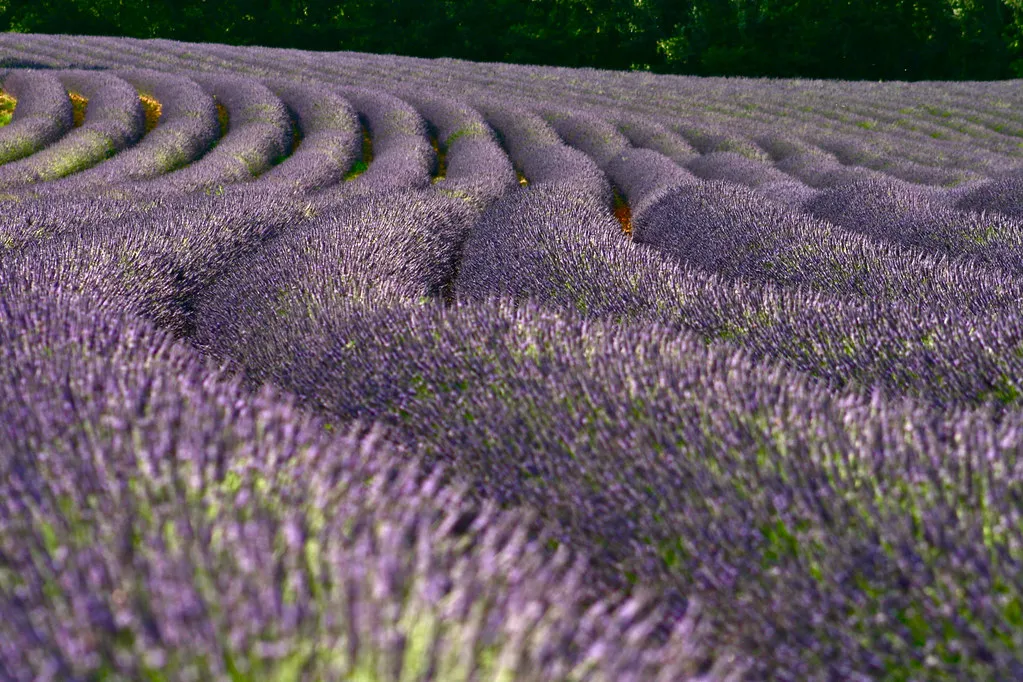
The region's fields mix true lavender and lavandin at varying elevations, so the bloom window is slightly earlier than Sault — generally early to mid-July. For visitors flying into Lyon rather than Marseille, Drôme Provençale is actually the closest lavender region and an easy addition to a broader southern France road trip.
Local producers here sell lavender honey, essential oils, and sachets directly from farm stands. Unlike the more commercial operations near Valensole, many Drôme farms are still small family businesses where you can watch traditional distillation with copper stills in a low-key setting.
We include this region in our guide to the best flower fields to visit in europe because it genuinely rewards travelers willing to drive an extra hour north from the main lavender belt.
True Lavender vs. Lavandin: Why the Scent Surprises Visitors
Most people arrive in Valensole expecting the sweet, floral lavender smell they know from sachets and candles. What they find instead has a sharper, slightly medicinal edge — because the vast majority of Valensole fields grow lavandin (Lavandula × intermedia), a hardy hybrid bred for high oil yield, not fragrance finesse.
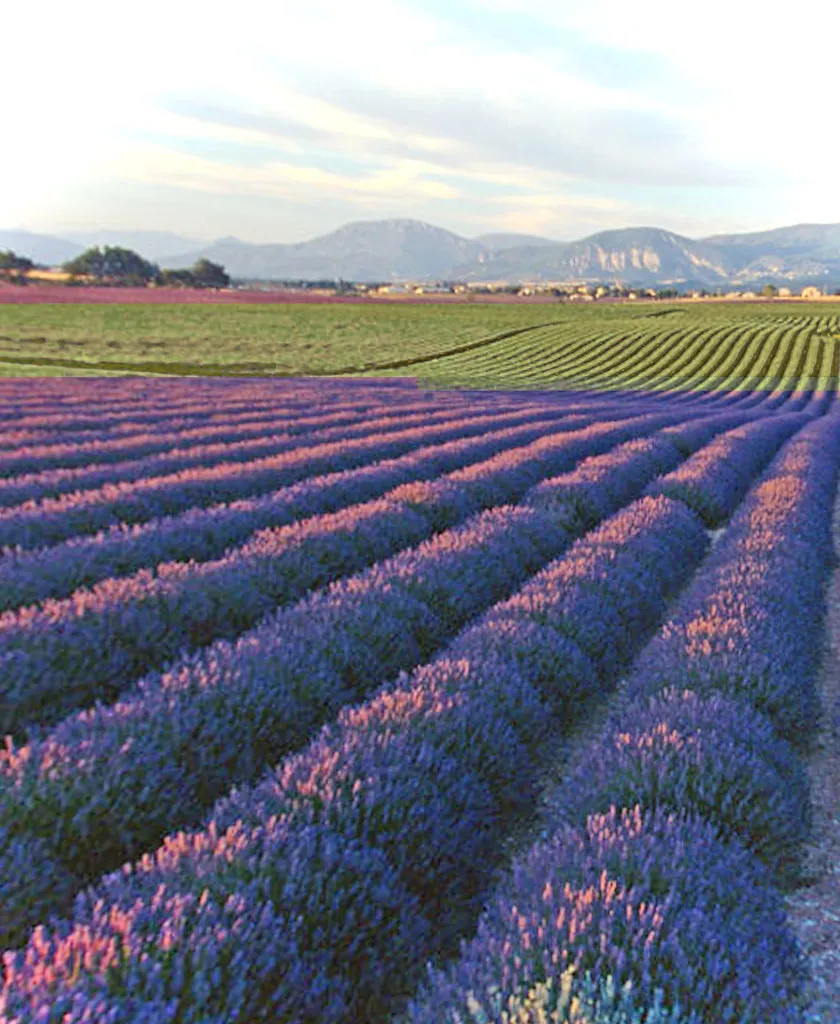
Lavandin contains a higher percentage of camphor, which gives it a bracing, almost mentholated quality. It is excellent for cleaning products, soaps, and industrial applications, which is why it dominates the commercial plateau. The visual impact is undeniably spectacular, but the scent is not what most visitors picture.
True lavender (Lavandula angustifolia), the variety grown at altitude around Sault and on smaller high-elevation farms in the Luberon, has the softer, more complex fragrance associated with fine perfumery. Grasse perfumers still source their finest lavender from these high-altitude plots, not from the postcard plateau. If the scent experience matters to you — not just the photographs — add a stop on the Sault Plateau or seek out a small true-lavender producer in the Luberon hills.
When buying products at farm shops, check the label. "Huile essentielle de lavande fine" or "lavande vraie" means true lavender. "Lavandin" will be clearly stated on reputable products and is not inferior — it just smells different than the perfume-counter archetype.
A One-Day Provence Lavender Driving Itinerary
Start your morning early — before 08:00 — at the Valensole Plateau to avoid the heat and the largest tourist buses. Morning light provides a soft glow that makes the purple hues look more natural in your photographs, and you can walk the rows before the first coach groups arrive around 09:30.
After exploring the plateau, drive toward the village of Gordes for a scenic lunch overlooking the Luberon Valley. Gordes sits roughly 40 minutes northwest of the main Valensole fields. The restaurant at La Bastide de Gordes has views over the valley if you want to splurge; the terrace at La Bastide de Pierres is a reliable, less expensive alternative — reserve in advance during July.
Finish your afternoon at the Abbaye de Sénanque, just a few minutes from Gordes. The 12th-century Benedictine abbey maintains small lavender plots directly in front of the stone facade. You cannot enter the fields immediately in front of the abbey, but the view from the road is the one seen in most travel photography. Arrive by 16:00 to catch the low afternoon light without a midday crowd.
Allow roughly 150 km of driving in total for this loop, starting and ending in Aix-en-Provence or Avignon. Both cities have straightforward motorway access to Manosque and the Valensole plateau.
How to Get Around: Car Rentals and Logistics
Renting a car is the only practical way to see the best fields because public transport is very limited.
You will find that most of the famous photo spots are located on rural roads far from train stations. Pick up your rental at Marseille-Provence Airport (MRS), Avignon TGV station, or Aix-en-Provence TGV — all three give easy motorway access to the main lavender belt within 45–90 minutes.
Be aware that Bastille Day on July 14 brings massive crowds and potential road closures to many small villages. Plan to stay put in your base town for the afternoon and evening of the 14th rather than attempting to drive between sites.
Drivers should prepare for narrow, winding roads and limited parking near the most popular lavender farms. Arrive before 08:30 at top spots like the Sénanque abbey car park — it fills quickly and roadside parking on the approach lane is tight.
Where to Stay: Best Hotels and Airbnbs
Choosing the right base town will save you hours of driving time during your purple flower hunt.
Gordes is a luxury favorite and home to the stunning La Bastide Hotel which offers incredible views across the Luberon valley. Book several months ahead for July — rooms here sell out by March most years.
For a more resort-style experience, consider staying at the Coquillade Provence Resort & Spa in the heart of the valley. The property sits in the middle of a working estate and is a particularly good base for day trips to both Gordes and Valensole.
If you prefer a vibrant town atmosphere, look for rooms at Le Saint Remy for easy access to markets and Saint-Rémy-de-Provence village life. July temperatures routinely reach 35–38 °C in the afternoon, so air conditioning is not optional — confirm it before booking any smaller gîte or Airbnb.
Essential Tips for Visiting (Bees, Clothing, and UV Filters)
The lavender fields are full of honeybees that are busy collecting nectar during the peak daylight hours. Bees are generally not aggressive if you move slowly and avoid swatting at them while you walk. Closed-toe shoes are sensible — sandals in a dense row mean you step where bees are feeding at ground level.
Wear white or yellow clothing to create a beautiful color contrast against the deep purple rows of flowers. Light, loose fabrics also help with the heat: midday temperatures in July regularly exceed 35 °C in the open plateau with no shade.
Professional photographers often use a high-quality UV filter to manage the harsh midday sun glare. Shooting at golden hour — roughly 07:00–09:00 or 19:00–21:00 in July — eliminates this problem naturally and produces the warm tones seen in the best Provence photography. If you are joining a golden-hour photography tour, book early: guided sessions fill up by mid-June each year.
Many fields are on private farmland. If there is no designated path or public signage, admire the view from the road rather than walking into the rows. Farmers depend on an undisturbed crop for their annual income, and the visible ruts left by visitors who stray off-path can damage root systems.
Nearby Attractions: Hilltop Villages and Distilleries
Take a break from the fields to visit a local distillery and learn how the flowers become essential oils. Many farms offer guided tours where you can see the traditional copper stills used for the distillation process. Lavandes Angelvin on the Valensole Plateau is among the most visitor-friendly operations, with products available directly from their farm shop.
The red ochre cliffs of Roussillon provide a striking visual change from the purple lavender landscape — a short drive from Gordes and worth an hour of your afternoon. The village of Ménerbes, made internationally known by Peter Mayle's writing, sits nearby and hosts a small but excellent market on Sunday mornings during the summer.
If you want to extend your trip beyond Provence, our guide to the best flower fields to visit in europe covers comparable seasonal blooms across the continent. The Gorges du Verdon, about an hour east of Valensole, offers turquoise river swimming — a welcome alternative on the afternoon of your second or third day when you have already covered the main lavender circuit.
Frequently Asked Questions
When is the best time to see lavender in Provence?
The best time to visit is usually the first two weeks of July. This window ensures the flowers are in full bloom before the harvest starts. You can find more details in our bloom timing guide for specific regions.
Is a car necessary to see the lavender fields?
Yes, a rental car is essential for visiting the most scenic locations. The fields are spread across rural plateaus that lack reliable public transportation. Having your own vehicle allows you to visit remote spots at sunrise or sunset.
What is the difference between lavender and lavandin?
True lavender grows at higher altitudes and has a more delicate scent used in perfumes. Lavandin is a hardier hybrid grown at lower altitudes for soaps and oils. Most of the large fields in Valensole consist of the lavandin variety.
Where are the most famous lavender fields in France?
The most famous fields are located on the Valensole Plateau in the Alpes-de-Haute-Provence region. This area features the iconic long rows seen in most postcards. Another legendary spot is the field surrounding the Abbaye de Sénanque near Gordes.
Planning a trip using this lavender fields provence guide ensures a smooth and colorful summer adventure.
Remember to book your car and accommodation early to secure the best rates during the busy July season.
Respect the local farmers by staying on the designated paths and avoiding any damage to the delicate plants.
Enjoy the unique fragrance and stunning views that make this region one of the most beautiful places in Europe.
Free guide: Europe's Festival Calendar
A month-by-month map of Europe's unmissable festivals — with the best dates to visit each and a local tip you won't find in the guidebooks.
You might also like


Continue reading
More guides you'll find useful