
8 Best Small and Secondary Christmas Markets in Europe (2026)
Discover the 8 best small and secondary Christmas markets in Europe for 2026. Avoid the crowds in Aachen, Tallinn, and Colmar with our expert travel guide.
On this page
8 Best Small and Secondary Christmas Markets in Europe (2026)
Europe's most memorable Christmas markets are not always the famous ones. While Cologne and Vienna draw tens of thousands of visitors on peak weekends, the continent's secondary cities offer tighter squares, shorter queues, and vendors who actually want to talk to you. This guide covers the pillar's own spoke cities — Brașov, Sibiu, Ljubljana, Zagreb, Trier, Quedlinburg, Würzburg, Maastricht, and Wells — towns where the market is still a community event rather than a ticketed spectacle. Last updated for the 2026 season.
Our editorial pick: if you can only choose one region, the Romania and Balkans circuit (Brașov, Sibiu, Ljubljana, Zagreb) delivers the sharpest contrast to over-touristed markets and the lowest prices on the list. German medieval towns run a close second for sheer atmosphere per euro spent.
Free guide: Europe's Festival Calendar
A month-by-month map of Europe's unmissable festivals — with the best dates to visit each and a local tip you won't find in the guidebooks.
Romania and the Balkans: Europe's Most Underrated Market Circuit
Brașov, Sibiu, Ljubljana, and Zagreb represent four of the most genuinely secondary Christmas market destinations on the continent. None belong to another pillar on this site; all four remain below the radar for Western European visitors while attracting strong domestic and regional audiences. Prices are typically 30–50% lower than equivalent German or French markets, and the quality of handmade goods — embroidered textiles, carved wood, local spirits — is high.
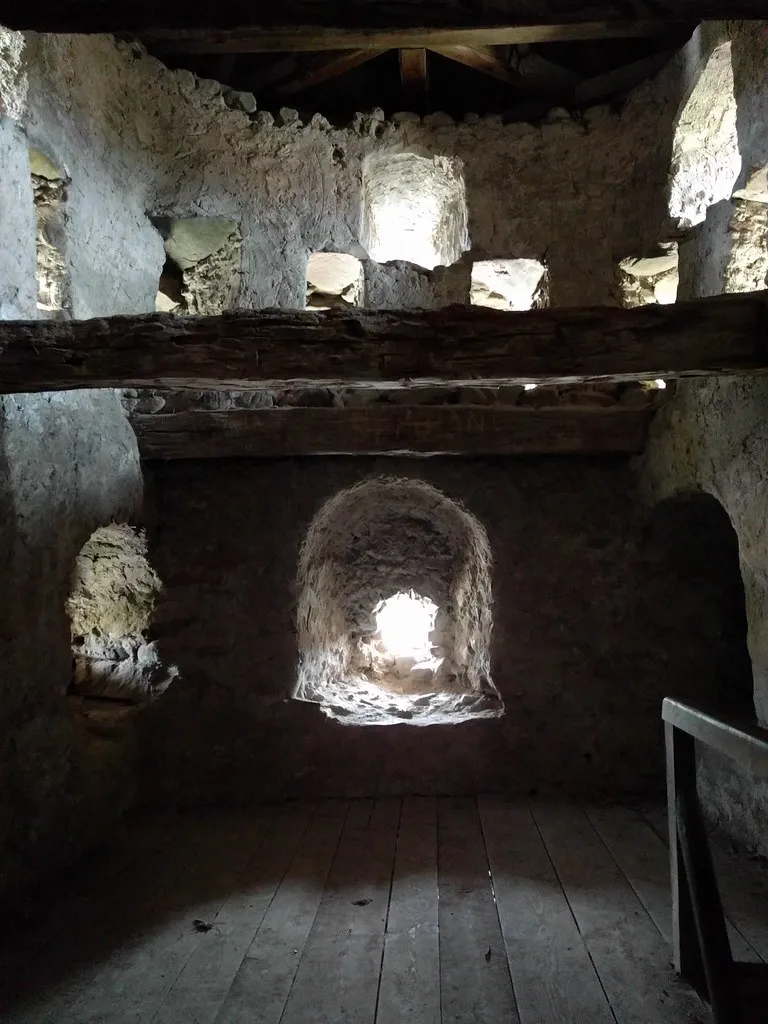
Brașov, Romania: Transylvania's Festive Square
Brașov's Christmas market occupies the Piața Sfatului (Council Square), one of the largest medieval squares in Romania, ringed by pastel baroque facades and watched over by the Black Church — the largest Gothic church in the country. The market typically runs late November to 23 December 2026 (confirm exact dates via the Brașov city tourism portal). Evening light shows projected onto the Church facade are included free and start around 18:00 on weekdays.
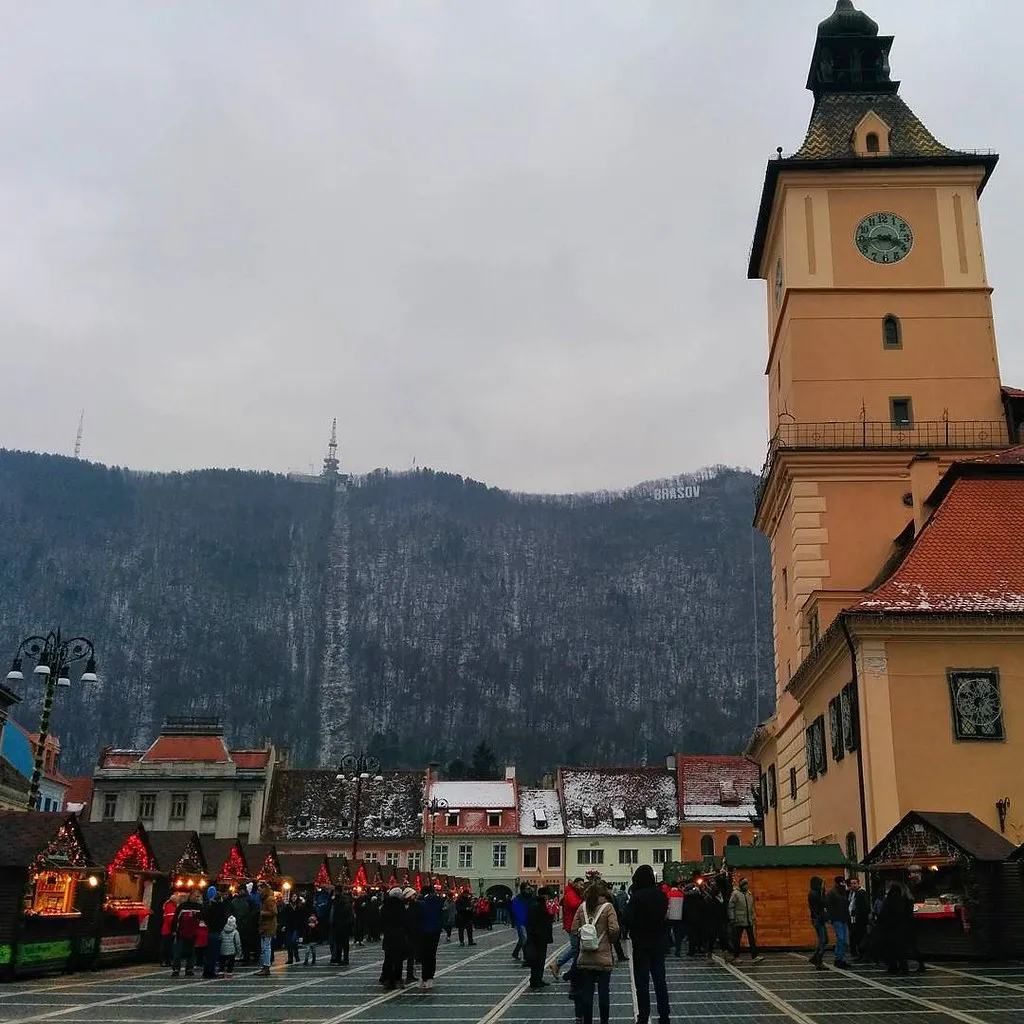
Food stalls sell kürtőskalács (chimney cake), a spit-roasted pastry rolled in cinnamon sugar, for about €2–€3 — the same dish costs twice as much at comparable markets in Central Europe. Hot mulled wine (vin fiert) costs €2–€4. Brașov is 2.5 hours by intercity train from Bucharest Henri Coandă Airport; the overnight train from Budapest also stops here. For a full guide to the market layout and the surrounding Old Town, see the Brașov Christmas Market guide.
Sibiu, Romania: The Most Atmospheric Market in Eastern Europe
Sibiu's Christmas market on the Piața Mare (Great Square) is routinely cited by European travel editors as one of the continent's best-kept secrets. The Upper Town is almost entirely medieval, with 14th-century defensive towers forming the skyline behind the stalls. The market runs from late November to 23 December 2026, with an outdoor ice rink in the adjacent Piața Mică operating into early January.
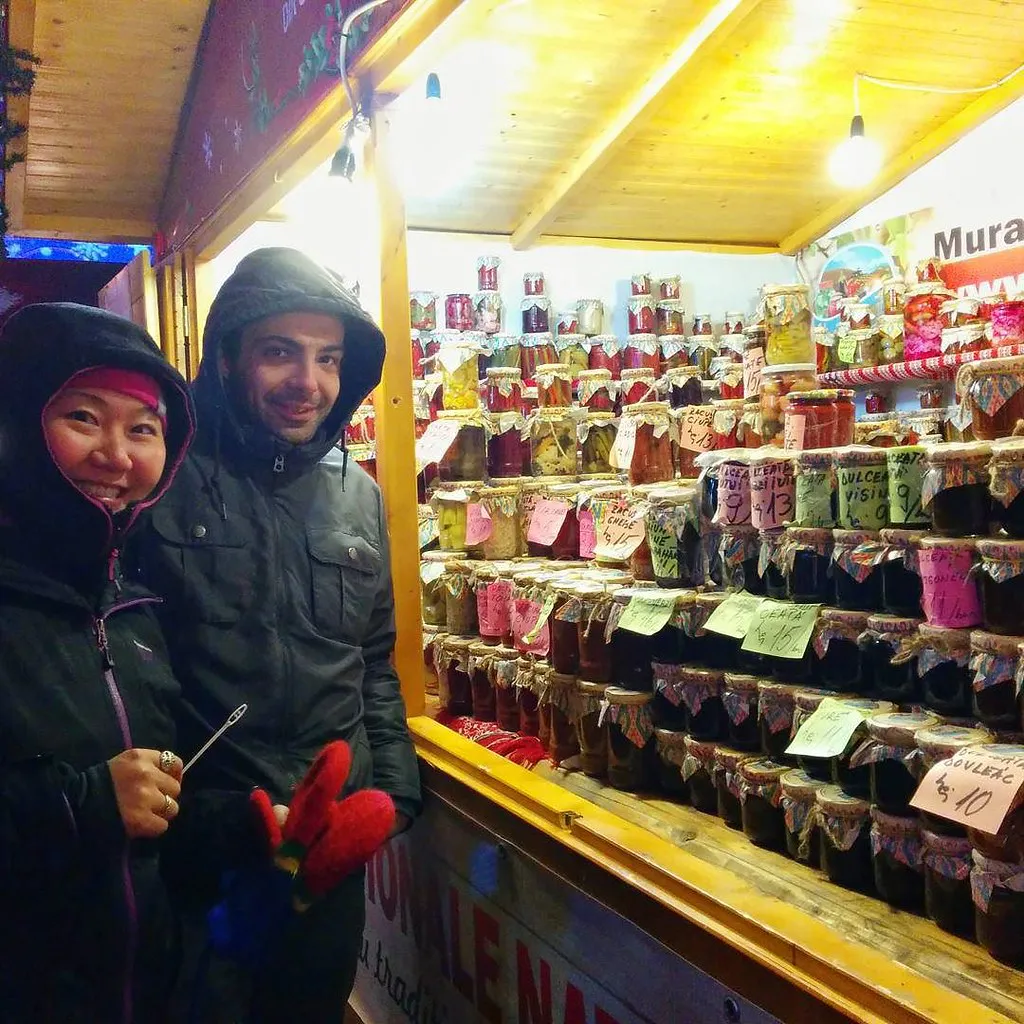
Look for hand-painted ceramic ornaments and locally distilled palincă (a fruit brandy) from artisan producers in Sibiu county — these are genuinely regional products, not mass-market imports. A meal of ciorbă (sour soup) and a main dish at a restaurant on Piața Huet costs €6–€10 per person. Sibiu has its own airport with Lufthansa connections from Frankfurt; alternatively, it is 70 minutes by train from Brașov, making the two cities a natural pair for a long weekend. Read the full Sibiu Christmas Market guide for accommodation picks.
Ljubljana, Slovenia: A Compact City That Goes All-In on Advent
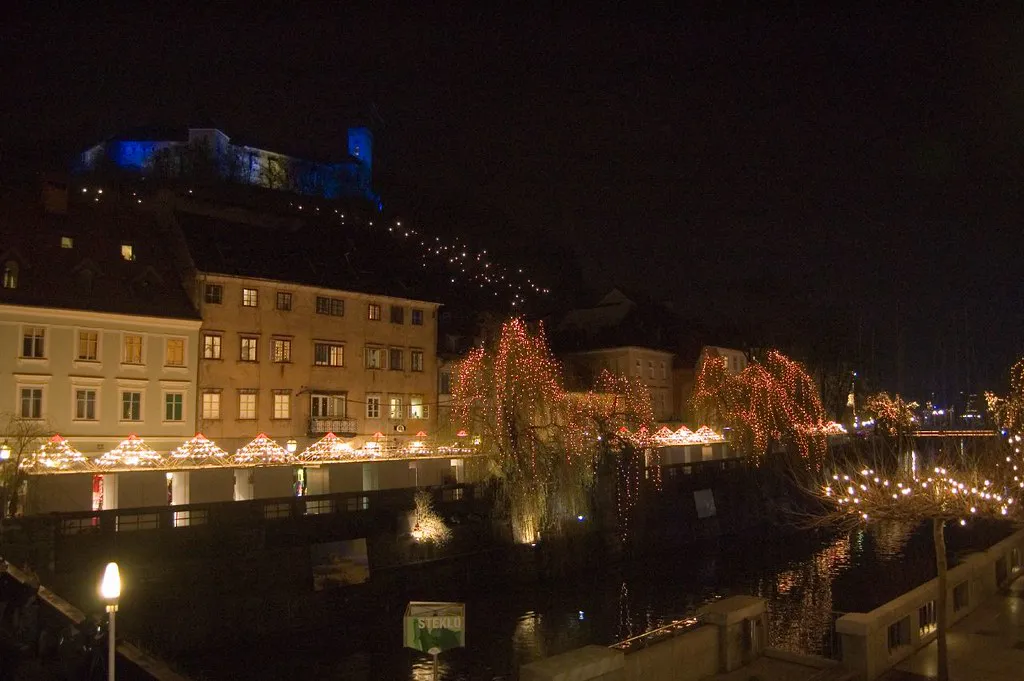
Ljubljana transforms its entire city center into a single extended market during December — the Prešeren Square and Pogačarjev Trg host stalls, while the Ljubljanica River banks are strung with lights from the Triple Bridge to the Cobbler's Bridge. The setup runs from late November to 2 January 2027, making it one of the longer seasons on this list. Entry to all areas is free.
The craft offer leans toward honey products (Slovenia has the highest ratio of beekeepers per capita in Europe), locally made lace from Idrija (a UNESCO-listed craft), and Kranjska klobasa sausages grilled on-site for €4–€6. Warm medica (honeyed brandy) costs €3–€4 per glass. Ljubljana is served by its own airport with connections from London, Amsterdam, and Frankfurt; or a 2.5-hour train from Vienna. Plan accommodation at least six weeks ahead — the city has only ~6,000 hotel beds total. Our Ljubljana Christmas Market guide covers the best spots along the river route.
Zagreb, Croatia: The Multiple Award-Winning Advent City
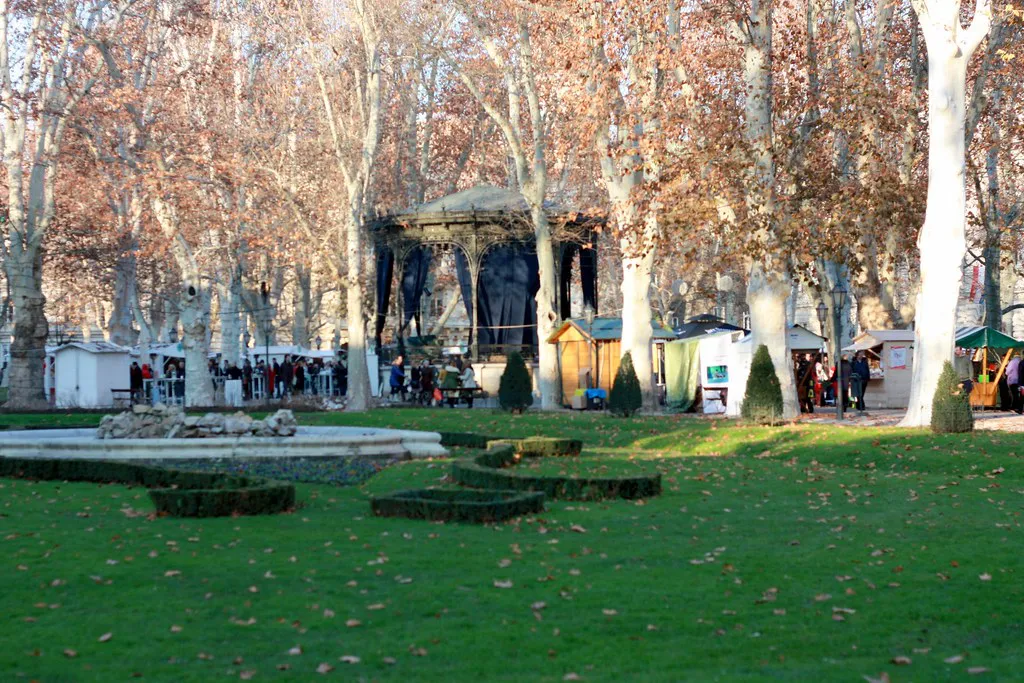
Zagreb's Advent has won the Best Christmas Market in Europe award at the European Best Destinations portal multiple times since 2015, yet it remains far less visited than Vienna or Prague. The market spans Ban Jelačić Square, Zrinjevac Park, and the Strossmayer Promenade — each zone has a distinct character, from traditional craft stalls to an outdoor cinema and ice skating on the Tomislavac rink. The season runs late November to early January 2027.
The unmissable dish is štrukli — a baked or boiled pastry filled with cottage cheese, served for about €4–€6 at stalls near the Cathedral. Mulled wine (kuhano vino) costs €3–€4. Zagreb Airport has budget airline connections from across Western Europe; the city center is 30 minutes by bus from the terminal. A full itinerary by zone is in the Zagreb Christmas Market guide.
Germany's Small-Town Markets: Medieval Settings Without the Megacity Crowds
Germany's secondary cities preserve Advent traditions far more authentically than the famous megacity markets. Quedlinburg, Würzburg, and Trier each operate markets inside UNESCO World Heritage settings — a rare claim even within Germany. Wiesbaden adds a spa-town elegance that the industrial Rhine cities cannot match.
Trier, Germany: Festive Traditions in Germany's Oldest City
Trier is Germany's oldest city, founded by the Romans in 16 BC, and its Christmas market benefits from that extraordinary backdrop. The Porta Nigra — a second-century Roman gate — frames the northern entrance to the market square, creating a setting no purpose-built Christmas destination can replicate. Stalls run from 10:00 to 20:00 Monday through Saturday and 11:00 to 20:00 on Sundays throughout Advent, typically late November to 23 December 2026.
Sample the regional Moselle Vintner's Glühwein for approximately €4–€6 per mug plus a refundable deposit on the ceramic cup. The Moselle Valley's wine tradition is distinct from Rhine-region versions — lighter and less heavily spiced. The Trier Christmas Market guide covers the full market layout. Trains reach Trier from Luxembourg in 50 minutes and from Frankfurt in 1 hour 40 minutes. Brass band performances take place on the historic market balcony on weekend afternoons — confirm the 2026 schedule with Trier Tourismus directly.
Quedlinburg, Germany: A UNESCO Timber-Frame Town
Quedlinburg is an often-overlooked name on the German Christmas market circuit, which is exactly why it belongs on this list. The entire old town is a UNESCO World Heritage Site — over 1,300 half-timbered buildings, more than any other German city — and the Advent market fills the Marktplatz beneath the collegiate church on the castle hill. The market runs from late November to 23 December 2026; check exact opening hours via the Quedlinburg Tourism Office.
Regional foods include Harz cheese (a low-fat soured milk cheese with a strong aroma, sold in small rounds for €4–€8) and Baumkuchen cake baked on a spit. The market is compact enough to walk completely in under an hour, which makes it practical as a day trip from Magdeburg (45 minutes by regional train) or Hanover (1.5 hours). The small scale is a feature, not a bug: stall operators are overwhelmingly local producers. Read the full Quedlinburg Christmas Market guide for logistics and accommodation in the old town.
Würzburg, Germany: Baroque Splendour and Franconian Wine
Würzburg's market spreads across the Marktplatz in front of the Gothic Marienkapelle and, uniquely, inside the courtyard of the UNESCO-listed Residenz palace — one of the finest baroque interiors in Europe and a genuinely spectacular evening setting when lit for Advent. The Residenz market typically runs weekends only during Advent; the main Marktplatz market operates daily from late November to 23 December 2026.
Franconian wine is the drink of choice here: Bocksbeutel-shaped bottles of Silvaner and Müller-Thurgau from the Main Valley are sold directly by local Winzer (wine producers) for €6–€12 per bottle. Bratwurst in a Semmel roll costs €4–€5 from street stalls. Würzburg is on the high-speed rail line between Frankfurt (1 hour) and Munich (2 hours), making it the most accessible pick on this list for a day trip. The Würzburg Christmas Market guide covers both market zones and the Residenz evening hours.
Benelux and UK: Maastricht and Wells
Maastricht and Wells occupy opposite ends of the "secondary market" spectrum: Maastricht is a university city with a sophisticated retail market spread across grand churches; Wells is England's smallest city, running one of the most charming market events in the UK inside its medieval cathedral close.
Maastricht, Netherlands: Christmas Inside a Dominican Church
Maastricht's most distinctive market element is the Selexyz Dominicanen bookshop — a 13th-century Dominican church converted into one of the world's most architecturally celebrated bookshops — which hosts evening readings and events during the Christmas season. The outdoor market on the Vrijthof square and Markt fills the city's two main medieval squares from late November to 23 December 2026, running daily from approximately 11:00 to 20:00.
The regional food specialty is vlaai — a Dutch fruit tart from Limburg province, different from the Flemish versions — sold for €3–€5 per slice. Maastricht is 30 minutes by Intercity train from Aachen, 1.5 hours from Brussels, and about 2.5 hours from Amsterdam, making it the natural Benelux anchor for a multi-city market trip. Hotels on the Vrijthof fill up from early December; book at least eight weeks ahead. See the complete Maastricht Christmas Market guide for the Vrijthof market map and the Dominicanen event schedule.
Wells, UK: England's Most Intimate Christmas Market
Wells in Somerset holds the distinction of being England's smallest city by population, with fewer than 12,000 residents — which makes its Christmas market event feel genuinely local rather than tourist-facing. The market is held in the Cathedral Green and the historic Bishop's Palace moat grounds, typically over one or two weekends in late November or early December 2026 (confirm exact 2026 dates with Wells Cathedral directly, as the event dates shift annually).
Expect local Somerset producers selling cider brandy, artisan cheeses from the surrounding Mendip Hills, and hand-crafted goods from regional makers. The Cathedral itself is free to enter during market weekends, and the candlelit Evensong services running concurrently are one of the most atmospheric experiences on this entire list. Wells is accessible by First Bus from Bath (45 minutes) or Bristol (1 hour); there is no train station. Allow a full afternoon — the combination of market, Cathedral interior, and Bishop's Palace moat walk takes about three hours at a relaxed pace. Full visitor logistics are in the Wells Christmas Market guide.
2026 Opening Dates and Schedules
Most secondary Christmas markets open in the last week of November 2026 and run through 23 or 24 December. Eastern European and Balkan markets often extend to early January. The dates below are recurring windows — confirm with each official tourism board before booking, as exact dates shift by a day or two each year.
- Brașov Piața Sfatului: approximately late November to 23 December 2026
- Sibiu Piața Mare: approximately late November to 23 December 2026, ice rink to early January
- Ljubljana city-wide Advent: approximately late November 2026 to 2 January 2027
- Zagreb Advent: approximately late November 2026 to early January 2027
- Trier Weihnachtsmarkt: approximately November 21 – December 23, 2026 (Mon–Sat 10:00–20:00, Sun 11:00–20:00)
- Quedlinburg Marktplatz: approximately late November to 23 December 2026
- Würzburg Marktplatz (daily) + Residenz courtyard (weekends): approximately late November to 23 December 2026
- Maastricht Vrijthof and Markt: approximately late November to 23 December 2026 (daily 11:00–20:00)
- Wells Cathedral Green: typically one to two weekends in late November or early December 2026 — confirm with Wells Cathedral
The Romania-Balkans markets (Brașov, Sibiu, Ljubljana, Zagreb) offer the best value outside peak weekend dates of December 12–14 and December 19–21. Visiting on a Monday or Tuesday in early December gives the full experience without the weekend crowds that have grown significantly in recent years.
Traditional Foods: What to Eat at Each Market
Food is the defining element that separates secondary markets from the generic tourist experience. Larger markets in capital cities increasingly stock the same global street food. The nine markets above still run on genuine local traditions, which means what you eat in Sibiu is genuinely different from what you find in Würzburg or Wells.
Glühwein and its regional equivalents — vin fiert in Romania, kuhano vino in Croatia, medica in Slovenia — cost €2–€5 across Eastern European markets and €4–€8 in Germany and the Netherlands. German pretzels at street stalls range from €2–€4. Regional variations to seek: kürtőskalács chimney cake in Brașov (€2–€3), palincă fruit brandy in Sibiu, Idrija lace goods in Ljubljana, štrukli pastries in Zagreb, Moselle Glühwein in Trier, Harz cheese in Quedlinburg, Franconian Silvaner wine in Würzburg, Limburg vlaai tarts in Maastricht, and Somerset cider brandy in Wells.
Budget €15–€25 per person for food and drink at a half-day visit across all nine destinations. Romanian and Balkan markets sit at the lower end of that range; German and Dutch markets sit at the upper end.
Logistics: Road vs. Rail for Secondary Markets
Choosing between a rental car and the rail network depends on your regional focus. For the Romania-Balkans circuit, trains link Brașov and Sibiu in 70 minutes and Zagreb and Ljubljana in 2.5 hours — rail is efficient and avoids mountain driving in winter conditions. For Germany, Trier, Quedlinburg, and Würzburg all have direct rail connections from Frankfurt; none require a car.
Rental cars offer superior flexibility for visiting multiple small towns in one day. However, medieval centers often ban non-resident cars or charge high parking fees — use park-and-ride lots on the outskirts and walk in, typically five to ten minutes. Winter driving in Romania or Slovenia requires experience with snow and ice; verify that your rental includes winter tires before leaving the lot.
For a balanced itinerary, use trains for long-haul legs between countries and rent locally for day trips within a single region. Booking rail tickets at least 60 days in advance can save 30–50% on standard fares. A one-week circuit covering Germany and Benelux by train costs approximately €150–€250 in rail passes; adding Romania or the Balkans by budget airline and local trains adds €100–€200 in transport costs depending on origin.
Frequently Asked Questions
Are Christmas markets in smaller towns cheaper than in big cities?
Yes, smaller markets generally offer lower prices for food and handmade crafts. You can expect to save about 15-20% on items like mulled wine and local snacks compared to major hubs like Paris or Munich.
What is the best way to travel between small European Christmas markets?
Regional trains are usually the most efficient and scenic way to travel. For clusters of small villages in areas like Alsace, a rental car provides the most flexibility for a custom itinerary.
Do I need to carry cash for small-town Christmas markets?
While card payments are becoming more common, many small stalls still prefer cash for low-value purchases. We recommend carrying €20-€30 in small coins and bills for snacks and mug deposits.
Visiting Europe for more than one festival? See our complete guide to festivals and events in Europe.
Secondary Christmas markets offer the experience that the megacity events increasingly cannot: stalls run by the people who made the goods, food that is actually regional, and a town that treats December as a community celebration rather than a logistics exercise. Brașov, Sibiu, Ljubljana, and Zagreb give you medieval squares and prices that make the trip genuinely affordable; Trier, Quedlinburg, and Würzburg deliver UNESCO-grade settings without Cologne-level crowds; Maastricht and Wells add Benelux sophistication and English charm to the circuit.
Book accommodation at least six to eight weeks ahead — boutique hotels in Quedlinburg, Wells, and Sibiu have very limited capacity. Keep an eye on official tourism boards for the final 2026 opening dates. For more seasonal travel inspiration, browse our latest updates on the Festivian blog. Safe travels and enjoy the magic of Europe's secondary Christmas markets.
Explore More Christmas Market Guides
Keep planning with our other in-depth festival guides across Europe.
- Brasov Christmas Market 2026/2027
- Bremen Christmas Market
- Dortmund Christmas Market Guide
- Ljubljana Christmas Market 2026
- Maastricht Christmas Market Guide 2026-2027
- Munster Christmas Market Guide
- Quedlinburg Christmas Market
- Sibiu Christmas Market 2026
- Tivoli Copenhagen Christmas Market
- Trier Christmas Market Travel Guide
- 6 Essential Things to Know about Wells Christmas Markets
- Wiesbaden Christmas Market Guide
- 7 Best Things to Do at the Wurzburg Christmas Market
- Zagreb Christmas Market
Free guide: Europe's Festival Calendar
A month-by-month map of Europe's unmissable festivals — with the best dates to visit each and a local tip you won't find in the guidebooks.
You might also like


Continue reading
More guides you'll find useful


