
Semana Santa In Malaga Travel Guide
Malaga's Semana Santa runs Palm Sunday to Easter: 4,200kg tronos, the Spanish Legion landing at Muelle Uno, Antonio Banderas' march, and free street viewing spots.
On this page
Semana Santa In Malaga
Experiencing semana santa in malaga is a sensory journey unlike any other in Spain. The city transforms into a stage for massive religious floats and centuries-old traditions. You will see thousands of locals participating in these historic and emotional parades.
See also: Semana Santa in Malaga Dates.
Planning your visit requires understanding the complex schedule of the brotherhoods. Learning how to watch Semana Santa processions properly will help you avoid the biggest crowds. This guide covers everything from the best viewing spots to the most famous parades.
Free guide: Europe's Festival Calendar
A month-by-month map of Europe's unmissable festivals — with the best dates to visit each and a local tip you won't find in the guidebooks.
What Is Semana Santa in Malaga?
Semana Santa, or Holy Week, runs from Palm Sunday to Easter Sunday. Every day except Holy Saturday features long processions organised by local religious brotherhoods called Cofradías. Each brotherhood prepares year-round for this single week, and joining one requires signing up in advance and making financial contributions. The result of that devotion fills the streets with one of the most visually stunning festivals in all of Europe.
Unlike Seville, where elegance and silence define the mood, Malaga is famous for sheer scale and emotional intensity. The tronos here are among the heaviest in Spain, and the military presence on Maundy Thursday gives the city a raw, patriotic charge. Comparing this to a Semana Santa in Seville guide shows just how distinct each city's character is. Both are worth attending, but Malaga rewards visitors with a heavier grandeur.
The week builds in intensity from the more cheerful Palm Sunday to the solemn silence of Good Friday. Easter Sunday closes the week on a joyful note, with white and green gowns replacing the dark purple and black of earlier days. Non-religious visitors are just as moved as devout Catholics — the spectacle operates on a purely human level.
Daily Processions: What Happens Each Day
Palm Sunday opens Holy Week with the most cheerful parade of all. Children carry large palm leaves, and the brotherhood of Lágrimas y Favores departs from the Church of San Juan at 15:20. Actor Antonio Banderas, a Malaga native, participates in this procession every year and draws an extra crowd. Arrive early on this day to claim your spot before the city fills up.
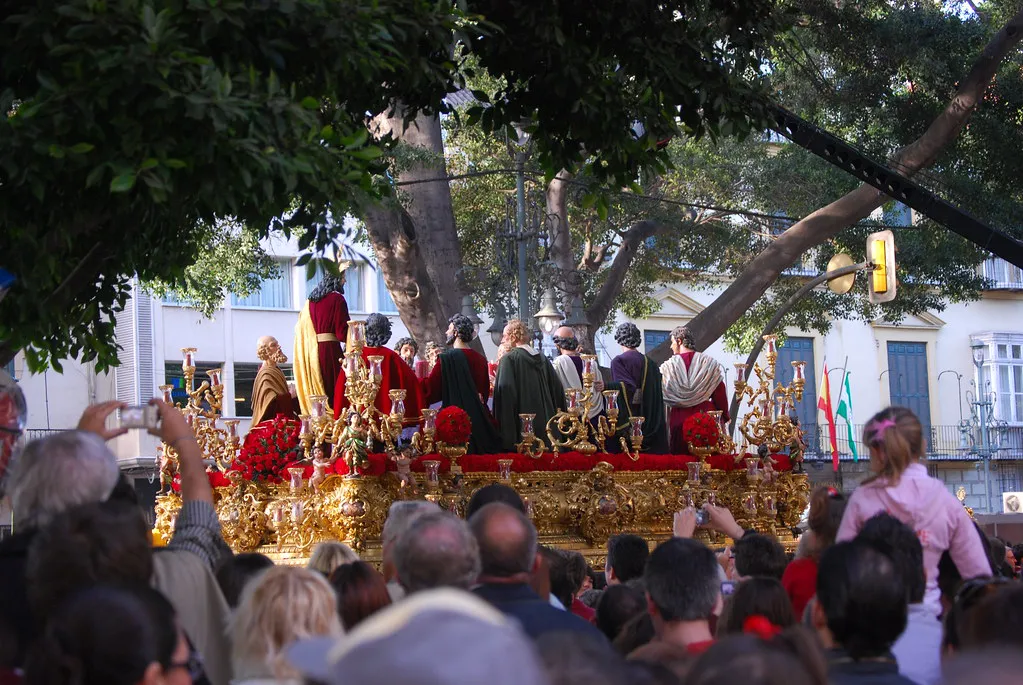
Holy Monday features El Cautivo, arguably the most emotionally charged procession of the entire week. It departs from the Barrio de la Trinidad at 17:30, passes the official tribune around 20:30, and does not return to its home church until approximately 02:15 the following morning. Gypsies follow behind singing, giving the Monday parade a raw, flamenco-inflected energy unlike any other day.
Holy Tuesday brings the Virgen de las Penas throne, whose cloaks are crafted entirely from fresh flowers made by Malaga's city gardeners. The carriers raise and lower the float in time with the music — a hypnotic motion worth watching up close. Also notable on Tuesday are the Rocío procession from La Victoria at 15:00 and the Nueva Esperanza from Nueva Málaga at 15:45.
Holy Wednesday is famous for a tradition that dates to the 18th century: the release of a prisoner. After a group of inmates once attempted to escape during a cancelled procession — and then voluntarily returned to their cells — King Charles III instituted the custom of pardoning one prisoner annually. To this day, a pardoned prisoner of good conduct walks with the Christ figure on Holy Wednesday. The Fusionadas procession departs from San Juan at 17:30, followed by the Paloma at 18:15 and El Rico at 18:40 from Santiago.
Maundy Thursday is the week's most popular morning, when the Spanish Legion arrives by boat at Muelle Uno (Malaga Port) between 10:30 and 11:00. Hundreds of people gather to watch the Legionnaires march to the Cristo de Mena while singing their anthem "Novio de la Muerte." Arrive at least one hour early. Evening highlights include Viñeros at 18:00, Vera+Cruz at 18:15, and the popular Esperanza at 20:00 from El Perchel.
Good Friday is the most solemn day, with the Dolores de San Juan procession departing at 17:00 and the Sepulcro leaving the Cathedral at 19:00. The final procession, Servitas, begins at 22:00 from San Felipe Neri and ends as the city lights dim around the passing throne. Easter Sunday concludes Holy Week joyfully with El Resucitado departing from San Julián at 10:00, the gowns now white and green.
Strategic Spots for Watching the Processions
The Alameda Principal is one of the best spots to see the tronos in full. This wide avenue lets you appreciate the true size of the floats and is where many official seating areas are set up for ticket holders. The large trees provide some shade during the warmer afternoon processions in early spring.
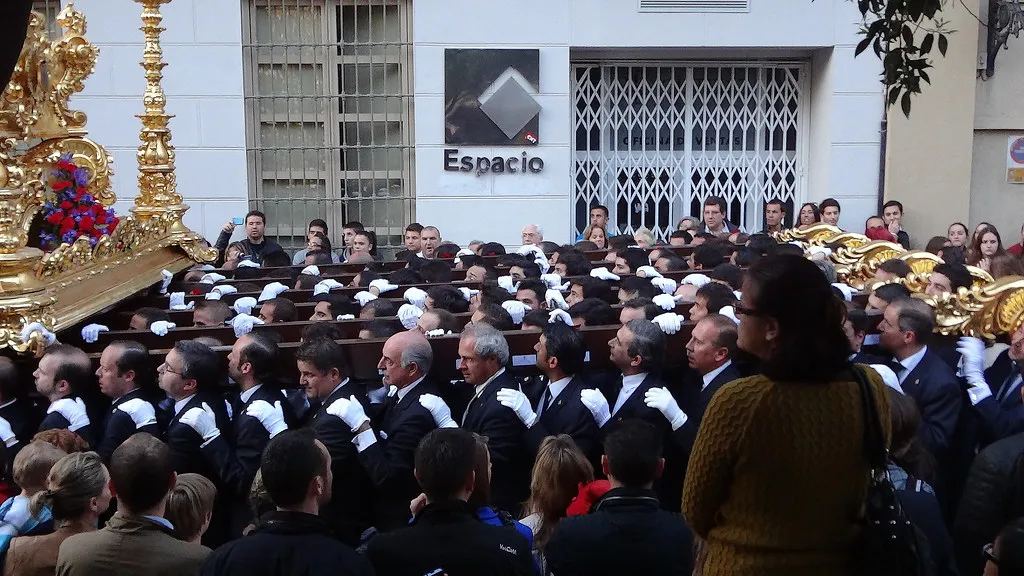
Calle Larios is the most famous street in Malaga and the heart of every route. Every brotherhood must pass through this elegant pedestrian street during their march. The atmosphere here is electric, but it is also the most crowded stretch in town. If you want a spot here, arrive several hours in advance and hold your ground.
The Tribuna Pobre is a set of steps at the beginning of Calle Carreteria, reserved by tradition for locals who cannot afford a seat. The energy here is very high as the carriers push through the final stretch. It offers a more authentic and less formal experience than the official tribunes. The Plaza Constitución nearby is home to la Tribuna de los Ricos — box seats that can cost up to 600 EUR, with applications made months in advance to the Agrupación de Cofradías.
Important Facts You Should Know Before You Go
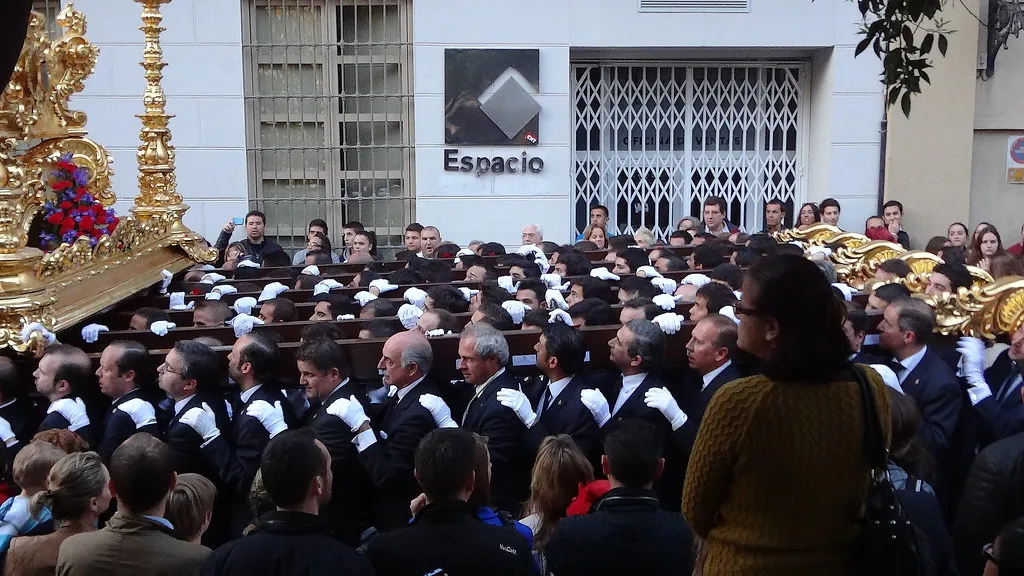
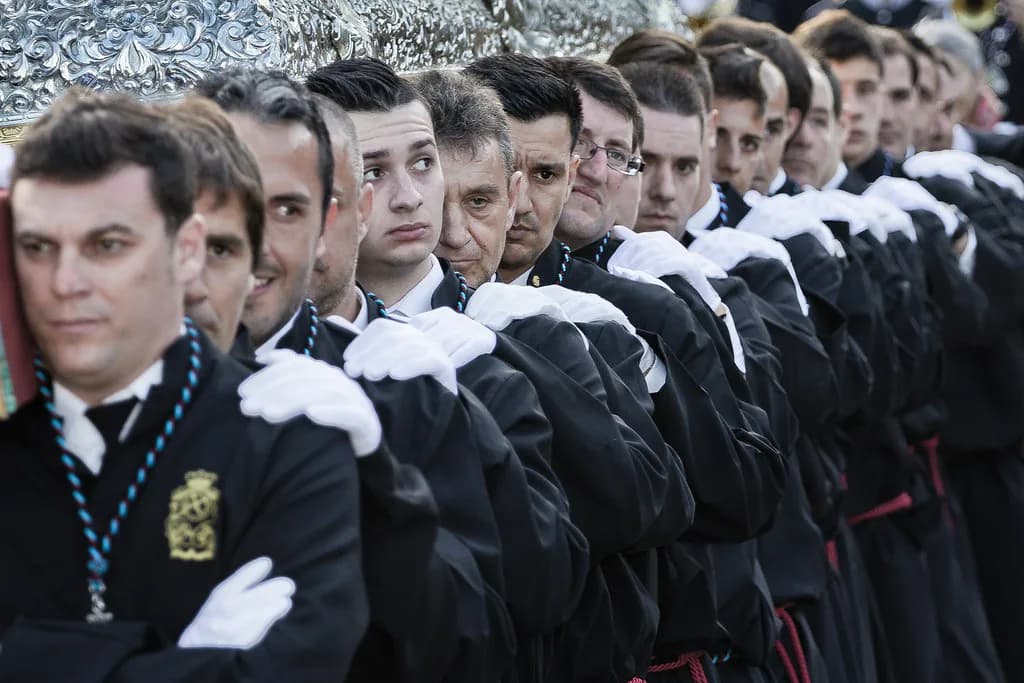
The tronos in Malaga are significantly larger than those found in any other Spanish city. These structures weigh between 3,200 kg and 4,200 kg and are carried on the shoulders of costaleros for approximately 6,360 meters — a journey that can take around 8 hours. Some thrones require more than 250 men; the Cristo de Mena uses 260, while the Virgen María Santísima de la Paloma needs 280. The physical feat is a point of immense local pride.
The ornate veils of the Virgin statues are another highlight of the local artistry. These veils can measure between 8 and 9 meters long and are hand-embroidered with gold and silver thread over many years of work. Seeing the fabric flow as the throne moves is a highlight for many spectators. Each brotherhood has its own colors, symbols, and marching music — known as La Marcha — composed specifically to keep the bearers' pace steady.
A practical safety note no one mentions enough: the large processional candles drip wax onto the street as the nazarenos walk. By evening, key stretches of pavement become genuinely slippery. Wear shoes with good grip, especially on the stone-paved historic streets, and watch your step after dark. Thursday and Friday are public holidays, so they draw the biggest crowds and the streets fill fastest.
Food and Drink During Holy Week
Semana Santa comes with its own seasonal food calendar, and several treats appear only during this week. Torrijas are the best-known: thick slices of bread soaked in milk or wine, fried, and glazed with honey. They appear in almost every bakery and tapas bar from Palm Sunday onward and are a must-try for visitors of any age.
Pestiños are another Andalusian Holy Week staple. Made from flour, aniseed, wine, and olive oil, the dough is deep-fried and glazed with honey or sugar. They taste like a Spanish churro's quieter, spiced cousin and pair well with a café con leche. Buñuelos — irregularly shaped, hole-free doughnuts coated with a sweet topping — are also common at street stalls.
For the adventurous, look out for Monas de Pascua, the traditional Easter cake. Picture a large ring doughnut topped with boiled eggs (or nowadays a chocolate egg), traditionally given by godparents to their godchildren. La Taberna Cofrade Las Merchanas, a tapas bar with Semana Santa-themed decor, is a local classic worth visiting for atmosphere as much as the food. Most restaurants and bars stay open all week, though smaller shops may close on Thursday and Friday — stock up on essentials early.
Navigating Malaga During Holy Week
The historic centre becomes largely inaccessible by car from the afternoon onward on every day of Semana Santa. Public buses reroute around the procession corridors, and the metro is the most reliable way to reach the centre from outlying neighborhoods or from the airport. Plan to arrive at your chosen viewing spot at least one hour before the parade, and expect the journey to take longer than usual.
You can find detailed daily schedules and route maps for every brotherhood at the official Agrupación de Cofradías website and the Diario Sur itineraries page. Official apps are updated in real time to show the exact location of each float. Check these resources frequently — weather delays or large crowds can push start times back by 30 minutes or more.
Wear your most comfortable walking shoes, and as noted above, make sure they have good grip for wax-covered cobblestones at night. Booking accommodation within walking distance of the historic centre is strongly recommended. The best hotels fill up months in advance, so reserve early and confirm your dinner reservations at the same time. For broader inspiration on Easter and Holy Week celebrations in Europe, Malaga consistently ranks among the most unmissable events on the continent.
Family and Budget Tips
Watching the processions from the public streets is entirely free. If you prefer a guaranteed seat, individual chairs are resold online from around 70 EUR each; box seats at the Tribuna Central in Plaza Constitución can reach 600 EUR for the best spots. Families often find the best balance by positioning near the beginning of the route, where crowds thin slightly and children can see the floats at close range.
Morning visits to the brotherhood houses — the Casa Hermandad — allow children to see the tronos up close before the evening marches. The atmosphere is calm, and the detailing on the floats becomes visible at arm's length. Many churches also offer free entry to see the statues dressed in floral displays. It is one of the most low-key ways to enjoy the art without the late-night hours.
Local tapas bars in the side streets away from Calle Larios offer better value than the main tourist drag. Bring water, especially for afternoon processions in warm spring weather. The energy of the week is manageable with children as long as you plan for early exits on the bigger nights — Holy Monday and Maundy Thursday run very late.
Frequently Asked Questions
What is the best time to see the processions?
Late evening and night offer the most atmospheric views as candles illuminate the tronos. However, afternoon starts are better for families wanting to avoid late hours. You can also see similar traditions during Easter Sunday at the Vatican for a different religious perspective.
Are shops and restaurants open during Semana Santa?
Most restaurants and bars remain open and are very busy throughout the week. However, many smaller shops and supermarkets may close on Maundy Thursday and Good Friday. It is wise to stock up on essentials early in the week to avoid any inconvenience.
Is Malaga very busy during Holy Week?
Yes, the city experiences its highest tourism levels of the year during this time. Expect very large crowds in the historic center and significant delays on public transport. Booking everything in advance is essential to ensure a smooth and enjoyable trip to the city.
Visiting during semana santa in malaga is an experience that stays with you forever. The combination of art, faith, and community creates a truly unique cultural tapestry. You will leave with a deeper understanding of Spanish traditions and local pride.
Remember to plan your route carefully and stay patient with the large crowds. The beauty of the tronos and the music make every moment of waiting worthwhile. For more travel inspiration and tips, visit the Festivian blog today.
Free guide: Europe's Festival Calendar
A month-by-month map of Europe's unmissable festivals — with the best dates to visit each and a local tip you won't find in the guidebooks.
You might also like


Continue reading
More guides you'll find useful


