10 Essential Tips for Semana Santa in Seville Tickets and Tours
Master Semana Santa in Seville with our guide to tickets, balcony tours, and procession schedules. Includes local tips on brotherhoods, music, and booking.
On this page
10 Essential Tips for Semana Santa in Seville Tickets and Tours
Holy Week in Seville is one of the most emotionally powerful public events in Europe, combining centuries-old religious traditions with a city-wide atmosphere unlike anything else on the continent. Planning well requires understanding the complex logistics of processions, the best viewing spots, and the limited availability of premium seats. Securing your place around the right Semana Santa in Seville dates is the essential first step. This guide gives you everything you need to book tours, find the best spots, and navigate the historic streets during this peak season.
Free guide: Europe's Festival Calendar
A month-by-month map of Europe's unmissable festivals — with the best dates to visit each and a local tip you won't find in the guidebooks.
What Exactly is Semana Santa in Seville?
Semana Santa is a week-long celebration running from Palm Sunday to Easter Sunday, with roots stretching back to the 16th century. The centrepiece of every day is the procession, where local brotherhoods carry ornate floats — called pasos — through the winding streets of the old city. These floats depict scenes from the Passion of Christ and are attended by thousands of penitents in robes and pointed hoods. The event was declared a Festival of International Tourist Interest by the Spanish government, recognising its cultural weight beyond the purely religious.
Brotherhoods, known as cofradías, spend the entire year preparing for their specific procession. Each group follows a strict route from their home church to Seville Cathedral and back again. The atmosphere shifts from quiet reverence in the morning to intense devotion as night falls. Witnessing these processions gives visitors a rare look into the heart of Andalusian identity, one that residents have maintained for generations. Whether is Semana Santa in Seville worth it depends on your appetite for immersive cultural experiences, but for most visitors the answer is a firm yes.
The sensory experience is unlike any parade or festival you have attended before. The scent of orange blossoms mixes with burning incense and melting candle wax. Rhythmic drums and the high, piercing sound of cornets carry for blocks before the float arrives. Local families claim the same street corners for generations to watch their specific brotherhood pass, and understanding this deep social connection is what separates a visitor from a true witness of the event.
How to Secure Balcony Tickets and Private Access
Watching from the street is completely free, but many visitors prefer the elevation and comfort of a private balcony. Balcony spots for private viewing run at around 149 Euros per person for a balcony-only arrangement, rising to 356 Euros or more per person for packages that include transport, overnight accommodation, and catering. The best-located balconies sit along the Carrera Oficial — the mandatory route that every procession must follow through the city centre. Providers like Balcones-Semana-Santa-Sevilla.com and Toma & Coe offer curated experiences with local hosts who explain the brotherhoods as they pass below.
What a balcony gives you that the street cannot is a bird's-eye view of the pasos and the extraordinary logistics involved in moving them through narrow lanes packed with onlookers. You can step away for a break without losing your place, eat tapas and drink wine while you wait, and hear a saetero perform directly from the balcony if you are lucky. The trade-off is significant cost and a reduction in the full-immersion feeling that comes from standing metres away from the costaleros as they manoeuvre the float around a corner. Both experiences are valid; the balcony suits families, older travellers, or anyone who finds crowds physically exhausting.
Book balcony spots as early as possible — ideally four to six months before Holy Week. The most prestigious locations facing the Cathedral or on Calle Sierpes sell out first and rarely appear through last-minute booking channels. If you miss the main providers, search on local Facebook groups where Sevillano families sometimes sell inherited seats. Always confirm the exact street address and verify which brotherhood's salida (departure) and entrada (return) your balcony overlooks before paying.
The Salida and Entrada: Moments That Every Visitor Misses
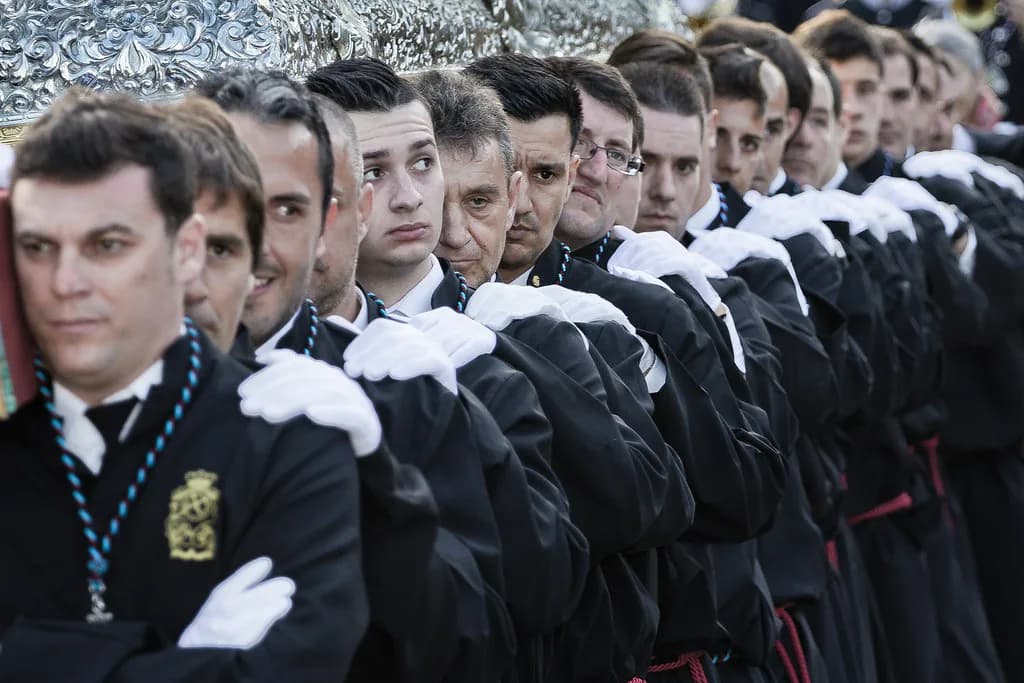
Most visitors position themselves somewhere along the middle of a procession route and watch the float pass by. What they miss are the two most intense moments of the night: the salida, when the paso exits the church door, and the entrada, when it returns in the early hours of the morning. Both require the costaleros to navigate an impossibly tight doorway with a float that weighs over 2,000 kg, guided by nothing but the rhythmic tapping of the capataz's stick against the wood. The crowd at a salida is expectant and electric; the crowd at an entrada is exhausted and silent, and the combination of that silence with the sound of a saeta at 02:00 am is the experience that Sevillanos describe when they say you have to feel it to understand it.
If your balcony overlooks a church entrance rather than a mid-route stretch, you have the rarer and more dramatic vantage point. The Brotherhood of Cristo de Burgos, for instance, exits through a doorway so narrow that the float must be tilted on its side to pass. Locals who have watched the same salida every year still stop talking when the moment comes. To find the salida times and church addresses for each brotherhood, consult the official schedule on SevillaSemana Santa.es and plan your evening around one or two of these moments rather than chasing the floats across the city all night.
Top Guided Tours: From Classic Andalucía to Al-Ándalus
Specialist cultural tours offer a deeper layer of context that is difficult to assemble from reading alone. The Al-Ándalus tour with historian Jason Webster explores the Muslim heritage that shaped Seville's architecture and civic identity, giving visitors a counter-narrative to the dominant Catholic themes visible in every procession. This kind of specialist framing is what separates a surface-level experience from one that stays with you. Early registration through Toma & Coe is essential, as these small-group tours fill months in advance.
Food-focused visitors will find the HIXperiencia culinaria with chef Mark Hix a more fitting choice. It focuses on high-end Andalusian gastronomy rather than religious history and is deliberately timed away from the most congested procession hours. For a broader sweep of the region, the Tour Clásico por Andalucía in the Hospes edition connects Seville to Granada and Córdoba and works well for first-timers who want the full southern Spain context alongside Holy Week. The Tour del Triángulo del Jerez is a full-day wine excursion into Jerez de la Frontera for sherry enthusiasts who want a different rhythm from the city crowds. History buffs interested in Seville's multicultural past will appreciate the Tour del Patrimonio Judío Sefardí, which focuses on the city's Sephardic Jewish heritage and provides a perspective that most generic city tours skip entirely.
All of these tours require booking several months ahead of Easter. Spaces are typically capped at ten to fifteen participants, which means they sell out far faster than the event itself becomes widely known. Check tour availability alongside your hotel booking — treat them as the same logistical priority.
Understanding the Daily Procession Schedules
Processions can last between 10 to 12 hours from the moment a brotherhood leaves its home church. Palm Sunday runs the longest and draws the largest crowds of the week. The Madrugá — which begins on Maundy Thursday night and continues into Good Friday morning — is the emotional peak of the entire week, when the most celebrated brotherhoods take the streets after midnight. Many processions do not return to their home parish until 01:30 am or 03:00 am, so plan accordingly if you want to witness the entrada.
Tracking these movements in real time is essential for avoiding dead ends and positioning yourself at the best vantage points. The El Llamador app is the tool locals use to follow the exact location of every float. You can also find official route maps and live updates throughout the week on the SevillaSemana Santa.es website. These digital tools allow you to plan your meals and rest breaks around the busiest moments rather than arriving somewhere only to find the procession has already passed.
Each day has a distinct character. Early afternoon processions are family-friendly and move through wider, more open streets. Late-night events carry a sombre, almost silent intensity that is entirely different from the daytime atmosphere. Rain can cause sudden cancellations — brotherhoods will not allow the pasos to get wet because the statues and their canopies are irreplaceable works of art. Check the weather daily and follow local news for any last-minute schedule changes, which can ripple across the whole week's programme.
Full List of the Ecclesiastical Brotherhoods (Cofradías)
There are over sixty brotherhoods in Seville, each with its own route, visual identity, and musical character. Knowing which ones process on which day helps you prioritise your time. The following list covers the principal cofradías that make their Station of Penitence at the Cathedral, organised by day.
Palm Sunday (Domingo de Ramos): La Borriquita, Jesús Despojado, La Paz, La Cena (The Supper), La Hiniesta, San Roque, La Estrella (The Star), La Amargura (The Bitterness), El Amor (The Love).
Holy Monday (Lunes Santo): El Cautivo, El Rocío, Santa Genoveva, Santa Marta, San Gonzalo, La Veracruz, Las Penas, Las Aguas, El Museo (The Museum).
Holy Tuesday (Martes Santo): El Cerro, Los Javieres, San Esteban, Los Estudiantes, San Benito, La Candelaria, El Dulce Nombre (La Bofetá), Santa Cruz.
Holy Wednesday (Miércoles Santo): Carmen Doloroso, La Sed (The Thirst), San Bernardo, El Buen Fin (The Good End), La Lanzada, El Baratillo, El Cristo de Burgos, Las Siete Palabras (The Seven Words), Los Panaderos (The Bakers).
Maundy Thursday (Jueves Santo): Los Negritos, La Exaltación, Las Cigarreras, Montesión, La Quinta Angustia, El Valle, La Pasión.
La Madrugá (Thursday night into Good Friday morning): El Silencio, El Gran Poder, La Macarena, El Calvario, La Esperanza de Triana, Los Gitanos (The Gypsies). These are the six most celebrated brotherhoods of the entire week. El Silencio, founded in the 14th century, processes in absolute silence — no music, no candles held aloft, only the slow movement of black-robed penitents through the night. La Macarena, with its iconic crowned Virgin, is the most beloved image in Seville; the crowds at her salida from the Basílica de la Macarena regularly draw tens of thousands of people. El Gran Poder, known as the Lord of Seville and founded in 1431, carries a cedar-wood figure of Christ in a purple and gold tunic whose carved expression of suffering has been moving Sevillanos to tears for centuries.
Good Friday (Viernes Santo): La Carretería, La Soledad de San Buenaventura, El Cachorro, La O, San Isidoro, Montserrat, El Santo Entierro (Holy Burial).
Holy Saturday (Sábado Santo): El Sol (The Sun), Los Servitas (The Servites), La Trinidad (The Trinity), El Santo Entierro, La Soledad de San Lorenzo.
Easter Sunday (Domingo de Resurrección): La Resurrección. The only joyful procession of the week, it marks the end of the mourning and the return to ordinary city life.
The Music of Holy Week: Saetas and Brass Bands
The auditory landscape of Holy Week in Seville is defined by the interplay between organised brass bands and the sudden, unaccompanied human voice. Bands of cornet and drum players, known as bandas de cornetas y tambores, walk behind each paso playing specific marches that dictate the slow, swaying pace of the costaleros beneath. The combined effect of shrill trumpets over heavy drumbeats has reduced adults to tears in the middle of crowded streets. When a band stops playing, the silence that follows in a packed alleyway can be more powerful than the music itself.
A saeta is a short, unaccompanied religious song performed from a balcony as the float passes below. The crowd falls completely silent the moment a saetero begins. These performances are often spontaneous — the singer feels moved by the passing image and simply starts — and they represent the emotional peak of expression during the week. Hearing a saeta in a narrow lane at 02:00 am, with a candlelit float stopped below and thousands of people holding their breath, is consistently described by international visitors as the single most unforgettable moment of the entire experience.
Different brotherhoods use different musical styles to reflect their character. Christ brotherhoods typically favour austere chapel music played on oboe, bassoon, and sometimes violins — instruments that produce a softer, more interior sound. Virgin brotherhoods tend towards the full brass band format, with the sweeping marches and dramatic dynamic shifts that fill wide streets most effectively. The interaction between the musicians and the crowd is worth paying attention to — when the band plays loudly and the crowd sings along, you are witnessing a form of communal devotion that has no secular equivalent.
Traditional Costumes: Nazarenos and Mantillas
The most recognisable figure is the Nazareno, who wears a tall conical hood called a capirote, covered by an antifaz — a cloth that covers the face and shows only the eyes. The word capirote comes from Arabic, meaning those who wear a turban, and the design dates to medieval penitential practice. The costume provides anonymity so that the act of penance is between the participant and God rather than a public performance of identity. Many people confuse these hoods with other organisations, but in this context they represent humble religious devotion. Knowing what to wear to Semana Santa in Seville as a spectator is equally important — modest, comfortable clothing in dark colours is the appropriate choice.
Women often wear the traditional mantilla on Maundy Thursday, sometimes extending to Good Friday. This is a black lace veil held up by a high decorative comb and worn with a black dress. It is a symbol of mourning for the death of Christ and is worn with great pride and formality. Spectators are not expected to wear the mantilla, but dressing respectfully is appreciated by local participants who regard the week as a sacred event rather than a tourist attraction.
The colours of the tunic worn by Nazarenos encode meaning. Purple signifies penance, white represents purity, red represents the blood of Christ, and black indicates mourning. Children often participate in processions too, some carrying small candles or distributing cards with images of the brotherhood's patron. This intergenerational participation is how the traditions are passed to the next generation of Sevillanos, and it explains why the event continues to grow in scale rather than diminish over time.
Eating at Easter: Torrijas and Local Delicacies
Seville produces a specific menu of foods that only appears during the Lenten and Easter season, and eating them is as much a part of Holy Week as watching the processions. Torrijas are the most famous item — bread soaked in honey or milk and then fried, similar to French toast but richer. Bakeries across the city compete to produce the best version, and regulars debate the merits of honey versus sugar with the same seriousness that locals elsewhere argue about football. These dense, sweet snacks fuel long nights of standing on cobblestones.
Savory dishes centre on bacalao (salt cod) since many residents abstain from meat during Holy Week. Potaje de vigilia — lenten chickpeas with cod and spinach — is the definitive Easter dish and appears on the menu of almost every traditional bar in the city. Pestiños, honey-glazed pastries flavoured with anise and sesame seeds, round out the seasonal sweet selection and are sold by street vendors near the main procession routes.
Restaurants in the historic centre are extremely busy throughout the week, with waiting times that can reach two hours at peak dinner hour. Eat earlier than usual — before 14:00 for lunch and before 20:00 for dinner — to avoid the worst of the queues. Look for small neighbourhood bars two or three streets back from the main procession routes; they serve the same food with shorter waits and a more local atmosphere. Keep snacks in your bag for the long hours between processions when sitting down for a full meal is impractical.
Practical Advice for Navigating the Crowds
Many streets are closed for hours at a time, and the central area around the Cathedral becomes almost impossible to move through during peak evening processions. Understanding how to watch Semana Santa in Seville strategically means identifying 'escapes' before you need them. Never attempt to cross through a line of Nazarenos — this is considered deeply disrespectful. Wait for a designated crossing point managed by local police, who create short gaps in the procession to let pedestrian traffic through.
The best viewing spots away from the Cathedral include La Alfalfa square, El Baratillo, La Cuesta del Bacalao, El Postiguillo, and the approach to Puente de Triana. These locations have more space and allow you to move more freely while still being directly on the route. Arrive at least forty-five minutes before the float is due to pass, as good positions fill up fast. The El Llamador app will tell you exactly how far away the procession is in real time.
Wear comfortable footwear — you will walk several miles each day on uneven cobblestones. Carry water and a light snack to avoid long queues at bars during peak hours. Public transport is severely restricted in the centre, so plan your route to a viewing position on foot from wherever you are staying. The area around the Cathedral is the most congested zone of the city all week; if you feel overwhelmed, head toward the Guadalquivir riverbank or the larger plazas for breathing room. Keep your phone in a front pocket and be aware of pickpockets, who take advantage of the dense and distracted crowds.
Essential Glossary of Holy Week Terms
Learning the correct terminology lets you follow local conversations and understand the commentary you hear during the week. These are the words you will encounter most often.
- Paso: the massive wooden float carrying religious statues. A masterpiece of Baroque art, often covered in real gold or silver leaf, and weighing over 2,000 kg.
- Costalero: the men who carry the float from inside, hidden beneath a wooden frame. They walk in darkness using only their shoulders and necks, guided by the capataz's tapping stick.
- Capataz: the leader who navigates the float through the streets by calling commands and tapping a rod called the llamador against the wooden frame.
- Carrera Oficial: the mandatory official route running through the city centre past the Cathedral. Ticketed chairs are installed along this stretch for spectators who want a guaranteed seated view.
- Nazareno: a member of a brotherhood who walks in the procession wearing a tunic and capirote.
- Penitente: a penitent who carries a heavy cross and walks barefoot, often without the capirote, as a more visible form of penance.
- Saeta: an unaccompanied religious song performed spontaneously from a balcony as the float passes. The float traditionally stops while the saeta is sung.
- Salida / Entrada: the departure from and return to the home church. These are the two most dramatic moments of any procession.
- La Madrugá: the hours between midnight and dawn on Good Friday, when the six most celebrated brotherhoods process through the city.
- Aguador: the water carrier who moves alongside the procession keeping costaleros and Nazarenos hydrated during the long hours of marching.
Frequently Asked Questions
Should I visit Seville during Holy Week?
Yes, if you enjoy world-class cultural events and don't mind large crowds. It is one of the best festivals in Spain for history and photography. However, if you prefer a quiet city break, the noise and congestion might be challenging for your visit.
Do I need tickets to see the processions?
No, watching from the street is completely free for everyone. You only need tickets if you want a reserved chair in the Carrera Oficial or a private balcony. These premium options provide more comfort but are not required to enjoy the event's atmosphere.
How busy is Seville during Semana Santa?
The city is extremely busy, with hotels often reaching 100% occupancy months in advance. Streets in the historic centre become packed with thousands of people during the peak afternoon and evening hours. Expect slow movement and long waits at popular restaurants and bars throughout the week.
Visiting Seville for more than one festival? See our complete guide to festivals and events in Seville.
Experiencing Semana Santa in Seville is a bucket-list event for travellers seeking authentic Spanish culture at its most intense and unfiltered. By booking your tours and balcony tickets early, learning where the salida moments happen, and using the El Llamador app to track the floats in real time, you can enjoy the festivities without being overwhelmed by the logistics. Respect the local traditions and take the time to learn the names of the brotherhoods that make this event possible. For more travel inspiration and detailed guides, explore the best festivals in Spain and keep Festivian bookmarked for your 2026 planning.
Free guide: Europe's Festival Calendar
A month-by-month map of Europe's unmissable festivals — with the best dates to visit each and a local tip you won't find in the guidebooks.
You might also like

Continue reading
More guides you'll find useful