
Scoppio Del Carro Florence Easter Travel Guide
Florence's Scoppio del Carro on Easter Sunday 2026: a 11.6m cart detonates by 11:30 when the Colombina dove flies from the Duomo altar. Free, but arrive by 09:30.
On this page
Scoppio Del Carro Florence Easter
Easter morning in Florence offers a spectacle unlike any other in the world. This ancient city celebrates with the Scoppio del Carro, a tradition dating back over 350 years. Visitors flock to the historic center to witness a towering wagon explode with vibrant fireworks. It is a moment where religious devotion meets dramatic public celebration.
The centerpiece of the event is a massive wooden cart known as the Brindellone. You will find the atmosphere electric as locals and tourists gather in the Piazza del Duomo. Witnessing this ritual is essential for anyone exploring Easter in Italy traditions and where to go during the spring. The event symbolizes hope and a good harvest for the coming year.
Free guide: Europe's Festival Calendar
A month-by-month map of Europe's unmissable festivals — with the best dates to visit each and a local tip you won't find in the guidebooks.
A Long-Established Easter Tradition
This tradition traces its roots back to the First Crusade in the eleventh century. A young Florentine nobleman named Pazzino de' Pazzi scaled the walls of Jerusalem during the crusade of 1099 and raised the Christian banner. As a reward for his bravery, he received three flints chipped from the Church of the Holy Sepulchre. He carried them back to Florence, where they were used to light a holy fire on Easter morning, symbolising the resurrection of Christ.
Over the following centuries, the ritual evolved from a simple fire distribution into a full civic procession. By the late fifteenth century, the cart began to carry explosive powder; by the early sixteenth century, the mechanical dove figure was introduced to ignite it. The reliquary holding Pazzino's three original flints is still preserved at the Church of Santi Apostoli, a small Romanesque church just a short walk from the Ponte Vecchio. Visiting it before Easter Sunday gives the entire spectacle a much deeper resonance.
Today the ceremony still bears a strong resemblance to the way it has been celebrated for centuries. A priest strikes the flints together, lights coals in a container placed on the cart, and a solemn procession carries the holy fire to the Archbishop at the Duomo. This continuity between an eleventh-century act of courage and a modern pyrotechnic show is what makes the Easter and holy week celebrations in Europe calendar so compelling.
A Flair for the Dramatic
The procession itself is half the spectacle. Starting around 10:00, a chest of coals symbolising the holy fire is ignited by a priest and placed on the elaborately decorated antique cart. A pair of white oxen adorned with garlands of flowers then pull the cart through the narrow streets of Florence to the Piazza del Duomo. The oxen are flanked by drummers, flag throwers, clergy, and city representatives dressed in full medieval costume.
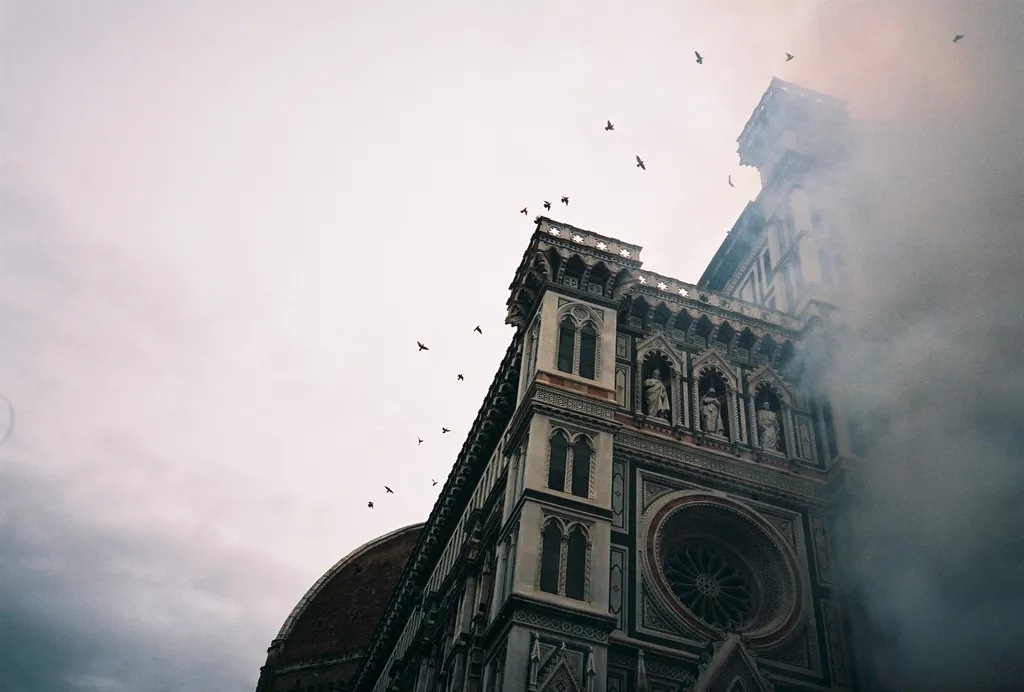
At around 11:00, when the Gloria is sung inside the cathedral during Easter Mass, the Archbishop uses the holy fire to light the Colombina — a dove-shaped rocket mounted on a wire that runs from the high altar to the cart outside. The dove shoots along the wire, strikes the cart, and detonates a spectacular cascade of fireworks. The crowd erupts the moment the first charge ignites. On the 2026 date of Easter Sunday, the square is expected to hold tens of thousands of people.
If the Colombina completes the full round trip — out to the cart and back to the altar — Florentines regard it as a good omen for the city's harvest and fortune. Failure to return is considered an ill sign, which is why technicians prepare the mechanism with meticulous care. The combination of religious gravity, medieval pageantry, and raw explosive power gives the Scoppio del Carro its unique character among European Easter traditions.
A Wagon Load of Fireworks
The cart, known as the Brindellone, is a massive wooden structure built in the eighteenth century. It stands 11.60 metres high and has an almost square base with sides measuring 3.40 by 2.80 metres. The structure is loaded with hundreds of firecrackers, whistling rockets, and coloured smoke canisters before the ceremony. Skilled pyrotechnicians spend days preparing and rigging the fireworks to ensure a reliable and safe performance.
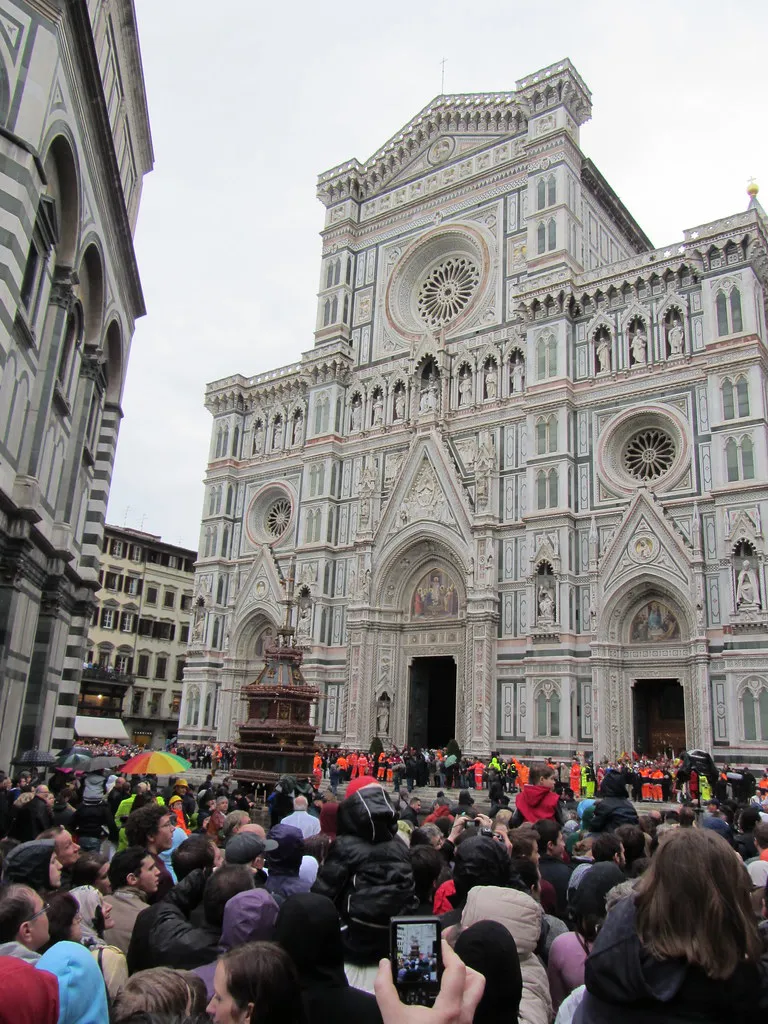
The display lasts roughly twenty minutes once the Colombina strikes the fuse. The noise is genuinely deafening at close range — a sustained barrage of bangs, hisses, and whistles that echoes off the stone facades of the surrounding buildings. Coloured smoke fills the square as successive stages of the charge ignite. The Brindellone is carefully inspected and restored each year to maintain its historic structural integrity.
The Explosion of the Cart and the Flight of the Colombina
The Colombina is the mechanical heart of the ceremony. The dove-shaped rocket sits on a wire that runs from the high altar of Santa Maria del Fiore all the way through the cathedral's main doors and out to the cart in the square. When the Archbishop lights the rocket, it accelerates along the wire and collides with the cart's fuse mechanism. The whole sequence takes only seconds from ignition to first explosion.
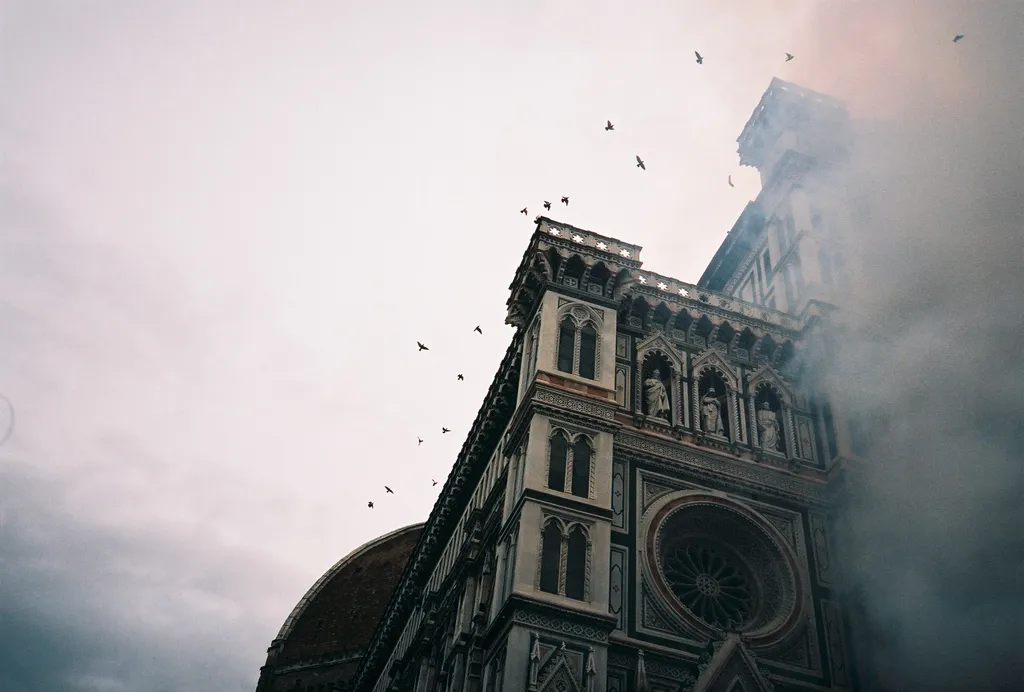
Watching the cart from the square, you see the dove emerge from the cathedral doors before the bang. It is the brief moment of anticipation — the crowd holding its breath — that makes the spectacle so memorable. The return flight of the dove back toward the altar is harder to see from outside but is the key indicator for the traditional good-omen reading. Details of the ceremony are documented by the Opera del Duomo itself on the official Scoppio del Carro coverage.
Must-See Scoppio Attractions
The heart of the celebration beats within the Piazza del Duomo and Piazza San Giovanni. Santa Maria del Fiore, better known as the Duomo, is where the Easter Mass takes place and where the Archbishop lights the Colombina from the high altar. The Baptistery of San Giovanni stands directly opposite and is a key stop in the morning procession — its famous bronze doors by Ghiberti make it worth a close look even outside the ceremony. These two buildings form the physical stage for the entire event.
Crowds begin filling the square hours before the explosion. Positioning yourself near the cathedral steps gives the best sightline to see the dove emerge from the doors. The narrow streets radiating from the piazza host smaller groups of drummers and flag throwers earlier in the morning, so wandering these alleys before 09:30 lets you see the parade without the densest crush. The Church of Santi Apostoli, about ten minutes on foot toward the Arno, is worth a quiet visit to see where Pazzino's three flints are still kept.
Museums, Art, and Culture in Scoppio
The Museo dell'Opera del Duomo is the best place to deepen your understanding of the ceremony's history. It houses the original statues from the cathedral exterior, detailed models of the square across different centuries, and artefacts connected to the building of the Duomo itself. The museum sits directly behind the cathedral and makes a logical stop before or after the explosion.
The Bargello National Museum, a short walk southeast, holds masterpieces by Donatello and Michelangelo. Its courtyard and stone halls capture the same medieval civic energy that the Scoppio del Carro parade channels. Exploring these galleries deepens your understanding of why the Florentines have always staged their public life with such theatrical ambition. Major attractions like the Uffizi are also open on Easter Sunday but require advance tickets and tend to be busy — book before you travel.
Parks, Gardens, and Outdoor Spots in Scoppio
After the morning fireworks, many visitors head to the Boboli Gardens for a peaceful afternoon. These expansive gardens offer manicured lawns and hidden grottos ideal for a spring stroll. You can view the city skyline and the Duomo from the upper terraces. Spring temperatures in Florence average around 17–20°C in April, making an outdoor afternoon genuinely comfortable.
Piazzale Michelangelo provides the most famous panoramic view of the entire city. The walk up the hill is steep but rewarding, and from the terrace you may still see faint smoke drifting over the red-tiled rooftops after the morning spectacle. The hills around Fiesole are another option for anyone wanting to escape the city after the crowds — a short bus ride brings you to walking trails and Etruscan ruins with views across the valley.
Family-Friendly and Budget-Friendly Options in Scoppio
Watching the procession and the explosion is entirely free for all visitors. The parade of white oxen decorated with flowers, accompanied by drummers and soldiers in full medieval regalia, genuinely delights children. Standing along the route of the procession — which runs through the historic centre before reaching the Piazza del Duomo — lets families see the costumes and animals at close range without being inside the densest crowd at the piazza itself.
For a budget-friendly lunch, a traditional schiacciata sandwich from a local bakery costs a fraction of anything in a tourist-facing restaurant around the square. Street vendors sell seasonal treats like chocolate eggs and Colomba Easter cake. Be aware that the event is very loud at close range, with the fireworks reaching a sustained volume that can distress small children. If your children are sensitive to noise, watching from a side street one block away still gives a clear view of the smoke and light without the full percussion.
How to Plan a Smooth Scoppio Attractions Day
The best viewing spots in the square are typically claimed well before 08:00. Wear comfortable shoes — you will be standing on cobblestones for two to three hours. Security checkpoints operate at entrances to the piazza and can slow down entry significantly, so travel light with minimal bags. Leave large backpacks and luggage at your accommodation.
Public transport in the city centre is often diverted during the morning parade. Walking is the most reliable way to reach the Piazza del Duomo from most central accommodation. On Easter Sunday 2026, the explosion is scheduled for approximately 11:00 to 11:30, so plan to be in position by 09:30 at the latest. Book a late lunch reservation for 13:30 or 14:00 — restaurants fill up immediately after the event ends and walk-ins are nearly impossible without a booking.
What to Do in Florence During Easter
Beyond the explosion, Florence offers strong seasonal programming across the holiday weekend. Easter is a particularly good time to visit the city's major churches — Santa Croce, San Miniato al Monte, and Orsanmichele all hold services with music that is worth attending even without a specific faith connection. The city's Easter markets sell locally made ceramics and seasonal foods throughout Holy Week.
Easter Monday, known as Pasquetta, is traditionally spent outdoors. Many Florentines head to the countryside around Chianti or the Mugello valley for a picnic. If you stay in the city, you will find fewer crowds at museums compared to Sunday. The Uffizi Gallery and the Accademia both open on Pasquetta but advance tickets remain necessary. Shops and smaller businesses often close, so stock up on food and supplies before Monday morning.
Spring is also peak truffle-hunting season in Tuscany. Organised half-day excursions from Florence into the hills near Fiesole or San Miniato offer a genuinely memorable contrast to the urban intensity of Easter Sunday. These trips typically cost around €60–90 per person and include a meal featuring the day's finds. It is the kind of activity that rounds out a four-day Easter break without overlapping with what any other European city offers.
Where to Stay for Easter in Florence
Accommodation within walking distance of the Piazza del Duomo fills months in advance for Easter weekend. The historic centre — the neighbourhoods of Santa Croce, Oltrarno, and San Giovanni — puts you inside the action and eliminates transport concerns on a day when buses and trams are rerouted. Budget options in these areas are limited in April; expect to pay a significant premium over a standard spring weekend.
The hills above the city, particularly around Fiesole, offer luxury villas with private gardens and panoramic views of the valley. These properties provide a quiet retreat from the intensity of the city centre and work well for families or groups travelling together. In-town palazzos and boutique hotels often include concierge services that can help with difficult restaurant bookings and reserved viewing arrangements. Plan to book your 2026 Easter stay at least six months in advance for any central option.
Frequently Asked Questions
What time does the Scoppio del Carro start?
The event typically begins around 10:00 AM when the cart arrives at the Piazza del Duomo. The actual explosion occurs at 11:00 AM during the Easter Mass. Arrive by 8:00 AM to secure a viewing spot. Learn more about how to watch processions for similar holiday logistics.
Is the Scoppio del Carro free to attend?
Yes, the outdoor ceremony and the parade are completely free for the public to watch. You do not need a ticket to stand in the square. However, space is limited and crowds are very dense. Early arrival is the only way to ensure a good view.
What happens if the mechanical dove fails to return?
Tradition states that if the Colombina fails to return to the altar, it is a bad omen. Historically, this was believed to signal a poor harvest or bad luck for the city. Modern technicians work very hard to ensure the mechanical flight is successful every year.
Can I enter the Duomo during the ceremony?
The Duomo is open for Easter Mass, but seating is extremely limited and fills up very early. Most people watch the explosion from the square outside rather than from within the cathedral. If you want to attend the Mass, plan to arrive before the doors open.
Is the event suitable for young children?
The event is very loud and crowded, which may be overwhelming for some small children. The fireworks produce a lot of noise and smoke for about twenty minutes. If your children are sensitive to loud sounds, consider watching from a further distance down the street.
Visiting Florence for more than one festival? See our complete guide to festivals and events in Florence.
The Scoppio del Carro is a powerful blend of history and excitement. It provides a unique window into the soul of Florence and its deep-rooted traditions. Planning ahead ensures you can enjoy the spectacle without unnecessary stress or confusion. The memory of the exploding cart will likely be the highlight of your Italian spring journey.
Whether you are there for the religious significance or the dramatic fireworks, the event never fails to impress. Take the time to explore the surrounding museums and the Church of Santi Apostoli to round out your understanding of the holiday. Florence in 2026 promises to be a vibrant destination for any traveler seeking authentic culture. Enjoy the magic of the Colombina and the thunderous roar of the Brindellone.
Free guide: Europe's Festival Calendar
A month-by-month map of Europe's unmissable festivals — with the best dates to visit each and a local tip you won't find in the guidebooks.
You might also like


Continue reading
More guides you'll find useful


