
How To Get To Semana Santa In Malaga Travel Guide
Reach Malaga's Semana Santa 2026 (Mar 29-Apr 5): airport-to-center in 15 min, free El Penitente GPS app, and where to watch all 45 brotherhoods.
On this page
How To Get To Semana Santa In Malaga
Malaga transforms into a vibrant hub of tradition and deep emotion during the annual Holy Week celebrations. Understanding the logistics of arrival helps you navigate the crowded streets and find the best viewing spots easily. Many travelers consider this coastal city the sunniest destination in Europe for a spring getaway. Planning ahead ensures you experience the most moving religious events without the stress of last-minute changes.
Part of our Best Festivals in Spain and Cultural Insights series.
Most visitors arrive via the Malaga-Costa del Sol Airport, which offers excellent connections to major European cities. You should consider booking your flights months in advance to secure reasonable prices during this peak season. Public transport from the airport to the city center is efficient and takes roughly fifteen minutes by train. Checking the semana santa in malaga dates helps you align your flight with the most important processions.
The city becomes a stage for massive wooden floats, known as tronos, carried by hundreds of devoted locals. Navigating the historic center requires patience as many streets close to vehicles to accommodate the marching brotherhoods. This guide provides the essential details needed to master the local transport and find the perfect viewing perch. Prepare for a week of sensory overload featuring incense, haunting music, and stunning religious art.
Free guide: Europe's Festival Calendar
A month-by-month map of Europe's unmissable festivals — with the best dates to visit each and a local tip you won't find in the guidebooks.
Getting to Malaga for Holy Week
The primary gateway for international visitors is the Malaga-Costa del Sol Airport, located just eight kilometers from the center. Trains run frequently from the airport terminal directly to the Alameda Principal station in the heart of the city. This central station puts you within walking distance of the main procession route and the historic Cathedral. Taxis are also available, though traffic diversions during the festival can make rail travel a much faster option.
If you are traveling from other Spanish cities, the Maria Zambrano station serves high-speed AVE trains from Madrid and Barcelona. Walking from the train station to the city center takes about twenty minutes through the modern shopping districts. The city is highly walkable, though the dense crowds can slow your pace significantly during peak evenings. Identify the main landmarks like Calle Larios to orient yourself during the chaotic but beautiful evening parades.
Holy Week in Malaga 2026 runs from Sunday, March 29 (Palm Sunday) to Sunday, April 5 (Easter Sunday). Book accommodation as early as possible — hotels and apartments fill months in advance and prices spike sharply. If you plan to watch multiple days of processions, arriving by Friday, March 27 gives you time to get oriented before Palm Sunday crowds hit.
Best Spots to Watch the Processions
The Official Route covers the Alameda Principal, Calle Larios, and the Plaza de la Constitución. Grandstand seats along this stretch require advance booking and a fee, but they guarantee an unobstructed front-row view of every float that passes. Free standing space lines both sides of this route, though popular sections fill two hours or more before the first float arrives.
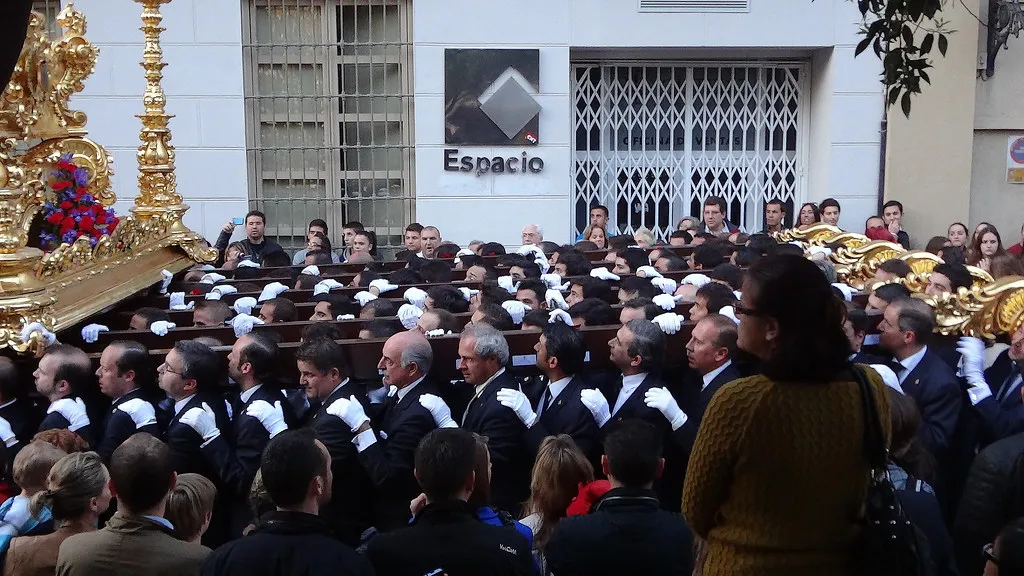
La Tribuna de los Pobres, at the end of Carretería street, is a free-access set of stairs where floats are traditionally swayed sideways by hand — a raw and physical display that packed grandstands rarely offer. The Cathedral surroundings at Plaza del Obispo are worth positioning yourself at least once: watching a five-ton trono maneuver through the narrow doorway against the floodlit Cathedral facade is genuinely breathtaking.
For a completely different perspective, seek out the departure point of a procession at its Brotherhood House. These neighborhood send-offs draw local crowds and TV crews, and you can often stand within metres of the float before it joins the main route. Returning bearers at dawn, exhausted after hours of carrying, is another sight that no grandstand ticket provides. Wandering outside the official route into the side streets of Barrio de la Trinidad or El Perchel reveals smaller, intensely devout neighbourhood processions that feel far more intimate than the central spectacle.
Processions You Cannot Miss in 2026
Malaga has 45 brotherhoods, each running its own procession, so you need to prioritise. Palm Sunday opens with La Pollinica, the most joyful event of the week, celebrating Christ's entry into Jerusalem. The atmosphere is light and the colours are vivid — the best day for photography and a gentle introduction for first-timers. The afternoon also brings Lágrimas y Favores, departing from the Church of San Juan at 15:20.
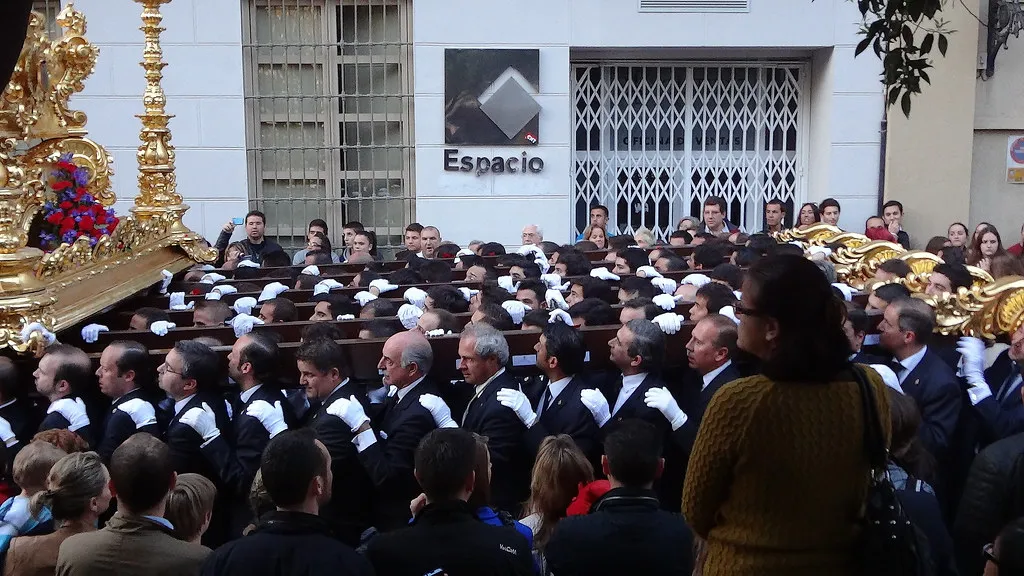
Holy Monday belongs to El Cautivo, departing from Barrio de la Trinidad at 17:30 and passing the official tribune around 20:30. This is the most attended procession in the city; locals refer to El Cautivo as the "Lord of Malaga." The white-robed figure appears to walk as the float shifts slightly with each step of the hundreds of bearers beneath it. The procession does not return until around 02:15, so pace yourself if you plan to stay until the end.
Maundy Thursday is the emotional peak. At 10:30–11:00, the Spanish Legion arrives at Malaga Port carrying the Cristo de la Buena Muerte while singing "El Novio de la Muerte." Arrive at the port at least one hour early to secure a position — the crowds are enormous and grow quickly once the ship is visible. That evening, Viñeros (18:00) and Vera+Cruz (18:15, from the Church of San Juan) are both worth watching, followed by Esperanza at 20:00 from El Perchel.
Good Friday features the solemn Dolores de San Juan at 17:00, the grand Sepulcro procession at 19:00 from the Cathedral, and Servitas at 22:00 from San Felipe Neri — the streetlights go out as the Virgen de los Dolores passes, creating one of the most striking moments of the entire week. Easter Sunday concludes with El Resucitado at 10:00 from San Julián, a joyful and relatively short procession that brings the week to a hopeful close. Consult the full Itinerary of the Agrupación de Cofradías for every departure time and route.
Useful Tips for Getting Around Malaga
Do not attempt to drive into central Malaga during Holy Week. The Malaga Metro, EMT city buses, and Cercanías commuter trains are the only sensible options. Services run extended hours into the early morning during the festival, but stops and routes change to accommodate road closures — check the official apps or ask your accommodation host before heading out each evening.
Download the free app "El Penitente" before you arrive. It shows the real-time GPS position of each procession's lead cross on a city map, so you can see exactly where every float is at any moment. This is genuinely useful when you are deciding whether to cross a street, whether a procession has started yet, or which route to take back to your accommodation after midnight. None of the major competitor guides highlight this app, but local residents use it constantly during the week.
Wear comfortable, grippy footwear. Cobblestone streets accumulate significant candle wax during processions, and the surface becomes slippery underfoot by the second half of the evening. Dress in layers — temperatures in Malaga reach the low twenties Celsius during March and April afternoons but drop sharply once the sea breeze picks up after dark. If you get trapped by a passing procession, look for designated pedestrian crossings managed by police rather than trying to push through the lines of Nazarenos.
One practical risk to plan for: in a bad weather year, more than half of the scheduled processions can be cancelled. The brotherhoods protect their ornate floats and statues from rain — if rain is forecast during a brotherhood's window, they typically cancel rather than risk damage. Check local forecasts daily using Holy Week Guide 2026 by La Opinión de Málaga, which also publishes real-time cancellation notices throughout the week.
Behind Closed Doors: The Brotherhood Houses
In the weeks before Semana Santa, the Brotherhood Houses are where the real preparation happens. Each house stores the giant floats and holy statues for most of the year behind enormous doors — the doors are large enough because the floats must pass through them carried on shoulders on procession day. If you spot an open side door while walking through the neighbourhoods before Holy Week starts, it is worth looking in.
Visitors are rarely turned away. Brothers often invite curious onlookers inside to see the floats in their final stages of decoration and to explain the significance of the statues. This behind-the-scenes access to gold-leaf woodwork, velvet embroidery, and silverwork — at close range and without crowds — is one of the most underrated experiences of the trip. The Casa Hermandad of El Cautivo in Barrio de la Trinidad is particularly welcoming to visitors.
In the days just before Holy Week, the Traslado (Transfer) takes place: the parish's holy statues are carried in a smaller procession from the church to the Brotherhood House where they are placed atop the floats. These neighbourhood events draw entire parish communities and feel far more intimate than the official Holy Week processions. If you are in Malaga the week before Easter, try to find a local Traslado — the sense of community devotion on display is something most visitors never see.
Family-Friendly and Budget-Friendly Options
Traveling with children during Holy Week requires extra planning to avoid the most congested times. Morning visits to the churches are often free and much less overwhelming for younger travelers. Many brotherhoods distribute small cards or sweets to children during the processions, making the experience more engaging for them. Bring plenty of water and snacks, as local cafes in the center fill up quickly and prices rise near the main route.
Budget-conscious travelers can enjoy the entire festival without spending a single Euro on tickets. While the grandstands require a fee, the majority of the street space is free for anyone to use. Eating at taperias located a few blocks away from the main route saves you significant money compared to the terraces directly on Calle Larios. Look for set menus or menu del dia options during lunch hours for the best value — typical Lenten fare like torrijas (sweet fried bread), buñuelos, and fried fish are sold at most local bars throughout the week. Check out the how to get to semana santa in seville guide for a regional comparison of the two biggest Andalusian Holy Weeks.
A rechargeable transport card gives you the best rates on bus and metro journeys. Walking remains the most cost-effective way to see the city provided you have comfortable shoes. Many free cultural events and concerts take place in the plazas during the mornings of Holy Week. Plan rest stops in the smaller neighbourhood parks to avoid the premium prices of central terraces.
Where to Stay for Semana Santa in Malaga
Choosing the right location is critical. Staying in the Centro Historico puts you in the middle of the action but can be very noisy — some processions do not return until 03:00. Many apartments here offer balconies that provide a private elevated view of the processions passing below, which can be worth the premium if you want to avoid street-level crowds. These premium spots often book out a year in advance. Learn more about accommodation options in our where to stay for semana santa in malaga guide.
The Soho district offers a trendy alternative that is slightly quieter but still very close to the main route. Modern apartments and boutique hotels here cater to travelers looking for style and comfort. Access to the Alameda Principal is easy from Soho, making it a strategic choice for those who want to watch multiple evenings of processions. This area also features some of the best street art and craft breweries in the city for daytime exploring.
For families, the neighbourhood of La Malagueta offers beach access and a more relaxed environment. It is a fifteen-minute walk to the center, allowing you to dip in and out of the festivities. Booking a full apartment ensures you have a kitchen and extra space — vital for managing meal times and resting between the long afternoon and late-night processions. Occupancy during Holy Week is extremely high across all neighbourhoods, so do not leave booking until the last minute.
How Many People Participate in the Malaga Processions?
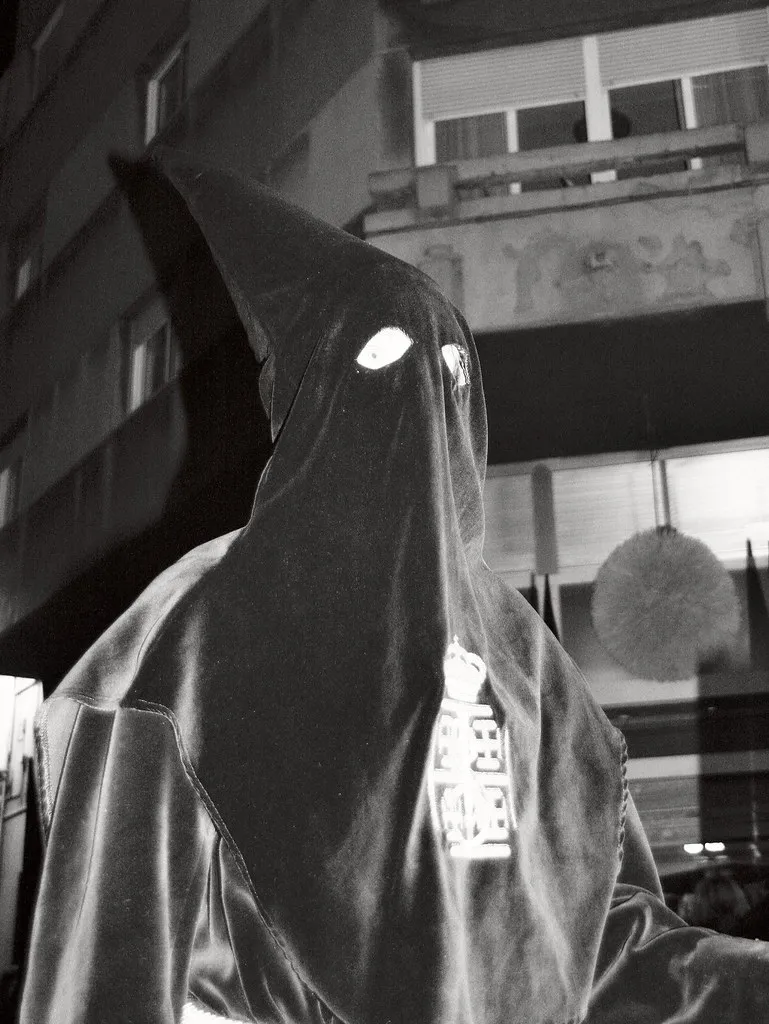
The scale of participation in Malaga is staggering. Malaga has 45 different brotherhoods, each running its own procession during the week. Each brotherhood can have well over 1,000 participants total — hundreds of Nazarenos marching in distinctive pointed hoods, plus three marching bands per procession (one at the front, one between the two floats, and one at the rear).
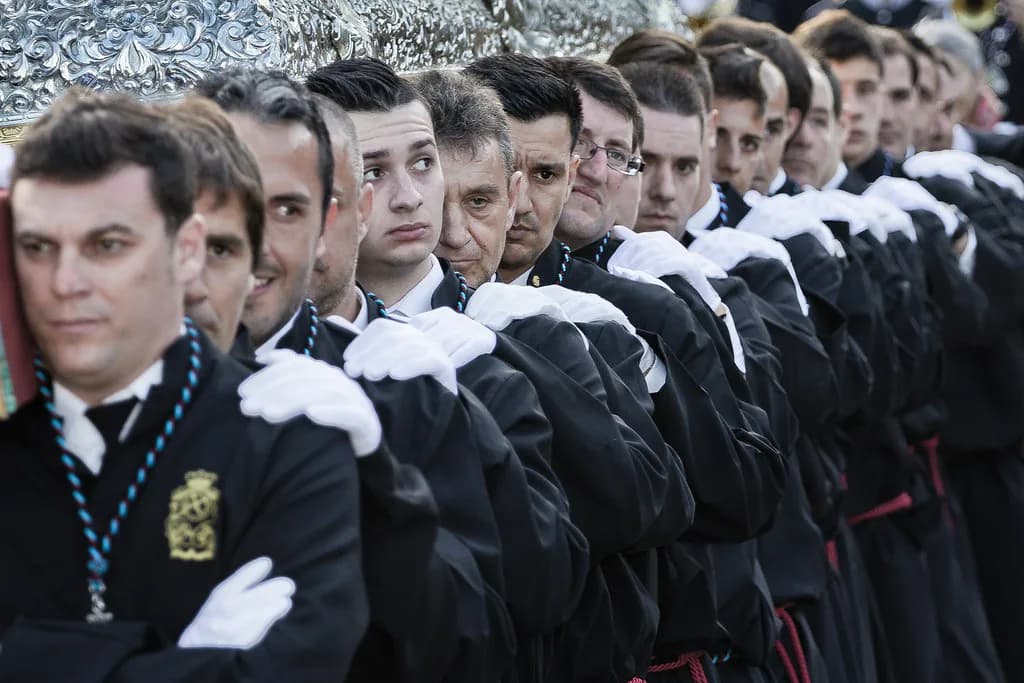
The Hombres de Trono (or Costaleros in other Andalusian cities) are the men and women who carry the floats on their shoulders for the entire length of the procession. Unlike in Seville where bearers carry from inside the float and are hidden from view, in Malaga the bearers work from outside the float on wooden staves and are fully visible to spectators. The largest floats can weigh up to five tons and require several hundred people to carry them. Depending on the distance from the Brotherhood House to the Cathedral and back, these processions can last up to 10 hours.
Spectators number in the hundreds of thousands across the week, filling every available inch of the historic streets. Security and crowd control are managed by local police to ensure the safety of both participants and visitors. The best fiestas in spain page places Malaga's Holy Week among the country's most significant cultural events, and the crowd numbers make that clear. The community spirit is visible as neighbours share food and stories in the side streets while waiting for the next float to arrive.
What Are the Most Impressive Days to See the Processions in Malaga?
Palm Sunday is the most joyful day, featuring many processions with children and palm branches. The atmosphere is light and celebratory as the city kicks off the week of religious observance. It is the best day for photography as the sun is usually bright and the colours are vivid. You will see many families dressed in their finest traditional clothing for the morning masses.
Maundy Thursday and Good Friday represent the emotional peak with the most dramatic events. The Legion's arrival Thursday morning and the solemn Good Friday processions — often held in near silence — are deeply moving for visitors and locals alike. These nights feature the most famous floats and the largest gatherings of penitents in the city center. Expect the streets to remain packed until well past midnight during these two critical days.
Easter Sunday concludes the week with the joyful procession of El Resucitado from San Julián at 10:00. The mood shifts from mourning to celebration, with bright music and a sense of collective relief. It is a shorter day of processions, allowing travelers to enjoy a final festive lunch before departing. This final event provides a hopeful and uplifting close to an intense week of cultural immersion. Full 2026 schedules are published by La Opinion de Malaga and updated throughout the week with any last-minute changes.
Frequently Asked Questions
Where can I watch Semana Santa in Malaga?
The best places to watch are along Calle Larios and the Alameda Principal. These areas form part of the official route where all processions must pass. You can stand for free in many sections or book a seat in the grandstands for a clearer view.
Is Malaga busy during the Holy Week?
Yes, Malaga is extremely busy as hundreds of thousands of visitors flock to the city. Hotels often reach full capacity months in advance. You should expect dense crowds in the historic center and significant delays when moving through the main streets.
Is it free to enter Malaga Cathedral?
While there is normally a fee for tourists, access may be restricted or changed during Holy Week religious services. Many people gather outside to watch processions enter or leave the grounds. Check the official cathedral website for specific holiday opening hours.
What to do in Malaga during Semana Santa?
Beyond watching processions, you can visit brotherhood houses, explore the Picasso Museum, or enjoy traditional Lenten sweets like 'torrijas.' Many people also take time to visit the local beaches for a break from the city crowds.
Mastering how to get to Semana Santa in Malaga allows you to focus on the beauty of the tradition. The combination of religious devotion, artistic excellence, and Mediterranean charm creates a unique travel experience. By planning your transport and accommodation early, you ensure a comfortable stay during this busy period. Malaga truly offers one of the most accessible and impressive Holy Week celebrations in all of Spain.
Remember to stay flexible with your plans as the weather and crowds can change the daily schedule. Use local resources and official guides to keep track of the many different procession routes. Take the time to step away from the main streets and explore the quiet neighbourhood parishes for a different perspective. This balance of grand spectacle and local intimacy is what makes the event so special for every visitor.
Whether you are there for the faith or the culture, the memories of the tronos will stay with you. Prepare for long days and emotional nights in one of Europe's most historic coastal cities. We hope this guide helps you navigate the streets of Malaga with confidence and ease. Enjoy the sights, sounds, and scents of a tradition that has defined this city for centuries.
Free guide: Europe's Festival Calendar
A month-by-month map of Europe's unmissable festivals — with the best dates to visit each and a local tip you won't find in the guidebooks.
You might also like

Continue reading
More guides you'll find useful


