
Bremen Christmas Market: Complete 2026/2027 Guide
Plan your trip to the Bremen Christmas market with 2026/2027 dates, parking tips for BREPARKhaus Mitte, train booking advice, and the best stalls at.
On this page
Bremen Christmas Market: Complete 2026/2027 Guide
Bremen transforms into a glowing winter wonderland every year during the festive season. The historic city center fills with the sweet scents of roasted nuts and warm spices. You can explore two distinct markets that offer very different holiday vibes. This guide helps you navigate the maritime charm and medieval history of Northern Germany.
The city is home to a UNESCO World Heritage site that provides a stunning backdrop for the stalls. Visitors often travel from across Europe to see the famous Town Hall and Roland Statue under twinkling lights. Planning ahead ensures you see the best of what this Hanseatic city offers.
Whether you want traditional crafts or a medieval riverside adventure, Bremen has something for every traveler. The markets are close together, making it easy to cover both in one afternoon. We have put together everything you need to know for a smooth and memorable 2026 or 2027 visit.
Free guide: Europe's Festival Calendar
A month-by-month map of Europe's unmissable festivals — with the best dates to visit each and a local tip you won't find in the guidebooks.
Bremen Christmas Market Dates and 2026/2027 Schedule
The main market on the Marktplatz usually opens on the last Monday of November and runs until December 23rd. Applying that rule, the 2026/2027 edition is expected to open on November 30, 2026 and close on December 23, 2026 (for reference, the 2025/2026 edition opened on November 24, 2025 with the same closing date). Confirm the exact 2026/2027 schedule with the official Bremer-Weihnachtsmarkt.de site closer to the season. Most stalls begin serving guests at 10:00 AM and close around 8:30 PM on weekdays.
Fridays and Saturdays typically offer extended hours, with most stalls open until 9:00 PM. Sunday hours shift slightly later, starting at 11:00 AM to accommodate local traditions. The Schlachte-Zauber market follows a similar seasonal window, opening daily from 11:00 AM throughout the advent period. The Findorff Winter Village is the longest-running market in the city — it opens as early as November 8th and stays open all the way through February.
- Marktplatz Traditional Market Hours
- Mon-Thu: 10:00 AM – 8:30 PM
- Fri-Sat: 10:00 AM – 9:00 PM
- Sunday: 11:00 AM – 8:30 PM
- Location: Market Square (Rathausplatz)
- Schlachte-Zauber Riverside Market Hours
- Daily: Opens at 11:00 AM
- Theme: Medieval maritime / pirate
- Best Time: After 3:00 PM when the lights come on
- Location: Weser Promenade (search: Freibeuterdorf zum Schlachtzaubermarkt)
- Findorff Winter Village
- Opens: November 8th (earliest in the city)
- Closes: February
- Hours: Daily from 5:00 PM
- Vibe: Local, quiet, low crowds
The Historic Market Square (Marktplatz) Experience
The Marktplatz is the heart of the festive celebrations and features over 170 decorated wooden stalls. You will find this area surrounded by the stunning Gothic architecture of the Town Hall, a UNESCO World Heritage site. The market is widely considered one of the most beautiful in Germany precisely because of this backdrop. It is a great place to start your journey through the best small and secondary christmas markets in europe.
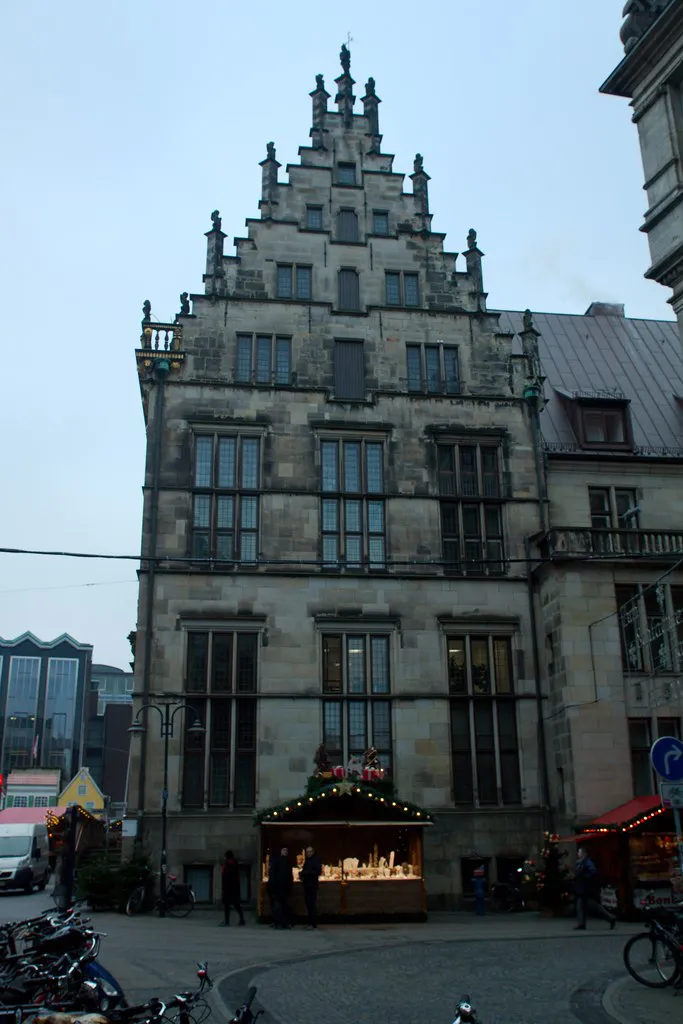
Artisans from across the region come here to sell handmade toys, delicate glass ornaments, and carved wooden figures. You can watch local craftsmen demonstrate their skills while you sip on a warm drink. There is also a carousel at the square — both adults and children can ride it, which makes it popular with families visiting for the day. The large central Christmas tree and the romantic golden lighting set the mood from the moment you arrive.
While you are on the square, take a short detour to see the famous Bremen Town Musicians statue. This bronze sculpture — depicting a donkey, dog, cat, and rooster stacked on top of each other — is one of the most photographed landmarks in the city. Rubbing the front legs of the donkey is said to bring good luck. The Roland Statue, standing guard nearby for centuries, is also worth a pause before you continue exploring.
Schlachte-Zauber: Medieval Magic on the Weser
A short walk through the Böttcherstraße leads you to the Weser River and the Schlachte-Zauber market. When searching on Google Maps, type "Freibeuterdorf zum Schlachtzaubermarkt" — that is the full official name. The setting transforms the promenade into a buccaneer-themed winter village, with ship-shaped buildings, rustic wooden stalls, and performers in historical costume. The blue lights reflecting off the river create a distinctly different atmosphere from the warm gold of the Marktplatz.
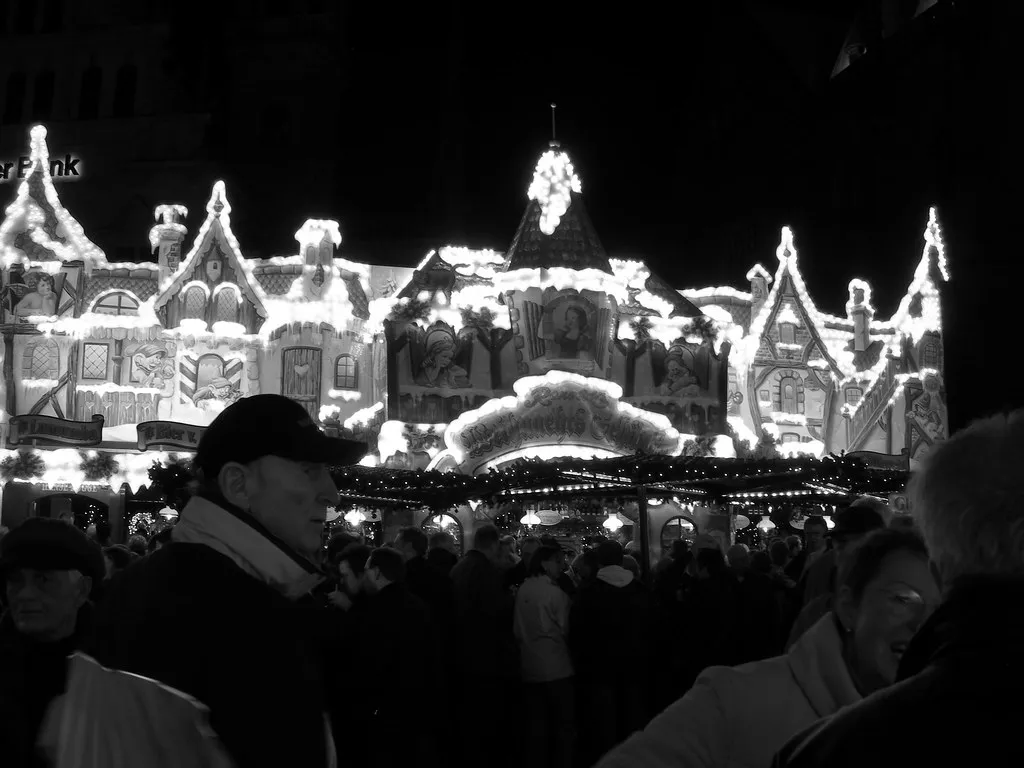
The pirate theme is not random. Back in the 1400s, Bremen was a major trade hub that actually awarded contracts to privateers targeting rival Dutch cities. That maritime history of sanctioned piracy is now celebrated every winter at Schlachte-Zauber, making it one of the most historically grounded themed markets in Germany. You can even find stalls and small vessels docked along the promenade, with some selling goods from on board the boats.
Activities here go well beyond browsing stalls. Adults can try their hand at blacksmithing under instruction, and children can fish for stuffed animals or climb rope ladders. The market also channels the feel of the quedlinburg christmas market with its strong artisan craft focus — leather goods, smithery, and carved woodwork are all common finds. It becomes very lively after 3:00 PM when the sun sets and the torchlight atmosphere kicks in fully.
Traditional Food and Drink at the Bremen Markets
Glühwein (mulled wine) is the undisputed drink of the season and you will find it at nearly every stall. Expect to pay €3.50 to €4.50 per cup at most vendors. When you order, you will pay an additional €3 deposit — called a "Pfand" — for the ceramic mug. You can return the mug to any stall that uses the same design to get your €3 back, or keep it as a souvenir since the mugs change design every year.
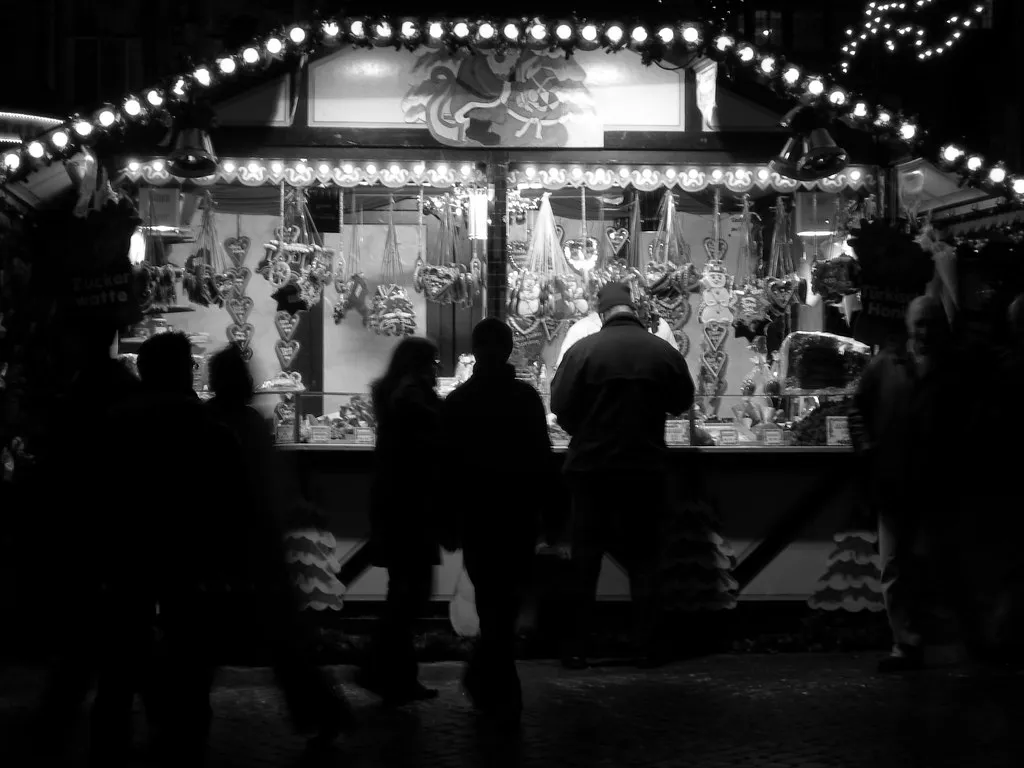
Schmalzkuchen are a must-try: small fried dough balls dusted with powdered sugar, similar to mini donuts. A portion costs around €4 and they are best eaten hot. Bratwurst runs about €3.50 and is available across both the Marktplatz and Schlachte-Zauber. For those who prefer non-alcoholic drinks, hot chocolate, mulled apple juice (Kinderpunsch), and a variety of herbal punches are widely available — particularly at Schlachte-Zauber, which leans into the warming beverages to match its outdoor riverside setting.
The Schnoor Quarter, a five-minute walk from the main square, is worth visiting for a sit-down meal after the markets. Gaststätte Kleiner Olymp on those historic medieval lanes serves traditional Bremen dishes in a 1700s building. Teestübchen im Schnoor is a well-known tea house offering high tea — book a day in advance if you want a table. Both options give you a warm indoor break without walking far from the festival zone.
Local Favorites: Findorff Winter Village and Vegesack
If you want to escape the tourist crowds, head to the Findorff Winter Village near the main station. This neighborhood market opens as early as November 8th and often runs until February — making it the longest-running market in the city. It offers a much more intimate and local feel compared to the large central markets, and daily hours begin at 5:00 PM. The historic Jan Reiner locomotive in the background is a charming detail you won't find anywhere else.
The Vegesacker Winterspaß is another excellent option located further north along the river. You can reach this area easily by taking a short train or tram ride from the city center. It features a charming ice rink and several stalls that focus on regional maritime delicacies. This market is perfect for families who want more space for children to run around.
Exploring these smaller markets gives you a better sense of daily life in Bremen during winter. Prices for food and drinks are often slightly lower in these residential areas than at the main tourist-facing stalls. They are also far less crowded, which allows for better conversations with local vendors. The Ansgari Quarter market in the city center shopping street is another option worth noting — it features a giant glowing fox sculpture as its centerpiece and is easy to fold into a city walk.
Winter Activities: The Schnoor Quarter and City Highlights
The Schnoor Quarter is one of the oldest surviving medieval neighborhoods in Northern Germany and sits just a few minutes from the Marktplatz. Its narrow passageways are lined with half-timbered houses decorated with Christmas lights, creating one of the most photogenic walks in the city. Be aware that the lanes are genuinely narrow — strollers can struggle to fit through some sections. Unique shops and small cafes fill almost every corner.
St. Petri Cathedral (St. Peter's Cathedral) towers above the market square and has been standing for over 1,200 years. A free museum inside the cathedral displays artifacts relating to its history — walk to the far end of the church to find the entrance. It is worth entering for a moment of quiet away from the outdoor crowds. The free museum access makes it an easy addition to your market day.
The Bremer Bonbon Manufaktur candy workshop is another distinctive stop. During the Christmas season, they produce festive-shaped sweets and you can watch the entire candy-making process live. It is especially popular with children and functions as a natural break from the market stalls. Finally, Böttcherstraße — the art nouveau street linking the Marktplatz to the Weser — deserves a slow walk. Plaques on each building explain the history in both German and English, and the Christmas decoration here is particularly elaborate.
Where to Stay: Hotels and Hostels in Bremen
Staying in the Altstadt (old town) puts you within walking distance of the Marktplatz, Schlachte-Zauber, and the Schnoor Quarter. The Radisson Blu Hotel Bremen at Böttcherstraße 2 is the best-known luxury option in this zone, with rates around €175 per night during the Christmas season. A major practical advantage: the hotel has its own underground parking, which removes the stress of finding street or garage parking during peak weeks. Booking well in advance is essential, as central accommodation fills fast from late November onward.
Budget travelers do well by staying near the University or Findorff neighborhood, roughly one kilometer from the center. The Altstadt Hostel Bremen on Am Wall has guest ratings above 8/10 and runs around €30–59 per night. It is walkable to the Marktplatz and close to tram connections for reaching outer markets like Vegesack. The trade-off in distance is modest, but the price difference compared to central hotels can be significant.
Wherever you stay, use the city's tram network to reach the satellite markets. A day ticket for local transport covers all tram and bus lines and usually costs less than €10. The Vegesacker Winterspaß, for instance, is straightforward by train from the main station. Staying slightly outside the center and commuting in by tram is a practical way to keep accommodation costs down without missing any of the markets.
How to Book Train Tickets to Bremen
Bremen is a major rail hub, making it very accessible from other European cities. You can travel from Amsterdam to Bremen in about 4 hours and 15 minutes with one change at Osnabrück. Tickets for this route often start at €28 if you book your journey well in advance. Using the German rail system is efficient and offers a scenic view of the countryside during the winter months.
If you are coming from Hamburg, the regional train takes only about an hour to reach the city. This makes Bremen a perfect day trip for those staying in larger nearby cities. You should check the Bremen.eu site for transport updates and local tram maps. The central station is just a ten-minute walk from the main market square, so no onward connection is needed once you arrive.
Booking your tickets early is the best way to secure the lowest fares for the holiday season. The DB Navigator app lets you track your train in real-time and manage your booking. The city's tram system is also very reliable for reaching outer markets like Vegesack — line 6 runs from the center to the northern districts along the river. A day ticket for local transport is usually the most cost-effective choice if you plan to visit more than two stops.
- Amsterdam to Bremen Train Details
- Duration: 4h 15 minutes
- Change: Osnabrück
- Starting Price: €28 (advance)
- Frequency: Every 2 hours
- Hamburg to Bremen Train Details
- Duration: 55–70 minutes
- Service: Direct (Metronom or ICE)
- Frequency: Every 30 minutes
Parking in Bremen: Rates and Best Locations
Driving into the city center during the Christmas market season requires careful planning. The BREPARKhaus Mitte is the most central garage, but it fills up very quickly — arriving at 11:00 AM on a weekend may still mean parking on the 10th floor. By midday on busy Saturdays the garage is frequently at capacity. If you see it full, do not circle the old town: the electronic parking signs on the main approach roads show real-time availability for all major garages.
The daily rate for central parking is approximately €12, which is reasonable for a city of this size. Park and Ride lots on the outskirts offer free parking combined with a tram ticket into the center, which can save both money and time during peak weekend hours. Look for P+R signage on the main approach roads from the A27 and A1 motorways. Walking an extra ten minutes from a quieter outer garage is almost always faster than sitting in the traffic queue around the Altstadt.
Always allow extra time for traffic congestion on the roads leading into the city center between 2:00 PM and 5:00 PM on Fridays and weekends. This is when the afternoon crowd arrives to catch the evening atmosphere as the lights come on. If you are staying at the Radisson Blu, their own underground parking eliminates this problem entirely. For everyone else, arriving before 11:00 AM gives the best chance of a central space.
Budgeting Tips and Visitor Etiquette
Visiting the markets can be affordable if you plan your spending on food and drinks. A realistic budget for food and a small souvenir is €10 to €20 per person — this covers a Glühwein (€3.50–€4.50), a Bratwurst (€3.50), and a bag of roasted nuts or Schmalzkuchen (€4). Prices are generally consistent across the central stalls at both the Marktplatz and Schlachte-Zauber.
One important detail is the "Pfand" (deposit) system for drink mugs. When you buy a Glühwein, you pay an extra €3 for the ceramic cup. You can return the mug to any stall selling the same drink to reclaim your money, or keep it as a souvenir since each year brings a new design. If you plan to drink more than one Glühwein, returning the cup and swapping it at the next stall is the simplest system.
Carrying cash is still helpful, though more stalls now accept card payments. Small vendors often prefer coins or small notes during the busy evening rush. Plan for the early sunset: the sun sets around 3:00 PM in Northern Germany in winter, and this is exactly when the "magical" atmosphere begins as all the lights come on. Arriving before 11:00 AM gives you a chance to browse the stalls without the evening crowd while you wait for the best lighting.
- Common Food and Drink Costs
- Glühwein: €3.50 – €4.50
- Mug Deposit (Pfand): €3.00
- Bratwurst: €3.50
- Schmalzkuchen: €4.00
- Parking and Transport Costs
- BREPARKhaus Mitte: €12 per day
- P+R Parking: Free (+ tram fare)
- Tram Single Ticket: ~€2.80
- Train from Hamburg: ~€20–25
Frequently Asked Questions
Is Bremen good for Christmas markets?
Bremen is excellent for Christmas markets because it offers two distinct themes within walking distance. You can enjoy the traditional Marktplatz and the medieval Schlachte-Zauber. It is widely considered one of the best festive destinations in Northern Germany for its unique maritime atmosphere.
Where is the Christmas market in Bremen?
The main markets are located in the historic city center at the Marktplatz and along the Weser river promenade. You can find smaller local markets in the Findorff neighborhood and the northern district of Vegesack. All locations are easily accessible by the city's efficient tram network.
What are the 2026/2027 dates for the Bremen Christmas market?
The market typically runs from the last Monday in November until December 23rd. Applying that rule, the 2026/2027 edition is expected to start on November 30, 2026 (the 2025/2026 edition opened on November 24, 2025). You should check official sources like Bremer-Weihnachtsmarkt.de for the exact 2026/2027 schedule closer to the season.
Bremen offers one of the most atmospheric holiday experiences in all of Germany. From the UNESCO-listed architecture to the medieval pirate ships on the river, the variety is impressive. You can easily spend a full weekend exploring the different stalls and local neighborhoods. The combination of history and maritime charm makes it a standout destination.
Remember to plan your parking or train travel early to avoid the peak season stress. Don't forget to try the local Schmalzkuchen and keep a souvenir mug from your favorite stall. Whether you are a first-time visitor or a returning fan, the city never fails to impress. We hope this guide helps you have a magical time in Bremen this winter.
If you have extra time, consider visiting nearby cities like Dortmund to see even more festive displays. Each city in this region has its own unique way of celebrating the season. Safe travels and enjoy the beautiful lights of Northern Germany.
Free guide: Europe's Festival Calendar
A month-by-month map of Europe's unmissable festivals — with the best dates to visit each and a local tip you won't find in the guidebooks.
You might also like

Continue reading
More guides you'll find useful


