Dortmund Christmas Market Guide: 10 Things to Know Before You Go
Plan your visit to the Dortmund Christmas Market with our 2026/2027 guide. Discover the world's largest tree, top food picks, and essential travel tips.
On this page
A Complete Guide to the Dortmund Christmas Market: 10 Essential Tips
The Dortmund Christmas market transforms the city center into a massive festive wonderland every winter. Known locally as the Weihnachtsstadt, this event is famous for its incredible scale and warm atmosphere. Travelers from across the globe visit to see the record-breaking tree and explore hundreds of wooden stalls. It stands out as one of the best secondary Christmas markets in Europe for those seeking tradition and size.
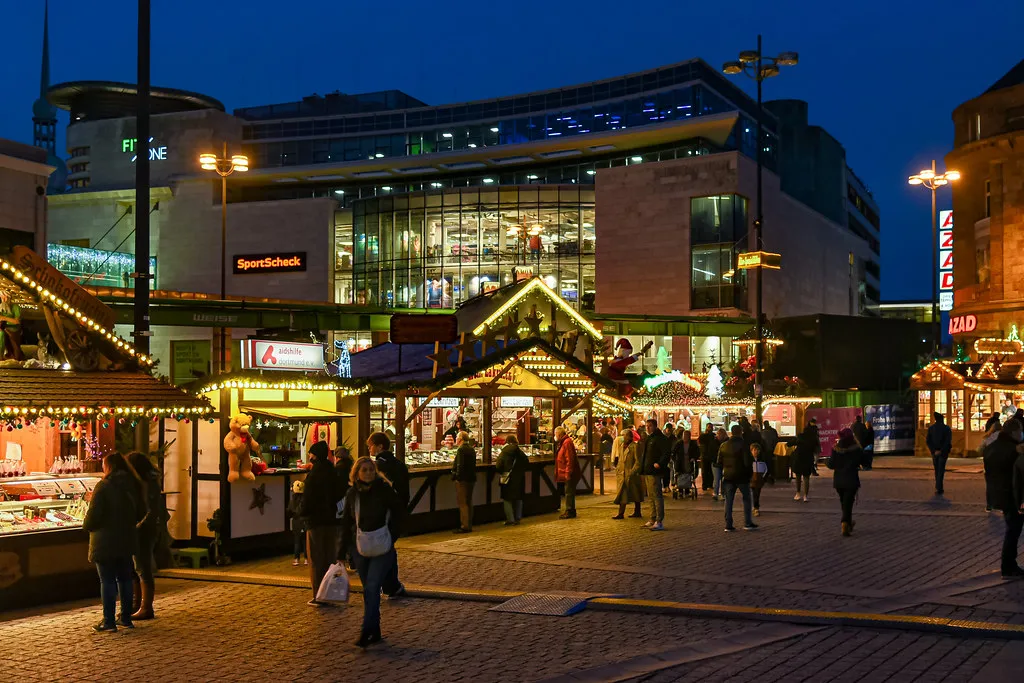
You will find over 250 stalls spread across several interconnected squares in the heart of the city. The scent of roasted almonds and spiced wine fills the air as visitors navigate the cozy pathways. Local crafts and international treats offer something for every type of holiday shopper. Planning your trip early ensures you can experience the magic without missing the best highlights.
Free guide: Europe's Festival Calendar
A month-by-month map of Europe's unmissable festivals — with the best dates to visit each and a local tip you won't find in the guidebooks.
Check the 2026/2027 Dates and Opening Hours
For the 2026/2027 season, the Weihnachtsstadt is expected to run from mid-November 2026 into late December 2026 (the 2026 edition ran 19 November – 30 December); confirm the exact dates on the official site before booking, as they shift slightly each year. Most stalls typically operate from 11:00 to 21:00 Monday through Thursday, with Friday and Saturday hours extended to 22:00. Sundays open slightly later at 12:00 and close at 21:00. The market is usually closed on the first Sunday (Totensonntag) and on December 25th, and runs shortened hours on Christmas Eve (11:00–14:00, select stalls only).
Be aware that some hours shift during specific German public holidays. Check the Dortmund Christmas Market Official Website for the most accurate daily schedule before you travel. Visiting during a weekday afternoon helps you avoid the heavy crowds that build after 17:00 on Fridays and Saturdays. The tree illumination ceremony typically takes place in late November — confirm the exact date before booking travel, as it draws large evening crowds.
Master the Logistics: Getting to the City Center
Reaching the festive stalls is simple by regional or national train. The main market area is a 10-minute walk from Dortmund Hauptbahnhof. Exit the station heading south toward the city center and you will reach the Katharinentor gate within a few minutes — this lit archway marks the official entrance and is strung with lights throughout the season. Dortmund is well-connected by rail, with trains running from Düsseldorf in under an hour and from Essen in around 30 minutes.
Drivers can find several large parking garages around the pedestrian zone perimeter, but public transport remains the fastest option because weekend traffic around the center can slow significantly. A VRR regional day ticket covers unlimited travel on trains and trams across the Ruhr area for a single price. Using a regional day ticket also lets you combine Dortmund with Wurzburg or other stops on a multi-city itinerary if you are touring the wider German Christmas market circuit.
Marvel at the World's Largest Christmas Tree
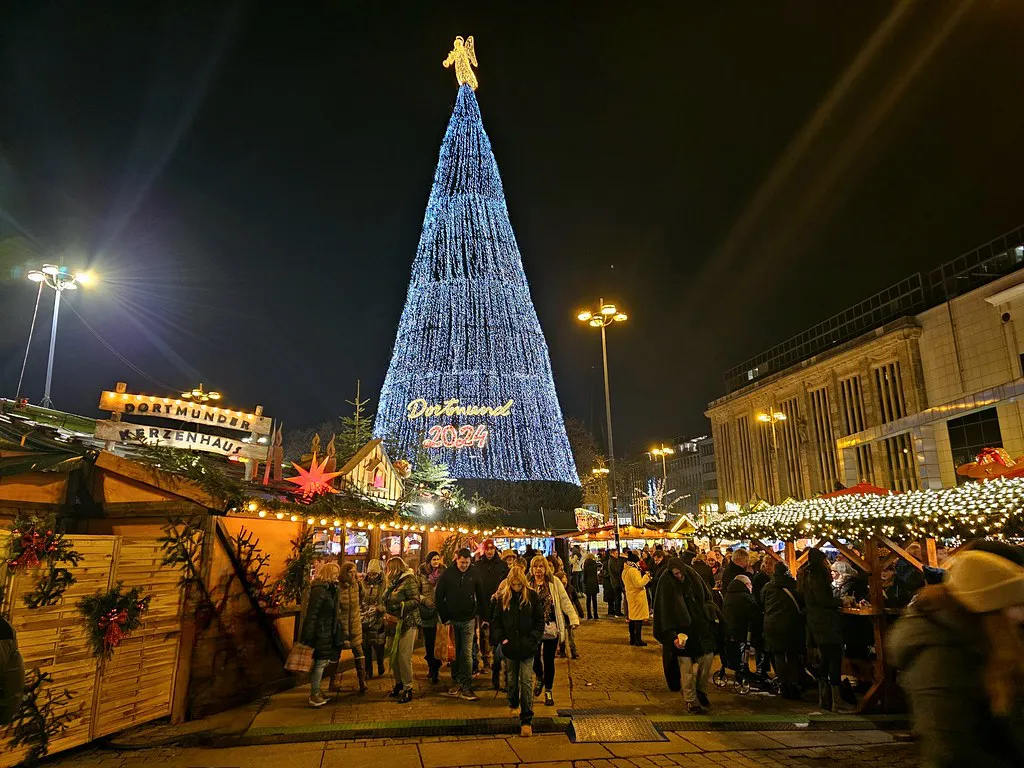
The centerpiece of the entire event is the towering Christmas tree on Hansaplatz. Standing 45 meters tall and weighing roughly 40,000 kilograms, it holds the record as the largest in the world. It is not a single tree: workers spend several weeks carefully assembling 1,700 individual red spruces onto a giant metal frame, creating the illusion of one unified structure. Each spruce is planted specifically for the occasion and harvested in coordinated batches.
The finished tree glows with 45,000 energy-efficient LED lights, and a 200-kilogram golden angel sits at the very top. The lights are switched on in a ceremony in late November — the exact date varies by year, so check the official schedule to avoid arriving before the illumination. Standing directly beneath the frame at night gives a strong sense of the engineering behind it. The tree is visible from several surrounding streets and serves as the easiest navigation landmark in the entire market.
Use the Market Map to Navigate 250+ Stalls
The Weihnachtsstadt is not one continuous market but a cluster of distinct squares, all within close walking distance of each other. Katharinentor is the natural entry point if you arrive from the train station, with stalls lining Kampstraße and a small stage at Petrikirche hosting daytime shows. Hansaplatz is the main hub — the giant tree stands here, ringed by food and gift stalls on every side. Alter Markt is the most food-focused zone and hosts a live music stage running performances throughout the season.
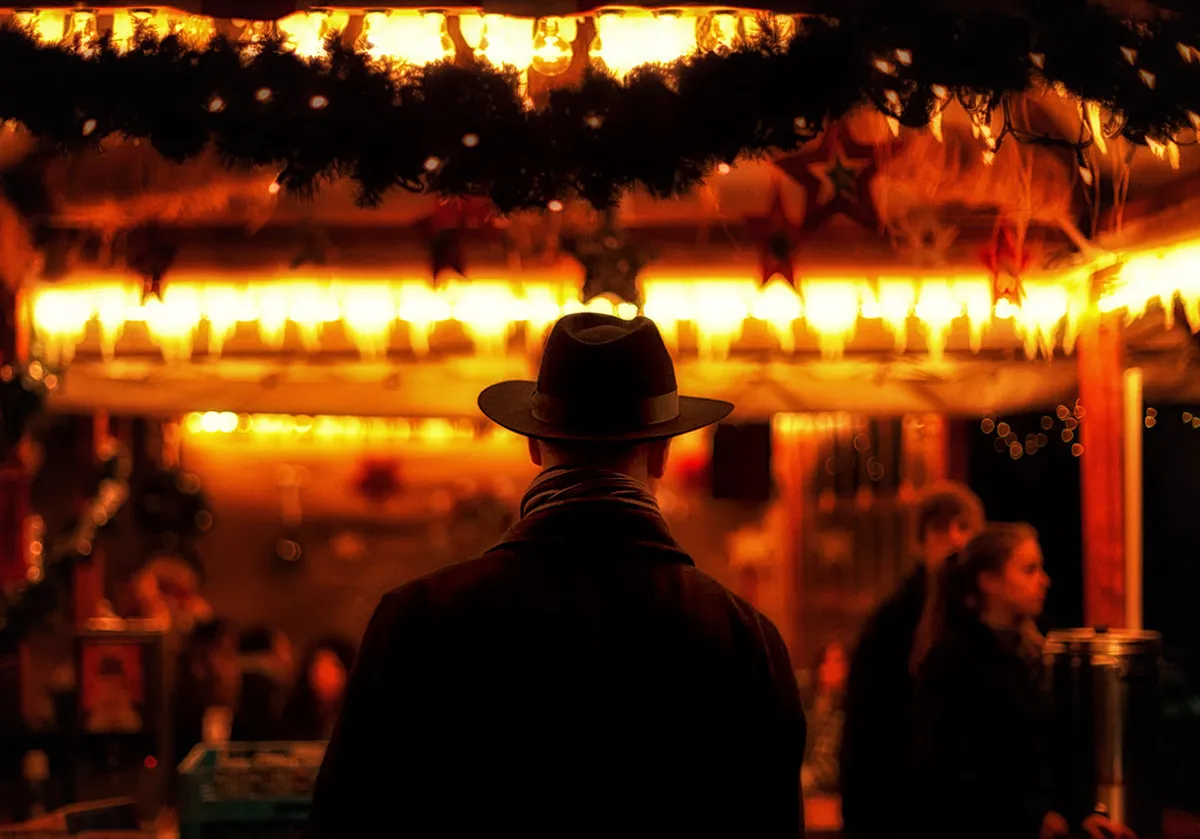
Kleppingstraße carries a noticeably different character, with stalls selling international goods from Japanese bonsai trees to Italian food products and artisan crafts. Reinoldikirchplatz, in front of Reinoldi Church, creates one of the most atmospheric spots in the market: long strings of overhead lights give the square a warm amber glow even on overcast evenings. Smaller clusters in Platz von Leeds and Platz von Netanya round out the circuit and are easy to reach on foot. Pick up an official market map at any major entrance gate to track your position across all ten sections.
Sample the Must-Try Food and Drink
Dortmund's food scene at the market goes well beyond the standard German market fare. Glühwein is the obvious starting point, but look for the seasonal Dortmunder Weihnachtsstadt beer brewed by Hövels, the city's local brewery. It is only available during the market period and provides a malty, cold-weather alternative for visitors who prefer beer over mulled wine. The Glühwein mugs change design each year and have become a collector's item — many visitors buy the mug specifically to keep it rather than returning it for the deposit.
For something less expected, try Eierpunsch: a warm drink made from egg yolks, white wine, cinnamon, cloves, and citrus, typically served with whipped cream. It is one of the most popular drinks at German Christmas markets and tastes nothing like eggnog despite the similar idea. Food stalls at Alter Markt cover the savory classics: Bratwurst, Reibekuchen (potato pancakes) served with apple sauce, and roasted mushrooms in garlic sauce. Near Katharinentor, the Pasta aus dem Parmesanlaib stall serves pasta tossed in a giant wheel of parmesan — the shrimp version costs around 8 euros and tends to draw a crowd at lunch.
- Westphalian Grilled Ham — smoky, salt-cured, best eaten fresh off the grill for around 7 euros
- Dortmunder Weihnachtsstadt Beer — the Hövels brewery seasonal brew, available at main beer stalls for roughly 5 euros
- Gebrannte Mandeln — cinnamon-sugar roasted almonds, sold at candy stalls across the market for around 4 euros a bag
- Schaumküsse — chocolate-covered marshmallows in multiple flavors, a visual highlight at the Alter Markt stalls
- Lángos — fried dough topped with sour cream and cheese, found at a dedicated stall on Kleppingstraße
Budget around 20–30 euros per person for a full round of snacks and drinks. Most stalls price individual items between 4 and 10 euros.
Shop for Authentic Souvenirs and Lichthäuser
Shopping at the market is the perfect way to find unique gifts for friends and family. One of the most popular items to collect is the hand-painted porcelain Lichthäuser — small houses designed to hold a candle or tea light to create a glowing village scene. Models are often themed after local landmarks, making them a genuinely Dortmund-specific souvenir. You can find similar high-quality crafts at the Trier Christmas market if you are touring the region.
Wooden ornaments from the Ore Mountains are another traditional choice: look for intricate nutcrackers, smoking men, and Moravian paper stars that fold flat and pack easily into a suitcase. The Historisches Kerzenhaus stall on the Reinoldi Nord-Seite carries carved honey and candle products, including unusually detailed figurines. Local fruit brandies, flavored honeys, and the Dortmunder Weihnachts-Likör liqueur stall at Alter Markt provide good edible gift options. The Kleppingstraße section has the most diverse mix of non-Christmas goods from international vendors.
Review Practical Must-Knows (Toilets & Cash)
Most stalls prefer cash, especially for smaller purchases like snacks or a single drink. ATMs are available near the train station and along the main shopping streets before you enter the market squares. A few larger vendors accept cards, but you should not rely on this for every purchase. Carry small coins so you can pay for toilets and snacks quickly without waiting for change.
Public restrooms are available near Hansaplatz and Reinoldi Church. Expect a fee of around 50 cents to 1 euro to use them. The market grows very busy on Fridays and Saturdays from late afternoon onward; weekday mornings and early afternoons are noticeably calmer. Keep personal belongings zipped and secure in any crowded area, particularly around the main Hansaplatz tree where foot traffic is densest.
Bring the Kids for the Free Puppet Theater
Families will find plenty of entertainment designed for younger visitors. The Reinoldi Church hosts a free puppet theater — performances run daily at 15:00 and 17:00 throughout the market season. The company behind the shows has been performing for seven generations and all puppets are handmade. The shows are in German, but the visual storytelling makes them accessible for children who do not speak the language.
The Dortmund Christmas Village adds interactive activities not found at most other markets: children can join baking and crafting sessions with a participation fee of around 2.50 euros. A children's scavenger hunt with a prize for completion is also available — pick up the question sheet at the event office in the Alter Markt. The fairytale forest near Reinoldikirchplatz features animated storybook displays, and carousels and a small holiday train operate nearby. The area around the church is generally more spacious than Hansaplatz, making it easier to navigate with a stroller.
Book Accommodation Near the Festivities
Staying in the city center lets you enjoy the market atmosphere late into the evening without rushing to catch the last train. Several hotels are within a five-minute walk of Hansaplatz and the main station. Book several months in advance because rooms near the market fill quickly once November dates are confirmed. Consider Bremen's Christmas market area if you are planning a multi-city tour through Germany's holiday circuit.
If the city center is full, look for hotels along the U-Bahn lines for easy access. Dortmund's public transit system runs frequently during the holiday season. Staying slightly further out can save money on nightly rates without adding much travel time. Properties that include breakfast help you fuel up before a long day of walking across ten separate market squares.
Plan a Day Trip to the Nearby Essen Market
Dortmund is well-positioned for travelers who want to see more than one market. Essen is a 30-minute train ride away and offers a noticeably different experience. While Dortmund leads with its record tree, Essen is known for its medieval-themed market in Porschekanzel where staff wear period costumes and fresh bread comes out of outdoor ovens. Essen's 2026/2027 market is expected to run from mid-November through late December 2026 (the 2026 edition ran 14 November – 23 December); check the official site for confirmed dates. Either way there is a significant overlap window for combining both in one trip.
Both cities sit on the same regional train line from Düsseldorf, making a two-market day trip straightforward. Start in Essen in the morning and continue to Dortmund in the afternoon to catch the tree lit up after dark. For full information on Essen's stalls and opening times, see the Visit Essen - Christmas Market Info page. Nearby cities like Munster also offer charming markets within an hour of Dortmund for those planning a longer regional circuit.
- Dortmund: 45-meter tree made of 1,700 spruces, 250+ stalls across 10 city squares, open into late December
- Essen: medieval-themed market, green-energy powered, light sculptures of life-sized animals, closes in late December
- Travel time between the two: around 30 minutes by regional train
- Best sequence: Essen in the morning, Dortmund in the afternoon for the tree illumination
Frequently Asked Questions
Is the Dortmund Christmas Market worth visiting?
Yes, it is absolutely worth visiting for the world's largest Christmas tree and the vibrant atmosphere. The market features over 250 stalls, offering a huge variety of food and crafts. It provides a more traditional feel compared to other major cities. You can also explore the Ljubljana Christmas market for a different European vibe.
What is the largest Christmas market in Germany?
Dortmund claims the title for having the largest Christmas tree, while markets in Cologne and Stuttgart are among the largest by stall count. Dortmund's market is consistently ranked in the top five for overall size and visitor numbers. It covers several large squares in the city center. This makes it a primary destination for holiday enthusiasts.
How do I get to the Dortmund Christmas Market from Düsseldorf?
You can take a direct regional train from Düsseldorf Central Station to Dortmund, which takes about 50 to 60 minutes. Trains run several times per hour throughout the day and evening. The walk from the Dortmund station to the market is very short. This makes it an ideal day trip for those staying in Düsseldorf.
The Dortmund Christmas market is a must-see destination for anyone loving the holiday season. With its record-breaking tree and massive selection of stalls, it offers an unforgettable experience. Planning your logistics and food choices ahead of time will help you make the most of your visit. Whether you come for the beer or the puppet theater, the magic of the Weihnachtsstadt awaits.
Free guide: Europe's Festival Calendar
A month-by-month map of Europe's unmissable festivals — with the best dates to visit each and a local tip you won't find in the guidebooks.
You might also like


Continue reading
More guides you'll find useful