
Sibiu Christmas Market 2026: 8 Essential Planning Tips
Plan your visit to the Sibiu Christmas Market with confirmed 2026 dates, opening times, must-try Transylvanian foods, and the best hotels in the Old Town.
On this page
Sibiu Christmas Market 2026: 8 Essential Planning Tips
Visiting the Sibiu Christmas Market is best between late November and mid-December for the full festive atmosphere. Last updated April 2026, this guide provides the most current details for your holiday planning. The city transforms into a winter wonderland that rivals the best small Christmas markets in Europe with ease. Traditional wooden chalets fill the historic center under a canopy of shimmering lights.
Sibiu sits in the heart of Transylvania and offers a unique medieval backdrop for seasonal celebrations. Temperatures typically range from -5°C to 2°C / 23°F to 35°F during the peak winter months. Travelers often praise the intimate feel of this market compared to larger capital city events. The local culture shines through in the handmade crafts and hearty regional cuisine served here.
Planning ahead is essential as the city becomes a popular destination for domestic and international tourists. This guide covers everything from confirmed 2026 dates to the best vantage points for photography. Prepare for a magical journey into one of Romania's most beautiful historic settings.
Free guide: Europe's Festival Calendar
A month-by-month map of Europe's unmissable festivals — with the best dates to visit each and a local tip you won't find in the guidebooks.
Confirming the 2026 Dates and Opening Times
The market officially runs from 13 November 2026 to 3 January 2027 in Piața Mare, the city's main Grand Square. Opening hours follow a consistent weekly pattern: Monday through Friday the stalls open at 11:00 and close at 22:00. On weekends, vendors start earlier at 10:00 and run until 22:00. Christmas Eve is a shorter day — 10:00 to 16:00 — while Christmas Day runs from 16:00 to 22:00.
Late November offers a quieter experience before the peak holiday crowds arrive in early December. Prices for accommodation often rise significantly as the Christmas holiday draws closer. Snowfall is more likely in late December, creating a picturesque scene for visitors. Early January provides a final chance to enjoy the lights with far fewer tourists.
The typical winter weather includes the cold Crivăț wind, which can make temperatures feel considerably lower than the thermometer reads. Daylight hours are short, so plan your outdoor sightseeing for the morning and early afternoon. Most visitors find that two to three days is enough to explore the market and the wider city. Check the Official Sibiu Christmas Market Site for live updates on daily performances and any hour changes.
Navigating the Location: Piața Mare (Grand Square)
Piața Mare is the undisputed heart of the market and one of the most photogenic public spaces in Romania. The square is framed by the imposing Holy Trinity Roman Catholic Church on the south side and the Brukenthal Palace to the north. Wooden market chalets line every edge of the cobblestones, creating a naturally defined circuit that is easy to walk in twenty minutes without stopping. The Sibiu City Council Tourism Portal offers downloadable maps marking every stall zone and stage.
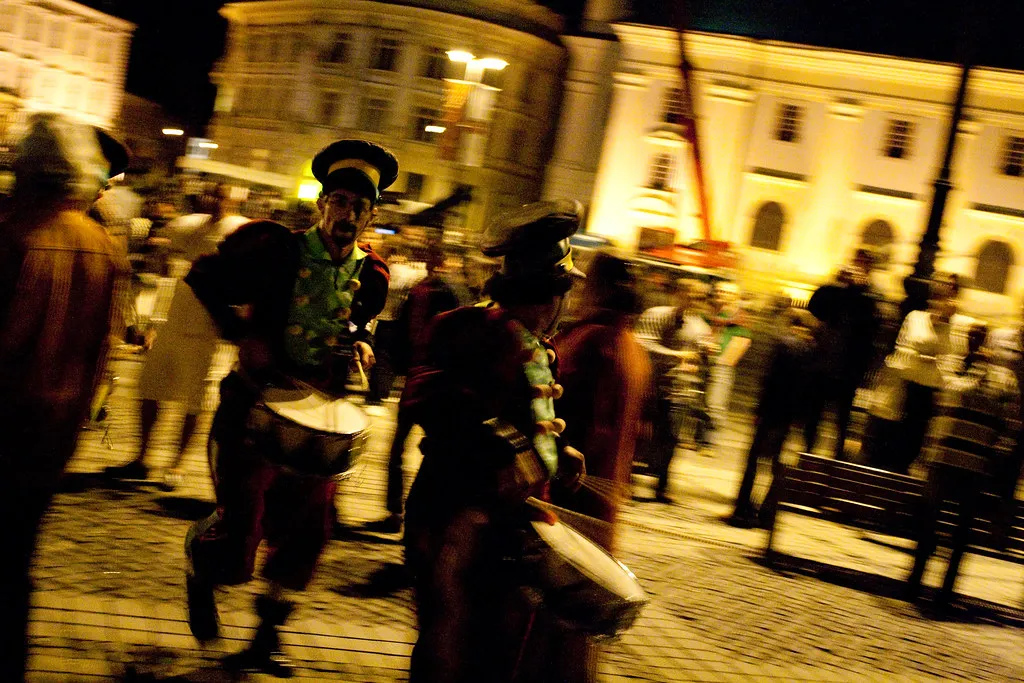
Look up as you walk — the rooflines surrounding the square feature the famous "Eyes of Sibiu," attic windows shaped like hooded lids that watch over the market below. Under the golden light of the Christmas illuminations, this architectural quirk gives the square an almost fairy-tale quality that no other European market square quite replicates. These are a hallmark of the city's Saxon heritage, brought here by German settlers roughly 900 years ago. The Evangelical Church tower, which has stood for 700 years, anchors the skyline to the east.
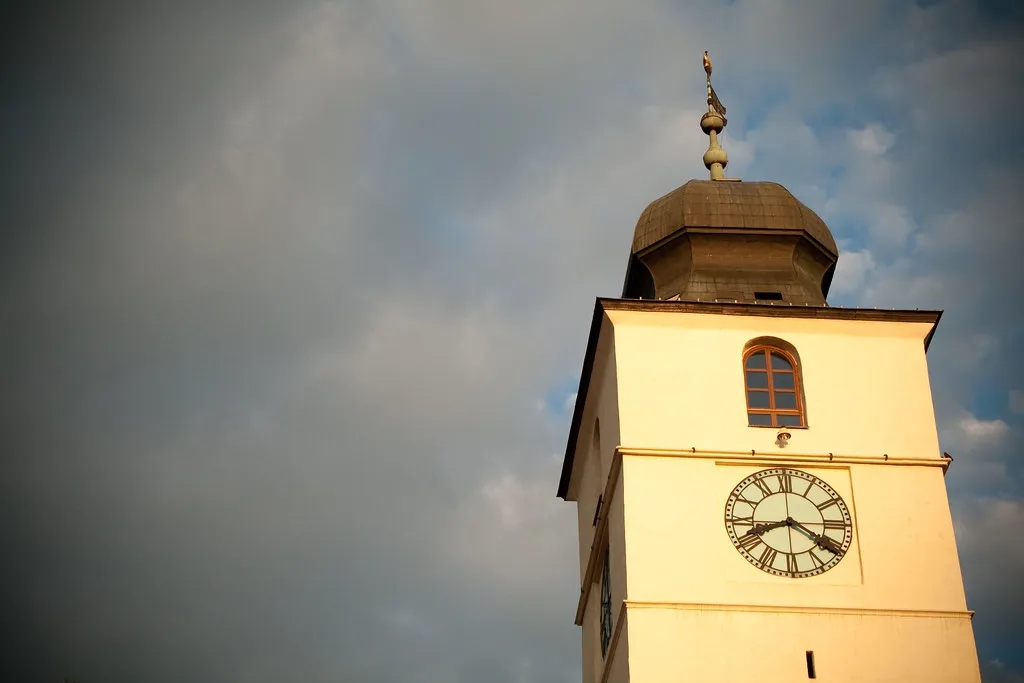
The adjacent Piața Mică (Small Square) hosts overflow stalls and is connected to the Grand Square by a short cobblestone lane. The 19th-century Bridge of Lies — Podul Minciunilor — sits just off Piața Mică and is worth a five-minute detour. According to local legend, the iron bridge creaks when someone tells a lie while standing on it. The Council Tower, near this same area, offers the best elevated view of the entire illuminated market.
Top Activities: From the Ferris Wheel to Santa's Workshop
The 22-metre-high Ferris wheel, installed permanently since 2019, dominates the square and is visible from most of the surrounding streets. A ride gives you a bird's-eye view of the entire illuminated market against the backdrop of the Transylvanian hills. It runs throughout the market period and is suitable for all ages. Tickets cost approximately 35 lei per person.
Santa's Workshop (Atelierul lui Moș Crăciun) is the main draw for families traveling with children. Sessions cost around 40 lei per child and typically include supervised glass painting and biscuit decorating in a heated chalet. Booking a time slot on arrival is recommended, as afternoon sessions fill quickly on weekends. Children who complete the workshop receive a small certificate from Santa, which has become a collector's item for regular visitors.
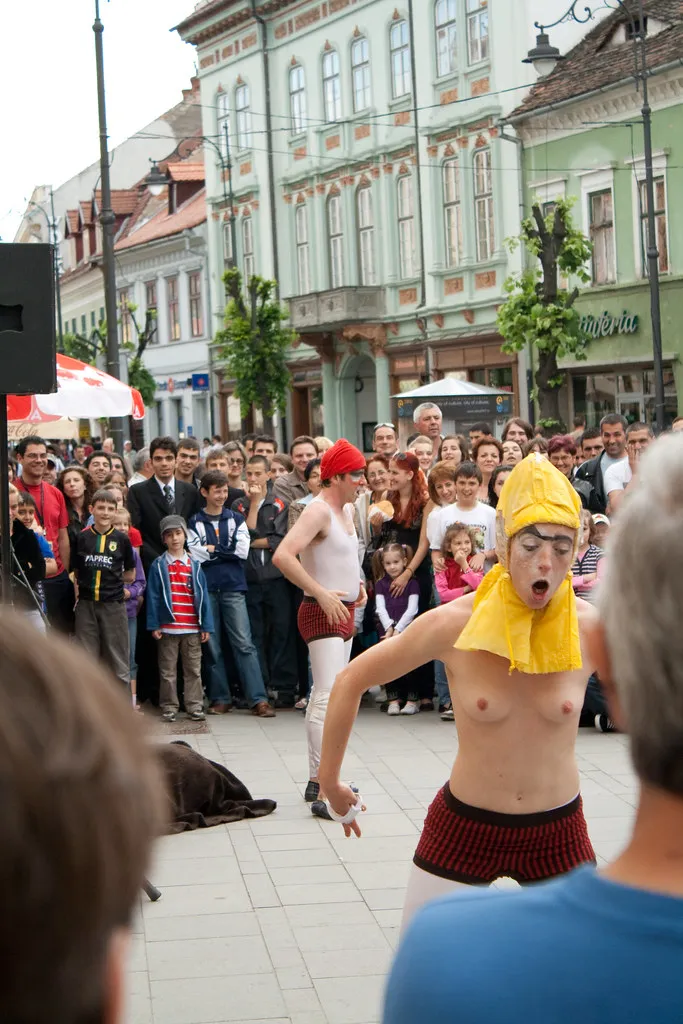
An outdoor ice skating rink occupies a section of the square throughout the market season. Entry costs approximately 30 lei per person including skate hire. Cultural performances — traditional Romanian music, carol choirs, and folk dance — take place on the central stage most evenings from 18:00. The full performance calendar is published weekly on the official market website.
Must-Try Food: Kurtos Kalacs and Transylvanian Specialties
Kürtős kalács — chimney cake — is the signature street food of the Sibiu market. These sweet spiral pastries are cooked on rotating wooden spits over open coals and cost around 20–25 lei each, with toppings from cinnamon sugar to Nutella. The charcoal aroma drifts across the square and is one of the defining sensory memories of the market. Eat them fresh; they go stale within thirty minutes.
Lángos, a deep-fried dough topped with garlic cream and grated cheese, is another staple at 15–20 lei. Gogoși doughnuts are sold plain or filled with jam and dusted with icing sugar for around 5–8 lei each. Grilled sausages — both pork and wild boar varieties — are sold by the 100g from the meat stalls that line the eastern edge of the square. Traditional mămăligă (polenta) and sarmale (cabbage rolls stuffed with pork and rice) appear on the menus of sit-down stalls near the church entrance.
Mulled wine, called vin fiert in Romanian, is served at almost every corner stall at 10–15 lei per cup. The clay mugs are sometimes included in the price as a souvenir to keep. For a non-alcoholic option, hot cider or spiced tea is available at most of the same stalls. Transylvanian aged cheese and cured meats are packaged for travel and make excellent gifts to take home.
What a Day at the Market Actually Costs
Most guides skip the practical spending numbers, but planning a realistic budget prevents surprises on the ground. The table below reflects 2026 approximate prices in Romanian lei (RON). The exchange rate in late 2026 is roughly 5 RON to 1 EUR, so a comfortable full day at the market runs to around €25–35 per adult excluding accommodation.
| Item | Approx. Price (RON) | Notes |
|---|---|---|
| Ferris wheel ride | 35 lei | Per person, all ages |
| Ice skating (incl. hire) | 30 lei | Per person |
| Santa's Workshop | 40 lei | Per child; book on arrival |
| Chimney cake (kürtős kalács) | 20–25 lei | Plain or topped |
| Mulled wine (vin fiert) | 10–15 lei | Clay mug sometimes included |
| Grilled sausage plate | 25–35 lei | Pork or wild boar |
| Council Tower entry | 10 lei | Best panoramic view of the market |
Cash is still preferred by many smaller stalls, though card readers are increasingly common. ATMs are plentiful within two blocks of the square on Strada Nicolae Bălcescu. Avoid exchanging currency at the airport; city-center exchange offices offer significantly better rates.
Where to Stay: Best Hotels Near the Old Town
Staying within the Old Town walls allows you to walk to the market in under five minutes and return to your room to warm up between sessions. Boutique properties in historic buildings are the most popular choice. The Art Hotel sits a short walk from Piața Mare and consistently ranks among the highest-rated options in the central area. The Council boutique hotel, housed in a restored 16th-century building, puts you directly inside the old town.
For a mid-range option, Hilton Sibiu is located a short drive from the center and suits travelers who prioritize space and amenities over walkability. Guesthouses such as Pensiunea Maria offer budget-friendly rooms with a warm, family-run atmosphere. Airbnb apartments in historic buildings provide the most local feel and often include kitchen access for self-catering. Book at least three months in advance for any central property during peak market weeks (late November through 26 December).
Practical Travel Tips: Getting to Sibiu and Parking
Sibiu International Airport is located approximately 5 km west of the city center — a taxi takes about 10 minutes and costs 30–40 lei. Direct flights operate from several European cities, making it accessible without a Bucharest connection. The airport also links to Wizz Air routes from the UK, Italy, and Germany during the winter season.
By train, Sibiu connects to Cluj-Napoca (roughly 2.5 hours) and Brasov (around 2.5 hours with a change). From Bucharest, the journey is approximately 4 hours by direct train. Rail tickets are inexpensive — typically under 80 lei for a standard seat — and the station is 1.5 km from the Old Town center. Bus services from Brasov and Cluj-Napoca are faster and more frequent than trains and drop passengers at the central bus terminal.
Parking within the historic center is severely limited and heavily regulated. Use the large public parking areas near the city walls rather than risking fines or towing in the pedestrian zones. Walking is the most efficient way to navigate between the market and the surrounding city sights. The historic core is compact enough that no destination within the Old Town takes more than ten minutes on foot.
Winter Beyond the Market: Museums and Sightseeing
The Brukenthal National Museum on the north side of Piața Mare is one of the oldest museums in Romania and houses a strong collection of Flemish and German paintings, including works attributed to Titian and Rubens. Entry costs around 20–30 lei and the building is beautifully decorated during the holiday season. It provides a welcome warm refuge on colder afternoons.
The ASTRA National Museum Complex, located just outside the city, is Europe's largest open-air ethnographic museum. It spreads across 96 hectares and reconstructs traditional village life from across Romania's regions. During the Christmas season it hosts special demonstrations and is particularly evocative under a light snowfall. Entry is approximately 30 lei for adults.
The Council Tower offers the clearest elevated view of the market below and costs only 10 lei to climb. The Evangelical Church is free to enter outside of service times and its Gothic nave is one of the most atmospheric spaces in Transylvania. Most museums and historic interiors remain open throughout the market period, though hours may be reduced on Christmas Eve and Christmas Day.
Recommended Day Trips and Tours from Sibiu
The Brasov Christmas Market is the most popular day trip from Sibiu and takes roughly 2.5 hours by train each way. Brasov's market in Piața Sfatului has a different architectural character — Gothic rather than Saxon Baroque — and the two markets together make a strong two-night Transylvania circuit. Regional trains depart Sibiu station every two to three hours throughout the day.
Sighisoara is a UNESCO-listed medieval citadel 90 minutes northeast of Sibiu by car and makes an excellent half-day excursion. The fortified hilltop town is one of the best-preserved medieval citadels in Europe and is visually striking in winter with the holiday lights against its colored tower facades. Public buses connect the two cities several times daily.
Private guided tours from Sibiu covering the Transylvania Christmas market circuit — Sibiu, Sighisoara, and Brasov — typically run for around €200–350 per car (group price, not per person) for a full day. This is the most convenient option if winter road conditions are uncertain, as a local driver will know the mountain passes. Self-guided visits by train are entirely feasible and significantly cheaper; the tradeoff is reduced flexibility if weather delays services. For Bucharest-based visitors, the 4-hour train journey makes Sibiu a natural standalone destination rather than a day trip from the capital.
Frequently Asked Questions
What are the dates for the Sibiu Christmas Market 2026?
The market runs from November 13, 2026, to January 3, 2027. It is open daily in the Grand Square. Check the official site for holiday hour changes.
Is Sibiu, Romania worth visiting in winter?
Yes, Sibiu is highly worth visiting for its magical atmosphere and historic architecture. The market is one of the best in Eastern Europe. Be prepared for cold weather.
Which Christmas market is best in Romania?
Sibiu is widely considered the most beautiful and traditional market in Romania. It offers a unique setting in a medieval square. Brasov and Bucharest are also popular options.
The Sibiu Christmas Market offers a truly authentic Transylvanian experience for every traveler. With its historic setting and vibrant traditions, it remains a top winter destination. Plan your visit for late November or early December to enjoy the best balance of atmosphere. Sibiu's charm will likely make your holiday season one to remember for years.
Free guide: Europe's Festival Calendar
A month-by-month map of Europe's unmissable festivals — with the best dates to visit each and a local tip you won't find in the guidebooks.
You might also like


Continue reading
More guides you'll find useful


