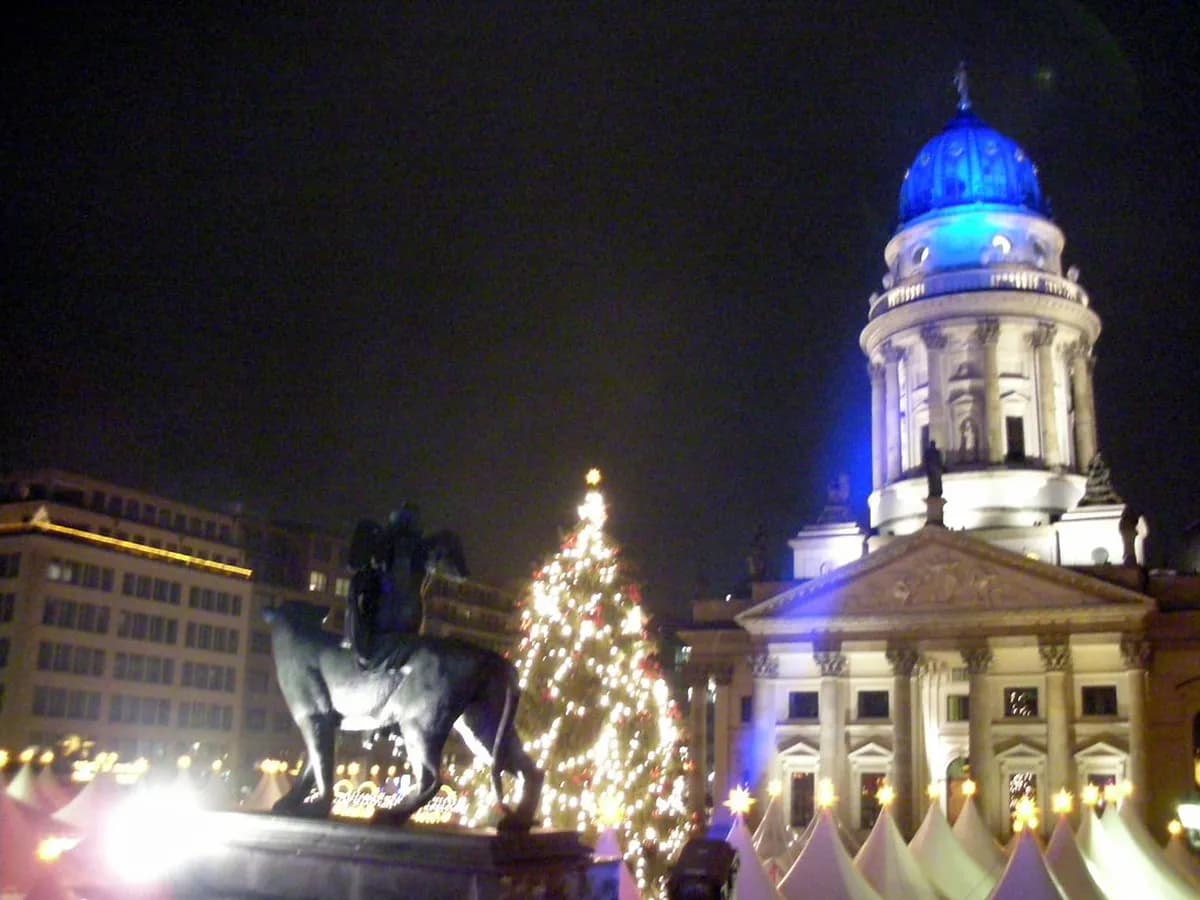
10 Best Christmas Markets in Scandinavia and the Baltics (2026)
Discover the best Christmas markets in Scandinavia and the Baltics for 2026. From Tallinn's medieval charm to Copenhagen's Tivoli Gardens, plan your perfect winter.
On this page
10 Best Christmas Markets in Scandinavia and the Baltics
Northern Europe transforms every November into something genuinely magical. Cobblestone squares fill with wooden stalls, mulled wine steams in ceramic mugs, and the sky turns dark before 4pm — which only makes the fairy lights look better. We have mapped the best Christmas markets across Scandinavia and the Baltics so you can choose the right combination of cities for your 2026 winter trip.
The two regions complement each other well. Scandinavia delivers high production values and deep-rooted traditions in cities like Copenhagen and Stockholm. The Baltic capitals of Tallinn, Riga, and Vilnius offer a more intimate, medieval atmosphere at noticeably lower prices. Bridging them is easier than most people expect: a two-hour ferry connects Helsinki to Tallinn, making a single multi-country itinerary entirely practical.
Free guide: Europe's Festival Calendar
A month-by-month map of Europe's unmissable festivals — with the best dates to visit each and a local tip you won't find in the guidebooks.
Tallinn Christmas Market: Estonia's Medieval Fairytale
Tallinn's Town Hall Square is the starting point for most Baltic Christmas itineraries, and for good reason. The market runs from late November through early January, daily from 10:00 to 20:00, with free entry. At its center stands a giant spruce tree decorated in thousands of lights — the same symbolic spot that both Estonian and Latvian traditions claim as the birthplace of the Christmas tree tradition (more on that rivalry below).
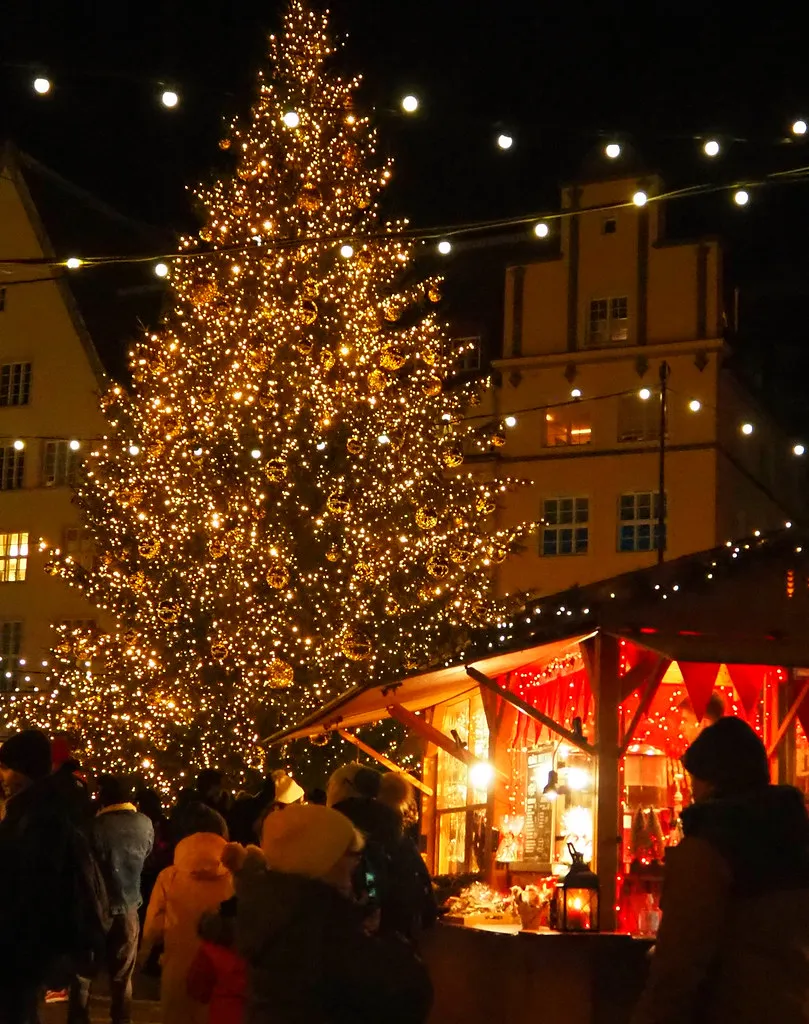
The stalls lean into authentic Estonian crafts: juniper wood kitchenware, hand-knitted wool socks, amber jewelry, and thick gingerbread. For food, try the blood sausages with sauerkraut at the open-fire grills — it is the most local thing you can eat at the market. A mug of hot mulled wine runs about €4–5. The square sits in the heart of the UNESCO-listed Old Town, five minutes on foot from any central hotel.
In 2019, Tallinn was named the best Christmas Destination in Europe, and the market has maintained that standard. Weekday evenings before 18:00 offer the best balance of atmosphere and manageable crowds. Weekend nights in mid-December can feel very full, though the narrow medieval lanes surrounding the square absorb the overflow well.
Riga Christmas Market: Dome Square and the Blackheads Legacy
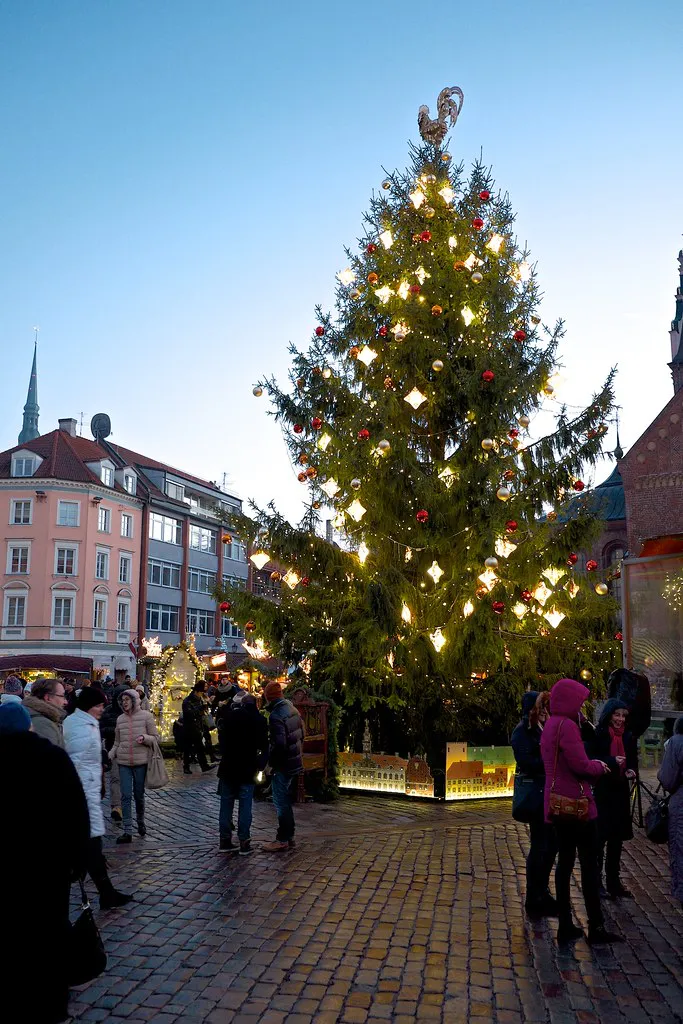
Riga's main market occupies Doma Laukums — Dome Square — in the heart of the Art Nouveau old town. The market runs from the end of November through early January, with stalls open daily 10:00 to 20:00 and free admission. Look for the large central tree and the wooden huts selling Latvian honey, amber pieces, handmade linen goods, and the local spirit: Riga Black Balsam mixed into hot blackcurrant juice.
Riga also has smaller satellite markets worth seeking out. Līvu Square has a distinctive Christmas tree built from wooden planks rather than a real spruce. Esplanade Park offers a quieter, more local experience with fewer tourist stalls. Together these three spots give Riga a distributed festive feel that rewards exploration beyond the main square.
The House of the Black Heads — the guild building connected to the Christmas tree origin story — sits directly on Rātslaukums (Town Hall Square), a short walk from Dome Square. It is worth stopping at both. The building was restored after Soviet-era demolition and is one of the most photogenic facades in the entire region.
Vilnius Christmas Market: Cathedral Square and the 3D Spectacle
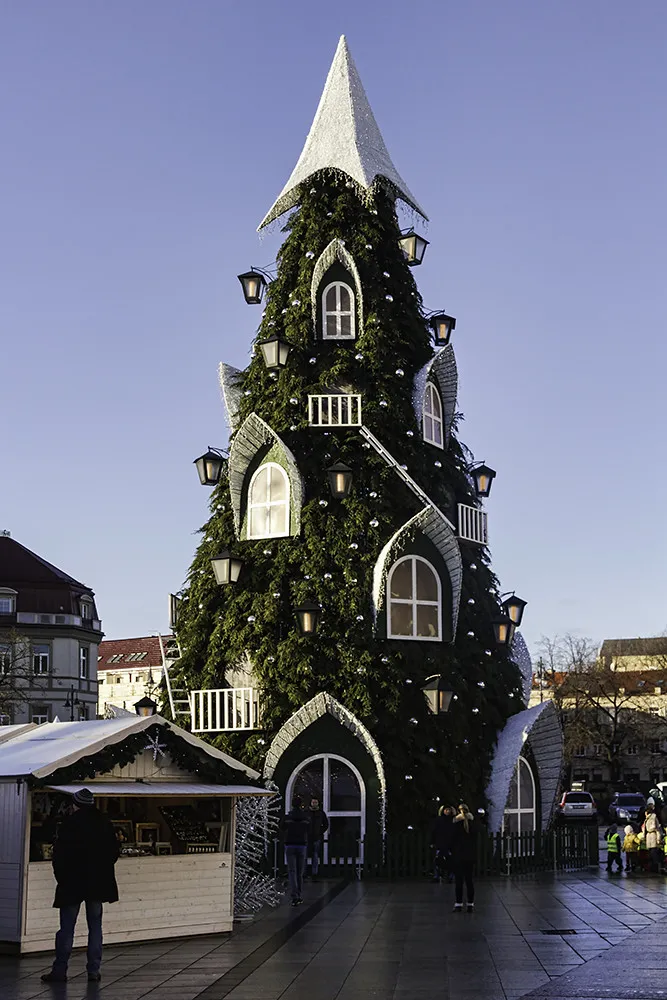
Lithuania's capital does Christmas on a more theatrical scale than its Baltic neighbors. The Vilnius Christmas Market runs from the last weekend of November through the first weekend of January, with stalls in Cathedral Square open daily from 11:00 to 21:00. Entry is free. In 2020, the Vilnius Christmas tree was named the Most Beautiful Christmas Tree in Europe, and the city has doubled down on ambitious designs every year since.
The headline feature is the 3D projection show on the cathedral facade, which runs on scheduled evenings throughout December. It is technically impressive and genuinely spectacular — plan your evening visit around the show times, which are posted at the square entrance each year. Elsewhere in the market, the small Christmas train that loops through the old streets costs a token fee and is popular with families.
The market is spread across several zones in the city center, with Cathedral Square and Town Hall Square being the largest. Vendors sell local amber, hand-painted wooden ornaments, and traditional honey cakes called meduoliai. Street food stalls serve fried dough pastries and smoked pig ear — unusual for western visitors but worth trying once.
Trakai Island Castle: The Best Day Trip from Vilnius
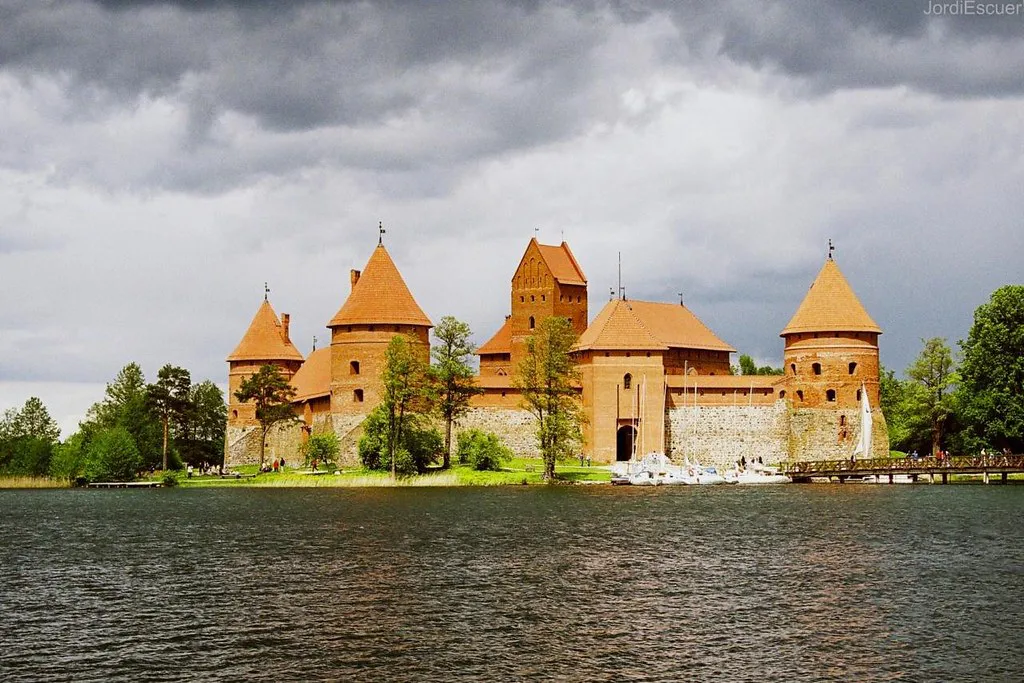
Trakai is about 28 km west of Vilnius — roughly 30 minutes by train or bus from the city center. The castle sits on an island in Lake Galve and looks, especially in winter, like an illustration from a medieval manuscript. When the lake freezes, the surrounding landscape becomes almost surreal. The castle museum costs about €12 for adults and is open Tuesday through Sunday.
Beyond the castle itself, the town of Trakai is home to Lithuania's small Karaim community, descendants of Crimean Turkic settlers brought to the region in the 14th century. Their traditional dish, kybynlar — a small pastry filled with meat — is sold in the restaurants lining the road to the castle and makes an excellent lunch stop. This is one of those hyper-specific food experiences that is nearly impossible to replicate elsewhere in Europe.
The combination of a 14th-century Gothic island fortress, a frozen lake, and a unique culinary tradition makes Trakai one of the strongest day-trip cases in the entire Baltic region. We recommend pairing it with a morning at the Vilnius Christmas Market and a late afternoon return to catch the cathedral projections in the evening.
Tivoli Gardens: Copenhagen's Iconic Festive Park
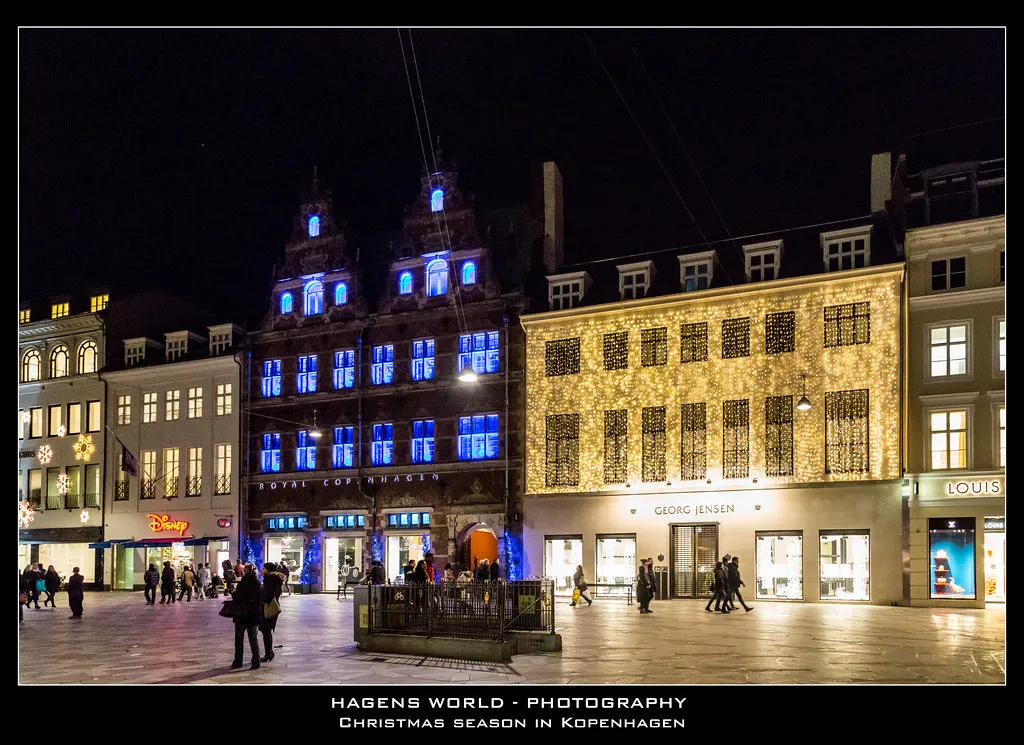
Tivoli Gardens in Copenhagen is the most produced Christmas market experience in Northern Europe. Over a thousand trees are decorated with fairy lights, the rides run through the cold, and the smell of æbleskiver — the Danish spherical pancake — fills the park. Admission costs approximately €22 per adult. The park opens in mid-November and runs through the first week of January, with evening hours until 22:00 on most days.
We suggest booking your accommodations near the markets in advance if you plan to visit on a weekend in December. Tivoli sits directly opposite Copenhagen Central Station, making it easy to reach from anywhere in the city. The Friday evening Tivoli Illuminations show, which lights up the entire park in synchronized sequences, is the single best hour to be inside the gardens.
Denmark is consistently cited as having the best Scandinavian Christmas market experience, and Tivoli is the primary reason. But Copenhagen also has smaller, more neighborhood-focused markets worth exploring: the one at Kongens Nytorv has a more local feel, and the Nyhavn waterfront is lit attractively throughout December even without a formal market structure. See our full Copenhagen Christmas market guide for the complete breakdown.
Stockholm's Markets: Skansen and Stortorget Traditions
Stockholm runs two very different Christmas market experiences and both deserve attention. Skansen, the open-air museum on Royal Djurgården, holds a traditional market on weekends from late November through December. Tickets cost around €20. Inside, heritage craftspeople demonstrate historical trades — blacksmithing, weaving, candle-dipping — while bonfires burn between the farmstead buildings. Tram 7 from the city center reaches the entrance in about ten minutes.
The Stortorget market in Gamla Stan is the older and more compact experience. Running since the 17th century, it occupies the tiny red-and-yellow square in the heart of Stockholm's medieval island. It is the oldest Christmas market in Sweden, and its scale — a few dozen stalls — is part of its appeal. You can walk the entire market in twenty minutes, which makes it easy to combine with an evening stroll through Gamla Stan's narrow lanes. Admission is free.
For families, Liseberg in Gothenburg (covered briefly in our Gothenburg guide) is worth the two-hour train ride for its five million lights and ice shows. But for Stockholm visitors with limited time, Skansen on a weekday afternoon and Stortorget in the evening is the right combination. Visit the Gothenburg Christmas market guide if you plan to head south.
Helsinki Senate Square: The Spirit of Finnish Christmas
The Tuomaan Markkinat on Senate Square is Finland's oldest outdoor Christmas market, running daily in December from 11:00 to 20:00 with free entry. Over a hundred local artisans sell woodwork, ceramics, and Finnish design objects. The centerpiece is a wood-fired sauna installed in the square — you can book a slot and warm up in genuinely Finnish style between rounds of browsing. It is the only Christmas market in the Nordic region where this is possible.
Helsinki Senate Square is also the natural starting point for the Helsinki-to-Tallinn journey. Tallink Silja and Viking Line both run multiple daily crossings on the two-hour route across the Gulf of Finland. Tickets booked in advance can cost as little as €20 one-way for a foot passenger, making this one of the most cost-effective border crossings in Europe. We recommend a morning departure to maximize daylight in Tallinn on arrival.
The Senate Square market sits ten minutes by foot or tram from Helsinki Central Station, making the logistics smooth. If you arrive in Helsinki by overnight ferry from Stockholm (Silja Line runs this route), you can walk directly from the ferry terminal to the market and then board another ferry to Tallinn on the same day — a genuinely satisfying single-day Nordic transit.
Rovaniemi: The Ultimate Santa Claus Village Experience
Rovaniemi sits exactly on the Arctic Circle in Finnish Lapland, and Santa Claus Village here is the official residence of the man in red. Entry to the village is free, though activities add up: reindeer sleigh rides cost €50–80 per person, husky safaris run €80–150, and a private Santa meeting costs €30–50 depending on the package. The village is open daily from 10:00 to 17:00 with extended hours in December.
The surrounding landscape in November and December alternates between total darkness and brilliant starry nights that are ideal for northern lights viewing. The Finnish Meteorological Institute posts aurora forecasts and Rovaniemi sits under the auroral zone with a reasonable probability of sightings on clear nights. This turns Rovaniemi into more than a family destination — it is a legitimate bucket-list stop for adults.
The town is accessible by direct flights from Helsinki (about 1.5 hours) and by overnight train. The Santa's Express bus connects the airport and train station to the village. Rovaniemi is best treated as a two-night standalone trip rather than a day trip — the 24-hour winter darkness makes early arrivals disorienting, and spending a night in the Arctic gives you a proper shot at the northern lights.
The Great Christmas Tree Feud: Riga vs. Tallinn
The rivalry between Estonia and Latvia over the origins of the Christmas tree is a centerpiece of local holiday lore. Latvians declared that the first tree was displayed in Riga in 1510 by the Brotherhood of the Blackheads. However, Estonians claim their own tradition dates back even further to 1441 in Tallinn's Town Hall Square. This friendly dispute drives both cities to create more spectacular displays each year to defend their festive honor.
The Brotherhood of the Blackheads was a guild for unmarried merchants who played a major role in civic life. Historical records suggest they were the ones who first placed a tree in the square for winter celebrations. Regardless of which city was truly first, both markets benefit from this deep-rooted sense of history. You will find plaques and monuments in both capitals commemorating these early festive milestones.
Visiting both cities allows you to see how each interprets this shared heritage through their market decorations. Tallinn tends to lean into a cozy, medieval atmosphere with wood-shingled stalls and warm candlelight. Riga often feels slightly more grand, with large-scale light installations and a focus on traditional Latvian crafts. Both cities are essential stops for anyone interested in the Christmas Destination in Europe experience.
What to Eat and Drink: Scandinavian vs. Baltic Specialties
Food is one of the clearest ways the two regions diverge. In Scandinavia, the Christmas market staples are glögg (spiced mulled wine served with raisins and almonds, around €5–8 a cup in Sweden and Denmark), æbleskiver in Copenhagen, and smoked reindeer at Skansen. Norwegian markets lean on elk burgers and toasted almonds. Finnish markets favor salted licorice, gingerbread, and cloudberry jam. Prices across Scandinavia average €6–10 for a hot drink and snack.
The Baltic states run noticeably cheaper and their food traditions are distinct. In Tallinn, try the grilled blood sausages with sauerkraut and a cup of hot mulled wine at roughly €3–4. Riga is known for piparkūkas (spiced Latvian gingerbread, sold by the bag) and hot blackcurrant juice mixed with Black Balsam — the herbal liqueur that has been made in Latvia since 1752. Vilnius offers meduoliai honey cakes and, if you make the Trakai day trip, the Karaim pastries kybynlar that no other market in Europe sells.
The budget gap is real and worth planning around. A mulled wine and a snack at Tivoli Gardens in Copenhagen costs roughly €12–15 total. The equivalent in Tallinn's Town Hall Square costs €6–8. For a five-day trip combining both regions, the Baltic days can offset the Scandinavian expenditure significantly — most travelers find the combined trip more affordable than a purely Scandinavian itinerary of the same length.
Logistics: How to Visit Both Regions in One Trip
The most practical route combines a Scandinavian leg (Copenhagen, Stockholm, Helsinki) with a Baltic leg (Tallinn, Riga, Vilnius) using the Helsinki-Tallinn ferry as the bridge. Tallink Silja and Viking Line both operate this crossing multiple times daily. The journey takes two hours and a foot-passenger ticket booked in advance costs €20–40 one-way. We recommend a morning ferry to maximize daylight hours in Tallinn on arrival day.
Managing the short daylight hours is the biggest challenge for winter travelers in these northern latitudes. The sun often sets by 15:00, meaning you should plan your outdoor sightseeing for the morning. Fortunately, the Christmas markets look their best after dark when the thousands of fairy lights come to life. Use the dark afternoons to visit museums or enjoy a long, traditional Baltic dinner before heading back to the evening market.
For those planning to visit all three Baltic capitals, the road between Tallinn, Riga, and Vilnius is straightforward — roughly four hours of driving between each city. Public buses like Lux Express are a high-quality, budget-friendly alternative with frequent daily departures and onboard wifi. Traveling by land allows stops at smaller towns: Pärnu between Tallinn and Riga, or Sigulda (Latvia's "Switzerland") with its medieval castle ruins, which looks particularly striking under winter snow.
Frequently Asked Questions
Which Scandinavian country has the best Christmas markets?
Denmark is widely considered to have the best markets, specifically due to the world-famous Tivoli Gardens in Copenhagen. The park offers a high level of production value and festive atmosphere that is difficult to match elsewhere in Scandinavia.
What is the prettiest Christmas market in Europe?
Tallinn is frequently cited as the prettiest market in Europe because of its perfectly preserved medieval setting. The combination of the historic Town Hall and the frequent snowfall creates a genuine fairytale aesthetic for visitors.
Does Estonia have a good Christmas market?
Yes, Estonia hosts one of the most acclaimed markets in the world in its capital, Tallinn. It is famous for its massive Christmas tree, traditional Estonian foods, and high-quality local handicrafts like juniper wood kitchenware.
Exploring the Christmas markets of Scandinavia and the Baltics is a rewarding way to embrace the winter season. Whether you prefer the polished charm of Stockholm or the medieval grit of Riga, there is a market for every type of traveler. We encourage you to use the Festivian blog for more detailed planning tips on your next European adventure. Bundle up, stay warm, and enjoy the unique magic that only Northern Europe can provide during the holidays.
Explore More Festival Guides
Keep planning with our other in-depth festival guides across Europe.
- 10 Essential Copenhagen Christmas Market Insights
- Copenhagen Christmas Market Dates
- 10 Best Gothenburg Christmas Markets & Holiday Experiences
- Riga Christmas Market Guide
- 12 Best Stockholm Christmas Market Locations
- 8 Things to Know About the 2026 Tallinn Christmas Market
- Tallinn Christmas Market Dates
- 10 Essential Tips for the Vilnius Christmas Market 2026
- 10 Best Areas and Tips for Copenhagen Christmas Markets
- Where To Stay For Tallinn Christmas Market
Free guide: Europe's Festival Calendar
A month-by-month map of Europe's unmissable festivals — with the best dates to visit each and a local tip you won't find in the guidebooks.
You might also like


Continue reading
More guides you'll find useful