
9 Best Christmas Markets in Central Europe (2026)
Discover the 9 best Christmas markets in Central Europe, including Prague, Vienna, and Budapest. Get expert tips on hotels, timing, and local treats for 2026.
On this page
9 Best Christmas Markets in Central Europe
Central Europe delivers the most concentrated collection of Christmas markets on the continent. Within a single rail journey, you move from the Gothic spires of Prague to the imperial grandeur of Vienna and the thermal warmth of Budapest — all three cities at peak festive form in November and December. We have updated this guide for the 2026 season with current prices, confirmed market dates, and practical logistics for the Railjet triangle route.
The nine markets below span Germany, Austria, and the Czech and Hungarian heartlands. We chose them for historical depth, food quality, and how well they hold up across all five days of a typical visit. Prices are in EUR and times are in 24h format throughout.
Free guide: Europe's Festival Calendar
A month-by-month map of Europe's unmissable festivals — with the best dates to visit each and a local tip you won't find in the guidebooks.
Market Dates and Timing for the 2026 Season
Most Central European Christmas markets open on the last Friday or Saturday of November and run until 23 or 24 December. A handful close on 26 December; only a few extend into the first days of January. The core window is 27 November to 23 December 2026. Verify individual dates before booking travel because each city sets its own schedule and it shifts by a day or two each year.
Timing within that window matters more than most guides admit. The first two weeks of December offer shorter queues, lower hotel rates, and a noticeably more local crowd. Markets in the final week before Christmas — especially Cologne, Nuremberg, and Prague — reach tourist-bus saturation from 18 December onward. If your priority is atmosphere over peak decoration density, aim for 1–14 December. If you want the full fairy-tale visual and can tolerate crowds, go 15–23 December.
Weekday evenings between 17:00 and 20:00 are the sweet spot at every market: lights are on, stalls are open, but the day-trip tour groups have gone home. Weekend afternoons from noon onward are the most congested period across all nine cities.
Prague, Czech Republic: Old Town Square Magic
The Prague Christmas market on Staroměstské náměstí is anchored by a 12-metre spruce and a wooden stable with live animals, set against the facade of the Týn Church. Stalls run from 09:00 to 22:00 daily from late November through 6 January 2026, making it one of the longest-running markets in the region. Entry is free. A cup of Svařák — the Czech mulled wine, less sweet than the German version — costs €2–3, making Prague the most affordable drinks stop on the circuit.
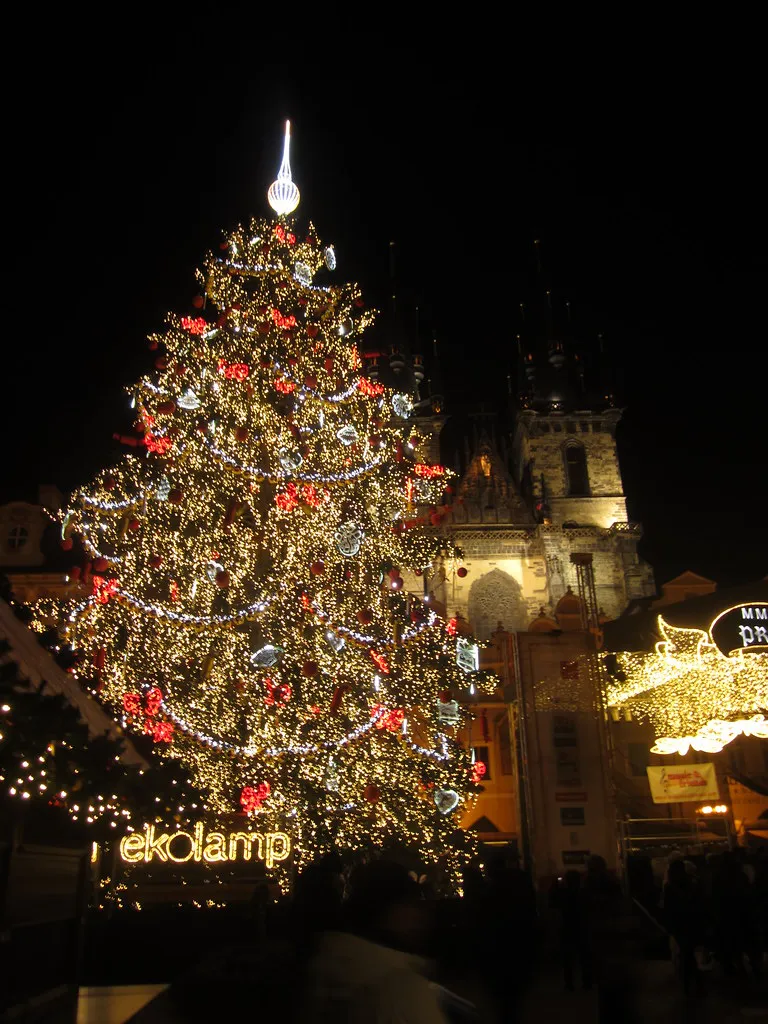
The Old Town Hall Tower (€15 adult entry) provides the best overview of the market and is worth climbing at dusk when the lights come on. Trdelník chimney cakes run €4–6 per portion; quality varies by stall, so look for vendors actually cooking them on the rotating spit rather than selling pre-made portions. Wenceslas Square hosts a smaller secondary market one metro stop away — less crowded, with more local food vendors.
For accommodation within the ten-minute walk rule, the Majestic Plaza Hotel sits between Old Town Square and Wenceslas Square. Budget travellers find solid options in the Josefov quarter, two streets from the main stalls. Book at least six weeks ahead for anything in December.
Vienna, Austria: Rathausplatz and Schönbrunn Palace
Vienna runs multiple simultaneous markets, but the Rathausplatz Christkindlmarkt in front of City Hall is the flagship. It opens mid-November and runs until 26 December, with an ice skating rink occupying the central forecourt from November through February. Market hours are 10:00–21:30 daily. Reach it via the U2 line to Rathaus station. The market is free to enter; a Glühwein costs €4–5 plus a mug deposit (see the deposit section below).
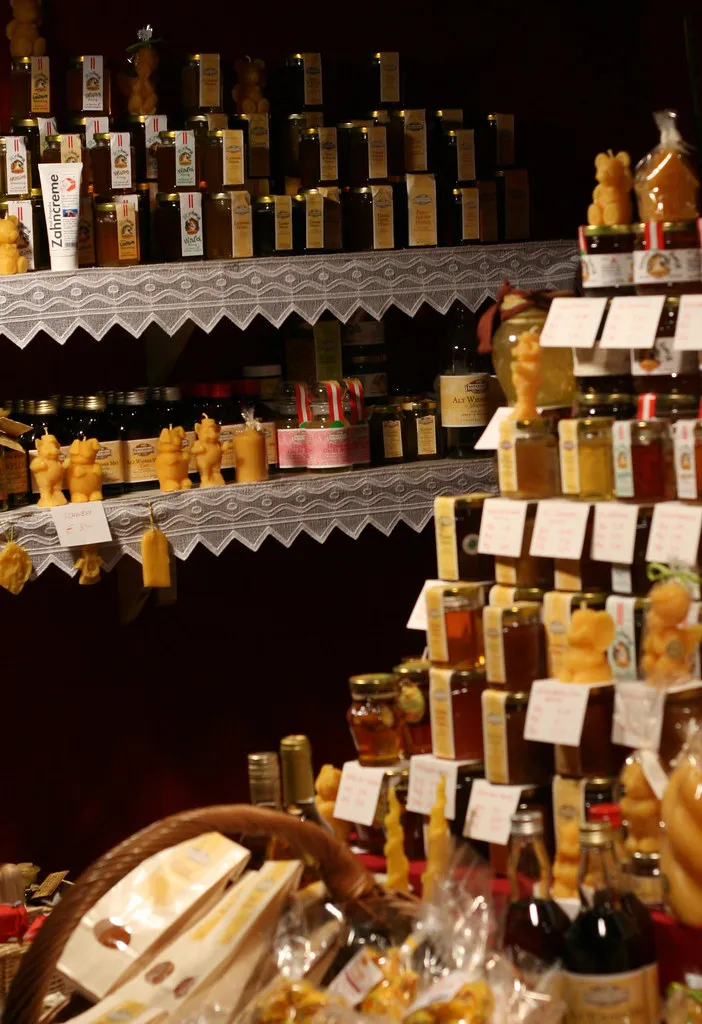
The Schönbrunn Palace market is smaller and closes earlier (around 21:00), but the Baroque palace backdrop is unmatched anywhere in Central Europe. It draws a slightly less tourist-dense crowd than Rathausplatz and specialises in traditional Austrian crafts: hand-painted wooden decorations, beeswax candles, and knitted woollens. The U4 line to Schönbrunn covers it in 15 minutes from the city centre.
Look for the 'Tree of Hearts' installation at Rathausplatz — it serves as the main meeting point for locals and is the most photographed element of the market each year. For food, Kaiserschmarrn (shredded pancake with plum compote) runs €8–12 per portion and is far better here than at tourist restaurants nearby.
Budapest, Hungary: Basilica and Vörösmarty Square
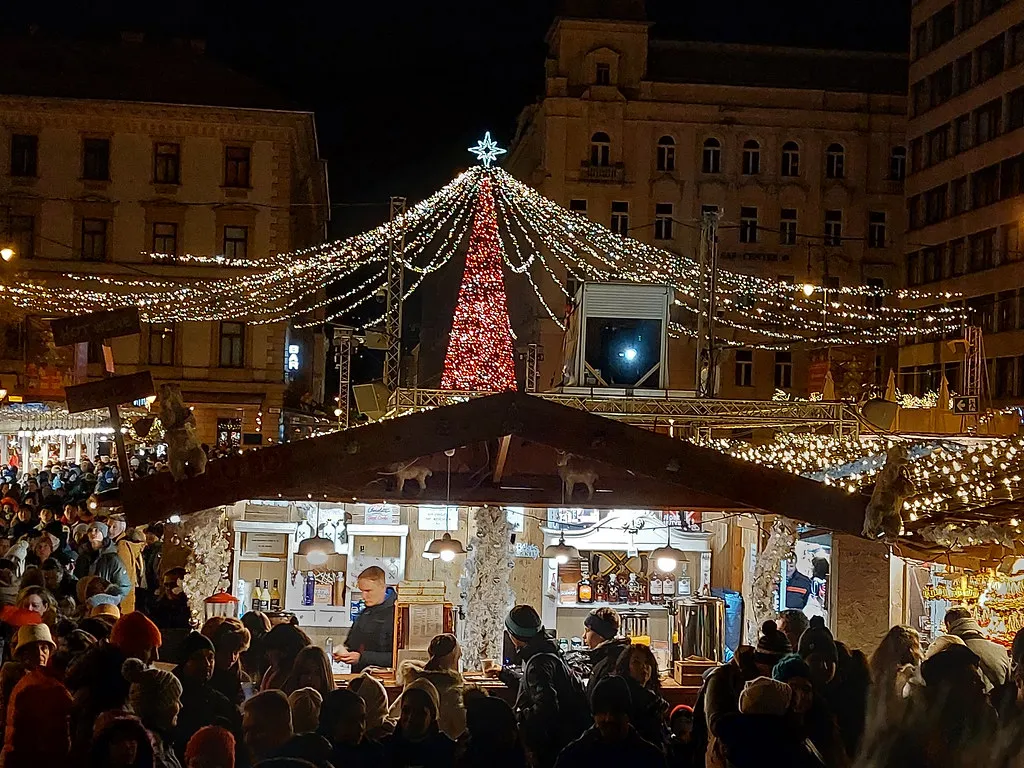
Budapest operates two distinct and complementary markets. The Advent Feast at the Basilica (District V, adjacent to St. Stephen's Basilica) has won the best European Christmas market award three times in the past decade. Its headline feature is a free 3D light projection show on the Basilica's facade, running nightly at 17:00, 18:00, 19:00, and 20:00. The Budapest Christmas market at Vörösmarty Square is larger and more commercial, but the combined visit takes less than 90 minutes on foot between the two.
Both markets open mid-November and run through 1 January. Hours are typically 11:00–21:00 on weekdays and 10:00–22:00 on weekends. The Deák Ferenc tér transit hub is five minutes' walk from the Basilica. Admission to both markets is free. Kürtőskalács (chimney cake) and Lángos (deep-fried dough with sour cream and cheese) are the must-try snacks here, each running €3–5.
Budapest is the most budget-friendly capital on the circuit. Drinks average €3–4, and sit-down meals near the markets cost significantly less than equivalent restaurants in Prague or Vienna. Consider the Budapest Christmas market accommodation guide for hotel options within walking distance of the Basilica.
Dresden, Germany: The Historic Striezelmarkt
Dresden's Striezelmarkt, established in 1434, is the oldest Christmas market in Germany and possibly in the world. It occupies the Altmarkt square and runs from late November through 24 December. Tram lines 1, 2, and 4 stop at Altmarkt, making it a five-minute ride from Dresden Hauptbahnhof. Hours are 10:00–21:00 Monday to Thursday, and 10:00–22:00 Friday through Sunday.
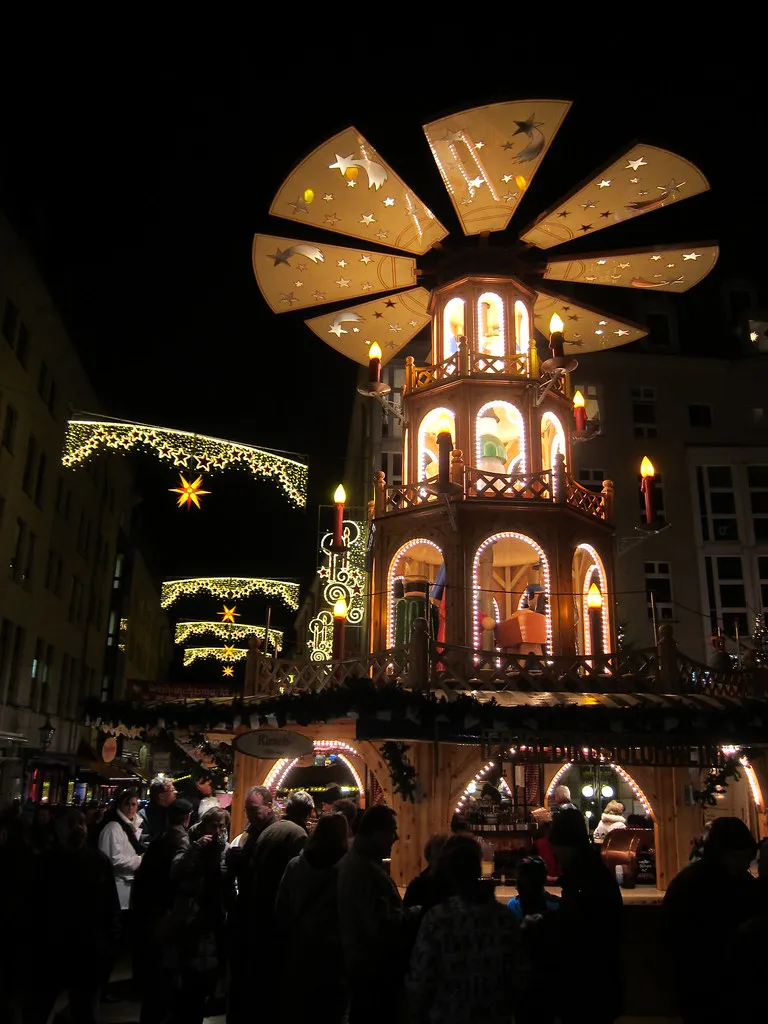
The centrepiece is a 14-metre Christmas pyramid — the world's largest of its type — surrounded by stalls selling Dresdner Christstollen (the famous buttery fruit bread) for €6–12 per slice with a drink. Authentic Stollen carries a protected geographic indication seal; stalls in the market's dedicated Stollen section will show this clearly. The pyramid and the Stollen make Dresden the strongest single destination on this list for food and history combined.
Dresden is also home to the separately ticketed Dresden Striezelmarkt Christmas World exhibition (inside the market grounds), which charges €5–8 and gives context to the 600-year market history. It is worth 45 minutes of time if you have children or a strong interest in the tradition.
Nuremberg, Germany: The Iconic Christkindlesmarkt
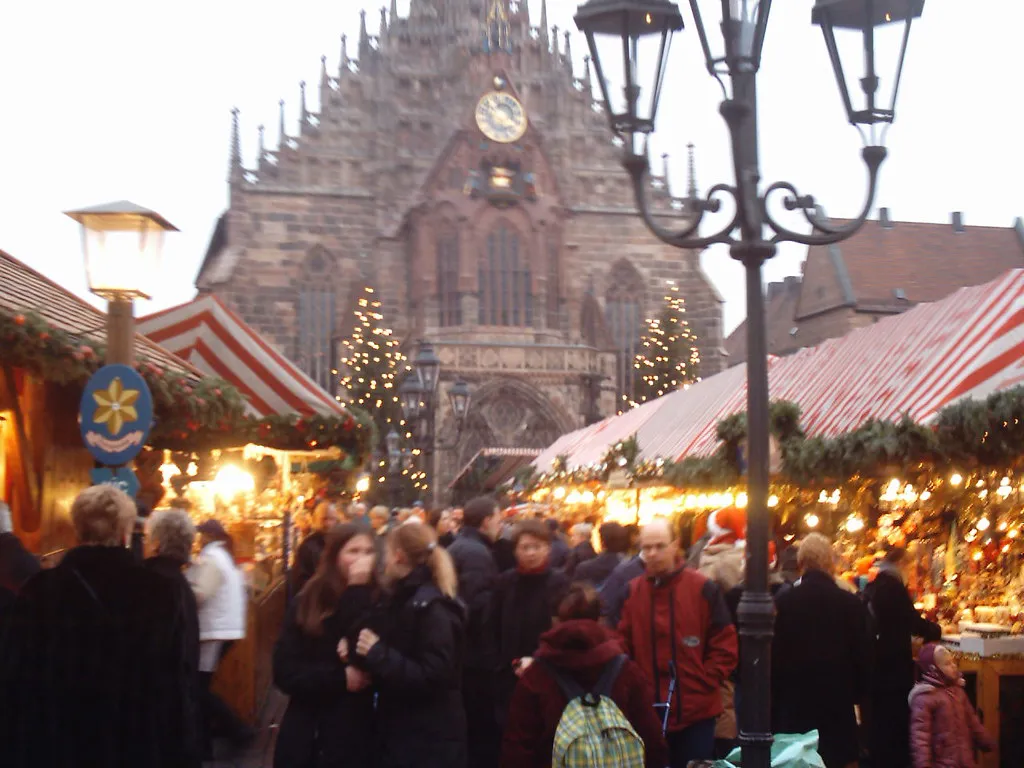
The Nuremberg Christkindlesmarkt is the most internationally recognisable market in Germany. It occupies the Hauptmarkt square inside the old city walls and opens each year with a ceremonial speech by the Christkind (a young woman elected to the role). The 2026 market runs from the Friday before the first Advent Sunday through 24 December, typically 10:00–21:00 daily. The market enforces strict quality rules: no plastic decorations, no mass-produced goods, and all stalls must offer items consistent with the historical tradition.
Three Nuremberg sausages in a bread roll cost €5–6; the local Lebkuchen (honey gingerbread) runs €6–14 depending on size and quality. The Dürer Hotel is a ten-minute walk from the Hauptmarkt, sits next to the old city walls, and provides a quieter base than hotels directly on the square. Nuremberg Hauptbahnhof is itself inside the old city walls, so the market is effectively adjacent to the train station.
One frequently missed detail: the Children's Christmas Market (Kinderweihnacht) operates simultaneously in Hans-Sachs-Platz, one block from the main market. It has a small-gauge railway, a carousel, and dedicated craft workshops. If you are travelling with children under ten, start there before the main stalls get crowded after 13:00.
Salzburg, Austria: Alpine Traditions Beneath the Fortress
Salzburg runs markets on two squares that are a five-minute walk apart: the Domplatz (Cathedral Square) and the Residenzplatz. Both sit in the old town beneath Hohensalzburg Fortress. The Domplatz market specialises in handmade goods and features a live nativity; Residenzplatz has more food stalls and a larger mulled wine selection. Combined hours are 09:00–20:00 daily from mid-November through 26 December.
The distinctive feature here is musical: Turmblasen, traditional brass chorales played from the cathedral towers, ring out each evening at 17:30 and 18:30. This is genuinely different from any other market on the circuit. Artisanal crafts average €10–30; Bauernbrot (farmhouse bread) with lard spread costs €4–6 per portion. Salzburg Hauptbahnhof is a 20-minute walk from the old town, or take bus lines 1, 3, 5, 6, or 25 to Rathaus stop.
Thursday and Saturday evenings typically include brass ensemble performances beyond the tower Turmblasen. Check the Salzburg Tourism calendar before your visit; performances can sell associated standing-room viewing areas quickly during peak weekends.
Aachen, Germany: The Local Border Gem
Aachen sits at the junction of Germany, Belgium, and the Netherlands — which partly explains its distinct market character. The Aachener Weihnachtsmarkt surrounds the UNESCO-listed Aachen Cathedral and feels unmistakably local: families with pushchairs, neighbours catching up over wine, and far fewer tour groups than Cologne or Nuremberg. Market hours run 11:00–20:00 Monday to Thursday and 11:00–21:00 Friday through Sunday, from late November to 23 December.
The food signature here is Aachener Printen — a locally protected spiced gingerbread distinct from the Nuremberg variety. A bag of mixed Printen costs €6–10 and travels well as a gift. The cathedral itself is free to enter during market hours and contains the throne of Charlemagne; combining a cathedral visit with the market is the obvious move and takes around two hours total.
Aachen is an easy day trip from Cologne (45 minutes by Regional Express train) or can serve as a one-night stop on a road trip route through the western Germany corridor. Hotel Kasteel Bloemendal, located 15 minutes across the Dutch border, is a castle-turned-hotel that represents exceptional value for those travelling by car.
Cologne, Germany: Cathedral Backdrop Markets
Cologne operates seven separate Christmas markets across the city, but the Cathedral Market (Kölner Weihnachtsmarkt) immediately outside the main station is the one people come for. Over 150 stalls cluster in the shadow of the twin Gothic spires of the UNESCO-listed Cologne Cathedral — a backdrop that no other market in the world can match. Hours are 11:00–21:00 daily from late November through 23 December. The station exit drops you directly into the market.
The Cathedral Market becomes notably congested on Friday and Saturday evenings from mid-December. The Angel's Market at the Neumarkt, about 20 minutes' walk away, is a less crowded alternative with a similar product range. Spaetzle (soft egg noodles with cheese) costs €6–8; the collector Glühwein mug changes design each year and is the most sought-after souvenir on the circuit among repeat visitors.
The Stadt Köln Bier (Kölsch, the local beer, served only in 200ml Stangen glasses) is available at most stalls and is as characteristic as the Glühwein. Cologne is the western anchor of the circuit: from here it is under an hour by ICE train to Aachen and around three hours to Frankfurt or Nuremberg.
Rothenburg ob der Tauber, Germany: Medieval Fairytale
Rothenburg ob der Tauber is the smallest city on this list and the one most likely to exceed expectations. Its Reiterlesmarkt occupies the central Marktplatz, with stalls extending into the surrounding medieval lanes. The market is open 11:00–19:00 daily from late November through 23 December — earlier closing than other markets, reflecting the town's quieter pace. The local train station is a 15-minute walk from the Marktplatz; the last train back to Nuremberg (the nearest hub) departs around 22:30 on most nights.
Arrive before 11:00 or after 17:00 to see the market without the large coach tours that typically descend between noon and 16:00. The town also hosts the Käthe Wohlfahrt Christmas Village year-round — a permanent shop and small museum dedicated entirely to German Christmas decorations, with an admission charge of around €4 for the museum section. The Schneeball (deep-fried dough ball coated in powdered sugar or chocolate) is the local pastry; quality varies, but the stalls on the Marktplatz steps tend to be freshest.
Rothenburg is the most photographed market town in Germany for good reason, but competitor guides consistently understate one crowd-management fact: the village is fully enclosed by medieval walls, creating a bottleneck at every gate on busy December weekends. If you drive, park outside the walls and walk in. If you train-trip from Nuremberg (45 minutes), the gate nearest the station (Rödertor) opens directly onto the Marktplatz.
Planning Your Central Europe Triangle Itinerary
The Railjet connects Prague, Vienna, and Budapest in a logical triangle. Prague to Vienna takes roughly four hours; Vienna to Budapest is approximately two hours and 40 minutes. Both routes run multiple daily departures. Book ÖBB Railjet tickets at least 30 days ahead for the best Sparschiene fares, which can drop below €20 per leg. You can also book via the Czech Regiojet operator on the same corridor at competitive prices, though comfort levels differ.
A practical seven-night structure: two nights in Prague, one night in Brno (two hours from Prague, quieter and cheaper), two nights in Vienna, two nights in Budapest. This allows one full evening market session per city plus a daytime exploration day. Avoid scheduling all your market evenings on Friday or Saturday — the best experience at every city on this circuit is a Tuesday or Wednesday dusk visit.
For the German corridor (Cologne → Aachen → Rothenburg → Nuremberg → Dresden), a car is more practical than rail because the towns are 45 minutes to two hours apart and the train connections between smaller stops require changes. Rental car companies at Cologne, Frankfurt, or Nuremberg airports all allow multi-country drop-offs within the Schengen zone. Budget one hour of daylight driving between each stop and arrive before 14:00 to secure parking before afternoon crowds peak.
Regional Food and Drink: What to Eat and What to Budget
Glühwein (Germany/Austria) and Svařák (Czech Republic) are the dominant hot drinks, each costing €2–5 depending on the city and whether a mug deposit is included. The deposit — typically €2–4 per mug — works as follows: you pay it on your first drink, then either return the mug for a full refund at any stall in the market, or keep it as a souvenir. Most markets use the same mug across all vendors in a given city, so you can return at any stall, not just the one where you bought the drink. This is a meaningful saving if you plan on drinking across multiple stalls throughout an evening.
Germany's food highlights by city: Nuremberg sausages (three for €5), Dresden Stollen (€6–12 per slice), Aachen Printen (€6–10 per bag), Rothenburg Schneeball (€3–5), Cologne Spaetzle (€6–8). Austria specialises in Kaiserschmarrn (€8–12) and Bauernbrot (€4–6). Czech and Hungarian markets lead on value: Prague's Svařák at €2–3 and Budapest's Lángos at €3–4 are the cheapest items on the circuit for their category.
Vegetarian and vegan options have expanded noticeably at every major market in the 2025–2026 season. Most markets now have at least two dedicated plant-based stalls alongside the traditional meat vendors. Contactless card payments are accepted at most stalls in Germany and Austria; Czech and Hungarian markets still have a higher proportion of cash-only vendors, so carry local currency for smaller purchases.
Transport and Logistics: Rail vs. Road Trip
Rail works best for the three Central European capitals (Prague, Vienna, Budapest) and for the German university cities (Cologne, Nuremberg, Dresden). Train stations in all six cities are within a 15-minute walk of the main market square. The ICE network connects Cologne and Nuremberg in under two hours; Dresden is 90 minutes from Nuremberg by regional express.
A road trip works better for the smaller stops: Rothenburg ob der Tauber, Aachen, and the Bavarian towns between Nuremberg and Munich. You gain flexibility on timing and can carry purchased goods without worrying about luggage allowances. The route Cologne → Aachen → Rothenburg → Nuremberg → Dresden spans roughly 650 km and can be driven comfortably over five days with one overnight per stop. Hotel prices in these smaller towns are noticeably lower than in the capitals — expect to pay €80–130 per night for a central property.
For a combined trip, fly into Cologne or Frankfurt, drive the smaller German stops for four days, then take the ICE to Prague and continue on the Railjet triangle. This structure covers eight of the nine markets on this list in under ten days. The Schengen Area means no border checks between Germany, Austria, and Czech Republic; Hungary is also Schengen as of 2025, so the full circuit is seamless.
Frequently Asked Questions
Where is the prettiest Christmas market in Europe?
Prague's Old Town Square is widely considered the prettiest due to its gothic architecture and massive, brightly lit tree. The combination of the Týn Church backdrop and traditional wooden huts creates a truly magical atmosphere.
Which central European country is famous for its Christmas markets?
Germany is the most famous country for these traditions, boasting historic markets like those in Dresden and Nuremberg. The German 'Christkindlmarkt' tradition has influenced holiday celebrations across the entire European continent for centuries.
What is the most Christmassy town in Europe?
Rothenburg ob der Tauber is often cited as the most Christmassy town because it hosts a year-round Christmas museum and shop. Its well-preserved medieval walls and narrow streets make it feel like a living holiday village.
Visiting these nine markets across Germany, Austria, Czech Republic, and Hungary covers the full range of what Central Europe does best at Christmas: imperial architecture lit at dusk, centuries-old food traditions, and efficient rail connections that make multi-city trips genuinely manageable. Plan around the 1–14 December window for the best balance of atmosphere and crowd levels, stay within a ten-minute walk of the main square in each city, and use the mug deposit refund system to keep drinks costs in check.
For city-specific planning, our guides to the Prague Christmas market, the Krakow Christmas market, and the Cesky Krumlov Christmas market cover logistics in more detail. The 2026 season runs from late November through late December — book accommodation now for anything in the two weeks before Christmas.
Explore More Festival Guides
Keep planning with our other in-depth festival guides across Europe.
- Brno Christmas Market Guide
- 10 Essential Things to Know About the Budapest Christmas Market
- 12 Best Budapest Christmas Market Dates & Locations
- Cesky Krumlov Christmas Market Travel Guide
- 7 Things to Know About the Eger Christmas Market
- Gdansk Christmas Market Guide
- 9 Essential Tips for the Krakow Christmas Market
- Krakow Christmas Market Dates
- 8 Things to Know About the Poznan Christmas Market
- Prague Christmas Market Guide
- Prague Christmas Market Dates
- Szentendre Christmas Market
- Where to Stay for Budapest Christmas Market
- 8 Best Areas and Hotels for Krakow Christmas Market
- 6 Best Areas Where To Stay For Prague Christmas Market
- 10 Essential Tips for Wroclaw Christmas Market
- Plovdiv Christmas Market Guide
- Sofia Christmas Market Guide
Free guide: Europe's Festival Calendar
A month-by-month map of Europe's unmissable festivals — with the best dates to visit each and a local tip you won't find in the guidebooks.
You might also like


Continue reading
More guides you'll find useful


