Tallinn Christmas Market Dates: 8 Things to Know
Plan your trip with the latest Tallinn Christmas market dates for 2026 and 2027. Includes opening hours, ferry tips, and must-try Estonian festive foods.
On this page
Tallinn Christmas Market Dates: 8 Things to Know
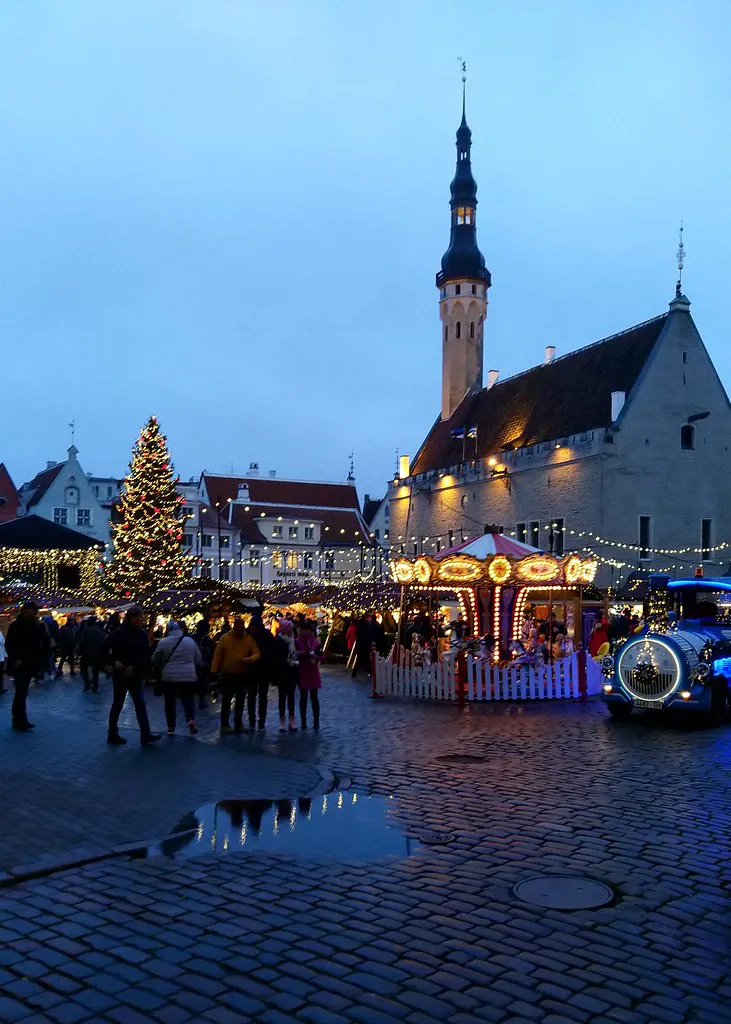
The Tallinn Christmas Market is held every year in Town Hall Square (Raekoja plats), the cobblestone heart of the medieval Old Town. It is consistently ranked among Europe's best holiday markets — European Best Destinations named it number one multiple times. The combination of 15th-century guild houses, a 14-metre lit tree, and genuinely Estonian food and crafts sets it apart from the larger, more generic markets in Germany or France.
See also: Things to Know About the 2026 Tallinn Christmas Market.
This guide covers the 2025 and 2026 dates, ferry logistics from Helsinki, what to eat and buy, where to sleep, and how to handle the very short December daylight window. All facts are verified against the official Tallinn Christmas Market site and Visit Estonia.
Free guide: Europe's Festival Calendar
A month-by-month map of Europe's unmissable festivals — with the best dates to visit each and a local tip you won't find in the guidebooks.
2025 and 2026 Market Dates and Opening Hours
The 2025 market ran from 21 November 2025 to 28 December 2025. For 2026, the market is scheduled to open on 20 November 2026 and close on 6 January 2027 — the extension into the new year accommodates Orthodox Christmas celebrations observed in parts of Estonia and neighbouring Russia.
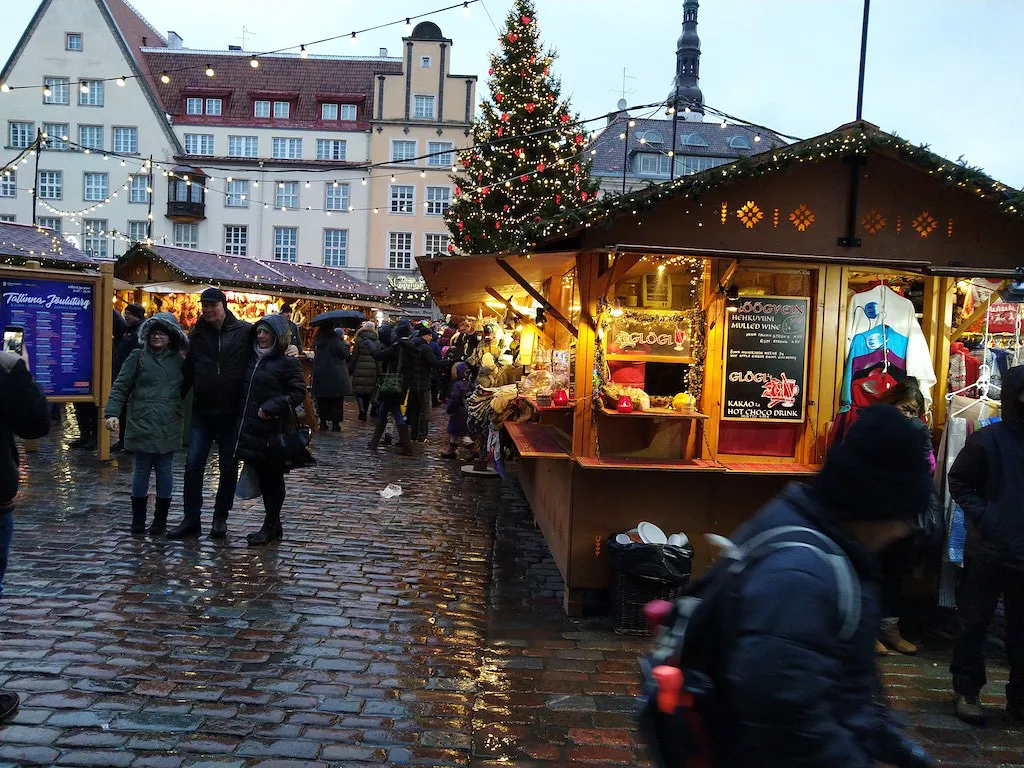
Stalls open daily at 10:00 and close at 20:00. Drinks are served until 22:00 from Sunday to Thursday and until 23:00 on Friday and Saturday. The central tree stays illuminated well after the vendors pack up. Always confirm the exact schedule at christmasmarket.ee before booking non-refundable travel.
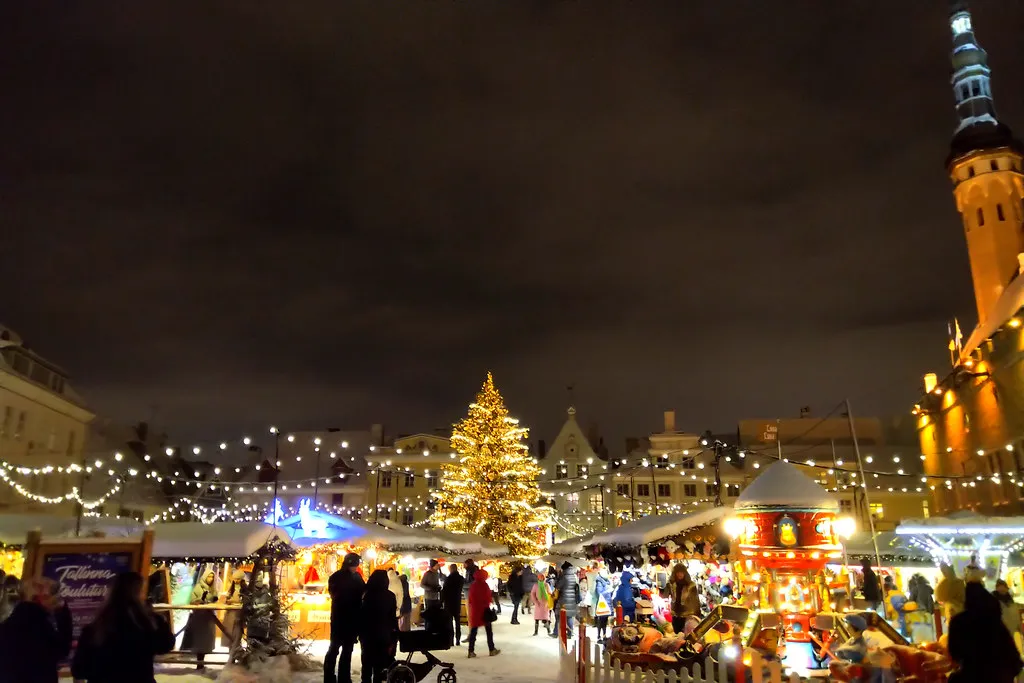
Weekends during the Advent period are the busiest and most atmospheric. Extra performers, choirs, and folk groups appear on the market stage on Fridays, Saturdays, and Sundays. If you visit during the week, crowds are thinner and it is easier to browse stalls at a relaxed pace. Both experiences are worthwhile — the daytime market and the illuminated evening version feel genuinely different.
The History of Europe's First Public Christmas Tree
Tallinn claims to have erected the first publicly decorated Christmas tree in 1441. The Brotherhood of Blackheads, a guild of unmarried merchants, placed a tree in Town Hall Square as part of a festive ritual that included communal dancing. Historical records from Tallinn support this date, making the tradition nearly six centuries old.
The rival claim comes from Riga, Latvia, which also points to a 15th-century record of a decorated tree. The debate between the two Baltic capitals remains friendly — both cities now display a plaque commemorating their respective claims. Check out the Riga Christmas Market Guide guide to see their competing version of the story.
Today the centrepiece tree stands approximately 14 metres (46 feet) tall and is decorated each November by the city. The lighting ceremony is a major community event attended by thousands of locals. It is placed in the exact spot where the Brotherhood first erected theirs, a continuity locals take genuine pride in.
Transport Guide: Reaching Tallinn by Ferry or Air
The most popular approach for visitors from Scandinavia is the ferry from Helsinki across the Gulf of Finland. Three companies operate this route: Tallink Silja (up to six departures per day), Viking Line (three per day), and Eckerö Line (three per day). All crossings take approximately two hours. Round-trip tickets range from 30 to 100 EUR depending on the company, travel date, and cabin class — Eckerö is typically the cheapest option, while Tallink offers more onboard amenities including restaurants and a duty-free shop.
| Ferry Line | Daily Departures | Approx. Crossing Time | Round-Trip Price Range | Best For |
|---|---|---|---|---|
| Tallink Silja | Up to 6 | ~2 hours | 50–100 EUR | Comfort, onboard dining |
| Viking Line | 3 | ~2 hours | 40–80 EUR | Mid-range option |
| Eckerö Line | 3 | ~2.5 hours | 30–60 EUR | Budget travellers |
Book ferry tickets at least a week in advance for weekend travel during the market period, as crossings fill quickly. The ships are large enough to carry cars, and many Finns use them specifically for lower-priced shopping in Estonia — you will be sharing the voyage with a mix of Christmas market tourists and regular cross-border shoppers.
Tallinn Airport receives direct flights from most major European hubs. The airport sits just 4 kilometres from the Old Town; tram line 4 connects it to the city centre in about 20 minutes and costs roughly 1.50 EUR. Taxis run around 10–15 EUR. Flying is the better option if you are coming from western or southern Europe rather than Finland.
What to Eat and Drink at Town Hall Square
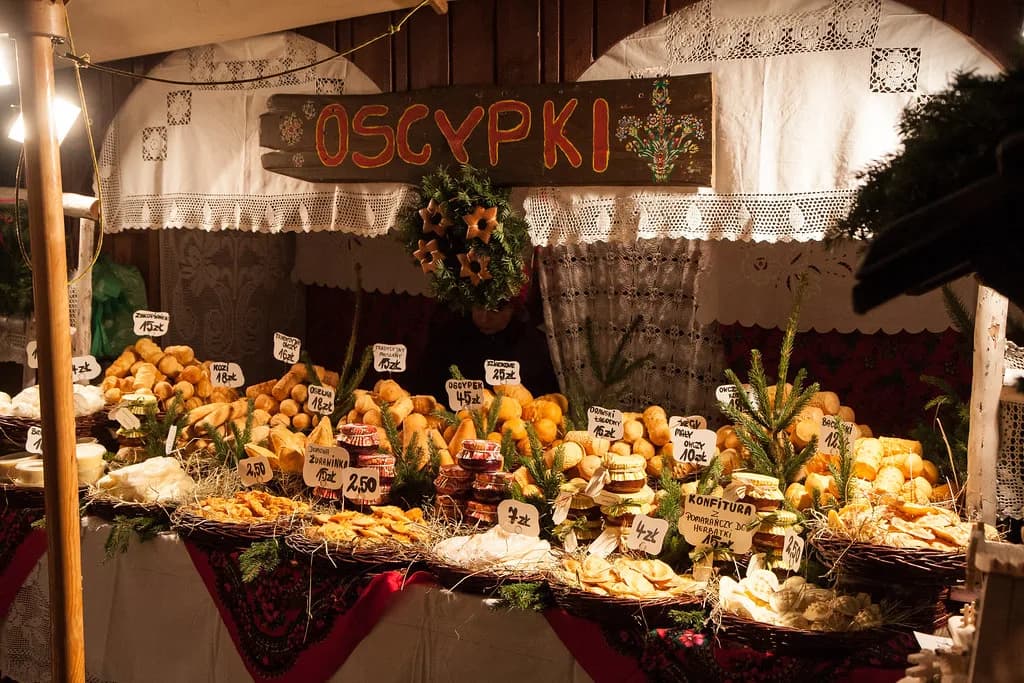
Estonian Christmas food is hearty and built for cold weather. The single most important dish to try is verivorst — blood sausage made from barley, pork, blood, and spices including allspice and marjoram. It is served with roasted potatoes, sauerkraut, and lingonberry jam, and it is Estonia's unofficial national Christmas dish. The large stalls with huge pans cooking over open flames are impossible to miss.
- Verivorst — Estonian blood sausage, the market's signature dish, served with lingonberry jam and sauerkraut
- Glögi — the Estonian take on mulled wine, spiced with cardamom and cinnamon; non-alcoholic berry-juice versions are available at every drinks stall
- Piparkoogid — traditional gingerbread cookies; look for the Metsaoru stand, which uses a medieval recipe producing a noticeably spicier, crispier result than the standard frosted versions
- Küüslauguleib — Estonian garlic bread, a savoury snack sold at several stalls throughout the square
- Marzipan — Tallinn has produced marzipan for centuries; beautifully hand-painted figurines make excellent edible gifts
Glögi can be served with or without a shot of Vana Tallinn liqueur, a locally made rum-based spirit with cinnamon and citrus notes. Most drinks stalls charge a small deposit (typically 1–2 EUR) on reusable mugs, which you recover when you return the cup. The market operates an eco-conscious reusable-plate system as well — keep your receipt to get the deposit back.
The Gingerbread Mania exhibition runs separately from the market itself, usually from early December to early January at the Design and Architecture Gallery. Around 100 artists participate and every piece — from sculptural towers to furniture-scale installations — must be made entirely from gingerbread dough. Entry is ticketed. If you are visiting in December, this is worth an hour of your time.
What to Buy: Estonian Handicrafts and Souvenirs
The stalls carry a mix of genuine Estonian handicrafts and generic imported goods that look similar on the surface. Knowing the difference saves you money and means you take home something that actually comes from Estonia.
Authentic hand-knitted wool mittens and socks are the most worthwhile purchase. Genuine Estonian mittens are worked in traditional patterns — geometric, with natural colour contrasts — and made from coarser local sheep's wool rather than the softer imported yarns used in mass-produced versions. Price is the clearest signal: authentic mittens run from 25 to 95 EUR depending on complexity. Anything priced under 15 EUR is almost certainly imported. Ask the vendor whether they knitted the item themselves; makers at the market are usually happy to explain the regional pattern.
- Hand-knitted mittens and socks — 25 to 95 EUR; look for irregular handmade stitching and natural wool smell
- Wooden Christmas decorations — hand-carved ornaments and figurines, typically birch or pine; mass-produced versions feel noticeably lighter
- Marzipan figurines — hand-painted and locally made; Tallinn's marzipan tradition dates to the Middle Ages
- Linen goods — tablecloths, towels, and cushion covers in natural flax; Baltic linen is a genuine regional product with a long history
- Vana Tallinn liqueur — available at the market and at grocery stores; a practical gift that travels well
Carved wooden items are another area where quality varies. Genuine hand-carved pieces show slight tool marks and imperfect symmetry. Machine-produced ornaments have perfectly uniform edges and a uniform finish. The price gap is usually 3–4x. When in doubt, go to the stalls run by individual craftspeople rather than vendors selling large quantities of identical items.
Accommodation: Where to Stay in the Old Town
Staying inside the UNESCO-listed Old Town puts you within a five-minute walk of Town Hall Square. This matters in December when temperatures drop to -5°C and the streets ice over after dark. The tradeoff is price — Old Town hotels and apartments carry a premium during the market period, particularly from late November through Christmas week.
The main accommodation zones to consider are the Upper Town (Toompea), where hotels tend to be quieter but slightly further from the market, and the Lower Old Town, which sits immediately adjacent to the square. Mid-range options in the Lower Old Town typically run 80–150 EUR per night during market season; budget guesthouses and hostels exist on the fringes for 30–60 EUR. Book at least four to six weeks in advance for Christmas week stays.
If budget is the priority, the Telliskivi and Kalamaja neighbourhoods west of the Old Town offer cheaper accommodation and a genuinely local atmosphere. Both are a 15-minute walk or a short tram ride from the market. The neighbourhoods have good restaurants and cafes that locals actually use, which is a welcome contrast to the tourist-facing options inside the Old Town gates.
Practical Tips for Cold Weather and Short Days
December daylight in Tallinn is extremely limited. Sunrise is around 08:40 and sunset is at approximately 15:30, giving you roughly six and a half hours of natural light. The most productive strategy is to use the daylight hours for photography around the Old Town and Toompea viewpoints, then shift to the market itself from around 15:00 onwards when the stalls are fully lit and the atmosphere is at its most atmospheric.
- 08:40–10:00 — Breakfast at a cafe in the Old Town; streets are quiet before the market opens
- 10:00–13:00 — First pass through the market in daylight; good for scouting stalls and photography of the tree against the guild-house facades
- 13:00–15:30 — Explore wider Old Town: Toompea citadel, Alexander Nevsky Cathedral, Kadriorg if time allows
- 15:30 onwards — Return to Town Hall Square as dusk falls; this is the golden window for market atmosphere — the lights are on, the temperature drops, and the glögi stalls are at peak activity
Temperatures range from -5°C to 0°C in December, and wind from the Baltic Sea makes it feel colder. Wear waterproof boots with a non-slip sole — the cobblestones ice over quickly after dark. Wool or synthetic thermal layers work better than cotton, which retains moisture. Estonian law does not require pedestrians to wear reflective tabs, but locals clip them to coats and bags for visibility during the dark afternoons; you can buy them at any pharmacy for under 1 EUR.
Cash is useful at the market, though most stalls now accept contactless payment. ATMs are available throughout the Old Town. Public toilets near the square are limited — use the facilities at a cafe or the tourist information centre before a long browsing session.
Beyond Tallinn: Estonia's Other Christmas Markets
Tallinn is the obvious draw, but visitors staying longer in Estonia have two worthwhile alternatives. Tartu, Estonia's university city 190 kilometres south of Tallinn, runs its own Christmas market in Town Hall Square with a noticeably quieter, more local atmosphere. Tartu's market is smaller and less polished, but prices are lower and the crowds are a fraction of what you encounter in Tallinn. A regional bus or train from Tallinn takes around two to two and a half hours.
Narva, on the Russian border in eastern Estonia, has a different character entirely. The city is majority Russian-speaking and celebrates Orthodox Christmas traditions alongside the Western calendar dates. Its market and festivities extend later into January. Narva is not on most tourist itineraries, but it offers a genuinely distinct experience if you have already done Tallinn and want to see a less-visited part of the Baltic region.
For travellers arriving via Helsinki ferry who want to extend the trip, the Best Christmas Markets in Scandinavia and the Baltics guide covers other regional options including Riga and Helsinki itself. Both cities are reachable from Tallinn in under four hours by ferry or bus.
Frequently Asked Questions
Is Tallinn Christmas Market worth it?
Yes, it is widely considered one of the most authentic markets in Europe. The medieval setting and traditional Estonian crafts provide a unique experience. It offers a more intimate feel than larger German markets.
How long is the Christmas market in Tallinn?
The market typically lasts for about six to seven weeks. It opens in late November and usually closes in early January. This extended schedule accommodates both Western and Orthodox holiday dates.
Is the Tallinn Christmas market open on Christmas Day?
The market remains open on December 25, though hours may be shorter. It is a popular time for families to visit the Town Hall Square. Most stalls operate from midday until the early evening.
How cold is it in Tallinn in December?
Temperatures usually range from -5°C to 0°C / 23°F to 32°F. Humidity and wind from the Baltic Sea can make it feel significantly colder. Visitors should prepare for snow and icy walking conditions.
Related: Tallinn's full festival calendar.
Tallinn offers one of the most magical festive experiences in the Baltic region. By planning around the Tallinn christmas market dates, you ensure a memorable trip. The combination of medieval history and warm traditions is truly special. Check the Best Christmas Markets in Scandinavia and the Baltics for more regional travel ideas.
Whether you visit for the food or the history, the city will impress. Remember to pack warm layers and prepare for the short winter days. The Town Hall Square awaits with its lights and historic charm. Safe travels to one of Europe's most enchanting winter destinations.
Free guide: Europe's Festival Calendar
A month-by-month map of Europe's unmissable festivals — with the best dates to visit each and a local tip you won't find in the guidebooks.
You might also like
Continue reading
More guides you'll find useful