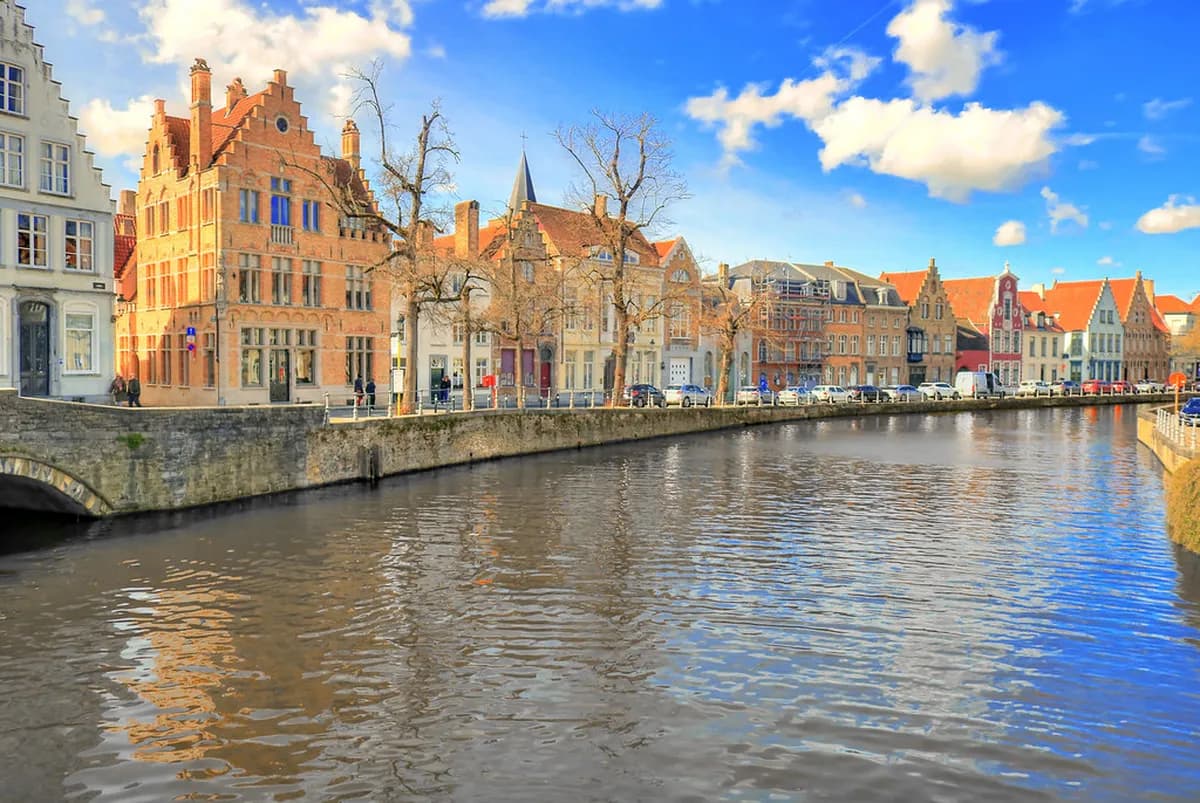
18 Best Places and Tips for Europe in January
Plan your trip to Europe in January with our guide to the 18 best destinations for winter sun, skiing, and budget-friendly city breaks.
On this page
18 Best Places and Tips for Europe in January
Europe in January offers the lowest prices and smallest crowds of the entire calendar year. Mid-January to early February is the best window for budget travelers seeking deep discounts. The post-holiday period empties streets, cuts hotel rates, and leaves major landmarks nearly queue-free. Last updated June 2026.
Part of our European Festival Calendar By Month Travel Guide series.
Travelers can find everything from volcanic beaches in the south to pristine ski slopes up north. Southern regions like the Canary Islands maintain mild temperatures for outdoor activities year-round. Central European cities transform into peaceful hubs for museum hopping and cozy dining. Planning now lets you lock in the best rates on flights and hotels before demand picks up.
If you enjoy winter events, check the best festivals in europe in winter guide. This article covers the top 18 spots — sun seekers, skiers, city breakers, and hikers all find a match below.
Free guide: Europe's Festival Calendar
A month-by-month map of Europe's unmissable festivals — with the best dates to visit each and a local tip you won't find in the guidebooks.
Why Visit Europe in January?
Visiting in early January lets you catch the tail end of holiday traditions before crowds dissolve. Cities like Seville celebrate the Three Kings Parade on the evening of January 5th with city-wide street parties and elaborate floats. Crowd levels drop sharply after the first week, leaving major museums nearly empty. Walking through the Uffizi or the Louvre without battling summer queues is genuinely possible.
Flight prices often hit their annual lows in the second half of the month. Budget airlines frequently list seats for under €30 between major European hubs. Accommodations follow — many luxury boutiques offer rooms at steep seasonal discounts, and traveler reports put five-star stays in the Algarve at under €30 a night. This is the best window to enjoy high-end experiences on a modest budget.
Winter festivals add cultural depth that disappears in summer. In San Sebastián, the Tamborrada Drum Festival on January 19th–20th fills the city with 24 hours of continuous drumming from the gastronomic societies. Those planning further ahead should also look at europe in february for carnival season. January rewards travelers who appreciate crisp air and authentic local life.
Tenerife, Canary Islands
Tenerife offers the most reliable winter sun in all of Europe. Daily highs typically sit at 18–22°C near the volcanic southern beaches throughout January, and the island sits geographically closer to Africa than to mainland Spain. Mount Teide, the highest peak in Spain, dominates the interior and is reachable by cable car year-round. The surrounding Teide National Park looks otherworldly with its red volcanic rock dusted in snow at altitude.
The north of the island is lush and green, a sharp contrast to the barren south. Anaga Rural Park contains ancient laurisilva forest and dramatic coastal cliffs ideal for day hikes. If beach weather is the main draw, the southern resorts around Playa de las Américas guarantee sun almost every day. Each of the eight Canary Islands has its own personality — Lanzarote runs slightly hotter as it sits closest to the Sahara, while Fuerteventura draws winter wind-sport enthusiasts.
Barcelona, Spain
Barcelona in January is a different city to the one that receives ten million summer tourists. Average daytime temperatures hover around 13–15°C, pleasant enough for walking the Gothic Quarter without sweating through a shirt. January crowds at Sagrada Família, Park Güell, and the Picasso Museum are thin enough to enter without pre-booking weeks in advance. The city's restaurant scene — always competitive — is at its most welcoming when tables are easy to get.
January also marks the start of Spain's Rebaixes (sales season), which runs through February. High-street stores and boutiques along Passeig de Gràcia discount stock significantly. Hotel rates drop 30–50% compared to summer peaks. A city break combining architecture, food, and shopping makes Barcelona one of the most versatile January destinations in Europe.
Rome, Italy
Rome in January is cold by Italian standards — expect 5–12°C — but the trade-off is extraordinary. The Colosseum, the Vatican Museums, and the Borghese Gallery operate with minimal queues. Restaurant bookings are easy, locals outnumber tourists, and the city moves at a pace that actually lets you absorb it. Rain showers pass quickly and the light on the Forum is often spectacular in winter.

Most major attractions remain open and fully operational in January. The Vatican Christmas decorations stay up through Epiphany on January 6th, and the Feast Day itself brings traditional processions around the city. Budget travelers find mid-range hotels in Trastevere well under €80 a night. For Italy's mountain alternative, the Dolomites (covered below) are just a few hours north.
Salzburg, Austria
Salzburg blanketed in snow is one of the most visually striking cities in Europe in winter. The baroque architecture and hilltop fortress look straight out of a fairy tale when frost coats the rooftops and the Salzach River steams in the cold air. The city's Mozart associations run deep — the Mozarteum concerts and museum visits make for a warm and cultural afternoon when temperatures dip. Several excellent ski areas sit within 30–60 minutes of the city centre.
January is quieter than December, so hotel prices around the Old Town soften significantly after the Christmas markets close. The Altstadt is compact and walkable; most major sights cluster within a 20-minute stroll. For a combined city-and-slopes itinerary, Salzburg is the most logical Austrian base, with Obertauern and Schladming both accessible by bus or car.
Cologne, Germany
Cologne in January is quieter than its Carnival reputation suggests — the biggest festivities fall in February or early March depending on the year. But the city is already preparing. The pre-Carnival atmosphere builds through January, and the Cathedral, one of the most visited landmarks in Germany, is best explored in January's off-peak calm. The Cologne Chocolate Museum and the Romano-Germanic Museum offer solid indoor options on rainy days.
When Carnival does peak, the centrepiece is the Rose Monday Procession (Rosenmontagszug): an 8.7 km parade with 12,000 participants that takes over five hours to pass a fixed point. Parade participants throw more than 300 tonnes of candy and 300,000 bouquets of flowers to costumed crowds. For 2026, check the exact dates — Shrove Monday (Rosenmontag) falls in February or early March — and book accommodation months in advance if you plan to attend. January visitors get the city without the chaos and at a fraction of peak prices.
Malta and Gozo Islands
Malta's "Green Season" runs through winter, and January is one of the best months to visit. Average highs reach 15–16°C with short rain showers every few days rather than prolonged grey spells. The island's Neolithic temples — including Ħaġar Qim and the Hypogeum of Hal Saflieni — are far easier to appreciate without the summer heat and humidity pressing down on exposed limestone. Gozo's coastal hiking, particularly the Xlendi Bay to Sanap Cliffs trail, is at its scenic best after light winter rain turns the landscape green.
Culture seekers should time a visit around the Valletta Baroque Festival, which runs for roughly three weeks in January across some of the capital's finest baroque buildings, including St John's Co-Cathedral. The programme features classical ensembles from across Europe performing in intimate architectural settings at prices well below standard concert venues elsewhere. This event receives almost no coverage in mainstream January travel guides, yet it is one of the most rewarding winter cultural events on the continent. Valletta itself — a compact UNESCO World Heritage city on a peninsula — is thoroughly walkable and offers excellent small restaurants at low off-season prices.
Nice & the French Riviera
Nice in January benefits from the Baie des Anges microclimate, which keeps daytime temperatures around 12–14°C and delivers a disproportionate number of sunny hours compared to the rest of France. The Promenade des Anglais is pleasant to walk even in mid-winter, and the Cours Saleya flower market runs year-round. The Musée Matisse and the MAMAC (modern art) are quiet and unhurried in January — exactly how they should be experienced.
Early January also marks the start of the Soldes, France's government-regulated seasonal sale period. Luxury boutiques and department stores along Rue de France and Avenue Jean Médecin discount stock significantly, making January the best month to shop for high-end French goods at reduced prices. Hotel rates across the Riviera fall sharply after New Year's. For skiers, the Mercantour mountains are roughly 90 minutes by car, combining a Riviera city base with day access to the slopes.
Seville & Cádiz, Spain
Seville is one of the warmest cities in continental Europe in January, regularly hitting 14–16°C on clear afternoons. The Three Kings Parade on the evening of January 5th — Cabalgata de Reyes — is one of the most theatrical in Spain, with floats moving through the historic centre to the delight of enormous crowds. Orange blossoms begin to appear on the city's famous trees from mid-January onward, adding fragrance to the streets of the Barrio de Santa Cruz. The Alcázar and Cathedral queue times are a fraction of those seen in spring.
Cádiz, 1.5 hours southwest by bus, is one of the oldest continuously inhabited cities in Europe and relatively overlooked by international tourists year-round. In January it is almost entirely locals. The waterfront is bracing but photogenic, and the central market is outstanding for fresh seafood at low prices. Both cities make a logical pairing for a one-week southern Spain circuit that avoids any January chill entirely.
Baden-Baden, Black Forest
Baden-Baden is a spa town in Germany's Black Forest where the contrast between the freezing forest air and the thermal water indoors is part of the appeal. The town's name — "bathing-bathing" — signals its identity clearly: two historic bathhouses anchor the visitor experience. Caracalla Spa is a 5,000 m² complex with outdoor pools heated to 38°C, where you can soak while snow rests on the surrounding trees. Friedrichsbad, opened in 1877, takes a more structured approach — all visitors progress through a fixed 17-stage sequence of steam baths, hot and cool pools, and a soap-and-brush massage. The Roman bath foundations are visible beneath the building.
The etiquette at Friedrichsbad is worth knowing before you go. Swimwear is not permitted during mixed bathing periods — check the timetable when booking. The experience typically takes around two hours. The surrounding Black Forest villages are quieter in January than at any other time, and hotel rates in Baden-Baden itself drop well below summer levels. The nearby Palais Thermal in Bad Wildbad is worth adding if you want to extend the spa itinerary.
Garmisch-Partenkirchen, Germany
Garmisch-Partenkirchen sits in the Bavarian Alps about one hour south of Munich and provides access to the Zugspitze — Germany's highest peak at 2,962 m — via a combination of cog railway and cable car. The summit views extend into Austria and Switzerland on clear days. In deep January, the Partnach Gorge just outside town develops spectacular ice formations: waterfalls freeze mid-fall, and blue-green ice columns build along the gorge walls. The gorge is walkable year-round but shows its most dramatic face between December and February.
The town itself is small, cosy, and best explored on foot. Mountain huts (Almhütten) serving hearty Bavarian food stay open through winter. Nearby storybook villages like Mittenwald and Oberammergau make easy day excursions. Hotel rates are lower in mid-January than over the Christmas-New Year period, and mid-month avoids the school holiday crowds that arrive in February.
Austrian Alps, Austria
Austria takes skiing seriously — the country has 435 ski resorts spread across eight provinces, and the season runs mid-December through late March. St. Anton am Arlberg is the most famous, now connected to Lech for one of the largest ski circuits in the Alps. Ischgl (Silvretta Arena) is notorious for its après-ski, while Kitzbühel draws the international set in late January for the Hahnenkamm downhill race. Obertauern in Salzburg state guarantees snow from November through May and is a solid choice for those who want deep winter conditions without fighting for slope space.
January avoids both the Christmas school rush and the February half-term peak — it is the quietest window of the ski season for most Austrian resorts, and mid-week lift-pass prices reflect this. Thermal baths round out an Austrian Alps trip well: the Aqua Dome in Tyrol and Hohe Tauern Spa in Salzburg are two of the most architecturally striking. A tip for non-skiers: the valley hiking and snowshoe trails in the Ötztal and Stubai valleys are underused in January and offer genuine winter wilderness without any ski-area crowds.
Dolomites, Northern Italy
The Dolomites host the largest ski area in the world — the Superski network spans 12 resorts and 1,200 km of pistes. Val Gardena and the Sella Ronda circuit are the most celebrated, with Michelin-starred restaurants and high-end spa hotels making après-ski as much a draw as the pistes. January brings statistically reliable snow cover and fewer lift queues than the February school holiday weeks. The Dolomites' pale limestone peaks turn extraordinary shades of orange and pink at sunrise — the Alpenglühen effect — and this is most vivid in the clear cold air of January mornings.
Winter hiking and snowshoeing to high-altitude rifugios is less discussed but equally rewarding. The Alta Via 1 and 2 routes have rifugio sections accessible on snowshoes in winter, offering a completely different pace to the ski-resort scene. If you want the Dolomites without the ski crowd, pick a smaller base like Alleghe or Arabba. Prices in the village restaurants run well below the resort-centre hotels, and January midweek bookings are easy to find.
Warm European Destinations in January
For travelers who want genuine warmth rather than just milder temperatures, the options narrow to a reliable cluster. The Canary Islands are the clear front-runner — Lanzarote and Fuerteventura regularly hit 20–21°C in January, with long sunny days. The Algarve in southern Portugal settles around 15–16°C with occasional showers, but cliff-top coastal trails like the Fisherman's Trail are almost empty. Madeira and the Azores add lush volcanic alternatives further into the Atlantic with temperatures similar to the Algarve.
Malta averages 15°C and Cyprus pushes slightly warmer at 16–17°C. Both are accessible on direct flights from most northern European cities for under €100 return if booked mid-January. Athens enjoys what locals call "Halcyon Days" — extended sunny spells in January where temperatures reach 13–15°C and the city feels temporarily like early spring. Southern Spain around Seville and the Sierra Nevada combines warmth with optional skiing within a couple of hours, making it one of the few January destinations where both experiences are genuinely on the table.
Dream Hiking Trips in Europe
Winter hiking in Europe is most rewarding in the south and along the Atlantic coast, where January rains keep trails green and temperatures stay manageable. The Rota Vicentina in Portugal — particularly the Fisherman's Trail section between Porto Covo and Odeceixe — hugs dramatic Atlantic cliffs with minimal elevation change and almost no other walkers in January. The trail is well-waymarked and can be walked in sections or end-to-end over five to seven days. Accommodation in small coastal villages is inexpensive and welcoming in the low season.
Crete offers some of the best winter hiking on any Greek island. The Aradena Gorge, the Loutro to Sweet Water Beach coastal path, and the Samariá Gorge (which reopens to walkers in April but whose surrounding trails are accessible in winter) are all rewarding options. The island's western regions around Chania and Plakias are quiet, green, and genuinely off-season in January. Malta's Gozo island adds another low-altitude coastal hiking option with Neolithic sites woven into the route. For the more adventurous, Georgia's Caucasus Mountains around Kazbegi are accessible in January with proper gear and reward with views of Gergeti Trinity Church above a snowfield.
Antwerp, Belgium
Antwerp in January is cold and occasionally rainy, but the city's interior life — its restaurants, breweries, art museums, and boutique shopping — makes it one of the best European city breaks of the winter. The Royal Museum of Fine Arts reopened after years of renovation and now houses one of the strongest Flemish Masters collections in the world, including major Rubens works. The Cathedral of Our Lady contains four Rubens altarpieces in situ, which is extraordinary. Entry queues in January are non-existent.
The city pairs well with Bruges (30 minutes by train) and Ghent (50 minutes), and the Belgian rail system makes day-tripping straightforward. Antwerp's restaurant scene covers everything from Michelin-starred Flemish cooking to American BBQ at Black Smoke inside the De Koninck brewery complex. Hotel rates in January sit well below the summer season — the boutique August hotel, set in a former Augustinian cloister, often has January availability at mid-range prices.
Athens, Greece
Athens in January benefits from the "Halcyon Days" phenomenon — extended sunny spells, sometimes lasting two weeks, where temperatures reach 13–15°C. The Acropolis, the National Archaeological Museum, and the Agora are accessible with virtually no queues. Entry to the Acropolis costs €20 in the off-season rather than the summer price, and the site is peaceful enough to actually pause and look at the Parthenon without being jostled. The Plaka district below the Acropolis feels genuinely residential in January, with local tavernas serving real food at local prices.
Greece was officially named European Capital of Culture partner through the Oulu 2026 programme — Oulu will be one of two EU Capitals of Culture 2026 — and cultural programming runs through winter in participating cities. Athens remains a genuine budget destination by Western European standards in January. Direct flights from London, Amsterdam, and Frankfurt are available under €60 return if booked mid-month.
What to Pack for Europe in January
Layering is the core strategy for a multi-destination January trip. Temperatures range from 0°C in northern cities at night to 20°C in the Canary Islands during the day. A mid-weight down jacket compresses small enough for carry-on luggage and covers most northern city scenarios. Thermal base layers are worth packing for ski destinations or any city north of the Alps.
Waterproof ankle boots with decent grip handle both rain and light snow without restricting walking distance. Southern destinations like Malta, Seville, or the Algarve need only a medium fleece and a light rain shell. Evenings along the Mediterranean get cold quickly once the sun sets, even when daytime feels mild. Check the local forecast 48 hours before arrival and adjust.
- Northern European cities: heavy down jacket, thermal layers, waterproof boots
- Alpine ski destinations: waterproof ski trousers, gloves, goggles, neck gaiter
- Southern sun destinations: light fleece, packable rain jacket, sunglasses
- City breaks anywhere: comfortable walking shoes, a scarf, a mid-weight layer
What's Closed in Low Season
Coastal resorts on the Greek islands — Santorini, Mykonos, and Paros — close substantially between November and March. Ferries to smaller outer islands run on limited winter schedules and can be cancelled in bad weather. Verify transport options before booking if you plan to island-hop. The Amalfi Coast and many smaller Italian coastal towns also take January for renovations and private closures.
Some mountain passes in the Alps close due to heavy snow and ice, affecting driving routes between Italy, Switzerland, and France. Christmas markets disappear by January 2nd or 3rd across most of Europe. Major city attractions generally stay open but may operate reduced hours on Mondays or national holidays. Check the europe in december guide for the late December to early January transition window.
Frequently Asked Questions
Where in Europe is best in January?
Tenerife is best for sun, while Salzburg is ideal for skiing. Cities like Rome and Athens offer great culture without the crowds. Choose based on your preference for snow or sunshine.
Is Europe in January worth it?
Yes, it is worth it for the significant cost savings and lack of crowds. You can see major landmarks like the Colosseum in peace. Just be prepared for shorter days and colder weather.
What's the warmest country in Europe in January?
Spain is generally the warmest, specifically the Canary Islands. Temperatures there reach 18–22°C / 64–72°F regularly. Cyprus and Malta also offer mild winter climates compared to the north.
Visiting Europe for more than one festival? See our complete guide to festivals and events in Europe.
January is a rewarding time to explore Europe for the savvy and prepared traveler. You will find a level of quiet and authenticity that disappears during the summer. Whether you seek the sun in Spain or the snow in Austria, the continent delivers. Check out more tips on the Festivian blog for your next trip.
Free guide: Europe's Festival Calendar
A month-by-month map of Europe's unmissable festivals — with the best dates to visit each and a local tip you won't find in the guidebooks.
You might also like


Continue reading
More guides you'll find useful


