Where To Stay For Tallinn Christmas Market: 7 Best Areas
Discover where to stay for Tallinn Christmas Market. Includes 2026 dates, hotel tips for Old Town, and essential winter travel advice for Estonia.
On this page
Where To Stay For Tallinn Christmas Market: Best Areas & Planning
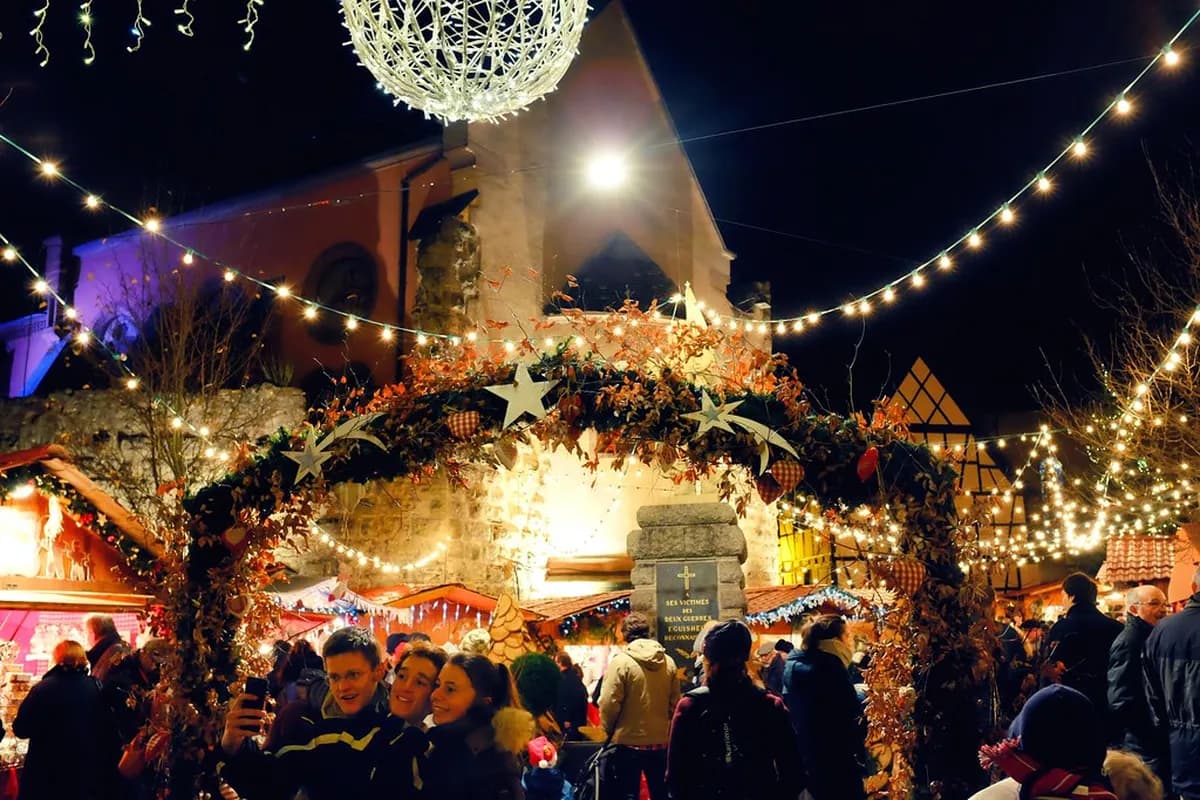
Choosing where to stay for Tallinn christmas market is the first step to a perfect winter trip. The most magical time to visit is from mid-November to early January when Town Hall Square glows with festive lights. This historic city hosted the world's first public Christmas tree back in 1441, making it the birthplace of a tradition celebrated across Europe. Last updated February 2026.
The 2026/2027 edition is expected to open in mid-to-late November 2026 and run through early January 2027 (the 2025/2026 edition opened on November 21st and ran through early January 2026); check the Visit Estonia Official Site for confirmed dates. Planning ahead is essential because the Tallinn Christmas market attracts thousands of visitors each December weekend. Securing a room early, especially in Old Town, ensures you stay within walking distance of Raekoja plats. Daylight is scarce — sunrise sits around 08:40 and sunset falls near 15:30 — so proximity to the market genuinely matters.
Visitors should check the Tallinn Christmas market dates before booking non-refundable flights. Temperatures typically hover between -5°C and 1°C during the peak season, with icy cobblestones requiring proper footwear. The best Christmas markets in the Baltics all share a local, unhurried character that is hard to find at larger markets in central Europe.
Free guide: Europe's Festival Calendar
A month-by-month map of Europe's unmissable festivals — with the best dates to visit each and a local tip you won't find in the guidebooks.
Old Town (Vanalinn): The Most Convenient Area
Staying in Old Town puts you within a four-minute walk of the market stalls. The medieval streets, thick stone walls, and lantern-lit alleyways make December evenings feel genuinely cinematic. Most boutique hotels here occupy buildings dating to the 13th century, which adds enormous character to a stay.
There is one important caveat: heritage laws in Estonia prevent most historic buildings from installing modern elevators. Travellers with heavy luggage, pushchairs, or mobility difficulties should confirm elevator access before booking. The Rixwell Collection Savoy Boutique Hotel is a popular Old Town choice that does have an elevator and sits just a four-minute walk from the Christmas market. Rooms run larger than the European average, and the location balances medieval atmosphere with practical convenience.
Expect to pay a premium for Old Town rooms during the peak market weeks of late November and December. Book at least two months ahead for weekend nights, which fill up first. Mid-week arrivals in early December offer better availability and often lower nightly rates while the market atmosphere is fully underway.
Kalamaja: Best for a Local, Trendy Vibe
Kalamaja sits a 15-minute walk northwest of Town Hall Square, just beyond the Balti jaam train station. The neighbourhood is defined by colourful 19th-century wooden houses and the sprawling Telliskivi Creative City, which hosts independent cafes, vintage shops, and local design studios. Prices for accommodation here run noticeably lower than in Old Town.
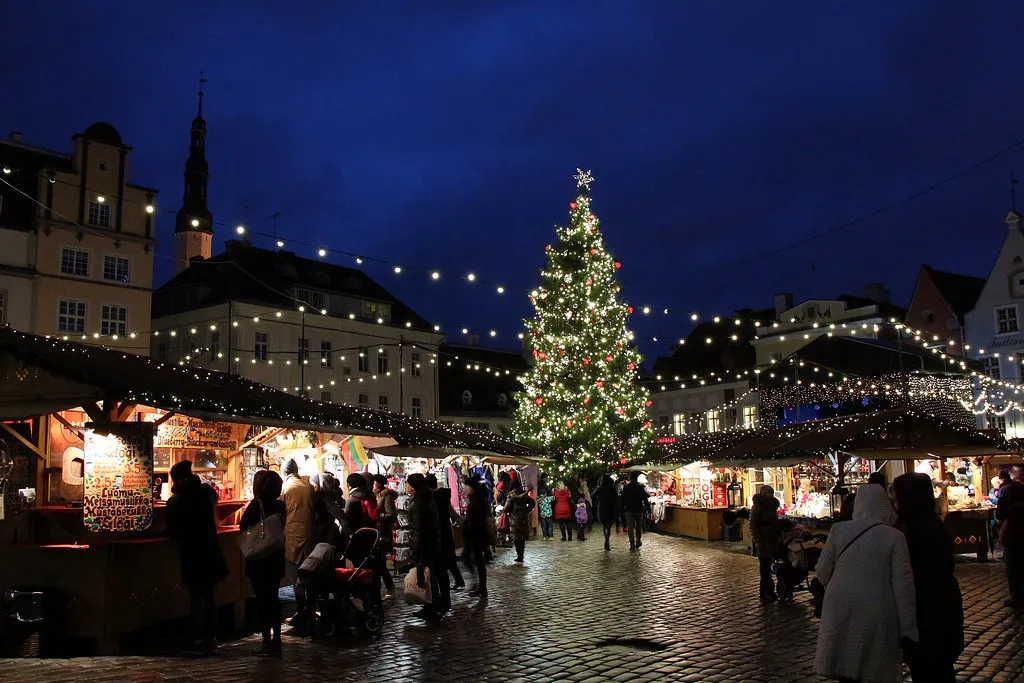
This district suits travellers who want a genuinely local base rather than a tourist-facing hotel. Cafes stay open in the evenings, the streets are quieter, and the walk into the medieval centre is a pleasant 20 minutes on flat terrain. It is also worth pairing a stay here with time exploring the Baltic Station market for everyday groceries and local snacks.
For those visiting the Riga Christmas market or the Vilnius Christmas market on a broader Baltic trip, Kalamaja's lower price point helps stretch a multi-city budget. The neighbourhood has grown quickly over the past decade and now offers solid options from private apartments to small guesthouses.
Rotermann Quarter: Best for Modern Amenities
The Rotermann Quarter occupies a converted industrial district between the harbour and the Old Town walls. Repurposed 19th-century limestone warehouses now house design hotels, high-end restaurants, and co-working spaces. The walk to the Christmas market takes roughly seven to ten minutes on foot.
This area works well for business travellers or those who prioritise fast Wi-Fi, gym facilities, and modern rooms with reliable heating. Hotels here typically have elevators as standard. It also serves as a convenient base for anyone arriving by ferry from Helsinki, since the D-terminal is a short five-minute walk from the quarter.
One differentiator worth knowing: Rotermann Quarter hotels often include a sauna, which is a genuinely restorative experience after hours on icy cobblestones. Estonia treats the sauna as a cultural institution rather than a spa luxury, so even mid-range properties tend to maintain well-equipped facilities.
2026 Market Schedule and Opening Hours
For 2026, the Old Town Tallinn Christmas market is expected to open in mid-to-late November (the 2025/2026 edition opened on November 21st) — confirm the exact opening date on the official tourism site before you book. Once open, the market runs daily from 10:00 to 20:00. Drink stalls stay open until 22:00 on Sunday through Thursday, and until 23:00 on Fridays and Saturdays. Food cabins begin closing from 20:00 onwards, so plan accordingly.
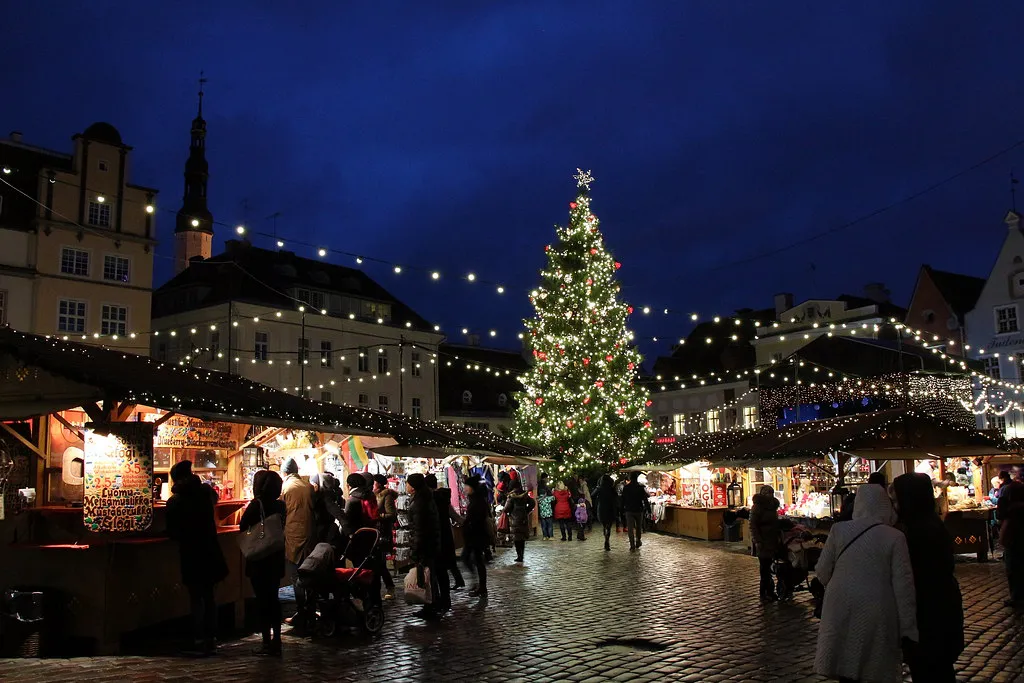
The official festive season is proclaimed by the Mayor on the first Sunday of Advent, when Santa Claus also begins his daily appearances at a dedicated cabin inside the market. Visiting Santa is free and the queue is typically short on weekday mornings. The market calendar on the local tourism website lists additional events, concerts, and themed evenings throughout December.
Because sunset falls around 15:30 in December, the market is most atmospheric between roughly 15:00 and 20:00, when the lights are fully visible against a dark sky. Arriving shortly before sunset and staying for dinner makes the most of those short daylight hours. Morning visits from 10:00 to 13:00 offer the lowest crowds and better access to popular food stalls.
What to Eat and Drink at the Market
Food stalls at the Tallinn market lean heavily into Estonian winter cooking. Sausages and smoked meats served alongside sauerkraut and fried potatoes are the backbone of the offering. Potato pancakes, dumplings, and soup served in an edible bread bowl are consistent favourites. Gingerbread biscuits come in elaborate hand-painted designs modelled on the Old Town's colourful facades.
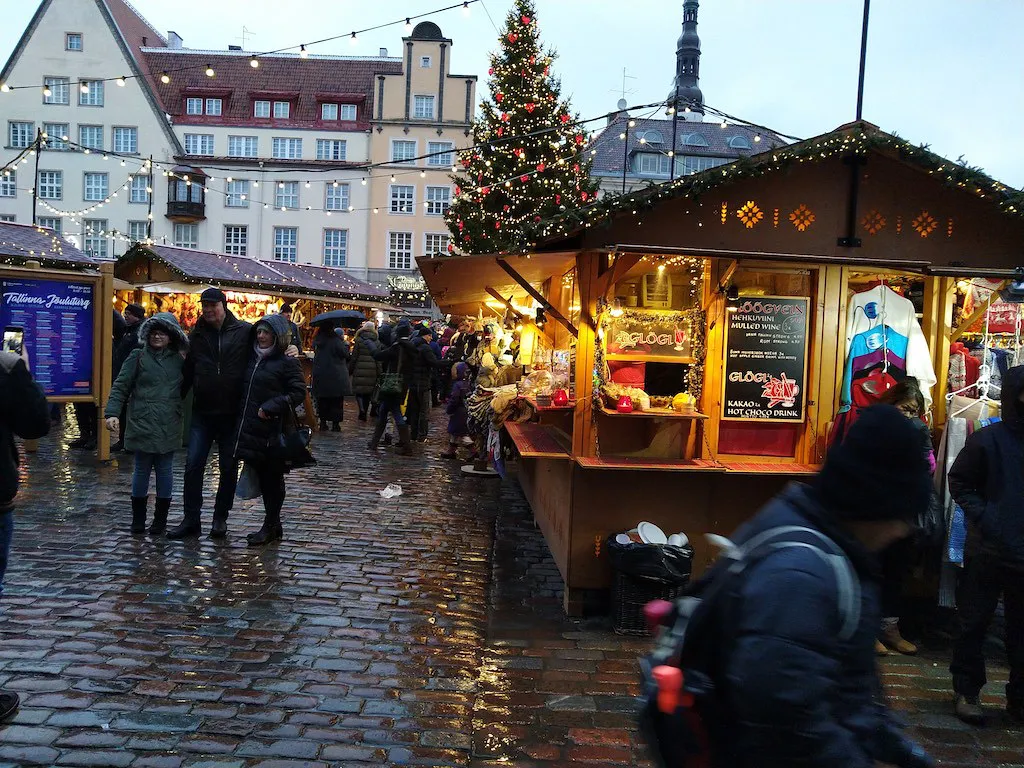
The drinks selection is more varied than at many European markets. Glögg (mulled wine) comes in several local flavours: cherry, blueberry, and Vana Tallinn liqueur are the most distinctive Estonian options. Non-alcoholic versions of each flavour are widely available, making the market accessible for those who do not drink. Hot chocolate is a standard option at most stalls.
One practical detail that surprises first-timers: Tallinn does not use the traditional ceramic deposit mugs common at German and Austrian markets. Drinks are served in plastic cups with a small deposit that is refunded when you return the cup. This is worth knowing if you plan to collect mugs as souvenirs from each market you visit.
Vegetarians will find the main food options limited to pancakes, soup, and gingerbread. If you need a full sit-down meal, the square is surrounded by restaurants. Olde Hansa is a popular medieval-themed option; Olde Estonia has a broader menu including pasta dishes that work well for families.
What to Buy: Estonian Crafts and Souvenir Budgeting
The Tallinn market prides itself on selling locally made Estonian goods rather than mass-produced imports. Woollen knitwear dominates: mittens, hats, socks, slippers, and scarves appear at almost every stall. Machine-made versions start from around 25 EUR per pair of mittens; hand-knitted pieces using traditional patterns can reach 95 EUR per pair. The quality difference is visible and worth the premium if you intend to use them rather than display them.
Beyond knitwear, stalls carry hand-painted Christmas ornaments, pottery, amber jewellery, embroidered linen tablecloths, and pillow covers. Chocolates and truffle boxes make compact gifts that travel easily. The market is intentionally small, which means each vendor is vetted — you will not encounter the same generic items repeated across dozens of booths as at larger markets.
Budget roughly 50–120 EUR per person for a solid mix of food, drinks, and one or two craft purchases. This is considerably more affordable than comparable markets in Vienna or Strasbourg, where a single ceramic mug deposit alone often exceeds 10 EUR.
Getting There: Ferry and Flight Logistics
Tallinn Airport sits about 4 km east of the city centre, roughly a 10–15 minute taxi ride depending on traffic. Bolt is the standard app for transparently priced rides and works well from the arrivals hall. Public tram lines also connect the airport to the Old Town for a fraction of the taxi cost.
The ferry from Helsinki is the most popular route for visitors already in Finland. The Tallink website handles bookings; the crossing takes approximately two hours each way. Ferries run multiple times daily, and boarding is straightforward — tickets on a phone are accepted without printing. The ships are large, with sit-down restaurants, a children's play room, and comfortable seating areas. Many day-trippers take the first morning sailing and return on the last evening ferry.
Once in Tallinn, the ferry D-terminal is a 20–25 minute walk from Town Hall Square, or a five-minute Bolt ride. Walking is pleasant in good weather but can feel exposed on cold, windy evenings. Pre-book ferry tickets at least a week ahead for weekend sailings in December, when demand from Finnish day-trippers peaks significantly.
Tallinn's Old Town is compact and very walkable once you are inside the city walls. A car is unnecessary for a market visit and parking in the medieval centre is limited. Public transport smartcards, available at the airport and main hotels, cover trams and buses efficiently if you want to reach Kalamaja or the Rotermann Quarter from Old Town.
What to Pack for an Estonian Winter
Dressing for Tallinn in December requires a proper layering system. Temperatures range from -5°C to 1°C, and the Baltic Sea humidity makes the cold feel sharper than the numbers suggest. A thermal merino wool base layer, a mid-layer fleece, and a windproof waterproof outer shell are the minimum. Down-filled coats add necessary insulation for multi-hour visits to the outdoor market.
Footwear matters more than almost anything else. Cobblestones in Old Town become icy and uneven in December. Choose insulated boots with rubber soles that have genuine grip — smooth leather soles are dangerous. Many local residents attach removable ice grips (available cheaply at Estonian pharmacies) over their boots for extra security on shaded streets.
Accessories to prioritise: a hat that covers your ears fully, waterproof gloves rather than knitted ones, and a heavy scarf. Hand warmers are worth packing for long evening sessions at the market. Given the short daylight window, a fully charged portable battery for your phone is more useful than any souvenir purchase.
Frequently Asked Questions
Where is the Tallinn Christmas Market located?
The market is located in the Town Hall Square (Raekoja plats) in the heart of the Old Town. This central location is easily accessible on foot from most major hotels. It serves as the historic hub of the city's festive celebrations.
What are the dates for the Tallinn Christmas Market 2026?
The 2026 market is expected to open in mid-to-late November 2026 and run until early January 2027 (the 2025/2026 edition opened on November 21st and ran until early January 2026). These dates follow the traditional festive calendar in Estonia, so confirm them on the official tourism site. Always verify specific closing times for individual stalls before your visit.
Is it better to stay in the Old Town or Kalamaja?
The Old Town is better for immediate market access and medieval charm. Kalamaja offers a trendier, more local experience with modern cafes and lower prices. Both areas are within walking distance of each other for easy exploration.
Related: festivals and events in Tallinn.
Tallinn offers one of the most authentic and intimate holiday market experiences in all of Europe. By choosing the right neighbourhood, knowing the market hours, and packing correctly for the cold, you can enjoy the festivities in genuine comfort. Remember that the 1441 Christmas tree tradition makes this square a truly historic destination — one that most European travellers have not yet discovered.
Whether you prefer a medieval boutique hotel with character or a modern Rotermann apartment with reliable heating, the city delivers. Plan for the short daylight window, eat your way through the Estonian stalls in the evening light, and book accommodation and restaurants well ahead of peak December weekends. Your winter journey to the Baltic coast will be among the most memorable of the season.
Free guide: Europe's Festival Calendar
A month-by-month map of Europe's unmissable festivals — with the best dates to visit each and a local tip you won't find in the guidebooks.
You might also like

Continue reading
More guides you'll find useful