Berlin Christmas Market Dates: 2026-2027 Guide to 15 Markets
Plan your trip with the latest Berlin Christmas market dates for 2026-2027. Includes entry fees, local tips on markets to skip, and packing advice.
On this page
Berlin Christmas Market Dates: 2026-2027 Guide to 15 Markets
Berlin runs more than 70 Christmas markets between late November and early January. They range from massive commercial affairs at Alexanderplatz to tiny courtyard markets that appear only on Advent weekends. Choosing the right ones — and knowing the exact dates — will determine whether you have a genuinely magical visit or spend three hours queuing for mediocre Glühwein. This guide covers 15 markets by category, with opening dates, entry fees, and honest assessments of which ones are worth your time.
Part of our Best Tips and Markets for Christmas in Germany series.
For the 2026/2027 season, most major Berlin markets are expected to open in late November 2026 (typically the Monday ahead of the first Advent Sunday, which falls on 29 November 2026) and run until late December — for reference, the 2025/2026 edition opened on or around 24 November 2025 and ran until 22–30 December 2025. Confirm exact 2026 dates on each market's official site before booking. The sun sets before 16:00 throughout December, so the best window is arriving at dusk when the lights come on before the post-work crowd arrives around 18:00.
Free guide: Europe's Festival Calendar
A month-by-month map of Europe's unmissable festivals — with the best dates to visit each and a local tip you won't find in the guidebooks.
Berlin Christmas Market Dates 2026-2027 (Overview)
The table below lists the most recent confirmed dates (the 2025/2026 edition) for Berlin's main markets as a planning reference — 2026/2027 dates typically shift only a day or two and are confirmed on each market's official site a few weeks before opening. Admission fees vary: most street markets are free, but a handful charge €1–€5 at the gate. Always carry cash — the majority of stalls are cash-only, and you will need small coins (50 cents to €1.50) for public toilet fees inside market grounds.
| Market | 2025/2026 Dates (reference — confirm 2026/2027) | Hours | Admission |
|---|---|---|---|
| Berliner Weihnachtszeit (Rotes Rathaus) | Nov 24 – Dec 30 | Mon–Fri 12:00–22:00, Sat–Sun 11:00–22:00 | Free |
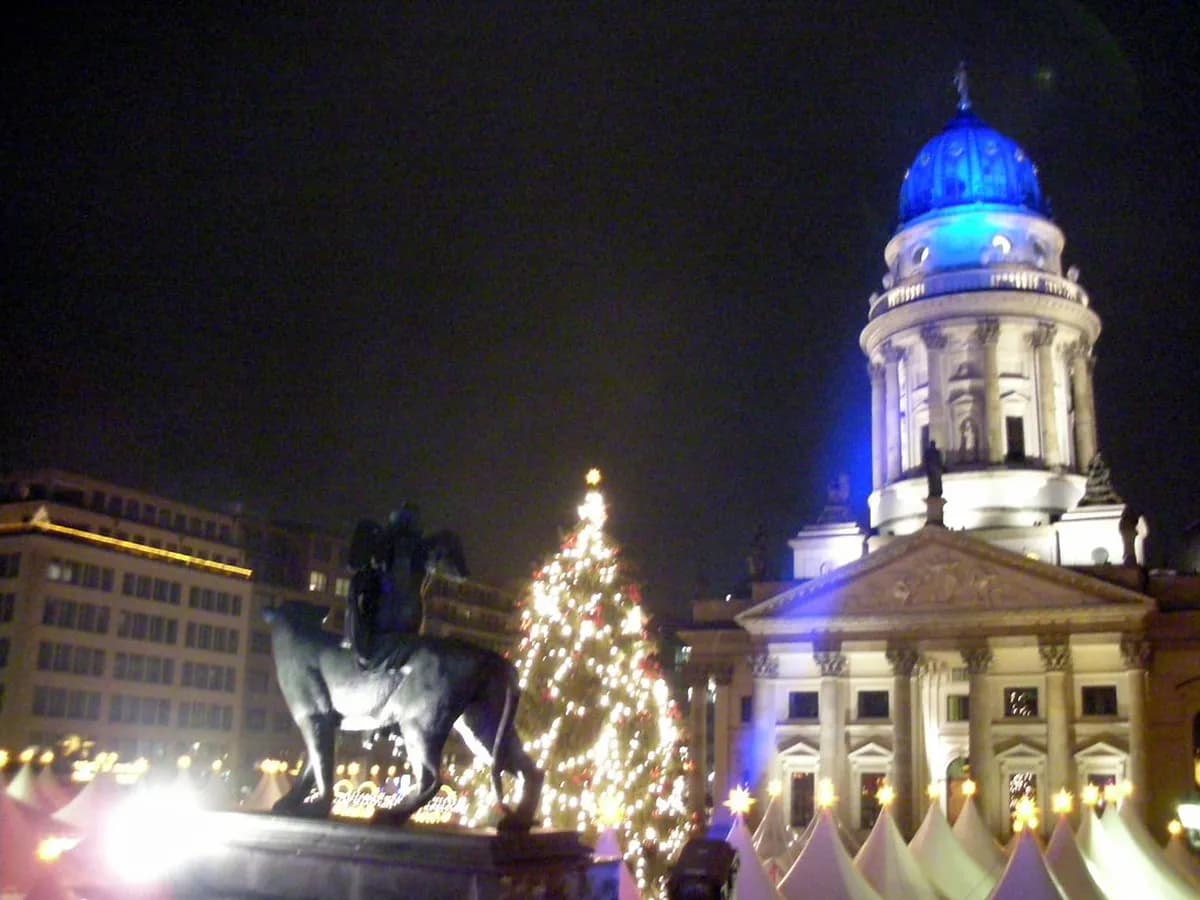
| WeihnachtsZauber Gendarmenmarkt | Nov 24 – Dec 31 | Sun–Thu 12:00–22:00, Fri–Sat 12:00–23:00 | €2 (free Mon–Fri 12:00–14:00, children under 12 free) |
| Schloss Charlottenburg | Nov 24 – Dec 28 | Mon–Thu 13:00–22:00, Fri–Sun 12:00–22:00 | Free |
| Spandau Old Town | Nov 24 – Dec 23 | Sun–Thu 11:00–20:00, Fri–Sat 11:00–22:00 | Free |
| Historischer Weihnachtsmarkt RAW | Nov 13 – Dec 22 | Mon–Fri 15:00–22:00, Sat–Sun 12:00–22:00 | Mon–Wed free; Thu–Sun €2 (children 6–16 and those in costume €1) |
| Lucia Market (Kulturbrauerei) | Nov 24 – Dec 22 | Mon–Fri 15:00–22:00, Sat–Sun 13:00–22:00 | Free |
| Humboldt Forum | Nov 24 – Jan 1 | TBC | Free |
| Heissa Holzmarkt | Advent weekends | Wed–Thu from 16:00, Fri–Sun from 14:00 | Wed–Thu free; Fri–Sun €2 |
| Schloss Britz (Nordic Fairy Tale) | Advent weekends only | Advent Saturdays–Sundays | €3 |
| Domäne Dahlem | Advent weekends only | Advent Saturdays–Sundays | €4.50 |
| Christmas Garden (Botanical Garden) | Late Nov – early Jan | Evening only, from 17:00 | €17–€21 (online) |
Check the Visit Berlin Official Market List for real-time 2026/2027 updates on smaller venues. Dates for minor neighborhood markets are often confirmed only a few weeks before opening.
Berliner Weihnachtszeit at the Rotes Rathaus
The market at the Red City Hall is one of Berlin's largest and typically runs from late November to around 30 December (for the 2025/2026 edition it ran 24 November to 30 December 2025; confirm 2026/2027 dates on the official site), staying open past Christmas. It sits in Alexanderplatz's shadow but occupies a far more atmospheric setting: the Gothic Revival City Hall with the Neptune Fountain lit at its base. Entry is free.
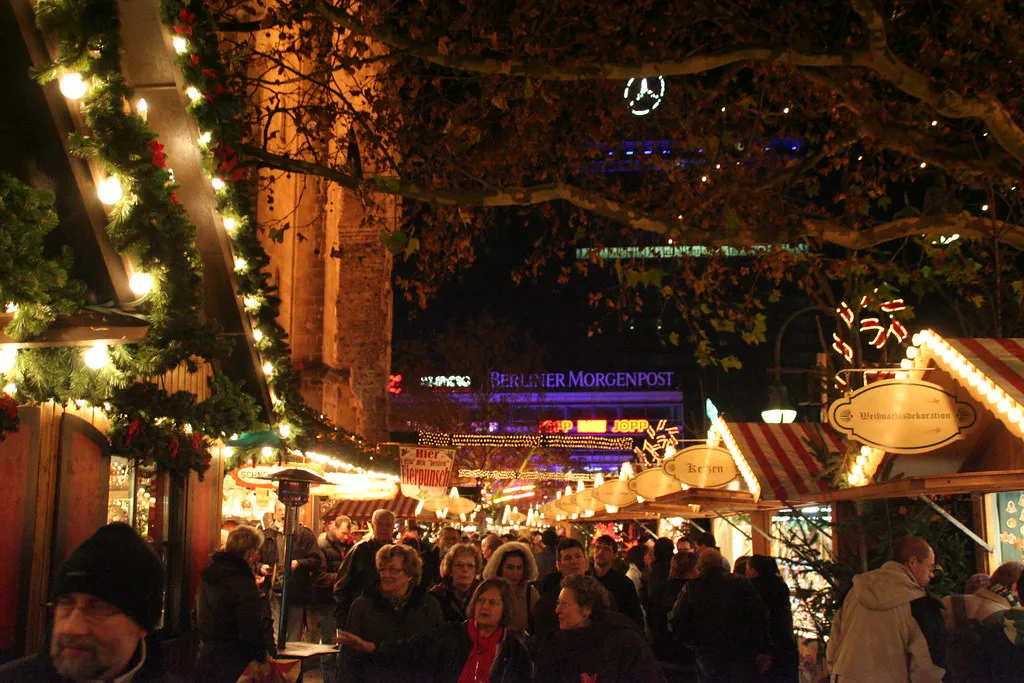
The standout features here are practical and visual. A full-scale ice skating rink sits in the centre of the market, rentals included in a session fee. A large Ferris wheel rises above the stalls and offers night views of the TV Tower and the city decked out in lights. This is also the best market for families: Santa appearances are regular, and live performers work the crowd from an open stage.
Food is a genuine draw. Dozens of stalls cluster around the fountain, and the homemade garlic potato chips — you will smell the stand before you see it — have become something of a local institution. Come hungry. Opening hours run Monday to Friday 12:00–22:00 and Saturday–Sunday 11:00–22:00, closed on Christmas Eve.
Spandau Old Town and Citadel Markets
Spandau is widely considered the most authentic large Christmas market in Berlin. The Old Town market runs through the historic streets of the Altstadt from late November to shortly before Christmas (the 2025/2026 edition ran 24 November to 23 December 2025 — confirm 2026/2027 dates locally), free to enter, with Sunday to Thursday hours of 11:00–20:00 and Friday–Saturday 11:00–22:00. The Citadel market runs on Advent weekends inside one of the best-preserved Renaissance fortresses in Europe.
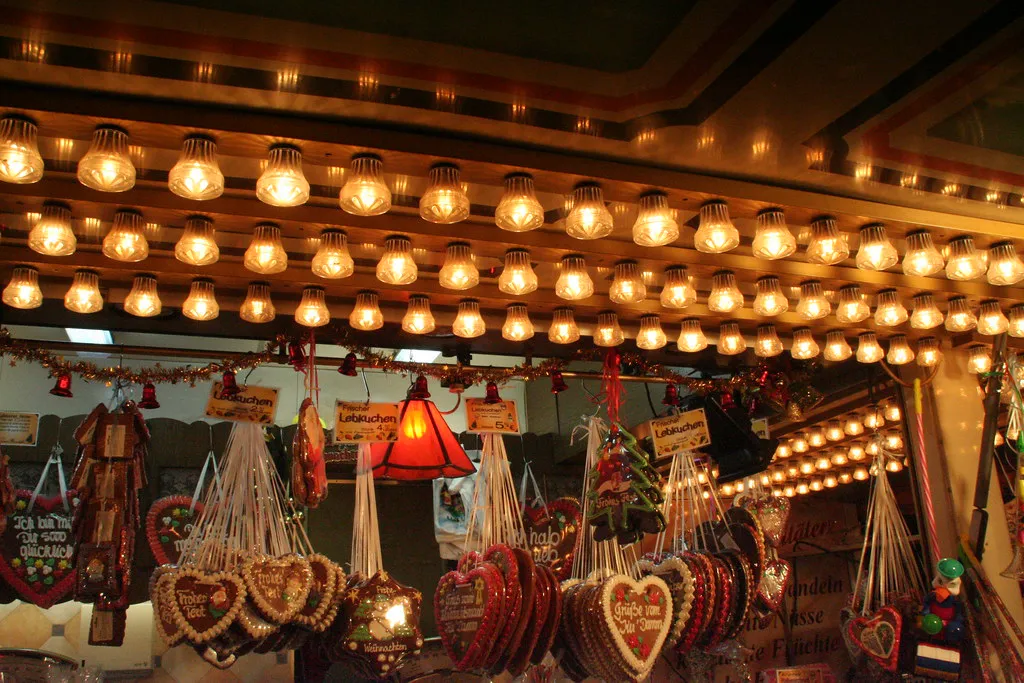
The Old Town section covers several city blocks with traditional wooden stalls, live carol singers, and craft vendors selling handmade goods. The courtyards off the main strip are quieter and more charming than the busier central thoroughfare. Locals genuinely shop here rather than just sipping Glühwein for photos.
The Citadel market adds a medieval dimension: it takes place inside the fortress walls under torchlight, with atmospheric stalls and period performers. If you can align your visit with an Advent weekend, combining both markets makes for a full half-day outing. Take the S-Bahn to Spandau station, then walk or take bus 135 to the Old Town.
Christmas Garden Berlin: Dates and Tickets
Christmas Garden at the Botanical Garden (Botanischer Garten) is not a traditional market — it is a 2-km illuminated walk through the garden grounds after dark. For the 2026/2027 season it is expected to run from late November 2026 through early January 2027, evenings only from 17:00 (the 2025/2026 edition ran late November 2025 to early January 2026; confirm dates when booking). Tickets cost €17–€21 and must be booked online in advance via the Christmas Garden Berlin official site; popular dates sell out weeks ahead.
The route passes through dozens of large-scale light installations: glowing trees, colour-shifting paths, and mirrored sculptures that reflect the winter landscape. There are food and drink stalls along the way, but the experience is primarily about the lights rather than shopping. It suits families with children and couples looking for something quieter than a crowded market square.
The Botanical Garden is in Dahlem, southwestern Berlin, reachable via S1 to Botanischer Garten station. Allow 90 minutes for the full route. Friday and Saturday evenings sell out first; Tuesday and Wednesday evenings are the least crowded.
Historischer Weihnachtsmarkt at RAW-Gelände
The Historical Christmas Market on the RAW Cultural Center grounds in Friedrichshain typically runs from mid-November to just before Christmas (the 2025/2026 edition ran 13 November to 22 December 2025; confirm 2026/2027 dates on the official site). It opens earlier than any other Berlin market and closes on "Dead Sunday" (Totensonntag). Monday to Friday hours are 15:00–22:00; weekends 12:00–22:00. Monday to Wednesday is free; Thursday to Sunday costs €2 (children ages 6–16 and visitors in historical costume pay €1).
This is Berlin's most theatrical market. The whole site is designed as a medieval village: acrobats and jugglers perform, blacksmiths work at open forges, and the stalls sell wood carvings, leather goods, and hand-forged metalwork. There is a hand-operated wooden carousel and a small wooden Ferris wheel aimed at children. The food is medieval-themed — hearty roasted meats, mulled beer (Glühbier), and hot mead served in ceramic mugs.
The RAW site itself is an interesting venue: a decommissioned railway repair yard that now hosts arts spaces, clubs, and food trucks. The combination of industrial bones and medieval market dressing is distinctly Berlin. Come on a weekday afternoon for free entry and manageable crowds before the evening rush after 18:00.
Lucia Christmas Market at Kulturbrauerei
The Lucia Market in Prenzlauer Berg is Berlin's Nordic-Scandinavian market, set in the winding brick courtyards of a 19th-century former brewery. It typically runs from late November to just before Christmas (the 2025/2026 edition ran 24 November to 22 December 2025; confirm 2026/2027 dates on the official site), free entry, Monday to Friday 15:00–22:00 and weekends 13:00–22:00.
The market specialises in Scandinavian food and craft: Swedish, Norwegian, and Danish glögg (mulled wine), reindeer sausages, flammkuchen, and hot mead. Dark wooden stalls against the red-brick courtyard walls give it an atmosphere that feels genuinely different from the open-square markets. The Lucia sign over the main food area is the landmark to navigate toward.
A word on the mead: it is significantly stronger than Glühwein and goes down easily in the cold. Pace yourself accordingly. The S-Bahn or U-Bahn to Schönhauser Allee puts you a short walk from the Kulturbrauerei entrance on Schönhauser Allee 36.
Heissa Holzmarkt Winter Festival
Holzmarkt on the Spree River in Friedrichshain operates as a self-contained urban village year-round, with bakeries, art studios, and event spaces. Its Christmas market runs on Advent weekends only, Wednesday and Thursday from 16:00 and Friday through Sunday from 14:00. Wednesday–Thursday entry is free; Friday–Sunday costs €2.
This is Berlin's most alternative market. Bonfires burn by the river, there are silent disco booths, and the music programming leans electronic rather than traditional carols. Food stalls offer a mix of German and international options. Puppet shows and art installations fill the outdoor spaces. It has none of the gingerbread-and-tinsel aesthetic of a conventional market, which is exactly the point.
Holzmarkt is ideal for visitors who find the bigger markets too commercial or crowded. It is small enough to explore in an hour but atmospheric enough to linger in. Take the S-Bahn to Ostbahnhof; the market entrance is on Holzmarktstraße 25, about a 10-minute walk along the river.
Nordische Märchenweihnacht at Schloss Britz
Schloss Britz runs its Nordic Fairy Tale market in the courtyard of an 18th-century manor house in Neukölln, on all four Advent weekends. For 2026 these fall on 27–29 November, 4–6 December, 11–13 December, and 18–20 December (the 2025 weekends were 28–30 November, 5–7 December, 12–14 December, and 19–21 December). Entry is €3.
Unlike the larger markets, Schloss Britz draws a manageable crowd, which means you can actually speak to the artisans at their stalls. The market leans Nordic in theme: medieval costumes appear without feeling like a caricature, and the food is inventive rather than standard fair-ground fare. Handmade preserves, spiced spirits, and crafted textiles feature alongside the usual Glühwein.
The manor house itself is open to visit in combination with the market. Families with children find the scale manageable and the atmosphere calm compared to city-centre markets. It is less convenient — you need the U8 to Grenzallee or bus connections to reach Britz — but that inconvenience filters the crowds. Worth planning specifically around an Advent weekend if you value quality over scale.
Advent Market at Domäne Dahlem
Domäne Dahlem is an agricultural museum and working farm in southwestern Berlin that hosts its Advent market on Advent weekends only. Entry is €4.50. The market features small producers and artisans: sea salts, spiced vinegars, handmade jams, beeswax candles, and traditional German handicrafts from local makers rather than commercial vendors.
There is a strong emphasis on organic and fresh food. You can eat well here — the food quality is noticeably higher than the fried-food stalls that dominate bigger markets. Children can interact with farm animals. The rural atmosphere is a genuine contrast to the urban density of city-centre options.
Take the U3 to Dahlem-Dorf. The farm is a short walk from the station. Verify specific 2026 weekend dates at the Domäne Dahlem official site before travelling, as the exact Advent weekends shift by a day or two year to year.
LGBTQIA Winterdays and Christmas Avenue at Nollendorfplatz
The LGBTQIA Winterdays market at Nollendorfplatz in Schöneberg is one of Berlin's most distinctive niche markets. It runs through Advent with a programme of live stage acts, drag performances, and community events that no other Berlin market replicates. Entry is free.
The surrounding Schöneberg neighbourhood is Berlin's historic LGBTQ+ quarter, and the market draws an openly social crowd. It functions as a genuine community gathering point rather than a tourist attraction — locals from the neighbourhood use it regularly through December. The food and drink stalls are standard market fare (Glühwein, bratwurst), but the stage programming is what sets it apart.
Safety at Berlin's markets is generally good. Authorities place concrete vehicle barriers around all major market perimeters and conduct backpack inspections at entry points. Nollendorfplatz is no exception and is well-lit and busy throughout the evening. Solo travellers — particularly solo women and LGBTQ+ visitors — consistently find Berlin's markets more socially relaxed than those in smaller German cities. The social dynamic of high tables with strangers makes meeting people natural. Take the U1, U2, U3, or U4 to Nollendorfplatz.
More Holiday Things to Do in Berlin
Christmas markets close by late December, but Berlin's winter programme extends further. The Berlin Christmas market season sits within a broader calendar of winter events worth noting.
- The TV Tower (Fernsehturm) at Alexanderplatz sells fast-track tickets that skip the queue and get you above the market crowds for city-wide views of the lit streets below.
- New Year's Eve at the Brandenburg Gate draws hundreds of thousands of people. The official Berlin NYE party (Brandenburger Tor) runs from around 20:00 on 31 December with concerts and a midnight fireworks display visible across the city centre.
- The Berlin Philharmonic's Christmas and New Year concerts sell out far in advance; check the box office in October for 2026–2027 dates.
- Several markets at Gendarmenmarkt and Humboldt Forum remain open through 31 December, offering a post-Christmas market atmosphere without the pre-holiday rush.
- The Botanical Garden Christmas Garden walk continues into early January, making it a strong option for the quieter "Between the Years" period.
The period between December 26 and January 1 — known in Germany as "Zwischen den Jahren" (Between the Years) — is when the city empties of tourists but a handful of markets remain active. Check the Berlin.de list of markets open after Christmas for the current year's options.
Don't Waste Your Time: Markets to Skip
Alexanderplatz is the most commercially dense market in Berlin and the one locals are most likely to avoid. The atmosphere is carnival rather than traditional: loud music, very dense crowds, and food quality that does not justify the queues. Its location makes it unavoidable if you are staying nearby, and a quick walk-through is fine, but do not spend an afternoon here when the Rotes Rathaus market is five minutes away in a far more atmospheric setting.
Potsdamer Platz runs the "Winterwelt" experience with a 12-metre toboggan run, DJ nights on weekends, and a sizeable Glühwein circuit. It is enjoyable for what it is — a fun rather than festive experience — but lacks the historic setting or craft quality of markets like Gendarmenmarkt or Spandau. It does stay open through the end of December if you want a post-Christmas option. Seek out the neighborhoods of Prenzlauer Berg for more genuine market atmosphere.
German Christmas Market Itinerary Planning
A two-day Berlin market itinerary works well if planned by geography rather than list order. On day one, start at the Rotes Rathaus market in the early evening (arrive at 16:00 for the lights before the 18:00 rush), walk through Alexanderplatz briefly, then take the U2 west to Potsdamer Platz or Gendarmenmarkt for dinner. On day two, head to Prenzlauer Berg for the Lucia Market in the afternoon, then cross to Friedrichshain for the RAW Historical Market in the evening.
Transport: buy a 7-day pass (Zone A & B) for €41.50 if you are staying five or more days. A single ticket costs €3.20 and is valid for two hours. The Berlin Welcome Card (approximately €30 for 48 hours) includes unlimited transport and discounts at over 200 attractions — useful if you plan museum visits alongside markets. Download the Transit App for Berlin to navigate U-Bahn and S-Bahn in real time.
If you have more time, extend the trip outward. Potsdam is 25 minutes by S7 from central Berlin and runs its own market around the UNESCO Sanssouci Palace gardens. Check Potsdam Tourism for market dates. For a broader German itinerary, see our guide to a German Christmas markets road trip across the north, or align your visit with Nuremberg Christmas market dates or Dresden Christmas market dates for a regional extension.
Essential Tips for Visiting Berlin Markets
Carry cash. Most stalls remain cash-only, and ATMs near popular markets can run dry on busy weekends. Bring small coins (50-cent pieces) for toilet fees at market facilities. The Glühwein mug deposit (Pfand) is €3–€5 per mug and is refunded when you return it to any stall selling the same drink. Many visitors keep the mug as a souvenir — which is exactly what the stallholders count on.
Dress for extended outdoor standing, not walking. Markets mean stationary time on cold cobblestones. Thermal base layers, waterproof boots with ankle support, and a hat that covers your ears are more important than a stylish coat. Temperatures range from 5°C in late November down to -1°C or below by late December. A reusable shopping bag for purchases will prevent juggling paper bags in the cold.
Time your arrivals around the light. The window between 16:00 and 17:30 is the sweet spot: dark enough for the lights, early enough to beat the post-work rush. Weekday visits are significantly less crowded than weekends for every major market. December 24 sees most markets close by 14:00, and 25–26 December runs on reduced hours — check individual market pages before planning those days.
Frequently Asked Questions
Is Berlin Christmas Market worth it?
Yes, Berlin is worth visiting for its sheer variety of markets. You can find everything from traditional palace fairs to alternative urban festivals. The city offers over 80 locations to explore.
Which is the largest Christmas market in Berlin?
The Spandau Christmas Market is widely considered the largest in Berlin. It features hundreds of stalls throughout the historic old town. It is best visited on weekdays to avoid massive crowds.
What is the Glühwein mug deposit (Pfand)?
When you buy Glühwein, you pay a deposit of 3 to 5 euros for the mug. You get this money back when you return the mug. Many visitors keep the mugs as souvenirs instead.
Visiting Berlin for more than one festival? See our complete guide to festivals and events in Berlin.
Berlin's Christmas market season is built around variety. The Rotes Rathaus handles sheer scale; RAW-Gelände delivers medieval theatre; Lucia gives you Nordic atmosphere; Schloss Britz offers quiet craftsmanship; and Domäne Dahlem handles everything organic and rural. Most visitors do a disservice to themselves by spending too long at Alexanderplatz and missing all of these. Use the table above to lock in the specific dates and entry fees, plan by neighbourhood to keep transport efficient, and arrive at dusk. The lights are the point.
Free guide: Europe's Festival Calendar
A month-by-month map of Europe's unmissable festivals — with the best dates to visit each and a local tip you won't find in the guidebooks.
You might also like


Continue reading
More guides you'll find useful