La Tomatina Dates: 10 Essential Things to Know for 2026 & 2026
Find the official La Tomatina dates for 2026 and 2027. Our guide covers the full festival schedule, ticket prices, transport from Valencia, and survival tips.
On this page
La Tomatina Dates: 10 Essential Things to Know for 2026 & 2026
Planning a trip around La Tomatina dates requires precision because the event happens only once a year. La Tomatina 2026 falls on Wednesday, 26 August. La Tomatina 2027 falls on Wednesday, 25 August. Both dates follow the fixed rule: always the last Wednesday of August in Buñol, Spain.
The festival takes place in the small town of Buñol, located 38 km west of Valencia. The tomato fight lasts exactly one hour, but the full festival week runs for several days around it. Check the Spain festival calendar for other summer events that coincide with your trip.
You must secure a ticket well in advance as the town caps participation at 20,000 for safety. Knowing the specific schedule, ticket options, and transport logistics makes the difference between a smooth morning and a chaotic scramble before the trucks even arrive.
Free guide: Europe's Festival Calendar
A month-by-month map of Europe's unmissable festivals — with the best dates to visit each and a local tip you won't find in the guidebooks.
When is La Tomatina? (2026 & 2027 Dates)
La Tomatina always falls on the last Wednesday of August. For 2026, that is Wednesday, 26 August. For 2027, that is Wednesday, 25 August. Mark these dates early, as accommodation in Buñol and even in Valencia sells out months before the event.
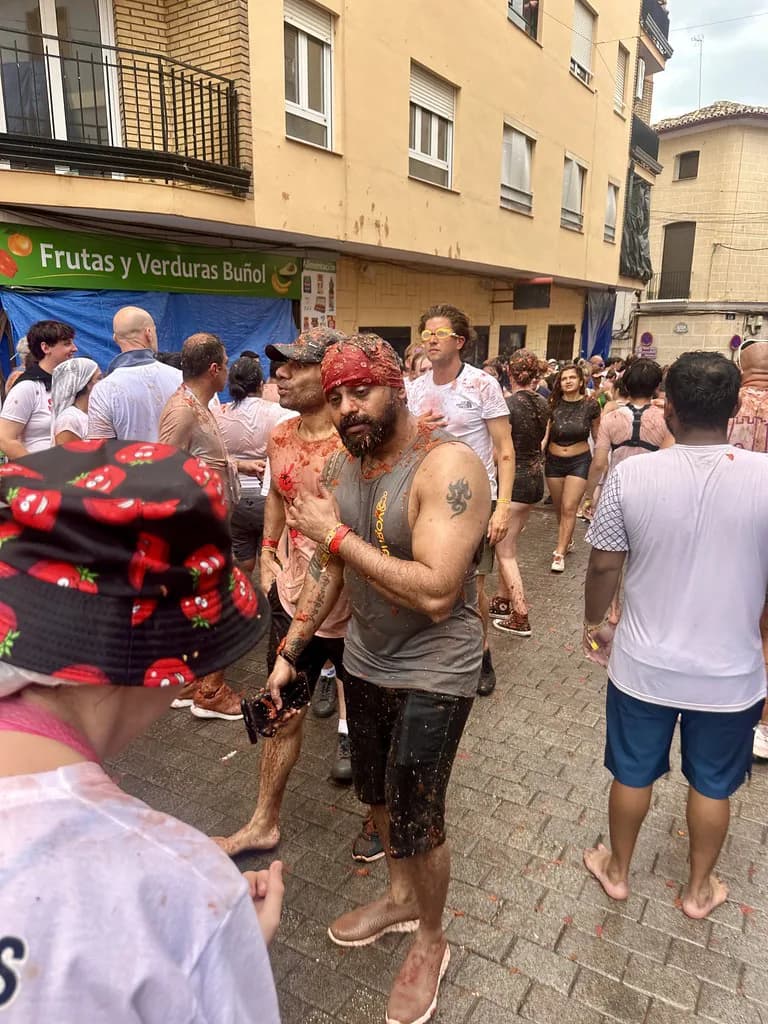
Temperatures in Buñol during late August typically reach 30–34°C by midday, with high humidity. Most participants arrive in the town centre before 9:00 to secure a spot near the Plaza del Pueblo. The actual tomato fight lasts just one hour — 11:00 to 12:00 — so the morning build-up is part of the experience.
The event is the headline act of a week-long festival honouring the town's patron saint, San Luis Beltrán. Parades, fireworks, cooking contests, and live music fill the days leading up to the fight. If you arrive a day early, you can experience Buñol before it turns red. Official ticket sales typically open in spring of the festival year — buy as soon as they go live.
Official Schedule for the Spanish Tomato Festival
The day follows a set timetable. Arriving early gives you time to find your position and watch the Palo Jabón warm-up event before the trucks roll in.

- From 09:00 — Participants fill the Plaza del Pueblo and surrounding streets. The atmosphere builds quickly.
- Around 10:00 — Palo Jabón — A tall greased wooden pole with a Spanish ham (jamón) at the top is erected. The fight cannot start until someone climbs it and claims the ham. This often takes considerable time and is great entertainment on its own.
- 11:00 — Water cannon signals the start — Trucks loaded with 100–150 tonnes of overripe tomatoes enter the narrow streets. The battle begins.
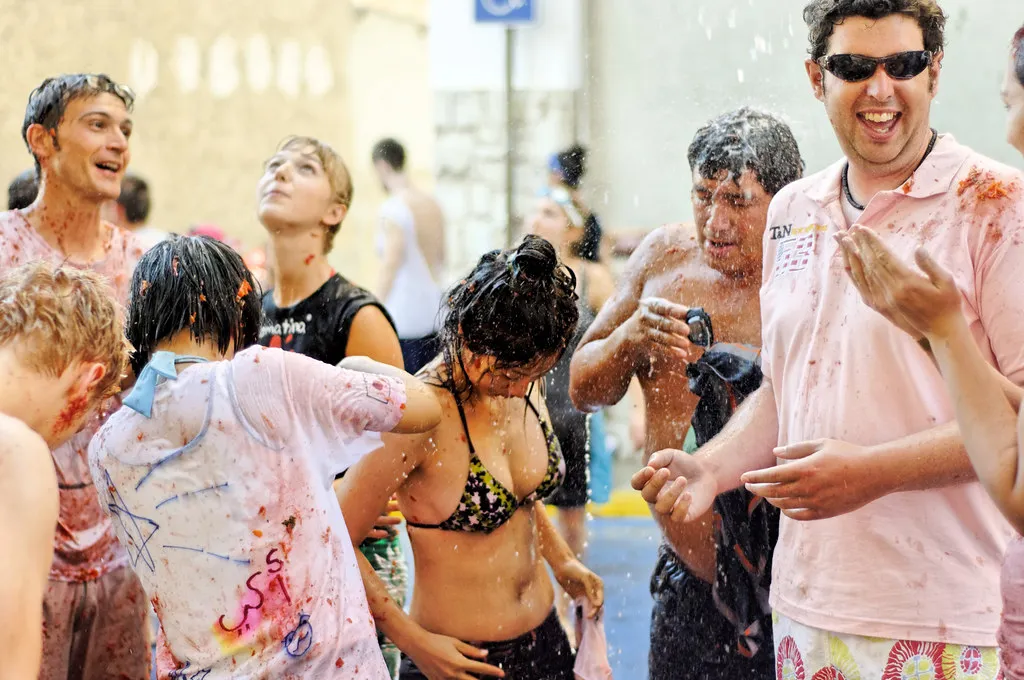
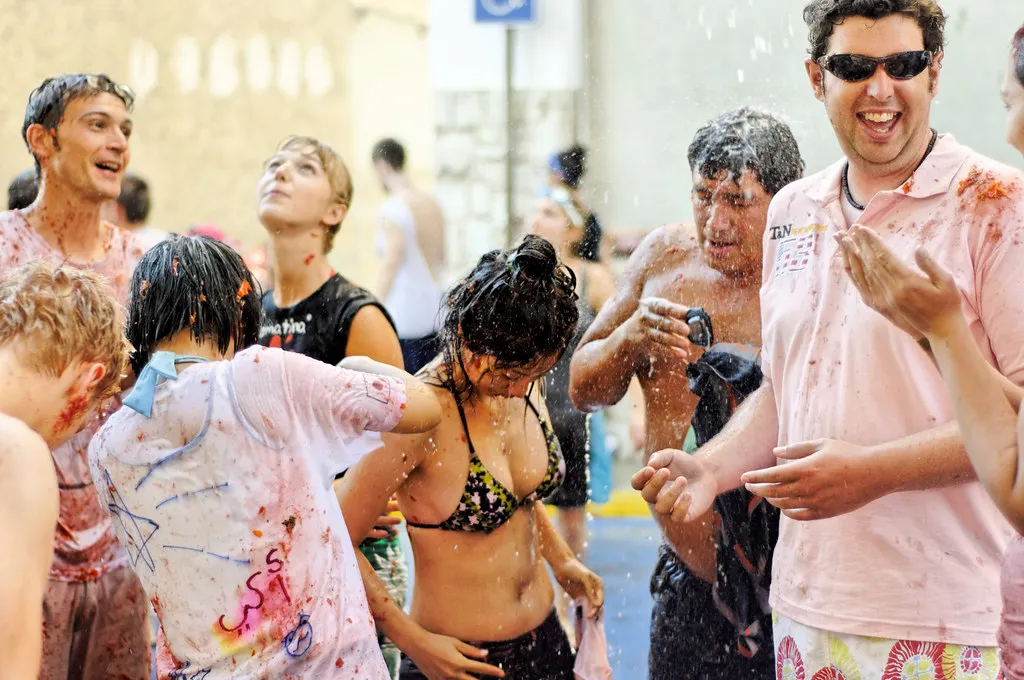
- 11:00–12:00 — One-hour food fight — Grab tomatoes from the street and throw. The golden rule: squash each tomato before launching it. A hard tomato causes real pain.
- 12:00 — Second signal ends the fight — Stop immediately when the cannon fires. This rule is enforced.
- From 13:00 — Big clean-up — Fire trucks hose down the streets. The acidity in the tomatoes acts as a natural disinfectant, leaving the cobblestones cleaner than before.
Consult the Official Festival Guide - Idealista for current safety regulations before you attend. No bottles, no backpacks, and no tearing other participants' clothing — these rules are non-negotiable. This event ranks among the best festivals in Spain for thrill-seekers, but only if you respect the rules that make it safe.
How to Get Tickets for La Tomatina
Gone are the days of showing up on the day. Since 2013, entry has been strictly ticketed and capped at 20,000 participants. Tickets sell out every single year, often within hours of going live in spring. Do not gamble on last-minute availability.
Tickets are available through the official festival website and through certified tour operators. Buying directly gives you the lowest base price but requires you to arrange your own transport and logistics. Tour operators bundle the entry ticket with a return bus from Valencia, a locker, and sometimes paella, sangria, or an official t-shirt — worth it for first-timers who want a stress-free morning.
A small number of premium packages include a spot on one of the tomato trucks that rolls through the streets. These sell out first and cost significantly more, but they offer an unobstructed view of the chaos from above. Book La Tomatina tickets and tours as early as possible once the sales window opens.
La Tomatina Ticket Prices and Packages
A basic entry-only ticket starts at around €15 for the 2026 season. That gets you through the gate and nothing else — you still need to sort transport, a locker, and food separately. This option suits those staying in Buñol or travelling independently from Valencia.
Tour packages from Valencia typically run €40–€80 per person and include the entry ticket, a return private bus, and at minimum a locker so you can leave a change of clothes. Mid-range packages often add a paella lunch after the fight and a festival t-shirt. Premium packages with truck access or a guided experience can reach €100–€150.
| Ticket Type | Approx. Price (2026) | What's Included | Best For |
|---|---|---|---|
| Entry only | ~€15 | Festival access | Independent travellers already in Buñol |
| Standard tour package | €40–€60 | Entry + return bus from Valencia + locker | Most first-timers |
| Premium tour package | €70–€150 | Entry + bus + locker + paella + t-shirt + extras | Those who want no logistics stress |
| Truck access package | €100–€150+ | Entry + spot on a tomato truck | Photography, unique vantage point |
Prices change annually. Always verify current rates on the official festival website or with your tour operator before booking.
Getting to Buñol from Valencia
Most visitors stay in Valencia and travel to Buñol for the day. Valencia is 38 km east of Buñol — about 40 minutes by car under normal conditions, but festival day is anything but normal. Roads into the town centre are closed to private vehicles, and parking is essentially impossible. Do not drive.
The local train (Cercanías line C-3 from Valencia Estación del Nord to Buñol) runs regularly and costs just a few euros. Expect the carriages to be extremely crowded from 08:00 onwards. Arrive at the Valencia station early to guarantee a spot on the train going out. Return trains after the fight are equally packed — build extra time into your afternoon plans.
The easiest option for most people is a tour bus. Operators run dedicated coaches from Valencia city centre with set departure and return times. Buses have reserved access and avoid the worst of the road congestion. They also typically park near a changing area, so you have somewhere to leave a dry bag before heading into the fight. Learn more about how to get to La Tomatina before finalising your itinerary.
The History of the Spain Tomato Festival
La Tomatina began in August 1945 by pure accident. During a parade of Giants and Bigheads through Buñol, a group of young locals got into a street brawl near a vegetable stall. Someone grabbed a tomato, someone else threw it back, and what followed was the world's first accidental food fight. They enjoyed it so much that they returned the following year and did it again.
For the next decade, local authorities periodically banned the event for lacking religious justification and disturbing the peace. But residents refused to let it die. In August 1957, protestors staged a theatrical "tomato burial" — a funeral procession through the streets of Buñol carrying a coffin containing a giant papier-mâché tomato, while a brass band played funeral songs. The stunt worked. Town officials eventually recognised La Tomatina as an official festival in 1957, and it has run without interruption since, except for a two-year pause in 2020–2021 due to the pandemic.
The tomatoes used in the fight are sourced from the Extremadura region of Spain — more than 400 km west of Buñol. They are overripe, low-quality fruits unsellable at market, making the fight genuinely non-wasteful. Around 100–150 tonnes arrive on trucks the morning of the event. In 2002, the Spanish government formally designated La Tomatina a Festival of International Tourist Interest, cementing its status as one of the country's most iconic annual events. According to La Tomatina - Wikipedia, the event now draws participants from dozens of countries annually.
15+ Interesting Facts About La Tomatina
Beyond the obvious chaos, La Tomatina has a surprising amount of history and quirks worth knowing before you go.
- It is the biggest food fight in the world by participant count and tomato volume.
- The tomatoes come from Extremadura and are overripe and inedible — so there is no actual food waste.
- Around 100–150 tonnes of tomatoes are thrown in a single one-hour window.
- Participation was originally free and uncontrolled. At its peak, up to 50,000 people crammed into Buñol. The cap of 20,000 was introduced in 2013 for safety.
- The festival was banned in the early 1950s and revived via the famous 1957 tomato burial protest — possibly the most effective act of civil disobedience in Spanish culinary history.
- La Tomatina has no religious origins. It is one of the few major Spanish festivals entirely rooted in spontaneous street chaos.
- The tomato acidity acts as a natural disinfectant. After the fire hoses clear the streets, the cobblestones are reportedly cleaner than on an average day.
- Versions of the festival have been attempted in Colombia, China, and Costa Rica, with mixed results. Bangalore, India, banned its version as a "waste of food."
- The event was cancelled in 2020 and 2021 due to the Covid-19 pandemic — the only interruptions since 1957.
- La Tomatina received its own Google Doodle, cementing its place in international pop culture.
- The week before the fight features parades, fireworks, cooking contests, and live music — the full festival atmosphere, without the tomato damage.
- You must squash each tomato before throwing. This is a safety rule, not just tradition. A firm tomato at speed causes real impact.
- Tearing another participant's clothing is banned. So is throwing anything other than tomatoes.
- When the second water cannon fires at 12:00, stopping is mandatory. The rule is enforced and universally respected.
- La Tomatina inspired spinoff festivals globally, none of which have matched the original for scale or cultural resonance.
What to Wear: Survival Checklist
Packing correctly makes the difference between a joyful hour and a miserable one. The tomato acid stings eyes and irritates skin, and the streets become dangerously slippery within minutes of the fight starting. Plan your outfit before you leave Valencia.
- Tight-fitting swim goggles — non-negotiable. Tomato juice in unprotected eyes turns a fun fight into an emergency. Cheap hardware-store goggles work perfectly.
- Old white t-shirt — white shows the stain beautifully and keeps you cool in 30°C heat. It will be destroyed. That is the point.
- Closed-toe shoes with grip — no flip-flops. The streets become a tomato-pulp slick within minutes. You will lose a flip-flop in the crowd and walk back to the bus barefoot.
- Waterproof phone pouch — a dedicated pouch sealed around your neck, not a case. Tomato juice infiltrates standard cases through ports and gaps.
- Change of dry clothes in a locker or on the bus — you will not want to sit on the Valencia train in soaking tomato-stained clothes for 40 minutes.
Review what to wear to La Tomatina for a complete breakdown by item. Leave valuables, jewellery, and anything irreplaceable at your accommodation.
After the Fight: Fiesta After Dark
The tomato fight ends at 12:00, but the day does not. Buñol's town centre hosts local celebrations through the afternoon, with the festival week's official programming continuing into the evening. If you want the full local experience, stick around Buñol after the clean-up. Local bars and squares come alive with music and paella from around 14:00.
Most visitors return to Valencia by early afternoon — the trains and buses start running back from around 13:30. Valencia itself picks up the energy in the evening, with many tour operators running La Tomatina after-parties starting around 22:00. These are typically held at Valencia nightlife venues and include a DJ, drinks, and the chance to compare battle scars with other festival survivors.
The practical trade-off: staying in Buñol until evening gives you the authentic local atmosphere but means a later, less crowded return journey. Heading back to Valencia by 15:00 puts you in position for a shower, a proper meal, and a city night out. Either works — just decide in advance so you are not making the call while soaking wet at 12:01.
Staying Connected: Using eSIMs During the Festival
Network congestion is severe when 20,000 people try to upload videos from the same 500-square-metre street simultaneously. Most carriers struggle with signal quality during the fight itself, regardless of plan. The bigger risk is physical: tomato juice infiltrates physical SIM trays and charging ports faster than you would expect.
An eSIM eliminates the port-infiltration risk entirely — your SIM data lives in the device's chip, not a physical tray. Pre-install your data plan before the day so you do not need to open your phone at all during the festival. Keep the device sealed in a waterproof pouch throughout. Most people reconnect with their group using café Wi-Fi after the fight and the clean-up, when signal normalises.
Frequently Asked Questions
What are the La Tomatina dates for 2026?
La Tomatina 2026 will take place on Wednesday, August 26. The festival always happens on the last Wednesday of August. You should arrive in Buñol by 8:00 AM to secure a good spot.
Is there an age limit for the tomato fight?
Participants must be at least 18 years old to enter the official zone. This rule was implemented to ensure safety during the chaotic event. Always carry a digital copy of your ID for verification.
How much do La Tomatina tickets cost?
Basic entry tickets usually start around €15 for the 2026 season. Prices for packages including transport and lockers are higher. It is best to buy tickets directly from official vendors early.
La Tomatina is a unique cultural phenomenon that requires careful timing and preparation. By following the official La Tomatina dates, you can experience the world's largest food fight. The acidity of the tomatoes actually cleans the town's cobblestones after the event ends.
Whether you visit in 2026 or 2027, the energy of Buñol is unmatched. Remember to respect the local rules and enjoy the mess responsibly. Safe travels to one of Spain's most iconic and vibrant summer celebrations.
Free guide: Europe's Festival Calendar
A month-by-month map of Europe's unmissable festivals — with the best dates to visit each and a local tip you won't find in the guidebooks.
You might also like


Continue reading
More guides you'll find useful


