11 Best Fiestas in Spain (2026): Your Ultimate Festival Guide
Discover the 11 best fiestas in Spain, from the tomato-throwing chaos of La Tomatina to the fire-filled Bonfires of San Juan. Plan your trip with our expert guide.
On this page
11 Best Fiestas in Spain
Our editors have navigated the crowded streets of Pamplona and the tomato-soaked plazas of Buñol to find the best fiestas in Spain. Last updated June 2026, this guide reflects the most current pricing, ticket requirements, and safety protocols for the upcoming season. Spain transforms during the summer months, offering a vibrant mix of religious solemnity and chaotic street parties that define the national spirit.
Many of these events, such as La Patum in Berga, are recognized by UNESCO for their profound cultural heritage. Their roots stretch back centuries — some honoring patron saints, others commemorating historic battles or the agricultural cycle. You can find an overview of the official summer fiesta calendar on the spain.info tourism portal.
Whether you seek the adrenaline of a bull run or the beauty of floral courtyards, planning ahead is essential for these popular dates. This list of the best festivals in Spain will help you decide which region matches your travel style. Prepare for late nights, loud music, and a deep sense of shared joy that only a true Spanish fiesta can provide.
Free guide: Europe's Festival Calendar
A month-by-month map of Europe's unmissable festivals — with the best dates to visit each and a local tip you won't find in the guidebooks.
Spain Summer Festival Calendar 2026
The Spanish fiesta season runs from mid-June through mid-September, clustering around the solstice, the Catholic feast day calendar, and the harvest. Most of the 11 festivals below fall within this window, which makes multi-festival itineraries genuinely feasible if you plan connections between cities. Accommodation in smaller host towns — Buñol, Haro, Catoira — sells out months in advance, so book before you have your flights confirmed.
Here is the 2026 sequence at a glance. Dates marked with an asterisk shift slightly each year based on the liturgical calendar or local council vote — always cross-check with the town hall website in the months before you travel.
- 20–24 June — Bonfires of San Juan, Alicante
- Late May / early June* — La Patum, Berga (Corpus Christi)
- 29 June — Haro Wine Battle, La Rioja
- Early–mid July — International Festival of the Celtic World, Ortigueira
- 7–14 July — San Fermín, Pamplona
- Late July — Moors and Christians, Villajoyosa
- First Saturday after 2 August — International Descent of the River Sella, Asturias
- First Sunday of August — Viking Pilgrimage, Catoira
- Last Wednesday of August — La Tomatina, Buñol
- 6–9 September — The Cascamorras, Baza and Guadix
- Around 24 September — La Mercè, Barcelona
The Bonfires of San Juan in Alicante
Alicante's Bonfires of San Juan are one of the most spectacular pyrotechnic events in all of Europe. Enormous artistic monuments — satirical sculptures called "fogueres" — are built over months by local artists, then burned to the ground on the night of 24 June. The effect is a city-wide controlled inferno that lights up the Mediterranean shoreline.
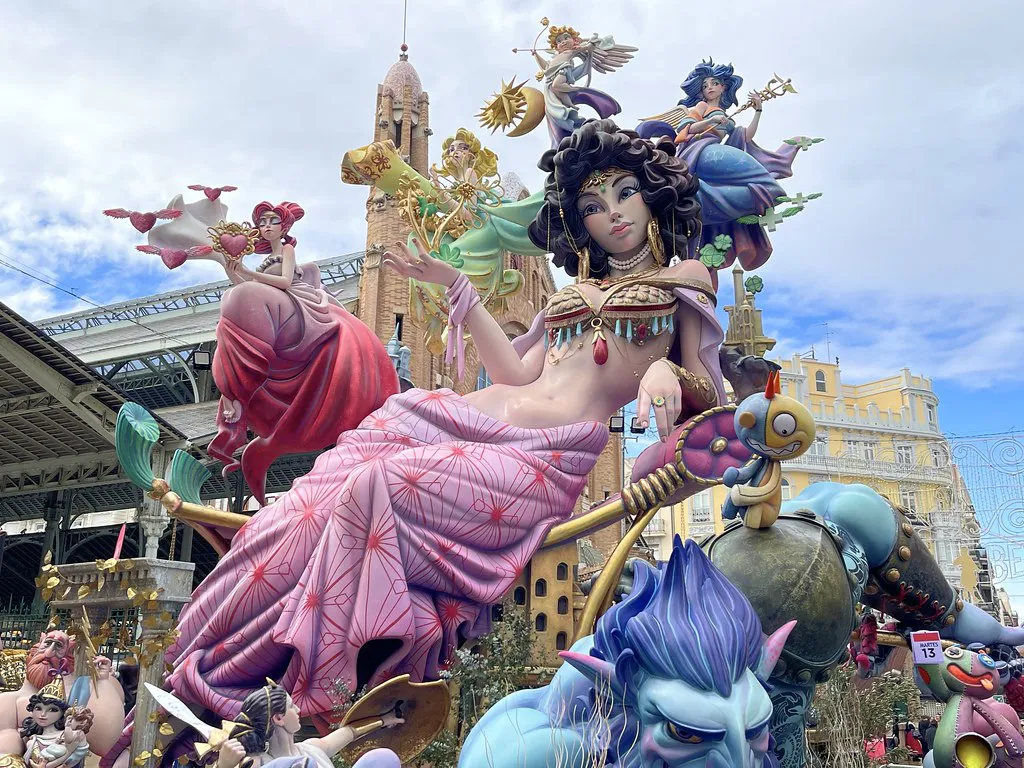
Festivities peak between 20 and 24 June, with competitive fireworks displays ("mascletàs") detonated daily at 14:00 in the Plaza de los Luceros. The burning itself is free to watch from the streets; museum entries for previous years' figures cost around €5. We recommend staying near Postiguet Beach to witness the final monuments collapse over the water's edge — the reflection doubles the visual impact.
This fiesta is rooted in both pagan solstice tradition and the Catholic feast of St. John the Baptist, a combination that gives it a rare dual intensity. Fire-safety marshals keep viewing corridors clear, but the heat from larger monuments is genuine — position yourself upwind and at least 20 meters back.
La Patum Festival in Berga
La Patum is one of the most visceral street festivals in Spain — a UNESCO Intangible Cultural Heritage event where mythological figures, giant puppets, and fire-bearers parade through the medieval streets of Berga to a relentless drum beat. The word "patum" is onomatopoeic, mimicking the sound of the drum that has summoned locals to the square since the 14th century.
Most performances take place in the narrow Plaça de Sant Pere and are entirely free for the public to attend. The most intense moment is the "Plens" — participants draped in fire-soaked costumes who dance while igniting sparks over the crowd. Wear a thick cotton hat and long sleeves, and expect your clothes to smell of gunpowder for days afterward.
The festival centers on Corpus Christi in late May or early June, so the exact dates shift annually. Book accommodation in Berga or nearby Manresa as early as January. The religious and historical dimension here is genuine: the giant figures represent medieval morality plays dramatizing the Christian struggle against evil, giving the chaos a surprisingly contemplative core.
Haro Wine Battle
Every 29 June, thousands of people climb to the Cliffs of Bilibio outside Haro in La Rioja to drench each other with red wine. The battle uses roughly 50,000 liters of local Rioja wine poured from leather bota bags, buckets, and water pistols. Within minutes, everyone in the crowd is soaked crimson from head to toe — including anyone unfortunate enough to be standing nearby.
Entry is free. Shuttle buses run from Haro town center to the mountain base for around €2–5. The event starts at 07:00 and the serious wine-dousing is finished within two hours, leaving the rest of the morning for the procession back into town and the feast of San Pedro. The afternoon is given over to live music and free-flowing Rioja in the main square.
Your survival kit: wear all-white clothes you never want to see clean again, bring UV-protective goggles (wine in the eyes stings), and wear closed-toe shoes because the ground becomes a slippery red river. Rent a locker in Haro for your passport and phone before heading to the cliffs — there are no dry surfaces once the battle begins. Transport from Logroño (30 km away) by rental car or taxi is the easiest approach if you are not basing yourself in Haro.
International Festival of the Celtic World
Ortigueira in Galicia hosts what is arguably the biggest free Celtic music festival in the world. The town of fewer than 6,000 residents welcomes 100,000 visitors over four days in mid-July for a continuous program of bagpipe groups, Celtic folk bands, and traditional dance troupes from Brittany, Ireland, Scotland, Asturias, and beyond.
All concerts are free to the public, making this one of the most accessible large-scale music festivals in Northern Spain. A free camping area operates in a pine forest on the edge of town — pack a sturdy tent, as the coastal Galician weather can produce sudden Atlantic squalls even in July. The local seafood stalls outside the main stage are exceptional; percebes (barnacles) and pulpo (octopus) are the dishes to prioritize.
The Celtic connection is not superficial: Galicia has its own gaita (bagpipe) tradition that predates the modern festival circuit, and the event is taken seriously by musicians as well as audiences. Evening sessions often run past midnight with spontaneous jam sessions breaking out between visiting bands.
San Fermín Bull-Running Festival in Pamplona
The world's most famous street festival runs from 7 to 14 July in Pamplona, Navarre. The "encierro" — the daily bull run — takes place every morning at 08:00, with six fighting bulls charging 875 meters from the Santo Domingo corral through the old city to the Plaza de Toros. The run lasts around three minutes; the surrounding street party lasts a week.
Watching from the street is free, but finding a safe vantage point requires arriving by 06:30. Private balcony rentals on the route cost between €100 and €250 per person and sell out by February. You can find information on San Fermín tickets and tours to navigate the logistics. Entry to the bullring at the end of the run costs around €6–12 and gives you the best view of the final stretch.
The religious origin of San Fermín is often overlooked amid the chaos: the festival honors the patron saint of Navarre with a solemn procession on 7 July at 10:00, well worth attending for its contrast with the surrounding carnival. The rest of the day involves traditional dances, concerts, and the communal wearing of white linen with a red neckerchief — the "pañuelo" — which you can buy in any shop in the old city for around €2.
Moors and Christians Festival in Villajoyosa
The Moors and Christians festival in Villajoyosa (Alicante) commemorates a 1538 pirate attack on the town that — according to local legend — was repelled by a miraculous apparition of the Virgin Mary. The centerpiece is a theatrical naval landing: thirty traditional wooden boats approach the beach before dawn while the "Moors" storm ashore and are eventually driven back by the "Christians" in a coastal battle that runs along the beach and into the streets.
The main "Desembarco" (landing) is free to view from the beach, though organized grandstand seating requires a small ticket. The festival takes place in late July, and the exact hour of the landing depends on the tide and sunrise — check the local tourism office schedule at villajoiosa.es the week before. Street parades in full historical costume fill the days either side of the naval battle.
Villajoyosa is a small, genuinely colorful town — its seafront houses are painted in vivid blues and pinks so fishermen could spot them from the water. Arriving a day early gives you time to walk the old town before it is overwhelmed with visitors.
International Descent of the River Sella
On the first Saturday after 2 August, over a thousand canoeists race 20 km down the Sella River through the green hills of Asturias from Arriondas to Ribadesella. The race has been running since 1930 and is both a serious competitive event and a massive party: the banks are lined with barbecues, cider stalls, and spectators in traditional Asturian dress.
Entering the race costs approximately €25–35 per person, which includes canoe rental and basic insurance. We suggest taking the "Tren de les Piragüas" — a special train that runs alongside the river — to follow the race if you prefer to stay dry. Tickets for the train must be booked in advance through FEVE, the narrow-gauge Asturian rail network.
Asturian sidra (cider) is the official drink of the festival and flows freely from the many temporary bars along the route. It is traditionally poured from height — the "escanciado" technique — to aerate the cider and develop its flavor. Attempting this yourself will result in spillage; asking a local to demonstrate is a reliable way to start a conversation.
Viking Pilgrimage in Catoira
On the first Sunday of August, the small Galician town of Catoira stages a chaotic re-enactment of a Viking invasion on the Arousa estuary. Participants dressed as Vikings row longship replicas toward the medieval Torres de Oeste (Towers of the West) while locals "defend" the ruins with red wine and mud. The distinction between attacker and defender dissolves quickly.
The invasion and the subsequent mud-filled battle at the ruined towers are completely free for all visitors. The main landing is usually scheduled for around 12:30. Expect to be splashed with red wine and estuary mud, so leave any valuable electronics in a waterproof bag and wear clothes you can throw away. After the battle, the entire town relocates to the waterfront for a seafood feast and live music.
Catoira is easy to reach by regional train from Pontevedra (around 45 minutes). The town has almost no hotel capacity, so book accommodation in Pontevedra or Vilagarcía de Arousa and travel in on the day.
La Tomatina Tomato Festival in Buñol
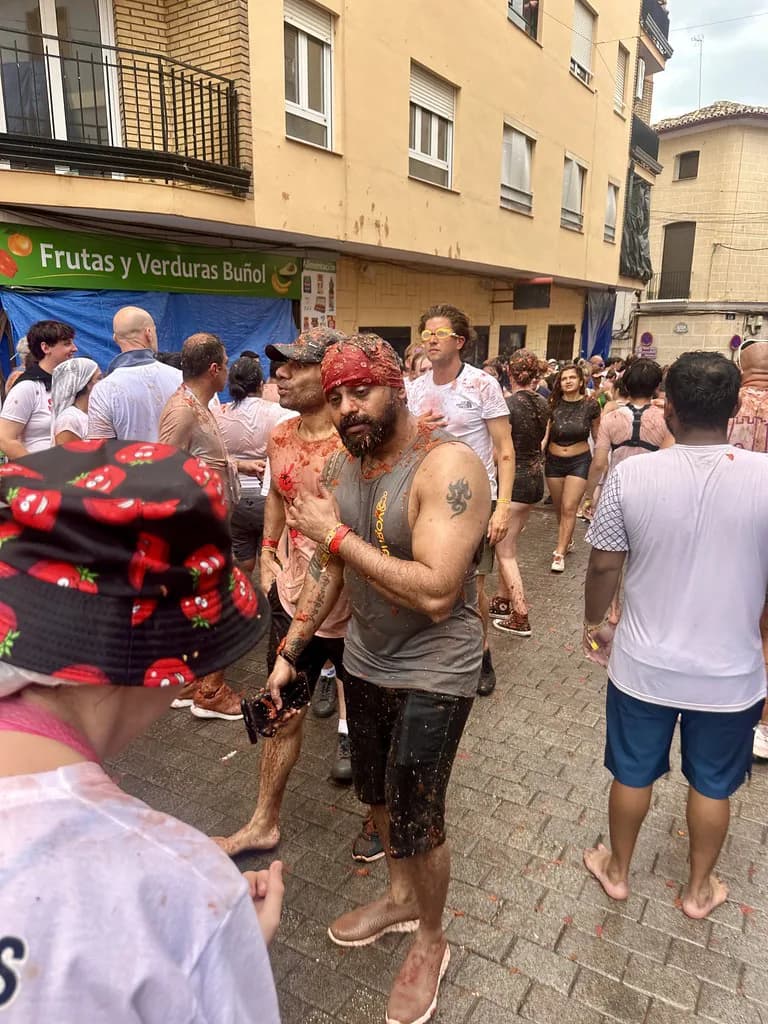
On the last Wednesday of August, over 20,000 people descend on the small Valencia-region town of Buñol to throw more than 100 metric tons of over-ripe tomatoes at each other for exactly one hour. The fight begins at 11:00 and ends when a second rocket is fired. It is the most internationally recognizable fiesta in Spain and one of the messiest events on the planet.
Basic entry tickets cost around €15, with packages including transport from Valencia ranging from €40 to €60. Check the La Tomatina dates page early — tickets typically sell out two to three months before the event. One tradition competitors rarely explain: the fight does not begin until someone climbs the "palo jabón," a greased wooden pole 15 meters tall, and retrieves a leg of ham from the top. The climbing attempts are worth watching in their own right; some years it takes over an hour before the ham comes down and the trucks roll in.
For messy festivals like this one, wear a swimsuit or throwaway clothes in dark colors (white turns immediately pink), bring sealed goggles, and wear closed shoes you can bin afterward. Tomatoes are squashed before throwing by law to reduce injury risk, but the volume of liquid underfoot makes the streets extremely slippery. Rent a locker at the edge of town for your passport and wallet — the organizers provide them near the entry points.
The Cascamorras in Baza and Guadix
The Cascamorras is one of the strangest and most photogenic festivals in Spain, played out over three days between 6 and 9 September across two rival towns in Granada province. The legend: a worker from Guadix found a statue of the Virgin in Baza and both towns claimed ownership. The result was a decree that if the Cascamorras — the envoy from Guadix — can carry the statue back to Guadix without being stained, it belongs to Guadix. He never succeeds.
On 6 September in Baza, the Cascamorras runner attempts to reach the church while thousands of locals douse him in black "empella" (a mixture of motor oil and black paint). On 9 September in Guadix, the roles partially reverse: having "failed," the Cascamorras returns home and is greeted with a different mixture of colored paints. The event is free to watch or join. If you stand in the crowd near the runner's path, you will be painted too.
Advance preparation: cover your skin with olive oil before wading in — it makes the black grease easier to remove afterward. Wear a full-body throwaway outfit and closed shoes. Baza is roughly 100 km east of Granada; the most practical base is Granada city with a rental car. The clean-vs-dirty dynamic between the two towns runs deep — locals from each side are genuinely competitive about which town stages the better spectacle.
La Mercè Festival in Barcelona
Barcelona's biggest free street festival centers on 24 September, the feast day of Our Lady of Mercy, the city's patron saint. Over four to five days, more than 500 free events take place across the city: fire-running ("correfoc"), giant puppet parades ("gegants i nans"), free outdoor concerts, and the extraordinary "Castellers" — human tower-building competitions where teams of Catalans build living towers up to ten stories tall.
The Castellers are the emotional core of La Mercè for most locals. The best plaza to see them is Plaça de Sant Jaume, where the city's two rival colles (tower teams) — Castellers de Barcelona and Minyons de Terrassa — often compete on the 24th itself. Arrive by 11:00 to secure a safe viewing spot along the perimeter, and stand near the side walls of the square rather than directly underneath the tower's projected fall zone. The towers are structurally impressive but do occasionally collapse.
Review the La Mercè dates to plot your route between plazas, as the correfoc fire-run through the Gothic Quarter happens on a different evening from the Castellers. Both are unmissable. Most concerts on the main outdoor stages — Passeig de Lluís Companys and Plaça de la Mercè — are free and attract headline-level acts.
What to Wear: Messy Festivals Survival Guide
Three festivals on this list — Haro, La Tomatina, and the Cascamorras — will destroy whatever you wear. The same principle applies to each: arrive in throwaway clothes, protect your eyes and electronics, and have a change of outfit stored somewhere dry.
- Haro Wine Battle: All-white old clothes (the wine contrast is photogenic), UV-blocking goggles, closed shoes. Leave valuables in a Haro locker before boarding the shuttle bus to the cliffs.
- La Tomatina: Dark swimsuit or single throwaway layer, sealed goggles, flip-flops or old trainers you can bin. Tomato acid irritates eyes fast — goggles are non-negotiable.
- The Cascamorras: Full-body throwaway outfit in any dark color, closed shoes, olive oil applied to exposed skin before the event to help remove the black grease afterward.
For fire-based festivals — San Juan bonfires and La Patum — the priority shifts: wear natural fibers (cotton, linen) rather than synthetics, which can melt. Bring a cotton cap or wide-brim hat to block sparks from above during the Plens in Berga.
Fire, Pyrotechnics, and Ancient Street Parades
A recurring thread across the best Spanish fiestas is fire. Spain has a unique "pirotècnica" culture — competitive fireworks displays called "mascletàs" (Alicante, Valencia), fire-dancing figures called "diables" or "plens" (Berga, Barcelona), and the burning of artistic monuments (Alicante's fogueres, Valencia's Las Fallas). Fire marks transitions: the end of winter, the harvest, the saint's day.
Street parades with giant puppets and figures are equally embedded in the cultural calendar. Barcelona's La Mercè, Berga's La Patum, and the Moors and Christians festivals all feature enormous carved figures — gegants, nans (dwarfs), and historical effigies — carried through narrow medieval streets by teams of bearers. These parades are slower and more accessible than fire events, making them particularly suited for visitors with children.
The religious and historical origins of these parades matter if you want to understand what you are watching. The gegants of Barcelona represent historical royal figures; the Patum's fire-beasts dramatize medieval Christian allegory; the Moors and Christians figures re-enact a specific military event with genuine local pride on both sides. Spending ten minutes reading the plaque outside the local "Casa de Cultura" before the parade begins transforms the spectacle from confusing noise into living history.
How to Plan Your Trip Around Spanish Fiestas
Attending the best fiestas in Spain requires more than just a plane ticket and a sense of adventure. Many festivals take place in small towns where hotels sell out a year in advance — Buñol has almost no hotel capacity; Haro is a wine town not a resort. Plan to base yourself in a larger nearby city and travel in on the day. Spain's RENFE and regional rail networks often add extra carriages for major events, and buses from provincial capitals typically run festival specials.
If you are visiting Barcelona, the La Tomatina day trip is manageable from there (Valencia is 3 hours by high-speed rail). San Fermín in Pamplona is reachable from Bilbao (1.5 hours by bus) or San Sebastián (80 minutes). Budget roughly €100–150 per day once you factor in transport, accommodation markup during festival weeks, and street food — tapas run €2–4 each at most fiesta stalls.
Hydration and sun protection are critical at summer fiestas. Most outdoor events peak in the early afternoon heat; carry a refillable water bottle and apply high-factor sunscreen before joining any street crowd. Always carry cash — local vendors in Catoira, Baza, and smaller host towns frequently do not accept international credit cards.
Frequently Asked Questions
What is the most famous festival in Spain?
San Fermín in Pamplona is widely considered the most famous festival in Spain. It attracts over a million visitors annually for the morning bull runs and week-long street parties. Most events are free to watch from the street.
When is the best time to visit Spain for festivals?
The best time to visit is between June and September when the majority of outdoor fiestas occur. This period includes the San Juan bonfires, La Tomatina, and many harvest festivals. Expect hot weather and large crowds during these months.
Are Spanish festivals family-friendly?
Many festivals like La Mercè and Moors and Christians offer dedicated daytime activities for children. However, messy events like the Haro Wine Battle or La Tomatina are better suited for adults. Always check the local schedule for 'infantil' events.
Related in Spain: Essential Tips for Sunflower Fields in Andalusia.
Related in Spain: What Is Semana Santa Holy Week Explained Travel Guide.
The best fiestas in Spain offer a window into the soul of a country that values community and celebration above all else. Whether you choose the fire of Alicante or the tomatoes of Buñol, you will leave with stories that last a lifetime. We encourage you to embrace the chaos, respect the traditions, and dive headfirst into the vibrant festival culture of 2026.
Remember to book early and stay flexible with your travel plans as dates can occasionally shift based on local council decisions. Spain is waiting to welcome you with open arms and a glass of wine at its next great celebration.
Free guide: Europe's Festival Calendar
A month-by-month map of Europe's unmissable festivals — with the best dates to visit each and a local tip you won't find in the guidebooks.
You might also like


Continue reading
More guides you'll find useful