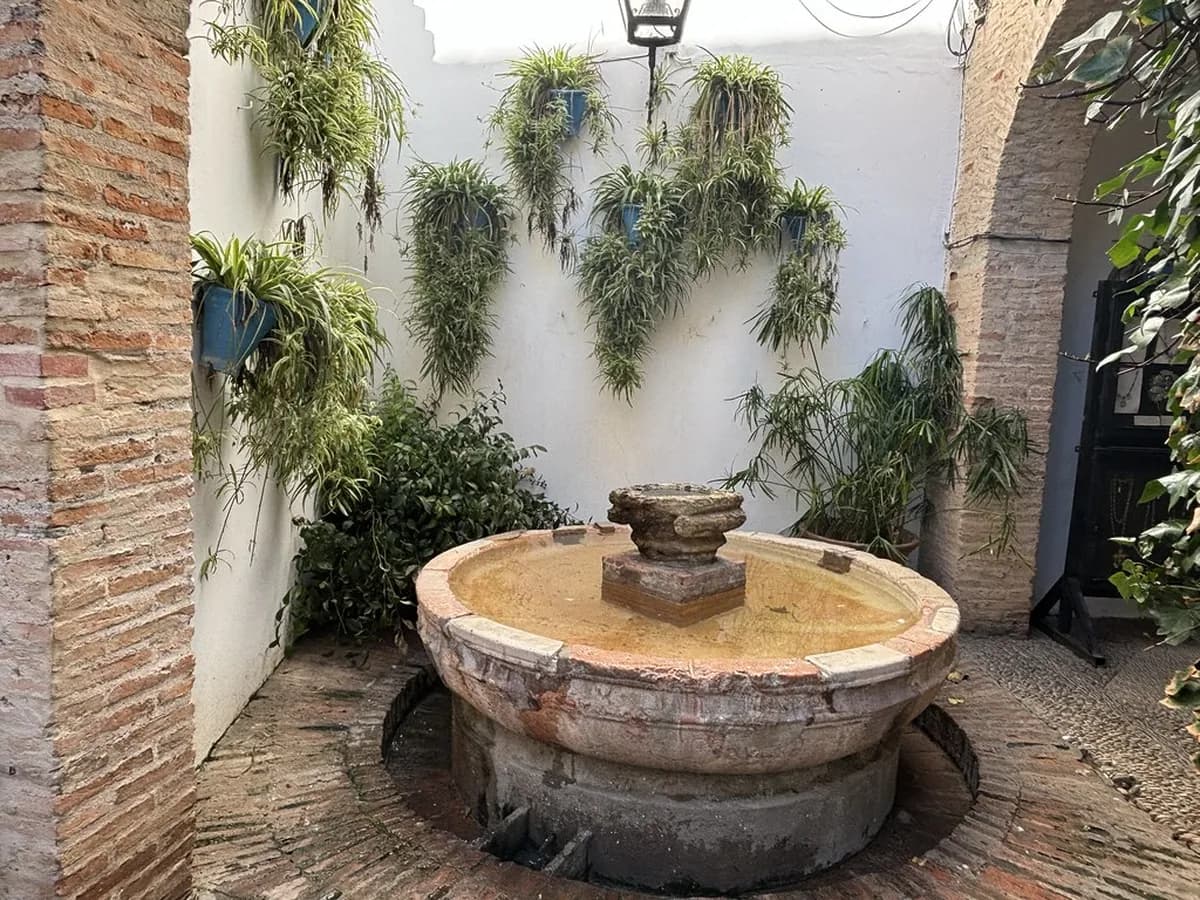
How To Get To Patios De Cordoba: 10 Essential Visiting Tips
Master your visit to the Patios de Cordoba. Learn how to get to the city, navigate the 6 official routes, manage wait times, and find the best photography spots.
On this page
How To Get To Patios De Cordoba: 10 Essential Visiting Tips
Every May, the city of Cordoba transforms into a vibrant canvas of blooming flowers and hidden architectural gems. Finding out how to get to Patios de Cordoba is the first step toward experiencing this world-famous floral celebration. Local residents open their private courtyards to share centuries of tradition and botanical beauty with the public.
This festival is more than just a flower show; it is a deep-rooted cultural event recognized by UNESCO. Visitors can explore narrow stone alleys filled with the scent of jasmine and the sight of colorful geraniums. Planning your logistics early is essential because the city becomes very crowded during the peak festival weeks.
Our guide provides everything you need to navigate the transport, routes, and timing for a perfect trip. We cover the high-speed train options, the six official neighborhood itineraries, specific patios worth visiting by address, and the navigation tools that locals actually use. Get ready to discover the most beautiful hidden corners of Andalusia with our practical advice.
Free guide: Europe's Festival Calendar
A month-by-month map of Europe's unmissable festivals — with the best dates to visit each and a local tip you won't find in the guidebooks.
Understanding the Festival de los Patios
The Festival de los Patios is a competition where local residents vie for the title of the most beautiful courtyard. The competition has run since 1921 and highlights the communal spirit of Córdoba's historic neighborhoods. In 2026, the festival ran from May 4 to May 17, spanning 14 days across the city.
For 2027, the event is expected around 5–18 May (dates TBC). This period coincides with some of the best festivals in Spain, making it a busy time for tourism. Each courtyard is a labor of love that requires year-round maintenance, daily watering, and specific botanical knowledge passed down through families.
Around 64 patios open to the public each year — 52 competing in the contest and 12 non-competing institutional courtyards. Judges score floral density, color combinations, cleanliness, artisan decoration, and architectural preservation. The festival is free to the public, though some institutional courtyards may charge small fees outside of specific free-entry windows.
Best Ways to Get to Córdoba (Transport)
Reaching Cordoba is straightforward thanks to Spain's excellent high-speed rail network, known as the AVE. Most travelers arrive at Córdoba Central station, which is well-connected to major hubs across the country. You can easily walk or take a short taxi ride from the station to the historic center.
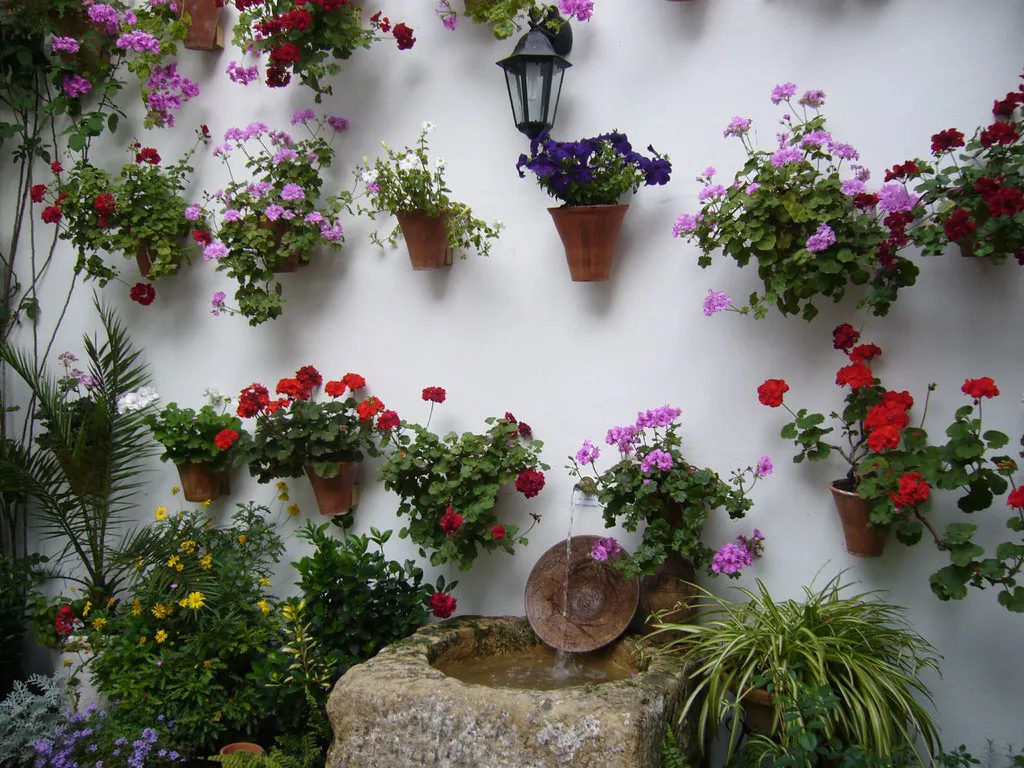
If you are coming from the capital, the train from Madrid takes approximately 2 hours and 10 minutes. Travelers from Seville enjoy an even shorter trip of just 50 minutes on the high-speed line. Those arriving from Malaga can expect a journey of about 1 hour and 10 minutes, and Granada is 1 hour and 45 minutes away. Be sure to check the patios de Cordoba dates before booking your tickets to ensure you arrive during the main event.
For those on a budget, ALSA buses provide frequent service from Granada and other regional cities. The bus station is located directly across from the train station for easy transfers. If you are driving, do not attempt to park inside the historic center during festival hours — Calle San Basilio and the Judería become effectively impassable. Park at Parking Alcázar or Parking Tendillas on the periphery (around €15–20 for a full day) and walk in.
- High-Speed Train (AVE) from Madrid: 2h 10m, approximately every 30–60 minutes, cost €30–70
- Regional Train from Seville: 50 minutes, ideal for day trips, cost €15–25
- Train from Malaga: 1h 10m, a viable day trip, cost €20–35
- Train from Granada: 1h 45m, several departures daily, cost €18–30
- Bus from Granada (ALSA): 2h 30m, best for budget travelers, cost €12–20
How to Navigate the 6 Official Patio Routes
The festival is organized into six official routes that guide you through different historic neighborhoods. Each route groups together 6 to 11 patios located close to one another. Maps are available at the patios themselves (ask the attendants in red T-shirts), at tourism offices, and through the Official Patios de Córdoba Website.
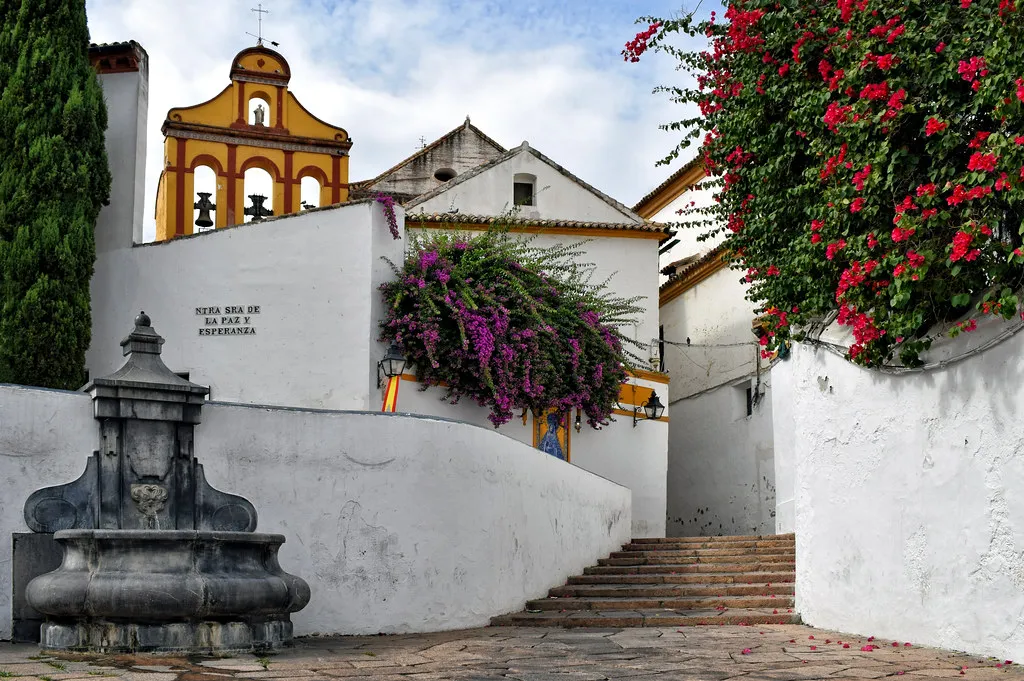
The six neighborhoods covered by the routes are: San Basilio, Judería, Santa Marina–San Agustín, Santiago–San Pedro, San Lorenzo, and Regina–Realejo. San Basilio contains the most award-winning patios and attracts the largest crowds. Santa Marina–San Agustín and San Lorenzo run 30–50% quieter across all time slots, making them good starting points if you want to ease into the festival.
We recommend a two-day strategy: spend your first morning in Santa Marina or San Lorenzo where queues are short, then use the evening golden hour for San Basilio when the light is best. On day two, hit the Judería in the morning before the heat builds, which also lets you combine a visit to the Mezquita-Catedral nearby. This approach prevents "courtyard fatigue" and ensures you see the prize-winning patios under the best possible conditions.
For phone-based navigation, download the free Mayo Cordobés app (available for iOS and Android). It covers all 6 routes with GPS maps, opening hours, and offline access — essential in the deep lanes of the Judería where cellular signal goes patchy. The Aumentur app is a useful backup with offline interactive maps of all 64 patios across the competition zones.
Must-Visit Patios in San Basilio and Beyond
San Basilio is widely considered the heart of the festival and contains many of the most famous courtyards. Several addresses have been consistent prize-winners and are worth building your route around. Calle San Basilio 14 is the most photographed patio at the festival — a spectacular triple-storey space with a central baroque fountain and around 300 pots of scarlet geraniums cascading down three floors.
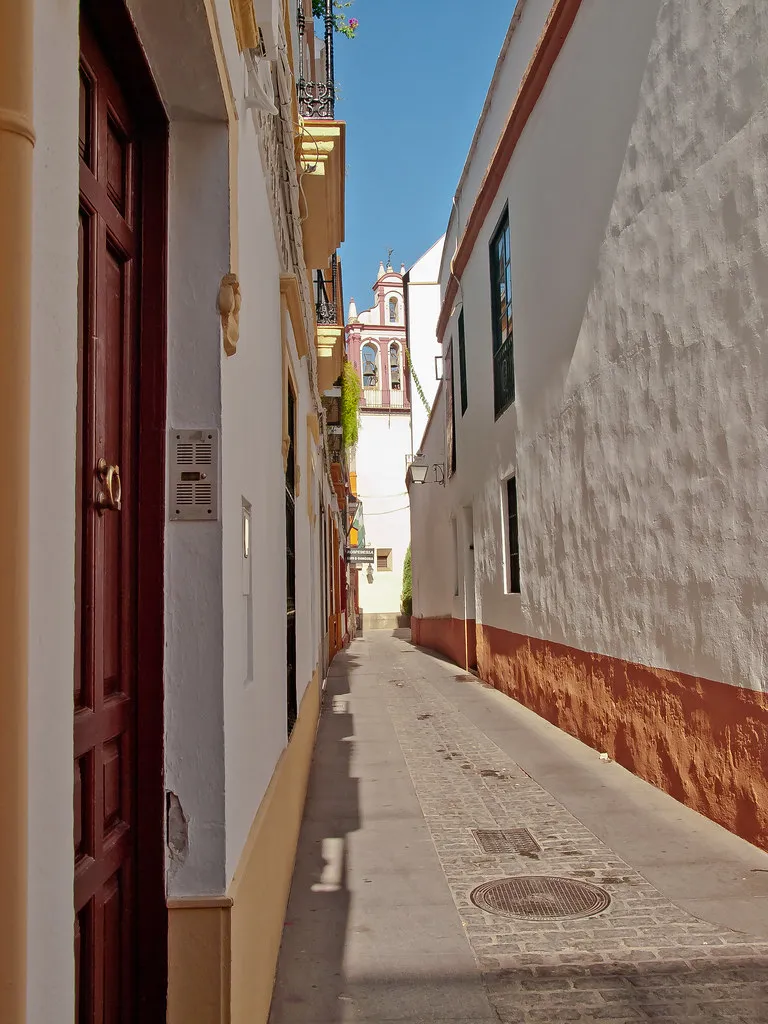
For a more intimate experience, Calle Judíos 23 in the Judería features preserved Mudéjar architecture with horseshoe arches and a century-old jasmine that perfumes the entire alley. At just 40m², it is calm and unhurried even during busy periods. In the Santiago neighborhood, Calle Postrera 28 is a family patio passed down through four generations with an original 19th-century cobblestone floor and an owner who loves explaining her work.
Queue times at the most popular patios (San Basilio, Judería) run 30–90 minutes at peak times — noon to 13:00 and 19:00 to 21:00, especially at weekends. The visit itself lasts just 2–5 minutes per patio. A reliable local tip: start with less well-known neighborhoods where you can see 8–10 patios in 90 minutes without waiting, and save San Basilio for after 21:00 when families have left.
The Judería neighborhood offers a different vibe with courtyards tucked into narrow, winding streets. These spaces often feel more intimate and are conveniently located near the Mezquita-Catedral. You can find more tips on timing in our spain festival calendar guide for regional events.
Visiting the Patios Outside the May Festival
If you cannot visit in May, you can still experience the beauty of Cordoba's courtyards. The Palacio de Viana is known as the "Museum of Patios" and features 12 distinct courtyards across a noble palace complex. It remains open throughout the year and provides a comprehensive look at the city's aristocratic gardening traditions.
You can find official information and tickets on the Viana Palace Official Site for your visit. During the festival itself, Viana typically offers a special open day (in 2026 this fell on May 7) where entry to the courtyards is free. On Wednesdays during the festival, they also offer free entry between 14:00 and 17:00.
Several private patios in the San Basilio area also offer guided tours during the spring and autumn months. These tours provide a more relaxed environment without the heavy festival crowds. The Córdoba Tourism Office maintains a list of courtyards that are accessible year-round. While the floral density may be lower in winter, the architectural beauty — pebble mosaic floors, decorative wells, hand-painted ceramic pots — remains stunning at any time of year.
Practical Tips: Hours, Entry, and Waiting Times
The patios follow a strict schedule that allows owners to rest and maintain their plants. Most courtyards open from 11:00 to 14:00 and reopen from 18:00 to 22:00. On the final Sunday of the festival, all patios close early at 20:30 instead of the usual 22:00 — plan your last evening route to finish by 20:00.
Entry to the competitive patios is free for all visitors. It is customary to leave a small contribution in the dishes or collection boxes near the exit if one is present — this helps residents cover the significant annual costs of water, plants, and lime (typically €1,500–3,000 per year). Do not hand money directly to the owner; most will politely decline. On Wednesdays, certain institutional courtyards offer free entry between 14:00 and 17:00.
To minimize your time in lines, avoid visiting on weekends if your schedule allows. Weekdays (Monday–Thursday) see 30–50% fewer visitors than Friday through Sunday. The quietest windows are 11:00–12:00 and 21:00–22:00. Always carry a bottle of water and wear comfortable shoes — expect 3–5 km of walking on cobblestone streets. A cap and sunscreen are essential in May, when temperatures regularly hit 25–30°C.
Photography and Lighting: Capturing the Courtyards
Capturing the beauty of the patios is challenging due to the high contrast between white walls and bright flowers. The harsh Andalusian sun often creates deep shadows and blown-out highlights in your photos. A reliable tip for smartphone users: tap on the white wall in your camera app to set the exposure, then brighten slightly. This prevents the walls from appearing as pure white and preserves detail in the flower colors.
The best lighting occurs between 19:00 and 21:00 during the festival — the golden hour brings warm tones to white walls and softens shadows. Evening visits also let you see the patios lit by traditional oil lamps and lanterns, which creates a romantic atmosphere that is impossible to replicate in daylight. After 21:00, some patios have artistic LED installations that add a completely different character.
Try to look for unique angles: shoot upward through a doorway or horseshoe arch to capture the cascade of geraniums above you. Zoom in on the red-against-white contrast — a single ceramic pot on a freshly limed wall makes a stronger image than a wide shot of a crowded courtyard. Be mindful of other visitors and move through quickly so everyone has a fair chance to see the display.
Where to Stay for the Patio Festival
Choosing the right neighborhood can make a big difference in how much you enjoy the festival. Staying in the San Basilio or Santa Marina districts puts you within walking distance of the best routes. These areas are very popular, so you should check for where to stay for patios de Cordoba at least six months in advance.
The Judería is another excellent choice for those who want to be near the main monuments and dining options. Many boutique hotels in this area have their own private courtyards for guests to enjoy. If you prefer a quieter stay, look for accommodations near the Palacio de Viana in the northern part of the center — this is where the authors of this guide have found the city is most walkable without being swallowed by festival crowds first thing in the morning.
Keep in mind that prices for hotels and apartments rise significantly during the first two weeks of May — typically 40% above normal rates. Booking early not only saves money but ensures you are close to the action. This is one of the best fiestas in Spain, so rooms disappear very quickly. Budget travelers can cut costs by staying in a hostel or shared apartment (around €60 per night) and eating tapas at local tabernas for €12–20 per meal, keeping the total 3-day spend to roughly €300–400 given that festival entry itself is completely free.
History and UNESCO Recognition
The Patios Festival was added to the UNESCO Intangible Heritage list in November 2012. This recognition honors not the buildings themselves but the living tradition: the horticultural expertise, the family transmission, the communal and festive dimension that binds these neighborhoods together. The tradition is roughly 2,000 years old, evolving from Roman atria through Moorish courtyard house design and surviving the Reconquista intact.
A well-designed Córdoba patio stays around 25°C when the street outside hits 40°C, thanks to a central fountain or well and dense shade planting. The whitewashed walls reflect around 80% of light, while the suspended flower pots — typically 100–300 per patio — maximize vertical space. Most patios display geraniums (which are not native to Spain but took root here in the 19th century for their heat resistance and vivid red color), jasmine, bougainvillea, roses, and carnations.
The festival also serves as a way to preserve traditional crafts and architectural techniques. You will see examples of empedrado (pebble mosaic floors), pozos (decorative water wells), hand-painted ceramic pots in blue or red, and the zaguán (entrance hallway) that separates street from patio. This cultural continuity is what makes the event a must-see for anyone interested in Spanish history, architecture, or gardening.
- Botanical Cheat Sheet: Common Plants
- Gitanilla: Hanging geraniums (Pelargonium) — heat-resistant, continuous flowering April–October
- Jasmine: Sweet nightly scent, white flowers from May–September
- Bougainvillea: Violet, fuchsia, or orange, March–November
- Carnation (Clavel): Red, pink, or white, May–September
- Architectural Features to Spot
- Empedrado: Pebble mosaic floors, often centuries old
- Pozos: Decorative water wells at the patio's center
- Azulejos: Hand-painted ceramic tiles, often Sevillian
- Zaguán: Entrance hallway separating street from courtyard
Frequently Asked Questions
Is there an entrance fee for the Patios de Cordoba?
No, entry to the private patios during the official festival is free for all visitors. It is polite to leave a small tip in the dishes provided by the owners to help with maintenance. Some institutional sites like Viana Palace require a paid ticket for entry.
When is the best time of day to visit the patios?
The best time to visit is during the morning session at 11:00 a.m. or the late evening at 7:00 p.m. These times offer better lighting for photography and slightly cooler temperatures. Weekdays are generally much less crowded than the busy festival weekends.
How many days do I need to see all the patio routes?
We recommend at least two to three days to see the six official routes without feeling rushed. This allows you to explore different neighborhoods like San Basilio and the Judería at a relaxed pace. Check our patios de Cordoba dates to plan your full itinerary.
Can I visit the patios if I am using a wheelchair?
Many patios are located on the ground floor and are accessible, but the historic streets can be narrow and cobbled. The official festival map usually indicates which courtyards have easier access for those with limited mobility. Some older homes may have small steps at the entrance.
Related: Cordoba's festival calendar.
Visiting the Patios de Cordoba is a sensory experience that stays with you long after the flowers fade. By understanding how to get to Patios de Cordoba and navigating the routes efficiently, you can enjoy this event with minimal stress. Remember to respect the residents who open their homes to make this festival possible.
Whether you are a photography enthusiast or a gardening lover, the city offers endless inspiration during the month of May. Use our transport and timing tips to ensure your journey is smooth and rewarding. Cordoba is waiting to share its most beautiful secrets with you during the next festival season.
Free guide: Europe's Festival Calendar
A month-by-month map of Europe's unmissable festivals — with the best dates to visit each and a local tip you won't find in the guidebooks.
You might also like


Continue reading
More guides you'll find useful


