9 Essential Facts About Haro Wine Festival Dates and Logistics
Planning for Haro Wine Festival dates? Get the 2026-2027 schedule, booking tips for San Vino packages, and a guide to the Batalla de Vino in La Rioja.
On this page
Haro Wine Festival Dates: A Guide to the Batalla de Vino
Last updated June 2026. Every year on June 29th, thousands of travelers and locals converge on the cliffs of Haro, La Rioja, to drench each other in red wine. This is the Haro Wine Festival — known locally as La Batalla del Vino de Haro — and it is one of the best festivals in Spain for sheer, memorable chaos. Planning your trip requires knowing the full schedule, what to bring, and how to get there before the crowds lock out the good spots.
The Haro Wine Festival dates are fixed annually around the feast of Saint Peter. While the main battle occurs on a single morning, the celebrations span from June 23rd through June 30th. Early booking is non-negotiable — accommodation near the town fills months in advance. You can also check the Spain festival calendar to slot this into a wider Northern Spain itinerary.
Free guide: Europe's Festival Calendar
A month-by-month map of Europe's unmissable festivals — with the best dates to visit each and a local tip you won't find in the guidebooks.
Official Haro Wine Festival Dates (June 29th & Beyond)
The primary event of the Haro Wine Festival always falls on June 29th. This date marks the feast of San Pedro (Saint Peter's Day) and the legendary wine battle at the Riscos de Bilibio cliffs. It is a public celebration declared a Festival of International Tourist Interest, which means the infrastructure in town rises to meet the crowds.
Preliminary festivities begin on the night of June 23rd with the San Juan bonfires and street music. The days between June 24th and June 28th bring smaller wine tastings, traditional parades, and cooking contests — including a famous tortilla competition in the town square. Crowds peak on the evening of June 28th as the town prepares for the main event. If you plan to arrive that evening, expect a late night of street fiestas in Plaza de la Paz.
The campsite operated by San Vino tour organizers opens on June 26th for those booking packages. The full festival programme runs through June 30th, when the final brunch and departure rituals round off the week. Knowing these dates lets you decide whether you want the full six-day immersion or a targeted two-night hit-and-run for the battle itself.
The History & Tradition of the Spanish Wine Battle
The origins of the wine fight trace back to a 13th-century land dispute between Haro and its neighbour, Miranda de Ebro. To mark their territorial boundary, Haro's officials were required to ride to the Cliffs of Bilibio every San Pedro's Day and plant purple banners. Over the centuries, this solemn legal ritual dissolved into a joyful wine-throwing celebration.
The tradition became formally codified in 1965, when Haro's mayor established official dress codes and rules: all white clothing, a red neckerchief (pañuelo), and plenty of local wine as ammunition. That formalisation transformed the event from a spontaneous local custom into a structured cultural ceremony that now draws around 10,000 participants annually. The hermitage of San Felices de Bilibio, perched on the cliffs above the battle site, serves as the religious anchor — mass is held there at 07:00 before the chaos begins.
One detail that no tourist brochure tends to emphasise: the wine used in the battle is surplus from the La Rioja harvest that did not meet the strict DOCa Rioja bottling standards. Rather than going to waste, it is thrown at strangers on a hillside, then drains back into the earth below — effectively fertilising the very vineyards that produced it. It is an accidental closed loop that makes the Haro Wine Festival one of the more ecologically coherent parties in Europe.
The Wine Fight Awaits: What Actually Happens on the Cliffs
On the morning of June 29th, participants make their way to the Riscos de Bilibio, either on foot (roughly 6 km from the town centre) or by shuttle bus that runs from around 06:00. The cliffs sit above the vineyards of La Rioja Alta, and the walk up is part of the experience — white-clad strangers carrying buckets and water guns in the pre-dawn light.
The battle is fought with approximately 70,000 litres of red wine, dispersed among roughly 10,000 participants. Weapons of choice include back-mounted sprayers, water pistols, and open buckets. There are no teams and no rules about who gets soaked — you will be purple from head to toe within the first ten minutes. The wine is acidic enough to sting the eyes, which is why goggles are essential rather than optional.
By around 10:30, the wine ammunition runs out and the crowd begins the slow, stained walk back down into Haro. The afternoon belongs to the open bars, recovery brunches, and street parties that fill the town through the night. At 21:30, the Toro de Fuego — a firework bull — is released through the crowds in a separate local tradition that caps the evening.
San Vino 2026: The Official Wine Warfare Schedule
For those joining via the San Vino package (the most popular organised route), the day-by-day timeline for 2026 runs as follows. June 26th is check-in day at the campsite, with the opening party starting at 19:00 and the crowd rolling into Haro's town square by 22:00. June 27th and 28th are built around bodega crawls, a salsa and sangria class, and nightly street fiestas in Plaza de la Paz.
June 29th — the main event — follows a tight sequence. 06:00–07:00: shuttle buses depart for the Cliffs of Bilibio. 07:00: mass at the Hermitage of San Felices. 08:00: the Mayor of Haro drops the flag and wine warfare commences. 11:00: the Purple Retreat back to the campsite for showers and the pool. 12:00–14:00: recovery brunch. The afternoon opens the bar and the Victory Bender begins in earnest.
June 30th closes with a final bottomless mimosa brunch from 09:00 to 11:00 before check-out. For independent travellers not using San Vino packages, the town's own programme follows broadly the same arc — the town council publishes the street fiesta schedule closer to the date on the official Haro tourism pages.
Choose Your Battle: San Vino 2026 Packages vs. DIY
The San Vino "Full Experience" package (June 26–30) includes 4 nights of camping, curated bodega tours, a salsa class, a traditional white outfit (saving roughly €40), wine tastings (saving roughly €50), and a private solo tent upgrade (saving roughly €120). When you add those extras up, the over-€270 in bundled value makes the package price defensible for anyone who was going to spend money on those activities anyway.
The DIY option starts from €99 per night and gives you a basecamp at the campsite without the curated programme. You access the open bar (€15/day), the festival shuttle, and the campsite pool, but you pay separately for the wine tour, the outfit, and any extras. For experienced travellers who want to dictate their own schedule, DIY makes sense. For first-timers, the maths usually favours the full package.
A third option — "Fight Only" (June 28–30) — suits those with just two days free. It covers two nights of camping, battle access, and the essential shuttle. It is the bucket-list minimum: arrive, turn purple, leave. Whatever route you choose, book well before May, since 2026 packages at San Vino have historically sold out before the spring.
San Vino Camping: Your Rioja Basecamp
The San Vino campsite sits at the base of the Bilibio hills, surrounded by La Rioja Alta's vineyards, at Camping Haro, Avenida de Miranda 1, 26200 Haro. Its main advantage is proximity: the walk to the battle site is part of the pre-dawn march rather than a logistics problem. The campsite includes pre-pitched twin tents, sleeping mats, sleeping bags, an onsite pool, and hot showers — the latter two being non-negotiable after the battle.
The trade-off is atmosphere versus comfort. The campsite is a full party environment from arrival to checkout — DJs, open bars, and several hundred international travellers who are all there for exactly the same reason. If you want quiet evenings or a private bathroom, book a hotel in the centre of Haro instead. The town centre is a five-minute walk from the campsite, so access to street fiestas is identical either way.
For independent travellers, the nearest campsite alternative is Camping de la Rioja on the outskirts of town. Hotels in the town centre — including the historic parador-style Los Agustinos — should be booked by March for the June 29th weekend. Prices during festival week run two to three times the standard rate.
Is the Wine Fight Better Than La Tomatina?
Both events involve throwing food-adjacent substances at strangers in the Spanish sun, but the comparison ends there. La Tomatina takes place in Buñol on the last Wednesday of August, drawing around 20,000 participants in 40°C heat. The Haro Wine Fight happens on June 29th, when temperatures in La Rioja sit around 21–28°C. The timing alone favours Haro for anyone sensitive to extreme heat.
The scale is different too. La Tomatina is heavily commercialised, with ticket caps, tour operators bussing in crowds from Valencia, and a well-worn tourist infrastructure. The Haro Wine Festival retains a stronger local character — the majority of participants are Spanish, the town's own fiestas continue around the foreign visitors, and the Riscos de Bilibio setting on open hillside vineyards feels nothing like the cramped Buñol streets.
On cost: La Tomatina entry tickets now run around €12–15 plus transport from Valencia. Haro festival access has no formal entry fee for the battle itself — you simply walk (or take the shuttle) to the cliffs. The wine you throw costs you nothing unless you bring your own. For value and authenticity, Haro wins. For convenience from a major city, La Tomatina is easier to reach from Barcelona or Valencia.
A Culinary Journey Through Haro and Northern Spain
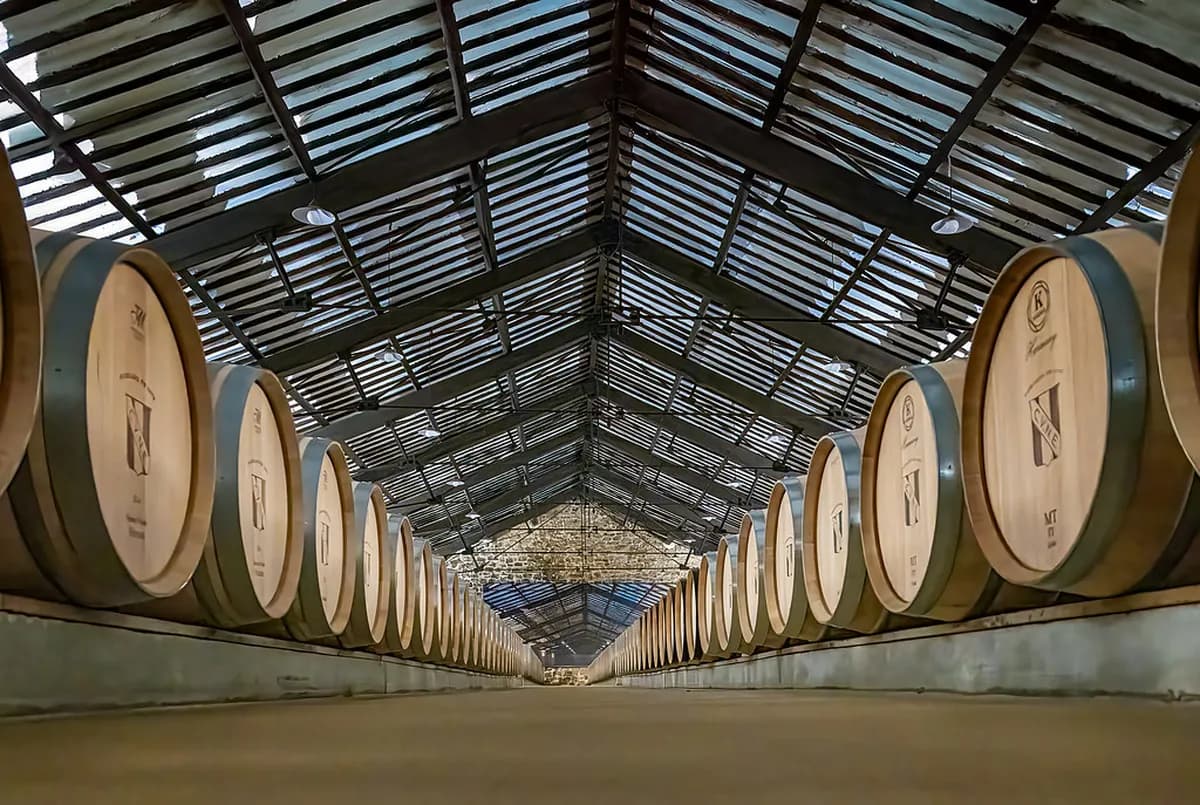
The Haro Wine Festival is the headline, but the Barrio de la Estación — a compact district in Haro — holds the highest concentration of century-old prestigious wineries anywhere in Spain. CVNE (Compañía Vinícola del Norte de España), Bodegas Muga, and La Rioja Alta are all within walking distance of each other and offer cellar tours and tastings year-round. Booking a tour at Muga in particular gives you access to one of the few remaining traditional gravity-fed winemaking operations in the region.
Beyond wine, Haro sits within striking distance of the broader culinary scene of Northern Spain. The regional dishes worth seeking out include patatas a la riojana (potatoes slow-cooked with chorizo and peppers), grilled lamb chops cooked over vine-wood cuttings, and queso de camerano, a sharp goat's milk cheese native to La Rioja. San Sebastián is roughly 100 km to the north and concentrates more Michelin stars per capita than any other city in Europe — a natural add-on for serious food travellers.
For those who want a curated deep-dive into the wine region without the battle, San Vino's bodega tour (included in the Full Experience package) covers Muga and CVNE with guided tastings. The contrast — sipping aged Tempranillo in a stone cellar one afternoon, throwing the surplus the next morning — is precisely what makes Haro worth the detour from any Northern Spain route.
Wine Fight Survival Kit: What to Pack
Packing for the Haro Wine Festival means accepting that most of what you bring will be destroyed. The red wine will permanently stain almost everything it touches. Experienced participants wear the cheapest white clothing they can find — a €3 white t-shirt from a supermarket or charity shop is ideal, since it starts as a blank canvas and ends the morning looking like a bruised eggplant.
Eye protection is the most overlooked item for first-timers. The acidity of Rioja wine is enough to cause significant stinging if it enters your eyes — and it will, repeatedly, from all directions. Cheap swimming goggles or lab glasses are the MVP of the festival. Footwear should be old rubber-soled sneakers: the hillside is slippery when soaked, and the shoes go straight in the bin afterwards.
A waterproof phone pouch is worth more than the phone it protects — you will want photos, and a soaked phone is a paperweight. Bring a light jacket for the post-battle street parties, when temperatures drop after dark. The full kit list: white t-shirt and white trousers, red neckerchief (pañuelo), cheap goggles, waterproof phone pouch, old rubber-soled sneakers (throwaway), light jacket, and a small dry bag for anything you cannot afford to lose. If you book the Full Experience package, the white outfit with red neckerchief is included, saving you the €40 sourcing cost.
- White t-shirt and white trousers — the cheaper the better
- Red neckerchief (pañuelo) — mandatory dress code
- Protective goggles — essential, not optional
- Waterproof phone pouch — bring it, use it
- Old rubber-soled sneakers — plan to bin them after
- Light jacket for evening street parties
- Small dry bag for documents and cash
Frequently Asked Questions
What are the exact Haro Wine Festival dates for 2026?
The main battle takes place on June 29th, 2026. Festivities begin on June 23rd with the San Juan bonfires. Most visitors arrive by June 27th to enjoy the full schedule of events.
Is the Haro Wine Festival worth it for non-drinkers?
Yes, the festival offers a unique cultural experience beyond just drinking. The energy, music, and tradition at Riscos de Bilibio are visually stunning. You can participate in the battle without consuming any alcohol.
How do I get to the wine battle from Haro town center?
Most people take a shuttle bus or walk the 6-kilometer path to the cliffs. Shuttles run frequently on the morning of June 29th starting at sunrise. Taxis are also available but must be booked well in advance.
The Haro Wine Festival is a bucket-list event for anyone visiting Northern Spain. By focusing on the June 29th date, you can experience the pinnacle of Rioja culture. Remember to book your accommodation early to avoid the steep price hikes. Whether you choose a package or go DIY, the experience is truly unforgettable.
Prepare for the mess, embrace the tradition, and enjoy the world-class wine. The combination of history and high-energy celebration makes Haro a unique destination. Safe travels and enjoy the legendary Batalla de Vino in La Rioja.
Free guide: Europe's Festival Calendar
A month-by-month map of Europe's unmissable festivals — with the best dates to visit each and a local tip you won't find in the guidebooks.
You might also like


Continue reading
More guides you'll find useful