Festivals and Events in Lisbon 2026: The Complete Calendar
Lisbon's 2026 festival calendar: Festas de Lisboa and Santo Antonio in June, NOS Alive and Rock in Rio, Arraial Lisboa Pride, the Feira do Livro, Carnaval, and the New Year fireworks over the Tagus.
On this page
Festivals and Events in Lisbon 2026: The Complete Calendar
The first time I spent a June night in Alfama, I gave up on my dinner plans somewhere around the third grilled sardine handed to me by a stranger. I had come to Lisbon to see the miradouros and ride the tram 28, and instead I found myself pressed into a tangle of lantern-strung lanes below the castle, wine in a plastic cup, paper decorations overhead, a brass band somewhere and pimba music somewhere else, and the whole neighbourhood out on its doorstep celebrating Santo António. No guidebook had prepared me for how completely the city gives itself over to its patron saint. It is, without question, the great Lisbon festival — and it is only the loudest month in a calendar that runs the whole year.
Lisbon is one of Europe's most rewarding short-break capitals — a hilly, sun-washed city on the Tagus where you can go from the fado houses of Alfama to the Jerónimos Monastery in Belém, from the grand riverside sweep of Praça do Comércio to the late-night bars of Bairro Alto, all in a single well-planned day. Its events reflect everything the city is: a saint's-day street party rooted in the medieval bairros, a summer that draws two of Portugal's biggest music festivals, the largest Pride in the country, and a book fair that turns a hilltop park into a month-long open-air reading room.
This guide maps Lisbon's 2026 festival year from end to end — from the pre-Lent colour of Carnaval, through the Feira do Livro and Arraial Pride, into the great June explosion of the Festas de Lisboa and Santo António, on to the summer stages of NOS Alive and Rock in Rio, and finally to the fireworks over the river on New Year's Eve. Whether you are building a trip around one event or working out the best week to come, the sections below will help you decide.
Free guide: Europe's Festival Calendar
A month-by-month map of Europe's unmissable festivals — with the best dates to visit each and a local tip you won't find in the guidebooks.
Why Lisbon for Festivals?
Lisbon makes an unusually characterful festival city, and much of that comes down to geography. This is a place of hills and viewpoints, tiled façades and steep cobbled lanes, and its celebrations are woven into that fabric rather than staged on some anonymous fairground. The great June festival happens in the actual medieval neighbourhoods — Alfama, Mouraria, Graça — where people live, so you are not watching a spectacle from behind a barrier; you are standing in someone's street eating their sardines. The summer music festivals, by contrast, spread out to the riverfront and the eastern parks, giving the season two rhythms: the tangled old town in June and the big open-air stages in July.
| Festival | When | What to expect |
|---|---|---|
| Carnaval | February–March | Costume parties and masked events in the run-up to Lent, in the quiet off-season |
| Feira do Livro (Book Fair) | Late May–June | Publishers' pavilions, author talks and signings across Parque Eduardo VII |
| Arraial Lisboa Pride | June | Portugal's largest Pride — an open-air arraial with concerts, DJs and drag, free to attend |
| Festas de Lisboa / Santo António | June (peaks 12–13) | Grilled sardines, all-night arraiais in Alfama, and the Marchas Populares down Avenida da Liberdade |
| Rock in Rio Lisboa | June (biennial) | Stadium-scale "City of Rock" with global headliners at Parque Tejo / Bela Vista |
| NOS Alive | July | Riverside multi-stage festival at the Passeio Marítimo de Algés with major international headliners |
| New Year's Eve | 31 December | Fireworks over the Tagus and free live music around Praça do Comércio |
The other reason is that Lisbon's events grow out of things the city genuinely owns. The Festas de Lisboa exist because Santo António — Saint Anthony of Padua, born here in the late twelfth century — is the city's own patron, and the celebration has been part of Lisbon life for centuries. The fado that drifts out of the Alfama tavernas during the arraiais is Lisbon's own melancholic music, recognised by UNESCO. That authenticity gives the calendar a coherence that a lot of European city-break destinations simply cannot match.
Festas de Lisboa and Santo António: The Great June Festival
Nothing else in the Lisbon calendar comes close to the Festas de Lisboa. All through June the city stages the Santos Populares — the popular-saints celebrations — but everything builds towards the night of 12 June into 13 June, the feast of Santo António, Lisbon's patron saint. In the days around it the historic bairros are strung with coloured paper garlands and bunting, the smell of charcoal-grilled sardines hangs over every lane, and the whole city eats, drinks and dances in the street until dawn. Alfama, Mouraria and Graça are the beating heart of it, their squares turned into arraiais — open-air street parties with grilled sardines, bica coffee, cheap wine, and the accordion-driven pimba music that Lisbon reserves for exactly these nights.
The set-piece is the Marchas Populares, the costumed neighbourhood parades that process down the grand boulevard of Avenida da Liberdade on the night of the 12th. Each historic bairro fields its own march — matching costumes, choreographed routines, months of rehearsal — competing for the city's affection in a pageant that draws huge crowds to the avenue. Grandstand seating along the route is ticketed and sells out; everything else is free and standing, so claim a spot early if you want a clear view. Santo António is also, traditionally, the day of weddings and of small pots of basil (manjerico) given with love poems — little rituals that give the party its tender, home-grown edge beneath the noise.
If June's popular-saints tradition catches you, it is worth knowing that Lisbon's celebration has a famous northern cousin. Porto throws its own, even wilder version on the night of 23 June — the Festa de São João — with plastic hammers, sky lanterns and midnight fireworks over the Douro. I have written a full Festa de São João Porto guide and a companion piece on how to experience Festa de São João in Porto; if you are in Portugal for a stretch of June, seeing both the Lisbon Santo António and the Porto São João in the same trip is the ultimate Portuguese midsummer double-header.
Summer Music: NOS Alive and Rock in Rio Lisboa
Once the sardine smoke of Santo António clears, Lisbon's summer belongs to its music festivals — and two of Portugal's biggest anchor the season. NOS Alive takes place in July at the Passeio Marítimo de Algés, the riverside promenade just west of the city towards Belém and beyond. It is one of the country's flagship festivals: a multi-day, multi-stage event that pulls major international rock, indie, pop and electronic headliners to a site right on the Tagus, with the water on one side and the summer crowd on the other. Day tickets and full passes go on sale months in advance and the headline nights sell out, so if a July trip is on the cards, book the moment the line-up is announced.
The other giant is Rock in Rio Lisboa, the Portuguese edition of the Brazilian mega-festival, staged biennially in June at the Parque Tejo / Bela Vista grounds in the east of the city. When it runs, it is one of the largest music events in the country — a purpose-built "City of Rock" with several stages, funfair rides and a stadium-scale main stage that hosts global superstars across a run of weekend days. Because it is held every other year, check whether 2026 is a Rock in Rio year before you plan around it. Between the two, plus smaller riverside and club events, Lisbon gives you a proper festival summer to follow straight on from the June street parties.
Lisbon Pride and the Book Fair (Late Spring–June)
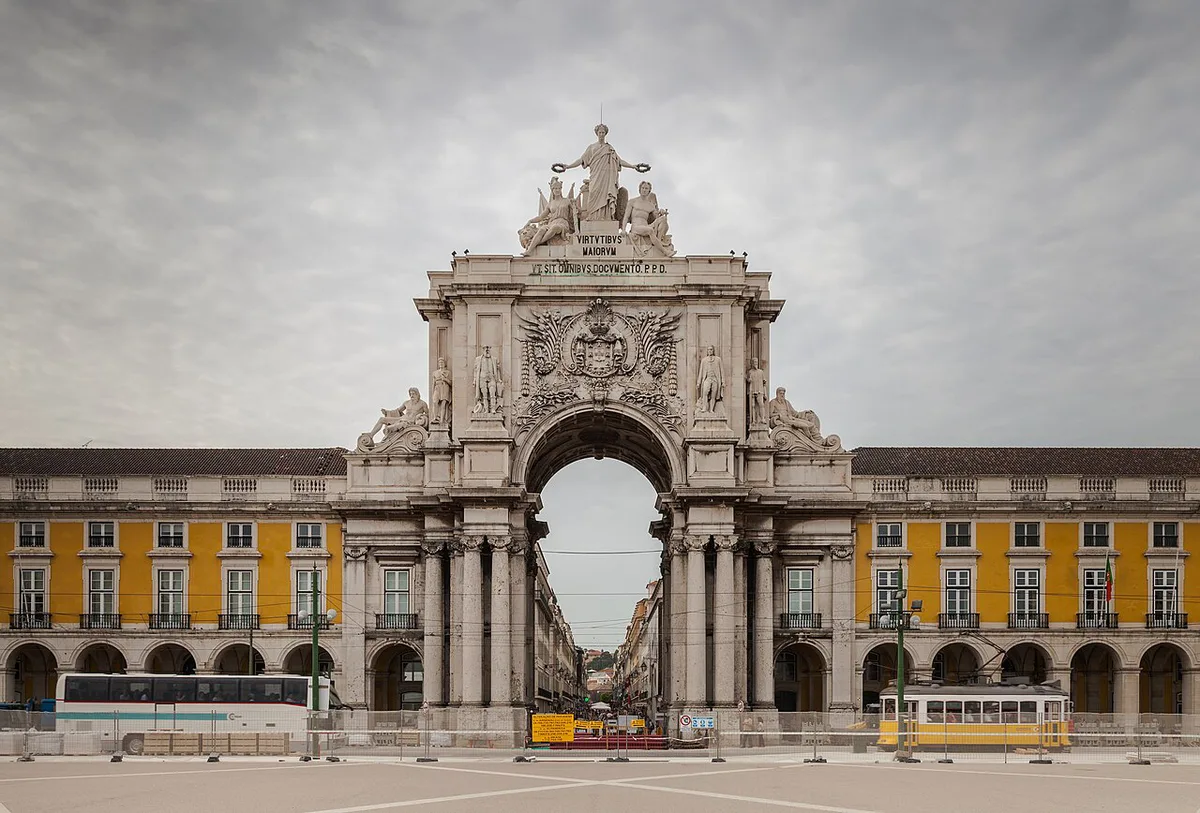
Two more June-ish events give the calendar its cultural breadth. The Arraial Lisboa Pride is Portugal's largest Pride celebration, held in June and centred on a huge open-air arraial — the same street-party format as the Santos Populares, but repurposed as a joyful, inclusive festival with concerts, DJs, drag performances and stalls that runs late into the night. It typically takes over a central square such as the Praça do Comércio or the Terreiro do Paço riverfront, and it draws a big, mixed, high-energy crowd. It is free to attend, family-friendly by day and party-minded after dark, and it slots naturally into a June trip alongside the saint's-day festivities.
Overlapping it is the Feira do Livro de Lisboa, the city's beloved book fair, which runs from late May into June across the terraces of Parque Eduardo VII, the great sloping park above the Marquês de Pombal. For a few weeks the park fills with rows of publishers' pavilions, author signings and talks, and Lisboetas come to browse in the evening light with the whole city laid out below towards the river. Entry is free, book discounts are the draw, and even if you do not read Portuguese it is a lovely, very local way to spend a warm evening — a reminder that Lisbon's festival year is as much about quiet cultural ritual as street parties and stadium stages.
Carnaval, Winter and New Year's Eve
Lisbon's festival year does not begin in June — it opens in the cool of late winter with Carnaval, held in February or March in the run-up to Lent. Lisbon's own Carnaval is smaller and more low-key than the famous Brazilian spectacles or the town-square parades of places like Torres Vedras just up the coast, but the city still marks it with costume parties, masked events and a festive weekend before Ash Wednesday. It is a good excuse to visit in the quiet, cheaper off-season, when the light is soft, the miradouros are empty, and you can ride the tram 28 without queuing for an hour.
The other winter fixtures come in November and December. Web Summit, one of the world's biggest technology conferences, descends on the Parque das Nações each November — worth knowing about even if you are not attending, because it pushes accommodation prices up sharply that week. Then the year closes with a bang: Lisbon stages a major New Year's Eve fireworks display over the Tagus, with the main gathering along the riverfront and around Praça do Comércio, free live music and a countdown that lights up the water and the far bank. It is a warm, walkable way to see in the new year without the crush of some larger European capitals.
Getting There, Getting Around, and Practicalities
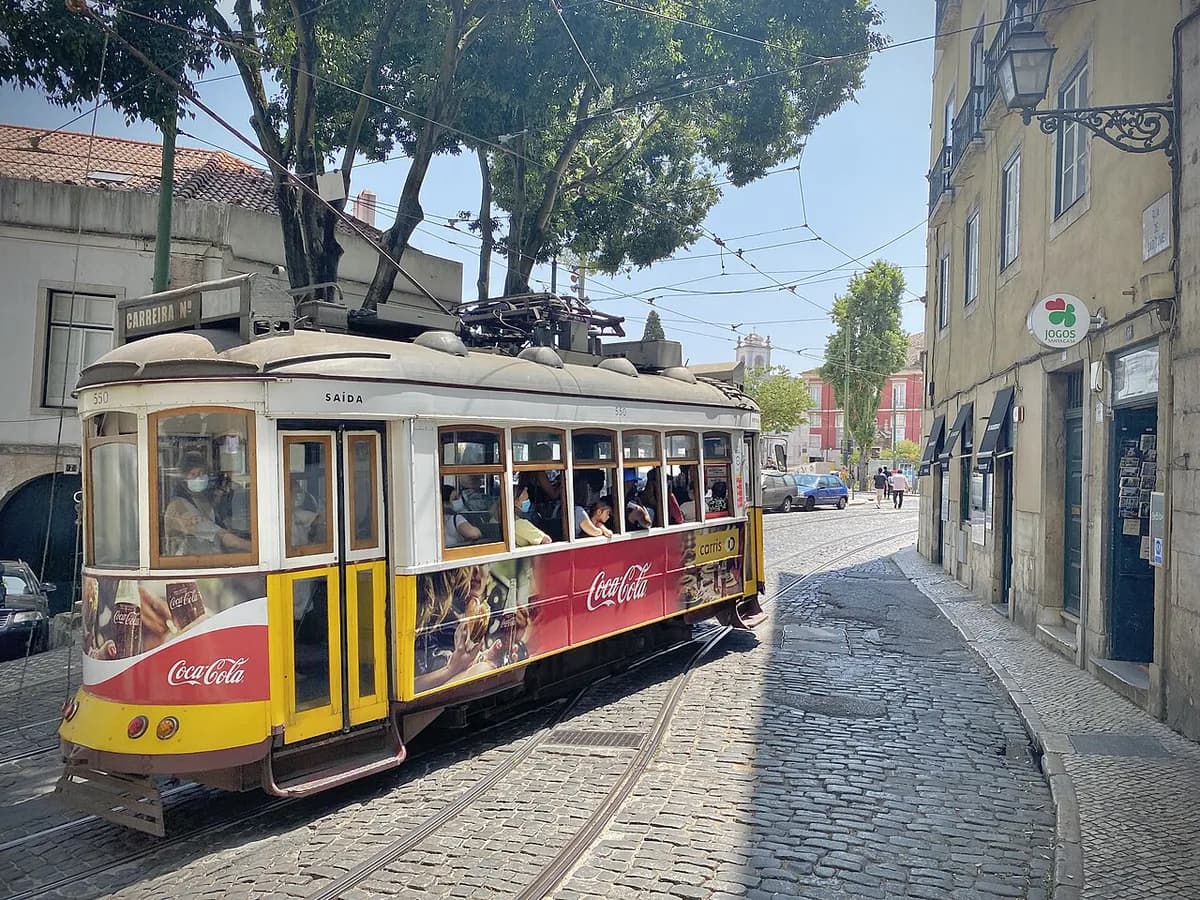
Getting to and around Lisbon is refreshingly simple. Lisbon Airport (Humberto Delgado) sits on the edge of the city and is only around 20 minutes from the centre by metro on the red line, with a change onto the other lines for the historic core — no long transfer, no separate rail journey. Once you are in town, the steep topography is handled by one of Europe's most charming transport mixes: the metro for longer hops, the historic yellow trams (the tram 28 is a sightseeing route in itself), the funiculars that climb the steepest streets, and your own feet for the lanes where nothing on wheels fits.
For festivals specifically, June is the ideal month — it is when the Festas de Lisboa, Pride and the Book Fair converge and the whole city is out celebrating, while the weather is warm but not yet punishing. High summer, July and August, is hot and busy and best timed around a specific festival like NOS Alive rather than for general sightseeing. Base yourself in Baixa, Alfama or Chiado to be within walking distance of the action, accepting that Alfama in June means late-night noise. If you want the party without the sleepless nights, stay a short uphill walk away and come down into the arraiais when the music starts.
- Lisbon Airport to centre — around 20 minutes by metro (red line, with one change for the core)
- Getting around — metro for distance, historic trams and funiculars for the hills, walking for the old town
- Best festival month — June, when the Festas de Lisboa, Pride and Book Fair all overlap
- Where to stay — Baixa, Alfama or Chiado for walkability; a little uphill for quieter nights
Christmas Markets and the Festive Season
Between Web Summit and the New Year fireworks, Lisbon slips into one of my favourite versions of itself — mild, lit up, and full of the smell of roasting chestnuts. From late November the city switches on its Christmas lights along the Baixa and around Praça do Comércio, and the markets open. The big one is Wonderland Lisboa in Parque Eduardo VII, running from late November into early January: a family-friendly affair with a towering Ferris wheel, an ice rink, festive food stalls and a proper Christmas market spread across the same terraces that host the Book Fair in June. Down in the centre, the Rossio Christmas Market fills the downtown squares with handicraft and gastronomy stalls in the run-up to Christmas, and smaller neighbourhood markets pop up in places like Alvalade. What I love about a December visit in 2026 is the weather — usually 10–16°C, so you can browse the stalls in a light coat while northern Europe freezes — and the fact that the crowds of June are long gone. It is the quiet, glowing bookend to Lisbon's festival year.
Frequently Asked Questions
When is the best time to visit Lisbon for festivals?
June is the clear peak, built around the Festas de Lisboa and the feast of Santo António on the night of 12 June into 13 June, with the Arraial Lisboa Pride and the Feira do Livro book fair in the same weeks. July is the other high point for music, thanks to NOS Alive, and in its years Rock in Rio Lisboa also lands in June. For a quieter, cheaper visit, Carnaval in February or March shows you the city out of season.
What is Santo António and when does Lisbon celebrate it?
Santo António is Saint Anthony, Lisbon's patron saint, and his feast is the centrepiece of the Festas de Lisboa. The celebration runs all through June but peaks on the night of 12 June into 13 June, when the historic bairros of Alfama, Mouraria and Graça fill with grilled sardines, wine, paper decorations and street parties, and the Marchas Populares parade down Avenida da Liberdade. The 13th of June is a public holiday in the city.
What is NOS Alive and where is it held?
NOS Alive is one of Portugal's biggest music festivals, held over several days in July at the Passeio Marítimo de Algés, the riverside promenade just west of central Lisbon. It is a multi-stage event featuring major international rock, indie, pop and electronic headliners right beside the Tagus. Day tickets and full passes sell out well in advance, so book as soon as the line-up is announced.
How is the Lisbon Santo António different from Porto's São João?
Both are June popular-saints festivals with grilled sardines and all-night street parties, but they fall on different dates and have different signatures. Lisbon celebrates Santo António, peaking on 12–13 June, with the Marchas Populares parade on Avenida da Liberdade. Porto celebrates São João on the night of 23 June, famous for plastic hammers, sky lanterns and midnight fireworks over the Douro. If you are in Portugal across June, you can experience both.
How do I get from Lisbon Airport to the city centre?
Lisbon Airport sits on the edge of the city and is only about 20 minutes from the centre by metro on the red line, changing onto the other lines to reach the historic core. Once in town, the metro covers longer distances while the historic trams, funiculars and your own feet handle the hills. Base yourself in Baixa, Alfama or Chiado to stay within walking distance of the June festivities.
Related: Festa de São João Porto Guide, How to Experience Festa de São João Porto, and the Europe festivals by city master guide.
Lisbon's festival calendar is one of the most characterful in Europe because every event grows out of something the city genuinely is — a saint's-day town rooted in its medieval bairros, a fado capital, a riverside stage for the biggest summer music, and a place that turns a hilltop park into a reading room for the price of nothing. There is no manufactured occasion here; each festival simply amplifies a part of Lisbon that is true the other eleven months of the year too.
If you can only come once, come in June and give yourself the days around the night of the 12th, when Santo António turns Alfama into the best street party in the country and the Marchas process down the Avenida. Add a July trip for NOS Alive if music is your thing, or a quiet Carnaval weekend if you want the miradouros to yourself. And if you have a longer run of June, pair Lisbon's Santo António with Porto's São João for a Portuguese midsummer you will be telling people about for years. Whichever you choose, you will find that Lisbon, more than almost anywhere I know, celebrates in its own streets — and pulls you straight in.
Free guide: Europe's Festival Calendar
A month-by-month map of Europe's unmissable festivals — with the best dates to visit each and a local tip you won't find in the guidebooks.
You might also like

Continue reading
More guides you'll find useful