Festivals and Events in Galway 2026: The Complete Calendar
Galway's 2026 festival calendar: the Galway International Arts Festival and Macnas parade in July, the world's oldest oyster festival in September, Film Fleadh, Cuirt, and the Eyre Square Christmas Market.
On this page
Festivals and Events in Galway 2026: The Complete Calendar
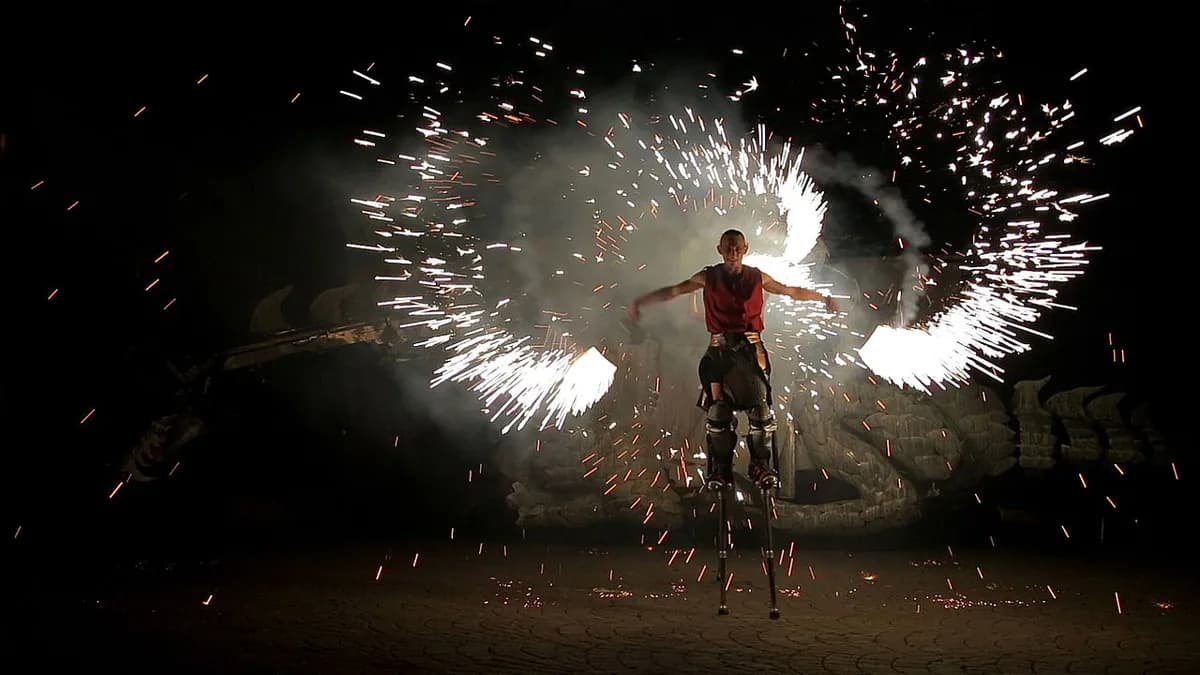
The first time I walked up Shop Street on a July evening, I could not tell where the festival ended and the city began. A fire-juggler had drawn a ring of children outside a bookshop, a fiddle session was pouring out of a pub door, and somewhere near the Spanish Arch a giant papier-mache creature was being wheeled into position for the night's parade. Galway does this to you. It is a small city on Ireland's wild western edge, and yet it throws itself into its festivals with a wholeheartedness I have rarely found anywhere else in Europe — which is exactly why locals have long called it Ireland's festival capital.
Part of the appeal is simply scale. Galway is compact and gloriously walkable: you can stroll from Eyre Square through the cobbled Latin Quarter to the Spanish Arch on the River Corrib in under fifteen minutes, and almost every stage, marquee, and pop-up venue sits inside that same small footprint. The other part is authenticity. This is a university town on the Wild Atlantic Way with traditional music in its bones, and its festivals grow out of things the city genuinely is rather than spectacle imported for tourists. If you are mapping a wider Irish trip, my companion guide to the festivals and events in Dublin covers the capital's very different rhythm.
This guide walks through Galway's 2026 festival year from end to end — from the literary readings of Cuirt in April, through the two-week roar of the Galway International Arts Festival and its Macnas parade in July, to the oyster-opening championships of late September and the Christmas market that fills Eyre Square in December. Whether you are building a trip around a single event or trying to work out the best week to come, the sections below will help you decide. For the wider continental picture, the Europe festivals by city master guide sets Galway alongside dozens of other destinations.
Free guide: Europe's Festival Calendar
A month-by-month map of Europe's unmissable festivals — with the best dates to visit each and a local tip you won't find in the guidebooks.
Why Galway for Festivals?
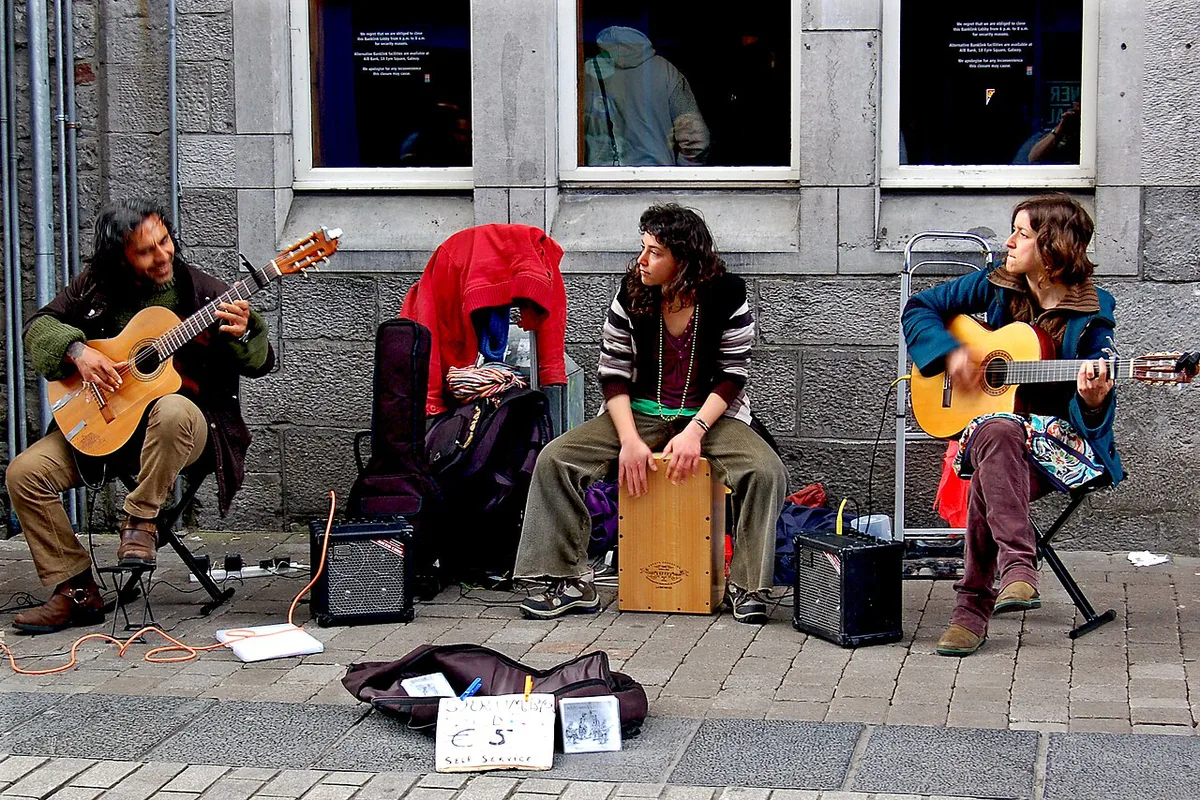
Galway makes an unusually rewarding festival city, and much of that comes down to its size and its setting. The medieval core is tiny and flat — you can cross it on foot in minutes — so unlike sprawling capitals where events are scattered across distant districts, Galway concentrates almost everything within one walkable stretch. Shop Street and Quay Street, the pedestrianised spine of the Latin Quarter, are lined with buskers and street performers year-round, and during festival season they become an open-air stage in their own right. Eyre Square anchors the north end, the Spanish Arch and the Corrib the south, and the whole thing is small enough to feel like a single venue.
| Festival | When | What to expect |
|---|---|---|
| Cuirt International Festival of Literature | April | A week of readings, poetry, debates, and workshops in intimate venues; quiet, cheaper shoulder season |
| Galway International Arts Festival | Mid-to-late July (roughly 13–26 July 2026) | Two-week multi-arts takeover — theatre, visual art, Big Top concerts, and the torchlit Macnas parade |
| Galway Film Fleadh | July (overlaps the Arts Festival) | Six days of Irish and international features, documentaries, shorts, and industry pitching sessions |
| Galway Races Summer Festival | 27 July – 2 August 2026 | Ireland's biggest racing festival at Ballybrit — the Galway Plate, Ladies Day, food, fashion, and music |
| Galway International Oyster and Seafood Festival | Late September | World's oldest oyster festival — a docks marquee with seafood, live music, and oyster-opening championships |
| Galway Christmas Market | Mid-November – late December | One of Ireland's largest Christmas markets in Eyre Square — chalets, mulled wine, crafts, and a big wheel |
The other reason is that Galway's calendar is rooted in what the city genuinely owns. It is a global stronghold of traditional Irish music — the trad sessions that spill out of the Latin Quarter pubs run every night of the year, festival or not — and it sits on the edge of the Atlantic, which is why the oyster harvest gave rise to the world's oldest festival of its kind here. Add a lively university, a thriving theatre and visual-arts scene, and a population that treats a good parade as a civic duty, and you get a festival programme with a coherence that manufactured city-break destinations simply cannot match. In 2026 the city carries that reputation forward with the same run of events that earned it the "festival capital" label in the first place.
Galway International Arts Festival: The July Flagship
Nothing else in the Galway calendar comes close to the Galway International Arts Festival (GIAF). Founded in 1978, it has grown into one of Ireland's most important arts festivals — a two-week takeover of the entire city that in 2026 runs across roughly 13 to 26 July, though organisers confirm the exact dates each spring, so check before you book. For a fortnight the city becomes one enormous multi-arts programme: theatre and dance, large-scale visual-art commissions, talks and readings, and a run of concerts staged inside the festival's purpose-built Big Top, a huge circus-style tent pitched for the occasion that has hosted everyone from world-touring bands to intimate late-night sessions.
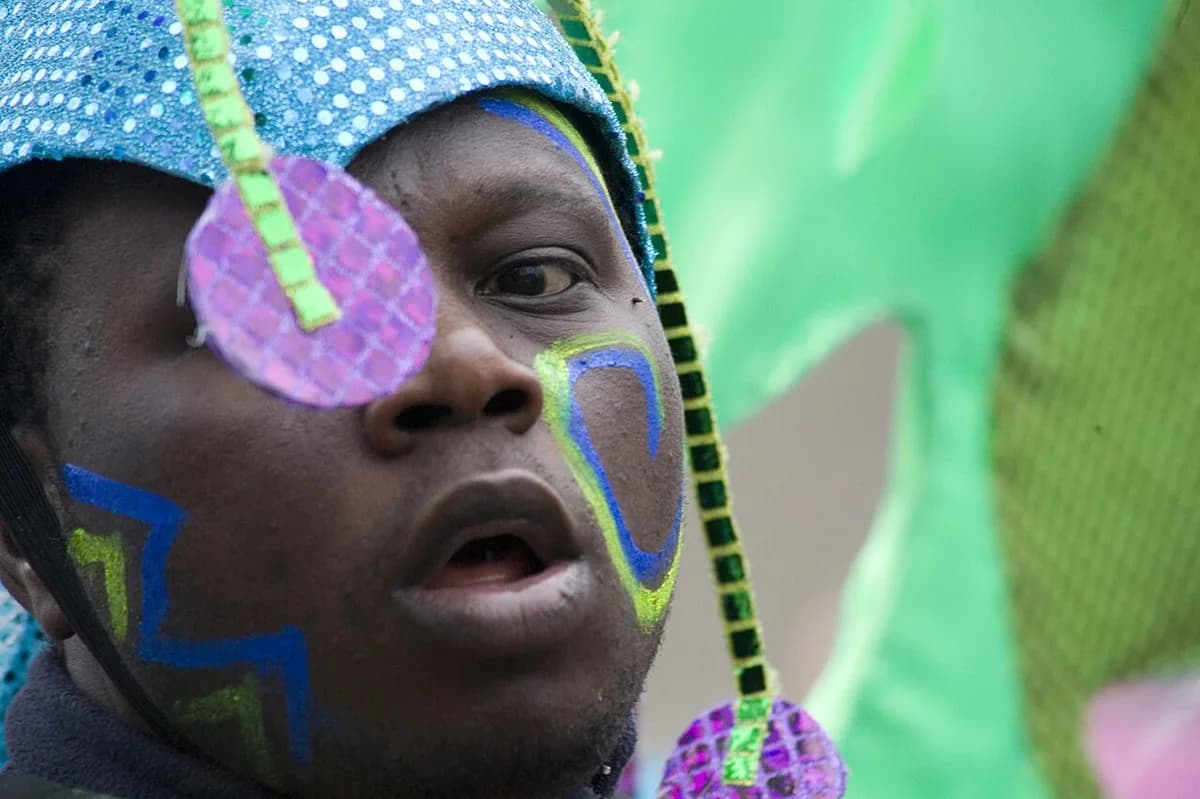
The single moment to build a trip around is the Macnas parade. Macnas is Galway's celebrated street-spectacle company, and its procession — a torchlit, drum-driven river of towering giant puppets, masked performers, and fantastical creatures — winds through the city centre and pulls tens of thousands onto the streets. It is genuinely one of the great sights of the Irish festival year, equal parts folklore, theatre, and pure spectacle, and it is free to watch. Claim a spot along the route an hour or two ahead, because the crowds around the Latin Quarter and Eyre Square build fast.
Because GIAF is deep enough to fill a book on its own, I have written a dedicated companion piece that goes far beyond a calendar entry. My Galway International Arts Festival guide covers the full programme structure — how the Big Top concerts, theatre commissions, gallery shows, and the Macnas parade fit together — plus where to stand, when tickets go on sale, and how to plan a two-week visit without burning out. Read it before you come; the marquee shows and Big Top headliners sell out, and the difference between a great GIAF and a frustrating one is almost entirely down to booking early.
Galway International Oyster and Seafood Festival (September)
If GIAF is Galway at its most theatrical, the Galway International Oyster and Seafood Festival is Galway at its most gloriously indulgent. Running since 1954, it is the world's oldest oyster festival, and it lands in late September when the native Galway Bay oysters come into season. The heart of it is a grand marquee pitched down by the docks, where the days fill with seafood, live music, and — the event's signature — the oyster-opening championships, in which the fastest shuckers in the world compete to open two dozen oysters against the clock in front of a roaring, Champagne-fuelled crowd.
It is a festival that takes its food seriously and itself lightly, and it has become one of the defining dates of the Irish autumn. Beyond the marquee, restaurants across the city run oyster menus, and the trad pubs of the Latin Quarter provide the soundtrack. Because it draws visitors from across the world into a small city on a single weekend, it warrants planning, and I have written three dedicated companion guides to help. Start with the Galway Oyster Festival dates guide for the confirmed 2026 schedule and what happens on each day of the weekend.
For the logistics, my guide on how to get to the Galway Oyster Festival covers the routes in from Dublin, Shannon, and beyond, and where to leave the car once you arrive. And because the festival weekend is exactly when the city sells out, my guide to where to stay for the Galway Oyster Festival breaks down the best neighbourhoods and how far ahead to book. Read all three before you commit to travel — the festival marquee tickets and the better-value city-centre rooms both go early.
Film Fleadh and Cuirt: Galway's Screen and Literary Festivals
Galway's cultural year is not carried by its two giants alone. The Galway Film Fleadh is one of Ireland's most important film festivals, held in July — it overlaps with the Arts Festival, so a mid-July visit can take in both at once. Over six days it screens Irish and international features, documentaries, and shorts, hosts industry days and pitching sessions, and has a well-earned reputation as the place where new Irish cinema is first shown to an audience. Most screenings are open to the public, and the atmosphere is warm and accessible rather than red-carpet formal — the kind of festival where you might find yourself in a post-screening Q&A with the director in a Latin Quarter bar afterwards.
Earlier in the year, the Cuirt International Festival of Literature arrives in April and is one of the longest-running literary festivals in Ireland. For a week the city fills with readings, poetry, debates, and workshops, drawing novelists and poets from Ireland and abroad into intimate venues around the centre. Cuirt suits the shoulder-season traveller perfectly: April is quieter and cheaper than the summer crush, and a literary festival is a lovely reason to be in a bookish, rain-washed western city. Between the two, the smaller Galway Early Music Festival brings medieval and Renaissance music to historic venues in spring, adding another string to the city's cultural bow. And beneath all of it, the traditional music scene runs on regardless — the Latin Quarter pubs host trad sessions every night of the year, festival or not, and for many visitors those unadvertised, free sessions are the truest festival Galway has to offer.
Galway Christmas Market: Eyre Square in December
Galway closes its festival year in the most atmospheric way it can — with the Galway Christmas Market, which fills Eyre Square from mid-November through to late December. It is one of the largest Christmas markets in Ireland, and it transforms the city's central square into a warren of wooden chalets selling mulled wine, craft gifts, roasted chestnuts, and continental street food, all strung with lights and centred on a big wheel that has become a fixture of the Galway winter skyline. On a cold December evening, with the market glowing and the buskers still working Shop Street a few steps away, it is one of the loveliest places in the country to be.
What makes the Galway market work is the same thing that makes every Galway festival work: compactness. The market sits at the top of the walkable core, so you can drift from a chalet of Gluhwein straight down into the Latin Quarter for a trad session and a pint without ever needing transport. It runs for around six weeks, so unlike the tightly-dated summer festivals it gives you a generous window to visit, and the shoulder weeks in late November are noticeably quieter than the run-up to Christmas. If a festive city break is what you are after, Galway pairs a genuinely large market with the year-round warmth of an Irish music town — a combination few Christmas-market cities can offer.
Getting There and Practicalities
Getting to Galway is refreshingly simple for a city on the far western coast. From Dublin, both the train and the coach take around two and a half hours, running frequently across the day and dropping you right in the centre — the train station and the main coach stop both sit beside Eyre Square, a few steps from the Latin Quarter. If you are flying in, the nearest airports are Shannon and Dublin; Shannon is closer by road, while Dublin offers far more international connections and an easy onward train or coach. There is no major airport in Galway itself, so most visitors arrive overland from one of those two hubs.
Once you are in town, the single best thing about Galway as a festival base is that you can forget about transport entirely. The city centre is completely walkable — Eyre Square, Shop Street, the Latin Quarter, the Spanish Arch, and the river are all within a ten-to-fifteen-minute stroll of one another, and almost every festival venue sits inside that compass. You will not need a bus, a tram, or a taxi to move between events, which is a rare luxury and one of the reasons Galway rewards a festival trip so well. Book accommodation early for the July Arts Festival and the September Oyster Festival, when the small city fills to capacity, and you are set.
- Dublin to Galway — around 2.5 hours by frequent train or coach, arriving beside Eyre Square
- Nearest airports — Shannon (closer by road) and Dublin (more international connections)
- City centre — compact and entirely walkable; most festival venues within a 15-minute stroll
- Peak weeks — book months ahead for the July Arts Festival and the September Oyster Festival
The Galway Races: Ireland's Biggest Racing Festival
The one thing I would add to any July itinerary is the Galway Races Summer Festival, which in 2026 gallops in the moment the Arts Festival winds down — running from Monday 27 July to Sunday 2 August at Ballybrit racecourse, a short hop from the city centre. It is the biggest racing festival in Ireland, and it is far more than horses: for seven days the whole county seems to decamp to the track for a giddy carnival of racing, fashion, food, and music. The two days to know are Wednesday, when the historic Galway Plate is run, and Ladies Day on Thursday, which pairs the Guinness Galway Hurdle with the country's most exuberant style competition — hats, tailoring, and colour on a scale that has to be seen. Even if you never place a bet, the atmosphere spills back into the Latin Quarter's pubs every evening, turning the last week of July into one long celebration. Book accommodation for these dates as early as you do for the Arts Festival — with both events landing back to back, the small city runs completely full.
Frequently Asked Questions
When is the best time to visit Galway for festivals?
July is the peak, built around the Galway International Arts Festival — roughly 13 to 26 July 2026 — with the Galway Film Fleadh running alongside it. Late September is the other high point, when the Galway International Oyster and Seafood Festival takes over the docks. For a quieter, cheaper trip, April brings the Cuirt literary festival, and mid-November to late December brings the Eyre Square Christmas Market.
What are the Galway International Arts Festival 2026 dates?
The Galway International Arts Festival typically runs for about two weeks in mid-to-late July, with the 2026 edition expected across roughly 13 to 26 July. Founded in 1978, it is one of Ireland's most important arts festivals, featuring theatre, visual art, music in the purpose-built Big Top, talks, and the spectacular Macnas street parade. Organisers confirm the exact dates each spring, so check the official programme before booking.
What is the Galway Oyster Festival?
The Galway International Oyster and Seafood Festival, held in late September, is the world's oldest oyster festival, running since 1954. It centres on a marquee by the docks with seafood, live music, and the famous oyster-opening championships, in which the world's fastest shuckers compete against the clock. It coincides with the start of the native Galway Bay oyster season, and both marquee tickets and city accommodation sell out early.
What is the Macnas parade in Galway?
The Macnas parade is a torchlit street spectacle staged as part of the Galway International Arts Festival by Macnas, the city's renowned performance company. It sends a procession of towering giant puppets, masked performers, and fantastical creatures through the city centre, drawing tens of thousands of spectators. It is free to watch, but the crowds around the Latin Quarter and Eyre Square build quickly, so claim a spot along the route an hour or two ahead.
How do I get to Galway?
Galway is about two and a half hours from Dublin by frequent train or coach, both arriving beside Eyre Square in the city centre. The nearest airports are Shannon, which is closer by road, and Dublin, which has more international connections and an easy onward train or coach. There is no major airport in Galway itself, and once you arrive the compact city centre is entirely walkable, so you will not need local transport to reach the festivals.
Related: Galway International Arts Festival Guide, Galway Oyster Festival Dates, and the Europe festivals by city master guide.
Galway earns its reputation as Ireland's festival capital not through the scale of any single event but through the wholeheartedness the whole small city brings to every one of them. The Arts Festival in July and the Macnas parade are the loud, unmissable centrepiece; the Oyster Festival in September is the indulgent, salt-air heart of the autumn; and the Christmas market, the Film Fleadh, and Cuirt fill out a year that never really stops celebrating. Under all of it runs the trad music of the Latin Quarter pubs — the truest festival of all, and the one that needs no ticket and no calendar.
If you can only come once, come in mid-July and give yourself the full fortnight of the Arts Festival, with the Film Fleadh folded in — but book early, because the city is tiny and it fills fast. For a more relaxed, more local Galway, the shoulder-season festivals of April and the December market will show you a city that celebrates just as hard with a fraction of the summer crowds. Whichever you choose, you will find that Galway, more than almost anywhere I know, throws its whole heart into the party.
Free guide: Europe's Festival Calendar
A month-by-month map of Europe's unmissable festivals — with the best dates to visit each and a local tip you won't find in the guidebooks.
You might also like

Continue reading
More guides you'll find useful