Festivals and Events in Krakow 2026: The Complete Calendar
Krakow festivals 2026: the Jewish Culture Festival in Kazimierz, Wianki midsummer beneath Wawel Castle, the szopki Christmas market on Rynek Glowny, plus film and music festivals.
On this page
Festivals and Events in Krakow 2026: The Complete Calendar
I have spent more seasons in Kraków than in any other Polish city, and I still think it hides its festival calendar in plain sight. Most first-time visitors come for the postcard — the vast Rynek Główny, Europe's largest medieval market square, ringed by the Cloth Hall and watched over by St Mary's Basilica, where a trumpeter still plays the hourly hejnał call from the tower and stops mid-phrase, exactly as tradition demands. What they do not always realise is that the same square, and the Jewish quarter of Kazimierz just south of it, host some of the most distinctive cultural events in Central Europe across the whole year.
The signature moment is the Jewish Culture Festival in Kazimierz in late June and early July — one of the world's oldest and largest celebrations of living Jewish culture, and unlike anything else on the continent. Around it the year fills out generously: Wianki, the Slavic midsummer wreath-floating on the Vistula beneath Wawel Castle; the szopki-famous Christmas market on the Rynek that runs through Advent; and a run of film, early-music, and experimental-music festivals that keep the calendar busy from Easter to autumn.
This guide walks through Kraków's 2026 events in the order they fall across the year, with practical notes on where each one happens, how to reach it, and what to expect as a visitor. Kraków is compact and walkable, which means you can often catch two or three events on a single trip — but it rewards choosing a couple of anchors and giving them room rather than trying to see everything at once.
Free guide: Europe's Festival Calendar
A month-by-month map of Europe's unmissable festivals — with the best dates to visit each and a local tip you won't find in the guidebooks.
Why Krakow for Festivals?
Kraków makes an unusually rewarding festival city because almost everything happens within an easy walk. As Poland's former royal capital, it kept the stage set that other cities lost — the medieval core survived the Second World War largely intact, so the events unfold against real Gothic and Renaissance buildings rather than reconstructions. From the Rynek Główny you can cross to Wawel Castle above the Vistula in ten minutes, or drop south into Kazimierz, the historic Jewish quarter, in about the same. The Old Town is ringed by the Planty, a green belt where the medieval walls once stood, and the whole centre is effectively pedestrianised. You rarely need transport to move between one event and the next.
| Festival | When | What to expect |
|---|---|---|
| Misteria Paschalia | Easter (Holy Week) | Baroque and Renaissance sacred music staged in churches and concert halls |
| Krakow Film Festival | Late May–early June | Documentary and short-film competitions and open-air screenings across city cinemas |
| Great Dragon Parade | June | Puppet-dragon river show with pyrotechnics, then a children's parade to the Rynek |
| Wianki | Late June (St John's Eve) | Wreath-floating on the Vistula, a free concert and riverside fireworks below Wawel |
| Jewish Culture Festival | Late June–early July | Klezmer and contemporary Jewish music, workshops and synagogue concerts; free Shalom on Szeroka Street finale |
| Unsound | October | Adventurous electronic and experimental music in unusual venues across the city |
| Christmas Market & szopki | Late November–December | Mulled wine and crafts on the Rynek plus the UNESCO-listed szopki nativity-crib competition |
The other reason is authenticity. Kraków's festivals grow out of things the city genuinely owns. The Jewish Culture Festival exists because Kazimierz was for centuries one of the great centres of Jewish life in Europe. The Wianki midsummer celebration draws on Slavic folk ritual that predates the Christian city. Even the szopki — the fantastical, brightly coloured Kraków nativity cribs modelled on the city's own church spires — are a craft tradition found nowhere else on earth. If you are pairing Kraków with the capital, my guide to festivals and events in Warsaw makes a natural companion, and the Baltic port covered in festivals and events in Gdansk rounds out a three-city Polish festival trip. For the wider picture, my Europe festivals by city master guide is the place to start.
Jewish Culture Festival: Kazimierz Comes Alive (Late June–July)
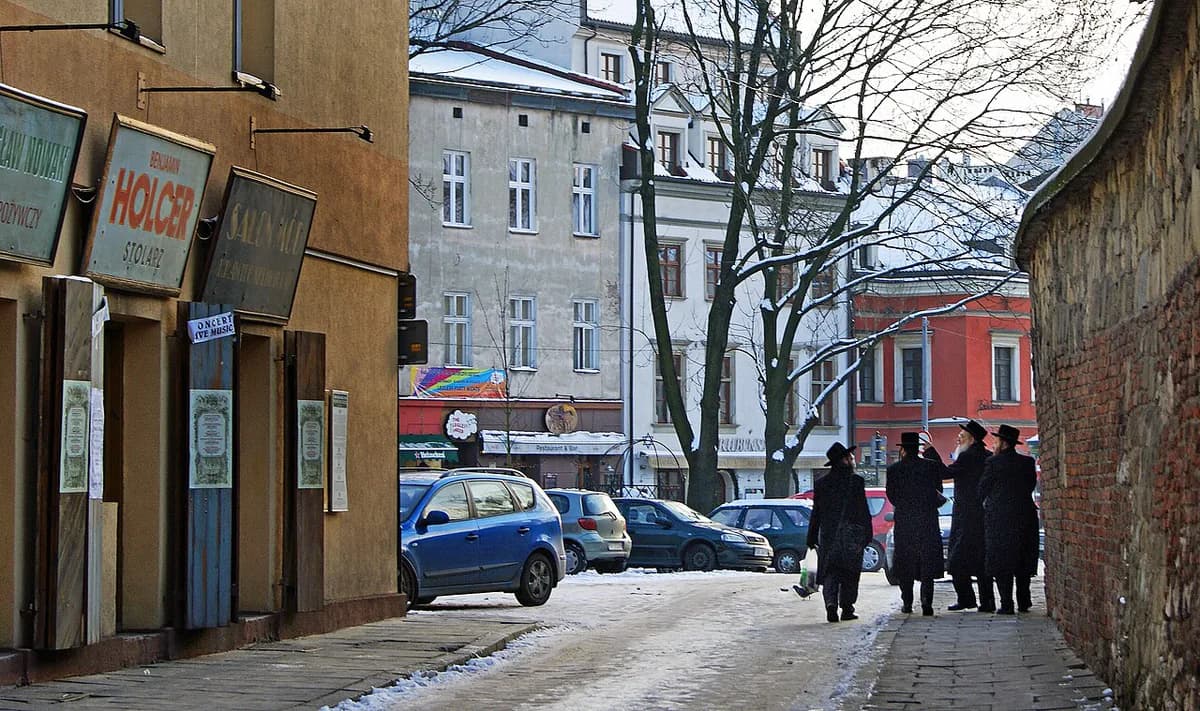
Nothing else in the Kraków calendar has quite the atmosphere of the Jewish Culture Festival — the Festiwal Kultury Żydowskiej. Founded in 1988, it is one of the oldest and largest festivals of living Jewish culture anywhere in the world, and it takes over Kazimierz for around ten days in late June and early July. This is not a museum exercise or a memorial; it is a celebration of a culture that is very much alive — klezmer and contemporary Jewish music, dance and cooking workshops, walking tours, lectures, synagogue concerts, and late-night sessions in the bars and courtyards around Szeroka Street and Plac Nowy.
The festival climaxes with Shalom on Szeroka Street, a huge free open-air concert that fills the square in the heart of Kazimierz with several hours of music and thousands of people, locals and visitors together, well into the summer night. It is one of the genuinely unmissable evenings in the Kraków year. Because the programme runs deep — dozens of ticketed and free events across the ten days — I have written a dedicated companion piece: the Krakow Jewish Culture Festival guide covers the history, how to book the workshop and concert tickets that sell out, which synagogue venues are worth seeking out, and how to plan your days around Shalom on Szeroka Street. Read it before you come — the festival is far richer than the free finale alone, and a little planning transforms the visit.
Wianki: Midsummer Wreaths Beneath Wawel (June)
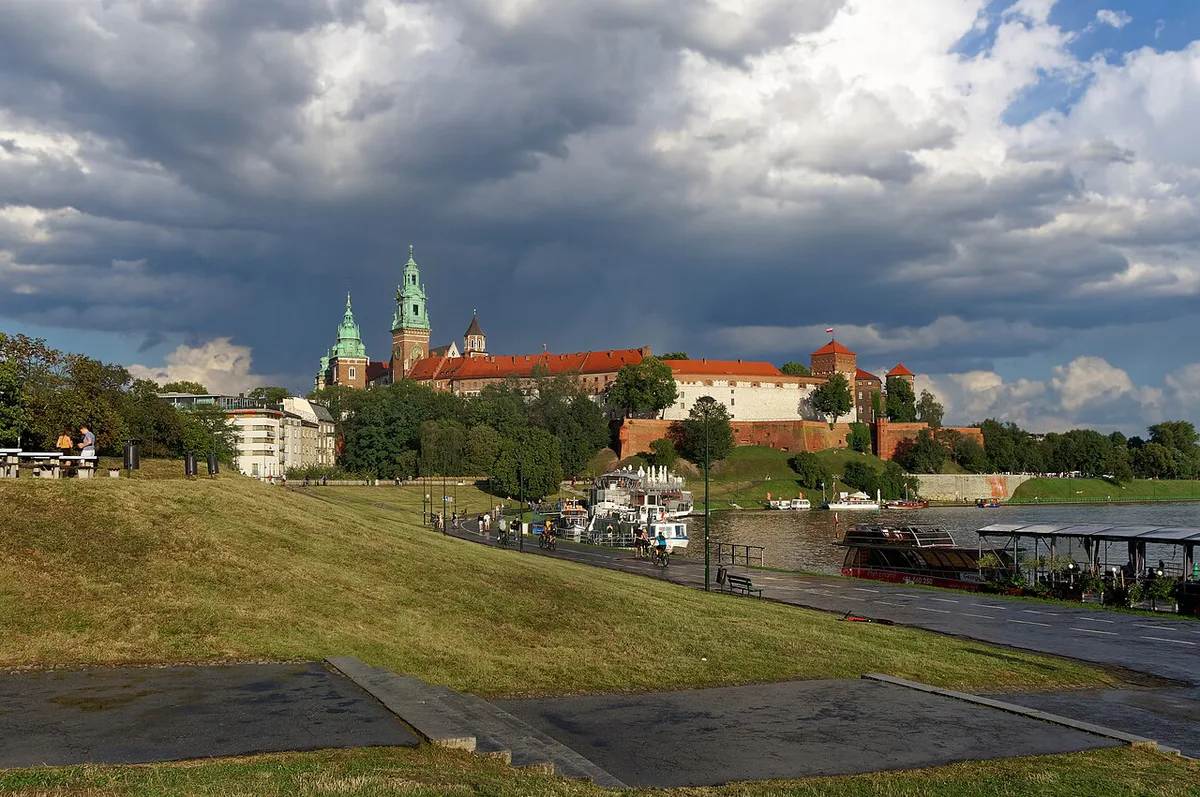
Wianki — the name comes from the Polish word for wreaths — is Kraków's midsummer celebration, held around St John's Eve in late June on the banks of the Vistula directly below Wawel Castle. The tradition is rooted in pre-Christian Slavic ritual: young women once floated flower wreaths on the river to read their romantic fortunes, and fires were lit along the banks to mark the shortest night of the year. In modern Kraków that folklore has grown into a large free city festival, with a concert stage set up on the riverside boulevards, food stalls, and a fireworks display launched over the water after dark.
I have watched Wianki from the grassy embankment below the castle, and the setting does most of the work — the floodlit walls of Wawel rising above the river, wreaths of flowers and candles drifting on the current, and the fireworks reflected in the Vistula as the concert builds toward midnight. It is a genuinely local occasion rather than a tourist-facing one, and it costs nothing to join. The event is centred on the Bulwary Wiślane, the riverside promenades between Wawel and the Dębnicki Bridge, which are an easy ten-minute walk from the Rynek Główny. Organisers confirm the exact 2026 date and programme in the late spring, so check the city events calendar as the summer approaches.
Krakow Christmas Market and the Szopki (Late November–December)
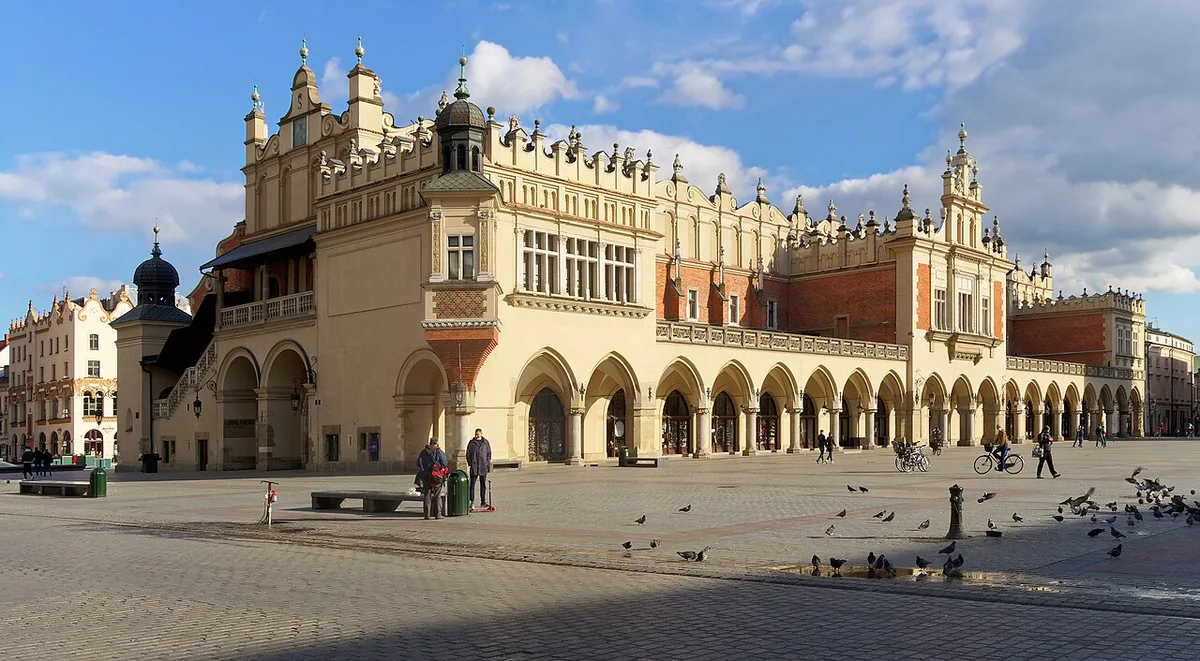
When winter closes in, the Rynek Główny becomes the setting for one of Poland's most atmospheric Christmas markets. The Kraków Christmas market runs from late November through December across the great square, with wooden chalets clustered around the Cloth Hall selling grzaniec (mulled wine), oscypek (grilled highland sheep's cheese), pierogi, gingerbread, and handmade decorations, all framed by the illuminated facade of St Mary's Basilica. It is a shorter, gentler occasion than the summer festivals, and all the better for it — dark afternoons, warm cups, and the medieval square glowing under the lights.
What makes Kraków's Advent unique is the szopki — the elaborate, brightly coloured nativity cribs built as miniature fairy-tale towers modelled on Kraków's own churches and monuments. The tradition dates back to the nineteenth century, and every December the city holds the famous szopki competition: on the first Thursday of the month, craftspeople carry their creations to the Adam Mickiewicz monument on the Rynek for judging, after which the best are displayed in the Historical Museum. It is UNESCO-recognised intangible heritage, and seeing the szopki up close is reason enough to visit in December.
I have full companion guides for planning an Advent trip: the Krakow Christmas market guide covers the layout, the best things to eat, and what to expect across the square, while the Krakow Christmas market dates page tracks the confirmed opening and closing days for 2026. If you want to be within walking distance of the stalls, my guide to where to stay for the Krakow Christmas market sets out the best neighbourhoods and how far each sits from the Rynek.
Film, Early Music, and Experimental Festivals (Spring–Autumn)
Between the marquee events, Kraków runs one of the busiest cultural calendars in Poland. Easter brings Misteria Paschalia, an acclaimed early-music festival that stages Baroque and Renaissance sacred works in churches and concert halls across Holy Week — a fitting sound for a city of this age. In early June the medieval Lajkonik pageant parades through the streets from the Norbertine convent in Zwierzyniec to the Rynek: a costumed rider dressed as a Tatar leads a colourful procession, tapping onlookers with a mace for luck, in a tradition that goes back centuries.
The Krakow Film Festival, one of Europe's oldest documentary and short-film events, takes over cinemas across the city in late May and early June, with international competitions and open-air screenings. In August, the Pierogi Festival fills a small square near the Old Town with stalls competing to serve the city's best dumplings — an easy, delicious afternoon. Come autumn, Kraków turns experimental: Unsound in October is one of the world's most respected festivals of adventurous electronic and experimental music, staging concerts in unusual venues from underground cellars to the Nowa Huta district, while Sacrum Profanum pairs contemporary classical and modern composition in a similar spirit. Between them, they mean that almost any month you choose to visit, something of real quality is on.
Getting to and Around Krakow
Getting to Kraków is straightforward. Kraków Airport (John Paul II International, at Balice) sits west of the city and is linked to the main railway station by a dedicated train that reaches the centre in about 20 minutes. If you are already in Poland, fast trains from Warsaw reach Kraków in roughly two and a half hours, which makes a two-city festival trip — the capital plus the old royal capital — very easy to build. The main station, Kraków Główny, sits directly on the edge of the Old Town.
Once you arrive, almost everything in this guide is walkable. The Old Town and Kazimierz are compact and pedestrian-friendly, and the Rynek Główny, Wawel, and the Vistula boulevards are all within fifteen minutes of one another on foot. An efficient tram network fills in the longer distances — out to Nowa Huta for some of the Unsound venues, for example — and single tickets are cheap. Note that the two biggest crowds of the year are in summer, when the Jewish Culture Festival, Wianki, and warm weather converge, and in December, around the Christmas market; book accommodation well ahead for either.
- Currency: Polish złoty (PLN) — not the euro; exchange at city-centre kantory (exchange bureaux) for the best rates rather than at the airport
- Kraków Airport (KRK) is around 20 minutes to the centre by direct train to Kraków Główny station
- The Old Town and Kazimierz are fully walkable; you rarely need transport between festival venues
- Fast trains from Warsaw take about 2.5 hours, making a capital-plus-Kraków trip easy to plan
The Great Dragon Parade: Kraków's Best Family Event (June)
Of all Kraków's 2026 events, the one I most often steer families toward is the Great Dragon Parade — Wielka Parada Smoków. It grows straight out of the city's founding legend, the Wawel Dragon that once terrorised the settlement below the castle, and every June it turns that story into a genuine spectacle. The weekend opens with an outdoor show on the Vistula directly beneath Wawel Hill, where enormous puppet dragons rise from barges on the water amid pyrotechnics, lasers, and music after dark — a free evening that draws huge, good-natured crowds to the riverbank.
The next day the parade itself sets off, with hundreds of children and community groups carrying handmade dragons of every colour through the streets from Wawel toward the Rynek Główny. It is warm, unpolished, and thoroughly local — closer in spirit to a neighbourhood carnival than a tourist show. The riverside performance is the highlight, so arrive on the Bulwary Wiślane early to claim a spot on the grass. Organisers confirm the exact June 2026 dates in the spring.
Explore festivals and events in other cities
Frequently Asked Questions
When is the best time to visit Krakow for festivals?
Late June and early July are the peak, built around the Jewish Culture Festival in Kazimierz, which climaxes with the free Shalom on Szeroka Street concert. The same window brings Wianki midsummer beneath Wawel Castle and warm weather. For a quieter, atmospheric alternative, the Kraków Christmas market runs on the Rynek Główny from late November through December, famous for its szopki nativity cribs.
What is the Jewish Culture Festival in Krakow?
The Jewish Culture Festival (Festiwal Kultury Zydowskiej) is one of the world's oldest and largest celebrations of living Jewish culture, held in the Kazimierz district since 1988. Running about ten days in late June and early July, it features klezmer and contemporary music, workshops, synagogue concerts, walking tours, and lectures, and ends with the huge free open-air Shalom on Szeroka Street concert. Exact dates are confirmed each spring.
What is Wianki in Krakow?
Wianki is Kraków's midsummer celebration, held around St John's Eve in late June on the Vistula riverbanks below Wawel Castle. Rooted in pre-Christian Slavic ritual, it centres on wreath-floating on the river, a free outdoor concert, and a fireworks display over the water after dark. It takes place on the Bulwary Wislane riverside promenades, a short walk from the Rynek Glowny, and is free to attend.
What are the szopki at the Krakow Christmas market?
Szopki are Kraków's unique nativity cribs — elaborate, brightly coloured miniature towers modelled on the city's own churches and monuments. Every December, craftspeople carry their creations to the Adam Mickiewicz monument on the Rynek Glowny for the annual szopki competition on the first Thursday of the month, after which the best are displayed in the city museum. The tradition is recognised by UNESCO as intangible cultural heritage.
How do I get from Krakow Airport to the city centre?
Kraków Airport (John Paul II International, at Balice) is linked to the main railway station, Kraków Glowny, by a dedicated train that reaches the centre in about 20 minutes. From there the Old Town and Kazimierz are fully walkable. Fast trains from Warsaw take around two and a half hours, so a two-city trip pairing the capital with Kraków is easy to arrange. Poland uses the Polish zloty, not the euro.
Related: Krakow Jewish Culture Festival Guide, Krakow Christmas Market, Festivals and Events in Warsaw, and the Europe festivals by city master guide.
Kraków's festival calendar is one of the most characterful in Central Europe precisely because every event grows out of what the city genuinely is — a former royal capital with an intact medieval heart, one of Europe's great historic centres of Jewish life, and the home of a craft tradition, the szopki, found nowhere else. There is no manufactured occasion here; the Jewish Culture Festival, Wianki, the Christmas market, and the film and music festivals all simply amplify a part of Kraków that is true the rest of the year too.
If you can only come once, aim for late June: the Jewish Culture Festival in Kazimierz and Wianki beneath Wawel fall within days of each other, and the long summer evenings make the whole city feel like an event. For a quieter, glowing alternative, the December market on the Rynek Główny — with its szopki and mulled wine under the towers of St Mary's — shows you a gentler, candlelit Kraków. Whichever you choose, plan around the compact, walkable centre, pick a couple of anchors, and let the old royal capital do the rest.
Free guide: Europe's Festival Calendar
A month-by-month map of Europe's unmissable festivals — with the best dates to visit each and a local tip you won't find in the guidebooks.
You might also like

Continue reading
More guides you'll find useful