
10 Essential Tips to Experience Festa de São João Porto
Master the Festa de São João in Porto with our guide to the 10km walk, the best sardine spots, fireworks viewing, and the 3 AM crowd strategy.
On this page
10 Essential Tips to Experience Festa de São João Porto
Last updated March 2026. The Festa de São João is the most vibrant night in Porto's cultural calendar. This celebration honors St. John the Baptist with a blend of pagan and Christian traditions. Thousands of people fill the streets to celebrate the summer solstice with music and food.
You will encounter a city transformed by the scent of grilled sardines and colorful decorations. Participating in this event requires stamina and a playful spirit to handle the crowds. Our guide explains how to experience Festa de Sao Joao Porto like a local. Preparation is essential because the festivities last from early evening until the following morning.
Quick Answer: The best way to experience the festival is by starting with a sardine dinner at 18:30. Most visitors then head to the Luiz I Bridge for midnight fireworks before walking 10km to Matosinhos beach. For a quieter experience, join the crowds after 03:00 when the largest groups begin to disperse.
Free guide: Europe's Festival Calendar
A month-by-month map of Europe's unmissable festivals — with the best dates to visit each and a local tip you won't find in the guidebooks.
The Origins of Porto's Biggest Night
São João has been celebrated in Porto for roughly 700 years, making it one of the oldest continuous street festivals in Europe. It began as a pagan midsummer festival honoring the sun god and giving thanks for the harvest. The Church later reanchored it to the feast day of St. John the Baptist on June 24th, but the pagan customs never fully disappeared.
The tradition of carrying wild leeks, or alho-porro, dates from this agricultural past. In earlier centuries, locals hung leeks on their doorways to bring good luck and ward off evil. The bonfire-jumping tradition is equally ancient — leaping over fire was believed to purify the body and protect the marriage. The plastic hammer replaced the leek as the primary greeting tool only in recent decades, borrowed from university students celebrating the Queima das Fitas earlier in the spring.
What makes São João uniquely Portuense is how fiercely the city claims ownership. Lisbon celebrates São António, Braga celebrates São João with fireworks, but Porto's version is the most intensely local. Residents describe June 23rd not as a festival but as the night the city becomes itself.
Timing the Festivities: From 18:30 to Sunrise
The rhythm of São João follows a specific timeline that locals have perfected over centuries. Starting early is the only way to secure a seat at popular riverside restaurants. Most kitchens begin serving the traditional festival menu around 18:30. Arriving later than this often means waiting hours for a simple plate of sardines.
Energy levels peak twice during the night, first at midnight and again at dawn. The 1:00 AM concert at Avenida dos Aliados is a major milestone for many revelers. If you prefer more space, wait until the post-firework rush clears the main squares. Crowds usually thin out significantly after 3:00 AM as the long walk begins.
Public transport operates on special schedules to accommodate the massive influx of visitors. The Metro do Porto typically runs throughout the night to connect major neighborhoods. Walking remains the most reliable way to navigate the historic center's narrow, packed streets. Plan your exit strategy early if you intend to leave before the sun rises.
- Step 1: Secure an early dinner reservation
- Book a table in Ribeira or Miragaia at least three months in advance.
- Expect a full meal to cost approximately €35 / ~$38 per person.
- Most restaurants stop taking walk-ins by 19:00 on the big night.
- Step 2: Purchase your plastic squeaky hammer
- Vendors line the streets near São Bento station with various sizes and colors.
- A standard hammer costs about €2 / ~$2 from local street stalls.
- Check the squeaker mechanism before buying to ensure it works properly.
- Step 3: Find a fireworks viewing spot
- Head toward the Douro riverbanks no later than 22:30 for a view.
- The show is free and lasts about 20 minutes starting at midnight.
- Avoid the bridge itself as it often closes for safety during the display.
- Step 4: Join the Aliados concert crowd
- Walk up to Avenida dos Aliados for live music starting at 01:00.
- Entry to the main square is free but becomes extremely crowded quickly.
- Stay near the edges of the square for an easier exit later.
- Step 5: Start the 10km coastal walk
- Follow the river path from Ribeira toward the Atlantic coast after 01:30.
- The journey takes roughly three hours at a casual celebratory pace.
- Many people stop at Foz for a quick drink along the way.
- Step 6: Watch the sunrise at Matosinhos
- Reach Matosinhos beach by 06:00 to see the sun come up.
- Watching the sunrise is a free and essential part of the local rite.
- Take the blue line metro back to the city center afterward.
Mastering the Traditions: Plastic Hammers and Wild Leeks
The most famous tradition involves hitting strangers on the head with plastic hammers. This playful gesture replaced the older custom of using flowering leeks to greet neighbors. You should expect to be bopped hundreds of times while walking through the city. It is all in good fun and serves as a unique social icebreaker.

Flowering leeks, or 'alho-porro', are still carried by many traditionalists today. People wave these long stalks under the noses of passersby for good luck. The scent is quite strong and represents the agricultural roots of the festival. Combining both the hammer and the leek is common among dedicated festival-goers.
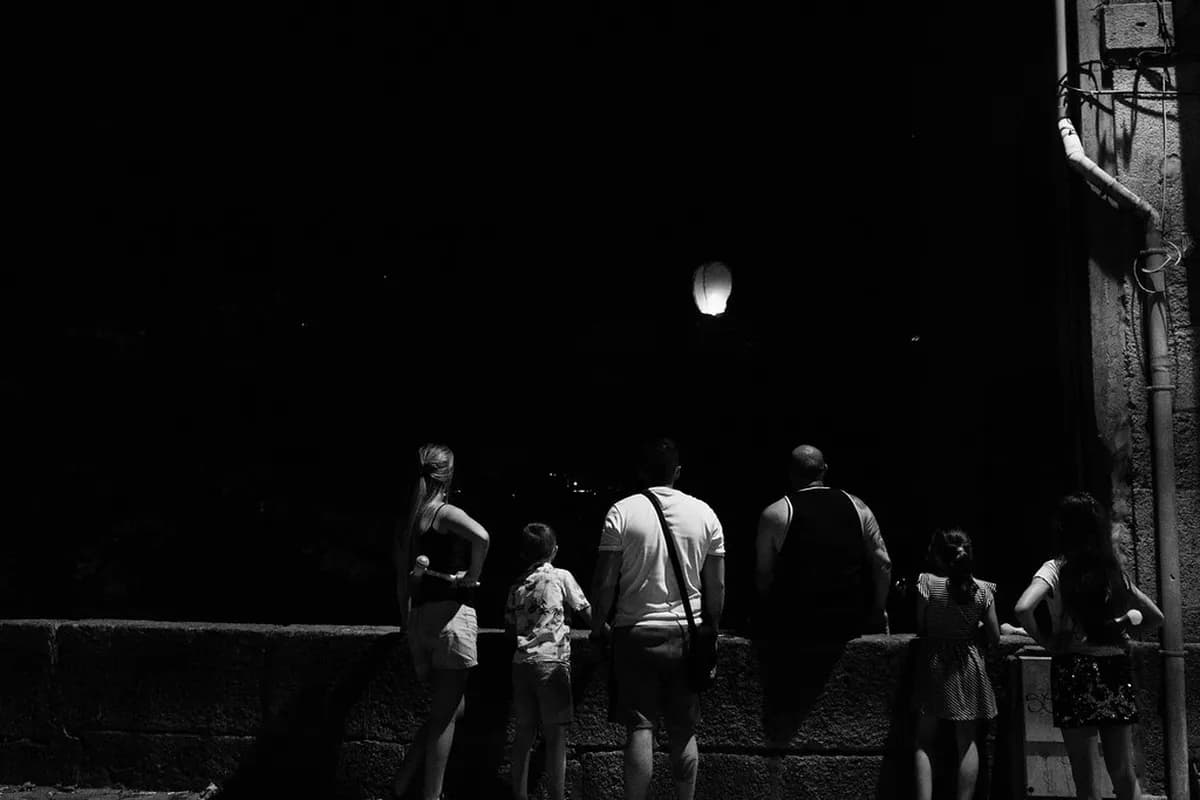
Launching hot air balloons is another beautiful sight during the night. These small paper lanterns float over the river, creating a glowing sky. You can buy them for about €3 / ~$3 at most corner shops. Be careful when lighting them as the wind near the river can be tricky.
What to Eat: Grilled Sardines and Caldo Verde
Sardines are the undisputed culinary stars of the São João festivities. The smell of charcoal grills fills every alleyway from Campanhã to Foz. Locals typically eat them on a thick slice of corn bread called 'broa'. This simple meal is often accompanied by roasted peppers and boiled potatoes.

Caldo verde provides a necessary warmth during the cooler riverside night. This traditional kale and potato soup usually features a slice of spicy chorizo. It is the perfect fuel for those planning to complete the 10km walk. Most street stalls sell bowls for a very affordable price throughout the night.
Pairing your meal with Port wine or local beer is highly recommended. Many visitors visit a Port wine lodge like Graham's or Cockburn's earlier in the day. Street vendors sell cups of wine for around €4 / ~$4 during the party. Always stay hydrated with water to keep up your energy for the sunrise.
- Sardines and Bread: €15-20 / ~$16-22
- Standard price for a full plate with sides at a neighborhood stall.
- Includes 4-6 fresh sardines and a thick slice of local corn bread.
- Best found in the narrow streets of the Miragaia district.
- Caldo Verde Soup: €3-5 / ~$3-5
- A hot bowl of kale soup served in a plastic or clay cup.
- Available at almost every street corner and temporary food tent.
- Ideal for a quick energy boost between hammer-hitting sessions.
- Bifana Pork Sandwich: €4-6 / ~$4-7
- Thinly sliced pork marinated in garlic and wine on a soft roll.
- A popular alternative for those who do not enjoy eating fish.
- Usually served with spicy mustard or piri-piri sauce.
Best Vantage Points for the Luiz I Bridge Fireworks
The fireworks display at midnight is the visual centerpiece of the celebration. Pyrotechnics are launched directly from the Luiz I Bridge and the river barges. The Ribeira waterfront offers the most iconic view but is also the most crowded. Arrive at least two hours early if you want a spot near the water.
Vila Nova de Gaia provides an excellent alternative perspective of the show. The hills on the Gaia side offer a panoramic view of the Porto skyline. Many people gather near the Jardim do Morro for a slightly elevated vantage point. This area is also home to many famous Port wine cellars and lodges.
The 6 Bridges Cruise offers a unique way to see the fireworks. Boats anchor in the Douro River to provide passengers with a front-row seat. Tickets for these special night cruises must be booked several months in advance. Prices for the holiday cruise are significantly higher than the standard daytime tours.
The 10km Coastal Walk: Ribeira to Matosinhos
Walking from the city center to the sea is a legendary São João tradition. The route follows the Douro River all the way to the Atlantic Ocean. This journey is nearly 10km long and takes you through beautiful neighborhoods. It is a social experience where you will meet thousands of fellow walkers.
Foz do Douro serves as a popular midpoint for a short rest. The upscale bars here offer a different atmosphere than the crowded Ribeira. You can find cleaner restrooms and shorter lines for drinks in this area. The ocean breeze becomes much stronger as you approach the river's mouth.
The walk ends at the wide sandy beaches of Matosinhos. Large bonfires are often lit on the sand as people wait for dawn. Tradition dictates that some brave souls take a dip in the cold Atlantic. It is a rewarding finish to an exhausting but exhilarating night of celebration.
Where to Stay: Balancing Party Access and Sleep
Choosing the right neighborhood is vital for your festival experience. Staying in Ribeira puts you in the heart of the noise and action. The Eurostars Porto Douro offers stunning views of the river festivities. Be prepared for loud music and cheering until at least 04:00 AM.
Boavista is a better choice for travelers who value a quiet night's sleep. This area is well-connected by metro but sits far from the loudest parties. The Intercontinental Porto provides a luxury retreat near the Aliados square. Booking your accommodation 4-6 months in advance is highly recommended for June.
Foz is another excellent option for those who enjoy the coastal walk. Staying here allows you to be near the finish line of the morning trek. Prices in Foz tend to be higher due to its exclusive seaside location. Most hotels in the city will be at full capacity during this week.
Daytime Highlights: The Rabelo Boat Regatta
June 24th is a public holiday in Porto, and the city fills the day with activities well-suited to anyone sleeping through the morning. The centrepiece is the Rabelo Boat Regatta on the Douro River, usually starting around 16:00. These wide, flat-bottomed wooden boats were once used to carry Port wine barrels from the Douro Valley vineyards down to the cellars of Vila Nova de Gaia.
The race runs from Cabedelo to the Luiz I Bridge, with each boat sailing the names of major Port wine houses — Graham's, Cockburn's, Sandeman — on their sails. You can watch for free from the riverbanks on both sides, or from the Fontainhas viewpoint for an elevated angle. The Confraria do Vinho do Porto organises the regatta to promote Port wine, and prizes are awarded in front of Casa Sandeman at the finish line to the sound of live music.
The day before the main night also rewards early arrivals. From June 13th, the winning entries of the Cascatas de São João competition are displayed at the Bolhão Market area. These are elaborate miniature tableaux — clay figures depicting scenes from Porto's history and everyday life — built by neighbourhood teams over months. More than 500 figures are typically on show, and admission is free. It is a quieter, less-photographed side of the festival that most tourists skip entirely.
On June 22nd, the Rusgas parade moves through the city with neighbourhood groups dressed in traditional costumes, performing Rancho folk music and choreographed dances. Judges score each neighbourhood on their music, clothing, and set design. If your travel dates include June 22nd or 23rd daytime, these events give context for why São João matters so much to local identity.
Practical Logistics: What to Wear and Safety Tips
Dressing for a São João all-nighter requires a practical approach. Comfortable walking shoes are the most important item in your festival kit. Temperatures can drop significantly near the river after the sun goes down. Layering your clothing allows you to adapt as you move through the crowds.
Safety is generally good, but large crowds always attract opportunistic pickpockets. Keep your phone and wallet in secure, zipped pockets at all times. Avoid bringing large backpacks that can be difficult to manage in tight spaces. Stick with your group and set a meeting point in case you separate.
Load an Andante card before the night — the Metro do Porto runs all night during São João but ticket queues at Trindade, Aliados, and São Bento stations become unmanageable after 03:00. Buy a card with several trips preloaded so you can bypass the lines entirely. Public restrooms are scarce and often have very long wait times. Many cafes allow customers to use facilities if they buy a small drink. Carry a small pack of tissues as supplies often run out by midnight. Staying patient is key to enjoying the chaotic energy of the night.
- Essential São João Survival Checklist
- Wear comfortable walking shoes for the 10km coastal trek.
- Carry small cash notes for street food and plastic hammers.
- Bring a light jacket for the breezy riverside midnight air.
- Pack a portable power bank to keep your phone charged.
- Carry a bottle of water to stay hydrated during the walk.
- Apply sunscreen if you plan to stay out for the sunrise.
- Keep a digital map of the metro lines on your phone.
- Troubleshooting Common Festival Problems
- Hammer breaks: Buy a spare from street vendors for €2 / ~$2.
- Lost group: Set a meeting point at the Clérigos Tower beforehand.
- No taxis: Use the Metro do Porto which runs all night.
- Battery dies: Locate a major hotel lobby for emergency charging assistance.
- Hungry late: Look for 24-hour bakeries selling fresh 'pão com chouriço'.
- Too crowded: Move toward the Cedofeita district for more breathing room.
Frequently Asked Questions
Is São João festival in Porto safe?
Yes, the festival is generally safe for tourists and families. You should watch for pickpockets in crowded areas like Ribeira. Police presence is high throughout the night to manage the large crowds.
How do people dress for São João?
Wear casual clothes and very comfortable walking shoes. You will be walking long distances and standing for hours. Bring a light sweater or jacket for the cooler night temperatures near the river.
Are shops and restaurants closed during São João?
Most shops close early on June 23rd so staff can celebrate. Restaurants stay open but require advanced reservations for the festival dinner. Many businesses remain closed on June 24th for the public holiday.
Experiencing the Festa de São João is a bucket-list item for any traveler in Portugal. The combination of ancient traditions and modern energy creates an unforgettable atmosphere. By following this guide, you can navigate the crowds and enjoy the best food. Whether you are hitting hammers or watching the sunrise, the night is truly magical.
If you enjoy this type of celebration, consider exploring other midsummer celebrations in Europe. Porto's unique take on the solstice is a testament to the city's vibrant spirit. Prepare your stamina, buy your hammer, and get ready for the longest night of the year.
Free guide: Europe's Festival Calendar
A month-by-month map of Europe's unmissable festivals — with the best dates to visit each and a local tip you won't find in the guidebooks.
You might also like

Continue reading
More guides you'll find useful


