Festivals and Events in Cordoba 2026: The Complete Calendar
Cordoba's 2026 festival calendar: the UNESCO Patios Festival, Cruces de Mayo, Cata del Vino Montilla-Moriles, Feria de Mayo and the July Guitar Festival.
On this page
Festivals and Events in Cordoba 2026: The Complete Calendar
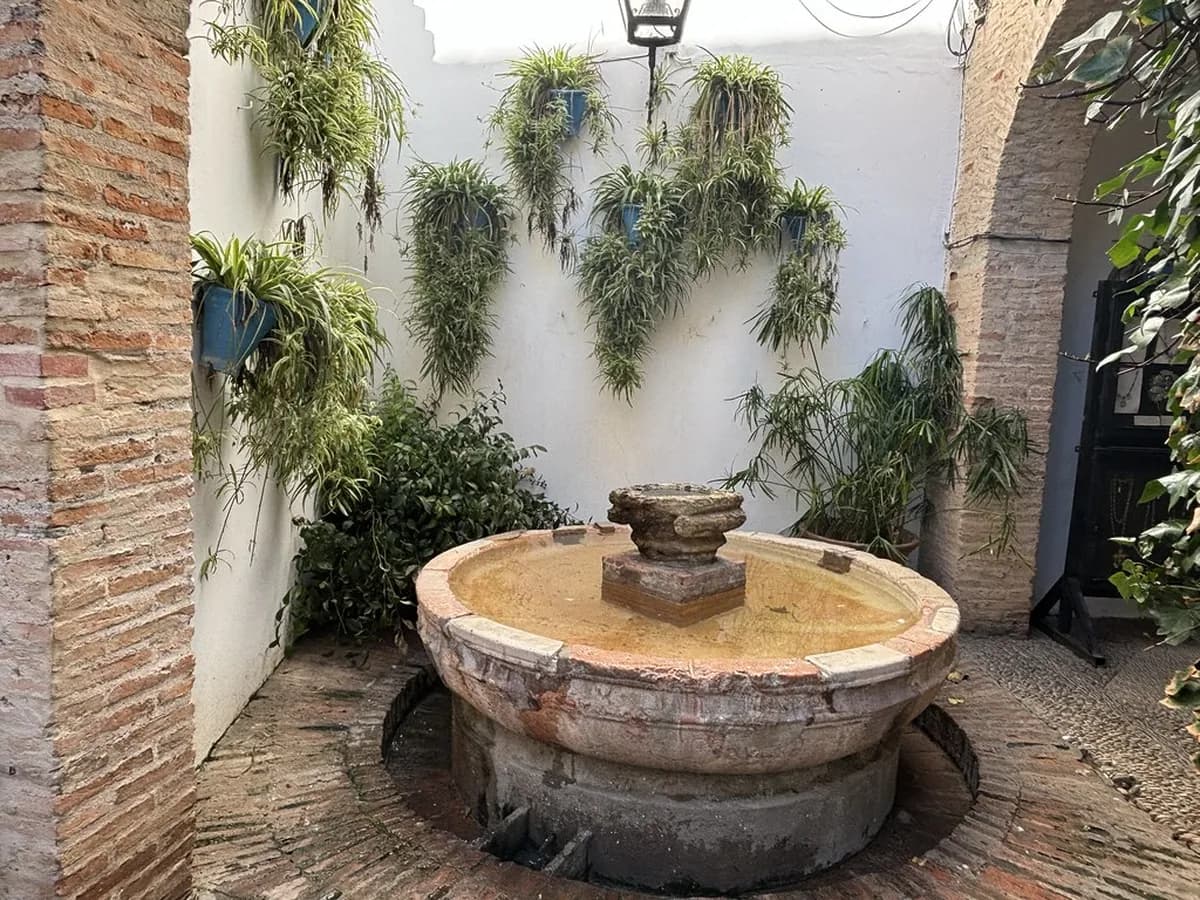
Cordoba is a city that saves its whole heart for one month, and the first time I walked into a whitewashed courtyard off Calle San Basilio in early May I finally understood why Andalusians talk about it the way they do. An elderly woman was watering a wall stacked ten pots deep with geraniums and carnations, the smell of jasmine and damp stone hung in the still afternoon air, and a queue of visitors waited patiently at her gate — because for these two weeks she opens her private home to strangers, free of charge, so they can stand in her patio and admire what she has spent a year growing. This is the Festival de los Patios Cordobeses, and it is the reason May in Cordoba is one of the great travel experiences in Spain.
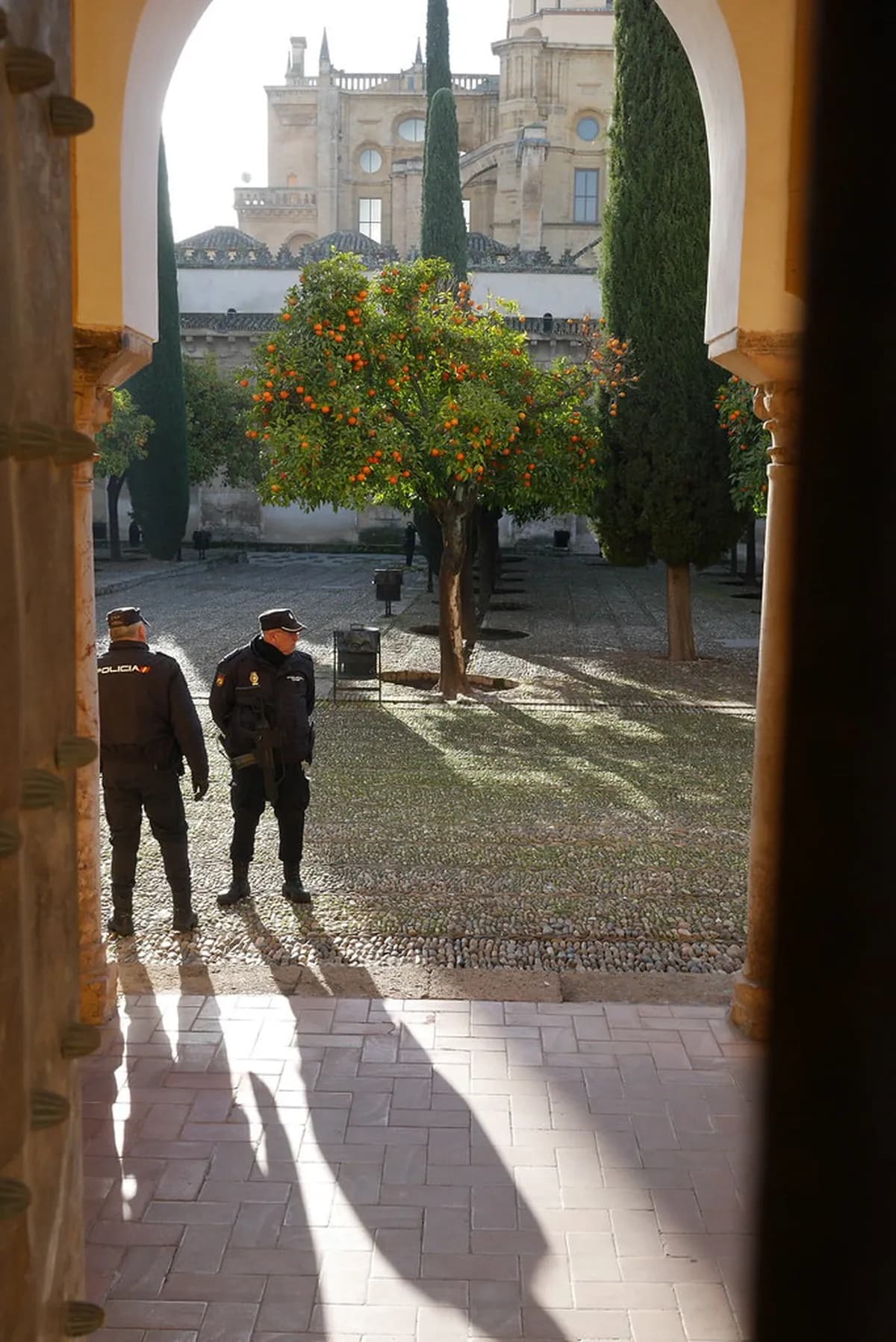
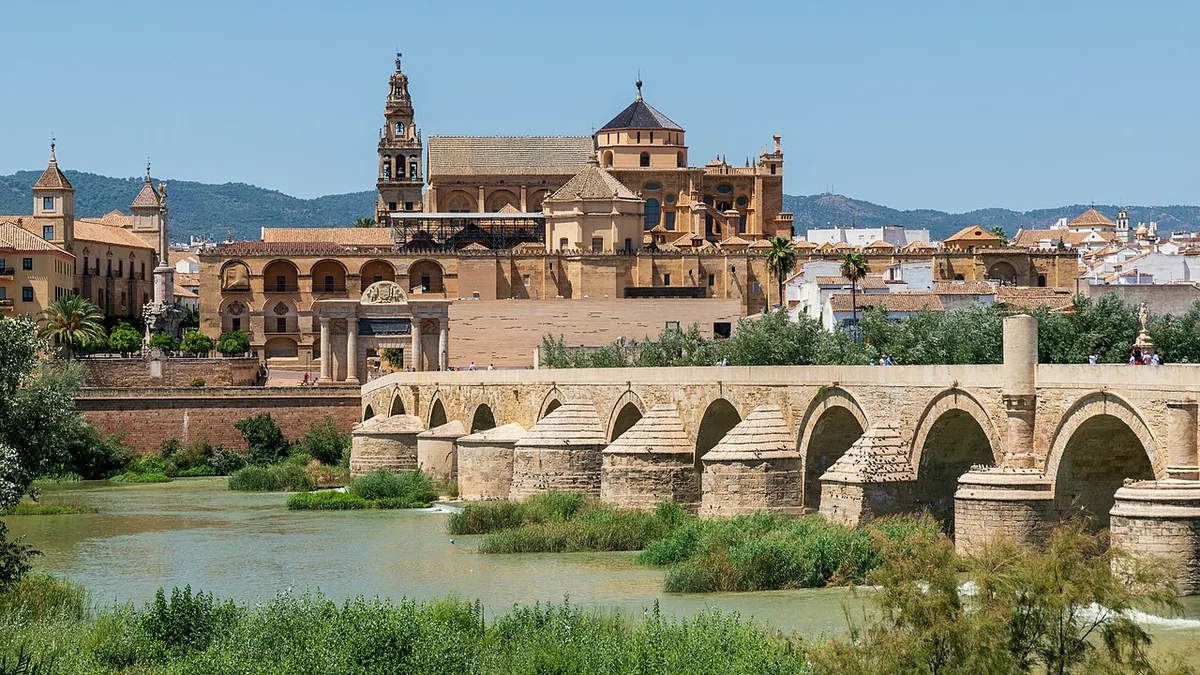
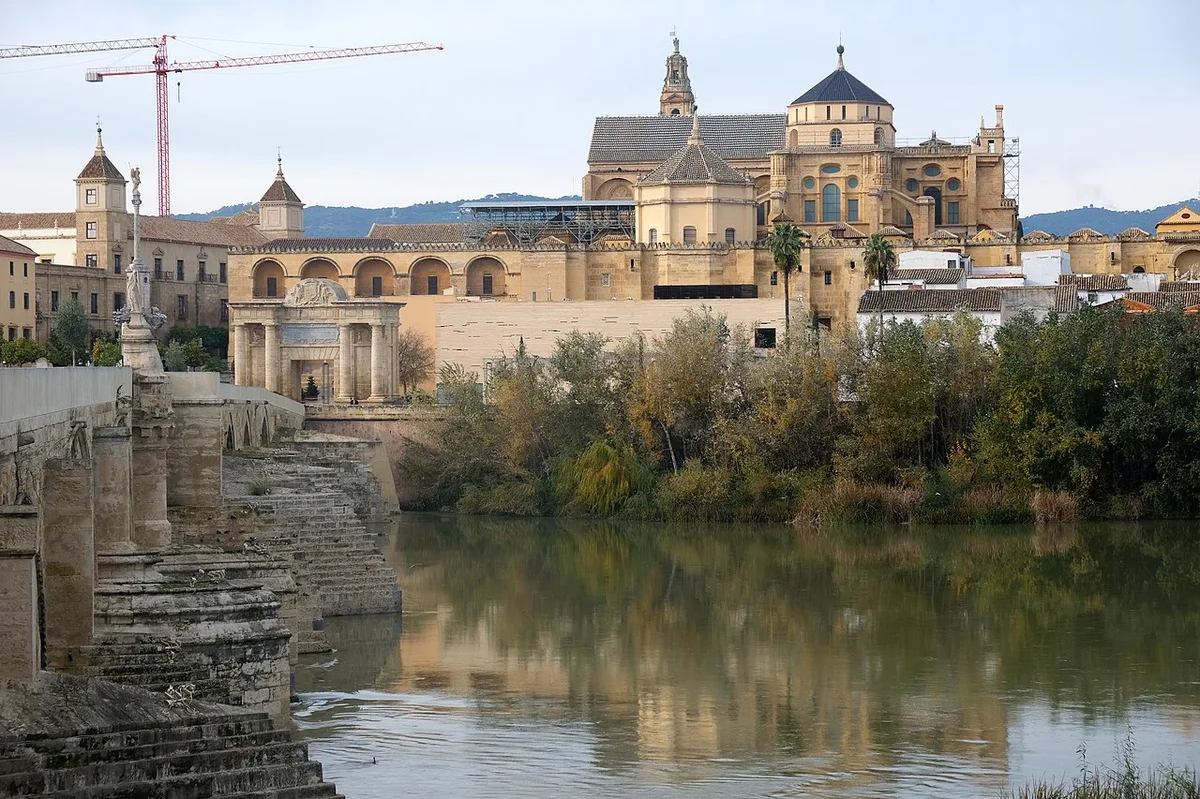
Cordoba sits in the heart of Andalusia, on the Guadalquivir river, roughly 45 minutes from Seville and about an hour and fifty minutes from Madrid by AVE high-speed train. It was once the largest city in Western Europe and the capital of a caliphate, and that layered past shows in the Mezquita-Catedral — the great mosque-cathedral with its forest of red-and-white striped arches — and in the tangle of the Juderia, the old Jewish quarter whose lanes are almost as famous for their flowers as the patios themselves. The whole historic core is a UNESCO World Heritage Site, and it forms the backdrop to nearly every festival on the city's calendar.
This guide maps Cordoba's 2026 festival year, with an honest focus on the extraordinary intensity of May, when the Patios Festival, the Cruces de Mayo, a Montilla-Moriles wine fair and the Feria de Mayo all crowd into a single month. It also covers July's international Guitar Festival, the spring Holy Week processions, and the June flamenco night, so you can decide when to come and — just as importantly — how far ahead to book, because in this city timing is everything.
Free guide: Europe's Festival Calendar
A month-by-month map of Europe's unmissable festivals — with the best dates to visit each and a local tip you won't find in the guidebooks.
Why Cordoba for Festivals?
Cordoba rewards travellers who come at the right moment. Unlike cities whose festivals feel bolted onto the tourist calendar, Cordoba's are woven into the fabric of ordinary neighbourhood life — the patios are private homes, the crosses in May are raised by local associations and parishes, and the Feria is where Cordobans themselves go to dance sevillanas until dawn. That authenticity is the city's great advantage, and it is also why the peak dates fill so fast. What you are watching in May is not a show staged for visitors; it is a city celebrating itself, and you have simply been invited in.
Practically, Cordoba is one of the easiest Andalusian cities to visit. The AVE and Avant high-speed trains put it within striking distance of Seville, Malaga and Madrid, and the historic centre is small enough to cross on foot in twenty minutes. Almost every festival venue — the patios of San Basilio and the Juderia, the squares hosting the May crosses, the Mezquita and its surrounding plazas — lies within that walkable core. The main exception is the Feria fairground at El Arenal on the southern bank of the Guadalquivir, which is a short bus or taxi ride from the centre. Because May concentrates so many events into a few weeks, it pays to plan the geography of your days in advance, and to accept that you will not see everything in one trip.
Festival de los Patios: Cordoba's Signature May Event
The Festival de los Patios Cordobeses is the event most worth building an entire trip around, and in 2026 it runs across early-to-mid May — roughly the fortnight from around 4 to 17 May, though you should confirm the exact window on the official site, as the city council fixes the dates each spring. For those two weeks, dozens of private house courtyards, concentrated around the Alcazar Viejo / San Basilio neighbourhood and threaded through the Juderia and Santa Marina, open their gates free of charge to the public. Inside, whitewashed walls disappear behind hundreds of flowerpots — geraniums, carnations, jasmine, gitanillas — arranged with a precision that takes the year to build and only weeks to display.
It is, crucially, a competition. The patios are entered into an official contest judged on their architecture, their planting and their overall harmony, which is why the standard is so extraordinarily high and why the tradition has been maintained for a century. In 2012 UNESCO inscribed the Fiesta de los Patios on its Representative List of the Intangible Cultural Heritage of Humanity — recognition of a living folk art passed down through Cordoban families rather than a museum piece. When you step into a courtyard, you are often talking to the very person who tends it, and the pride is unmistakable.
For the confirmed 2026 dates and how the festival window is set, see the dedicated Patios de Cordoba dates guide. Planning the journey and getting to the courtyards is covered in how to get to Patios de Cordoba, and because rooms in the old town vanish months ahead in May, read where to stay for Patios de Cordoba before you commit to dates. If there is one piece of advice I give every friend who asks about Cordoba, it is this: book your accommodation the moment the dates are confirmed, because the good places near San Basilio sell out first.
Cruces de Mayo: The May Crosses
The Cruces de Mayo arrive in the first days of May and overlap the opening of the Patios Festival, which makes early May the single most atmospheric stretch of the Cordoban year. Across the city, squares and plazas are filled with large crosses — some three or four metres tall — entirely covered in fresh red and white carnations. Neighbourhood associations, parishes and brotherhoods build them and then compete for the best display, echoing the same civic pride that drives the patios contest.
What makes the crosses more than a static decoration is everything that gathers around them. Each cross typically anchors an improvised open-air bar, so the squares fill with people drinking fino and montilla wine, eating tapas, and — as the evening warms up — dancing sevillanas and flamenco to live music. Squares such as those in the Santa Marina and San Andres districts become the beating heart of the celebration. It is free, it is genuinely local, and it spills naturally out of the daytime patio visits into long, music-filled evenings. If you come in the first week of May, you can see the patios by day and the crosses by night without ever needing a plan.
Cata del Vino Montilla-Moriles: The May Wine Fair
Running in early May, alongside the crosses and the opening of the patios, the Cata del Vino Montilla-Moriles is Cordoba's official wine-tasting festival and a quieter pleasure amid the flowers. Montilla-Moriles is the Denominacion de Origen just south of the city, producing the fino, amontillado, oloroso and sweet Pedro Ximenez wines from Pedro Ximenez grapes that Cordobans drink year-round. During the Cata, producers gather to pour their wines by the glass, usually with a tasting-glass-and-tokens system, and the fair pairs the wines with local cheeses, hams and tapas.
It is a lovely way to break up a day of patio-walking, and it explains what you will be drinking in every square during the Cruces de Mayo. The wines here are made in a solera system similar to sherry but without fortification, and a chilled fino on a warm Cordoban afternoon is one of the small revelations of the trip. Exact venue and dates shift year to year, so check the official programme when you arrive.
Feria de Mayo: The Andalusian Fair
Cordoba closes its great month with the Feria de Nuestra Señora de la Salud — universally known as the Feria de Mayo — which takes place in late May at the El Arenal fairground on the southern bank of the Guadalquivir. This is the classic Andalusian fair, the Cordoban cousin of Seville's more famous April fair, and it runs for around a week of near-continuous celebration. The fairground fills with casetas — decorated marquee tents — where families and associations gather to eat, drink and dance late into the night.
The Feria is where you see Cordoba dressed up: women in flamenco dresses of every colour, horses and traditional carriages parading in the afternoon, and sevillanas danced with real skill by locals of all ages. Unlike Seville's fair, where many casetas are private, a good share of Cordoba's are open to the public, which makes it far more accessible to visitors. There is a funfair for children, food stalls, and a lighting ceremony that switches on the fairground's decorative arch to open the festivities. It is loud, warm, late and thoroughly joyful — the perfect counterweight to the hushed reverence of the patios earlier in the month.
Festival de la Guitarra: Cordoba's July Guitar Festival
If May belongs to the flowers, July belongs to the strings. The Festival de la Guitarra de Córdoba is one of the world's most important international guitar events, and in 2026 it runs across early-to-mid July. For roughly two weeks the city becomes a stage for the instrument in all its forms — classical, flamenco and contemporary — with headline concerts in the Gran Teatro and open-air venues, alongside a dense daytime programme of masterclasses, courses, exhibitions and lectures for players who come to study as much as to listen.
The festival's reach is genuinely global: over its decades it has hosted many of the greatest names in classical and flamenco guitar, and the mix of a serious academic programme with world-class evening concerts gives it a character all its own. Flamenco has deep roots across Andalusia, and hearing it played in a Cordoban summer night — after the daytime heat has broken — is an experience that stays with you. Tickets for the marquee concerts sell in advance and the biggest names fill their halls, so book ahead through the official channels; the daytime exhibitions and some street performances are free. Come in July and you trade the crowds and flowers of May for balmy evenings and extraordinary music.
Semana Santa and the Noche Blanca del Flamenco
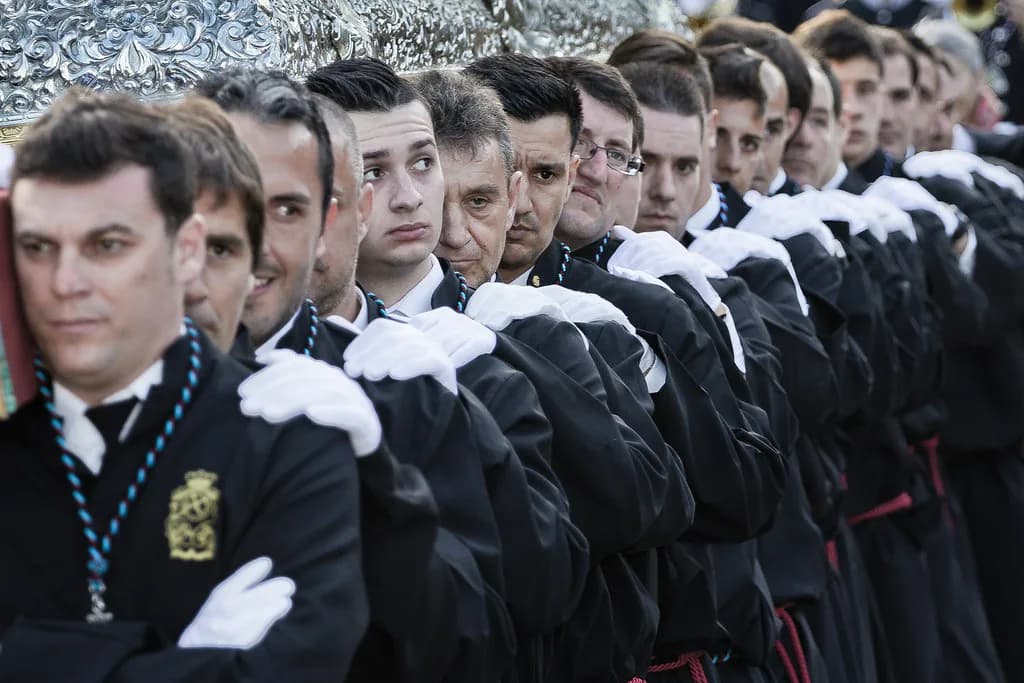
Semana Santa — Holy Week — falls in spring (its dates move with Easter each year) and brings Cordoba's most solemn spectacle. Elaborate processions of the city's brotherhoods carry ornate floats, or pasos, bearing sculptures of Christ and the Virgin through the narrow streets, accompanied by drums, brass and hooded penitents in the traditional nazareno robes. The processions wind past the Mezquita and through the whitewashed lanes, and the contrast between the flowered daytime beauty of the city and the candlelit gravity of the night processions is striking. It is worth checking the exact Easter dates when you plan a spring trip.
Then, in June, comes the Noche Blanca del Flamenco — the White Night of Flamenco. On a single night, the city's squares, patios and monuments host free flamenco performances that run from late evening until dawn. Stages appear in atmospheric settings across the old town, and locals and visitors move from one to the next through the warm night. For anyone who wants to experience flamenco in Cordoba without the peak-May crowds, this is an outstanding — and free — introduction. As with everything here, the date is fixed annually, so confirm it before you build a trip around it.
Getting Around Cordoba and When to Come
Cordoba's historic centre is compact and best explored on foot. The Mezquita-Catedral, the Juderia, the Roman bridge and the San Basilio patios cluster all sit within a walkable core, and getting lost in the flowered lanes is part of the pleasure. High-speed trains arrive at the central station a short walk or single bus ride from the old town, connecting Cordoba to Seville in about 45 minutes, Malaga in under an hour, and Madrid in roughly one hour fifty. The one venue that needs transport is the Feria fairground at El Arenal, reachable by city bus or taxi across the river.
Timing your visit is the single most important decision. Here is the honest summary:
- Early May — the Patios Festival opens, overlapping the Cruces de Mayo and the Montilla-Moriles wine fair; the richest, busiest, most flower-filled stretch of the year.
- Late May — the Feria de Mayo at El Arenal; flamenco dresses, casetas and horses.
- Spring (movable) — Semana Santa processions through the old town.
- June — the free all-night Noche Blanca del Flamenco.
- Early-to-mid July — the international Festival de la Guitarra.
Frequently Asked Questions
When is the best time to visit Cordoba for festivals?
May is by far the peak festival month. Early May brings the Patios Festival, the Cruces de Mayo and the Montilla-Moriles wine fair, all overlapping, while late May hosts the Feria de Mayo. July is the other highlight, with the international Festival de la Guitarra. Note that May accommodation books out months ahead, so reserve early.
What are the Patios de Cordoba 2026 dates?
The Festival de los Patios Cordobeses runs across early-to-mid May 2026 — roughly the fortnight from around 4 to 17 May — with private courtyards near San Basilio and in the Juderia opening free to the public. The city council confirms the exact window each spring, so check the official site or the dedicated Patios de Cordoba dates guide before booking.
Is the Patios Festival free to visit?
Yes. The competing private courtyards open their gates free of charge during the festival. The most celebrated patios develop long queues, especially at weekends and midday, so arrive early in the morning or in the cooler early evening. The official route map and opening hours are published by Cordoba's tourism office each spring.
What is the difference between the Patios Festival and Cruces de Mayo?
The Patios Festival opens private house courtyards decorated with hundreds of flowerpots for a competition, concentrated around San Basilio and the Juderia. The Cruces de Mayo, in the first days of May, fills public squares with large crosses covered in carnations, each with a bar, tapas and flamenco. They overlap in early May, so you can see the patios by day and the crosses by night.
When is the Cordoba Guitar Festival in 2026?
The Festival de la Guitarra de Córdoba runs across early-to-mid July 2026, with roughly two weeks of classical, flamenco and contemporary guitar concerts, masterclasses and exhibitions across the city. Tickets for headline concerts sell in advance; some daytime exhibitions and street performances are free. Confirm exact dates on the official festival site.
Related: Festivals and Events in Seville, Festivals and Events in Madrid and the Europe festivals by city master calendar.
Cordoba is a city that asks you to come at the right time, and when you do, it gives you something few destinations can match. The Patios Festival alone justifies the journey — standing in a stranger's flower-drowned courtyard, invited in for nothing more than the pleasure of sharing it, is the kind of travel moment that recalibrates what you thought a festival could be. Wrap the Cruces de Mayo, a glass of Montilla-Moriles fino and the late-night Feria around it, and early-to-late May in Cordoba becomes one of the fullest months in the Spanish calendar.
If May feels too intense — and with rooms scarce and prices high, it can — July's Guitar Festival offers a quieter, cooler way in, with world-class music filling the warm Andalusian nights. Either way, plan around one anchor event, book your bed early, and let the flowered lanes of the Juderia and the arches of the Mezquita do the rest. Cordoba does not spread its magic thinly across the year; it concentrates it, and a traveller who arrives at the right moment is richly rewarded.
Free guide: Europe's Festival Calendar
A month-by-month map of Europe's unmissable festivals — with the best dates to visit each and a local tip you won't find in the guidebooks.
You might also like

Continue reading
More guides you'll find useful