Festivals and Events in Dresden 2026: The Complete Calendar
Dresden's 2026 festival calendar: the Dresden Music Festival, Filmnächte am Elbufer open-air cinema, the BRN street party, and the historic Striezelmarkt.
On this page
Festivals and Events in Dresden 2026: The Complete Calendar
The first time I really understood Dresden's festival calendar, I was standing on the Elbe riverbank on a warm July evening, watching a film flicker to life on a giant open-air screen with the floodlit domes and towers of the Baroque Altstadt rising directly behind it. That was Filmnächte am Elbufer, and it captured everything I have come to love about how this Saxon capital marks the year — a city that treats its extraordinary skyline as a permanent stage set and programmes music, cinema and street celebration against it with total confidence. Dresden's headline classical event, the Dresdner Musikfestspiele, is covered in full in the Dresden Music Festival guide, but the city's calendar runs far deeper than any single festival.
Dresden sits on the river Elbe in eastern Germany, roughly two hours south of Berlin by train, and it wears its history openly. The Zwinger palace, the reconstructed Frauenkirche, and the Semperoper opera house cluster into a compact Baroque Altstadt that you can walk end to end in twenty minutes, while across the river the Neustadt is a completely different animal — younger, scruffier, covered in murals and packed with bars. That contrast is exactly why Dresden's festivals feel so varied: the same city that fills the Semperoper with international orchestras in May also throws one of Germany's largest and most anarchic district street parties in June. For the current official programme, the Dresden city events calendar is updated throughout the year.
This guide maps Dresden's 2026 festival calendar month by month — from the Semperopernball in the depths of winter, through the classical grandeur of the Dresden Music Festival in May, the riverbank cinema and jazz of high summer, and on to the Striezelmarkt, one of Germany's oldest Christmas markets. Whether you are building a trip around a single event or planning a longer Saxony itinerary, the sections below will help you decide when to come and what to expect.
Free guide: Europe's Festival Calendar
A month-by-month map of Europe's unmissable festivals — with the best dates to visit each and a local tip you won't find in the guidebooks.
Why Dresden for Festivals?
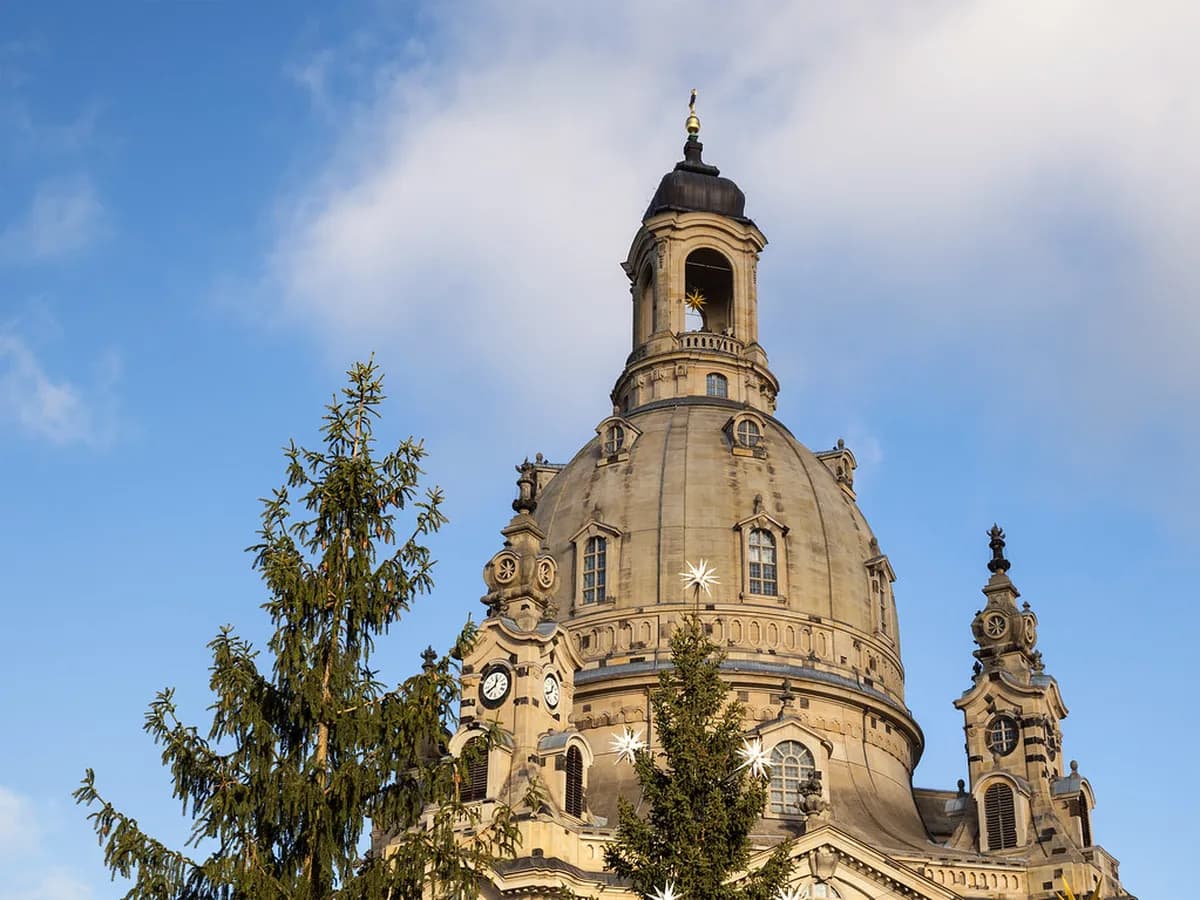
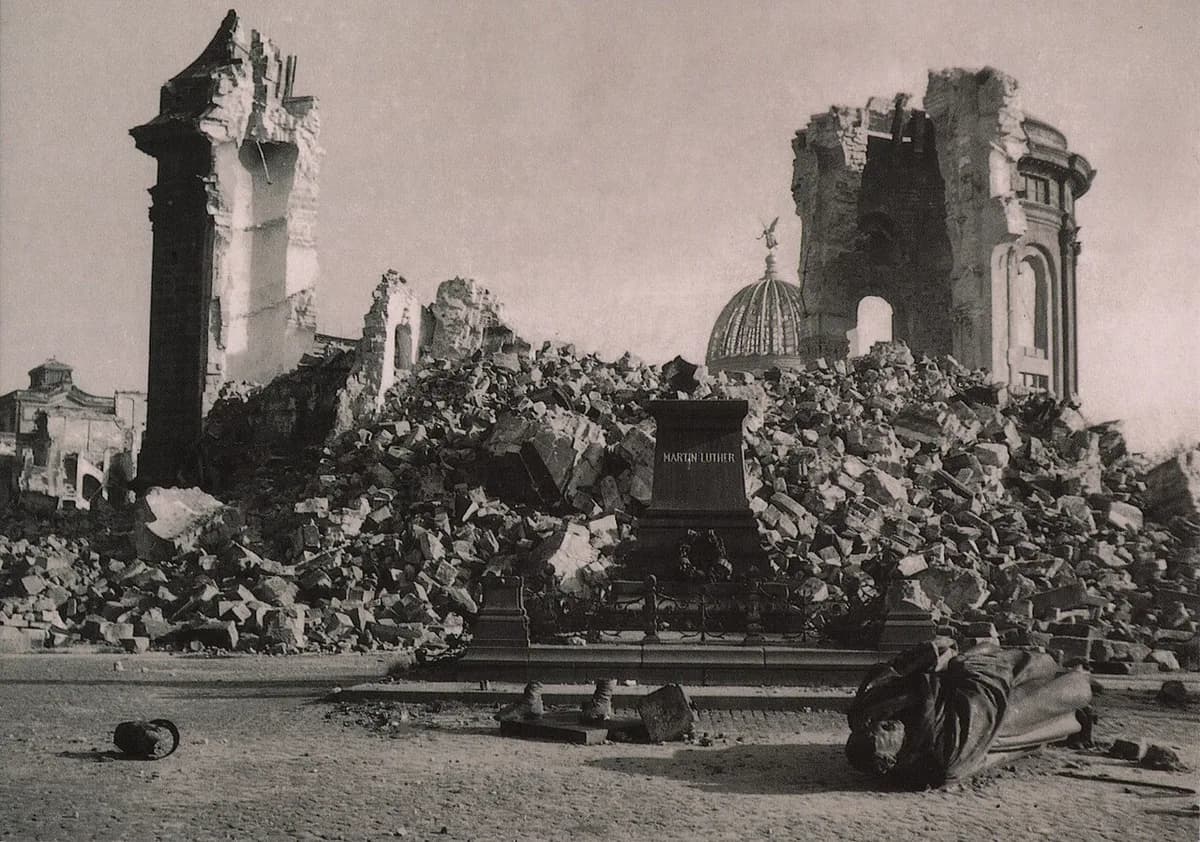
Dresden rewards visitors who understand what the city has been through. Firebombed almost to nothing in February 1945 and then painstakingly rebuilt over the following decades — the Frauenkirche was only reconsecrated in 2005, its dark salvaged stones set among the pale new ones like a deliberate scar — this is a city that takes cultural continuity seriously. That history shapes its festivals. When the Dresden Music Festival programmes a concert inside the Frauenkirche or the Kulturpalast, it is not just booking a pretty venue; it is asserting that the tradition of the Saxon court capital, the "Florence on the Elbe," survives intact. The events here feel earned rather than manufactured.
Practically, the city could hardly be easier to navigate. Almost everything worth seeing sits within the compact Altstadt on the south bank or the lively Neustadt on the north bank, linked by the Augustusbrücke and a handful of other bridges across the Elbe. Dresden's tram and S-Bahn network is dense and cheap, and the Dresden City Card bundles unlimited public transport with discounts on many of the state art collections in the Zwinger and the Residenzschloss. Because the two festival hearts — Baroque Altstadt and bohemian Neustadt — are a ten-minute walk apart, you can pair an afternoon orchestral concert with a late night in the Neustadt bars without ever needing a taxi.
Winter: Semperopernball and the Season's Opening
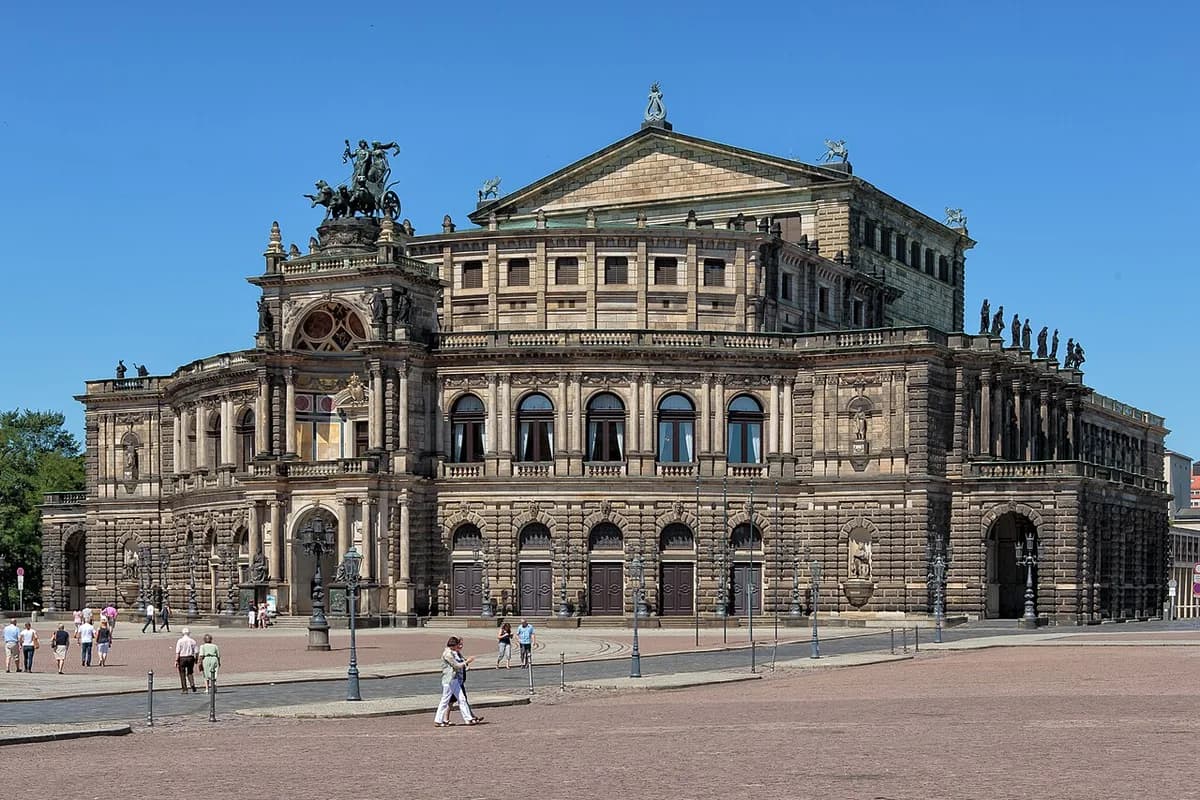
Dresden's festival year opens in glittering formality with the Semperopernball, usually held in early February inside and around the Semperoper. Modelled loosely on the great Viennese opera balls, it turns the opera house and the surrounding Theaterplatz into an evening of orchestral music, debutante processions, and black-tie spectacle, with a free outdoor programme on the square for those without a ballroom ticket. It is a very particular slice of Dresden — a reminder that this was one of Europe's great court cities long before it became a tourist destination.
February also carries the sombre, dignified commemorations of the 1945 bombing on and around the 13th, when tens of thousands of residents form a human chain around the Altstadt. It is not a festival in any celebratory sense, but it is one of the most moving public gatherings you can witness in Germany, and worth knowing about if you are in the city then. On a lighter note, the winter months keep the state art collections and the Semperoper's own opera and ballet season in full swing — Dresden is never short of something to see indoors when the weather along the Elbe turns grey.
Dresden Music Festival: The May Highlight
The Dresdner Musikfestspiele — the Dresden Music Festival — is the crown of the city's cultural year and the event most worth building a trip around. Founded in 1978, it now runs for several weeks from mid-May into early June (roughly the second half of May 2026), spreading a large international programme across Dresden's most spectacular venues. This is where the city's history and its music genuinely fuse: concerts take place inside the Semperoper, the modern Kulturpalast concert hall, the reconstructed Frauenkirche, and a scattering of palaces, churches and courtyards across the Altstadt and beyond.
The programming leans classical and orchestral — visiting symphony orchestras, star soloists, early-music ensembles and choral works — but the festival has increasingly reached into jazz, world music and crossover projects, giving it a breadth that keeps it from feeling like a museum piece. Each year is loosely organised around a theme, and the artistic direction under a high-profile lead artist draws genuinely world-class names to the Elbe. Tickets for the marquee Semperoper and Frauenkirche concerts sell out early; if you want a specific evening, book well ahead. For the full venue-by-venue breakdown, ticketing advice, and which concerts suit first-time visitors, see the dedicated Dresden Music Festival guide.
Spring: Dresden Dixieland Festival
Overlapping the classical grandeur of May is something completely different in spirit: the Dresden Dixieland Festival, an international celebration of traditional and New Orleans-style jazz that has run since the early 1970s and is one of the largest events of its kind in Europe. For a week in May, bands from around the world play across the city — on paddle steamers on the Elbe, in the Neustadt's bars and squares, on open-air stages in the Altstadt, and in a big final parade that winds through the centre.
Much of the programme is free and public, which makes it a wonderfully accessible festival to stumble into. The signature image is a historic Elbe paddle steamer — Dresden operates one of the oldest and largest fleets of these in the world — chugging along the river with a Dixieland band swinging on the deck. If your visit to Dresden happens to land in May, there is a decent chance you will catch both the tail of the Music Festival's opening and the brassy sprawl of Dixieland in the same trip, which is about as good as the city's calendar gets.
June: Bunte Republik Neustadt (BRN)
If the Music Festival shows you Dresden's polished, court-capital face, the Bunte Republik Neustadt — the BRN — shows you its rebellious one. Held over a weekend in mid-June in the Äußere Neustadt, the alternative quarter on the north bank, the BRN is one of Germany's biggest and most gloriously chaotic district street festivals. It began in 1990 as a tongue-in-cheek declaration of the neighbourhood's independence — the "Colourful Republic of Neustadt" — and it has kept that anarchic, DIY spirit ever since.
For the weekend, the grid of streets around Alaunstraße and Louisenstraße closes to traffic and fills with hundreds of small stages, food stalls, backyard bars, live bands, DJs, flea-market blankets and improvised performance. Entry is free, the crowds are enormous and young, and the whole thing feels far more like a communal neighbourhood party than a commercial event. It is loud, crowded and occasionally shambolic — and completely wonderful. Come with cash, wear comfortable shoes, and don't expect to move quickly through the packed streets. If you want the contrast that defines Dresden, spend a May evening in the Semperoper and a June afternoon in the BRN and you will have seen both halves of the city.
Summer: Filmnächte am Elbufer
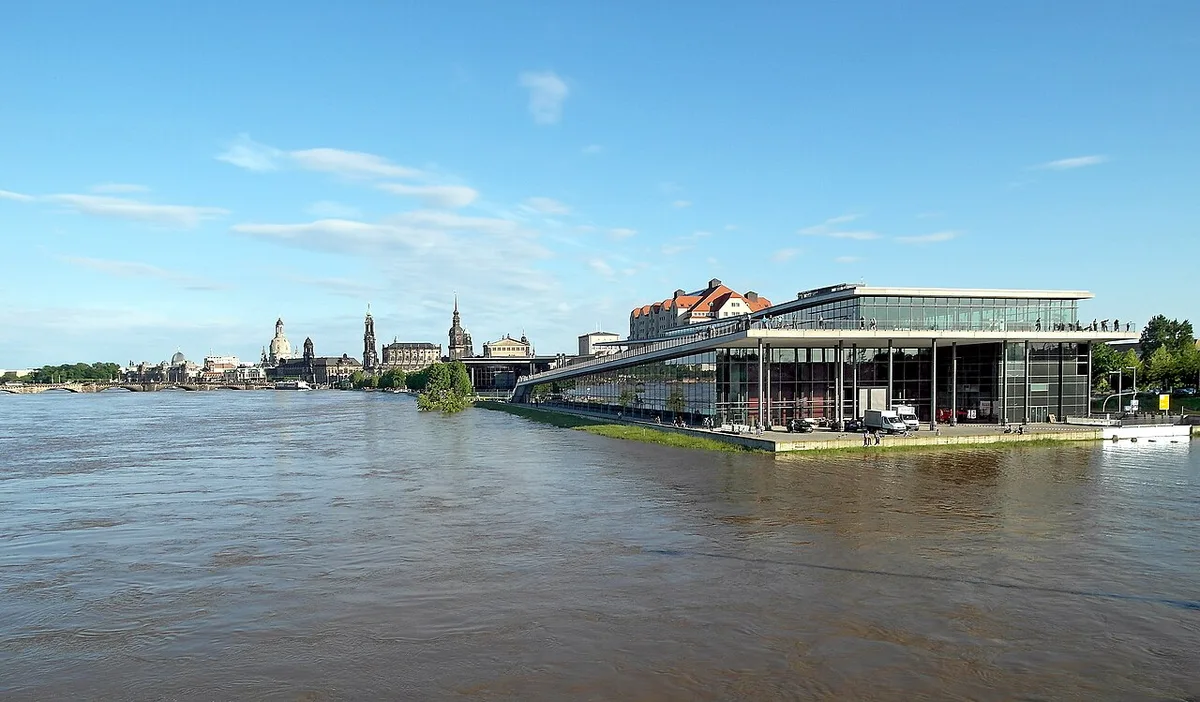
Filmnächte am Elbufer — "film nights on the Elbe bank" — is Dresden's signature summer institution and, for my money, the most romantic festival setting in Germany. From late June through August, a huge open-air screen and stage are set up on the Königsufer meadow on the Neustadt bank, directly facing the illuminated skyline of the Altstadt across the river. As dusk falls, the domes of the Frauenkirche and the Kunstakademie glow gold behind the screen, and you watch a film with one of Europe's great cityscapes as the backdrop. It is genuinely hard to beat.
The programme is a mix of two things: open-air cinema — a broad slate of recent hits, cult classics and German premieres running most evenings — and a strong series of live concerts, drawing major German and international acts to the riverside stage across the summer. Seating is on tiered benches; tickets are sold per event (films are inexpensive, concerts more so), and popular screenings and gigs sell out, so book the concerts ahead. Bring a light layer even in July — the breeze off the Elbe picks up after dark. Arriving early enough to grab a drink and watch the Altstadt lights come on across the water is half the pleasure of the evening.
Late Summer: Stadtfest Dresden (Canaletto)
The city's big civic celebration is Stadtfest Dresden, known as the Canaletto festival after the Venetian painter Bernardo Bellotto (called Canaletto) whose famous eighteenth-century views immortalised the Dresden skyline. Held over a weekend in August, it spreads dozens of stages and hundreds of stalls across both banks of the Elbe — the Altstadt riverfront, the Neustadt bank, and the bridges between them — and it is one of the largest city festivals in eastern Germany, drawing hundreds of thousands of visitors.
The programme is deliberately something-for-everyone: live music across every genre, food and craft markets, funfair rides, children's areas, and river activities including boat parades and, on the final night, fireworks over the Elbe. It is more mainstream and family-oriented than the edgy BRN, but the setting — the whole historic riverfront turned into one long festival ground — makes it a fine time to be in the city if you enjoy a big, buzzing summer crowd. Entry to the general festival areas is free.
Striezelmarkt: One of Germany's Oldest Christmas Markets
Dresden's winter crown is the Striezelmarkt, first held in 1434 and reckoned to be one of the oldest Christmas markets in Germany. It runs from late November until 24 December in the Altmarkt, the great square at the heart of the Altstadt, and it is the beating heart of a city that transforms in December. The name comes from "Striezel," the old word for the buttery, sugar-dusted fruit loaf that Dresden turned into its most famous export: Dresdner Christstollen.
Stollen is the market's whole identity. The wooden stalls sell it in every size, and the market's showpiece is the annual Stollenfest in early December, when a colossal stollen — weighing several tonnes — is paraded through the Altstadt on a horse-drawn cart, ceremonially cut with an oversized knife, and sold to raise money for charity. Beyond stollen you will find Erzgebirge wooden crafts — the carved nutcrackers, smoking-men and candle arches from the nearby Ore Mountains — plus a giant Christmas pyramid, a nativity scene, and mulled wine (Glühwein) in commemorative mugs. It is warm, historic and genuinely enchanting once the lights come on.
For everything you need to plan a Striezelmarkt trip — from the layout of the Altmarkt stalls to the wider ring of smaller markets around the Frauenkirche and Neumarkt — see the dedicated Dresden Christmas market guide. If you are pinning down travel dates, the Dresden Christmas market dates page tracks the opening and closing days, and where to stay for the Dresden Christmas market covers the best-placed neighbourhoods and hotels. For the wider context, the Christmas markets in Europe for first-timers guide sets Dresden alongside the other great European markets.
Getting Around Dresden and Day Trips
Dresden's festival venues are remarkably concentrated. The Semperoper, Kulturpalast, Frauenkirche and Altmarkt all sit within a few hundred metres of each other in the Altstadt, while the Neustadt events — the BRN and the Filmnächte riverbank — are a short walk across the Augustusbrücke on the north side. For anything further out, the tram network is fast, frequent and inexpensive; a single ride costs around €3, and the Dresden City Card adds transport plus museum discounts if you plan to visit the state collections. Almost every festival in this guide is reachable on foot or with one short tram hop from a central hotel.
The city is also an outstanding base for day trips into Saxon Switzerland (Sächsische Schweiz), the dramatic sandstone national park upriver from Dresden, where the Bastei bridge and its rock formations are about 45 minutes away by S-Bahn. Meißen, home of Europe's oldest porcelain manufactory, is a half-hour train ride, and Berlin is roughly two hours north if you want to combine Dresden with the capital's own busy calendar.
- Dresden City Card — covers trams + museum discounts; buy at the tourist office or online
- Trams and S-Bahn — dense, cheap network linking Altstadt, Neustadt and the suburbs
- S-Bahn to Saxon Switzerland — Bastei rocks and hiking, ~45 minutes upriver
- Regional trains to Meißen — porcelain town day trip, ~30 minutes
- Berlin in ~2 hours — pair Dresden with the capital's festivals and events in Berlin
Frequently Asked Questions
When is the best time to visit Dresden for festivals?
May and the summer months are the two peak festival periods, alongside December. May brings the Dresden Music Festival and the Dixieland Festival; June to August covers the BRN street party, Filmnächte am Elbufer open-air cinema and concerts, and the Stadtfest in August. Late November to 24 December is the season of the historic Striezelmarkt and Dresden's other Christmas markets. February offers the Semperopernball for a formal winter highlight.
When is the Dresden Music Festival in 2026?
The Dresdner Musikfestspiele (Dresden Music Festival) runs for several weeks from around mid-May into early June 2026. Concerts take place in the Semperoper, the Kulturpalast, the Frauenkirche and other historic venues across the city, with a large international classical programme plus jazz and crossover projects. Exact dates and the full programme are confirmed on the official festival site — book marquee concerts early as they sell out.
What is the Striezelmarkt and when is it open?
The Striezelmarkt is Dresden's Christmas market on the Altmarkt, first held in 1434 and one of the oldest in Germany. It runs from late November until 24 December each year and is famous for Dresdner Christstollen fruit loaf, the giant Stollenfest parade in early December, and Erzgebirge wooden crafts. Confirm the exact 2026 opening and closing dates on the official market site before you travel.
What is Filmnächte am Elbufer?
Filmnächte am Elbufer is Dresden's open-air summer cinema and concert series, held on the Königsufer riverbank on the Neustadt side of the Elbe from late June through August. A large screen and stage face the illuminated Altstadt skyline across the river; the programme mixes nightly open-air films with live concerts by major German and international acts. Tickets are sold per event, and concert nights sell out well in advance.
What day trips can I do from Dresden?
The most popular day trip is to Saxon Switzerland (Sächsische Schweiz), the sandstone national park upriver, where the Bastei bridge and rock formations are about 45 minutes away by S-Bahn. Meißen, home of Europe's oldest porcelain manufactory, is around 30 minutes by train, and Berlin is roughly two hours north, making it easy to combine Dresden with the German capital.
Related: Dresden Music Festival — Full Guide · Festivals and Events in Europe by City.
Dresden's festival calendar is one of the most rewarding in Germany precisely because of its range. In the space of a single year the same city stages the international grandeur of the Dresden Music Festival, the free-wheeling chaos of the BRN, the riverbank magic of Filmnächte am Elbufer, and the centuries-deep tradition of the Striezelmarkt. Each event grows out of something the city genuinely is — a Baroque court capital, a rebuilt survivor, a bohemian riverside town — and none of it feels imported or generic.
If you can only come once, May is the month I would choose, for the sheer concentration of music along the Elbe. But the summer of open-air cinema and the December of stollen and Glühwein each make their own strong case, and the beauty of Dresden is that its greatest venues — the Frauenkirche, the Semperoper, the Altmarkt, the riverbank itself — are the backdrop to all of it. Pick your festival, book the concert that anchors the trip, and let the "Florence on the Elbe" do the rest.
Free guide: Europe's Festival Calendar
A month-by-month map of Europe's unmissable festivals — with the best dates to visit each and a local tip you won't find in the guidebooks.
You might also like
Continue reading
More guides you'll find useful