How To Get To Feria De Abril: 10 Best Transport Options
Master the logistics of the Seville April Fair. Our guide covers the 10 best ways to get to Feria de Abril, from Metro routes to traditional horse carriages.
On this page
How To Get To Feria De Abril: 10 Best Transport Options
Last updated April 2026. The Seville April Fair is one of the most vibrant best festivals in Spain, drawing millions to the city. Navigating the logistics of this massive event requires careful planning to avoid massive crowds and road closures. This guide explains how to get to Feria de Abril using every available transport method in the city.
The festivities take place at the Real de la Feria, a dedicated site in the Los Remedios district. Understanding the local transport network is essential because the city center often comes to a standstill. Travelers should check the official Feria de Abril dates before booking their Seville accommodation. Whether you prefer a modern metro or a traditional horse carriage, multiple options exist for every budget.
Quick Answer: The Seville Metro Line 1 is the best option, costing €1.60 / ~$1.75 and taking 10-15 minutes. Special TUSSAM buses and traditional horse carriages offer reliable alternatives for those staying in different neighborhoods. Walking remains the most popular choice for visitors staying in the nearby Triana or city center districts.
Free guide: Europe's Festival Calendar
A month-by-month map of Europe's unmissable festivals — with the best dates to visit each and a local tip you won't find in the guidebooks.
Location Overview: Where is El Real de la Feria?
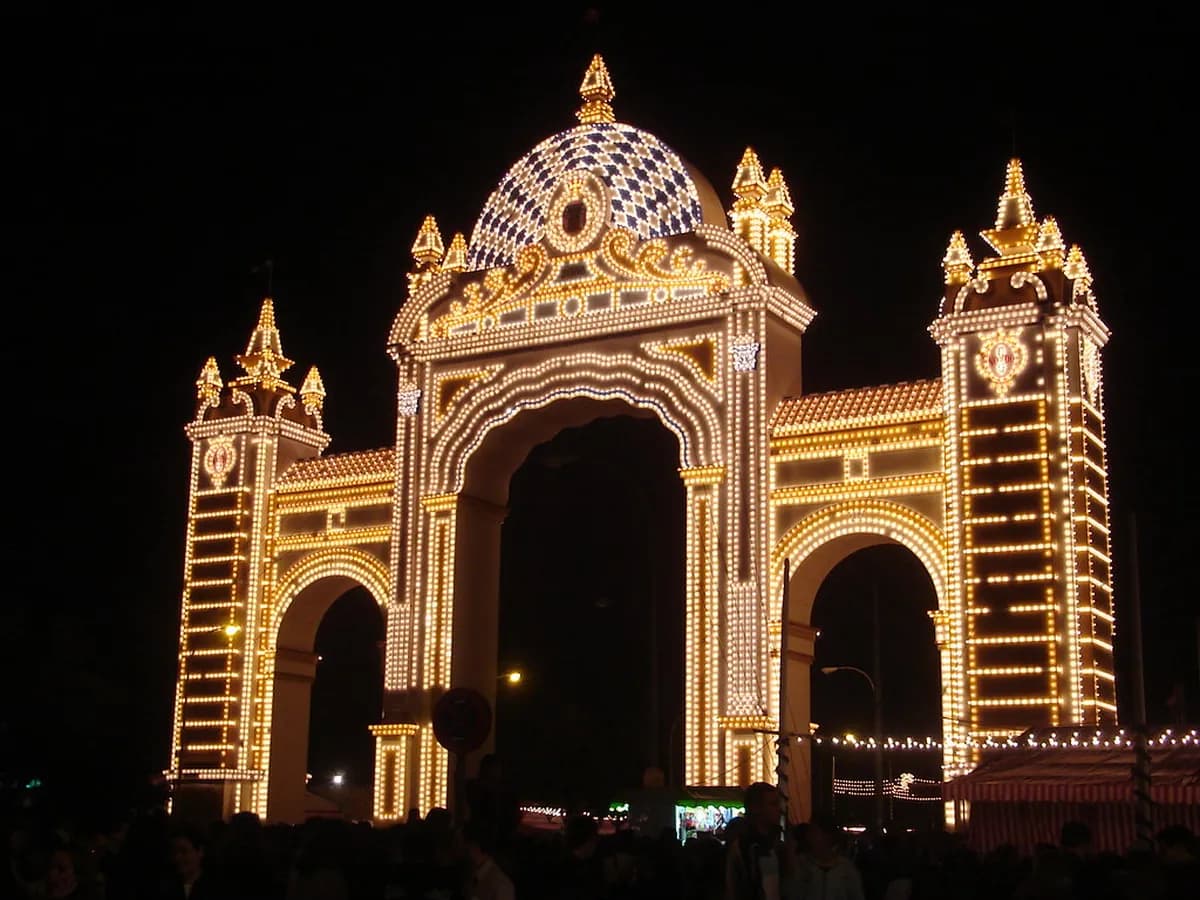
The fairgrounds are located in the Los Remedios neighborhood, just south of the historic Triana district. This area, known as El Real, spans over 450,000 square meters of dedicated festive space. It sits bordered by the Guadalquivir River on one side and the SE-30 ring road on the other. The main entrance is marked by a massive temporary gate called La Portada on Calle Antonio Bienvenida.
Most visitors find that the fair is distinct from the primary tourist sights in the city center. Reaching the site requires crossing one of several bridges, such as the Puente de las Delicias. The area is divided into a grid of streets named after famous bullfighters from Spanish history. Knowing the exact street of your destination caseta will help you choose the nearest drop-off point.
Taking the Seville Metro: The Most Efficient Way
The Metro de Sevilla provides the fastest connection to the fairgrounds during the busy week. Line 1 is the only line currently serving the city, but it connects many key residential areas. During the fair, the metro runs 24 hours a day to accommodate late-night celebrations. This service is highly reliable and avoids the heavy surface traffic that plagues the Los Remedios district.
Stations are often very crowded during peak hours, particularly between 2:00 PM and 8:00 PM. Security guards manage the flow of passengers at the entrance to prevent platform overcrowding. It is wise to purchase a rechargeable card in advance to avoid long ticket machine queues. The following steps outline exactly how to use the metro to reach the festive site.
- Step 1: Purchase a rechargeable transport card
- Buy a multi-trip card at any metro station or licensed tobacco shop in the city.
- Expect to pay around €1.50 / ~$1.65 for the card plus your initial credit balance.
- Avoid buying single tickets at the station to save time during the peak afternoon rush.
- Step 2: Board Line 1 toward Ciudad Expo or Olivar de Quintos
- Locate the nearest Line 1 station such as Puerta Jerez or Prado de San Sebastián.
- Trains typically arrive every 4 to 7 minutes during the high-demand festival hours.
- Check the digital platform signs to ensure you are boarding the correct southbound or northbound train.
- Step 3: Exit at Plaza de Cuba or Parque de los Príncipes
- Disembark at Plaza de Cuba if you want to walk toward the main Portada entrance.
- The journey from the city center takes approximately 5 to 10 minutes total travel time.
- Use the Parque de los Príncipes stop for direct access to the back of the fairgrounds.
- Step 4: Follow the color-coded festival signage
- Look for the bright yellow and red signs pointing toward the Real de la Feria.
- Walking from the metro exit to the fair gates takes roughly 5 to 8 minutes.
- Stay on the designated pedestrian paths to avoid the heavy bus and taxi traffic nearby.
- Step 5: Validate your card for the return journey
- Ensure your card has enough balance for the trip home before entering the fair.
- A standard metro ride costs about €1.60 / ~$1.75 per person for a single zone.
- Top up your card early in the day when the station machines are less busy.
Special TUSSAM Bus Services and Routes
The local bus operator, TUSSAM Official Site, runs a dedicated shuttle service called the 'F' line. This special route connects the Prado de San Sebastián transport hub directly to the fairgrounds. Buses run continuously throughout the day and night with very high frequency during the week. The fare for the special 'F' line is usually slightly higher than standard city bus routes.
Standard lines like the C1, C2, 5, 6, and 41 also serve the Los Remedios area. These regular lines are useful for visitors staying in neighborhoods outside the immediate city center. Traffic congestion can significantly delay bus travel times compared to the underground metro system. The table below compares the primary transport options to help you plan your journey effectively.
- Transport Comparison: Cost and Speed
- Metro Line 1: Costs €1.60 / ~$1.75, takes 10 minutes, runs every 5 minutes.
- Special 'F' Bus: Costs €1.60 / ~$1.75, takes 20-30 minutes, runs every 4 minutes.
- Taxi Service: Costs €10-€15 / ~$11-$16, takes 15-25 minutes, available at designated ranks.
- Horse Carriage: Costs €95 / ~$103, takes 45 minutes, available at official city points.
Arriving by Traditional Horse-Drawn Carriage
Entering the fair in a horse-drawn carriage is a quintessential Seville experience for many visitors. Official carriages can be hired from designated points like the Cathedral or Plaza de España. The city regulates the prices during the fair to prevent overcharging by private drivers. A standard ride into the Real typically costs around €95 / ~$103 for the entire carriage.
Carriages are only allowed to enter the fairgrounds during specific daytime hours, usually until 8:00 PM. The streets of the Real become packed with horses and riders, creating a spectacular visual display. Passengers should dress appropriately, as this is considered a formal way to arrive at the casetas. Always confirm the final price with the driver before beginning your journey through the city.
Walking to the Fairgrounds from Nearby Neighborhoods
Walking is often the most practical way to reach the fair if you stay in Triana. The walk from the city center across the San Telmo bridge takes about 20 minutes. Pedestrian routes are well-marked and usually very safe due to the high police presence. Many locals prefer walking to avoid the frustration of waiting for packed buses or trains.
Ensure you wear comfortable shoes, as the fairgrounds are covered in a fine yellow sand called albero. This sand can be dusty when dry and messy if it happens to rain during the week. The walk offers great views of the Guadalquivir river and the colorful crowds heading to the site. Below is a checklist of items to prepare before you start your walk to the Real.
- Checklist: Before you head to the Fair
- Wear comfortable footwear that you do not mind getting slightly dusty from the sand.
- Carry a small hand fan to stay cool during the warm Andalusian afternoons.
- Bring plenty of cash as many smaller casetas do not accept international credit cards.
- Pack a portable phone charger to ensure you can navigate back home at night.
- Keep a digital or paper map of the fairground street names to find casetas.
- Apply sunscreen before leaving your hotel as shade is limited in the open streets.
- Check the weather forecast for sudden spring showers that can occur in April.
Taxi Ranks and Rideshare (Uber/Cabify) Access
Taxis are a convenient option but they cannot enter the pedestrianized streets of the Los Remedios district. Specific taxi ranks are set up around the perimeter of the fair for drop-offs and pickups. The main taxi rank is located near the Portada entrance on the Avenida de la Flota de Indias. Expect to wait in long lines if you try to leave the fair by taxi after midnight.
Rideshare apps like Uber and Cabify operate in Seville but face strict access limitations during the fair. Drivers must use designated pickup zones which may be a 10-minute walk from the main gate. Surge pricing is common during the 'Alumbrao' night and the final weekend of the festival. Consult the decision guide below to choose the best vehicle service for your specific needs.
- Decision Guide: Taxi vs. Rideshare
- If you are in a large group, hire an official taxi from a rank for fixed rates.
- Choose Uber or Cabify if you prefer cashless payments and have a clear pickup point.
- Take the Metro if you are traveling alone late at night to save on surge costs.
- Walk to the nearby Triana district before calling a car to avoid the heaviest traffic.
Driving and Parking: Is Hiring a Car Worth It?
Driving a private car to the Feria de Abril is generally discouraged for most international tourists. The city closes almost all streets in Los Remedios to non-resident traffic during the entire week. Parking near the fairgrounds is nearly impossible without a pre-purchased official parking permit. Hiring a car specifically for this event often results in more stress than convenience.
If you must drive, the official parking lot is located at Charco de la Pava. This massive lot connects to the fair via a free shuttle bus that runs 24 hours. Parking fees typically range from €10 to €20 / ~$11 to ~$22 depending on the day. Most visitors find that where to stay for Feria de Abril determines if driving is necessary.
Accessible Transport and Reduced Mobility Services
Seville has made significant efforts to make the April Fair accessible to all visitors. The Metro and most TUSSAM buses are equipped with ramps and dedicated spaces for wheelchairs. Special shuttle services are often available for people with reduced mobility from the main transport hubs. Information points at the entrance can provide maps showing the most accessible routes through the Real.
A unique local initiative includes 'quiet hours' where music and loud noises are significantly reduced. This usually happens on Monday or Tuesday afternoons to support visitors with sensory sensitivities. The fairgrounds also feature paved sections on main avenues to assist those using mobility aids. Consult the Visit Sevilla Official Portal for specific accessibility schedules and updates.
Guided Tours and Information Points at La Portada
First-time visitors often feel overwhelmed by the scale and private nature of the Caseta system. Official guided tours depart from the information kiosk located at the main Portada entrance. Tours are available in multiple languages including English, Spanish, French, and Italian. These sessions typically run at 1:00 PM, 2:30 PM, 4:00 PM, and 5:30 PM daily.
The information points provide free maps that label the public casetas open to everyone. Staff can also assist with lost items or provide directions to the nearest medical post. Booking a tour can be a great way to learn about the history of the Los Remedios site. You can find these services easily by looking for the large 'i' signs near Antonio Bienvenida.
Timing Your Arrival: The 'Alumbrao' and Peak Hours
The 'Alumbrao' ceremony marks the official start of the fair on Saturday night at midnight. Thousands of lightbulbs on the Portada are switched on simultaneously, creating a massive transport surge. Getting to the fair during this time is extremely difficult due to the sheer volume of people. Plan to arrive at least two hours early if you want to witness the lighting ceremony.
Daily peak hours occur during the 'Paseo de Caballos' in the late afternoon and early evening, roughly 13:00 to 20:00. The fairgrounds are quietest on Monday mornings, which is the best time to explore without crowds. Tuesdays can also be lighter as locals recover from the Alumbrao weekend. Wednesday and Thursday evenings are typically the most festive nights for atmosphere.
- Troubleshooting: Common Transport Problems
- If the Metro card machine fails, use the contactless payment option on the turnstiles.
- Walk away from the main gate to find a taxi if the ranks are too long.
- Check the TUSSAM app for real-time bus delays caused by heavy festival traffic.
- Use the river path to walk back to the center if roads are blocked by police.
- Avoid the main Portada exit at 3:00 AM when crowds are at their highest density.
- Carry a physical map in case your phone battery dies from taking festival photos.
- Ask a local 'Policía Local' officer for the nearest open bridge if one is closed.
Leaving the Fair at 3 AM: The Late-Night Exit Strategy
The period between 02:30 and 04:00 is by far the hardest time to leave El Real. Taxi ranks swell with hundreds of people simultaneously trying to leave, and Uber and Cabify drivers often decline fares in the congestion zone. The Metro is your single most reliable escape route at this hour, but expect platforms to be packed. Board at Parque de los Príncipes rather than the closer Plaza de Cuba — it is one stop further into the line and the crowds thin noticeably there.
If you want to avoid the platform crush entirely, the best tactic is to walk north across the Puente de los Remedios into the Triana district first. From Triana, taxis flow freely because they are outside the restricted perimeter, and the Cabify pickup wait drops to roughly five minutes. This adds about 15 minutes on foot but routinely cuts total journey time in half compared to queuing at the Portada taxi rank. Tell your driver to meet you on Calle Betis, the main riverside street in Triana.
A second option used by regulars is to simply wait it out inside one of the public casetas until around 04:30, when the first crush dissipates. The public casetas — the ones marked on the free maps from the information kiosk — stay open and lively well past 03:00. Ordering one last rebujito and letting the taxis clear is often the most comfortable strategy for anyone not in a rush to sleep.
Public vs. Private Casetas: How Your Transport Strategy Changes
Most transport guides treat the fairgrounds as a single destination, but where you are heading inside El Real changes your approach. The public casetas — run by the city, political parties, and trade unions — are clustered near the main Portada entrance on Calle Antonio Bienvenida. For these, any of the standard routes (Metro to Plaza de Cuba, the 'F' bus, or walking from Triana) drops you within a five-minute walk.
Private casetas belonging to private clubs or families are spread across the interior grid and are often located toward the back of the Real. If you have an invitation to a specific private caseta, ask your host for the nearest cross-street before you arrive. The fairground streets run east-to-west and are numbered; casetas on the far western end are a 20-minute walk from the Portada gate. In that case, entering via the back access road off Avenida del Deporte and dropping off by taxi or Cabify is faster than walking the length of the fair.
Horse-drawn carriages offer a practical advantage here: they can navigate the interior streets that are closed to motorized vehicles, dropping passengers closer to private casetas than any taxi or bus can. This is the practical reason many locals still use carriages for formal evening visits, not just for the spectacle.
Frequently Asked Questions
What is the best way to get to the Seville Fair?
The Seville Metro Line 1 is the most efficient choice for most travelers. It avoids surface traffic and runs 24 hours a day during the fair. Rides cost approximately €1.60 / ~$1.75 per person.
Where can I park near Feria de Abril?
Parking is available at the Charco de la Pava lot for about €10-€20 / ~$11-$22. A free shuttle bus connects this lot to the fairgrounds. Driving into the Los Remedios district is strictly prohibited.
How much does a horse carriage to the Feria cost?
A traditional horse carriage ride usually costs around €95 / ~$103 for the full carriage. These rates are regulated by the city during the festival week. You can hire them at the Cathedral or Plaza de España.
Visiting Seville for more than one festival? See our complete guide to festivals and events in Seville.
Reaching the Feria de Abril is straightforward if you use the city's extensive public transport network. The Metro Line 1 and special TUSSAM buses offer the most reliable and affordable ways to travel. Walking remains a fantastic option for those staying in Triana or near the San Telmo bridge. By planning your route and timing your arrival, you can focus on enjoying the music and culture.
Remember to buy your transport cards in advance to avoid the long queues at station kiosks. Whether you arrive by carriage or on foot, the magic of the Seville April Fair is unforgettable. Safe travels and enjoy your time at one of the most iconic events in Andalusia.
Free guide: Europe's Festival Calendar
A month-by-month map of Europe's unmissable festivals — with the best dates to visit each and a local tip you won't find in the guidebooks.
You might also like


Continue reading
More guides you'll find useful