Festivals and Events in Cannes 2026: The Complete Calendar
Cannes 2026 festival calendar: the Film Festival red carpet in May, Cannes Lions, the free Festival d'Art Pyrotechnique fireworks, and the Yachting Festival.
On this page
Festivals and Events in Cannes 2026: The Complete Calendar
The first time I covered a Cannes season, I made the rookie mistake every first-timer makes: I turned up in May assuming that "the festival" meant I could somehow slip into a screening. I could not. What I learned that week — and what I have watched confuse visitors every year since — is that the Festival de Cannes is a badge-only industry event, and yet the city around it is one of the most rewarding festival destinations on the French Riviera precisely because so much of its calendar is open to anyone who shows up. You just have to know which events those are.
Cannes sits on the Côte d'Azur, about thirty minutes west of Nice by train, wrapped around a curving bay with the palm-lined Boulevard de la Croisette running along the seafront and the old fishing quarter of Le Suquet climbing the hill behind the Vieux Port. It is compact, walkable, and — despite its glamorous reputation — surprisingly navigable once you stop trying to buy a ticket to something you were never meant to attend. The city's calendar runs the full year, from the March real-estate trade shows through the film and advertising festivals of late spring, into a summer of free fireworks and beach music, and on to the September yachts. For the current programme, the official Cannes Tourism events calendar is updated regularly.
This guide maps Cannes' 2026 festival calendar month by month, and — more usefully — tells you honestly which events you can actually experience as a visitor and which ones you can only watch from the outside. Whether you are planning a trip around the red-carpet spectacle or, as I now recommend, around the free fireworks over the bay, the sections below will help you decide when to come.
Free guide: Europe's Festival Calendar
A month-by-month map of Europe's unmissable festivals — with the best dates to visit each and a local tip you won't find in the guidebooks.
Why Cannes for Festivals?
Cannes built its identity on a single event and then quietly diversified around it. The Film Festival, founded in 1946, made the city a global byword for cinema and glamour — but the same infrastructure that hosts the film world, above all the vast Palais des Festivals et des Congrès at the western end of the Croisette, also anchors a year-round rotation of major industry gatherings. Cannes Lions for the advertising world, MIPIM for real estate, MIPTV for television: this is a city whose economy is genuinely built on the festival and congress calendar, which is why the events feel so professionally run even when they are free and public.
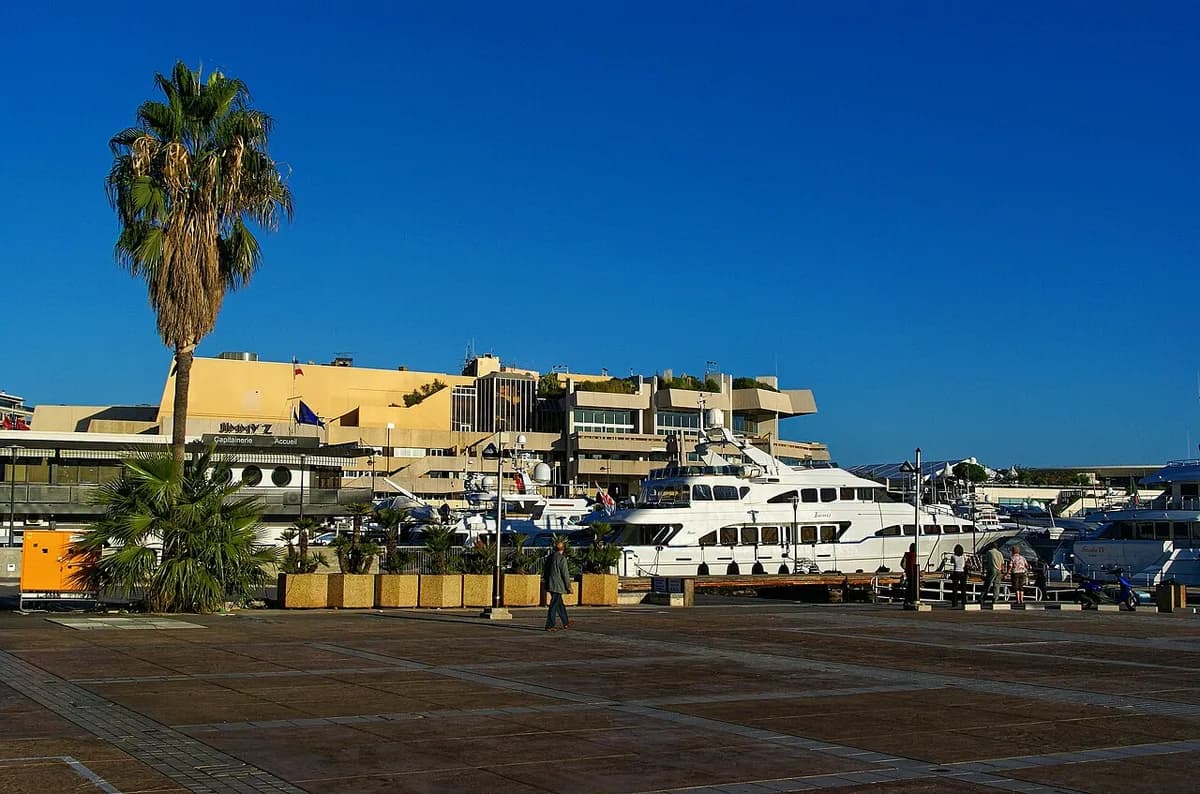
Practically, that concentration works in a visitor's favour. Almost everything happens within walking distance of the seafront. The Palais sits at the junction of the Croisette and the Vieux Port; Le Suquet and its church square rise directly behind the old harbour; the public beaches where the summer fireworks and beach concerts take place stretch east along the bay. You can base yourself anywhere central and reach every major venue on foot. Cannes' train station is a five-minute walk from the Palais, and Nice Côte d'Azur airport — the second-busiest in France — is roughly forty minutes away by road or a short train ride, making the city one of the easiest festival destinations on the Riviera to reach.
Cannes Film Festival: What Visitors Can Actually Do (May 2026)
The Festival de Cannes is the event everyone knows and the one most people misunderstand. The 79th edition is scheduled to run approximately 12–23 May 2026 at the Palais des Festivals et des Congrès on the Boulevard de la Croisette. Here is the honest truth that no glossy travel piece will tell you plainly: the competition screenings are strictly industry, press, and badge-holder only. As an ordinary visitor, you cannot buy a ticket to the main competition films. The famous red-carpet premieres at the Grand Théâtre Lumière are accessible only with an official accreditation and, for the black-tie evening galas, a formal invitation.
So why come at all? Because the atmosphere around the festival is genuinely worth experiencing, and parts of it are open to everyone. The single best thing a visitor can do is Cinéma de la Plage — free evening screenings held on Macé beach, open to the public, showing a mix of classics and festival-adjacent titles under the stars. Seating is first-come, and it is one of the few ways to say you watched a film "at Cannes" without a badge. You can also watch the red-carpet arrivals from the public barriers around the Palais — arrive hours early on a big premiere day if you want a view of the steps — and simply walk the Croisette, which during festival fortnight becomes a rolling spectacle of photographers, yachts, and film-poster hoardings the length of the seafront.
A few tactical notes from experience. Hotel prices during the festival fortnight are the highest of the entire Riviera year, so if the film world is not your specific reason for coming, almost any other month is better value. If you do want the buzz without the industry access, the middle weekend delivers the most red-carpet activity. And book a table anywhere near the Croisette well in advance — the restaurants are overwhelmed. For the official programme, badge information, and Cinéma de la Plage listings, the Festival de Cannes website is the only authoritative source.
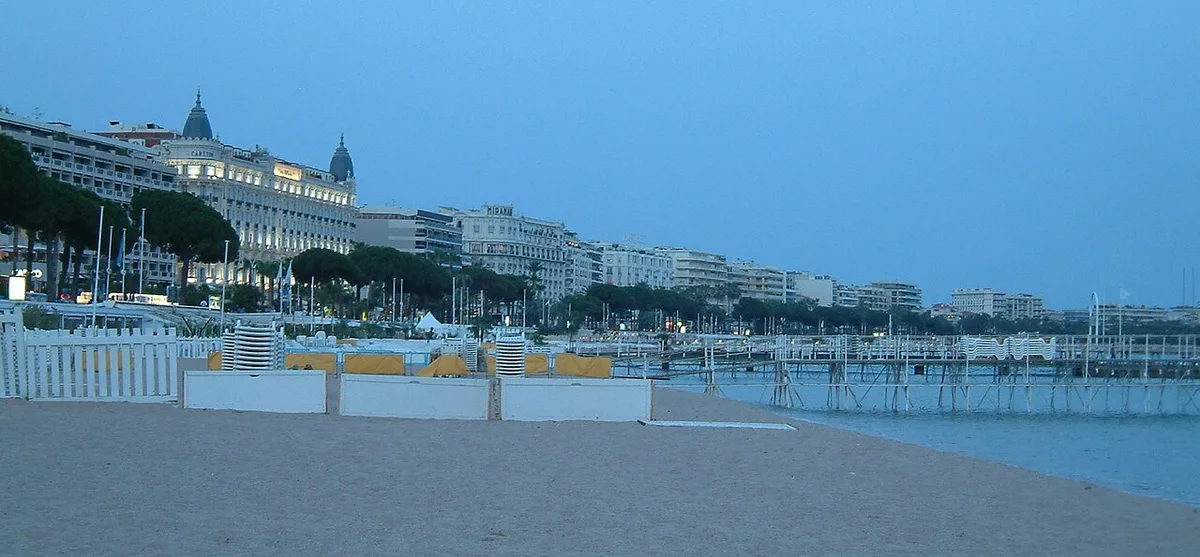
Cannes Lions and the Spring Trade Shows
A month after the film world leaves, the advertising world arrives. Cannes Lions International Festival of Creativity takes over the Palais in mid-June — five days that fill the city with marketers, agencies, and brand executives, and push seafront hotel rates back up to near-May levels. Like the film festival, Cannes Lions is a badge-based professional event; the awards ceremonies and conference sessions are for delegates, not the general public. But the delegate crowd spills out along the Croisette every evening, and the beachfront bars and rooftop terraces host a rolling programme of brand activations and parties that give the whole city a distinct, high-energy character for the week.
Earlier in the year come the trade shows that pay Cannes' bills. MIPIM, the international real-estate exhibition, fills the Palais in March and is one of the largest events of its kind in the world. MIPTV, the television content market, historically runs in spring, though its format has shifted in recent years — check current listings before planning around it. None of these are visitor events in any meaningful sense, but it is worth knowing they exist: if you turn up in mid-March and find every hotel full and the Croisette lined with corporate branding, MIPIM is the reason. For a broader picture of how France's cities structure their event calendars, the Paris festivals and events guide is a useful companion — the capital runs on a very different, more publicly accessible rhythm.
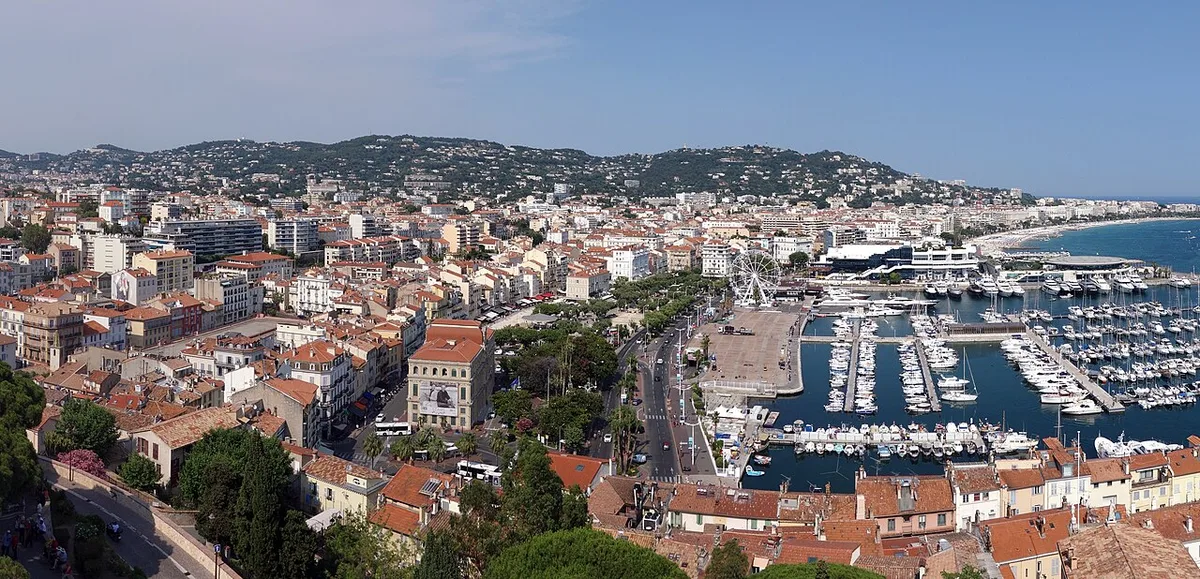
Summer: Fireworks Over the Bay and Les Nuits Musicales
This, for my money, is when Cannes is at its best for an ordinary visitor — and it is almost entirely free. The Festival d'Art Pyrotechnique, the international fireworks competition, is the summer highlight. Across several evenings between July and August, competing pyrotechnic teams from different countries stage elaborate choreographed displays set to music, launched from a barge in the Bay of Cannes. You watch from the public beaches, the Croisette, or anywhere along the seafront — no ticket, no badge, no accreditation. Arrive in the early evening to claim a spot on the sand, bring a picnic, and settle in; the displays typically begin around 22:00 once it is fully dark. It is genuinely one of the finest free public events anywhere on the Riviera, and the reason I now tell people to skip May and come in high summer.
Alongside the fireworks, Les Nuits Musicales du Suquet brings classical music to the old town in July. Concerts are staged in the square in front of the church of Notre-Dame d'Espérance, at the top of the Le Suquet quarter, with the bay spread out below — an atmospheric setting for chamber and orchestral programmes. These concerts are ticketed but modestly priced, and the walk up through the old town's narrow streets to the venue is part of the pleasure. Between the free fireworks on the beach and an evening concert above the harbour, July gives you a Cannes that is cultural, warm, and refreshingly free of the industry-badge exclusivity of spring.
Les Plages Électroniques: Beach Music in August
Les Plages Électroniques is Cannes' electronic music festival, held on the beach in August — usually a multi-day event with stages set directly on the sand and international DJs and electronic acts playing from afternoon into the night. It is a ticketed festival with a genuinely striking setting: dancing on the beach with the Mediterranean at your back and the lights of the Croisette behind you is a very different Cannes from the black-tie image most people carry. The crowd skews younger and more international than the film-festival set, and the vibe is closer to a summer beach party than a formal music festival.
Tickets are sold in advance by day or for the full run, and the popular headline nights sell out, so book ahead if a particular act is your draw. Because it lands in August, Plages Électroniques often overlaps with the tail end of the fireworks season, meaning a well-timed high-summer visit can catch both a free pyrotechnic display on one evening and a beach music night on another. If your taste in festivals runs to the electronic and outdoor, Cannes in August genuinely competes with better-known Mediterranean beach events — and it does so within walking distance of a proper city.
Autumn: The Cannes Yachting Festival
September brings the Cannes Yachting Festival, the largest in-water boat show in Europe and the event that closes the city's main season. It spreads across two harbours — the Vieux Port beneath Le Suquet and the Port Canto at the eastern end of the Croisette — with hundreds of boats, from day cruisers to superyachts, moored and open for viewing. It is a trade and enthusiast event: many of the vessels are there to be sold, and serious buyers attend with appointments. But it is ticketed and open to the public, so anyone can buy entry and walk the pontoons, and even if you have no intention of buying a boat, the spectacle of the two ports packed with gleaming hulls against the September Riviera light is worth the ticket.
September is also, quietly, one of the best months to visit Cannes generally: the summer crowds have thinned, the sea is still warm, hotel rates ease from their August peak, and the light on the bay turns golden. If you want the Riviera in good weather without the festival-fortnight prices or the August beach density, book around the Yachting Festival's edges — either just before it opens or in the calmer weeks that follow.
Winter, Christmas and Getting Around
Cannes is not a winter-festival city. There is a modest seafront Christmas market and an ice rink that appear on the Allées de la Liberté near the Vieux Port through December, and the Croisette carries festive lights, but it is a low-key affair compared with the great markets of northern and eastern France. If a proper Christmas-market trip is what you are after, the Riviera is the wrong region — you would do far better to point yourself towards the best Christmas markets in France and Alsace, where Strasbourg, Colmar and the Alsatian villages run the country's finest festive season. Cannes in December is best treated as a mild, quiet off-season city break rather than a Christmas-market destination.
Getting around, in every season, is straightforward. The city centre is genuinely walkable: the Palais, the Vieux Port, Le Suquet, the Croisette and the public beaches all sit within a compact seafront corridor. Cannes' train station puts you on the coastal rail line that runs the length of the Côte d'Azur, so day trips are effortless.
- Train to Nice — around 30 minutes on the coastal line; frequent services from Cannes station
- Nice Côte d'Azur airport — roughly 40 minutes by road or train; the main gateway to the Riviera
- Walkable centre — Palais, Vieux Port, Le Suquet and the Croisette are all within a short flat walk
- Îles de Lérins — a short ferry from the Vieux Port to Sainte-Marguerite for a half-day escape from any festival crowd
Frequently Asked Questions
Can the public attend the Cannes Film Festival?
Not the competition screenings. The Festival de Cannes (approximately 12–23 May 2026 at the Palais des Festivals) is strictly industry, press, and badge-holder only, and there is no public ticket window for the main programme. What visitors can do for free is attend Cinéma de la Plage — evening screenings on Macé beach open to the public — watch red-carpet arrivals from the public areas around the Palais, and soak up the atmosphere along the Croisette. Check the official festival site for exact dates.
When is the best time to visit Cannes for festivals?
For glamour and atmosphere, mid-May during the Film Festival, though you cannot attend screenings and prices peak. For the best visitor experience, July and August: the free Festival d'Art Pyrotechnique fireworks over the bay, Les Nuits Musicales du Suquet in July, and Les Plages Électroniques beach music in August. September's Yachting Festival closes the season with easier prices and warm weather.
Is the Cannes fireworks festival free to watch?
Yes. The Festival d'Art Pyrotechnique is an international fireworks competition staged from a barge in the Bay of Cannes across several evenings in July and August, and it is completely free to watch from the public beaches, the Croisette, or anywhere along the seafront. Displays usually begin around 22:00 once it is dark; arrive in the early evening to claim a good spot. Exact dates are confirmed by the city in early summer.
What is Cannes Lions and can I attend?
Cannes Lions International Festival of Creativity is a major advertising and marketing industry event held at the Palais des Festivals in mid-June. Like the Film Festival, it is a badge-based professional gathering — the awards and conference sessions are for registered delegates, not the general public. The delegate crowd does fill the Croisette's bars and rooftop terraces every evening, giving the city a lively character that week.
How do I get to Cannes and get around?
Cannes is on the French Riviera (Côte d'Azur), about 30 minutes by train from Nice on the coastal line. Nice Côte d'Azur airport, roughly 40 minutes away, is the main gateway. The city centre is compact and walkable — the Palais des Festivals, the Vieux Port, the old town of Le Suquet, the Croisette, and the public beaches all sit within a short flat walk of one another, and a ferry from the Vieux Port reaches the Îles de Lérins.
Related: Festivals and Events in Europe by City · Festivals and Events in Bordeaux.
Cannes is a city that rewards knowing what you are actually walking into. The name conjures red carpets and film stars, and for two weeks in May that image is real — but it is an image you watch from behind a barrier, not one you step into, and travelling there in May without a badge is the most common mistake I see visitors make. The Cannes that opens its arms to ordinary travellers is the summer city: the fireworks arcing over the bay for free on a July night, a classical concert in the church square of Le Suquet, a beach thumping with electronic music in August, the September ports crowded with yachts.
My advice, after many seasons on this stretch of coast, is to let the Film Festival be the thing you know about Cannes and the free summer calendar be the reason you actually go. Pair it with the wider Riviera — Nice is thirty minutes away, the Lérins islands a short ferry from the Vieux Port — and you have exactly the kind of layered Côte d'Azur trip that the festival's glamour tends to overshadow. For more French city calendars, the Paris and Bordeaux guides make natural next reads.
Free guide: Europe's Festival Calendar
A month-by-month map of Europe's unmissable festivals — with the best dates to visit each and a local tip you won't find in the guidebooks.
You might also like


Continue reading
More guides you'll find useful