St Patrick's Festival Dublin 2026: The Complete Guide
St Patrick's Festival Dublin 2026: the multi-day programme, the 17 March parade route on O'Connell Street, where to stand, opening hours, transport, and planning tips.
On this page
St Patrick's Festival Dublin 2026: The Complete Guide
I have watched St Patrick's Day celebrated in three different countries, and none of them come close to the real thing in the city that invented it. What most of the world reduces to a single day of green beer is, in Dublin, a multi-day festival that takes over the whole centre — and the parade on O'Connell Street is only the loudest moment of it. The first time I saw it, I was crushed shoulder-to-shoulder near the General Post Office, a marching band from Chicago somewhere ahead of me, giant puppets swaying over the crowd, and I remember thinking that no amount of reading had prepared me for how it actually felt.
This guide is the practical, on-the-ground picture of St Patrick's Festival for 2026 — when it runs, what happens beyond the parade, exactly where to stand on 17 March, and how to plan a trip around a day when the whole city grinds to a joyful halt. It sits inside the wider Dublin festival calendar, but St Patrick's Festival is the headline act that deserves a page of its own. For the confirmed year's programme, the official site at stpatricksfestival.ie is the place to check before you book.
Get the planning right and this is one of the great days out in Europe. Get it wrong — turn up an hour before the parade expecting a clear view, or try to walk into a restaurant at 2pm on the day — and it can be a long, cold, crowded slog. The difference is almost entirely down to what you know before you arrive.
Free guide: Europe's Festival Calendar
A month-by-month map of Europe's unmissable festivals — with the best dates to visit each and a local tip you won't find in the guidebooks.
What St Patrick's Festival Actually Is
St Patrick's Festival is not simply a parade — it is a multi-day cultural programme built around Ireland's national holiday, which falls on 17 March. Outside Ireland the day has become shorthand for a party, and there is plenty of that here too, but in Dublin the occasion is treated as a genuine national celebration of Irish identity, language, music, and community. The parade is the centrepiece, but the festival wraps days of events around it on either side.
That distinction matters for how you plan. If you come only for the 17th, you will see the biggest single spectacle, but you will miss the outdoor concerts, the ceili dancing, the light installations, the family workshops, and the citywide cultural programme that the festival stages across the surrounding days. Coming a day or two early lets you experience the festival as Dubliners do — as a slow build to the main event rather than a one-day crush. For the deeper history of the saint and the traditions behind the day, my St Patrick's Day guide covers how and why the feast is celebrated the way it is, in Ireland and around the world.
The festival also anchors what Dublin does best all year: it is a compact, walkable, English-speaking city where the great sights, the pubs, and the parade route all sit within the same central core. That means you can build a full trip around the festival without ever needing to work out a complicated transport plan — the celebration comes to you.
St Patrick's Festival 2026 Dates
The immovable date is 17 March 2026, the feast of St Patrick and Ireland's national holiday — that is the day of the great parade, and it does not change. Around it, the festival typically runs a multi-day programme across roughly 13 to 17 March, filling the days before the parade with concerts, performances, and cultural events. The organisers confirm the exact span and the full line-up each winter, so treat those bookend dates as a strong guide rather than a guarantee and check the official site once the year's programme is announced.
| Detail | What to know |
|---|---|
| 2026 dates | Parade on 17 March 2026; festival programme runs roughly 13–17 March |
| Parade day & route | 17 March, ~3.2km from Parnell Square down O'Connell Street, over O'Connell Bridge to Kevin Street |
| Where to stand | GPO / O'Connell Bridge for the best atmosphere; the south side beyond the bridge is far quieter |
| Tickets / cost | The route is free and standing; grandstand seats are sold in advance |
| Weather | March is cold and often wet — dress in layers with a waterproof |
| From the airport | Dublin Airport is ~30 min by frequent coach; there is no airport rail link |
Because the parade always lands on 17 March, the day of the week shifts each year, and that shapes the atmosphere. When the holiday falls mid-week the crowds are heavily Irish and family-oriented; when it lands on or near a weekend the city fills with international visitors and the pubs run at capacity for days. Whatever the day, book accommodation early — Dublin's hotel prices climb sharply around the holiday and the best-value rooms go months ahead.
The Parade: O'Connell Street on 17 March
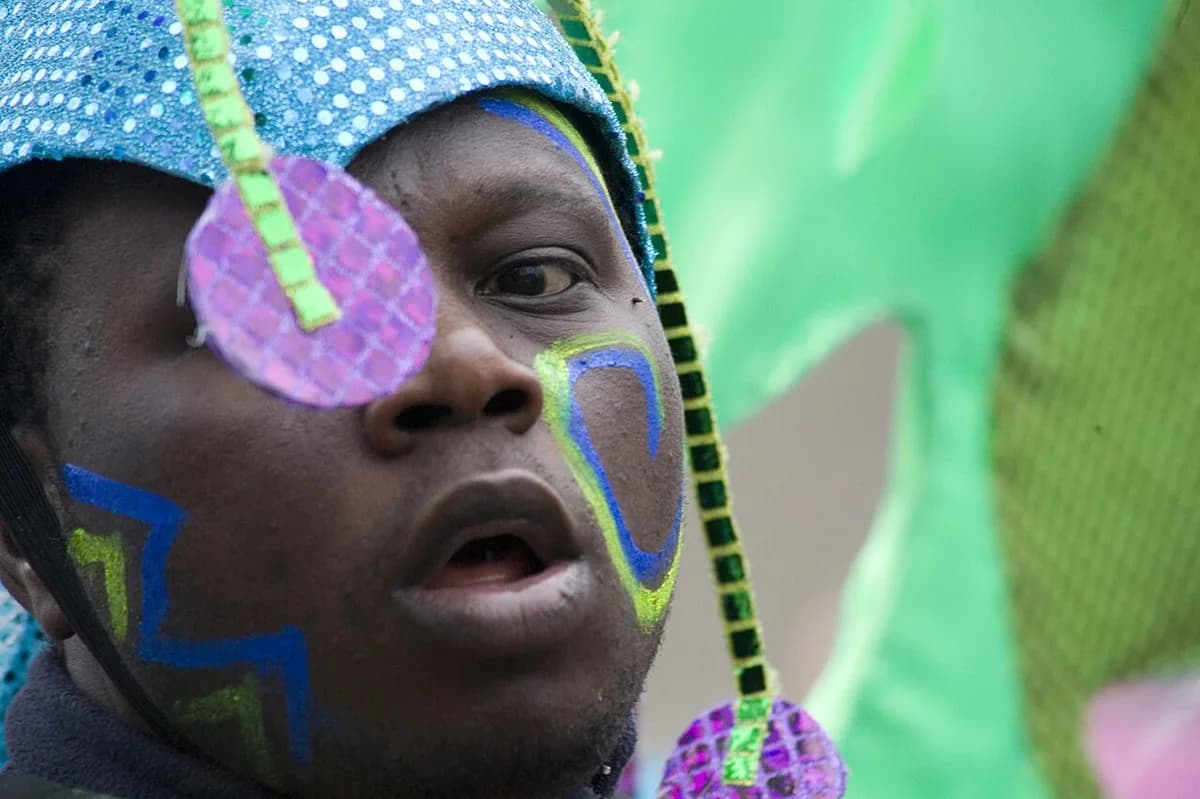
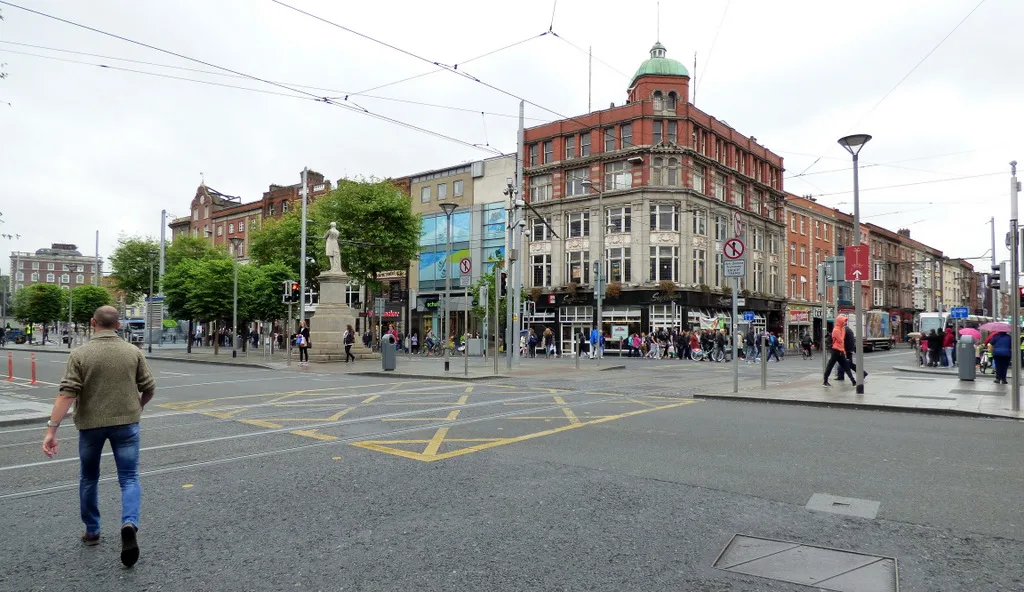
The national parade is the reason to build your trip around 17 March. It runs down O'Connell Street, Dublin's grand central boulevard, past the Spire and the General Post Office, and it is a genuine spectacle — pageant companies with towering theatrical creations, marching bands from across Ireland and, in large numbers, from the United States, giant puppets, dance troupes, and community groups in a procession that lasts well over two hours. It usually steps off around midday, but the crowds gather long before that.
Hundreds of thousands of people line the route, so position is everything. If you want a clear, unobstructed view you need to claim your spot two to three hours before the parade begins — the prime stretches around the GPO and O'Connell Bridge fill first and fastest. Grandstand seats are sold in advance for those who would rather sit and be guaranteed a sightline; everywhere else along the route is free and standing, on a first-come basis. If you are travelling with children or anyone who cannot stand for hours in a crush, the paid grandstand is worth the outlay.
The parade is family-friendly and good-natured, but it is dense, and once you are locked into a good position near the GPO you will not easily move until it is over — so bring what you need and use the bathroom before you settle in. For the full where-to-stand-and-what-to-avoid playbook, including which pubs to skip and where to find the quieter corners of the day, read my companion guide on how to experience St Patrick's Day, which goes far deeper into the on-the-ground tactics than a single section can.
Beyond the Parade: The Festival Quarter
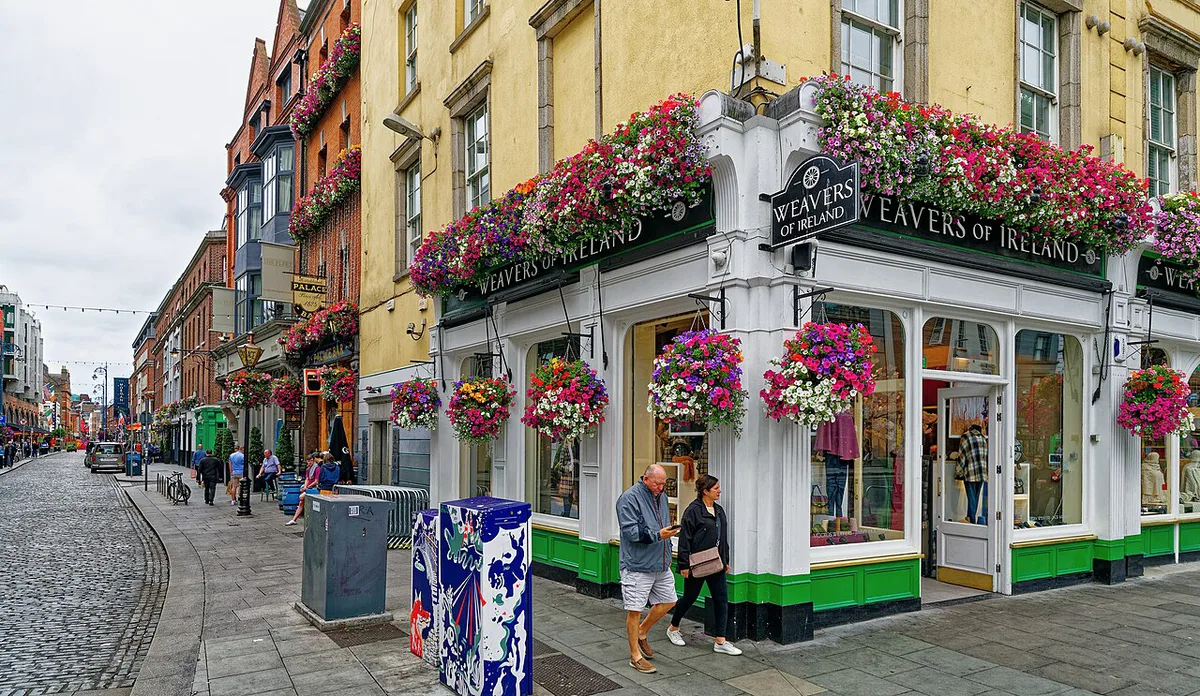
The mistake most first-time visitors make is treating St Patrick's Festival as a single day. In reality the parade is bracketed by a proper festival programme, much of it staged in a dedicated Festival Quarter and at venues around the city centre. Expect outdoor concerts and live music, ceili dancing where anyone can join in, a funfair, after-dark light and projection installations that transform familiar streets, and family workshops that make the festival genuinely good for travelling with children.
Some of this is free and open to anyone who wanders in; some of the marquee concerts and indoor events are ticketed and do sell out, so if there is a specific performance you want to see, book it the moment the line-up drops. The citywide cultural programme is also where you get the more thoughtful, less boozy side of the celebration — traditional-music sessions, Irish-language events, and performances that reflect what the day actually commemorates rather than the party the rest of the world exports.
Spending an evening in the Festival Quarter the night before the parade is, for my money, the best way to feel the celebration build. It is calmer than the 17th, the light installations look their best after dark, and you get a sense of the festival as a piece of the wider calendar of Europe festivals by city rather than just a day out. One practical note that applies to the whole festival period: book any restaurant you care about several days ahead, because walk-in tables near the centre are almost impossible to find around the holiday.
Getting There and Planning Your Trip
Getting to Dublin for the festival is refreshingly simple. Dublin Airport sits around 30 minutes from the city centre, and — importantly — there is no rail link from the airport, so the frequent airport coach services are the standard way in. They run at high frequency and drop you close to the centre, which is exactly where you want to be. Once you are in town, almost everything to do with the festival is walkable: the parade route on O'Connell Street, the Festival Quarter, the pubs, and the main sights all sit within the same compact core.
For any journeys beyond the centre — out to the coastal suburbs or the outer neighbourhoods — a Leap Visitor Card gives you unlimited travel across the buses, the DART commuter rail, and the Luas trams for a set number of days, and it is the simplest option if you plan to range wider. But for the festival itself you will spend most of your time on foot. Around the parade, expect road closures and diverted public transport in the city centre from the morning of 17 March, so plan to walk to your spot rather than rely on a bus getting you close.
- Dublin Airport to city — around 30 minutes by frequent airport coach; no airport rail link
- City centre — compact and walkable; the parade route and Festival Quarter are within an easy stroll
- Leap Visitor Card — unlimited bus, DART, and Luas travel for 1, 3, or 7 days
- 17 March — public holiday, reduced opening hours, city-centre road closures around the parade
Two final planning notes from experience. First, book restaurants days ahead and expect hotel prices to spike around the holiday, so lock in accommodation as early as you can. Second, the pubs immediately around Temple Bar are rammed and overpriced on the day itself — locals drift out to the neighbourhood pubs for a better pint and a seat, and you should too. Plan the parade, plan your food, and dress for the weather, and St Patrick's Festival becomes exactly the day you hoped it would be.
The Full Route: Quieter Spots Beyond the GPO
Here is the detail that took me a few years to learn: the parade is far longer than the O'Connell Street stretch everyone crushes into. In 2026 the route runs roughly 3.2km, stepping off from Parnell Square at the top of the city, coming down O'Connell Street and over O'Connell Bridge, then carrying on through the south side to finish near the Cuffe Street and Kevin Street junction. That whole southern half sees the same floats, the same marching bands, and the same giant pageant creations — just with a fraction of the crowd fighting for a view.
So if the idea of claiming a GPO spot three hours early fills you with dread, walk south instead. The stretches beyond O'Connell Bridge, down toward Dame Street and on to Kevin Street, are noticeably easier to slip into an hour before things start, and you will still see everything roll past. The floats simply arrive a little later than they do at the top of the route. For families or anyone who would rather not be shoulder-to-shoulder, this is the quiet trick that makes the day genuinely enjoyable.
Frequently Asked Questions
What are the St Patrick's Festival 2026 dates?
The national parade takes place on 17 March 2026, Ireland's public holiday for the feast of St Patrick. Around it, the festival typically runs a multi-day programme across roughly 13 to 17 March, with concerts, ceili dancing, a funfair, light installations, and family events. The organisers confirm the exact span and line-up each winter, so check the official site before you book travel.
Where does the St Patrick's Day parade go in Dublin?
The national parade runs down O'Connell Street, Dublin's central boulevard, passing the Spire and the General Post Office. It usually starts around midday and lasts well over two hours, featuring pageant companies, marching bands from across Ireland and the United States, giant puppets, and community groups. The whole route is in the walkable city centre.
Where is the best place to watch the parade?
The stretch of O'Connell Street around the General Post Office and O'Connell Bridge offers the best atmosphere, but it fills first. To get a clear standing view, claim your spot two to three hours before the parade begins. Grandstand seats are sold in advance for anyone who would rather sit with a guaranteed sightline; the rest of the route is free and standing.
Is St Patrick's Day a public holiday in Ireland?
Yes. 17 March is a national public holiday in Ireland, so many shops, offices, and some attractions run reduced hours or close on the day. Restaurants near the parade route book out days in advance and hotel prices rise sharply around the holiday, so reserve accommodation and any meals well ahead of your trip.
How do I get from Dublin Airport to the city for the festival?
Dublin Airport is about 30 minutes from the city centre by frequent airport coach, and there is no rail link from the airport, so the express bus services are the way in. Once in town, the parade route and most festival venues are within walking distance. Expect city-centre road closures and diverted transport on 17 March, so plan to reach your parade spot on foot.
Related: the Dublin festival calendar and my practical playbook on how to experience St Patrick's Day.
St Patrick's Festival is the one event in the Dublin calendar that lives up to every bit of its reputation — but only if you treat it as the multi-day festival it actually is rather than the single day of green the rest of the world imagines. Come a day or two early for the Festival Quarter and the concerts, then give the parade on 17 March the respect it demands: arrive hours ahead, dress for the cold, and settle in near the GPO for the best of it.
Do that, and you will understand why this is the day so many people first think of when they imagine visiting Ireland at all. It is loud, warm, chaotic, and completely, unmistakably Dublin — a city that, more than almost anywhere I know, genuinely means it when it celebrates. Plan well, and 2026 could be the year you finally see St Patrick's Day where it was born.
Free guide: Europe's Festival Calendar
A month-by-month map of Europe's unmissable festivals — with the best dates to visit each and a local tip you won't find in the guidebooks.
You might also like

Continue reading
More guides you'll find useful