Fete de l'Escalade Geneva Guide 2026: The Torchlit December Festival
Geneva Fete de l'Escalade 2026: dates, the 1602 legend, torchlit old-town processions, the chocolate marmite ritual, the Course de l'Escalade race, food, and practical tips.
On this page
Fête de l'Escalade Geneva Guide 2026: The Torchlit December Festival
The first time I saw the Fête de l'Escalade, I had wandered into Geneva's Vieille Ville on a freezing December evening with no idea what was happening. Then the drums started. Out of the dark lanes around St-Pierre Cathedral came hundreds of people in seventeenth-century costume, carrying torches, muskets and pikes, some on horseback, all moving to the beat of fifes and side drums. A herald stopped, unrolled a scroll, and read a proclamation in old French to a silent crowd. I have been to a lot of European festivals, and very few of them feel like this one — genuinely local, genuinely old, and almost untouched by the tourist economy.
Escalade is Geneva's biggest, oldest and most cherished festival, and unlike the summer events on the other side of the country it is unapologetically about a single night in the city's history. It commemorates a failed invasion in 1602, and Genevans have marked it every December for more than four centuries. This guide covers what the festival remembers, what actually happens in the streets, the strange and wonderful chocolate cauldron ritual, the running race that fills the old town beforehand, and how to plan a visit around it in 2026.
Free guide: Europe's Festival Calendar
A month-by-month map of Europe's unmissable festivals — with the best dates to visit each and a local tip you won't find in the guidebooks.
The Night of 1602: What Escalade Remembers
The word escalade means "the scaling" — the act of climbing a wall — and that is exactly what the festival is named for. On the night of 11–12 December 1602, soldiers of the Catholic Duke of Savoy, Charles Emmanuel I, tried to take Protestant Geneva by surprise. They crept up to the city walls in the darkness and raised long ladders painted black so they would not be seen. The plan was to scale the ramparts quietly, open the gates from inside, and seize the independent republic before it could wake.
It did not work. The citizens of Geneva woke, raised the alarm, and fought the attackers off before they could break through. By dawn the assault had collapsed, and Geneva had kept its independence. The victory was so decisive, and so bound up with the city's Protestant identity and self-governing pride, that it became the founding civic memory of the republic. Escalade is not a costume party bolted onto a random date — it is the annual retelling of the night Geneva refused to be conquered, and everyone marching in it knows exactly what they are re-enacting.
If you want to see how differently Swiss cities structure their public calendars, it is worth comparing this single-night commemoration with the spread-out, year-round rhythm of the festivals and events in Zurich — Escalade's intensity comes precisely from being about one thing.
The Torchlit Processions Through the Old Town
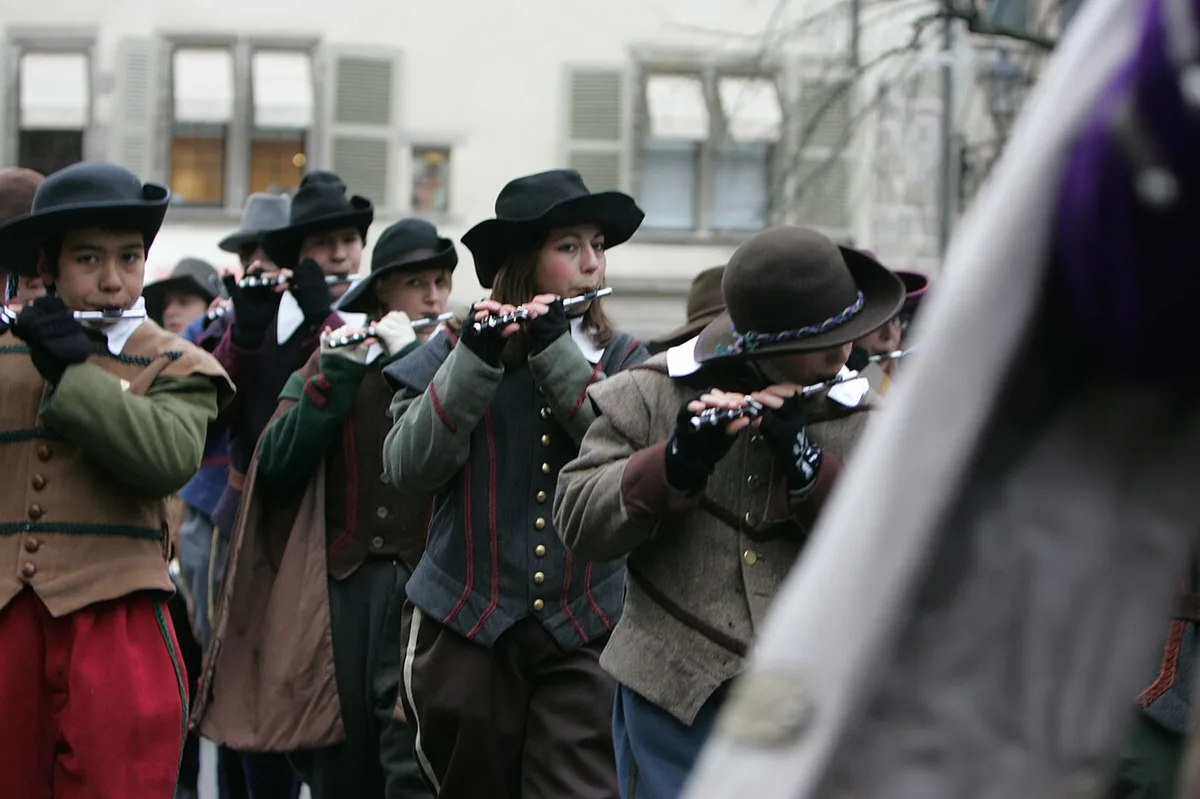
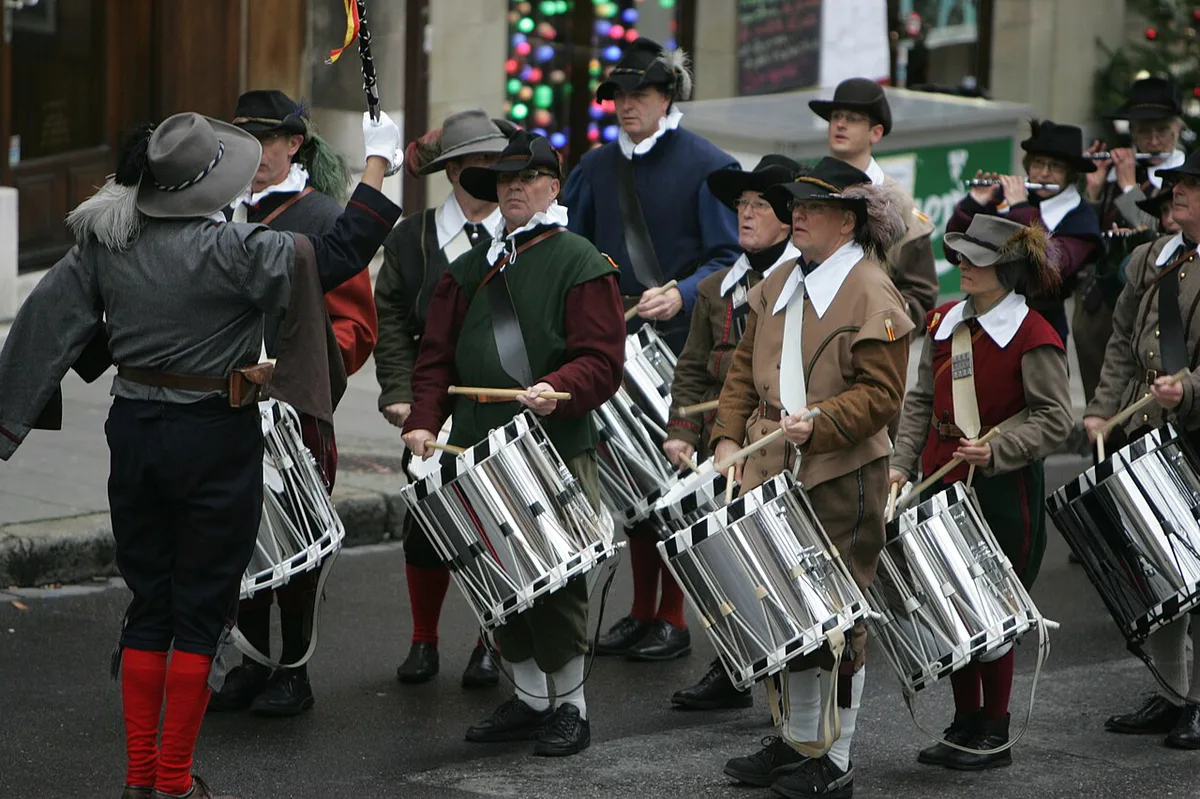
The heart of the festival is the historical procession staged by the Compagnie de 1602, a Geneva association whose members spend the year preparing costumes, drilling and rehearsing. On the main festival days, hundreds of costumed participants march through the narrow streets of the Vieille Ville by torchlight — foot soldiers, musketeers, pikemen, drummers and fifers, mounted riders on horseback, and officials in period dress. Muskets and cannon are fired, filling the stone lanes with smoke and noise, and at set points a herald on horseback halts to read the proclamation of the republic's victory.
There are usually several processions across the festival weekend, but the emotional climax is the Sunday-night torchlit march. As the procession winds up toward St-Pierre Cathedral and through Place du Bourg-de-Four, the combination of firelight on old façades, the smell of gunpowder, and the drums echoing off the walls is genuinely moving — this is the moment worth planning your whole visit around. There are no barriers and no grandstands in most of the old town; you simply stand in the street and let the procession pass, which is part of why it feels so unmediated.
The Marmite: Chocolate, and the Legend of Mère Royaume
No Escalade tradition is more beloved than the marmite. In everyday French a marmite is a cooking cauldron, and during the festival the shops and markets of Geneva fill with chocolate versions — a chocolate cauldron, often wrapped in the red-and-yellow colours of Geneva, filled with marzipan "vegetables" and assorted sweets. You will see them stacked in every chocolatier window in the old town for weeks beforehand, in sizes from a single serving to a centrepiece.
The ritual is the best part. When a family, office or group gathers, the oldest and the youngest person present put their hands together on the chocolate cauldron and smash it open, while everyone recites the line "Ainsi périrent les ennemis de la République!" — "Thus perish the enemies of the Republic!" It is half solemn, half gleeful, and children take it very seriously. The custom ties back to the legend of Mère Royaume, a Geneva woman who, during the 1602 attack, is said to have poured a cauldron of scalding hot vegetable soup down onto a Savoyard soldier climbing below her window — the everyday kitchen pot turned weapon of the republic.
La Course de l'Escalade and the Food of the Festival
Before the historical processions, the old town belongs to runners. La Course de l'Escalade is one of the most popular running events in Switzerland, held in early December, with tens of thousands of participants of every age pounding through the streets of the Vieille Ville and the surrounding centre. There are competitive elite races, but the atmosphere is defined by the mass of amateur runners, families and children — and by the famous fancy-dress event, in which thousands run in full costume, from historical soldiers to whatever the year's meme happens to be. Even if you do not run, spectating the Course is a joy; the route threads past the same landmarks the processions will later use.
Then there is the food, which is inseparable from Escalade. Two things dominate. The first is soupe aux légumes — the vegetable soup that directly echoes Mère Royaume's legendary cauldron, ladled out hot at stalls and gatherings across the old town. The second is vin chaud, the spiced mulled wine that keeps everyone upright through a near-freezing December night. Add the chocolate marmites sold on every corner and you have the full culinary trinity of the festival: soup, mulled wine, chocolate. Eat all three in one evening and you have done Escalade properly.
How to Experience Escalade: Practical Planning for 2026
The best news about Escalade is that it is free and open to everyone. There is no ticket, no wristband and no paid enclosure — the processions pass through public streets, the proclamations are read in the open air, and you simply show up. The one thing you must budget for is warmth: December in Geneva often hovers near freezing, the evening events run late, and you will be standing on stone for a long time. Dress as if for a night outdoors — thermal layers, a proper coat, a hat, and gloves that still let you hold a cup of vin chaud.
| Detail | What to know |
|---|---|
| 2026 dates | Weekend on or around 11–12 December (confirm locally) |
| What it commemorates | The failed 1602 night attack by the Duke of Savoy |
| Key traditions | Chocolate marmite ritual, torchlit processions, Course de l'Escalade |
| Food to try | Soupe aux légumes (vegetable soup) & vin chaud (mulled wine) |
| Where | Vieille Ville (old town), around St-Pierre Cathedral |
| Cost | Free — no tickets or paid enclosures |
Base yourself in or near the Vieille Ville. The old town around St-Pierre Cathedral and Place du Bourg-de-Four is the heart of the festival, and staying within walking distance means you are not fighting for late-night transport after the Sunday procession. Combine your visit with Geneva's Christmas lights and markets, which run through the same period and make the whole centre glow. For a wider plan, the parent Geneva festival calendar covers what else the city stages across the year, and if you are stitching together a longer winter trip, our master festivals and events in Europe by city guide places Escalade alongside December events across the continent.
One honest warning: Geneva is expensive, and the Escalade weekend is a busy one. Hotels in and near the old town fill early and prices rise, so book accommodation well in advance — two months ahead is not too soon for a December weekend. If central Geneva is beyond budget, the city's excellent trams and trains make it easy to stay slightly out and come in for the evenings.
Beyond the Parade: The Daytime Program in the Old Town
What I wish someone had told me on my first visit is that Escalade is not just the Sunday-night parade — the whole weekend fills the Vieille Ville with a living seventeenth-century world, and the daytime is when you can actually get close to it. From the Friday-evening solemn commemoration onward, the Compagnie de 1602 sets up encampments and bivouacs in the old-town squares, and if you wander through on Saturday you will find men-at-arms drilling, blacksmiths working at forges, pikemen and musketeers demonstrating their weapons, and craftspeople showing period trades. Dotted around are stalls giving out the traditional vegetable soup and vin chaud — often free, in tribute to Mère Royaume — alongside patriotic songs, period speeches and readings, and open visits to historic venues. In 2026 these daytime activities run right through the weekend, and because there is no stage and no barrier, you can talk to the re-enactors, watch a forge up close, and warm up on soup between demonstrations. Arrive in daylight and you get two festivals for the price of one.
Frequently Asked Questions
When is the Fête de l'Escalade in Geneva in 2026?
The Fête de l'Escalade commemorates the night of 11–12 December 1602, and the 2026 celebrations fall on the weekend on or around 11–12 December. The main historical procession is usually held on the Saturday and Sunday closest to 12 December, with the torchlit Sunday-night march as the emotional climax. Exact times are confirmed locally each autumn, so check the Compagnie de 1602 programme before you travel.
What does the Escalade festival commemorate?
It commemorates the night of 11–12 December 1602, when soldiers of the Catholic Duke of Savoy tried to take Protestant Geneva by surprise, scaling the city walls with black-painted ladders. The word escalade means "the scaling." Geneva's citizens woke, repelled the attack, and secured the republic's independence — an event that became the city's founding civic memory.
What is the chocolate marmite and how does the ritual work?
The marmite is a chocolate cauldron filled with marzipan vegetables and sweets, wrapped in Geneva's colours and sold across the old town during the festival. The oldest and youngest person present smash it open together while everyone recites "Ainsi périrent les ennemis de la République!" ("Thus perish the enemies of the Republic!"). The custom honours the legend of Mère Royaume, who is said to have poured a cauldron of hot vegetable soup on an attacking soldier in 1602.
What is La Course de l'Escalade?
La Course de l'Escalade is a hugely popular running race held through the streets of Geneva's old town in early December, with tens of thousands of runners of all ages. It includes competitive elite races, mass amateur runs, family events and a famous fancy-dress race in which thousands run in costume. It takes place shortly before the main historical processions of the festival weekend.
Is the Escalade festival free, and what should I know before going?
Yes — the Fête de l'Escalade is free and open to all, with no tickets. The processions pass through the public streets of the Vieille Ville around St-Pierre Cathedral and Place du Bourg-de-Four. Dress very warmly, as December in Geneva is often near freezing and events run late into the evening. Geneva is an expensive city, so book accommodation early, and combine your visit with the city's Christmas lights and markets.
Related: Festivals and Events in Geneva, Festivals and Events in Zurich.
Of all the festivals I have written about in Switzerland, Escalade is the one I most want first-time visitors to catch, precisely because it has resisted becoming a tourist product. There is no headline act and nothing to buy your way into; there is a city retelling the night it saved itself, in the actual streets where it happened, by firelight, in the cold. Stand in the Vieille Ville on the Sunday evening as the Compagnie de 1602 marches past and you understand Geneva in a way no museum will give you.
Plan simply: arrive with warm clothes and an empty stomach, catch the Course de l'Escalade earlier in the weekend if the dates line up, eat your soup and drink your vin chaud, smash a chocolate marmite with someone older and someone younger, and hold your spot near St-Pierre for the torchlit procession. Do that, and you will have experienced the oldest and most cherished festival in the city exactly as Genevans do — for free, in December, and on their own terms.
Free guide: Europe's Festival Calendar
A month-by-month map of Europe's unmissable festivals — with the best dates to visit each and a local tip you won't find in the guidebooks.
You might also like
Continue reading
More guides you'll find useful