Galway International Arts Festival Guide 2026
Galway International Arts Festival 2026 guide: mid-July dates, the Macnas parade, Big Top concerts, theatre premieres, ticketing, and where to stay.
On this page
Galway International Arts Festival Guide 2026
Of all the festivals I have covered across Ireland, none takes over its host city quite like the Galway International Arts Festival. For two weeks every July, Galway stops being a place you pass through on the way to the Wild Atlantic Way and becomes the event itself — theatre premieres in converted warehouses, an enormous concert tent pitched by the river, and a night-time street spectacle that empties every pub for an hour so the whole city can watch giant puppets pass.
I first arrived expecting a polite regional arts programme and found something closer to a controlled takeover — the Latin Quarter strung with festival flags, a stage on Eyre Square, and a Big Top the size of a small stadium down by the docks. GIAF is one of Ireland's largest and most acclaimed multidisciplinary arts festivals, and it wears that reputation lightly: the free street events matter as much as the ticketed premieres. This guide covers the 2026 edition end to end — dates, the Macnas parade, the Big Top concerts, the theatre and visual-art programme, and the practical business of tickets, accommodation, and getting to a city that fills to bursting the moment the programme drops.
Free guide: Europe's Festival Calendar
A month-by-month map of Europe's unmissable festivals — with the best dates to visit each and a local tip you won't find in the guidebooks.
What Is the Galway International Arts Festival
The Galway International Arts Festival was founded in 1978 and has grown into one of Ireland's biggest and most acclaimed multidisciplinary arts events. Multidisciplinary is the operative word: in a single day you can move from a large-scale theatre commission to a visual-art exhibition, catch a lunchtime talk, and end the night at a headline concert under canvas. It is not a music festival with some art bolted on — it genuinely spans the whole spectrum, and the programme is curated so the disciplines reinforce each other rather than compete.
The festival's other defining trait is how thoroughly it inhabits Galway itself. Venues are scattered across the walkable city centre — the medieval Latin Quarter, Eyre Square, the theatres and galleries in between — plus the purpose-built Big Top down by the docks. Because Galway is compact, you experience the festival on foot, drifting between a gallery, a street performance, and a theatre without ever needing transport, which is why GIAF feels less like an event you attend and more like a city you temporarily live in. For the full picture of what else the city stages through the year, the Galway festival calendar sets GIAF alongside its neighbours.
Galway Arts Festival 2026 Dates
The 2026 edition runs in mid-to-late July, across roughly two weeks — my current read is approximately 13–26 July 2026, but treat that as indicative rather than gospel. GIAF confirms exact dates and its full programme in the spring, and the festival's official site at giaf.ie is the only source I would plan hard bookings around. If you are reading this before the spring announcement, pencil in the dates and check back once the programme lands.
| Detail | What to know |
|---|---|
| 2026 dates | Roughly 13–26 July 2026, across about two weeks; confirm exact dates on giaf.ie once the spring programme drops. |
| Macnas parade | Free night-time street spectacle of giant puppets and fire, typically a specific evening late in the run; arrive at least an hour early for a spot. |
| Big Top concerts | Major Irish and international acts in a purpose-built tent by the docks, staggered across almost every night; headliners sell out within hours. |
| Theatre & visual art | Ambitious premieres and commissions staged before touring to Dublin, London, or Edinburgh, plus large-scale exhibitions in unconventional venues (often free or low-cost). |
| Tickets & booking | Programme is released in spring; set a reminder for the on-sale date and book priority shows within the first hour. |
| Where | Galway city centre, Ireland — every venue, including the Big Top, sits within a 15-to-20-minute walk. |
| Getting there | Roughly 2.5 hours from Dublin by regular train or coach; the city itself is covered entirely on foot. |
Two weeks is longer than most people assume, and it changes how you plan. The marquee events are spread deliberately across the fortnight — the Macnas parade typically falls on a specific evening late in the run, while Big Top concerts are staggered across almost every night — so deciding which two or three unmissable events anchor your trip and booking around those dates works far better than turning up on a random festival day and hoping.
July is peak season on the west coast of Ireland, so the festival dates collide with the busiest travel window of the year. If you are building GIAF into a wider Irish trip, it slots naturally alongside Dublin's summer programme — the festivals and events in Dublin guide covers what is on at the same time on the east coast, about two and a half hours away by road or rail.
The Macnas Parade: Galway's Signature Spectacle
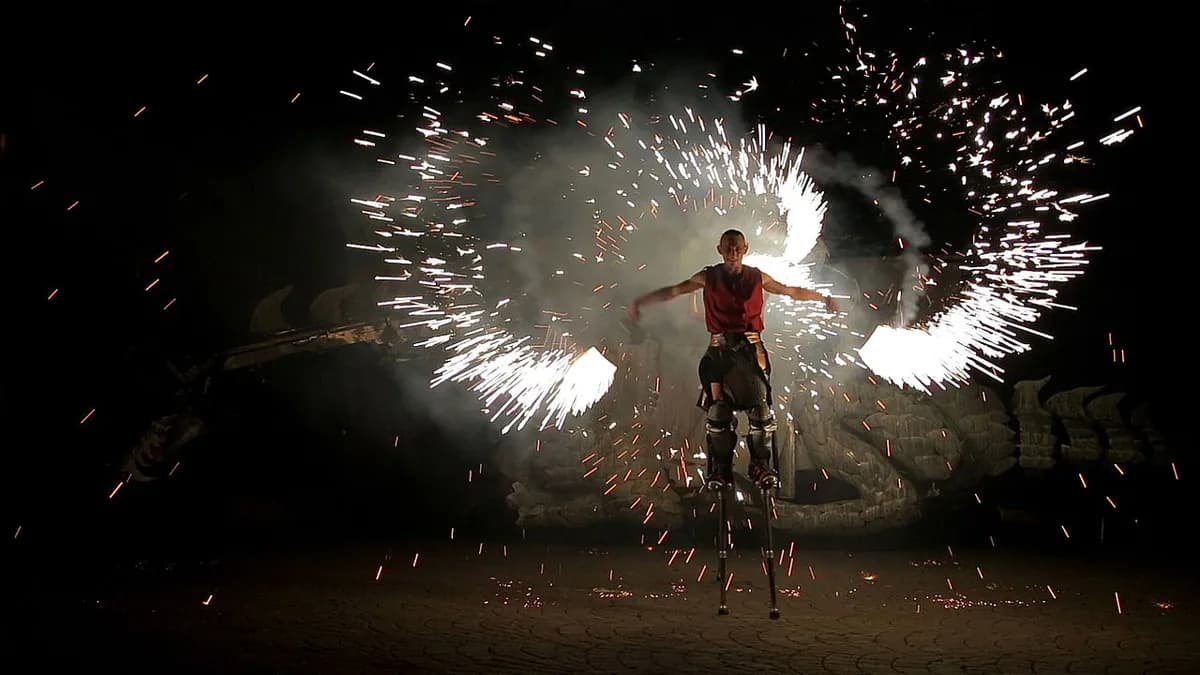
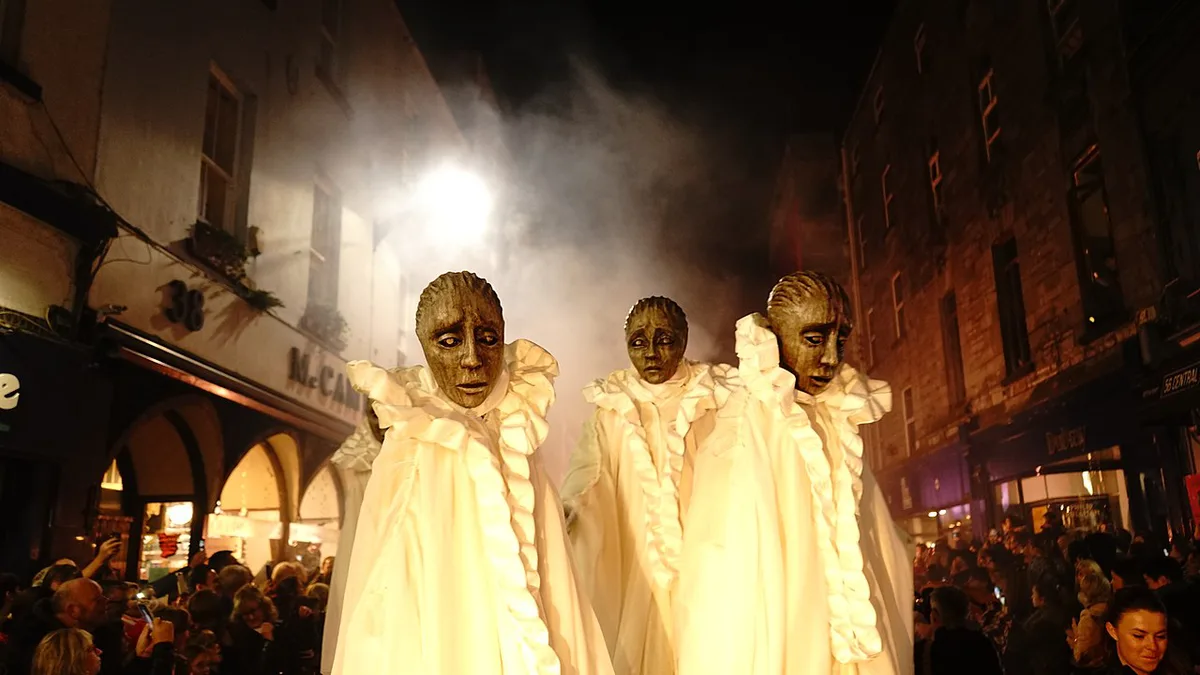
If you see one thing at GIAF, see the Macnas parade. Macnas is Galway's world-renowned spectacle-theatre company, and its festival parade is a huge, theatrical night-time procession through the city streets — giant puppets, towering figures, fire, drumming, and a loose narrative that unfolds as the whole thing moves. It is genuinely unlike a conventional carnival parade: darker, stranger, more like watching a piece of outdoor theatre that happens to be the size of a building. It draws tens of thousands of spectators, and for the hour it runs, central Galway belongs to it entirely.
The parade is free — no ticket, no enclosure, no reserved viewing, you simply find a spot on the route and wait. Because the crowd is so large, position matters more than for almost any other festival event. I would arrive at least an hour early and stake out a place near a corner or a wider stretch of street, where the giant figures have room to turn and perform rather than simply file past. Further along the route, away from the family crowds toward the front, you can often get a clearer sightline.
Macnas builds a new production each year around a chosen theme, so no two parades are the same. The company keeps the concept under wraps until close to the festival, which is part of the appeal — you turn up not quite knowing what is coming down the street toward you. It is the single most photographed moment of the festival and, for many locals, the emotional centre of the whole two weeks.
Big Top Concerts, Theatre, and Visual Art
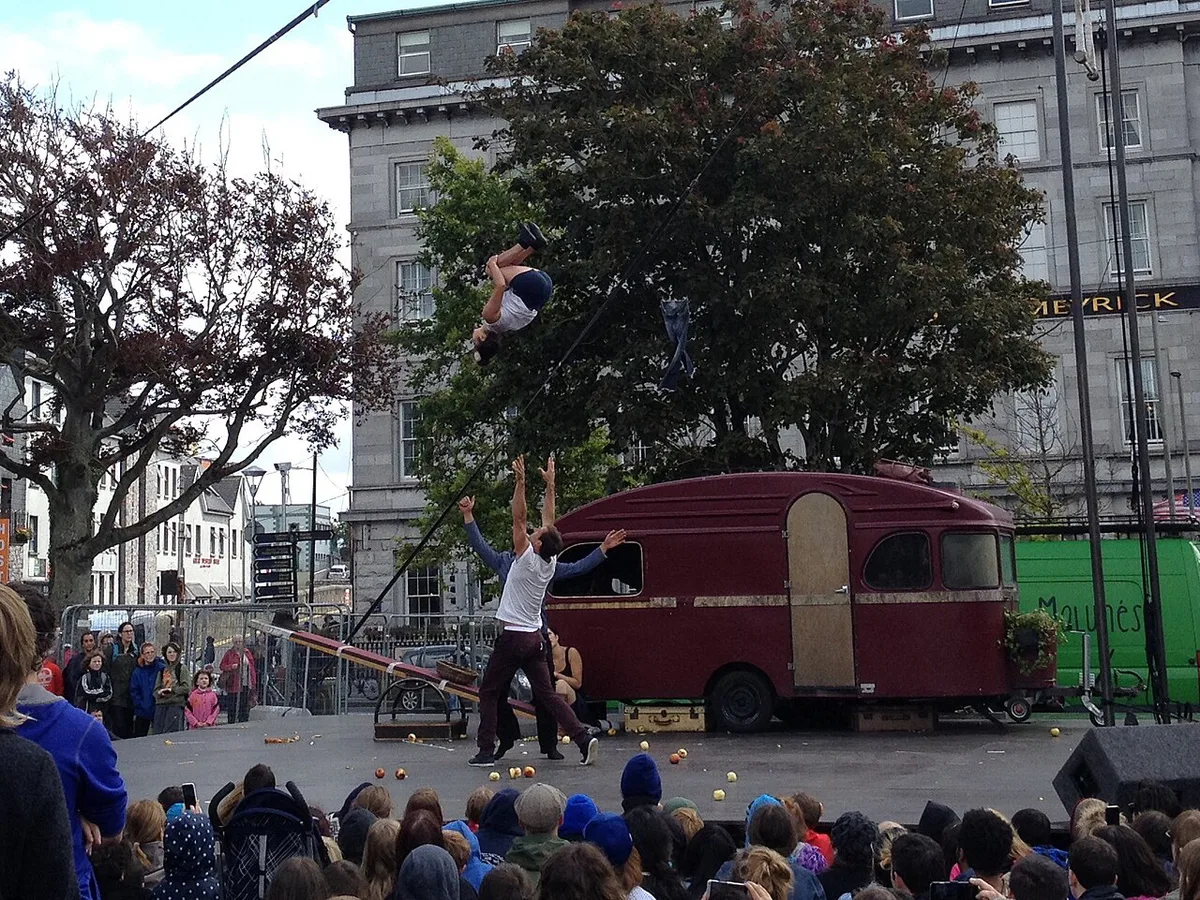
The Big Top is the festival's beating musical heart — a purpose-built concert tent pitched near the docks that hosts major Irish and international acts across almost every night of the run. The tent format gives concerts an intimacy that a stadium cannot, with the crowd close to the stage and the canvas trapping the sound and the atmosphere. Big Top shows are the fastest-selling tickets of the festival; headline nights routinely sell out within hours of going on sale, so this is the part of the programme to book the instant it is released.
Away from the music, the theatre programme is where GIAF earns its international reputation — ambitious commissions and premieres staged across the city's theatres and repurposed spaces, the kind of work that later tours to Dublin, London, or Edinburgh but is seen in Galway first. Alongside it runs a strand of large-scale visual-art exhibitions, often in unconventional venues, and a talks programme (the festival's First Thought discussions) where writers and artists unpack the ideas behind the work. Many exhibitions and talks are free or low-cost, an easy way to fill the daytime hours between ticketed evening events.
My advice is to balance your schedule across the disciplines rather than loading up on concerts alone. A day that pairs a morning exhibition, an afternoon talk, an evening theatre premiere, and a late Big Top set is GIAF at its best, and it is only possible because everything sits within a short walk. If you want a lighter, food-led counterpoint later in the year, the city's autumn Galway Oyster Festival dates offer a very different but equally quintessential Galway experience.
Practical Planning: Tickets, Getting There, and Where to Stay
Galway is compact and walkable, which is the single most useful fact for planning a festival trip. Nearly every venue — the theatres, galleries, Eyre Square, the Latin Quarter, and the Big Top by the docks — sits within a 15-to-20-minute walk of the others, so you can build a dense schedule without factoring in transport at all. The city has no need for a festival shuttle; your own two feet cover it.
Accommodation is the part that genuinely requires forward planning. Galway is small, July is peak season, and the festival fills the city to capacity — hotels and guesthouses near the centre book out months ahead and prices climb steeply for the fortnight. Secure a room the moment your dates are confirmed, ideally before the programme is even announced. Staying within the medieval core keeps you inside walking distance of everything and means you never need to worry about getting back after a late Big Top show.
- Book accommodation months in advance — the city fills completely during the festival, and central rooms go first
- Buy tickets the moment the programme is released in spring; Big Top headliners and marquee theatre premieres sell out within hours
- Galway sits roughly 2.5 hours from Dublin by road or rail — an easy add-on to an east-coast trip, and served by regular trains and coaches
- Build your schedule on foot: everything is within a short walk, so plan by time of day rather than by location
- Keep the free strand in view — the Macnas parade and street events cost nothing and are often the most memorable part of the fortnight
For travellers assembling a wider European festival summer, GIAF is one of the strongest July anchors on the continent — the festivals and events in Europe by city guide places it alongside the other city celebrations worth planning a trip around.
The 2026 Programme Highlights to Book
When GIAF released its 49th-edition programme, the Heineken Big Top lineup was the part I circled first — 2026 brings the Patti Smith Quartet, The Flaming Lips with Mercury Rev, The Saw Doctors, James, Bell X1, and a special double-bill pairing Emeli Sandé with James Morrison, all down at Nimmo's Pier. Away from the music, the shows I would prioritise are Druid's reworking of Boucicault's The Shaughraun under Garry Hynes, NoFit State's circus spectacular Carnation staged in their own fully-seated Big Top, and Stephanie Lake's Colossus, a contemporary-dance piece that moves fifty performers as a single hypnotic mass. For the free strand, watch for Compagnie PPP's The Whale Street — a giant whale and ship roaming the medieval centre — and Sean Henry's Presence, monumental sculptures planted in Eyre Square and the Claddagh. These are the anchor events I would build a 2026 trip around: book the Big Top and Druid nights the hour they go on sale, and let the street work find you.
Frequently Asked Questions
When is the Galway International Arts Festival 2026?
The 2026 Galway International Arts Festival runs for roughly two weeks in mid-to-late July, indicatively around 13–26 July 2026. The festival confirms its exact dates and full programme in the spring, so check the official site at giaf.ie before making firm bookings. July is peak season in the west of Ireland, so plan accommodation early.
What is the Macnas parade?
The Macnas parade is GIAF's signature event — a huge, theatrical night-time street procession created by Galway's spectacle-theatre company Macnas. It features giant puppets, towering figures, fire, and drumming, and draws tens of thousands of spectators through the city centre. It is completely free to watch, with no ticket required. Arrive at least an hour early to secure a good position on the route.
Are Galway International Arts Festival events free?
Some are and some are not. The Macnas parade and much of the street programming are free, while the Big Top concerts, theatre premieres, and many exhibitions are ticketed. Ticketed events, especially the Big Top headliners, sell out fast once the spring programme is released, so book as soon as tickets go on sale.
How do I get to Galway for the festival?
Galway sits roughly 2.5 hours from Dublin and is served by regular trains and coaches, making it an easy add-on to an east-coast trip. The city itself is compact and walkable, so once you arrive you can reach nearly every festival venue — including the Big Top by the docks — on foot within 15 to 20 minutes.
How far in advance should I book accommodation?
As early as possible — ideally months ahead. Galway is a small city and the festival fills it to capacity during peak July, so central hotels and guesthouses book out well in advance and prices rise sharply for the festival fortnight. Securing a room in the medieval core keeps you within walking distance of every venue and late-night event.
Related: Galway Oyster Festival: Dates and Guide.
The Galway International Arts Festival rewards visitors who plan around a few anchor events and then let the city carry them the rest of the way. Lock in the dates once GIAF confirms them in spring, book the Big Top and theatre tickets the hour they go on sale, and build the rest of your fortnight on foot between galleries, talks, and street performances. The free Macnas parade needs no booking at all — only an early arrival and a good spot on the route.
More than any single show, what stays with you is the way GIAF dissolves the line between festival and city. For two weeks the medieval lanes, the square, and the docks all belong to the programme, and you experience it not as an audience member arriving and leaving but as someone temporarily living inside a city-wide work of art. Plan your July around that, and Galway gives you one of the finest festival experiences in Europe in 2026.
Free guide: Europe's Festival Calendar
A month-by-month map of Europe's unmissable festivals — with the best dates to visit each and a local tip you won't find in the guidebooks.
You might also like

Continue reading
More guides you'll find useful