How to Experience St Patrick's Day in Dublin
Learn how to experience St Patricks Day in Dublin — from parade viewing spots and festival events to the St Patrick trail across Ireland. Last updated June 2026.
On this page
How to Experience St Patrick's Day: Your Practical Guide
St Patrick's Day falls on March 17 each year and is Ireland's biggest national celebration. Dublin hosts the largest events, but the real depth of the occasion stretches across the whole island — from the saint's grave in County Down to the pilgrimage peak of Croagh Patrick in Mayo. This guide covers how to experience St Patrick's Day from the Grand Parade to the ancient pilgrimage trail, with practical timing, costs, and crowd advice. Last updated June 2026.
Quick Answer: The best default way to experience St Patrick's Day is to attend Dublin's St Patrick's Festival — the Grand Parade typically runs on March 17 and entry is free along most of the route. Visitors who want a quieter alternative can follow the Saint Patrick trail in County Down, where Down Cathedral and the surrounding sites draw smaller, more reflective crowds. Pilgrims seeking the most immersive experience make the barefoot ascent of Croagh Patrick in Mayo, a roughly 3–4 hour round trip.
Free guide: Europe's Festival Calendar
A month-by-month map of Europe's unmissable festivals — with the best dates to visit each and a local tip you won't find in the guidebooks.
How to Experience St Patrick's Day: Step by Step
Planning ahead is essential because Dublin's accommodation sells out faster than almost any other European festival city in March. The steps below cover the full journey from booking to the parade itself, with realistic costs and timing at each stage. Adjust the route depending on whether you want the city buzz or the quieter pilgrimage trail — both are valid and very different experiences.
Most visitors underestimate how early the city centre locks down on parade day — road closures begin around 8 am, well before the parade starts at noon. Arriving near the O'Connell Street end of the route by 10 am usually secures a clear sightline without a barrier crush. Grafton Street and Dame Street also offer strong viewing positions with easier exit routes afterward.
- Step 1: Book accommodation at least 6 months ahead
- Dublin hotels for the St Patrick's weekend often sell out by September of the previous year.
- Expect to pay €150–€300 / ~$165–$330 per night in city-centre hotels during festival week.
- Staying in a suburb like Drumcondra or Rathmines and taking the Luas tram saves €50–€80 per night.
- Step 2: Download the official festival programme
- The St Patrick's Festival Dublin releases its full programme at stpatricksfestival.ie usually in late January or February.
- Free outdoor events require no tickets, but some ticketed evening shows sell out within hours of going live.
- Checking the programme early lets you book indoor theatre and spectacle events before they close.
- Step 3: Plan your parade route and viewing spot
- The Grand Parade follows a roughly 2 km route through Dublin city centre, traditionally ending near St Patrick's Cathedral.
- The parade usually steps off at noon and takes about 2 hours to pass any fixed viewing point.
- Arriving by 10 am near O'Connell Street gives you the best barrier-front position without a multi-hour wait.
- Step 4: Arrange transport before road closures hit
- Dublin Bus and Luas operate on modified timetables on March 17 — check transports.ie the week before for live updates.
- Road closures around the city centre typically run from 7 am to 4 pm on parade day.
- Taxis and rideshare apps struggle to reach the city core during peak hours; plan to walk the last kilometre.
- Step 5: Choose your evening pub strategy early
- Popular Temple Bar pubs fill up by midday on March 17 — book a table for dinner service if you want a guaranteed seat.
- Cover charges of €5–€15 / ~$5.50–$16.50 apply at many live-music venues on parade evening.
- Side-street pubs off Dame Street and Camden Street are often less crowded and just as lively as the tourist-facing spots.
- Step 6: Add a day trip to the Saint Patrick trail sites
- Down Cathedral in Downpatrick is about 2 hours by bus from Dublin's Busáras station, costing roughly €15–€20 / ~$16–$22 return.
- Saul Church, two miles from Downpatrick, can be reached by taxi from the cathedral for around €10 / ~$11 each way.
- Combining Down Cathedral, Saul Church, and the Saint Patrick Centre in one day is very manageable.
What Happens at the St Patrick's Festival Dublin
Dublin's St Patrick's Festival typically runs for four to five days around March 17, with the Grand Parade as the centrepiece. The festival includes street spectacles, open-air concerts, historical talks, céilí dancing, and a dedicated family zone in Merrion Square. Most outdoor events across the festival are free to attend — ticketed shows tend to be evening indoor performances.
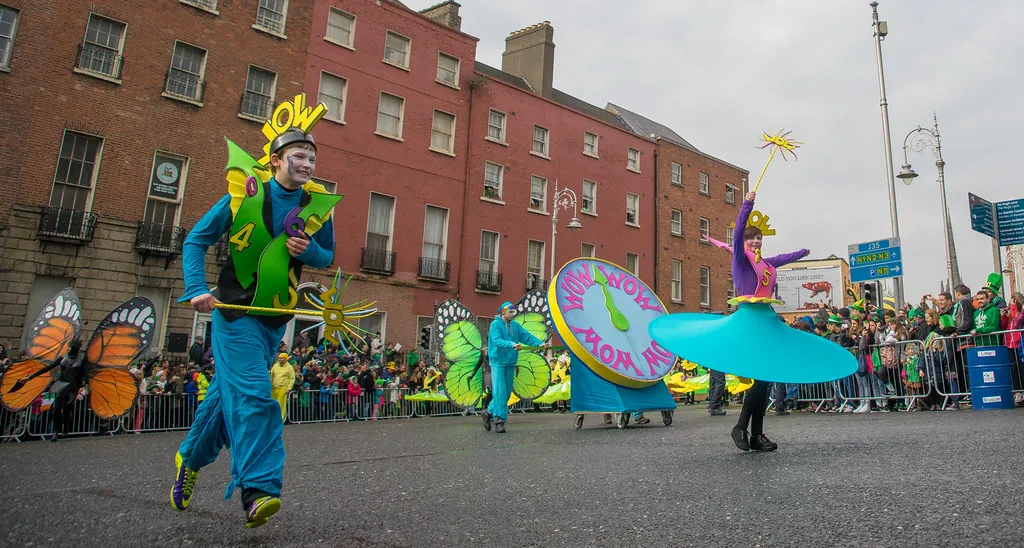
The Grand Parade draws over 500,000 spectators annually, making crowd management the single biggest practical challenge for visitors. Spectacle zones along the route feature theatrical floats, international marching bands, and traditional Irish music groups — the scale is genuinely impressive. For context among Europe's best cultural festivals, the Dublin parade ranks among the continent's top three free public events by attendance.
The Tradfest fringe festival runs concurrently, offering ticketed and free traditional Irish music sessions in venues across the city. City libraries and museums often open extended hours during festival week, offering free exhibitions on Ireland's heritage. Checking the official programme ahead of time is the only reliable way to catch limited-capacity events before they sell out.
Follow St Patrick's Footsteps Across Ireland
Ireland's Saint Patrick trail connects the historic sites linked to the patron saint, stretching from County Down in Northern Ireland to County Mayo on the west coast. This route is less crowded than central Dublin on March 17 itself, and many visitors find it a more meaningful way to mark the occasion. The key sites each require at least half a day, so most travellers spread the trail across a two- or three-day road trip.
Saul Church, two miles outside Downpatrick, is a replica of St Patrick's first church in Ireland built on the original site where he landed in 432 AD. Admission to the church grounds is free, and the surrounding hillside offers sweeping views across County Down. Down Cathedral, where St Patrick is believed to be buried alongside St Brigid and St Columcille, sits a short walk away in Downpatrick town centre. The Saint Patrick Centre in Downpatrick — a dedicated exhibition space — covers the saint's life, his writings, and the spread of early Christianity across Ireland. Entry costs around €5 / ~$5.50 and takes about 90 minutes; it works well as the first stop before walking to the cathedral.
Slemish Mountain in County Antrim, northeast of Belfast, is where the young Patrick is said to have worked as a shepherd slave before escaping. The steep but short ascent (about 45 minutes return) is free, and the summit gives panoramic views of the Antrim plateau. This site draws large crowds on the morning of March 17 itself for an open-air service — one of the few outdoor religious gatherings on the day outside Dublin.
Croagh Patrick in County Mayo is Ireland's most famous pilgrimage mountain, rising 764 metres above Clew Bay. The ascent takes roughly 3–4 hours return and is free to walk — many pilgrims undertake it barefoot, especially on Reek Sunday each July. The Westport Road trailhead is about 3 hours by car from Dublin or reachable by Bus Éireann from Westport town.
Lough Derg in County Donegal, traditionally called St Patrick's Purgatory, has been a place of pilgrimage for over 1,500 years. Three-day penitential retreats on Station Island run from June to August and require advance booking through the official site. The lake-island setting is remote and moving — a very different experience from the Dublin festival, and best suited to visitors wanting genuine spiritual depth.
Armagh: The Spiritual Capital Most Visitors Miss
Armagh in Northern Ireland has a stronger claim on St Patrick's legacy than Dublin does, yet it draws a fraction of the March 17 crowd. The city holds two cathedrals both dedicated to the saint: the Catholic St Patrick's Cathedral on Cathedral Road, built on the hill where Patrick founded his principal church in 445 AD, and the Church of Ireland St Patrick's Cathedral on the opposite hill, which occupies the site of the original fifth-century stone church. Having both denominations claim the same patron on the same hilltops facing each other across a small city centre is a detail that no other place in Ireland can match.

The Home of St Patrick Festival runs in Armagh each year on and around March 17, with a programme of free outdoor events including street theatre, traditional music, and cultural walks. It is smaller than Dublin's festival by orders of magnitude — which is precisely its appeal. Families and visitors who want to see real community celebration without the 500,000-person crowd regularly name Armagh as the most rewarding St Patrick's Day they have experienced.
Getting to Armagh from Dublin takes roughly 90 minutes by car or about 2.5 hours by Translink bus via Newry. There is no train station in Armagh city itself, so a car or bus is the only option. The cathedrals charge no admission; the Church of Ireland cathedral does request a small donation. For those combining Armagh with the County Down sites, Downpatrick is about 40 minutes east by car — a natural one-night base for both.
What to Eat, Drink, and Wear on St Patrick's Day
The dress code is straightforward: green is the universal choice, with shamrocks — real or plastic — worn pinned to jackets or hats. Orange clothing is considered politically sensitive in an Irish context due to its association with Unionism, so most visitors stick to green, white, or gold. Temperatures in Dublin on March 17 average 7–10°C / 44–50°F, so a waterproof layer over your green gear is strongly recommended — rain is common.
Traditional Irish food worth trying during the festival includes soda bread, boxty potato pancakes, lamb and Guinness stew, and colcannon. Street food stalls line the parade route and surrounding squares, typically open from 10 am until early evening. For a comparable food-centred festival experience in Europe, Bastille Day in Paris offers a useful contrast in how national holidays blend cuisine with celebration.
Pub culture is central to St Patrick's Day — traditional live sessions featuring fiddle, bodhrán, and flute run throughout the day in most city pubs. Guinness is the drink of choice and pubs typically sell significantly more pints on March 17 than any other day of the year. Booking a pub dinner table by noon on parade day is advised — walk-ins to popular spots become nearly impossible after 3 pm.
- What to bring to St Patrick's Day in Dublin
- Pack a waterproof jacket — March in Dublin is cold and rain is likely at any point.
- Wear comfortable walking shoes suitable for standing on pavement for two or more hours.
- Bring cash for street food stalls, many of which do not accept cards.
- Download the festival app or save the parade route map offline before road closures disrupt mobile data.
- Carry a small backpack so your hands are free during the parade crowd.
- Book pub dinner reservations at least two weeks ahead to avoid missing out.
- Bring a small Irish flag or shamrock pin — it is the fastest way to blend in with the local crowd.
Common Problems on St Patrick's Day (and How to Fix Them)
St Patrick's Day in Dublin is one of Europe's most attended free events, which means predictable crowd and logistics problems. Most issues are avoidable with advance planning — the ones that catch visitors by surprise are almost always last-minute decisions. The troubleshooting list below covers the eight most common situations reported by first-time festival visitors.
Beyond the city problems, the wider Ireland trail sites each have practical quirks worth knowing before you set out. Down Cathedral closes on certain bank holidays, Lough Derg retreats require advance booking, and Croagh Patrick can be dangerous in wet or icy conditions. Checking each site's website in the week before your visit is the only reliable way to confirm current opening hours and access.
For context on how crowd logistics compare across other major European national-day festivals, the King's Day guide for Amsterdam covers a similarly dense free-attendance event with comparable transport and crowd management challenges. European visitors comparing major cultural celebrations may also find the Highland Games experience guide useful for a related Celtic-heritage outdoor event. Both give useful benchmarks for planning a national-day festival visit in Europe.
- Troubleshooting: common St Patrick's Day problems
- No hotel rooms left: book Airbnbs in surrounding suburbs and use the Luas tram into the city.
- Parade road closures blocking your route: allow 90 minutes extra walking time and cross the Liffey via Ha'penny Bridge.
- Pub too crowded to enter: walk one block off Temple Bar — side streets have locals pubs with real seats.
- Cold or wet weather ruining parade viewing: the parade still runs in rain, so a poncho is more useful than an umbrella in a crowd.
- Phone signal lost in crowd: save all maps and tickets offline before leaving your accommodation.
- Pickpocket risk in dense sections: keep cards and cash in a front zip pocket, not a back pocket or open bag.
- Missed the parade start: the floats take 90 minutes to two hours to pass, so joining mid-parade still gives a full viewing experience.
Frequently Asked Questions
Is St Patrick's Day free to attend in Dublin?
Yes — the Grand Parade and most outdoor festival events are free to watch and attend. Some ticketed evening shows and indoor performances charge €10–€30 / ~$11–$33. Check the official St Patrick's Festival website for the full programme before booking any paid events.
What is the best spot to watch the Dublin parade?
O'Connell Street near the GPO is the most popular viewing area and offers a wide sightline. Arriving by 10 am secures a good position for the noon start. Dame Street and the area near Christ Church Cathedral are less congested alternatives with strong views.
What colour should you not wear on St Patrick's Day?
Orange carries Unionist associations in Ireland and is generally avoided on March 17. Green is the universal choice, often combined with white and gold. Most visitors also add a shamrock pin — real or fabric — to complete the look.
Can you visit Down Cathedral on St Patrick's Day?
Down Cathedral in Downpatrick, where St Patrick is believed to be buried, typically holds special services on March 17. Visitor access may be limited during services, so checking the cathedral's schedule in advance is recommended. The site is about 2 hours from Dublin by bus.
How far in advance should you book for St Patrick's Day Dublin?
Dublin hotels for the St Patrick's weekend regularly sell out 6–9 months ahead — by autumn of the preceding year for central properties. Flights also rise sharply in price. Booking by September for the following March is the safest timeline for city-centre stays.
Related: Dublin's festival calendar.
St Patrick's Day in Dublin rewards visitors who plan early and arrive without assumptions about easy pub access or last-minute rooms. The Grand Parade is genuinely spectacular and completely free — but the deeper experience comes from tracing the saint's actual footsteps at Down Cathedral, Saul Church, and Croagh Patrick. Whether you choose the city festival or the pilgrimage trail, March 17 in Ireland offers something no other national holiday in Europe quite matches.
Use the step-by-step sequence above to structure your trip, and check the official St Patrick's Festival website for the year's programme as soon as it goes live. For other major European celebrations worth planning around, explore our guide to experiencing Notting Hill Carnival as another major free outdoor European festival.
Free guide: Europe's Festival Calendar
A month-by-month map of Europe's unmissable festivals — with the best dates to visit each and a local tip you won't find in the guidebooks.
You might also like


Continue reading
More guides you'll find useful