
Binche Carnival Dates Travel Guide
Binche Carnival 2026 runs February 15-17, peaking with Shrove Tuesday's orange procession at 15:00. See the day-by-day Gilles program, train tips and costs.
On this page
Binche Carnival Dates
The official Binche carnival dates for 2026 are February 15 to February 17 — three days leading up to Ash Wednesday that transform this small Belgian city into the most intensely folkloric spectacle in northern Europe. The 2027 edition runs February 7 to 9. Both years follow the same liturgical calendar rhythm: Shrove Sunday, Shrove Monday, and Shrove Tuesday. Last updated June 2026.
UNESCO inscribed the Carnival of Binche as a Masterpiece of the Oral and Intangible Heritage of Humanity in 2003, recognizing traditions that date to written records from the 14th century. The event is anchored around the Gilles — a character exclusive to Binche, worn only by male residents who commit to the role for life. Understanding what happens on each of the three days, and how to position yourself for the highlights, is the core planning task this guide covers.
For deeper background on where Binche sits in the European carnival calendar, see our Binche carnival guide. For a broader comparison of the continent's biggest events, the best carnivals in Europe overview puts it in context.
Free guide: Europe's Festival Calendar
A month-by-month map of Europe's unmissable festivals — with the best dates to visit each and a local tip you won't find in the guidebooks.
Shrove Days Program
Shrove Sunday opens the carnival with 13 societies parading through Binche's streets from 15:00. Each society wears costumes that members have been constructing in secret for months or even years. Four character types take part: the Gilles, the Peasants, the Harlequins, and the Pierrots. The drums and brass instruments are constant — this is not background music; the drumbeat drives the choreography.
Shrove Monday belongs to the children of Binche. A confetti battle in the town square begins at 10:00, followed by a costumed children's dance at 16:00 and fireworks at 19:00. Crowds are thinner than Tuesday, making it a good day to secure a position on the Grand Place and photograph the costumes without being jostled.
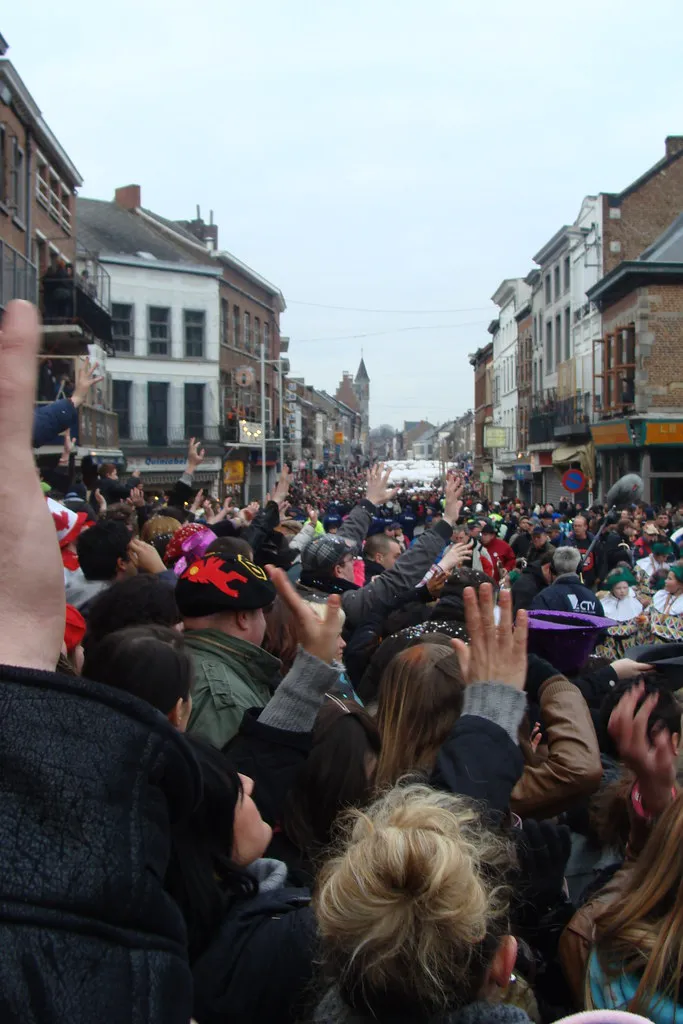
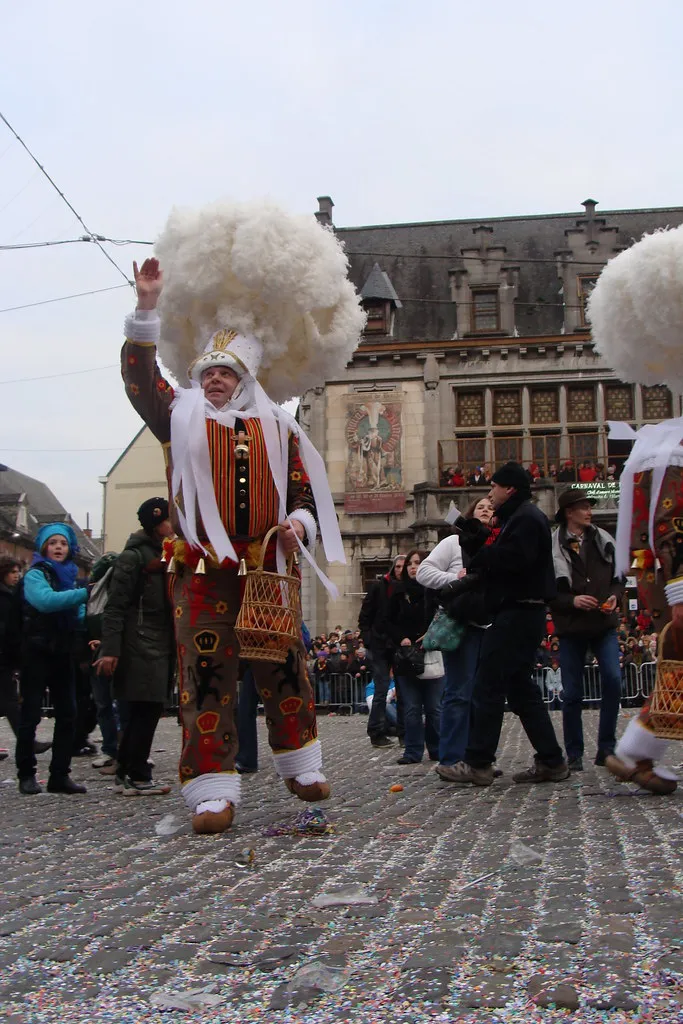
Shrove Tuesday is the climax. The day starts before dawn with the dressing of the Gilles — a ceremony where family members help each Gille into his straw-stuffed costume. The leader of each society then goes door to door collecting members, and by tradition a glass of champagne is drunk at every stop. By mid-morning, the Gilles march in their wax masks and carry bundles of willow twigs to ward off evil spirits. At 15:00 they remove their masks, put on their ostrich-feather hats, and the famous orange procession begins. At 20:00 the last rondeau — a great circular dance — fills the Grand Place before fireworks close the festival around 21:00.
Official timetables, including any schedule changes caused by weather, are published on the Binche.be website each year. Note that the feathered hats — weighing up to 3 kg — are protected from rain, so schedule shifts do happen.
Did You Know?
The orange procession on Shrove Tuesday follows a strict etiquette that catches first-time visitors off guard. Catching an orange thrown by a Gille brings good luck. Refusing one, or throwing it back, is considered a serious insult to the Gille and to the carnival tradition. Accept every orange offered, even if your bag is already full.
The Gilles' wax masks all bear the same face — a Napoleon III-style moustache and green-tinted spectacles. This standardized appearance is intentional: on carnival days, all Gilles are equal regardless of social standing. Only after the masks come off at 15:00 do individuals become visible again. The porcelain masks are among the most photographed objects in Belgian folklore.
Becoming a Gille is a lifelong commitment open to any male born or resident in Binche. Women cannot become Gilles but participate as Peasants, Harlequins, or Pierrots, and the wives of Gilles play a formal role in the dressing ceremony. The four-character system has remained structurally unchanged since its earliest documented form in the 14th century.
Must-See Binche Attractions
The Grand Place is the nerve center of the carnival and the best single vantage point for the Tuesday rondeau and orange procession. Arrive by 14:00 on Shrove Tuesday to secure standing space near the front barriers. The square is flanked by historic guild buildings that frame photographs well even on overcast February days.
The medieval city walls encircling Binche are among the best-preserved in Belgium. A circuit walk takes around 45 minutes and offers elevated views across the Haine valley. Outside carnival weekend, the walls are almost always quiet — a stark contrast to the packed streets below during the three Shrove days.
Saint Ursmer Collegiate Church anchors the northern edge of the old town. The Romanesque nave and Gothic choir span several building campaigns from the 11th to the 16th century. Entrance is free, and the interior is open most mornings except during services.
Museums, Art, and Culture in Binche
The International Museum of Carnival and Mask (Musée International du Carnaval et du Masque) is the essential pre-carnival stop. Its permanent collection holds over 10,000 masks from more than 50 countries, with an entire wing devoted to the Gilles costume, wax masks, and the history of Binche's specific traditions. According to ich.Unesco.org, the museum is a core institution for preserving this UNESCO-listed heritage. Allow at least 90 minutes.
The museum typically closes for reconfiguration in the days immediately before the carnival, so visit earlier in February or well outside the festival window if you want guaranteed access. Admission for adults is around €7; concessions and children under 12 are reduced or free. Check current hours at the official museum site before planning your day.
Beyond the museum, several commercial galleries in the old town show carnival-themed prints and photography year-round. These are worth browsing for distinctive souvenirs that go beyond the mass-produced plastic Gille figurines sold from street stalls during the festival.
Parks, Gardens, and Outdoor Spots in Binche
The Parc Communal sits just inside the southern wall and provides the most accessible green space in the town center. During the carnival, the park functions as an overflow gathering area where families with young children can watch street musicians and grab food from temporary stalls. Outside carnival season, it is a calm spot for a lunch break between museum visits.
The city walls themselves form the most scenic outdoor route in Binche. The full circuit passes through several tower gates including the Porte de Mons, one of the last remaining medieval gate structures in Wallonia. The rampart walk is uneven stone in sections, so footwear with grip matters even in summer.
Visitors who arrive a day early for the carnival and want to decompress after the journey benefit from the quieter green zones in the residential streets east of the Grand Place. The density of tourists is lower there, and a few traditional Belgian cafes operate with normal table service rather than festival-tempo bar queues.
Family-Friendly and Budget-Friendly Options in Binche
Shrove Monday is the most accessible day for families with children. The crowds are smaller, the confetti battle is designed for kids, and the evening fireworks at 19:00 finish early enough that young visitors are not kept out past midnight. Tuesday's orange procession can be physically intense for small children standing in packed crowds for hours.
Budget travelers should note that the carnival itself is free to attend — there are no paid grandstand tickets or official viewing zones. The cost centers are accommodation and transport. Hotels in Binche and the nearby cities of Charleroi and Mons fill months in advance; prices during carnival weekend run two to three times normal rates. Booking in Charleroi (30 minutes by train) is the standard budget solution, as special carnival trains run directly to Binche across all three days. Check the Belgiantrain.be schedule for extra services each year.
Food during the festival is primarily street stalls selling frites, waffles, and hot drinks. Sit-down restaurants within the old town do not take reservations during carnival days and operate on a first-come basis. Eating before the main Tuesday procession (before 13:00) avoids the worst queue times.
How to Plan a Smooth Binche Carnival Day
Arriving by train is the only practical choice on Shrove Tuesday. The town center becomes a pedestrian zone and parking is closed to most vehicles from early morning. Belgian Rail runs extra services specifically for the carnival — the route from Charleroi-Sud takes around 30 minutes and costs under €5 each way. Arrive no later than 11:00 if you want a position close to the Grand Place.
For those comparing European carnival options, see the Cologne carnival guide — Cologne is much larger and more commercially oriented, while Binche offers a tighter, more community-rooted experience. The orange procession at Binche has no equivalent elsewhere; it is the single most memorable moment of the three days and worth structuring your entire visit around.
Earplugs are a genuine recommendation, not a joke. The drums are loud and continuous for several hours. Thermal base layers, waterproof boots, and a rain poncho cover the weather risk — February in Wallonia averages 1–6°C with frequent drizzle. Keep your camera battery warm inside a jacket pocket; cold drains lithium cells fast. Book accommodation and train tickets as early as September the year before to avoid being shut out entirely.
Frequently Asked Questions
How long does the Binche Carnival last?
The main festivities last for three days, known as Shrove Sunday, Monday, and Tuesday. Each day features a unique program of parades and traditional music. Most visitors focus on the final day to see the Gilles.
What is the date for Carnival 2026?
The Binche carnival dates for 2026 are February 15 to February 17. These dates follow the liturgical calendar leading up to Ash Wednesday. It is the peak time to visit for folklore fans.
Why is the Carnival of Binche celebrated?
The carnival is a centuries-old tradition meant to drive away winter and celebrate the coming spring. It is famous for its Gilles characters who represent local pride. UNESCO recognizes it as a Masterpiece of Oral and Intangible Heritage.
The Binche carnival dates anchor one of the most rigorously preserved folk traditions in Europe. Whether you plan around the 2026 dates of February 15 to 17 or the 2027 dates of February 7 to 9, the experience is defined by Shrove Tuesday's orange procession and the rondeau on the Grand Place. Book transport and lodging early, arrive before the crowds, accept every orange a Gille offers, and prepare for the cold. Binche rewards the visitors who come prepared.
Free guide: Europe's Festival Calendar
A month-by-month map of Europe's unmissable festivals — with the best dates to visit each and a local tip you won't find in the guidebooks.
You might also like


Continue reading
More guides you'll find useful


