Basel Carnival Guide: 11 Essential Planning Tips
Plan Basel Fasnacht 2026 and 2027: Morgestraich's 4 AM start, parade routes, family safety tips, and etiquette for Switzerland's largest carnival.
On this page
Basel Carnival Guide: 11 Essential Planning Tips
The Basel Fasnacht is Switzerland's largest carnival and one of the most precisely choreographed public events in Europe. Last updated June 2026. This three-day celebration fills the old city with lantern light, piccolo music, and sharp political satire. Understanding the Basel carnival dates is the first step to securing accommodation before the city sells out.
Listed on the UNESCO Intangible Cultural Heritage register since 2017, the Fasnacht operates by strict local rules that surprise first-time visitors. Unlike the confetti-and-costumes approach at carnivals elsewhere, Basel is organized around cliques: closed groups of musicians who rehearse year-round. The festivities run for exactly 72 hours, starting and ending at 4:00 AM. Locals call these the three best days of the year.
This Basel carnival guide covers every stage of the programme, from the opening Morgestraich silence to the final Guggenmusik brass sets on Wednesday night. We include exact 2026 dates, viewing spot advice, food traditions, and the etiquette rules that keep you on the right side of the locals.
Free guide: Europe's Festival Calendar
A month-by-month map of Europe's unmissable festivals — with the best dates to visit each and a local tip you won't find in the guidebooks.
What is Basel Fasnacht?
Basel Fasnacht is a community-run cultural event rather than a commercial carnival. It is organized entirely by local cliques — closed associations of pipers and drummers who choose a satirical theme, or Sujet, each year. These themes critique local politics, global events, or Basel society itself, and they appear on every lantern, costume, and parade float each clique uses. The creativity and specificity of the satire is what distinguishes this event from most other European carnivals.
The celebration is famous for its haunting piccolo and snare drum soundscape, which echoes off the narrow streets of the old town. Masked figures known as Waggis throw sweets, confetti, and vegetables from large parade floats. The music shifts between the precise, almost meditative tempo of the cliques and the raucous chaos of the Guggenmusik brass bands. Both styles have devoted audiences and very different atmospheres.
The entire city center becomes a pedestrian zone for 72 hours, with trams suspended to make room for the parades. It ranks among the most beautiful carnivals in Europe for the quality of its lantern craftsmanship alone. Unlike the Cologne carnival guide style of open street party, Basel has a structure and a sequence that rewards visitors who plan ahead.
2025 and 2026 Event Dates
Basel Fasnacht always begins on the Monday following Ash Wednesday, exactly one week after most other European carnivals end. For 2026, the event runs from Monday, 23 February to Thursday, 26 February 2026. The precise timetable is: Morgestraich opens at 04:00 on Monday 23 February; the first Cortège parade takes place on Monday afternoon; the Lantern Exhibition and Guggenmusik concerts occupy Tuesday; the second Cortège parade runs on Wednesday afternoon; and the entire event closes at 04:00 on Thursday morning.
For 2025, Morgestraich took place on Monday, 10 March 2025, with the festival running until 13 March 2025. The 2027 dates fall in late February again — they shift each year with the Easter calendar. If you are planning further ahead, the Official Basel Tourism Carnival page publishes confirmed dates each autumn.
- Monday 23 February 2026, 04:00 — Morgestraich (opening)
- Monday 23 February 2026, afternoon — Cortège parade #1
- Tuesday 24 February 2026 — Kinderfasnacht + Lantern Exhibition + Guggenmusik night
- Wednesday 25 February 2026, afternoon — Cortège parade #2
- Thursday 26 February 2026, 04:00 — Fasnacht ends
Hotels within walking distance of the old town typically fill three to six months in advance. The Saint-Louis area across the French border offers overflow accommodation at lower rates, with the Basel tram network making the crossing straightforward when city-centre trams resume after the Morgestraich.
Morgestraich: The 4:00 AM Ritual
The Morgestraich marks the official start of the carnival on Monday morning. At exactly 4:00 AM, every city light switches off and the streets fall into complete darkness. Thousands of pipers and drummers begin to play simultaneously across the center, with the only light coming from the glowing lanterns each clique carries. The crowd observes a near-total silence at this moment — applause is considered out of place, and mobile phone screens lighting up during the opening march are actively resented by locals.
Most visitors find that arriving at Marktplatz by 3:30 AM gives enough time to find a good position on the pavement. The Marktplatz offers wide sightlines and is where the largest lanterns congregate. Claraplatz, across the Rhine in Kleinbasel, is less crowded and gives a cleaner view of individual cliques as they pass at closer range — a better option if you want to read the Sujet details painted on the lanterns rather than simply absorb the spectacle. Both squares are free to stand in.
After the initial march, many people head to local taverns for Mehlsuppe and Zwiebelwähe. Restaurants stay open throughout the night specifically for post-Morgestraich crowds. The atmosphere in these packed venues is warm and welcoming, and it is one of the best moments to hear locals debate the cliques' Sujets for the year.
The Cortège: Monday and Wednesday Parades
The Cortège is the afternoon parade that runs on both Monday and Wednesday, looping through the main streets of the city center. Each clique marches in costume, carrying their decorated instruments and pulling elaborately painted floats. The Waggis figures on the floats throw confetti (Räppli), oranges, sweets, and flowers into the crowd — receiving these gifts is part of the experience. The parade route runs from the inner ring roads through Barfüsserplatz and back; spectators can stand anywhere along the route for free.
Monday's Cortège has a raw, first-day energy that many visitors find the most exciting. Wednesday's is quieter but more focused, as seasoned attendees know where to position themselves and the cliques' performances are more polished after two days of practice. Standing on the narrower side streets rather than the main boulevard gives a closer encounter with the musicians and makes it easier to read the satirical lanterns at eye level.
The Cortège moves slowly enough to follow on foot between locations. A single loop takes roughly two to three hours. You can leave and rejoin the crowd at any intersection, which makes the event accessible for families with young children who need breaks. See the best carnivals in Europe comparison if you are deciding between Basel and other events in the same season.
Reading the Lanterns: Clique Culture and Sujet
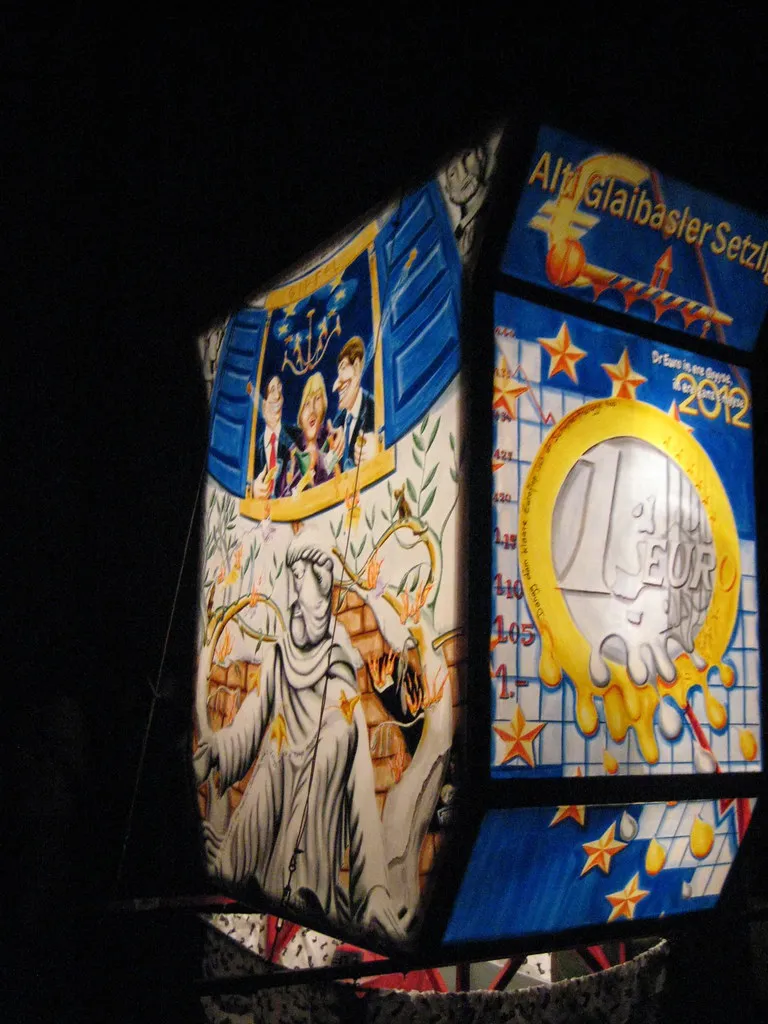
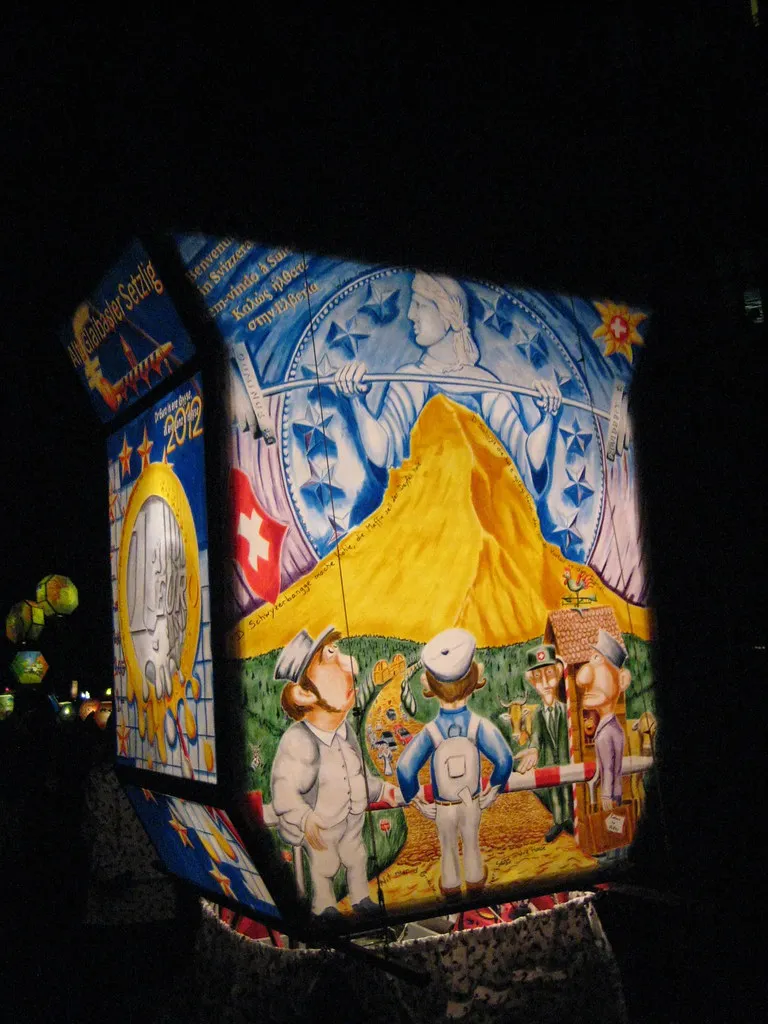
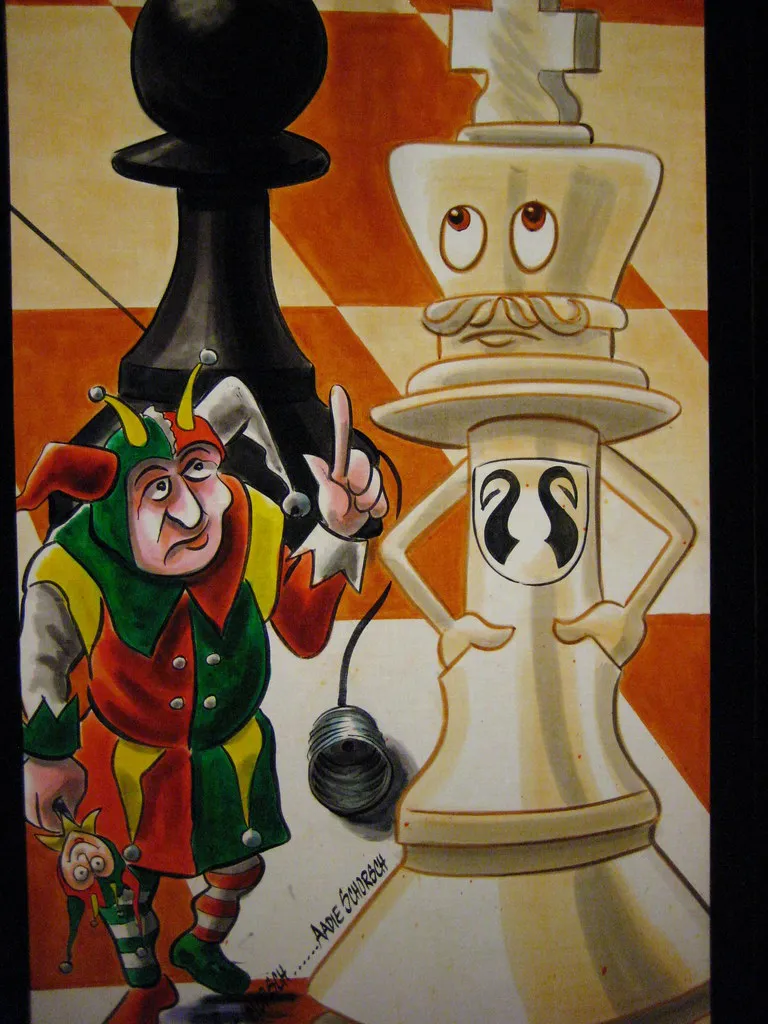
Each clique selects its Sujet in autumn, months before the event. The Sujet is a single satirical premise — a political scandal, a local controversy, a global absurdity — that the clique then interprets across every element of their participation: their central lantern (the Laterne), individual hand lanterns, costumes, and the verses in their printed pamphlets (Zeedel). Understanding the Sujet unlocks the event. Without it, the costumes are beautiful but opaque.
The printed Zeedel is key: cliques sell their satirical pamphlets on the streets during the festival for CHF 1–2 each. These booklets explain the Sujet in Basel dialect (Baseldytsch), but even visitors who cannot read Swiss German can usually follow the visual logic by cross-referencing the Zeedel cover with what they see on the floats. Collecting Zeedel from several cliques gives a map of the year's big controversies as Baslers see them.
The large central Laterne is unveiled at the Tuesday Lantern Exhibition, held indoors at the Mustermesse exhibition center near the train station. Entry is free. The lanterns are several meters tall and carry intricate painted panels illustrating the Sujet — this is where the craftsmanship that earns UNESCO recognition becomes fully visible, at close range and in good light. Plan at least 90 minutes for the exhibition.
Guggenmusik: Tuesday Night and the Brass Invasion
Tuesday night belongs to the Guggenmusik bands. These large brass and percussion ensembles play loud, deliberately chaotic music through the bars and alleys of the old town from around 20:00 until the early hours. The sound is intentionally wrong in a structured way — off-key horns, thundering bass drums, and improvised riffs collide in the narrow streets. Earplugs are useful here; the volume in enclosed alleys regularly exceeds 100 dB.
The Guggenmusik atmosphere is the most accessible part of the festival for visitors who did not make it to the 4:00 AM Morgestraich. The bars are open, the streets are packed, and the performances feel participatory rather than ceremonial. Each band dresses in its own costume and often plays a medley of pop songs or film soundtracks rearranged into Guggenmusik style. The area around Marktplatz and Spalenberg fills most densely from 21:00.
Family Guide: Kinderfasnacht and Safety
The Kinderfasnacht on Tuesday, 24 February 2026 is a dedicated children's version of the full carnival. It features smaller, slower parades and child-appropriate activities throughout the afternoon in the city center. The scale is more manageable than the main Cortège, and the crowd density is lower, making it the most practical entry point for families with children under ten.
Children will be in the minority as spectators at the Morgestraich — the 4:00 AM timing and extreme cold rule it out for most families. The Kinderfasnacht and the Tuesday Lantern Exhibition are the recommended combination for a family day. Both run between roughly 12:00 and 18:00 and require no advance tickets. Dress children in several warm layers; temperatures in Basel in late February typically stay between 1°C and 6°C during the day.
Safety in the old town is not a significant concern, but crowd management is. The narrowest alleys between Marktplatz and Barfüsserplatz can become extremely dense during the Cortège. Keep children at shoulder height in crowded sections or position yourselves on the outer edge of a wider street. Large backpacks are discouraged in parade areas as they reduce visibility and create friction in tight crowds.
Carnival Flavors: Mehlsuppe and Zwiebelwähe
Two dishes define the Fasnacht food experience. Mehlsuppe is a dark flour soup made by browning plain wheat flour in fat until deeply toasted, then simmering it into a broth with onion and beef stock. The result is bitter, rich, and warming — exactly what the crowd needs after standing in freezing streets at 4:00 AM. It has been associated with the carnival since at least the nineteenth century, when it was considered a poor man's dish that kept revelers going through the night.
Zwiebelwähe is an onion tart served in slices from most carnival taverns and pop-up kitchens. The combination of Mehlsuppe and Zwiebelwähe is eaten specifically during the Morgestraich morning; later in the day the food stalls shift to wurst, pretzels, and Fasnachtskiechli (fried dough pastries). Most taverns along Freie Strasse and around Barfüsserplatz serve the traditional menu from 04:00 until breakfast time. Expect to pay CHF 6–10 for a bowl of Mehlsuppe.
Essential Etiquette: The Blaggedde and Customs
The most important rule for visitors is to purchase a Blaggedde — the official carnival badge. These come in three tiers: copper (the standard supporter badge), silver, and gold. Each tier contributes more to the clique funds that cover costumes, lantern construction, and the year-round rehearsal costs. Wearing one signals that you are a contributing spectator rather than a free rider. Those without a badge may find themselves on the receiving end of extra Räppli confetti from the Waggis, which is meant humorously but can become relentless.
Confetti, known locally as Räppli, is a major part of the afternoon parades. The rule is simple: never pick up confetti from the ground to throw it back. The Waggis characters control the confetti exchange and take their role seriously. Accept the shower with a smile — joining in with handfuls of street confetti breaks the dynamic and is considered bad form.
Respect the performers by not crossing the parade lines during the Cortège. Do not wear generic fancy dress as a spectator — locals see this as misunderstanding the event. The cliques are the performers; visitors are the audience. The Nice carnival guide and the Cadiz carnival guide involve more participatory costuming, but Basel is specifically not that format. Regional context for the Swiss-French-German border area is available from the Saint-Louis Regional Carnival Info page.
Logistics: Bag Policy, Transport, and Luggage
There is no official bag ban for Basel Fasnacht, but large rucksacks are impractical and create friction in crowded parade areas. A small daypack or crossbody bag is the practical choice. There are no cloakrooms or official storage points on the parade route itself; plan to carry only what you genuinely need for the hours you are out.
City trams are suspended in the old town center for the entire 72-hour period. The outer tram lines continue to run, but connections between Marktplatz, Barfüsserplatz, and Claraplatz require walking. The distances are short — around 10–15 minutes on foot between major squares — but they add up over a long cold night. Wear proper waterproof winter boots rather than fashion footwear.
If you are arriving by train and need somewhere to leave luggage before your hotel check-in, Basel SBB station offers locker storage. Day visitors crossing from France via Saint-Louis can use TER regional trains to Basel SBB, with a journey time of around 8 minutes from Saint-Louis station. Check the Official Basel Tourism Carnival page for updated transport advisories each year, as timetable changes are confirmed closer to the event.
Regional Extensions: Carnivals in the 3-Country Corner
Basel sits at the meeting point of Switzerland, France, and Germany, and the surrounding region runs its own parallel carnival events in the weeks before and during Fasnacht. On the French side, the Saint-Louis area municipality of Village-Neuf holds a cavalcade on 8 March 2026, and Kembs runs its 50th-edition cavalcade on 7 February 2026 (admission EUR 10, free for children under 14). These are small-scale community events — intimate and local rather than tourist-facing.
On the German side, Lörrach runs its full Fasnacht programme in mid-February 2026: the Hemdglunki torchlit parade on 12 February, the Gugge-Explosion on 14 February, and the grand carnival procession (Fasnachtsumzug) on 15 February at Marktplatz Lörrach (free entry). Lörrach is 15 minutes by bus from Basel and offers a different tradition — the German Alemannic Fasnacht style, with wooden masks rather than Basel's painted papier-mâché, and a wilder, less structured programme.
Combining the Lörrach procession in mid-February with the Basel Fasnacht at the end of the month is a practical way to see both regional traditions without extra travel. The contrast between the two approaches — Lörrach's pagan mask tradition versus Basel's satirical lantern culture — illustrates how distinct the Alemannic and Basel Carnival strands really are, despite sharing geography and a calendar.
What to Pack
Packing for a Basel winter requires a focus on warmth and mobility. You will be standing outside for several hours, often in damp or windy conditions. The "Bise" wind can make the air feel much colder than the thermometer suggests. Layering is the most effective strategy for managing the long cold hours between 03:00 and mid-morning.
Comfortable, waterproof shoes are non-negotiable for navigating wet cobblestone streets in the dark. Bring a small bag for snacks and water, and carry earplugs if you plan to follow the Guggenmusik bands on Tuesday night. Large backpacks reduce your mobility and irritate people around you in crowd pinch points.
- Thermal base layers — essential for the 4:00 AM start
- Waterproof winter boots — dry feet over six-plus hours
- Warm hat, gloves, and a windproof outer layer — for the Bise
- A Fasnacht Blaggedde — buy on arrival to support the cliques
- Earplugs — needed for Guggenmusik night near the stage
- A small crossbody bag — no large rucksacks in parade crowds
Frequently Asked Questions
What time does Morgestraich start?
Morgestraich starts at exactly 4:00 AM on the Monday after Ash Wednesday. The city lights are turned off and the parades begin in darkness. You should arrive by 3:30 AM to find a good spot.
Do I need a ticket for Basel Carnival?
No official ticket is required to watch the street parades in Basel. However, you are strongly encouraged to buy a carnival badge called a Blaggedde. This purchase supports the local cliques and their elaborate costumes.
Is Basel Carnival suitable for children?
Yes, children will especially enjoy the Kinderfasnacht on Tuesday afternoon. This day features smaller parades and family-friendly activities throughout the city center. Be sure to dress them in warm, layered clothing.
Related in Basel: Basel Christmas Market Guide. Related: festivals and events in Zurich.
Basel Fasnacht rewards visitors who understand its structure. The Morgestraich silence, the Cortège parade rhythm, the Lantern Exhibition at the Mustermesse, and the Tuesday Guggenmusik night are four distinct experiences that each require different timing and positioning. Using this Basel carnival guide to plan each stage means you spend the 72 hours watching rather than navigating.
Book accommodation at least three months ahead for the 2026 festival. Buy your Blaggedde on arrival, collect a Zeedel from a clique, and eat Mehlsuppe at 05:00 in a packed tavern. That combination is how Baslers experience their own festival, and it is available to any visitor who shows up prepared.
Free guide: Europe's Festival Calendar
A month-by-month map of Europe's unmissable festivals — with the best dates to visit each and a local tip you won't find in the guidebooks.
You might also like


Continue reading
More guides you'll find useful