
Basel Carnival Dates: 72-Hour Schedule and Planning Guide
Plan your trip with official Basel Carnival dates for 2026-2027. Includes Morgenstreich timing, parade routes, and regional events in Saint-Louis.
On this page
7 Key Phases of the Basel Carnival
The Basel Carnival, or Fasnacht, is the largest and most significant cultural event in Switzerland and holds a UNESCO Intangible Cultural Heritage listing. Travelers consistently rank it among the best carnivals in Europe for its combination of satirical lanterns, Gugge music, and the electric silence of the 4 AM start. Planning ahead is essential: hotel rooms in the city center sell out months in advance.
Known as the "drey scheenschte Dääg" (three most beautiful days), this 72-hour window transforms Basel into a sea of lanterns and percussion. Around 20,000 active participants take part, accompanied by cliques, drums, and piccolo flutes. If you have only one Swiss winter event on your calendar, this is the one to build your trip around.
Free guide: Europe's Festival Calendar
A month-by-month map of Europe's unmissable festivals — with the best dates to visit each and a local tip you won't find in the guidebooks.
Official Basel Carnival Dates (2025-2027)
The Basel carnival dates follow a strict rule: the festival begins at exactly 04:00 on the Monday after Ash Wednesday and runs for exactly 72 hours. It closes at 04:00 on the following Thursday morning. No other European carnival keeps time this precisely.
Here are the confirmed dates across three years for long-term planners:
- 2025: Monday 10 March – Thursday 13 March (Morgenstreich: 10 March at 04:00)
- 2026: Monday 23 February – Thursday 26 February (Morgenstreich: 23 February at 04:00)
- 2027: Monday 15 February – Thursday 18 February (Morgenstreich: 15 February at 04:00)
Confirming these dates early allows you to secure better rates at regional hotels across the Swiss-French-German border. Consult the Basel carnival guide for specific parade route maps and official programme updates closer to the event.
Morgenstreich: The 4 AM Monday Kickoff
Morgenstreich marks the exact start of Fasnacht. At 04:00 on Monday morning, every electric light in the Basel city centre is switched off simultaneously. Thousands of participants march through pitch-dark streets with illuminated canvas lanterns balanced on their heads, accompanied only by the sound of fifes and drums.
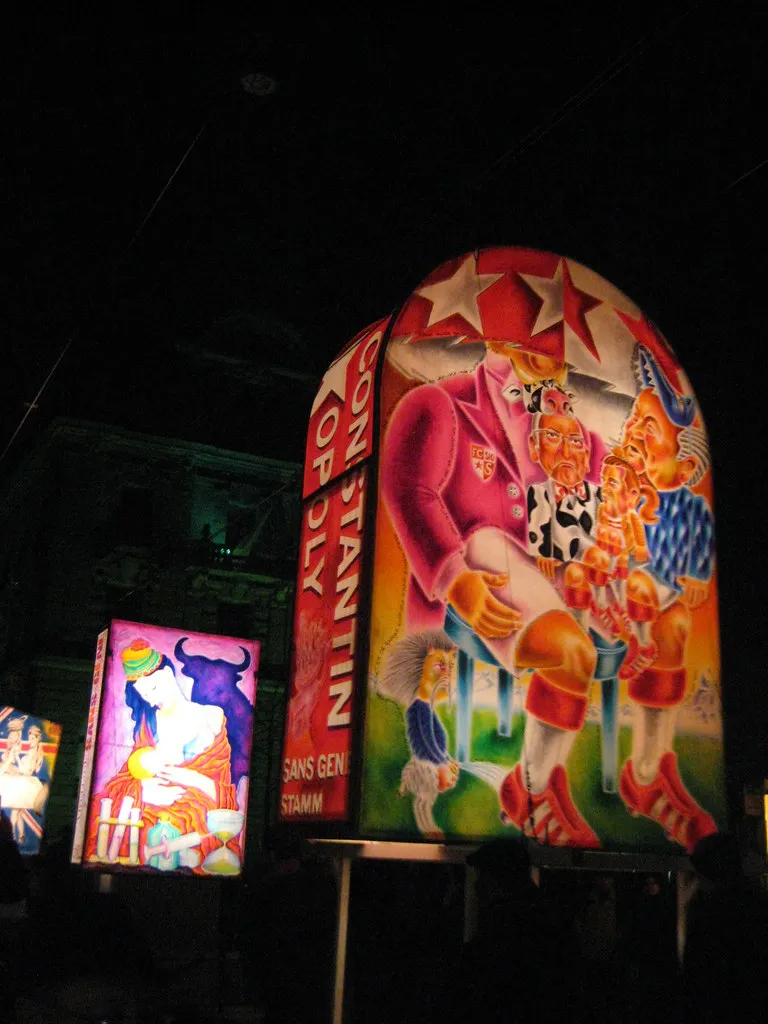
Strict etiquette rules preserve the atmosphere. Never use flash photography during Morgenstreich — it blinds the lantern carriers and ruins the darkness that makes the spectacle work. Avoid glowing smartphone screens, light-up accessories, and torches in the procession zone. Most locals hold their phones at waist level or use a low-brightness setting.
Arrive in the city centre by 03:30 to secure a viewpoint at Marktplatz or Barfüsserplatz. After the first procession passes, many spectators move to local restaurants to eat traditional Mehlsuppe (flour soup) and Zwiebeltorte (onion tart) — the two dishes served almost exclusively during Fasnacht week and worth trying on their own merits.
The Cortège: Afternoon Parades and Routes
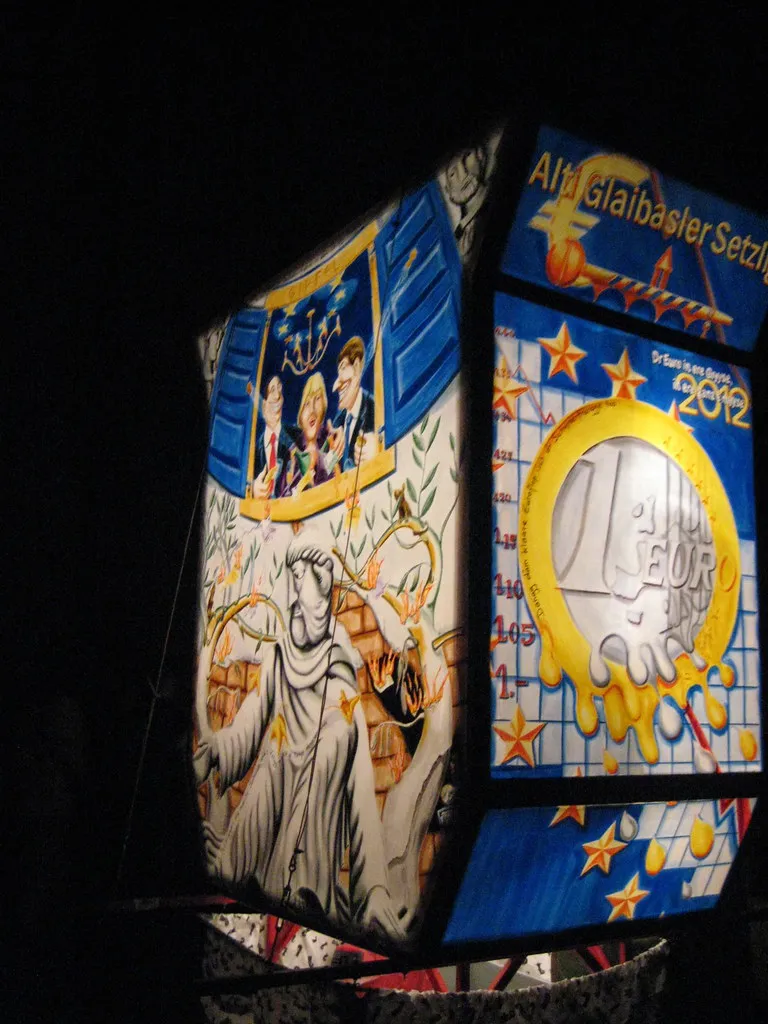
The Cortège parades take place on Monday and Wednesday afternoons, starting at 13:30. These are the most accessible events for visitors who cannot manage the 04:00 start: the streets are daylit, the routes are clearly marked, and confetti (called Räppli) fills the air for hours. Cliques march in full costume, pulling the large lanterns on carts and distributing satirical pamphlets called Zeedel.
The main route runs through the old town, from Barfüsserplatz along Freie Strasse and around Marktplatz. Tuesday is a quieter day without a main parade — it is devoted to smaller Guggenkonzerte and gatherings at Basel's many Beizen (informal tavern-restaurants). Wednesday's Cortège is often larger than Monday's, as more cliques participate after two days of warm-up.
Compare this format with the Cologne carnival guide, where the main parade is a single day. Basel's two-parade structure means you get a second chance if Monday's crowds overwhelm you. Stake out a spot on the narrower alleys off Freie Strasse for a closer view of the lanterns and costumes.
Guggenkonzerte and Lantern Exhibitions
Guggenmusik bands — brass and percussion groups playing intentionally off-key — are the sonic heartbeat of Fasnacht. On Tuesday evening, the city hosts informal Guggenkonzerte in squares and at bar entrances across the old town. There is no single ticketed venue: the music erupts wherever a Gugge band stops to play, which can be in front of a pharmacy or down a medieval alleyway.
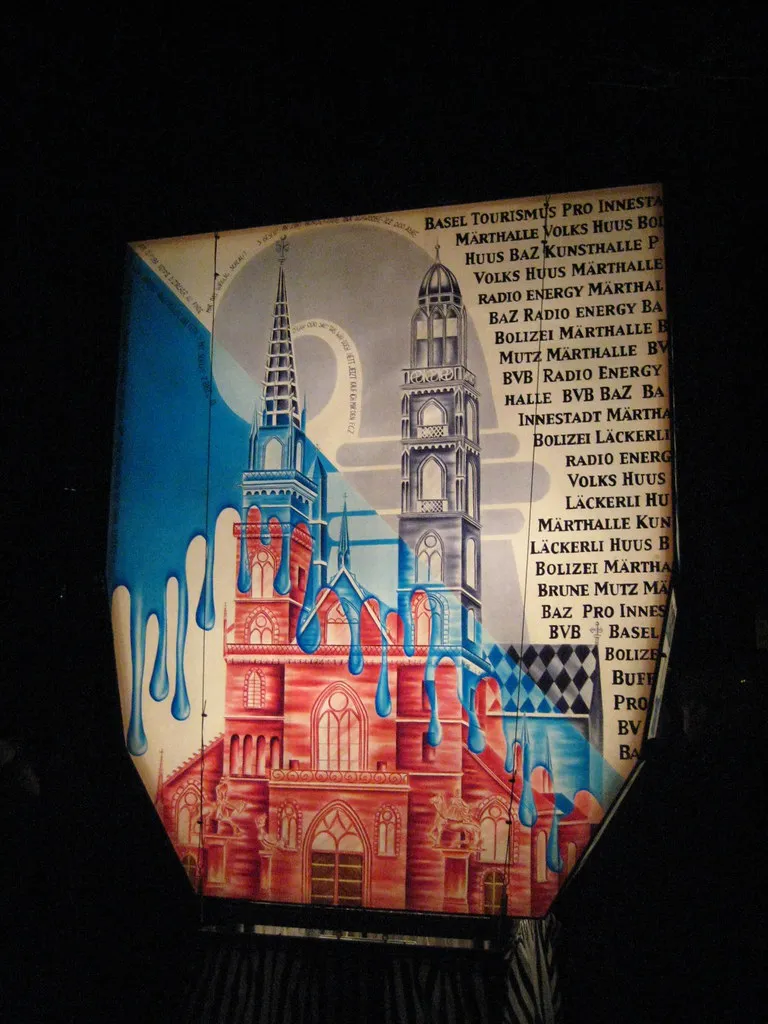
The lanterns (Laternen) are arguably the most impressive artistic output of the carnival. Each clique designs its lantern months in advance to illustrate that year's satirical theme. After Morgenstreich, some lanterns are displayed in Münsterplatz and around Marktplatz during the day, allowing visitors to examine the painted imagery up close. The themes range from local Basel politics to international news events — reading them is a crash course in Swiss satire.
A separate Laternenausstellung (Lantern Exhibition) opens on the Sunday before Morgenstreich, typically in the Musiksaal of the Casino Basel. Admission costs a few Swiss francs and provides a preview of the themes before the cliques take to the streets.
Regional Carnivals in Saint-Louis and Lörrach
Basel sits at a three-country junction where Switzerland, France, and Germany meet within a few kilometres. The carnival season extends well beyond the city limits, with neighbouring municipalities staging their own events from early February onwards.
In France, the Saint-Louis area hosts a dense calendar of events. In 2026, Kembs holds its 50th-anniversary cavalcade on 7 February at 17:15 at the Roundabout Rue du Rhin. Leymen's cavalcade runs on 8 February at 14:00 along Main Street (€5 admission, free under-12s). Village-Neuf stages a carnival night on 7 March (€10) followed by a cavalcade on 8 March along the Rhine. These are family-oriented daytime events with far smaller crowds than Fasnacht itself.
In Germany, Lörrach's Fasnacht programme for 2026 includes the Hemdglunki nightshirt procession on 12 February, the Gugge-Explosion on 14 February, and the main carnival procession (Fasnachtsumzug) on Sunday 15 February at Marktplatz (79539 Lörrach) — all free. Lörrach is 12 km from Basel city centre and easily reachable by regional train or bus in under 20 minutes.
Essential Visitor Etiquette and the Fasnacht Badge
The Blaggedde (Fasnacht badge) is the single most important item for any visitor to understand. Each year, the Fasnachts-Comité issues numbered enamel badges in three tiers: Copper, Silver, and Gold, at roughly CHF 5, 15, and 30 respectively. Proceeds fund the elaborate lanterns, costumes, and logistics that 20,000 participants depend on. Buying one is not obligatory, but locals notice who wears one.
Badges go on sale in the weeks before Fasnacht at kiosks around the city and from vendors during the event itself. You can also order them in advance through the official Fasnachts-Comité website. Not wearing a badge as a spectator won't get you removed, but it may result in friendly confetti or Räppli being directed your way by passing cliques — consider yourself warned.
Beyond the badge, a few rules make the experience better for everyone. Spectators do not dress up in Basel: leave the costume at home unless you are a participating clique member. Avoid blocking narrow alleys during the Cortège — the cliques need room to manoeuvre their large lantern carts. And if a clique hands you a Zeedel (satirical pamphlet), accept it: refusing is considered rude.
Travel Logistics: Where to Stay and Getting Around
Basel city centre hotels book out entirely within days of Fasnacht dates being confirmed, often by September the previous year. If you cannot find a central room, the most practical cross-border solution is the Saint-Louis 3 Pays area in France, roughly 5 km from the Basel city centre. The Aparthotel Adagio Access Saint-Louis Bâle is a reliable mid-range option used by carnival visitors who book late.
The key transport link from Saint-Louis into Basel is Tram Line 3 (operated by BVB), which crosses the French border and terminates at Burgfelden Grenze before connecting onward. On the Swiss side, Tram Lines 3, 8, and 14 serve the main carnival zones around Barfüsserplatz and Marktplatz. During Fasnacht, the tram network runs extended night hours on Monday and Wednesday to manage the 04:00 Morgenstreich crowd — confirm the special timetable on the BVB website before you travel.
Lörrach in Germany is a third option for accommodation. Regional trains (S-Bahn line S5) connect Lörrach to Basel SBB station in under 20 minutes and run frequently throughout the day. Staying in Lörrach also lets you attend the Gugge-Explosion and Fasnachtsumzug there before crossing into Basel for the main events. Prices on the German side of the border typically run 30–50% below Basel city-centre rates during Fasnacht week.
Frequently Asked Questions
What is the theme for Basel Carnival 2026?
The specific theme for 2026 will be announced by the Carnival Committee in late 2025. Each year, the theme reflects local or global political events. Participants use these themes to create satirical lanterns and costumes.
Is it crowded at Basel Carnival?
Yes, the city center becomes extremely crowded, especially during Morgenstreich and the afternoon parades. Over 200,000 people often attend the opening morning. It is important to arrive early to secure a viewing spot.
What time is the carnival in Basel?
The carnival starts at 4:00 a.m. on Monday and runs continuously for 72 hours. Major parades occur on Monday and Wednesday afternoons at 1:30 p.m. Tuesday evening is dedicated to Gugge music concerts.
The Basel Carnival is a bucket-list event that rewards careful timing and preparation. By locking in the official Basel carnival dates and booking accommodation across the border in Saint-Louis or Lörrach, you can experience one of the world's most singular festivals without the stress of last-minute planning. Whether you come for the flutes or the satire, the 04:00 darkness of Morgenstreich is an atmosphere that no other European carnival replicates.
If you enjoy this style of celebration, consider reading about the nice carnival guide for a sun-soaked contrast. The cadiz carnival guide covers another deeply satirical tradition worth comparing. Basel remains the top choice for those seeking a historically grounded, precisely timed, and intellectually rich carnival experience.
Free guide: Europe's Festival Calendar
A month-by-month map of Europe's unmissable festivals — with the best dates to visit each and a local tip you won't find in the guidebooks.
You might also like

Continue reading
More guides you'll find useful


