Maastricht Carnival Dates and Seasonal Travel Guide
Plan your trip with Maastricht carnival dates and seasonal tips. Find the best time to visit for festivals, weather, and local traditions in 2026.
On this page
Maastricht Carnival Dates: A Seasonal Guide
Last updated June 2026. Maastricht Carnival — locally called Vastelaovend or Mestreechter Vastelaovend — takes place on 15, 16 and 17 February 2026. That is Sunday through Tuesday, with unofficial celebrations beginning on the preceding Saturday. Knowing the Maastricht carnival dates early is essential: hotels sell out months in advance and the city runs on its own festive schedule for the entire period.
This southern Dutch city takes Carnival more seriously than almost anywhere else in the Netherlands. Understanding the exact parade times, bar hours, safety rules, and Limburgish traditions helps you get the most out of the three days rather than simply surviving the crowds.
Free guide: Europe's Festival Calendar
A month-by-month map of Europe's unmissable festivals — with the best dates to visit each and a local tip you won't find in the guidebooks.
Carnival 2026 Dates and Parade Times
The official Carnival season opens on Saturday 14 February with the key transfer at 15:11. The Carnival Prince receives the city key from the mayor at the City Hall on Markt. From that moment, the Prince symbolically rules the city for three days and normal civic life pauses. The Municipal Service Desk closes at 15:00 on Friday 13 February and remains closed on Monday 16 and Tuesday 17 February.
The main Maastricht parade rolls through the city centre on Sunday 15 February at around 12:30. It passes through the Vrijthof and Markt, drawing some of the largest crowds of the entire festival. A second, smaller parade follows on Monday 16 February at around 11:00 in the city centre. These are the two unmissable street moments — plan your Sunday morning arrival with time to claim a viewing spot before 12:00.
Tuesday evening winds things down gradually. Outdoor music curfews tighten: Sunday and Monday outdoor music runs until 02:00, but Tuesday outdoor music ends at midnight. If you want one final night of indoor bars, Tuesday remains lively until closing at 02:00. The city cleaning crews start at 06:00 each morning from Saturday through Wednesday, which means streets are generally walkable again by mid-morning.
Vastelaovend Traditions and the 'Alaaf' Greeting
Maastricht's Carnival is distinct from the rest of the Netherlands. The city sits in Limburg, which has a Rhenish rather than Brabantine influence, making Vastelaovend feel closer in spirit to Cologne Carnival than to the Brabant celebrations in Tilburg or Den Bosch. The local Limburgish dialect dominates the festival songs, called carnavalskrakers, and street performers belt them out from floats and makeshift stages throughout the weekend.
The traditional greeting is alaaf, shouted back and forth between revelers. Costumes in Maastricht lean theatrical — elaborate group themes, historical satire, and handmade props — rather than the generic fancy dress you might see in larger tourist-heavy carnivals. The 'Boonte Störm' (colorful storm) describes the cascade of parade participants who follow the official floats, turning the viewing route into a moving party that lasts for hours.
Unlike Nice Carnival dates or Viareggio Carnival dates, Maastricht keeps its Carnival relatively intimate and community-driven. The Prince is elected months in advance, and locals genuinely hand over the city to the Carnival committee for the duration. Visitors who learn even a few Limburgish phrases or join a local pub group before the parade will find the welcome far warmer than simply watching from the sidelines.
Carnival Food and Drink: What to Try
Every bar and café in Maastricht uses mandatory reusable hard plastic cups during Carnival 2026. The cup costs €1 at the point of purchase and can be reused at any participating venue throughout the three days. At the end of the weekend, return it to any bar for a refund, take it home, or keep it as a souvenir — many visitors do the latter since each venue prints a unique artistic design.
Street food stalls cluster around the Vrijthof and Markt throughout the weekend. Classic Carnival snacks include oliebollen (fried dough balls with powdered sugar), poffertjes (mini pancakes), and locally made waffles. Limburgish vlaai — a flat pie filled with fruit or rice pudding — appears in bakery windows throughout the city during the festival period. For a proper sit-down meal, book ahead: most restaurants that do accept walk-ins are overwhelmed by Sunday afternoon.
Practical Logistics: Bars, Toilets, and Accessibility
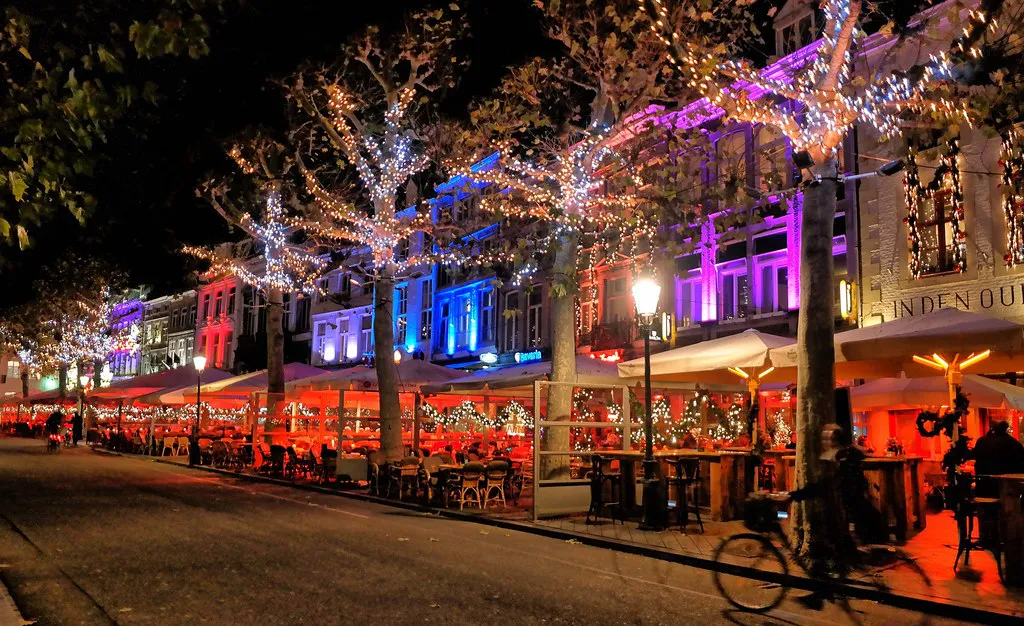
Hospitality venues keep long hours but not unlimited ones. From Saturday through Monday, bars close at 03:00. On Tuesday, they close at 02:00. Outdoor bars close one hour earlier than their indoor counterparts on all nights. Outdoor music is permitted from 16:00 on Friday and Saturday, and from 12:00 on Sunday through Tuesday. Plan your bar-hopping around these windows — the narrow alley bars in the Stokstraat quarter fill up well before the parades end.
Public toilets are set up at Vrijthof, Markt, and Onze Lieve Vrouweplein. Access costs €1 per visit or €5 for a day wristband, payable by card or cash. Each site includes a wheelchair-accessible toilet. Portable free toilets are also scattered across other locations. Using the paid facilities is genuinely worth it during peak hours: the queues are managed and the facilities are cleaned throughout the day. First aid (EHBO) is available from Sunday to Tuesday at De Hoofdwacht on Vrijthof, identifiable by its rounded arches. In emergencies, call 112.
For transport and road closure updates, the Maastricht Bereikbaar website publishes real-time parade routes, parking locations, shuttle bus stops, and bike parking maps. Several city-centre streets are closed to vehicles from Saturday onwards. Check it the evening before each parade day for the most current closures.
Safety Rules and What Not to Bring
A glass ban applies across the entire city centre during Carnival. Leave glassware and glass bottles at your hotel — the rule is enforced, and broken glass on cobblestones is a genuine hazard after dark. Large carts, pull-along wagons, and sound carts are banned from the busiest streets including Stokstraat, Kleine Stokstraat, Platielstraat, and Sint Amorsplein. Cart operators bringing floats into the city must confirm with the municipality where they may park them. Ignoring these restrictions leads to enforcement action, not just inconvenience.
Alcohol purchase, drinking, and carrying in public spaces is prohibited for anyone under 18. The municipality, police, and Koninklijke Horeca Nederland (KHN) monitor compliance jointly throughout the festival. A Calamity Management Team operates from Theater aan het Vrijthof from Friday to Tuesday, monitoring crowd density via cameras. If a street becomes dangerously packed, they redirect foot traffic — follow any instruction from stewards immediately. The policy rules for carnaval in Maastricht on overheid.nl cover the full legal framework if you need the detail.
Maastricht Beyond Carnival
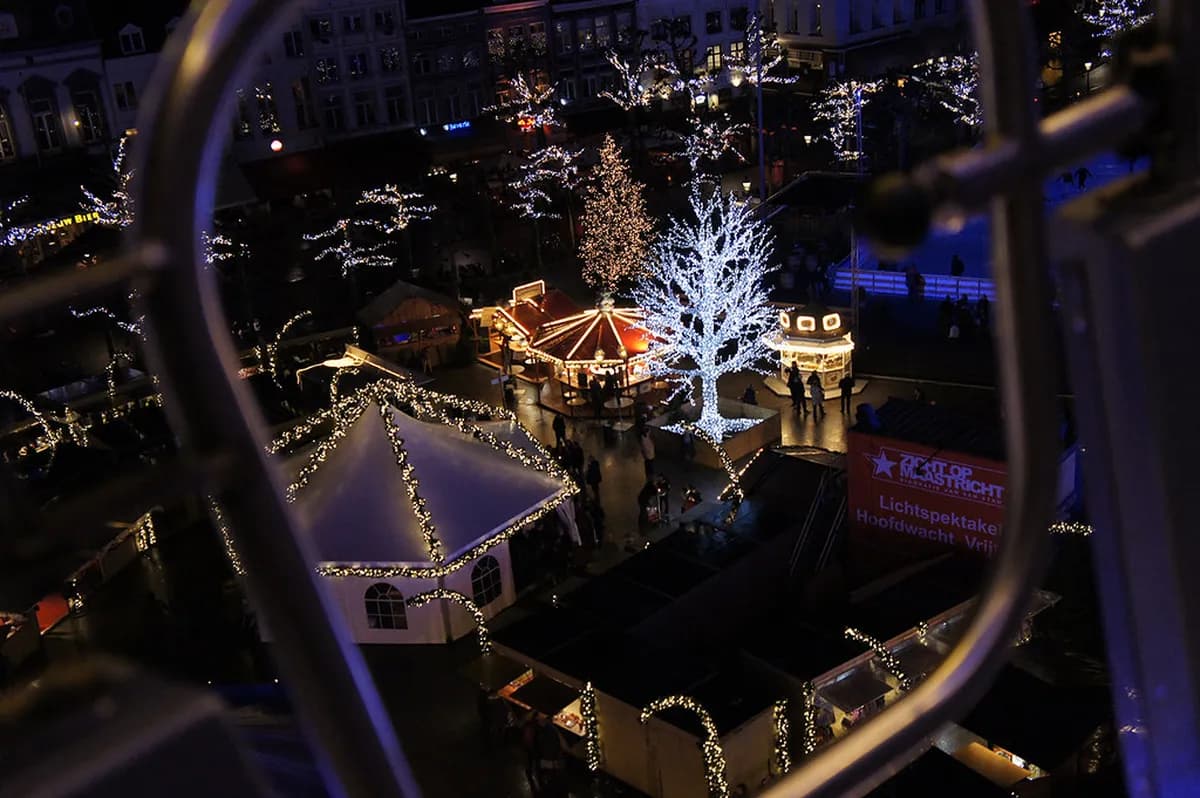
The Vrijthof is the city's main square and the parade's natural endpoint. Saint Servatius Basilica and Saint John's Church flank it — the red tower of St John's is climbable for panoramic views. During Carnival, the Vrijthof becomes an open-air party space surrounded by temporary stages and bar terraces, so save the interior visits for the days before or after the main festival weekend.
Bookstore Dominicanen, set inside a 13th-century Gothic church near the Markt, is one of the most photographed interiors in the Netherlands and is worth a quiet morning visit. The Jekerkwartier neighbourhood reveals the old defensive walls and watermills of medieval Maastricht and is the calmest part of the city even during the festival. Visitors arriving early for Carnival often spend the Friday exploring here before the weekend crowds arrive.
Beyond Carnival, the city's year-round calendar includes TEFAF in March (one of the world's leading art and antiques fairs), André Rieu's July concerts on the Vrijthof, and King's Day on 27 April. Comparing Maastricht across the seasons against other European events such as Cadiz Carnival dates or the Basel Carnival dates helps frame just how community-rooted the Vastelaovend remains. See our overview of the best carnivals in Europe for a broader comparison.
Maastricht Carnival in Context: Other Dutch Cities
Carnival in the Netherlands is concentrated in the south. Den Bosch celebrates as Oeteldonk — wear a black jacket and the town's signature scarf. Breda's identity is Kielegat, with orange and red scarves. Eindhoven goes by Lampegat and dresses in orange and blue. Each town renames itself and appoints its own Carnival Prince for the duration. Maastricht's Vastelaovend carries the most international recognition among these, partly because the city's architecture and river setting photograph well and partly because the Limburgish music tradition is unique within the Netherlands.
If you are weighing between Dutch Carnival cities, Maastricht offers the strongest combination of historic backdrop and locally rooted tradition. It is also the most logistically complex — the narrow medieval streets amplify crowd density faster than the wider boulevards of Eindhoven or Tilburg. First-time visitors who pick a single Dutch Carnival city generally come here and rarely feel the need to go elsewhere.
Frequently Asked Questions
Is it crowded during carnaval in Maastricht?
Yes, the city becomes extremely crowded during the three days of Carnival. Hotels often sell out months in advance. The streets are packed with costumed revelers, especially during the Sunday parade.
What time is the Maastricht Carnival parade 2026?
The main parade starts at approximately 12:30 on Sunday, 15 February 2026. It moves through the city center, passing major landmarks like the Vrijthof and Markt. Arrive early to secure a good viewing spot.
How long does Carnival last in Maastricht?
The official street Carnival lasts for three days, from Sunday to Tuesday. However, festivities often begin on the Saturday with the symbolic key transfer. Most events conclude by Tuesday night or early Wednesday morning.
Maastricht is a city that rewards those who plan around its festive calendar. Whether you come for the Carnival or the summer terraces, the atmosphere is always welcoming. Remember to check the specific dates for 2026 to ensure you don't miss the parade. The mix of history and celebration makes every visit to this Dutch gem memorable.
Pack your layers, learn the 'alaaf' greeting, and prepare for a unique cultural experience. The southern hospitality of Limburg ensures that you will feel right at home. Safe travels to one of Europe's most charming and lively historic cities.
Free guide: Europe's Festival Calendar
A month-by-month map of Europe's unmissable festivals — with the best dates to visit each and a local tip you won't find in the guidebooks.
You might also like

Continue reading
More guides you'll find useful