Calcio Storico Guide Travel Guide
Florence's Calcio Storico 2026: semifinals June 13-14, final June 24 at 6pm in Piazza Santa Croce. Tickets from 29 euro sell out in minutes on TicketOne.
On this page
Calcio Storico Guide
Calcio Storico represents a brutal yet beautiful tradition that defines the spirit of Florence. This ancient sport combines elements of soccer, rugby, and wrestling into a high-intensity spectacle played on sand in Piazza Santa Croce every June. Our Calcio Storico guide helps you navigate tickets, parade timing, and the right spot to watch in 2026.
The city transforms into a medieval battleground where four neighborhoods fight for local glory. Fans from around the globe gather to witness this unique display of strength and heritage. Understanding the logistics of this event ensures you enjoy the festivities without unnecessary stress.
Florence offers more than just a match during this historic month of celebration. You will find incredible food, community events, and a citywide festive atmosphere throughout the narrow Tuscan streets. This guide covers everything from the rules of the game to where to stay and how to buy tickets before they sell out.
Free guide: Europe's Festival Calendar
A month-by-month map of Europe's unmissable festivals — with the best dates to visit each and a local tip you won't find in the guidebooks.
What is Calcio Storico?
Calcio Storico is an ancient form of football that originated in 16th-century Florence and is still played today in full Renaissance costume. Each match features two teams of twenty-seven players competing on a rectangular sand field, double the length of its width. The primary goal is to score a caccia by throwing the ball over the opponent's net, which runs the entire width of the short end of the pitch.
The rules allow for significant physical contact including punching, kicking, and wrestling. This makes the game one of the most demanding and dangerous sports still practiced anywhere in the world. Henry III of France reportedly described it in 1574 as "too small to be a real war and too cruel to be a game" — a verdict that still holds today.
Matches last exactly fifty minutes without interruptions for injuries or substitutions. If a player is forced to leave the field, the team continues with fewer men. The official rules were first published in 1580 by Florentine count Giovanni de' Bardi, and the game has changed remarkably little since.
Winners receive a Chianina calf as their prize — a symbolic gesture that keeps the tradition rooted in its agrarian Florentine past. You can read more about the history of Calcio Storico to understand its deep roots in Medici-era culture.
The History of Calcio Storico
The game grew out of Roman harpastum, a vigorous team ball game that itself descended from the Greek phaininda. Florentine aristocrats adopted it as an expression of classical culture during the Renaissance — at a time when Brunelleschi was studying Roman domes and philosophers were reviving Plato. Calcio was another form of that same classical enthusiasm, played by noblemen in the city's main squares from Epiphany through Lent.
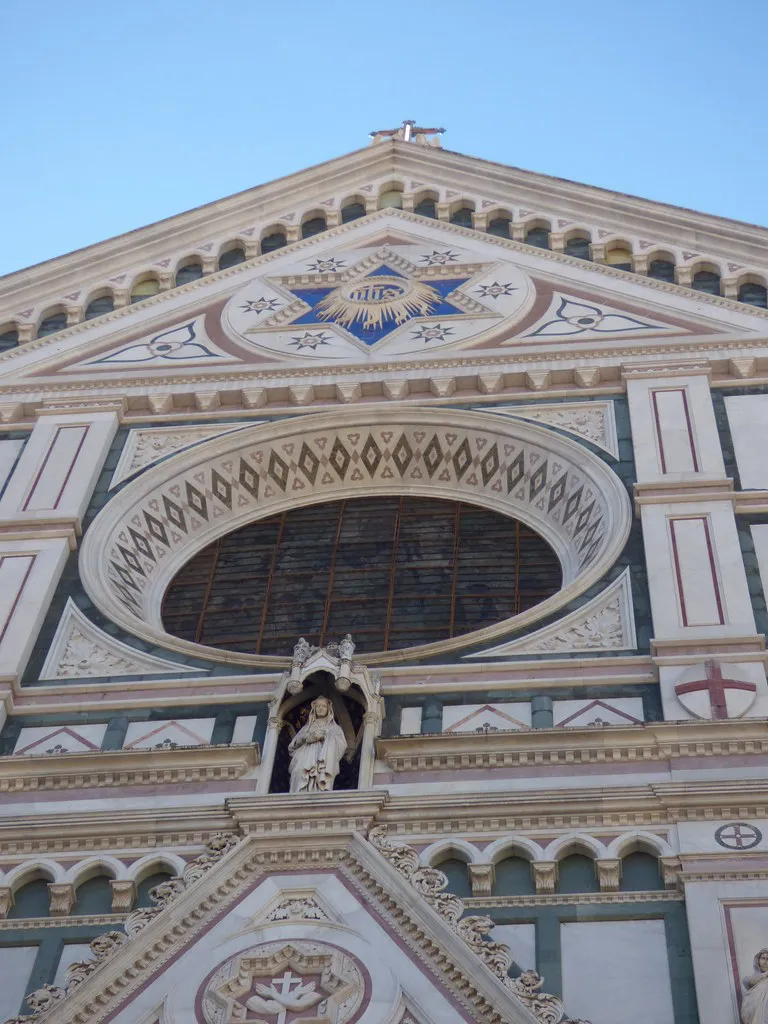
After fading away in the 18th century, the game was revived in the 1930s during another period of enthusiasm for Roman history. The modern tournament format — two semifinals and a final on June 24 — has run continuously since then. The four historic neighborhoods of the city have competed under the same colors for decades: Santa Croce in blue (Azzurri), Santo Spirito in white (Bianchi), Santa Maria Novella in red (Rossi), and San Giovanni in green (Verdi).
The draw to determine which teams face each other in the semifinals takes place on Easter Sunday during the Scoppio del Carro event at the Duomo. This tradition ties the Calcio tournament calendar directly to the wider Florentine festival year. In 2026, the draw placed Rossi against Verdi for the first semifinal and Bianchi against Azzurri for the second.
2026 Match Schedule and Parade Times
The 2026 Calcio Storico tournament follows the traditional three-match structure. The first semifinal — Rossi of Santa Maria Novella versus Verdi of San Giovanni — takes place on Saturday, June 13. The second semifinal — Bianchi of Santo Spirito versus Azzurri of Santa Croce — follows on Sunday, June 14. The final is played on Wednesday, June 24 at 18:00 in Piazza Santa Croce.
Each match is preceded by a magnificent historical parade that starts in Piazza Santa Maria Novella and winds through the city center. For the semifinals, the parade departs around 16:45 and arrives at Piazza Santa Croce around 18:00, with the match starting around 19:00. For the final, times are one hour earlier: parade at 15:45, arrival around 17:00, game starting at 18:00. All four neighborhood teams participate in the parade, even those not competing in that specific match.
The parade splits at Piazza Strozzi. One half heads toward the Arno river, crosses Ponte Vecchio, and passes through Piazza della Signoria under the Uffizi. The other half goes straight to Piazza della Repubblica before rejoining the route. Both halves converge at Palazzo Vecchio and continue via Via de' Neri to Santa Croce. June 24 ends with a spectacular fireworks display launched from Piazzale Michelangelo, visible along the Arno's banks.
TICKETS FOR SEMIFINALS & FINAL MATCH
Securing tickets is the biggest logistical challenge of the entire trip. For 2026, tickets for the semifinals went on sale online on June 11 at 12:00 local time via TicketOne.it. They sell out within minutes. Semifinal ticket prices follow the same tiered structure as recent years: €53 for Tribuna C (in the sun), and €29 for the Curve Colori ends (one end per team color, unnumbered general seating). The Tribune "A" section is reserved for members of the historical society and is not available to the public.
For the final match on June 24, tickets go on sale separately — typically around June 19 — exclusively online at TicketOne.it. Final match pricing has historically been €82 for Tribuna Laterale (shaded side seats), €53 for Tribuna C, and €29 for the Curve Colori. Each person may purchase a maximum of four tickets.
An important practical detail that many visitors miss: since 2018, tickets for the box office have been distributed first to locals. If you miss the online sale, the physical box office on the morning of the match hands out queue numbers from 09:00, with tickets paid by electronic card only (no Amex accepted). Arrive very early — this is genuinely a game that the city organizes for its own residents first, not a tourist spectacle engineered for easy access.
Avoid unauthorized street vendors and unofficial resellers. Fake tickets circulate every year and are turned away at the gate. If you cannot get tickets at all, watching from a local bar or streaming online is a legitimate fallback — not a consolation prize.
How to Watch If You Can't Get Tickets
Missing out on tickets does not mean missing the event. The historical parade through the city center is free and entirely open to the public — no ticket required. Lining the streets near Piazza della Signoria or Via de' Neri gives you an excellent close-up view of the Renaissance costumes, drummers, and flag-throwers for both semifinal and final days. Arrive at least an hour before the parade starts (by 15:45 for the final, 16:00 for semifinals) to secure a clear position along the narrow streets.
The matches are broadcast locally on Toscana TV (channel 11) and Firenze TV (channel 80), with a replay at 20:00. International viewing rights are held by DAZN, which streams the final on a paid pay-per-view basis. If you are staying in Florence, many bars near Piazza Santa Croce screen the match live — the atmosphere in the surrounding streets on final day is electric even without a seat inside the arena.
In bad weather, matches proceed regardless. Rain turns the sand pitch into mud, the colors blur, and the game starts to resemble a medieval battle in the truest sense. If the weather looks uncertain on match day, dress accordingly — the bleachers offer no rain cover.
How to Plan a Smooth Match Day
Success on game day requires arriving at Piazza Santa Croce by 15:30 at the latest for the final. Security checks can take a long time due to the volume of spectators, and the bleachers fill quickly. Have your tickets ready, your bag open, and carry only what you need inside — large bags create friction at the entry checks.
The June sun in Florence is intense in the late afternoon. Wear a wide-brimmed hat and apply sunscreen before heading to the outdoor arena. The Tribuna C section sits in full sun throughout the match — factor this in when choosing your ticket tier. Carry a reusable water bottle; staying hydrated across a 50-minute match in the heat is non-negotiable.
Street closures disrupt the usual bus and taxi routes throughout the historic center on match and parade days. Plan to walk between attractions or use the tram system where it remains operational. Check a local map for pedestrian zones in advance so you do not get caught on the wrong side of a closure. Travelers who enjoy historic Italian competitions might also consider the Palio di Siena, which follows a similar format of neighborhood rivalry and requires equally careful advance planning.
Where to Stay in Florence for Calcio Storico
The closer you stay to Piazza Santa Croce, the better positioned you are for both the match and the parade. The Santa Croce neighborhood itself (the Azzurri district) puts you within a five-minute walk of the arena and lets you absorb the pre-match street energy. Via della Colonna, just east of the square, has historically been a popular base for visitors attending the tournament.
If you prefer more space and lower prices, the Oltrarno district across the Arno river is a ten-to-fifteen minute walk from the venue and significantly calmer than the tourist-heavy streets near Santa Croce. It also sits on the parade route near Ponte Vecchio, meaning you can watch the procession without fighting through a crowd to get there.
Book accommodation well before June. Florence in late June fills quickly even without Calcio Storico — the heat, the feast day of San Giovanni on June 24, and the fireworks at Piazzale Michelangelo draw visitors independently. A mid-week arrival before the June 13 semifinals gives you time to orient before the crowds peak. You can find a list of cultural festivals if you want to plan your Italian trip around multiple events.
Attending with Children and on a Budget
The parade is free, entirely family-friendly, and frankly more visually spectacular than the match itself for younger children. Over five hundred participants in Renaissance costume march through the historic center — horses, soldiers, musicians, flag-throwers. Lining the streets near the Duomo or Piazza della Signoria early gives children a front-row view of the procession without spending anything.
The match itself is genuinely violent. Florentines do bring their children as a rite of passage, but younger or sensitive children may find the contact confronting. There is no age restriction at the gates, but be honest about what your family can handle watching before you commit to paying for bleacher seats.
Budget travelers should note that food prices around Piazza Santa Croce rise sharply on match and parade days. Packing snacks and water before arriving, or eating at a local alimentari a few blocks from the square, saves meaningful money. Many smaller squares in the Oltrarno and Sant'Ambrogio neighborhoods host free community gatherings and live music during June that offer a relaxed parallel to the main spectacle.
Contact Details and Resources
The main tourist information office in Florence is located across from the Santa Maria Novella train station. Staff can provide physical maps and the latest schedules for the 2026 tournament. They are particularly useful for checking last-minute changes to parade routes or match times, which occasionally shift due to municipal decisions made close to the event.
For official media and high-quality photography, view images by Clara Vannucci online. Her work captures the intensity and grit of the players with documentary precision. The Calcio Fiorentino Wikipedia page provides a solid historical overview including past match records and rule evolution.
Emergency services are always present at matches to assist players and spectators. Note the location of the first aid stations around the perimeter of Piazza Santa Croce before the match begins. Keep your accommodation address and a local emergency number saved in your phone as a basic precaution.
Frequently Asked Questions
When is Calcio Storico played in 2026?
The tournament matches are typically held in mid-June, with the grand final occurring on June 24. This date coincides with the Feast of St. John the Baptist, the patron saint of Florence. You should confirm the exact semifinal dates on the official city website by early May.
How do you get tickets to Calcio Storico?
Tickets are primarily sold online through TicketOne starting in early June. Prices range from 29 to 80 euro, but they sell out almost instantly. You can also try the physical box office in Florence if you are already in the city during the sale week.
What are the rules of Calcio Storico?
Matches last 50 minutes with 27 players per side on a sand-covered field. Players can use their hands and feet to move the ball and score a caccia. While wrestling and striking are allowed, certain dangerous moves like headbutts are strictly prohibited. For more festival tips, check our best cultural festivals guide.
Where is the best place to watch the parade?
The parade travels from Santa Maria Novella to Piazza Santa Croce through the historic center. Standing along the narrow streets near the Duomo offers an excellent and close-up view of the costumes. Arrive at least an hour before the 4 PM start time to secure your spot.
Visiting Florence for more than one festival? See our complete guide to festivals and events in Florence.
Calcio Storico remains one of the most authentic and visceral cultural experiences in all of Europe. By following this Calcio Storico guide, you can successfully navigate the tickets, crowds, and heat of Florence in June. The memories of the thundering drums, the Renaissance parade, and the sandy arena will stay with you long after you leave.
Respecting the local traditions and the intensity of the game is key to a positive experience. Whether you watch the match inside the bleachers or the parade from the street, you are participating in a centuries-old Florentine legacy. We hope your journey to Italy is filled with excitement and discovery.
Plan your trip early to ensure you don't miss out on this incredible summer spectacle. Florence is waiting to show you its courageous heart and its vibrant history. Safe travels as you explore the wonders of the Tuscan capital.
Free guide: Europe's Festival Calendar
A month-by-month map of Europe's unmissable festivals — with the best dates to visit each and a local tip you won't find in the guidebooks.
You might also like


Continue reading
More guides you'll find useful