Florence Christmas Market Guide: Dates, Locations & Tips
Plan your visit to the Florence Christmas markets with our guide to Piazza Santa Croce, local boutique markets, travel logistics, and the best festive food.
On this page
Florence Christmas Market Guide
The Florence Christmas market season officially begins in late November and runs through late December. For the best festive experience, plan your visit between December 1 and December 20. Last updated June 2026.
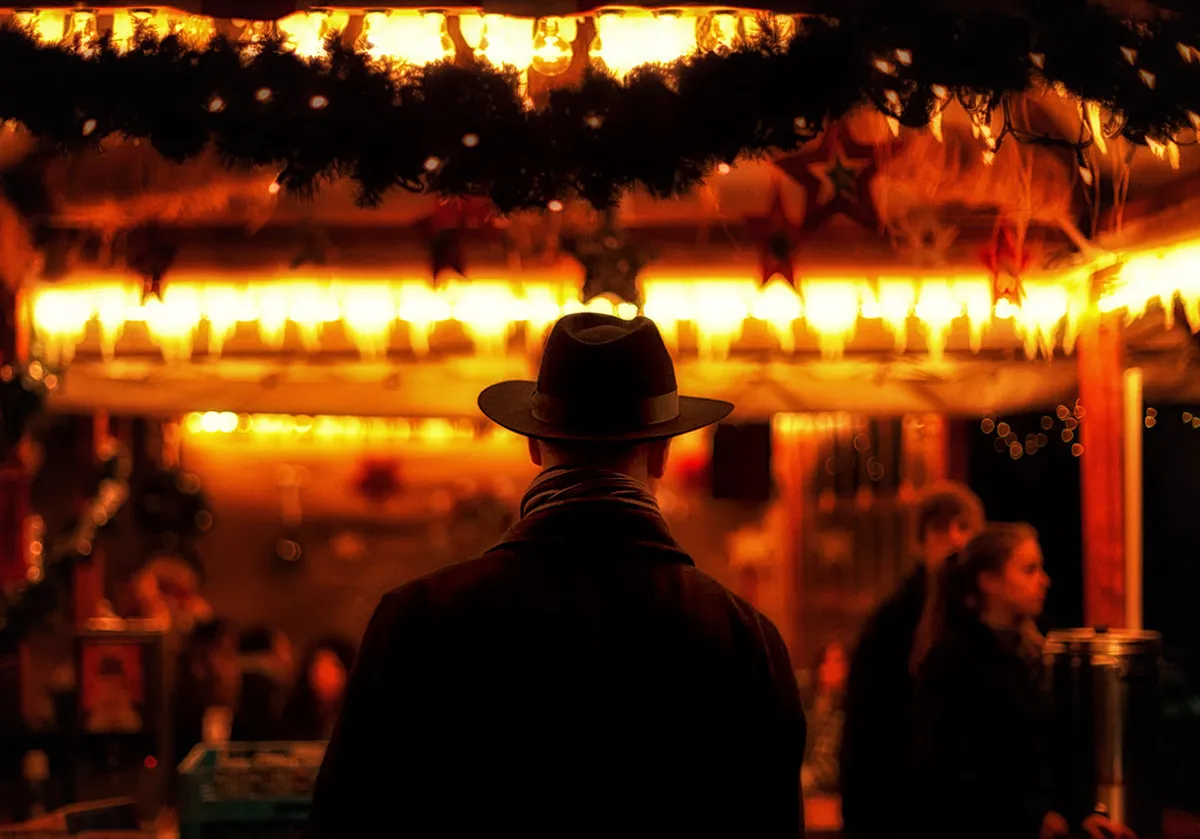
Visitors will find several festive hubs across the historic center during this time. These markets rank among the best Christmas markets in Italy for their unique Tuscan flair. Traditional wooden stalls and glowing lights transform the Renaissance city into a winter wonderland.
This guide covers every market worth visiting in 2026, what to eat and buy, where to sleep, and how to get there — everything you need to plan a complete festive trip to Florence.
Free guide: Europe's Festival Calendar
A month-by-month map of Europe's unmissable festivals — with the best dates to visit each and a local tip you won't find in the guidebooks.
The Main Event: Piazza Santa Croce (Weihnachtsmarkt)
The Piazza Santa Croce market is the largest and most traditional holiday event in the city. Officially called the Weihnachtsmagico Mercato di Natale, it brings a centuries-old German tradition to the heart of Tuscany. More than fifty rustic wooden stalls fill the square with twinkling lights and the scent of grilled sausages and spiced wine. The backdrop of the Santa Croce Basilica makes evening visits especially atmospheric.
In 2025, the market ran from November 15 to December 21 — expect similar dates for 2026, though the official announcement typically comes in September. Stalls open at 10:00 a.m. Monday through Thursday, with extended hours until 11:00 p.m. on Friday, Saturday, and Sunday. Weekday mornings are the least crowded; weekend evenings draw the biggest local crowds. Official opening dates and any special closures are published on the Visit Florence - Official Tourism Site.
Food stalls lean into the market's German roots: Nürnberger bratwurst, hot pretzels, and Vin Brulé served in collectible mugs are the staples. Craft stalls offer handmade ornaments, carved wood items, and woven textiles. Many travelers also pair this with the Rome Christmas market at Piazza Navona for a two-city festive loop.
Lesser-Known Local Markets (Palazzo Corsini & Beyond)
Palazzo Corsini hosts the elegant Nataleperfile market during the second week of December. This boutique event raises funds for seriously ill patients and their families, and the Corsini family opens the ground floor of their baroque palazzo — built in 1649 on a former Medici property — to welcome visitors. The grotto room alone, covered in elaborate stucco and shells, is worth the detour. Admission is free, and goods range from hand-painted textiles made by artisans with special needs to vintage ceramics.
Piazza Ognissanti hosts two separate December events worth knowing. The first weekend of December brings the Fiera Internazionale della Ceramica, a ceramics fair featuring Italian and European potters. On the third Sunday in December, the Fierucola Natale takes over with organic and sustainable crafts: local olive oil, artisan honey, soaps, wooden toys, and fresh cheeses from Tuscan producers. If you want authentically local shopping, this is where to go.
Piazza Santa Maria Novella adds a third outdoor hub, running from December 19 through Epiphany (January 6). The Tyrolean-style stalls here focus on Tuscan handmade crafts — leather, ceramics, glass, handwoven fabrics, and locally produced wine. This market runs later than Piazza Santa Croce, making it the best option for visitors arriving after Christmas. Sustainability is a key focus at smaller markets like the Fierucola di Natale. Buying directly from these makers ensures your holiday spending benefits the local Tuscan economy rather than large import vendors.
Other Festive Events and Holiday Lights in Florence
Florence decorates its streets and bridges with festive lighting from late November through January. The Ponte Vecchio and the Arno embankment are particularly striking on clear December evenings. Piazzale Michelangelo — a panoramic terrace above the city, free to visit — offers the best winter views of the illuminated skyline and is uncrowded at dusk on weekdays.
The Duomo square receives its own seasonal lighting and is free to enter for the main cathedral, making it an easy stop between markets. The neighborhood of Oltrarno hosts smaller one-day craft fairs and live nativity scenes (presepi) made from terracotta throughout December. San Spirito and the surrounding streets often have pop-up artisan stalls and live music on weekend afternoons. These neighborhood events complement the main market circuit and reward visitors who spend more than one day in the city.
For museum visits, book the Galleria dell'Accademia (Michelangelo's David) and the Uffizi Gallery in advance — queues are shorter in December than in summer but skip-the-line tickets still save 30–60 minutes. The Feel Florence - Official City Guide publishes a full December events calendar updated in November each year.
What to Eat and Buy at the Florence Markets
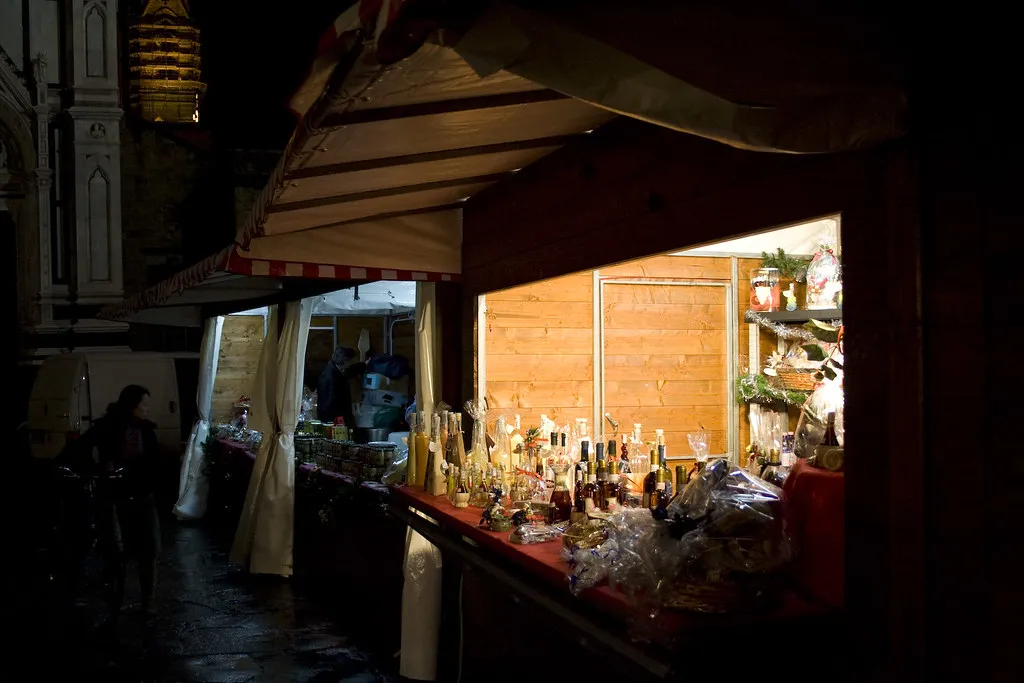
The food at Piazza Santa Croce blends German market traditions with Tuscan seasonal specialties. Beyond bratwurst and pretzels, look for these Tuscan-specific treats that you will not find at most European Christmas markets:
- Vin Brulé — Italy's mulled wine, spiced with cinnamon, cloves, and citrus, served hot in a festive mug. Keep the mug; they are collectible.
- Panforte — a dense, chewy Sienese cake packed with dried fruits, nuts, and spices. The real version is sold by local producers, not the plastic-wrapped tourist variety.
- Ricciarelli — soft almond paste biscuits dusted in powdered sugar, a Sienese speciality that appears on every Tuscan Christmas table.
- Cavallucci — traditional pastry cookies flavored with anise and candied fruit, another Siena export available at most stalls.
- Bombardino — an Italian winter cocktail of egg liqueur and brandy topped with whipped cream, popular at the mountain-style stalls.
- Panettone — artisan versions from Florentine bakeries (filled with pistachio cream or dark chocolate) are far superior to supermarket imports.
For gifts and souvenirs, prioritize items that are genuinely Tuscan-made. The best markers of authenticity: olive wood boards and utensils carved locally (look for the grain variation), handmade leather wallets and gloves from workshops in the Oltrarno district, small jars of truffle honey or porcini mushroom sauce, and hand-painted ceramics with the town-of-origin stamp. Avoid stalls selling mass-produced ornaments with "Made in China" labels — they exist at Santa Croce too. The Palazzo Corsini and Piazza Ognissanti markets have a higher proportion of genuinely artisanal goods.
Logistics: Getting to Florence for the Holidays
Florence is well-connected to major Italian cities via high-speed rail networks. Trains from Rome reach Santa Maria Novella station in just 1 hour 30 minutes. Travelers coming from Milan can expect a journey of approximately 1 hour 40 minutes. Venice connects in just under 2 hours. Book Trenitalia or Italo tickets at least two weeks ahead during December — prices climb steeply in the final week before Christmas. Those visiting the Trento Christmas market first can easily connect via Bologna.
From Florence Airport (Peretola/FLR), tramway Line T2 reaches Santa Maria Novella station in the city center in 20 minutes for around €1.70 per journey — far cheaper and faster than a taxi at peak season. Pisa International Airport (PSA) is another option for European short-haul flights; a direct train to Florence Santa Maria Novella takes roughly 1 hour. From the train station, the main markets are all within a 15-minute walk: Piazza Santa Croce is a direct east on the Via dei Calzaiuoli corridor, and Palazzo Corsini is a 12-minute walk via the Ponte alla Carraia.
Stay in or near the historic center and walk between venues. Most of the December market circuit — Santa Croce, Ognissanti, Santa Maria Novella — fits into a half-day circuit on foot. City buses supplement the trams for outer neighborhoods, and the Feel Florence - Official City Guide provides real-time transport updates and maps.
Where to Stay Near the Markets
Staying in the historic center puts all three main market squares within walking distance and keeps you inside the Christmas lighting displays after dark. The FH55 Grand Hotel Mediterraneo on Lungarno del Tempio sits roughly 8 minutes on foot from Piazza Santa Croce and offers direct river views. Boutique hotels in the Oltrarno district — the south side of the Arno — give easy access to both Santa Croce (Ponte alle Grazie, 7 minutes) and Palazzo Corsini (Ponte alla Carraia, 6 minutes).
For budget travelers, the Santa Maria Novella station area has a dense cluster of three-star hotels and guesthouses. This location is especially convenient for day-tripping to the Bolzano Christmas market via direct high-speed rail — Florence to Bolzano runs in roughly 3 hours with a change in Verona or Bologna. Travelers combining both markets can stay a night in each city without backtracking. Book December accommodation at least 6–8 weeks ahead; the city fills up between December 7 and December 20 when both tourists and Italians from other regions visit for the holidays.
For more accommodation options across Italy's festive season, explore our market accommodation guides covering other major Italian cities.
Essential Tips for Visiting Florence in December
Winter temperatures in Florence range from 3–11°C / 37–52°F, with occasional sharp winds the Tuscans call Tramontana cutting through the open piazzas after sunset. The market atmosphere is best enjoyed after 17:00 when the lights come on, so dress in proper layers — a thermal base, wool mid-layer, and a windproof jacket are the minimum. Florence cobblestones are genuinely slippery when wet; waterproof walking shoes prevent a very avoidable accident. Cold weather drains phone batteries faster than expected, so carry a portable power bank for navigation and photos.
A few practical points that experienced visitors rely on:
- Arrive at Piazza Santa Croce before noon on a weekday for the most relaxed shopping; weekend evenings after 18:00 are the busiest but most atmospheric.
- Christmas Day (December 25) and New Year's Day (January 1) see reduced market hours or closures at some stalls — check the official Visit Florence calendar the week before.
- Many smaller family-run restaurants close for a short break in early January, but the main trattorias near Santa Croce remain open throughout December.
- Museum closures on December 25 and January 1 apply to the Uffizi and Accademia — plan those visits for December 26–30 when crowds are lighter than the pre-Christmas peak.
- Bring a reusable shopping bag for market purchases; most artisan stalls provide minimal packaging to keep their prices low.
December in Florence is significantly quieter than the summer peak, which means shorter museum queues and easier restaurant reservations. The trade-off is occasional rain and cold evenings — the reward is the city looking its most romantic, with Renaissance facades lit against a dark winter sky.
Frequently Asked Questions
When does the Florence Christmas market start?
The main market in Piazza Santa Croce typically starts in late November. It usually runs daily until just before Christmas Day. Most stalls open around 10:00 a.m. each morning.
Is Florence worth visiting at Christmas?
Yes, Florence is very festive and beautiful during the holiday season. The city features stunning light displays and traditional markets. Crowds are smaller than in the peak summer months.
What food should I try at the Florence Christmas market?
You should try the traditional Panforte and local Tuscan honey. The German-style stalls also serve excellent bratwurst and pretzels. Do not miss the warm Vin Brulé on cold evenings.
Visiting Florence for more than one festival? See our complete guide to festivals and events in Florence.
Florence offers a magical holiday experience that blends German traditions with authentic Tuscan craftsmanship. Whether you visit Piazza Santa Croce or a boutique palace market, the atmosphere is truly special. Plan your logistics early to secure the best accommodation near the historic center.
For more Italian holiday inspiration, explore our market accommodation guides. Enjoy the festive lights, warm wine, and the timeless beauty of Florence this winter. Safe travels and happy holidays in one of the world's most beautiful cities.
Free guide: Europe's Festival Calendar
A month-by-month map of Europe's unmissable festivals — with the best dates to visit each and a local tip you won't find in the guidebooks.
You might also like
Continue reading
More guides you'll find useful