10 Essential Munich Christmas Market Dates & Planning Tips
Plan your trip with the official 2026 Munich Christmas market dates. Includes maps, opening hours for Marienplatz, and local tips on food and traditions.
On this page
10 Essential Munich Christmas Market Dates & Planning Tips
Last updated May 2026. The best time to visit Munich for the holidays is between late November and December 23. Visiting during this window ensures you see every major market in its full festive glory. This guide covers the essential best christmas markets in germany found in the Bavarian capital.
Munich transforms into a winter wonderland as the Advent season approaches each year. The city hosts over a dozen distinct markets across various historic squares and parks. You will find traditional crafts, spiced wine, and centuries of history in every corner. Careful planning is required to catch specific events like the famous Krampus run and the live balcony performances.
Most visitors find the first two weeks of December offer the best balance of atmosphere and manageable crowds. Knowing the specific Munich christmas market dates helps you avoid the busiest weekend peaks and plan your route efficiently. This article provides the full 2026 schedule, a market map overview, and practical tips for a well-planned trip.
Free guide: Europe's Festival Calendar
A month-by-month map of Europe's unmissable festivals — with the best dates to visit each and a local tip you won't find in the guidebooks.
Official 2026 Munich Christmas Market Dates & Hours
The main municipal market at Marienplatz opens on November 20, 2026, and runs through December 24. Stalls generally operate Monday through Saturday from 10:00 to 21:00 and Sunday from 10:00 to 20:00. On Christmas Eve the market closes at 14:00. Check the Official Munich Tourism - Christmas Markets page for any last-minute schedule changes.
The Medieval Market at Wittelsbacherplatz runs November 20 through December 23, 2026, and is closed on November 22. Tollwood Winter Festival opens at 14:00 on weekdays and 11:00 on weekends, and it continues past Christmas into late December, making it the best option for visitors arriving after the 24th. The Märchenbazar (Fairytale Bazaar) at Olympiapark runs November 26 through December 28, 2026, with Monday–Wednesday hours of 14:00–22:00, Thursday–Friday 14:00–23:00, and weekends from 11:00–23:00.
Pink Christmas at Stephansplatz runs November 20 through December 20, 2026, opening weekdays at 16:00 and weekends at 14:00. The Christmas Market at the Chinese Tower in the English Garden is open Wednesday through Friday from 11:30 to 20:30, and weekends from 11:00 to 20:30. The Feuerzangenbowle market at the Isartor runs November 23, 2026 through January 1, 2027, Monday through Saturday 11:00–22:00. Compare these schedules to the nuremberg christmas market dates if you plan a Bavarian regional tour.
Munich Christmas Markets Map: Where Each Market Is
Munich's markets are spread across several distinct neighborhoods and it takes time to walk between them. Marienplatz is the geographic center and the logical starting point for any visit. From there, Wittelsbacherplatz (Medieval Market) is a 10-minute walk northwest. Viktualienmarkt sits just two blocks south of Marienplatz and the Sendlinger Tor market is another five minutes on foot from there.
Slightly further afield, the Residenz Christmas Village at the Kaiserhof courtyard is a 5-minute walk northeast of Marienplatz. Pink Christmas in the Glockenbachviertel is about 15 minutes south on foot. The Chinese Tower market in the English Garden requires a 30-minute walk or a quick U-Bahn ride on the U3/U6 to Münchner Freiheit. Tollwood at Theresienwiese sits to the southwest and is easiest reached on the U4/U5 to Theresienwiese station.
A single-day ticket on the MVV network (around €9.20 for a day pass in the inner zones in 2026) makes it practical to combine three or four markets without worrying about taxi costs. Wear comfortable, waterproof shoes — cobblestones and winter slush are the default underfoot surface at every location. Plan your route from the city center outward, finishing at whichever neighborhood you most want to dine in afterward.
Marienplatz: The Heart of Münchner Christkindlmarkt
The munich christmas market at Marienplatz is the city's oldest and most famous, with roots going back to the 14th century. A massive Christmas tree glowing with thousands of lights stands before the New Town Hall. This market features over 130 wooden stalls selling traditional Bavarian ornaments, toys, and food. It is the primary hub for the Munich christmas market dates festivities each Advent season.
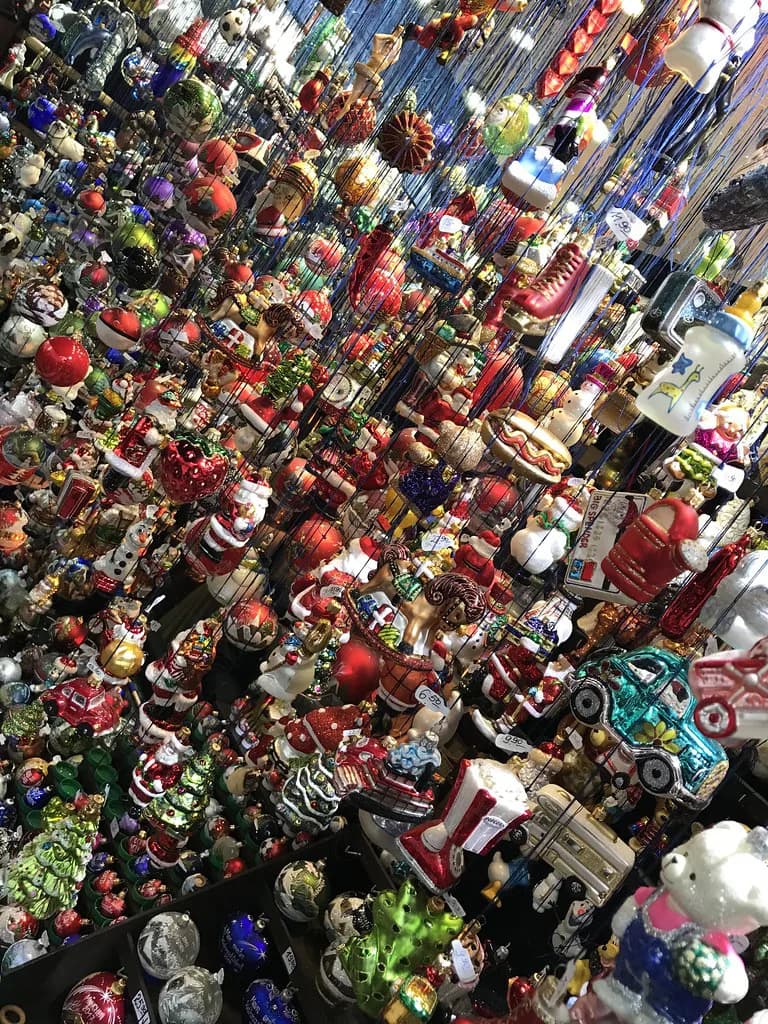
Collectors should head to the Nativity market at the nearby Old Peter church (Alter Peter). This specific section is the largest nativity market of its kind in Germany, with an exceptional range of manger scene figurines. You can find everything from antique wood carvings to modern clay figures here. The craftsmanship runs far higher than the mass-produced souvenir items sold elsewhere in the city.
The town hall balcony hosts live Advent music every evening at 17:30, Sunday through Thursday. Brass bands and choirs perform traditional Bavarian Stubenmusik and holiday carols for the crowds below. Each performance lasts approximately 30 minutes and occurs once, so arrive a few minutes early to secure a good spot in the square. This event is completely free and the acoustic quality in the enclosed plaza is genuinely impressive.
If you want to send a postcard with a special Christkindlmarkt stamp, head to the Rathaus courtyard. Purchase a postcard and postage at the post office around the corner, then drop it into one of the yellow letter boxes — it will be stamped and mailed from inside the market. This is a small tradition that most first-time visitors miss entirely.
Medieval Market at Wittelsbacherplatz
The Medieval Market offers a genuine journey back to the Middle Ages. Vendors wear period costumes and sell goods like hand-forged iron, leather belts, and handmade shields. Food here is cooked over open flames and served in clay goblets rather than the standard mugs you find elsewhere. It runs from November 20 through December 23, 2026, open daily from 11:00 to 21:00 — and the darkness after sunset genuinely amplifies the atmosphere.
Try the Drachenglut, a spiced mulled wine unique to this market, or opt for flammkuchen (Alsatian flatbread) cooked over a beechwood fire. The feuerzangenbowle — a rum-soaked sugar loaf set aflame and dissolved into mulled wine — is also available here. Jugglers and fire performers entertain the crowds on weekend afternoons. This market closes before Christmas Eve, so check your specific visit dates against the schedule above.
Tollwood Winter Festival at Theresienwiese
Tollwood takes place on the same grounds as the famous Oktoberfest. It focuses on international culture, organic food, and environmental sustainability, giving it a distinctly different feel from the municipal markets. Large heated tents house crafts from across the globe alongside diverse food stalls — this is the best place to warm up when the wind cuts in from the Alps. The festival often runs until 01:00 on some nights, longer than any other market in Munich.
The festival continues past Christmas, hosting events through late December. Art installations and theatrical performances are scattered throughout the outdoor areas, and the children's tent has dedicated activities for families. It offers a modern, world-music contrast to the traditional markets in the old town. Entry to the grounds is free, though specific shows and performances inside require a ticket.
Christmas Village at the Residenz and Other Markets Worth Adding
The Christmas Village (Weihnachtsdorf im Kaiserhof) is set inside the inner courtyard of the Residenz, Munich's former royal palace. It runs from mid-November through mid-December, open daily from 11:00 to 21:00 (closing at 20:00 on December 22). The smaller scale means it feels noticeably less crowded than Marienplatz while still delivering a genuinely festive atmosphere. Look for käsespätzle (cheesy egg noodles with fried onions) and gebrannte Mandeln (candied roasted almonds) here — both are particularly good at this market.
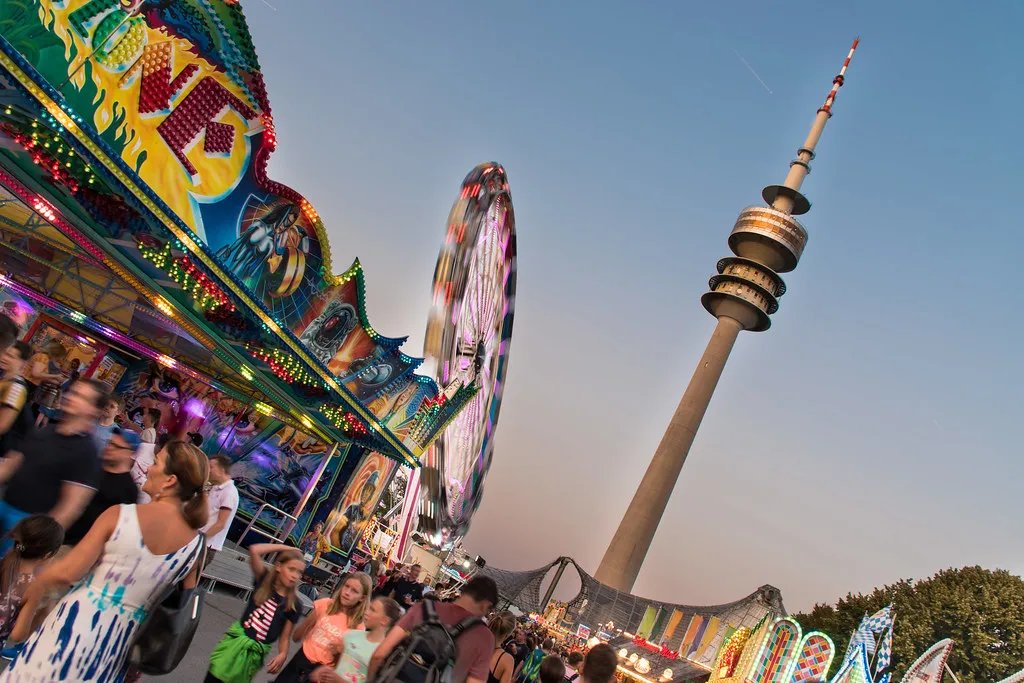
Märchenbazar at Olympiapark is worth the trip for its circus-tent layout, live performances, and world-food stalls serving butter chicken, ramen, and chai alongside the German classics. It is open on Christmas Day and through December 28, which makes it the best fallback if you arrive late in the holiday period. Pink Christmas at Stephansplatz is Munich's LGBTQ-friendly market in the Glockenbachviertel — small, illuminated in pink, and reliably lively on weekend evenings with DJs and live acts. The Schwabinger Weihnachtsmarkt at Münchner Freiheit focuses on locally made goods directly from their makers, which makes it the best choice for buying high-quality gifts rather than imported souvenirs.
The Christmas Market at the Chinese Tower in the English Garden is a converted biergarten with a quieter, more local feel. It stocks locally sourced food including ox sandwiches and auszogene (Bavarian donuts) rarely seen at the central markets. A curling rink on-site is open for bookings via email. The Sendlinger Tor market, dating to 1886, is small but convenient if you are already visiting Pink Christmas nearby.
Family Highlights: Himmelswerkstatt, Kasperl, and the Krampus Run
The Himmelswerkstatt ("Heaven's Workshop") is a dedicated children's zone within the Marienplatz market area. Children can take part in craft workshops, make their own Christmas decorations, and meet seasonal characters. These activities run daily throughout the Advent period and are most accessible on weekday mornings when queues are shortest. Families with children under 10 should build this into their itinerary first before exploring the wider market.
Kasperl theater performances take place at several market stages in the city center, offering short puppet shows in the Bavarian folk-comedy tradition. Performances are primarily in German but the slapstick format is easy to follow for non-German speakers and children of all ages. Check the Marienplatz stage schedule on arrival for daily showtimes — they typically run at midday and again at 15:00.
The Krampus run is an unmissable spectacle if you are visiting in mid-December. More than 300 participants dress in full Alpine beast costumes — horns, fur, chains, and bells — and parade through Marienplatz, mock-chasing bystanders. It usually takes place on the second Sunday of December (December 13, 2026). For families, the upper terrace of a nearby café or the balcony areas around the square offer a safe vantage point to watch without being in the middle of the crowd. Children under about six may find the noise and costumes overwhelming at close range.
Advent Music and Singing Under the Christmas Tree
Beyond the nightly Rathaus balcony performances, Munich hosts a dedicated "Singing Under the Christmas Tree" programme at Marienplatz throughout the Advent season. Community choirs, school groups, and local brass ensembles take turns performing beneath the giant spruce each evening. The programme rotates daily, so no two visits offer exactly the same musical experience. Schedules are posted on the market's official notice boards and updated each week.
What few visitors know is that large-print and Braille versions of the traditional carol texts are available at the market information point near Marienplatz. This makes the communal singing event genuinely accessible for visually impaired visitors — a detail competitors consistently mention but never emphasize. If accessibility is a consideration for your group, ask at the information kiosk on arrival and the staff can point you toward the most accessible standing positions and facilities.
The U-Bahn stops directly at Marienplatz (U3/U6 and U4/U5 intersect there) and the station is fully step-free with lifts to street level. Most of the Marienplatz market itself is flat cobblestone, though the surrounding streets can be uneven. A mobility map is available from Munich Tourism for wheelchair users and those with pushchairs.
Feuerzangenbowle at the Isartor: The Local Alternative
If the Marienplatz crowds become too much, the Feuerzangenbowle market at the Isartor (Isar Gate) is the single best move a first-time visitor can make. This market runs from November 23, 2026 through January 1, 2027 — longer than any other market except Tollwood — and its central draw is a custom-built 9,000-litre kettle producing feuerzangenbowle: mulled wine with a rum-soaked sugar loaf set aflame over the top before serving. The presentation alone is worth the detour.
The market sits at one of Munich's remaining medieval city gates and draws a more local crowd than the Marienplatz hub. Prices for food and drinks are broadly similar to other markets, but the atmosphere is noticeably calmer on weekday evenings. Hours are Monday through Saturday 11:00 to 22:00, Sunday 11:00 to 21:00, and Christmas Eve 11:00 to 14:00. No competitor article we found specifically positions this market as the best escape-the-tourist-crush option — it is consistently listed among ten others without any emphasis on its crowd dynamic.
Practical Tips: Cash, Pfand, Toilets, and Weather
Germany remains a cash-heavy society, especially at traditional outdoor market stalls. While some larger vendors accept cards, most food and drink stalls are cash-only. ATMs are available at all major markets but charge a fee — withdraw cash at a bank ATM before you set out. Expect to pay a deposit, or Pfand, of €3 to €5 for your Glühwein mug. You get this money back when you return the mug to any stall at the same market.
Many visitors choose to keep a mug as a souvenir. Each market typically has its own design with the year printed on the base — 2026 editions are collected from mid-December onward once the final run goes on sale. If you return the mug you keep the €3–5 deposit; if you keep it, the mug costs no more than a souvenir from any gift shop. Bathrooms at the markets are generally clean and cost around €1 or less to use. The Marienplatz toilets are located in the Rathaus courtyard and accept card payments.
Weather in Munich during the Advent season is typically cold and damp. Expect temperatures between -2°C and 4°C / 28°F and 39°F during the day. Snow is possible but often turns to slush on the busy city center streets. Be aware of the Föhn wind, a warm Alpine breeze that occasionally causes temperatures to rise sharply and can bring clear skies but also headaches for some people. A heavy wool coat or down jacket, waterproof boots, a wool hat, and gloves are all essential.
The "golden hour" window of 15:00–17:00 is the single best time to visit. You see the stalls in the last daylight, the illuminations switch on while the sky is still dusky, and the post-work crowd has not yet arrived. Weekday mornings before 13:00 are the quietest across all markets. Avoid Friday and Saturday evenings if you want any meaningful access to the food stalls.
Sample Munich Christmas Market Itinerary
A two-day itinerary covers the essential markets without feeling rushed. On day one, start at Marienplatz by 10:00 to browse stalls before the lunchtime crowd builds. Walk to the Nativity market at Alter Peter, then cross to the Christmas Village at the Residenz. Return to Marienplatz at 17:30 for the balcony music performance. End the evening at the Medieval Market at Wittelsbacherplatz, which is at its best after dark.
On day two, take the U-Bahn to Theresienwiese for Tollwood when it opens at 14:00 on a weekday (11:00 on weekends). Spend two hours exploring the tents and art installations, then head south by U-Bahn or on foot to the Glockenbachviertel for Pink Christmas in the evening. If time allows, add the Isartor Feuerzangenbowle market as a final stop — it closes at 22:00 and is a 15-minute walk east of Marienplatz.
Families with children should swap day one's evening section for the Himmelswerkstatt workshops (run during daytime) and build the Krampus run into a Sunday visit in mid-December. Budget approximately €25–35 per adult per day for food, drinks, and Pfand deposits, not including transport or accommodation. Consult our where to stay for munich christmas market guide for central hotel options within easy walking distance of Marienplatz.
Beyond Munich: Regional Christmas Market Options
Many travelers combine Munich with a short rail trip to other Bavarian and German markets. Nuremberg is 70 minutes north by ICE train and its Christkindlesmarkt (November 27–December 24, 2026) is widely considered the most traditionally German of all major markets. You can also see the berlin christmas market dates for a more urban, modern contrast. Check the Cologne Tourism Christmas Guide for the famous cathedral-backdrop markets in the west.
If you prefer a shorter regional loop, the german christmas markets road trip through Bavaria covers Rothenburg ob der Tauber and Augsburg in addition to Munich and Nuremberg. Official sites like the Dresden Christmas Markets Official page offer Eastern Germany options with a longer season running through December 31, 2026. Potsdam's market (November 23–December 27, 2026) pairs well with a Berlin visit — see the Potsdam Christmas Market Dates guide for specifics.
Frequently Asked Questions
When do the Munich christmas market dates start in 2026?
The main Munich Christmas market at Marienplatz starts on November 20, 2026. Most other markets in the city open on the same day. They typically run until the early afternoon of December 24.
Is Munich or Cologne better for Christmas markets?
Munich offers a traditional Bavarian atmosphere with Alpine influences. Cologne is famous for its cathedral backdrop and diverse themed markets. Both are excellent, but Munich is better for those seeking mountain scenery nearby.
Are German Christmas Markets Free?
Yes, almost all Christmas markets in Munich and across Germany are free to enter. You only pay for the food, drinks, and crafts you buy. Some specific events or indoor shows may require a ticket.
What is the Krampus run in Munich?
The Krampus run features over 300 people dressed in scary, traditional Alpine beast costumes. It usually takes place on a Sunday in mid-December at Marienplatz. It is a loud and exciting folk tradition for all ages.
Visiting Munich for more than one festival? See our complete guide to festivals and events in Munich.
Munich is a premier destination for anyone wanting a traditional German holiday. The variety of markets ensures that every traveler finds something to enjoy. By following the official Munich christmas market dates, you can plan a seamless trip. Visit festivian.com/blog for more winter travel inspiration and tips.
Remember to dress warmly and keep plenty of cash for the stalls. The magic of the Bavarian capital in December is something every traveler should see. Book your travel early to secure the best spots in this winter wonderland.
Free guide: Europe's Festival Calendar
A month-by-month map of Europe's unmissable festivals — with the best dates to visit each and a local tip you won't find in the guidebooks.
You might also like

Continue reading
More guides you'll find useful