St Dominic's Fair Gdansk 2026: A Complete Visitor Guide
St Dominic's Fair Gdansk 2026: dates, what to buy, amber-buying tips, the cultural programme, and how to plan a Main Town trip around the fair.
On this page
St Dominic's Fair Gdansk 2026: A Complete Visitor Guide
The first time I walked into St Dominic's Fair, I did not realise I had walked into it. I had come to Gdansk for the architecture — the tall, gabled merchant houses along Długi Targ, the brick bulk of St Mary's Church — and turned a corner to find the whole Main Town swallowed by stalls. Amber glinting under canvas awnings, grilled sausage and mulled cherry drifting up from the Motława waterfront, a brass band somewhere out of sight. It took me a full day to grasp that this was Jarmark św. Dominika, and that people had been doing exactly this on these streets since the thirteenth century.
St Dominic's Fair is one of the oldest and largest open-air trade and cultural events in Europe. Founded in 1260 under a papal privilege granted to the Dominican friars, it has run for more than 760 years — through wars, partitions, and the near-total rebuilding of Gdansk after 1945. For three weeks each summer it turns the historic core into a marketplace of roughly a thousand stalls, layered over a busy programme of concerts, parades, and street theatre.
This guide covers what I wish I had known before that first accidental visit: the 2026 dates, what is worth buying, how to shop for amber without overpaying, and how to build a trip around the fair. For everything else the city stages across the year, see our Gdansk festival calendar.
Free guide: Europe's Festival Calendar
A month-by-month map of Europe's unmissable festivals — with the best dates to visit each and a local tip you won't find in the guidebooks.
What Is St Dominic's Fair: 760 Years of Trade
Jarmark św. Dominika began in 1260 as a religious fair tied to the feast of Saint Dominic, held around the Dominican priory near what is now the Market Hall (Hala Targowa). The privilege that established it granted indulgences to visitors, which — in the economy of a Hanseatic port — was as much a commercial magnet as a spiritual one. Merchants followed the pilgrims, and within a couple of centuries the fair had grown into one of the great trading events of the Baltic.
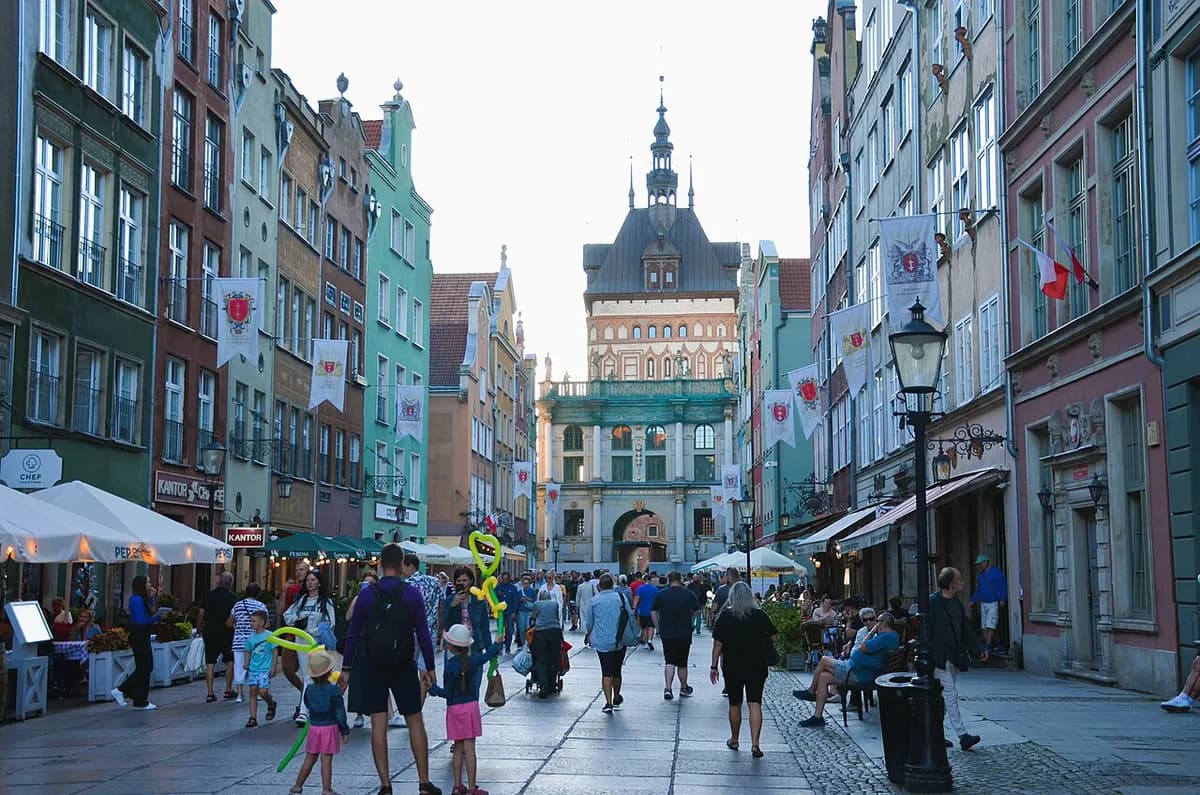
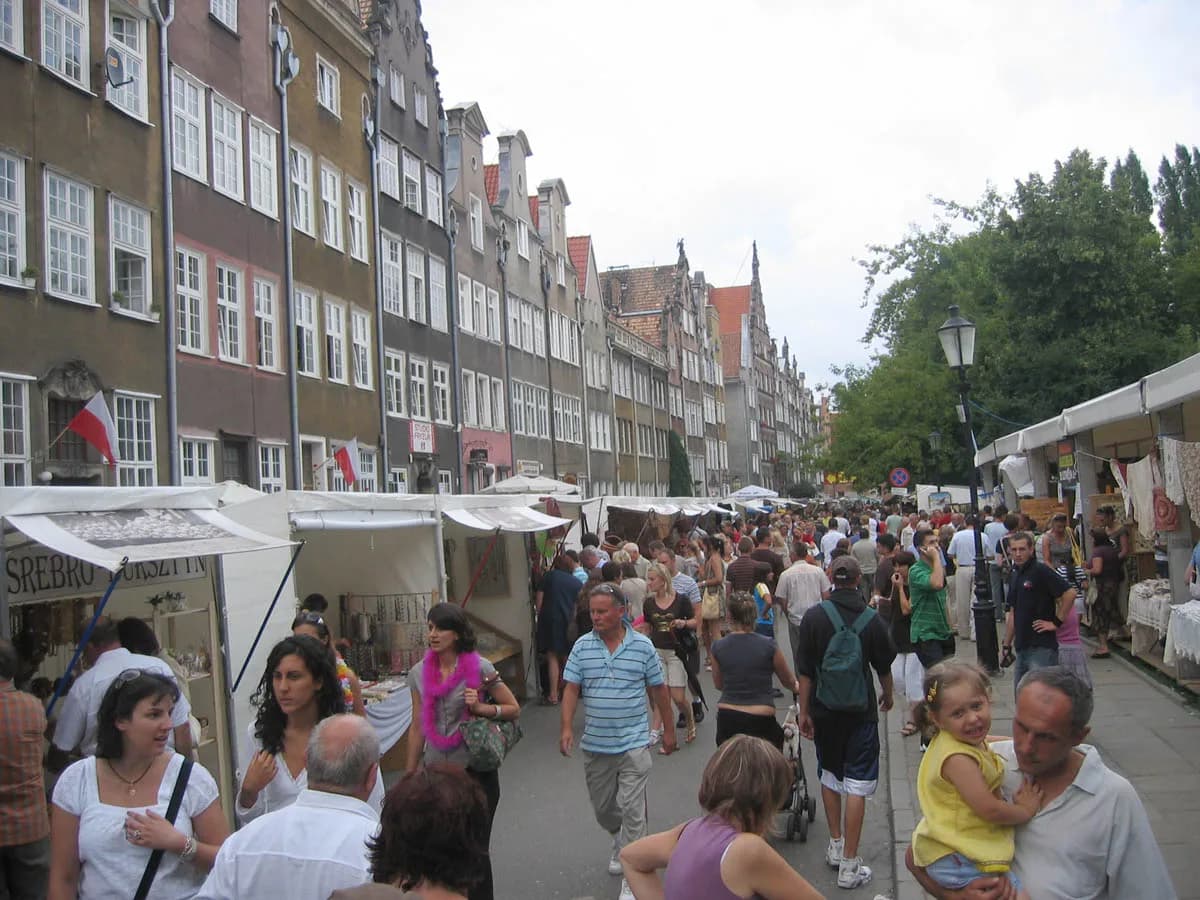
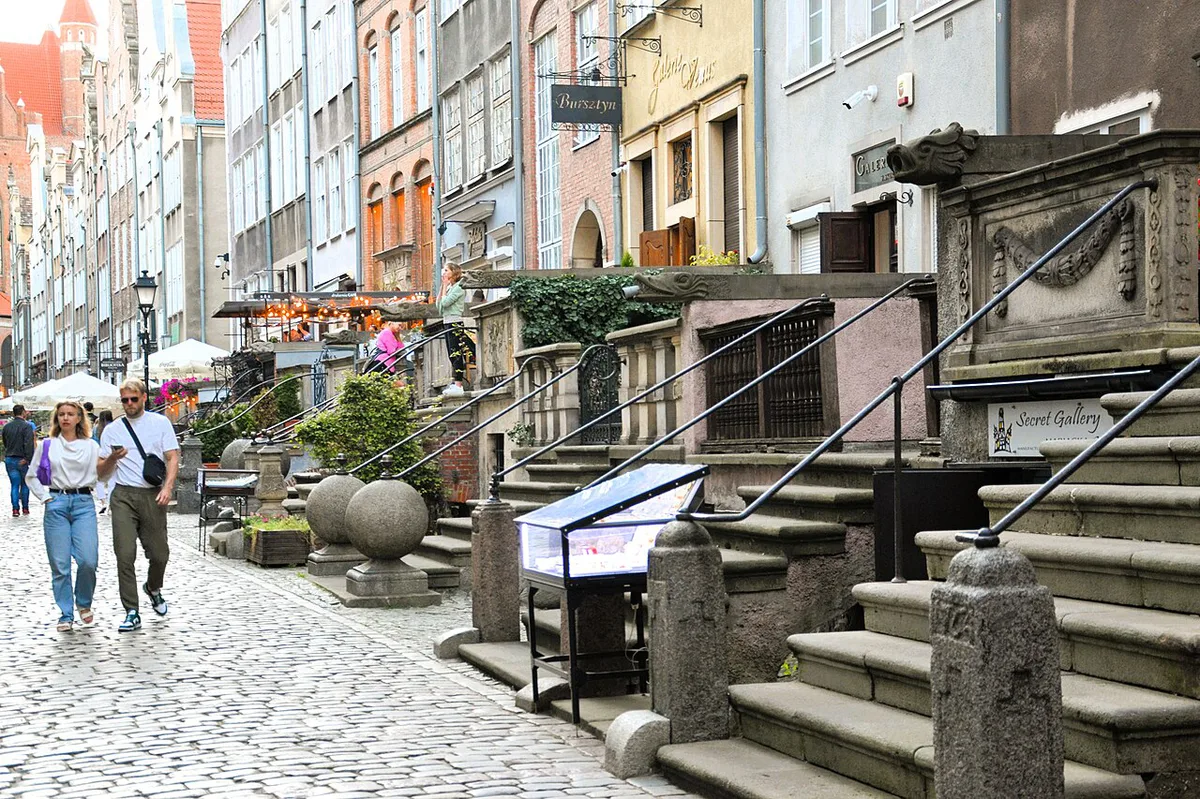
What survives today is that same instinct, scaled up for a modern crowd. A thousand or more stalls fill the Main Town during the fair, concentrated along Długi Targ (the Long Market), the parallel Piwna and Mariacka streets, and the Motława riverfront by the medieval Crane (Żuraw). Stallholders range from professional antiques dealers and jewellers to folk-craft makers, artists, and food vendors, and the fair draws several million visits across its three-week run — a figure that puts it among the biggest events of its kind on the continent.
| Detail | What to know |
|---|---|
| 2026 dates | Approx. 25 July – 16 August 2026 (about three weeks) |
| Founded | 1260, under a papal privilege granted to the Dominican friars |
| What's sold | Baltic amber, antiques and collectibles, folk crafts, and regional food |
| Entry cost | Free — no ticket, gate, or wristband |
| Where | Main Town, along Długi Targ, Gdansk |
| Best time to go | Weekday mornings to browse; evenings and weekends for the culture |
Crucially, the fair has never stopped being a genuine market rather than a museum piece. You are not watching re-enactors pretend to trade; you are watching real dealers sell real goods, from nineteenth-century porcelain to hand-thrown pottery to Baltic amber pulled from the sea up the coast. That mix of the everyday and the historic gives Jarmark św. Dominika its particular texture.
When It Happens: 2026 Dates and Timing
St Dominic's Fair runs for roughly three weeks in the second half of summer. In 2026 the fair is expected to run from around 25 July to 16 August, following the pattern of recent years, which typically open the fair in late July and close it in mid-August. Treat these as indicative rather than locked: the organiser, the Gdansk International Fair (MTG), confirms the exact opening and closing dates in spring or early summer, so it is worth checking the official fair website before you book non-refundable travel.
That places the fair squarely in the peak of the Baltic-coast summer, when Gdansk and neighbouring Sopot are already busy with beach visitors. The upside is long, warm evenings and a city in full swing; the downside is competition for accommodation and higher prices. Entry to the fair itself is free — no ticket, no gate, no wristband — so your budget goes on where you sleep, what you eat, and what you carry home.
The fair is at its best in the evenings and at weekends, when the light softens over the Motława, the food stalls hit their stride, and the stage programmes come alive. Weekday mornings are the quietest window for browsing the antiques and amber stalls without shoulder-to-shoulder crowds. If you want both, arrive for a weekday morning and come back the following evening.
What to Buy: Amber, Antiques, and Crafts
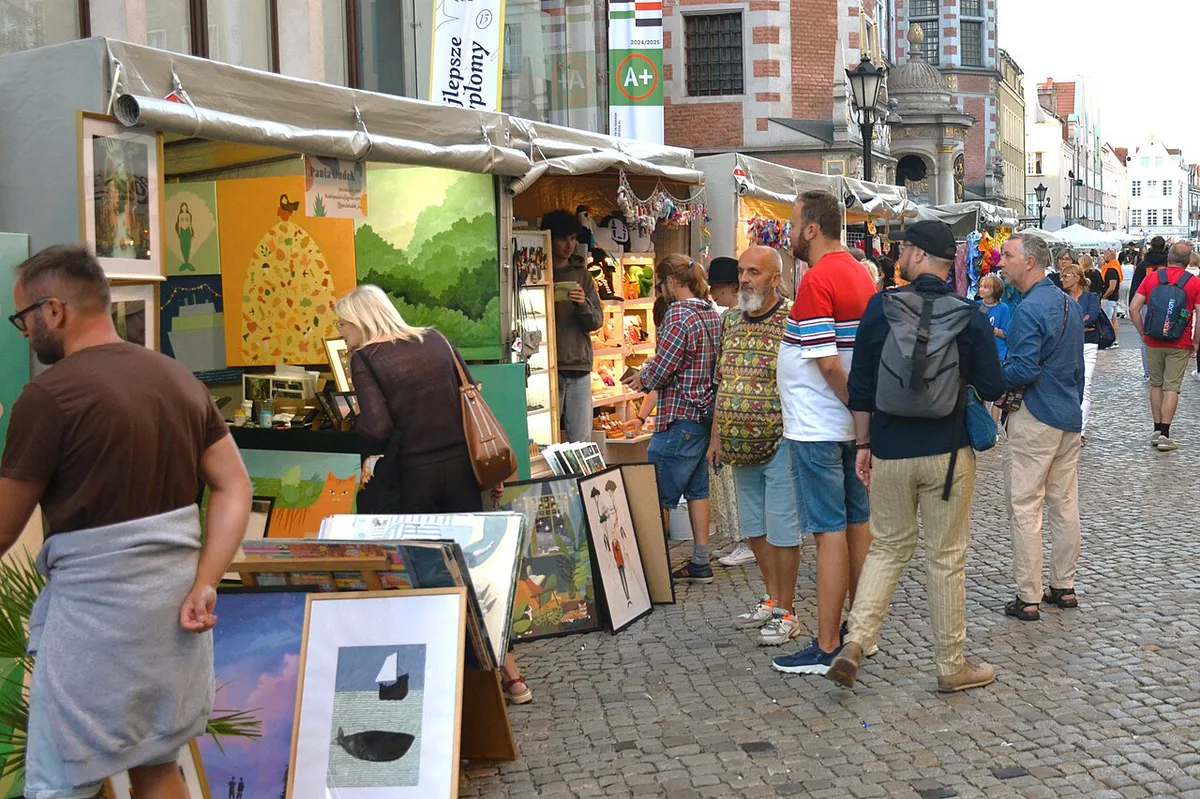
Gdansk calls itself the world capital of amber, and St Dominic's Fair is where that claim is easiest to test. Dozens of stalls sell Baltic amber in every form — raw lumps, polished cabochons, silver-set pendants, full necklaces, and the honey-to-cognac colours the fossilised resin takes on. Prices vary enormously, from a few złoty for a tumbled stone to several hundred for a designer piece, so walk a few stalls and get a feel for the going rate before you commit.
Beyond amber, the antiques and collectibles stalls are the real heart of the fair for many regulars: old coins and banknotes, militaria, vinyl records, vintage postcards of pre-war Danzig, glassware, porcelain, and curios that reward a patient rummage. Folk-craft makers sell ceramics, embroidered linen, wooden toys, and regional Kashubian designs, while artists and jewellers offer work you will not see in the chain shops. And running through all of it is the food: grilled sausage, pierogi, oscypek cheese, fresh Baltic fish, honey, and regional beer and mead.
Beyond the Stalls: Concerts and Street Theatre
What lifts St Dominic's Fair above an ordinary flea market is the cultural programme wrapped around the trading. Across the three weeks the Main Town hosts open-air concerts, parades, historical re-enactments, and street performers — jugglers, fire-eaters, buskers, and theatre troupes — along Długi Targ and the waterfront. Much of it is free and unticketed; you simply walk into it, the way I did on that first visit.
The fair even has its own presiding character, Professor Bartholomew (Profesor Bartłomiej), a folkloric figure who embodies its traditions and turns up in its parades and imagery. The opening weekend usually features a ceremonial procession that formally launches the fair, and the programme threads sporting events, children's activities, and evening stage shows through the whole run. Check the daily schedule on the official site once you are there — the line-up shifts from day to day, and the best concerts are easy to miss.
Treat the culture as the reason to stay into the evening. Browse in the cooler part of the day, then find a spot on the Motława with a beer and a plate of grilled fish and let the parades and music come to you — it is when the fair feels most like the centuries-old civic celebration it is.
Planning Your Visit: Stay, Transport, and Beaches
The single best decision you can make is to base yourself in or very close to the Main Town. The fair has no single venue — it is the streets — so staying in the historic core means you step straight into it each morning and can drift back for the evening programme without arranging transport. Gdansk's centre is entirely walkable, and the main train station (Gdańsk Główny) is a ten-minute walk from Długi Targ, so arriving by rail from Warsaw or the airport is straightforward.
Because August is the Baltic high season, book accommodation months ahead, especially for the fair's weekend nights. The fair is genuinely family-friendly — wide pedestrian streets, plenty of food, street performers children love — so it suits a multi-generation trip. Bring cash as well as cards; some smaller stallholders prefer złoty in hand, and there is nothing worse than finding the perfect piece of amber at a card-free stall.
The obvious pairing is the beach. The resort town of Sopot sits fifteen minutes up the coast by frequent SKM commuter train, with a long sandy Baltic beach and Europe's longest wooden pier, so you can easily split a day between fair shopping in the morning and sea air in the afternoon. For the full year, our Gdansk festival calendar covers everything the city stages, including the Gdansk Christmas market that is the winter counterpart to the summer fair. And if you are plotting a wider trip, our festivals and events in Europe by city guide sets Gdansk alongside the continent's other great seasonal events.
Opening Hours and Arriving by Car
One thing I only worked out on a return trip: the fair keeps regular daily hours. In 2026 the stalls open each day from 10am, with the food and craft trade running through the day and into the evening, and the whole run opens on Saturday 25 July with a ceremonial handover of the city keys around noon on the Artus Court forecourt. If you are an early riser, that 10am opening is your quietest window at the amber and antiques stalls.
Driving in is where people come unstuck. The Main Town streets are closed to traffic for the fair, so do not aim your car at Długi Targ. Instead use the city's Park&Ride at Plac Zebrań Ludowych — roughly 15 złoty a day, a little less with a city card — and walk or take a tram the short remaining distance. There is also a park-and-shuttle option out at the Polsat Plus Arena and AmberExpo car parks, with a bus into the centre. Note that e-scooters cannot be ridden or parked within the fair grounds.
Frequently Asked Questions
When is St Dominic's Fair in Gdansk in 2026?
St Dominic's Fair 2026 is expected to run for about three weeks from roughly 25 July to 16 August 2026, in line with recent years. The organiser, the Gdansk International Fair (MTG), confirms the exact opening and closing dates in spring or early summer, so check the official fair website before booking non-refundable travel.
How much does it cost to get into St Dominic's Fair?
Entry to St Dominic's Fair is completely free. There is no ticket, gate, or wristband — the fair fills the public streets of the Main Town, so you simply walk in. Your spending goes on shopping, food, drink, and accommodation rather than admission.
What can you buy at St Dominic's Fair?
The fair has around a thousand stalls selling Baltic amber jewellery, antiques and collectibles, coins, folk crafts, ceramics, art, and regional food and drink. Amber is the signature purchase — Gdansk is known as the amber capital — but the antiques and collectibles stalls are a highlight for many regular visitors.
How old is St Dominic's Fair?
St Dominic's Fair was founded in 1260 under a papal privilege granted to the Dominican friars in Gdansk, which makes it more than 760 years old. It is one of the oldest and largest open-air trade and cultural events in Europe, and it has run through wars, partitions, and the rebuilding of the city.
How do I buy genuine amber at the fair?
Buy from certified sellers who can provide a certificate of authenticity, especially for higher-priced pieces. Genuine Baltic amber is warm and light to the touch and floats in salted water. Amber prices vary wildly between stalls, so compare a few before committing, and be wary of large, flawless pieces offered at prices that seem too low.
Related: Festivals and Events in Gdansk: Your 2026 Calendar.
St Dominic's Fair is the rare event that works on almost every level of travel. Come for the amber and you leave with a piece of the Baltic; come for the antiques and you lose a happy afternoon in the stalls; come for the atmosphere and you find a 760-year-old civic celebration in full voice along the Motława. It is free to enter, easy to reach, and generous with its time — three weeks is long enough that you never feel you have to rush.
If you take one thing from this guide, plan around the evenings and book your bed early. Confirm the dates on the official site once published, secure a place in or near the Main Town, and leave an afternoon for the beach at Sopot. Do that, and Jarmark św. Dominika will give you the best of a Gdansk summer in a single, walkable, centuries-old package.
Free guide: Europe's Festival Calendar
A month-by-month map of Europe's unmissable festivals — with the best dates to visit each and a local tip you won't find in the guidebooks.
You might also like

Continue reading
More guides you'll find useful