
Festivals and Events in Tallinn (2026): The Year-Round Guide
Year-round guide to Tallinn festivals and events 2026: Music Week, Old Town Days, Jaanipäev, PÖFF film festival, and the award-winning Christmas Market.
On this page
Festivals and Events in Tallinn (2026): The Year-Round Guide
Tallinn's medieval Old Town is one of the best-preserved in Northern Europe, and the city uses it exceptionally well. The 2026 calendar runs from a global music showcase in March to what is regularly voted one of Europe's finest Christmas markets in December — with Midsummer bonfires, international film premieres, opera at a ruined convent, and tall ships in the harbour somewhere in between. If you are weighing up when to visit Estonia, this guide covers every major event and the practical details behind each one.
I first visited Tallinn for Old Town Days in early June, when medieval costumed performers filled Raekoja plats and concerts spilled out of every courtyard. I have since come back in November for the Black Nights Film Festival and in December for the Christmas Market — and each version of the city feels genuinely distinct. The full year-round calendar is published by Visit Tallinn, but the events worth building a trip around are the ones I have covered here.
This hub focuses on what each event feels like on the ground — the venues, the crowd dynamics, the logistics — and points to deeper guides for the bigger occasions. Tallinn is compact enough that a long weekend covers most of the Old Town's event geography on foot. Getting in is easy: the airport sits 4 km from the city centre, and the ferry from Helsinki takes two to three hours.
Free guide: Europe's Festival Calendar
A month-by-month map of Europe's unmissable festivals — with the best dates to visit each and a local tip you won't find in the guidebooks.
Why Tallinn's Event Calendar Works
Tallinn Old Town — Vanalinn — is a UNESCO World Heritage Site with 700-year-old limestone towers, intact medieval walls, and a Town Hall Square (Raekoja plats) that functions as a natural outdoor stage year-round. Almost every major event takes place within 1.5 km of each other, which is genuinely unusual for a European capital: you can walk from a morning concert in the Lower Town to an afternoon craft market at the medieval guild hall without needing a tram.
The city's size — around 460,000 people — keeps events human-scale. Even PÖFF, one of Northern Europe's largest film festivals, runs across a handful of centrally located cinemas you can reach on foot. Prices stay lower than Western European equivalents: a beer at a festival costs roughly €3–5, and many of the summer street events are free. The event calendar rewards visitors who plan by season rather than by a single date.
Spring: Tallinn Music Week and Jüriöö
Tallinn Music Week, held across late March and early April, is a five-day city-wide showcase filling more than 50 venues — clubs, concert halls, courtyards, and converted warehouses — with Estonian and international artists. The event runs roughly 200 concerts in parallel, making it less a single festival than a coordinated takeover of the city's music infrastructure. Full passes cost around €60–80; a number of daytime and outdoor shows are free.
Jüriöö — St George's Night, 23 April — has a different register. It commemorates the 1343 Estonian peasant uprising against the Teutonic Order, and while it is primarily a historical remembrance, the Old Town holds candlelit processions, small cultural performances, and occasional outdoor events around the anniversary. It is a reminder that Estonia's festival calendar is as much about national memory as cultural entertainment.
Early Summer: Old Town Days (Vanalinna Päevad)
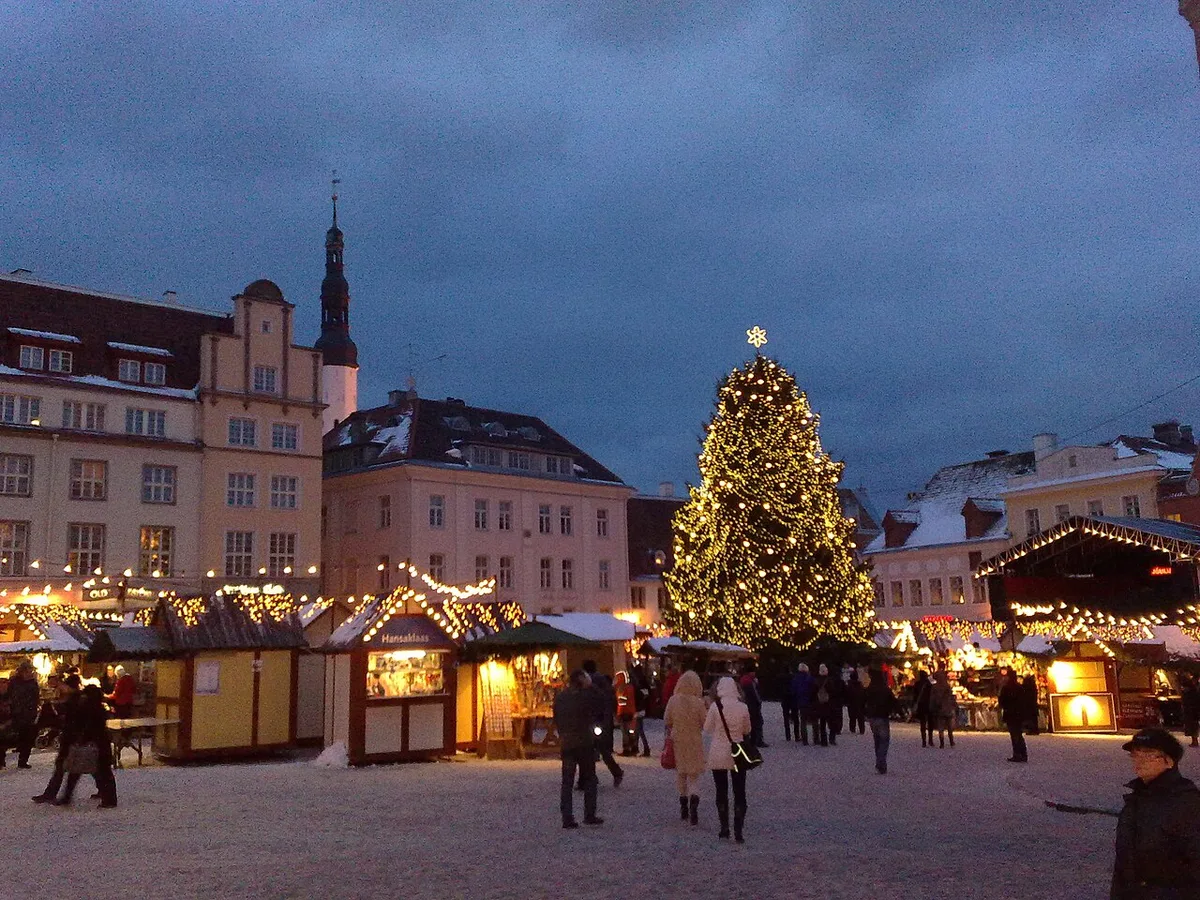
Old Town Days typically runs for four to five days in the first week of June, transforming Raekoja plats and the surrounding medieval lanes into an open-air historical fair. When I arrived on the opening afternoon, I found armoured knights sparring in front of the Town Hall, a working smithy in the square's north-east corner, and a troubadour performing inside the courtyard of the Great Guild Hall. Most events are free to attend.
The week includes medieval craft markets, archery demonstrations, fire-juggling, and evening concerts ranging from folk to contemporary Estonian pop. The combination of genuine 14th-century architecture and living-history performers makes Old Town Days one of the most photogenic events in the Baltic states. Because it occupies public squares rather than ticketed enclosures, it is also one of the easiest festivals in Tallinn to dip in and out of at your own pace. Organisers confirm exact dates each spring at tallinnoldtowndays.ee — check the official site for 2026 details.
Midsummer: Jaanipäev and the Bonfires
Jaanipäev — St John's Day, 23–24 June — is the biggest holiday in the Estonian year. The tradition centres on jaanilõke: bonfires built large enough to jump over, singing, and being outdoors under the near-midnight sun until the sky finally darkens. Tallinn itself is quieter than the countryside on Jaanipäev: most Estonians leave the city and gather at family summer houses or at communal bonfire sites along the coast.
The most accessible bonfire experience near Tallinn is at Pirita beach, north-east of the city centre (tram 1 or 5 from Viru). Larger public Jaanipäev events are also organised at Rocca al Mare and in several Tallinn parks. The atmosphere is warm and domestic rather than touristy — foreigners are welcome at public events, but the heart of the holiday is distinctly Estonian, and that is precisely part of its appeal for curious visitors.
July–August: Maritime Days and the Birgitta Festival
Tallinn Maritime Days, held each July, uses two harbours as its backdrop: the historic Pirita marina and the Noblessner creative quarter — a repurposed submarine shipyard on the city's western edge, now housing restaurants, galleries, and a large outdoor stage. The event brings in tall ships, rowing competitions, street food markets, and evening concerts. Entry to the Noblessner waterfront events is free; some onboard ship tours carry a small fee.
The Birgitta Festival in August is the cultural counterpart: more contemplative and more rarefied. Opera, classical concerts, and theatre take place in the open-air ruins of the Pirita Convent — a 15th-century monastery gutted by Ivan the Terrible's forces in 1577 and left standing as an atmospheric skeleton of arched limestone walls. Performances begin at dusk, which in August still means an orange Baltic sky over the ruins. Tickets range from €15 to €60 depending on the production; book in advance, as outdoor performances sell out well ahead.
Autumn: PÖFF — the Black Nights Film Festival
The Tallinn Black Nights Film Festival — PÖFF in Estonian — runs for around 11 days in mid-to-late November and is the largest film festival in Northern Europe by programme scope. It carries FIAPF accreditation (the same body that accredits Cannes and Venice), which means its competition sections carry real international weight. In 2026, the festival is expected to screen more than 250 films from over 60 countries across venues including Sõprus cinema, Coca-Cola Plaza, and the Art Museum of Estonia.
Individual screening tickets cost €5–12, and the atmosphere is more relaxed than you might expect at an accredited international festival. I once watched two films back-to-back at Sõprus, the independent cinema just inside Viru Gate, and found the audience enthusiastically mixed: directors and actors regularly attend Tallinn screenings because the city is small enough to be genuinely accessible. PÖFF also runs HÕFF (a horror sidebar), Just Film (children's programme), and an Industry track for film professionals.
December: The Tallinn Christmas Market
The Tallinn Christmas Market in Raekoja plats is the centrepiece of the winter calendar — and for good reason. Running from late November into the first days of January, it occupies the same medieval square as Old Town Days but transformed: wooden market stalls ring the perimeter, the 15th-century Town Hall is lit in gold, and the central spruce tree stands at the heart of the scene. Estonia claims to have erected one of Europe's first public Christmas trees here in 1441, and the tradition of the decorated spruce in this square has continued ever since.
The market's reputation — regularly voted one of Europe's best alongside Vienna and Strasbourg — is backed by genuine food and craft quality. The specialities are distinctly Estonian: hõõgvein (mulled wine, the local equivalent of Glühwein), marzipan from the Old House Marzipan Room (a Tallinn institution dating to the medieval period), kama desserts, and blood sausage with lingonberry sauce from the evening stalls. Check the exact opening dates and reduced Christmas hours before you travel — the market runs through 25 December but keeps shorter hours on 24–25 December.
- Hõõgvein — Estonian mulled wine, served from stalls around the square
- Marzipan — Tallinn has been producing it since the 15th century; the Old House shop is the best source
- Kama — a roasted grain and dairy dessert unique to Estonia
- Blood sausage with lingonberry sauce — the traditional winter street food
- Roasted almonds and caramelised walnuts — in paper cones from several vendors
New Year's Eve in Tallinn brings fireworks over Old Town, with Raekoja plats as the best free vantage point. The square fills from around 23:00; wear serious layers. If you are planning to stay near the market — and you should, because the evenings are when the atmosphere peaks — there is practical accommodation advice in our guide on where to stay for the Tallinn Christmas Market.
Getting to Tallinn and Getting Around
Lennart Meri Tallinn Airport is 4 km from Old Town. Tram line 4 runs directly to the Viru stop — the eastern gateway of the Old Town — in around 20 minutes; a single fare costs €1.50 with a contactless card. Taxis take 10 minutes and cost roughly €8–12.
The Helsinki–Tallinn ferry route is one of the busiest sea crossings in Northern Europe. Tallink, Viking Line, and Eckerö Line run multiple crossings daily: fast ferries complete the crossing in around two hours, standard ferries in three and a half. The passenger terminal is a 15-minute walk from Old Town, or one tram stop. Day trips from Helsinki are feasible — a 6:00 AM departure reaches Tallinn by 08:00 — but a single overnight stay captures the evening festival atmosphere far better, especially for the Christmas Market or PÖFF. If you are pairing the two cities, the festivals and events in Helsinki sit just a two-hour ferry across the gulf.
For Old Town events, walking is sufficient: the historic centre's diameter is barely a kilometre. The Tallinn Card (24, 48, or 72 hours) covers unlimited public transport, free entry to most state museums, and partner discounts — useful if you are heading to Pirita for Maritime Days or the Birgitta Festival. The currency is the euro; Estonia adopted it in 2011 and there are no Estonian kroons in circulation.
Frequently Asked Questions
What is the best time to visit Tallinn for festivals?
December is the most atmospheric month, when the Christmas Market fills Town Hall Square and the medieval Old Town is lit up after dark. Early June — during Old Town Days — is the second best window: the weather is mild, the events are free, and the medieval setting is at its most photogenic. November is excellent if you are interested in film, thanks to PÖFF.
Is the Tallinn Christmas Market worth visiting?
Yes — it is consistently ranked among the best Christmas markets in Europe. The market occupies a genuine medieval Town Hall Square, the food is distinctly Estonian (hõõgvein, marzipan, kama), and the spruce tree at the centre of the square has historical roots going back to 1441. It feels less commercial than many Western European equivalents and is more compact and walkable.
What is Jaanipäev like in Tallinn?
Jaanipäev (23–24 June) is Estonia's biggest national holiday, centred on outdoor bonfires, singing, and spending the near-midnight midsummer night outside. In Tallinn, the best public bonfire events are at Pirita beach and Rocca al Mare. Note that 24 June is a public holiday — many shops and restaurants in Old Town close, so plan provisions the day before.
Which Tallinn festivals are free to attend?
Old Town Days (Vanalinna Päevad) in early June is almost entirely free, with medieval re-enactments, craft markets, and concerts all taking place in public squares. Tallinn Maritime Days at Noblessner in July is also free to enter. Jaanipäev bonfire events at Pirita and in Tallinn parks carry no admission charge. Tallinn Music Week has free daytime shows alongside its paid evening programme.
Can you visit Tallinn on a day trip from Helsinki?
Yes — the fast ferry crossing takes around two hours, and multiple operators (Tallink, Viking Line, Eckerö Line) run several departures daily. An early morning ferry gives you eight to ten hours in Tallinn, which is enough to walk the Old Town and catch a daytime event. That said, an overnight stay is strongly recommended for the Christmas Market or PÖFF, when the evening atmosphere is the whole point.
Related: Christmas Markets in Europe for First Timers.
Tallinn rewards visitors who pick their season deliberately. The Christmas Market is the headline event — rightly so — but Old Town Days in June, the Birgitta Festival in August, and PÖFF in November each offer a version of the city that feels entirely different to the winter one. The shared constant is the medieval stone backdrop: Town Hall Square works as an outdoor stage in every month of the year.
Whichever event brings you to Tallinn in 2026, the practical formula is the same: stay inside or directly adjacent to Old Town, get a Tallinn Card for the tram network, and plan your evenings around the square. The ferry from Helsinki makes it one of the most accessible short-break destinations in Northern Europe — and one of the most underrated event calendars on the continent.
Free guide: Europe's Festival Calendar
A month-by-month map of Europe's unmissable festivals — with the best dates to visit each and a local tip you won't find in the guidebooks.
You might also like


Continue reading
More guides you'll find useful


