CioccolaTò 2026: Turin Chocolate Festival Guide
CioccolaTò 2026: Turin's chocolate festival at Piazza Vittorio Veneto, 13–17 February. Free entry, gianduiotto, masterclasses, and the city's heritage cafés.
On this page
CioccolaTò 2026: Turin Chocolate Festival Guide
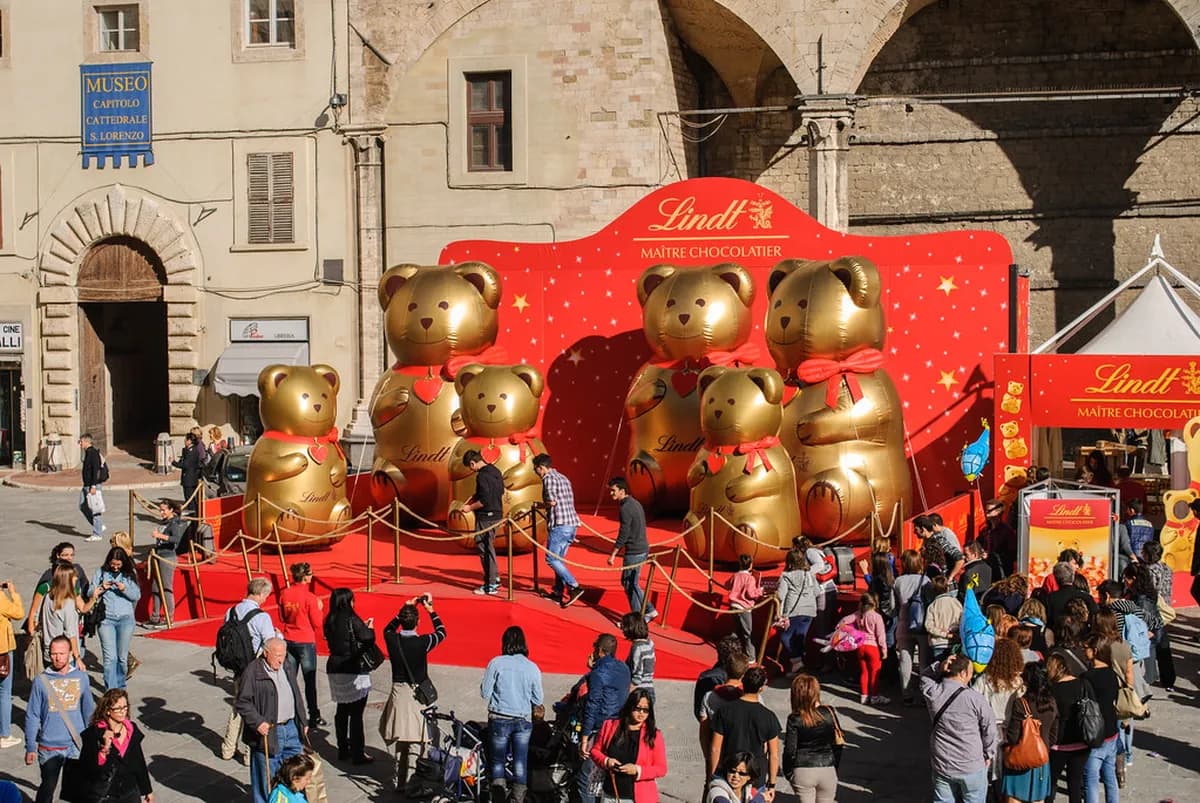
Turin is the city that gave the world gianduiotto, bicerin, and arguably the modern idea of fine chocolate as a cultural product — so when it hosts a chocolate festival, it is worth clearing the calendar. CioccolaTò 2026 runs from 13 to 17 February at Piazza Vittorio Veneto and a cluster of historic venues across the city, placing it neatly between Valentine's Day and the start of Carnival. I first visited on a cold Friday morning and found a square entirely transformed: rows of chocolatiers stretching toward the Po river, the smell of roasting hazelnuts drifting from every stall, and a steady procession of Torinesi who seemed to know exactly which booth held the best gianduiotti of the year. For the full picture of what to do across the city in February and beyond, the festivals and events in Turin guide covers the wider calendar.
The festival name is a portmanteau of cioccolato and Torino, and the event has been filling Piazza Vittorio Veneto for over two decades. The timing is deliberate: Valentine's Day falls during the festival weekend, and Carnival's gianduja mask — a Turinese invention — adds a layer of local pride to the proceedings. CioccolaTò sits at the intersection of all of these traditions. The organisers confirm the exact programme and any ticketed events each year; for the official 2026 listing check the Turismo Torino CioccolaTò page.
This guide covers the 2026 dates, hours, and venues in detail, plus what to taste and take home, how to get there, the best time of day to avoid the thickest crowds, and where to continue your chocolate education in Turin's storici caffè after the festival closes each evening. Whether you are making a weekend trip from Milan or building a longer Piedmontese itinerary, CioccolaTò is a dependable anchor for a February visit to northern Italy.
Free guide: Europe's Festival Calendar
A month-by-month map of Europe's unmissable festivals — with the best dates to visit each and a local tip you won't find in the guidebooks.
Turin's Chocolate Heritage and What CioccolaTò Is
Turin has been making chocolate longer than almost any other European city. The drink arrived at the Savoy court in the seventeenth century, and by the early nineteenth century the city's confectioners had turned it into a full industry. The gianduiotto — the small, ingot-shaped chocolate made from a blend of dark cocoa and roasted Piedmontese hazelnuts — was born here in the 1860s, when a cocoa shortage forced local chocolatiers to stretch their supplies with the Langhe hills' abundant nocciola tonda gentile hazelnut. The resulting paste, gianduja (sometimes spelled gianduia), proved better than what it was diluting: richer, smoother, and unmistakably local. It is now imitated worldwide, but the original is still best bought on a Turin side street.
The gianduja name comes directly from Gianduja, Turin's own Carnival mask — a wine-loving, good-natured character who represents the Piedmontese spirit. That link between chocolate and Carnival runs deep in the city's identity, and CioccolaTò exploits it deliberately. The festival is timed to coincide with Carnival season, Valentine's Day falls during its run, and the gianduja mask appears on signage, chocolatiers' wrappers, and the festival's own branding. Walking Piazza Vittorio Veneto during the festival, you feel all of those threads pulling at once.
The event has been running since the late 1990s and has grown to include master chocolatiers from across Piedmont alongside international guests and Turin's own historic producers — names like Guido Gobino, Baratti & Milano, and Stratta, whose gilded shopfronts have occupied the city's arcaded streets for generations. The 2026 edition extends the festival into four satellite venues, making it as much a cultural programme as a market.
CioccolaTò 2026: Dates, Hours, and Venues
The 2026 festival runs for five days, from Friday 13 February to Tuesday 17 February. Opening hours vary by day: on Friday and Saturday the market at Piazza Vittorio Veneto is open from 10:00 to 21:00. On Sunday, Monday, and Tuesday the festival closes one hour earlier, at 20:00. Valentine's Day falls on Saturday 14 February — the second day of the run and one of its longest — which means the square will be at its most atmospheric and its most crowded at the same time.
Entry to the outdoor square and the main stall market is free. Tastings at individual stalls range from complimentary samples handed across the counter to paid multi-chocolate tasting flights at a few euros per person. Masterclasses and guided workshops run in the satellite venues and carry a separate ticket; these typically require advance booking through the official programme.
Beyond Piazza Vittorio Veneto, the 2026 edition spreads across four heritage venues:
- Museo Nazionale del Cinema — inside the Mole Antonelliana, for screenings and themed cultural events
- Circolo dei Lettori — literary and cultural talks given a chocolate angle
- Gallerie d'Italia — the banking museum on Piazza San Carlo, used for special exhibitions
- Polo le Rosine — an arts and education space in the city centre
What to Expect at the Festival
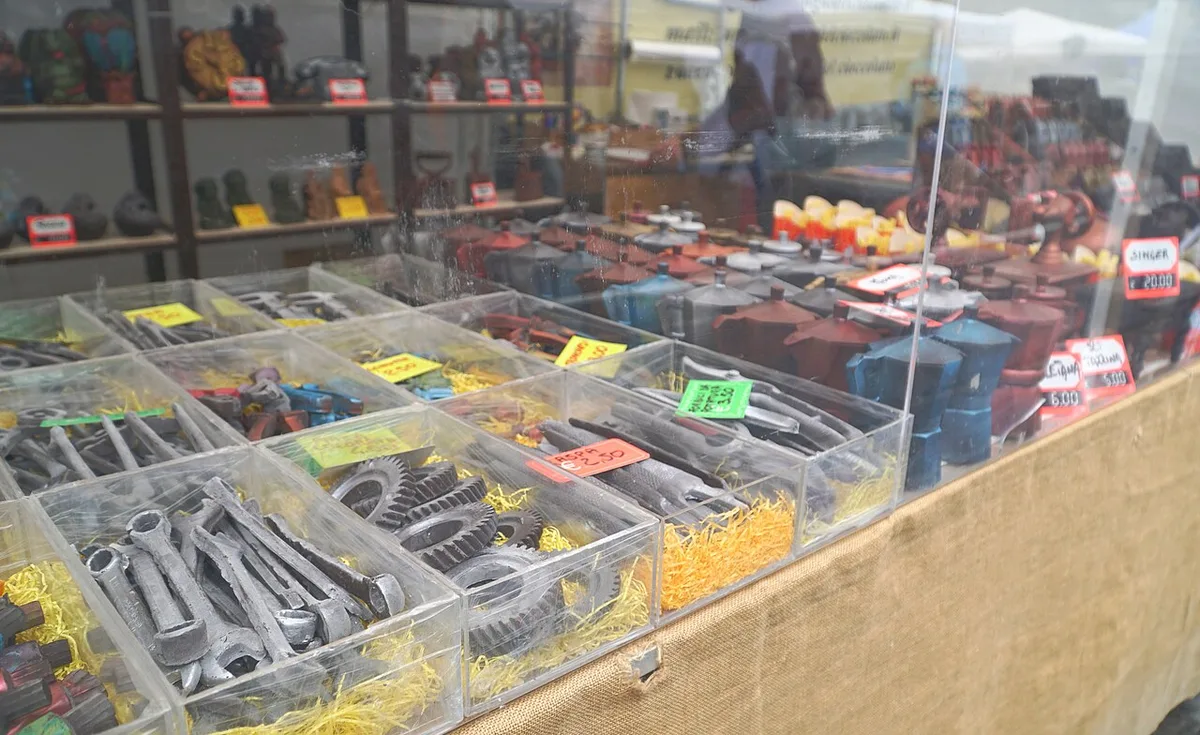
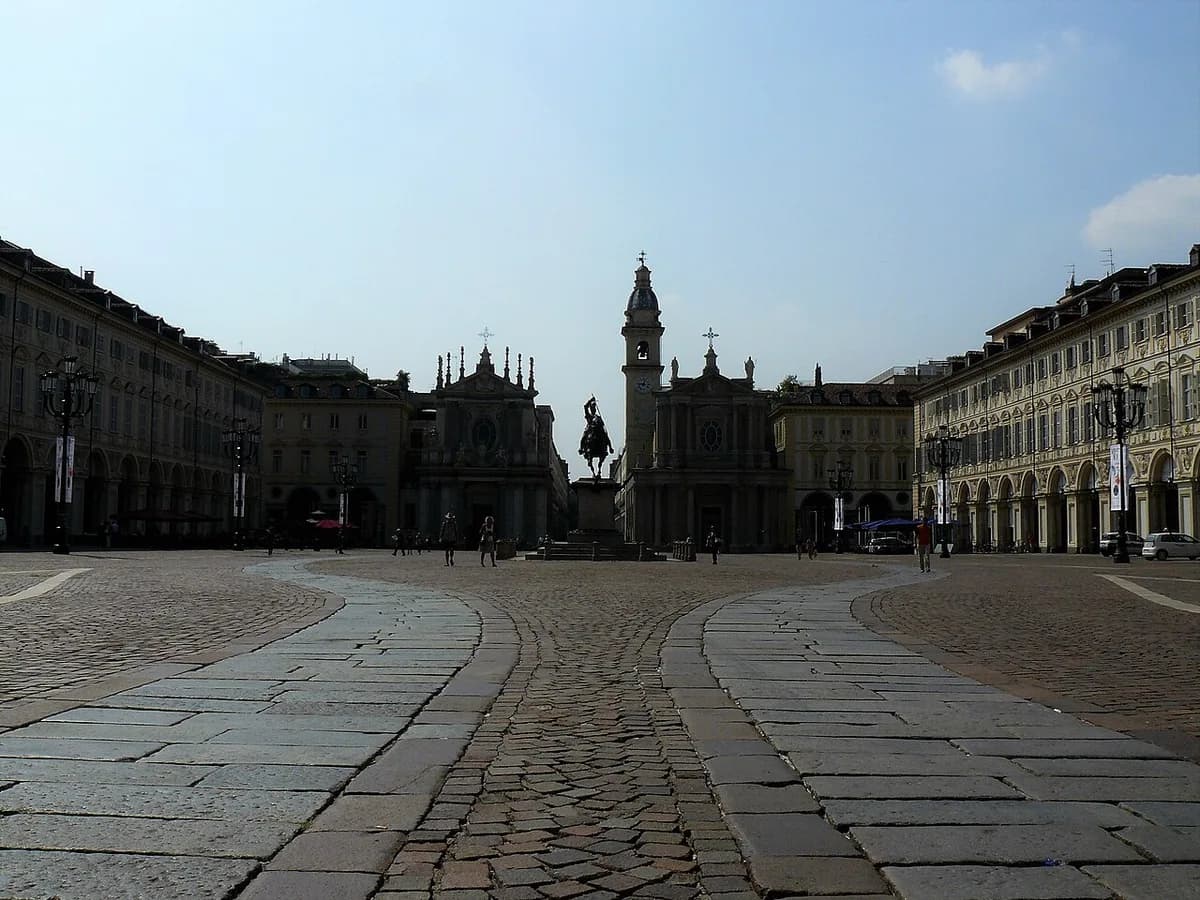
Piazza Vittorio Veneto is one of the largest baroque squares in Europe — long, colonnaded, and open at the eastern end toward the Po. During CioccolaTò it fills with rows of wooden stalls, each run by a chocolatier or confectionery producer. When I walked the full length of the market on a weekday morning, I found stalls representing every major tradition: Piedmontese gianduja houses, Sicilian modica chocolate producers (whose ancient cold-process bars are grainy, intensely dark, and usually spiced with cinnamon or vanilla), Belgian praline makers, and a handful of single-origin craft bars from smaller Italian producers. The range is broader than the name suggests — this is a serious chocolate event, not a seasonal gift market.
Most stalls offer samples freely. The etiquette is relaxed: accept what is offered, ask about origin and process, and buy at the stalls where the product earns it. Chocolatiers here are proud of their sourcing and willing to explain the difference between a 72% Criollo bar and a mass-market blend. Children are well catered for — a dedicated laboratorio del cioccolato runs hands-on workshops where younger visitors can try moulding and decorating their own sweets. It is popular and usually draws a brief queue, but moves at a reasonable pace.
Masterclasses for adults run at the satellite venues. Past editions have included sessions on tempering technique, structured chocolate tasting, and the history of Piedmontese confectionery. These book out quickly; if you are travelling specifically for a workshop, check the programme in January and reserve early through the official site.
What to Taste and Take Home
The gianduiotto is non-negotiable. If you leave Turin without trying one, you have missed the point of the city's chocolate culture. The shape — a small, asymmetrical log with a flat base and a tapered peak — is immediately recognisable, and good ones dissolve slowly on the tongue rather than snapping like a hard bar. The texture is soft because gianduja is a paste, not a solid chocolate. Buy them individually wrapped from an artisan producer rather than in a sealed supermarket box; the fresh version has a different quality entirely.
Beyond gianduiotto, the festival offers:
- Cremino — a layered square of alternating gianduja and plain chocolate or coffee cream, invented in Turin in the 1850s
- Bicerin tasting — the layered espresso, dark chocolate, and whipped cream drink served in Turin's historic cafés since the eighteenth century; some stalls offer it cold or as a dipping pairing
- Gianduja cream in jars — the original ancestor of every chocolate-hazelnut spread now sold globally; this is the real thing, made with Langhe hazelnuts
- Single-origin dark bars — craft producers at the festival often bring limited runs unavailable elsewhere in Italy
For taking purchases home: gianduiotti in individual foil wrappers travel well in cool weather but dislike warmth, so avoid leaving them in a bag in direct sun or a warm car. February temperatures in Turin work in your favour. Most artisan chocolatiers provide gift boxes sized for hand luggage. Piedmont's food calendar stretches well beyond February — the autumn brings the Alba White Truffle Festival, the region's other great seasonal food event, with a very different flavour profile but the same spirit of pride in exceptional local ingredients.
Getting to Piazza Vittorio Veneto
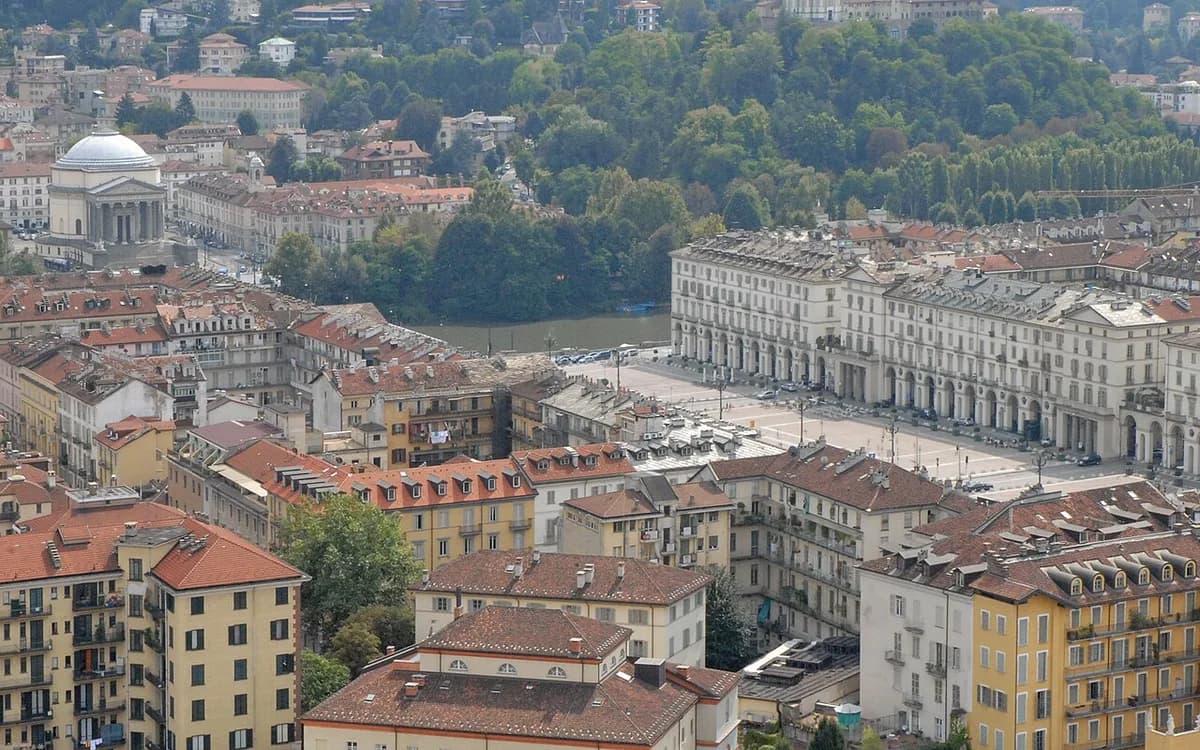
Piazza Vittorio Veneto sits at the eastern edge of Turin's historic centre, where the city meets the Po. On one side the long baroque colonnades frame the square; on the opposite bank of the river the neoclassical Gran Madre di Dio church looks back down the length of the piazza from the hilltop. The location is easy to reach from every direction.
From Porta Nuova station — the main rail hub for arrivals from Milan (around 50 minutes on the high-speed), Rome, and the rest of Italy — the square is a 20-minute walk through the city centre along Via Roma and then Via Po. Tram lines 13 and 15 cover the same route and stop near Piazza Vittorio Veneto if you prefer not to walk; the tram journey takes around ten minutes.
By metro, the nearest station on Metro Line 1 is Vittorio Emanuele II, a short walk from the square. Turin's metro is clean and reliable, runs until midnight on most days, and is the fastest option for the evening sessions when walking back across town in the cold is less appealing.
If you are flying in, Turin Caselle Airport (TRN) is served by direct buses to Porta Nuova station — journey time around 40 minutes, departing roughly every 30 minutes through the day. From Porta Nuova the festival is then a tram or walk away.
Best Time to Visit, Crowd Tips, and Budget
The Valentine's Day weekend in the middle of the festival run is peak attendance by a significant margin. If you can visit on a weekday morning — particularly Friday at opening, or Tuesday in the final afternoon — the stalls are calmer and the chocolatiers have more time to walk you through their products. The first two hours after the 10:00 opening are consistently the quietest on non-weekend days. By early afternoon on Saturday 14 February, Piazza Vittorio Veneto will be very full and moving between stalls will require patience.
Rough budget guide:
- Entry to the square: free
- Tasting samples at stalls: free at most
- Paid tasting flights: approximately €3–6 for a multi-chocolate structured tasting
- Masterclasses: typically €15–30 per person, confirmed in the official programme
- Gianduiotti gift boxes: artisan boxes range from €8–20 depending on quantity
Bring a mix of card and cash. Larger stalls accept card payments, but smaller artisan producers sometimes prefer cash, and a few are cash-only. ATMs are available on the arcaded streets leading into the square.
Pairing CioccolaTò with Turin's Other Highlights
The festival makes an excellent anchor for a wider Turin visit. The Egyptian Museum — consistently ranked among the top three Egyptian collections in the world, after Cairo — is a 20-minute walk from Piazza Vittorio Veneto. Plan two to three hours; the sarcophagus hall and papyrus archive alone deserve unhurried time. Entry is around €15 for adults and the museum is fully open during the festival period.
The Mole Antonelliana — Turin's eccentric, needle-tipped landmark that dominates the city skyline — houses the Museo Nazionale del Cinema, which doubles as one of the 2026 satellite venues for the CioccolaTò programme. The panoramic lift to the Mole's observation deck costs around €9 and, on a clear February day with snow-covered Alps to the west, is one of the better city viewpoints in northern Italy.
Via Roma and the Piazza San Carlo arcade loop give you the city's best café culture and shop-window browsing in a single hour-long walk. If you are planning a broader Piedmont food itinerary, the Alba White Truffle Festival tours and tickets cover the other great seasonal event in this corner of northern Italy — same landscape, a very different season and flavour.
Where to Eat Chocolate in Turin Year-Round
The festival is the concentrated expression of something Turin does every day. The city's storici caffè — historic cafés, some operating from the same premises for two centuries — are the best continuation of the chocolate experience once the market stalls close each evening.
Caffè Al Bicerin (Piazza della Consolata 5) has been serving the layered bicerin since 1763. The drink — espresso on the bottom, a thick layer of dark chocolate in the middle, and whipped cream floating on top, drunk without stirring — was invented here and is still made to the original recipe. The café is small, always occupied, and worth every minute of the wait. A bicerin costs around €4.50.
Baratti & Milano (Piazza Castello 27) opened in 1858 and occupies a gilded, chandelier-hung room under the Galleria Subalpina. Their handmade gianduiotti, sold in distinctive pale-blue boxes, are among the finest in the city. The café also serves a proper Turinese hot chocolate — dense and spoonable, nothing like the thin version served elsewhere.
Caffè San Carlo (Piazza San Carlo 156) dates from 1842. Beneath one of the great nineteenth-century ceilings of Piedmont, you can order a hot chocolate, a bicerin, or a pastry tray that arrives with a formality that feels entirely natural in that room. Prices sit at the upper end for the city, but the interior is part of what you are paying for.
For a more contemporary purchase, Guido Gobino has a boutique on Via Cagliari where gianduiotti are made fresh on premises and sold by weight. I find these the most consistent year-round option in Turin for quality gianduja chocolate, with the advantage of being able to buy as few or as many as you want without committing to a full gift box.
Frequently Asked Questions
When does CioccolaTò 2026 take place?
CioccolaTò 2026 runs from Friday 13 February to Tuesday 17 February at Piazza Vittorio Veneto and satellite venues across Turin. Opening hours are 10:00–21:00 on Friday and Saturday, and 10:00–20:00 on Sunday, Monday, and Tuesday. Organisers confirm exact dates and any schedule changes each year — check the official Turismo Torino listing before you travel.
Is entry to CioccolaTò free?
Entry to the main outdoor market at Piazza Vittorio Veneto is free, and most stalls offer complimentary tasting samples. Individual paid tastings, guided workshops, and masterclasses at the satellite venues carry a separate fee — typically €15–30 per session — and require advance booking through the official programme.
Where exactly is the festival held?
The main event takes place at Piazza Vittorio Veneto, Turin's large baroque square near the Po river and the Gran Madre di Dio church. The 2026 programme also uses four satellite venues: the Museo Nazionale del Cinema inside the Mole Antonelliana, the Circolo dei Lettori, the Gallerie d'Italia on Piazza San Carlo, and Polo le Rosine.
What chocolate should I try at CioccolaTò?
The gianduiotto is the essential purchase — Turin's ingot-shaped chocolate made from gianduja, a blend of cocoa and roasted Piedmontese hazelnuts. Also look for cremino layers, gianduja cream in jars, and single-origin dark bars from craft producers. If there is a bicerin tasting on offer, try the layered espresso, chocolate, and cream drink that has been served in Turin's historic cafés since the 1760s.
Is CioccolaTò suitable for families with children?
Yes. CioccolaTò typically includes a dedicated children's chocolate laboratory where kids can try hands-on activities and make their own sweets. The outdoor market at Piazza Vittorio Veneto is open-air and straightforward to navigate with young children, and the free entry makes it a low-pressure family outing for a February afternoon in Turin.
Related: Best Christmas Markets in Italy — another reason to plan a winter trip to northern Italy.
CioccolaTò works for almost every type of visitor. You can spend two hours walking the stalls, collecting samples, and carrying home a box of gianduiotti, or you can build a full five-day Piedmont trip around the programme, using the festival as a daily anchor while the satellite venues, the Egyptian Museum, Caffè Al Bicerin, and Baratti & Milano fill the gaps. February in Turin is cold — typically 2°C to 8°C — but the city's arcaded streets and the warmth coming off the chocolate stalls make it very manageable.
Book accommodation well ahead for the Valentine's Day weekend; Turin fills fast in mid-February. If you are planning around the truffle or Christmas seasons as well, the Alba truffle calendar and the Italy-wide Christmas market season both sit in the same Piedmont catchment area. CioccolaTò sits in the same tradition of Italian open-air market culture — community-rooted, seasonally grounded, and as good as the city it comes from.
Free guide: Europe's Festival Calendar
A month-by-month map of Europe's unmissable festivals — with the best dates to visit each and a local tip you won't find in the guidebooks.
You might also like

Continue reading
More guides you'll find useful