
European Christmas Markets for First-Timers: 2026 Guide
First-timer's manual for European Christmas markets 2026: the Pfand mug system, Glühwein, cash vs card, what to eat, how to dress, and market-hopping by train.
On this page
European Christmas Markets for First-Timers: 2026 Guide
The first time I stepped into a European Christmas market, I made every mistake a first-timer can make. I handed over cash for a mug of Glühwein, drank it standing by the stall, and walked away — abandoning the souvenir mug on a barrel because nobody had explained the deposit system. I spent three hours confused about whether I was supposed to keep the mug or return it, bought nothing from the craft vendors because I had no coins, and got to the market at noon on a Saturday and found it so packed I could barely move. This guide is everything I wish someone had told me before that first trip. It is a practical manual for how European Christmas markets actually work — not a ranking of which to choose.
If you want to know which specific market is the best fit for your itinerary, the companion guide to the best European Christmas market for first-timers covers exactly that: a ranked, compared selection of markets by atmosphere, accessibility, and crowd level. What you are reading now is different — it is the how-it-actually-works manual. The mug deposit system, the food and drink culture, the currency situation across 12+ countries, how to dress for six hours outdoors in December, and how to build a multi-city market-hopping itinerary by train. These questions are what trip you up on the ground, regardless of which market you pick.
European Christmas markets run from the last week of November through to Christmas Eve, with some extending into the New Year and beyond. They exist in hundreds of cities across Germany, Austria, Switzerland, France, the Czech Republic, Italy, Scandinavia, the Baltic states, and the UK. The format is remarkably consistent — a cluster of wooden chalets called Stände (in German-speaking countries) or stands arranged around a central square or a cathedral forecourt — but the details vary just enough to catch you off guard. The official German Christmas market information site at germany.travel is a reliable starting point for confirmed 2026 opening dates in the market-dense heartland.
Free guide: Europe's Festival Calendar
A month-by-month map of Europe's unmissable festivals — with the best dates to visit each and a local tip you won't find in the guidebooks.
How European Christmas Markets Work
A European Christmas market is a temporary outdoor market held in the run-up to Christmas, with roots in the medieval German-speaking world stretching back to the fourteenth century. The Nuremberg Christkindlesmarkt, one of the oldest and most famous, has been running since 1628. The format that spread across Europe from that tradition is remarkably stable: wooden stalls arranged in rows or rings around a central focal point — usually a town hall square, a cathedral forecourt, or a main pedestrian street. Larger cities run several separate markets simultaneously, each with a different character. Vienna alone has around nine official markets across the city in December 2026.
Each stall is individually operated, usually by small local businesses, craftspeople, or food vendors who apply to the city for a pitch. This is why payment, hours, and stock vary from one stall to the next. The market itself is free to enter — no ticket, no wristband, no registration. You walk in from the street, browse, buy what you like, and leave. There are no closing zones or enforced circuits. The atmosphere combines a genuine local shopping event (Austrians really do buy their Advent candles and tree decorations here) with a tourist draw that has grown enormously over the past two decades. Arriving with the right expectations for both makes the experience much more enjoyable.
Opening Dates and Hours 2026
Most markets open in the last week of November, timed to the start of Advent. In 2026, the first Sunday of Advent falls on 29 November, which is the traditional anchor for opening day. The Nuremberg Christkindlesmarkt opens on the Friday before Advent — 27 November 2026. Vienna's Rathausplatz market opens mid-November; Strasbourg's famous Christkindelsmärik, one of the oldest in France, typically opens on the last Friday of November. Prague, Budapest, and Tallinn follow in the same window. A small number of markets — particularly in Alsace and Germany — open as early as the third week of November.
The closing date is where markets diverge more noticeably. The majority close on 23 or 24 December (Christmas Eve), since the market's purpose is Advent preparation, not Christmas Day itself. However, some markets now run through to 31 December to capture the New Year travel wave, and a handful of specialist or religious markets extend to 6 January (Epiphany / Three Kings Day). Always check the organiser's website for the specific market you plan to visit — dates shift by a day or two each year with the calendar, and organisers confirm the exact schedule each autumn.
Opening hours are typically 10:00 or 11:00 until 21:00 or 22:00 on weekdays, with slightly extended evening hours on weekends. A few markets open as late as 23:00 on the busiest December weekends. Most stalls stop serving around 30 minutes before the official close. Plan to arrive with at least two to three hours before closing if you want to eat, drink, and browse at a reasonable pace.
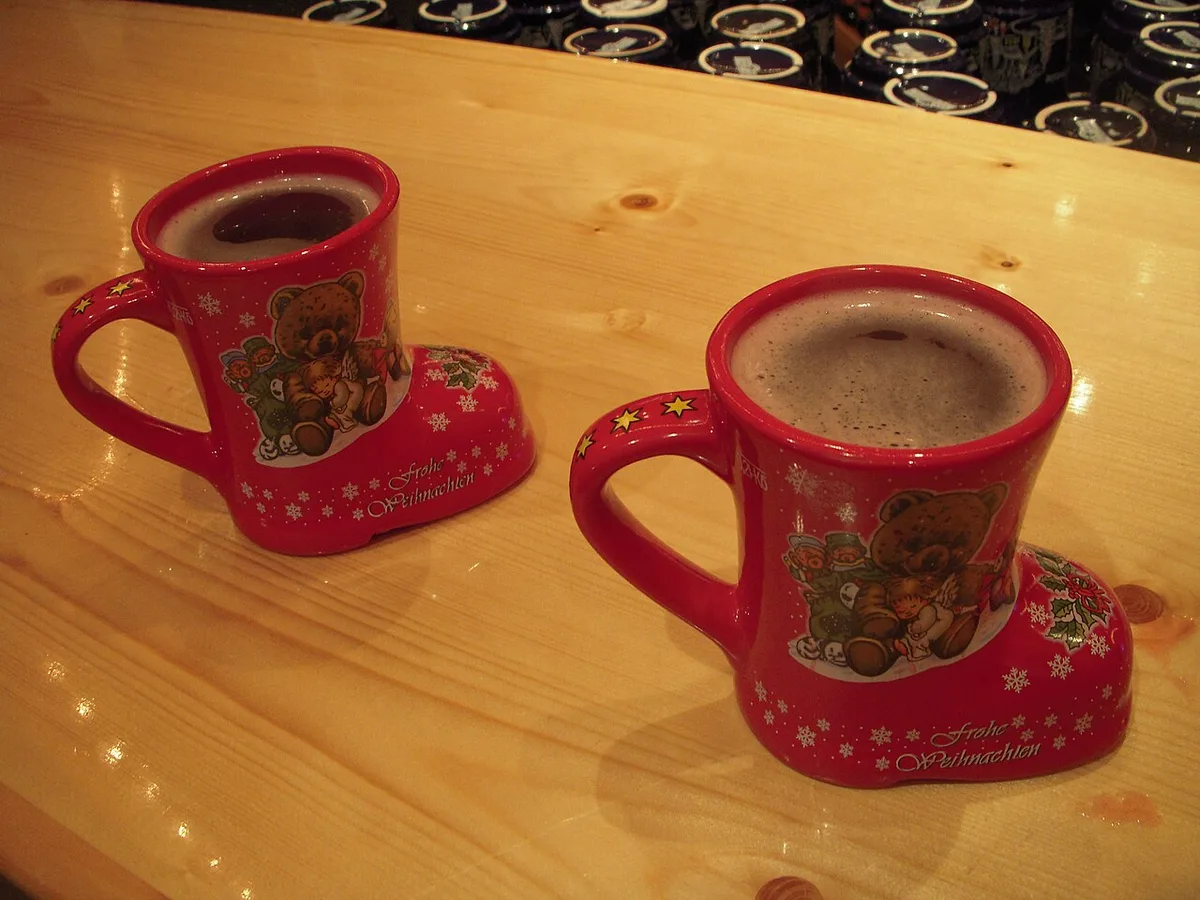
The Glühwein Mug Deposit (Pfand) Explained
This is the system that confuses first-timers most reliably, so I am going to explain it step by step. When you buy a hot drink at most Christmas markets, particularly in German-speaking countries, you pay two separate amounts: the price of the drink itself (typically €3–5 or the local equivalent), and a deposit on the mug (typically €2–5). The deposit is called the Pfand in German. It appears on the price board as a separate line item: "Glühwein €4 / Pfand €3" means you pay €7 total.
The mug is a fired ceramic cup, usually branded with that market's name, the city's crest, or the year. When you have finished your drink, you have two options. Option one: return the empty mug to any stall on the same market — not only the one you bought from — and the vendor hands you back the deposit in cash. Option two: keep the mug as a souvenir and forfeit the deposit. Many regular market-goers keep every dated mug from every market they visit; if you look in the kitchens of Viennese households, you will often find a shelf of accumulated Glühwein mugs going back twenty years.
The deposit amount varies by market and by year. German markets tend to charge €2–3 Pfand; Austrian markets often charge €3–5 for more elaborate ceramic designs; Swiss markets can charge CHF 4–6. The deposit is not a tip — it is a genuine refundable deposit and you should always claim it back if you do not want the mug. The system exists as an environmental measure: reusable mugs replaced billions of disposable cups across European markets from the 1990s onward.
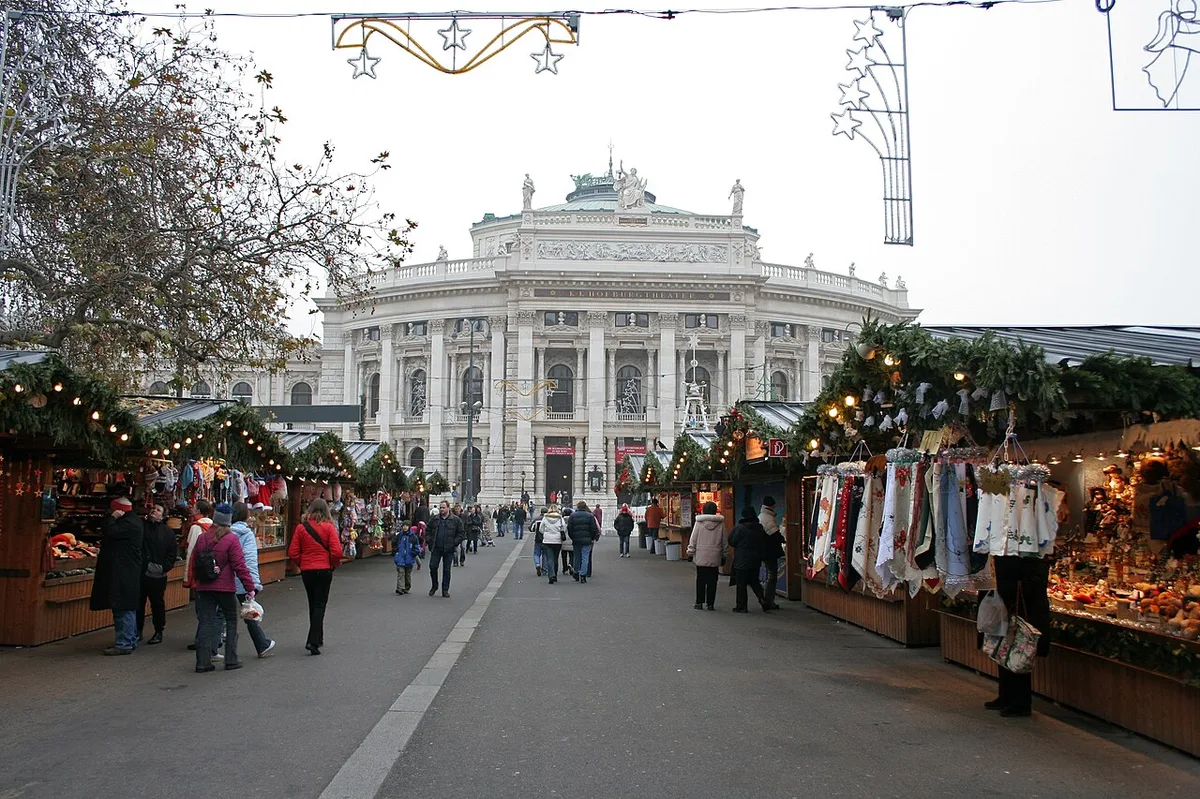
What to Eat and Drink
The drink menu at a European Christmas market is one of its great pleasures, and it goes well beyond Glühwein. Glühwein — hot red wine spiced with cinnamon, cloves, star anise, and orange peel — is the flagship, but each country has its own version. France serves vin chaud, made with the same basic spice profile but often with local Alsatian wine. The Czech Republic offers svařák, typically sharper and with a higher wine-to-spice ratio. Austria sometimes serves a white wine version called weißer Glühwein, which is lighter and less tannic. For those who want something stronger, Feuerzangenbowle — a dramatic punch made by setting a rum-soaked sugar cone alight over a bowl of spiced wine — appears at German markets, usually prepared theatrically at a dedicated stall. For children and drivers, Kinderpunsch (Germany/Austria) or punč (Czech Republic) is an alcohol-free version of warm spiced fruit juice, usually apple or cherry-based, served in the same deposit mugs. The full breakdown of drinks and regional variations is in the guide to European Christmas market food and drink.
The food is equally regional but some items are near-universal. Bratwurst in a bread roll (a Semmel in Austria, a Brötchen in Germany) is the backbone of every German-language market. Lebkuchen — large spiced gingerbread hearts decorated with icing and sold on strings to hang around your neck — are a distinctly Nuremberg tradition that has spread across Europe. Stollen, the dense dried-fruit and marzipan cake dusted with icing sugar, is a German Christmas staple you will find at markets from Stuttgart to Riga. In Switzerland and Alsace, raclette scraped over bread or potatoes is standard. Hungarian markets serve lángos (deep-fried flatbread with toppings), and Prague and Bratislava are famous for trdelník, a coiled pastry rolled over a hot spit. Roasted chestnuts — called Maroni in Austrian German — are sold from wheeled carts at almost every major market in central Europe and are the best hand-warmer a first-timer can buy for €3.
Cash or Card? Local Currencies Across Europe
The honest answer is: bring cash. A significant number of Christmas market stalls — particularly smaller craft vendors, roasted chestnut carts, and independent food stalls — are cash-only. This is especially true in Central and Eastern European markets where card infrastructure at outdoor stalls is less common. Even at markets where some stalls accept cards, the queue slows considerably when each transaction requires a PIN and a card terminal in the cold. Having cash means you can move quickly between stalls and buy the roasted Maroni on impulse without breaking your stride.
The currency depends on which country you are in, and Europe's currency patchwork catches many visitors off guard. Germany, Austria, France, Italy, the Netherlands, Belgium, Finland, and most of the Baltic states (including Estonia, where Tallinn's medieval market is held) all use the euro. Switzerland uses the Swiss franc (CHF), which does not convert to euros at stalls — do not assume CHF is accepted across the border. Poland uses the złoty, the Czech Republic uses the koruna, Hungary uses the forint, and Denmark, Sweden, and Norway each use their own krona. Withdraw local currency at an ATM on arrival, before you reach the market.
What to Wear: How to Stay Warm
Standing still at a Christmas market for three hours in December is significantly colder than walking the same distance on a city street. Wind chill, damp cobblestones, and the fact that you stop moving whenever you queue at a stall mean that temperature management requires more planning than most visitors expect. Layering is the only reliable system. A thermal base layer, a fleece or wool mid-layer, and a windproof outer shell give you flexibility that a single heavy coat does not — you can remove a layer when you step into a heated stall and add it back when you go outside.
- Waterproof insulated boots — cobblestones are often wet and uneven at night; your feet will get cold from the ground up if boots are not insulated
- Thermal base layer (top and bottom) — non-negotiable for evening visits
- Hat and gloves — lose the most heat from your head and hands; pack both even if you think you will not need them
- A small backpack or crossbody bag — large rucksacks create friction in crowded markets and are a pickpocket risk
- Hand warmers — single-use chemical warmers in your coat pockets make a significant difference over a long evening; reusable versions work equally well
Temperatures across Europe in late November and December vary considerably by region. Vienna and Prague typically range from 0°C to 5°C in December; Nuremberg can drop to −5°C or below by mid-December; Strasbourg and Colmar are milder at 2°C–7°C; Edinburgh and Bath run colder and wetter than temperature alone suggests. Scandinavia is the most demanding: Tallinn and Stockholm regularly see −5°C to −10°C on December evenings, and the Tallinn Christmas market in the Old Town square is genuinely magical in those conditions — but only if you are dressed for it.
How Many Days and Market-Hopping by Train
One to two days is the right amount of time to see the main markets in a single city. Most major city markets can be covered comfortably in an afternoon and an evening — the afternoon for browsing craft stalls and food, the evening for atmosphere and Glühwein when the lights are at their most impressive. Cities with multiple separate markets (Vienna, Munich, Cologne, Brussels) reward a second day, especially if the markets are spread across different neighbourhoods.
The real pleasure of a first European Christmas market trip is often a multi-city itinerary, and Europe's train network makes this more practical than most visitors realise. The main regional clusters work well as combined itineraries:
- Germany: Nuremberg to Bamberg is 35 minutes by regional train — a genuinely underrated combination. Munich, Cologne, and Dresden each have excellent markets and connect to each other by intercity rail in two to four hours.
- Alsace: Strasbourg to Colmar is 35 minutes by TER. Together they form the densest concentration of Christmas market culture anywhere in France, and both cities are exceptionally photogenic in December.
- Austria and Switzerland: Vienna to Salzburg is 2 hours 30 minutes by ÖBB Railjet; Salzburg to Innsbruck is 2 hours by train. The guide to Austrian and Swiss Christmas markets covers the full circuit including Zurich, where the Zurich Advent season combines the main market at Bellevue with the famous indoor market at the main station.
- Central Europe: Prague to Vienna is 4 hours by Railjet; Vienna to Budapest is 2 hours 40 minutes. The three cities chain neatly into a week-long itinerary with three very different market cultures.
- Italy: The Italian Christmas markets are concentrated in the South Tyrol region — Bolzano, Merano, and Bressanone — and are accessible by train from Verona or Innsbruck. The northern Italian markets are among the most undervisited in Europe.
- Scandinavia and the Baltics: Stockholm and Copenhagen each run established markets; the medieval Old Town market in Tallinn, operating in the square that has hosted a Christmas market since 1441, is consistently ranked among the most atmospheric in Europe.
Best Times to Visit: Avoiding the Crowds
Weekday mornings between 10:00 and 13:00 are the quietest windows at almost every major Christmas market. Local shoppers tend to arrive at lunchtime; tourists gravitate toward afternoons and evenings. If you can be at the market when it opens on a Tuesday or Wednesday, you will find stalls freshly stocked, vendors willing to chat, and no queues at the mulled wine counters. This is also the best time to look at craft stalls properly, since in crowded evening conditions you are often jostling rather than browsing.
Fridays from around 17:00 are noticeably busier as local office workers arrive after work. Saturdays are the peak day at every market in Europe — all day, not just the evening. The first Advent weekend is always very busy; so is the weekend of December 19–21, when local last-minute shoppers combine with the final wave of visitors before Christmas. If your trip falls on a weekend, arriving at opening time (10:00–11:00) gives you an hour or two before the Saturday crowds build.
Families and Children at Christmas Markets
Christmas markets are genuinely family-friendly environments in a way that most European winter events are not. The free-entry, open-air format means there is no pressure to stay a fixed amount of time, children can run between stalls, and leaving when someone gets cold or tired is straightforward. Most larger markets include a carousel, sometimes a small ice rink, and often a Nativity scene or children's craft tent. The atmosphere is celebratory and unhurried rather than rowdy — very different from a summer festival.
Kinderpunsch — the alcohol-free warm spiced fruit punch served in the same deposit mugs — is specifically designed for children, and most German and Austrian markets have dedicated stalls for it. The mug deposit system works the same way: pay the Pfand, collect it back when you return the mug, or keep the small souvenir. Children universally enjoy the ritual of returning the mug for their coins back.
The main practical challenge for families is crowd management on busy evenings and weekends. Push a buggy through a Saturday-evening Christmas market crowd and you will quickly understand why weekday mornings are the better choice with young children. The best Christmas markets for families in Europe guide selects markets with the most space, the most child-specific programming, and the most manageable crowds. And if you are weighing the trip overall, the honest are European Christmas markets worth it piece addresses the cost-versus-experience question directly.
Safety, Budgeting, and Sustainability
Pickpocketing is the most realistic safety risk at major European Christmas markets. Vienna, Prague, Budapest, and Strasbourg all have active pickpocket operations targeting tourists in crowded market conditions. The practical counter-measures are simple: carry your wallet in a zipped inner pocket or a crossbody bag worn in front of your body; do not leave your bag on the ground when queuing; be aware of anyone who bumps into you or creates a distraction. This is not a reason to avoid the markets — millions of people visit each December without incident — but it is a reason not to carry your passport or all your cash in a back pocket.
On budget: a realistic estimate for a single market visit is €15–30 per person in food and drink. One or two Glühwein (including the Pfand deposit, which you get back), a bratwurst or another snack, and a bag of roasted chestnuts lands around €15–20. Add a Stollen or Lebkuchen and you are at €25–30. Gift shopping is on top of this — handmade ornaments range from €3 for a simple painted bauble to €30–50 for hand-carved Nativity figures. Accommodation and transport are the bigger costs; the market itself is very accessible on a modest daily food budget.
The Pfand mug system is, practically speaking, the original sustainability initiative at European Christmas markets — launched decades before single-use plastics became a mainstream concern. By keeping your mug and using it for refills across the day (at different stalls on the same market), you eliminate multiple disposable cups per visit. The mugs are durable enough to serve as kitchen cups or travel mementos for years. Keeping one mug per city you visit is a low-waste way to collect a physical record of the markets you have attended.
Frequently Asked Questions
When do European Christmas markets open and close in 2026?
Most European Christmas markets open in the last week of November 2026, timed to the start of Advent (the first Sunday of Advent falls on 29 November 2026). Some markets — including Nuremberg's Christkindlesmarkt — open as early as 27 November. The majority close on 23 or 24 December, though some extend to 31 December or even 6 January (Epiphany). Organisers confirm exact dates each autumn, so check the official website of the specific market you plan to visit.
How does the Glühwein mug deposit (Pfand) work?
When you buy a hot drink at most German-language Christmas markets, you pay two amounts: the price of the drink (usually €3–5) and a refundable deposit — the Pfand — on the ceramic souvenir mug (usually €2–5). When you finish your drink, return the empty mug to any stall on the same market and the vendor refunds the deposit in cash. Alternatively, keep the mug as a souvenir and forfeit the deposit. Dated market mugs are collected by many regulars as annual souvenirs.
Should I bring cash or card to European Christmas markets?
Bring cash. Many stalls — particularly smaller craft vendors and street food carts — are cash-only. The currency depends on the country: euros in Germany, Austria, France, and Italy; Swiss francs in Switzerland; złoty in Poland; koruna in the Czech Republic; forint in Hungary; krona in Scandinavia. Withdraw local currency from a bank ATM in the city before you arrive at the market, as ATMs at major markets often have queues and higher fees.
Which Christmas market is best for first-timers?
That question is covered in detail in the companion guide: see the best European Christmas market for first-timers, which ranks and compares markets by atmosphere, accessibility, crowd level, and ease of navigation. For a broad overview of the top destinations, the best Christmas markets in Europe guide covers the full field.
Are European Christmas markets worth it for families with kids?
Yes — Christmas markets are among the most family-friendly winter events in Europe. Entry is free, there is no fixed programme to follow, and most large markets include carousels, Nativity scenes, and children's craft activities. Kinderpunsch (alcohol-free spiced fruit punch) is served in the same deposit mugs as Glühwein, so children can join the mug-deposit ritual too. Visit on a weekday morning to avoid the densest weekend crowds, which can be difficult to navigate with a buggy.
Related: Best European Christmas Market for First-Timers — the ranked comparison guide.
A European Christmas market in 2026 rewards visitors who understand the mechanics before they arrive. The Pfand mug deposit is not confusing once you know it — it is actually one of the most satisfying rituals of the visit, returning the mug for your coins or tucking it into your bag as a dated souvenir of the trip. The cash situation is easy to plan for. The crowds are manageable if you go on a Tuesday morning rather than a Saturday afternoon. And the food and drink — the Glühwein, the bratwurst, the Maroni from a street cart, the occasional Stollen slice — are genuinely worth the trip on their own terms, not just as a backdrop for photographs.
Start with a single city and one or two markets, get the system down, and then build toward the multi-city train itineraries. Whether you end up in Nuremberg for the Christkindlesmarkt, in Colmar for the most photogenic lanes in Alsace, in Vienna for the scale of Rathausplatz, or in Tallinn for a medieval square that has run a market since 1441, the first-timer's experience is essentially the same: a hot mug in your hands, the smell of cinnamon and wood smoke, and the quiet recognition that this is exactly what December in Europe is supposed to feel like.
Free guide: Europe's Festival Calendar
A month-by-month map of Europe's unmissable festivals — with the best dates to visit each and a local tip you won't find in the guidebooks.
You might also like


Continue reading
More guides you'll find useful


