Festivals and Events in Zurich: Your 2026 Events Calendar
Zurich festival calendar 2026: Street Parade, Sechseläuten, ZFF, Knabenschiessen, Christmas markets, and New Year fireworks — dates, venues, and tips.
On this page
Festivals and Events in Zurich: Your 2026 Events Calendar
Zurich runs its calendar differently from most European cities. Switzerland's largest city compresses an entire year of major public events into a handful of moments that feel genuinely unmissable — a spring guild bonfire that predicts the weather, a summer techno party that draws a million people to the lake, and a December Christmas market under a Swarovski crystal tree at the central station. When I first moved through Zurich in April, I arrived the week of Sechseläuten by accident. The guilds in full costume, the smell of the bonfire, and the crowd's reaction when the Böögg exploded were unlike anything I had encountered in any other city in Central Europe.
The city's own tourism platform at zuerich.com maintains a live events calendar that updates as organisers confirm exact dates each year. The headline draw remains the Street Parade, the world's largest outdoor techno party, which returns to the lakefront on Saturday, 8 August 2026 for its 33rd edition. But the full picture is richer than one event — Zurich hosts international performing arts, cinema, shooting traditions, and winter markets that each deserve a day of their own.
This calendar covers every major festival and event in Zurich for 2026, from Sechseläuten in April to the Silvesterzauber fireworks on New Year's Eve. I have organised it chronologically so you can slot the events you want into a broader Swiss itinerary — or plan a dedicated festival trip around the dates that matter most to you.
Free guide: Europe's Festival Calendar
A month-by-month map of Europe's unmissable festivals — with the best dates to visit each and a local tip you won't find in the guidebooks.
Sechseläuten: Spring Guild Festival and the Böögg
Sechseläuten falls on the third Monday of April — in 2026 that is Monday, 20 April. The name translates loosely as "the six o'clock ringing," a reference to the church bells that once marked the end of the winter working day and the beginning of the longer evening hours of spring. Zurich's guilds have been marking this transition for centuries, and the event has grown into the city's most idiosyncratic public celebration.
The afternoon begins with a parade through the Old Town (Niederdorf) and along the lakefront quays. Representatives from all 26 guild corporations march in historical costumes alongside horse-drawn carriages, mounted riders, and brass bands. The atmosphere is festive but unhurried, with spectators lining Bahnhofstrasse and the quays for a relaxed view. By early evening the procession converges on Sechseläutenplatz, the large square between the opera house and Lake Zurich.
The centrepiece is the Böögg: a large snowman effigy stuffed with fireworks, mounted on a pyre, and set alight. The crowd counts the minutes and seconds until the Böögg's head explodes. Local belief — cheerfully maintained by guild members and meteorologists alike — holds that the faster the head explodes, the hotter and sunnier the coming summer will be. A head that burns for longer than fifteen minutes is taken as a sign of a cool, wet summer. The spectacle reliably draws tens of thousands of spectators to Sechseläutenplatz, and entry is free.
Street Parade 2026: The World's Largest Techno Party
The Zurich Street Parade on Saturday, 8 August 2026 is the 33rd edition of an event that has no meaningful rival in electronic music. Around one million people gather along the Lake Zurich quays each year for a day-long procession of Love Mobiles — articulated trucks carrying massive sound systems and DJs — that crawl the route between Zurichhorn and Bürkliplatz. Admission to the entire event is free. There is no wristband, no ticket barrier, and no VIP enclosure on the main route.
The Love Mobiles number around thirty each year, each run by a different promoter or record label. Some carry world-ranked DJs; others platform regional acts. The crowd drifts between trucks based on sound preference, which makes the event feel more like an enormous open-air club district than a conventional parade. The lakeside setting — mountains visible in the distance on a clear August day — amplifies the atmosphere in a way that indoor venues cannot replicate.
After-parties run through the following night at clubs across the city, particularly in the Langstrasse and Zurich West districts. The official Street Parade website publishes the confirmed Love Mobile lineup and after-party locations each spring. Book accommodation for the Street Parade weekend by April at the latest; the city sells out several months ahead of the event.
Summer on the Lake: Zürich Theater Spektakel and Caliente!
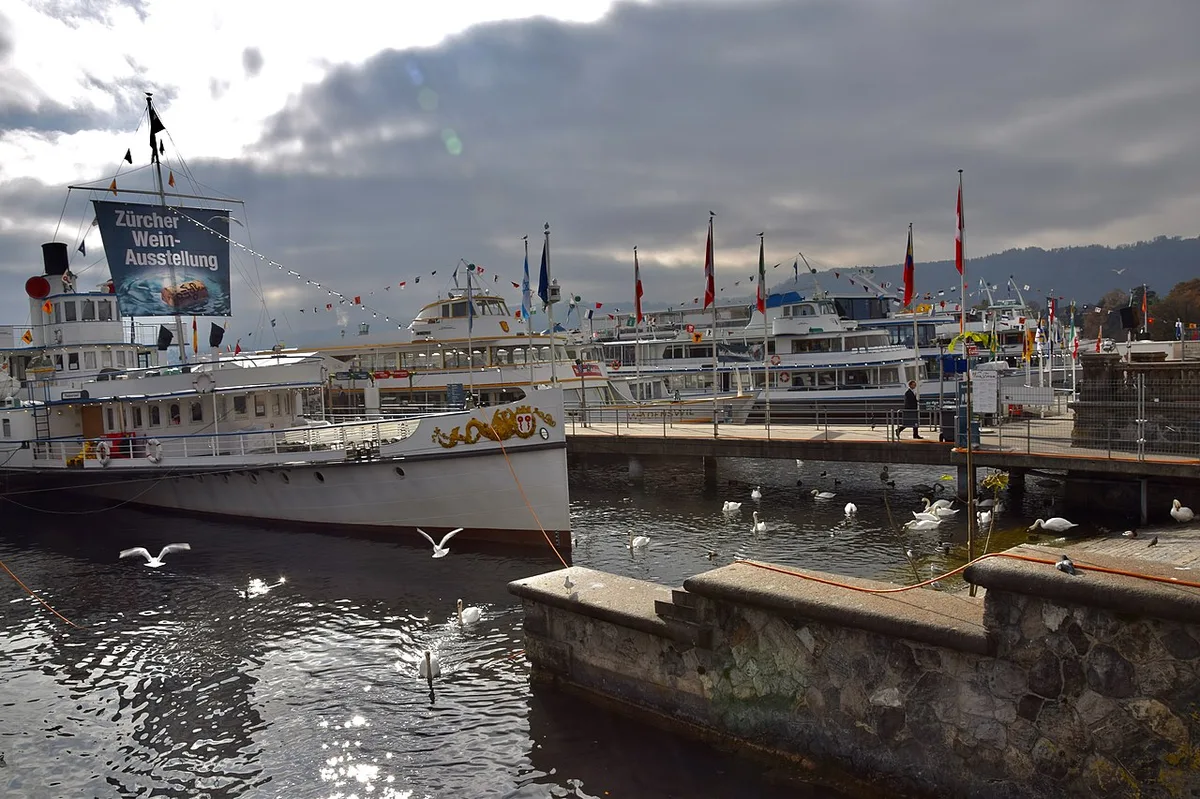
The Zürich Theater Spektakel runs for roughly three weeks in August, immediately after Street Parade weekend. The festival takes place on the Landiwiese, a lakeside meadow in the Enge neighbourhood, where a temporary village of pavilion stages, canteen tents, and outdoor performance spaces is constructed for the duration. International theatre companies, performance artists, and circus acts from across the world present work that ranges from intimate installations to large-scale outdoor productions. Much of the programme is ticketed but affordable, with seats in the CHF 25–50 range for main-stage productions.
The Landiwiese setting is one of the festival's best assets. The lake is a few metres away, and on warm August evenings the combination of outdoor theatre, a cooling breeze off the water, and a relaxed canteen atmosphere makes the Spektakel feel more like a cultural gathering than a conventional arts programme. Many of the daytime events and outdoor performances are free, which makes the festival accessible without a full ticket budget.
Also in summer, Caliente! brings Latin music, dance, and food to the Zürichhorn park on the lake's east bank, typically over a weekend in late June or early July. The festival is free to enter and draws a mixed crowd for live salsa, cumbia, and reggaeton alongside food stalls from Latin American communities across the region.
Zurich Film Festival: Late September to Early October
The Zurich Film Festival (ZFF) runs for eleven days in late September and early October each year. The 2026 edition will take place in the same slot — organisers confirm exact dates each spring. The ZFF screens international competition films alongside retrospectives and industry events, with screenings spread across multiple cinemas in the city centre including the Kino Corso and the Arthouse venues in the Niederdorf.
The festival punches above its weight for a city of Zurich's size. It attracts a consistent roster of international directors and actors for its Golden Eye competition, and its timing — sandwiched between Venice and the autumn North American circuit — makes it a meaningful stop on the prestige-film calendar. Most screenings are open to the public without accreditation. Single tickets cost CHF 20–28; a multi-film pass reduces the per-film cost significantly.
The main evening screenings on the red carpet at the Kino Corso attract large crowds. If you want a position close to the carpet arrivals, arrive at least 45 minutes before the scheduled start. Accessible festival passes and programme information are published on the ZFF website each August.
Knabenschiessen: September Fairground and Shooting Tradition
The Knabenschiessen takes place over the second weekend of September at the Albisgütli shooting range in the south of the city. The event's name means "boys' shooting" — it originated in the seventeenth century as a marksmanship competition for Zurich's male youth and has since expanded into one of the largest fairgrounds in Switzerland. Girls have participated on equal terms since 1991, and the winner of the shooting competition is crowned Schützenkönig (or Schützenkönigin) for the year.
The fairground component is the main draw for most visitors. Dozens of rides, games, food stalls, and the characteristic "Määs" smell of roasted nuts and candied apples fill the grounds around the shooting hall for three days. The event draws roughly 160,000 visitors over the weekend, making it the largest annual public gathering in Zurich after Street Parade. Entry to the fairground is free; rides and stalls charge individually.
The Albisgütli is reached from the city centre by tram 13 (direction Albisgütli) in around 25 minutes. The tram service increases frequency on Knabenschiessen weekend to handle the crowds, but expect queues on Saturday afternoon and Sunday, which are the busiest days.
Zurich Christmas Markets: Late November to Late December
Zurich runs three distinct Christmas markets simultaneously, each with a different character. The most photographed is the Christkindlimarkt at Zurich Hauptbahnhof — a market built inside and on the forecourt of the main station, centred on a towering Swarovski crystal tree. The combination of the neoclassical station hall, the crystal decorations, and the market stalls creates an atmosphere that manages to feel both festive and genuinely impressive rather than generically commercial. The market runs from late November through 24 December.
The Wienachtsdorf at Sechseläutenplatz, on the same square where the Böögg burns in spring, offers a more open-air, village-style market with a larger food and drink component. This is the market I recommend for sitting down with a mug of Glühwein and watching the ice rink on the adjacent Schanzengraben. The third market, the Singing Christmas Tree on Werdmühleplatz, features choir performances on a purpose-built stage shaped like a decorated conifer — it is the most local and least touristy of the three, with free choir concerts running through December on evenings and weekend afternoons.
For travellers combining a Zurich Christmas visit with wider regional plans, the best Christmas markets in Austria and Switzerland guide covers how Zurich compares to markets in Basel, Vienna, and Salzburg. And if this is your first time exploring European markets more broadly, the Christmas markets in Europe for first-timers guide covers logistics, timing, and what to expect across the continent.
New Year: Silvesterzauber Lakeside Fireworks
Zurich's New Year celebration, the Silvesterzauber, takes place along the lake quays on 31 December each year. The fireworks are launched from the centre of Lake Zurich and reflect off the water in a way that makes the display visible from most of the lakefront — from Bürkliplatz in the west to Zürichhorn in the east. The area around Bürkliplatz and the Quaibrücke fills densely from around 22:00, so arriving an hour earlier gives you a comfortable standing position.
The Silvesterzauber is free to watch from the public quays. Restaurants and clubs along the lake and in the city centre run ticketed New Year events with premium views, and many venues require advance booking from October. The trams and S-Bahn run extended overnight services on New Year's Eve, making it straightforward to reach the lakefront from most parts of the city and return afterwards without needing a taxi.
Practical Planning: Transport, the Zürich Card, and Costs
Zurich is compact and walkable enough that the Old Town and the main lakefront venues — Sechseläutenplatz, Bürkliplatz, the Hauptbahnhof, the Landiwiese — are all within 20–30 minutes of each other on foot. The tram and S-Bahn network covers the outer event venues (Albisgütli for Knabenschiessen, Landiwiese for Theater Spektakel) efficiently. A single tram ticket costs CHF 4.40; the 24-hour all-zone ZVV day pass is CHF 13.60.
The Zürich Card, available in 24-hour (CHF 29) and 72-hour (CHF 53) versions, covers all public transport in the city and region plus free or discounted entry to more than 40 museums and attractions. If you are in Zurich for three days and plan to visit any museums between festival events, the 72-hour card pays for itself quickly.
- Zurich is one of the most expensive cities in Europe — budget CHF 80–130 per person per day for food, drinks, and transport, excluding accommodation
- ZRH airport connects to Zurich Hauptbahnhof by direct train in approximately 10 minutes (CHF 7.20 with a city-zone ticket)
- Most major festival events (Street Parade, Sechseläuten, Knabenschiessen, Silvesterzauber) are free to attend — the main costs are accommodation, food, and after-parties
- Book accommodation at least two months ahead for Street Parade weekend and the Christmas market period (late November–December), when the city fills to capacity
Frequently Asked Questions
When is the best time to visit Zurich for festivals?
August is the peak festival month, combining the Street Parade on 8 August 2026 with the Zürich Theater Spektakel later in the month. April is the best time for Sechseläuten (the guild festival and Böögg bonfire), and late November through December is ideal for the Christmas markets. Zurich has major public events in virtually every month of the year.
What is the Street Parade in Zurich?
The Zurich Street Parade is the world's largest outdoor techno festival, held annually on the second Saturday of August. Around one million people gather along the Lake Zurich quays to follow a procession of Love Mobiles — trucks carrying sound systems and DJs — along the lakefront route. The event is completely free to attend. The 2026 edition takes place on Saturday, 8 August.
What is Sechseläuten and what is the Böögg?
Sechseläuten is Zurich's spring guild festival, held on the third Monday of April. It features a parade of Zurich's historical guild corporations in traditional costume, followed by the burning of the Böögg — a large snowman effigy stuffed with fireworks — at Sechseläutenplatz. The time it takes for the Böögg's head to explode is said to predict the quality of the coming summer: a fast explosion means a hot summer, a slow burn signals a cooler one.
What are the Christmas markets in Zurich?
Zurich runs three main Christmas markets from late November to 24 December. The Christkindlimarkt at Zurich Hauptbahnhof is the most famous, built inside the main station around a towering Swarovski crystal tree. The Wienachtsdorf at Sechseläutenplatz is a larger open-air village market with an ice rink nearby. The Singing Christmas Tree on Werdmühleplatz features free choir performances on a stage shaped like a decorated tree.
Is Zurich expensive for festival visits?
Zurich is one of the most expensive cities in Europe. Most major festival events — Street Parade, Sechseläuten, Knabenschiessen, the Christmas markets, and the Silvesterzauber fireworks — are free to attend, so the main costs are accommodation, food, and drinks. Budget roughly CHF 80–130 per person per day for meals and transport. The Zürich Card (CHF 29 for 24 hours, CHF 53 for 72 hours) covers all public transport and museum entry and offers good value for multi-day visits.
Related: festivals and events in Geneva · Zurich Street Parade: Complete Guide for 2026.
Zurich's festival calendar rewards visitors who plan ahead and arrive with an understanding of how the events fit into the city's rhythms. Sechseläuten in April belongs to the locals — it is best experienced as a spectator who has read enough to follow the guild traditions without intruding on them. Street Parade in August is genuinely open to everyone and benefits from no preparation beyond a good pair of shoes and an early start. The Christmas markets are the easiest entry point: low-pressure, visually striking, and accessible across all budgets.
The one thread connecting all of Zurich's major events is the lake. Sechseläutenplatz, the Street Parade route, the Theater Spektakel at Landiwiese, the Wienachtsdorf, and the Silvesterzauber fireworks all draw their best energy from the water and the mountains behind it. Plan your visit around that lakefront geography and you will find each event slots naturally into the next.
Free guide: Europe's Festival Calendar
A month-by-month map of Europe's unmissable festivals — with the best dates to visit each and a local tip you won't find in the guidebooks.
You might also like


Continue reading
More guides you'll find useful