Festivals and Events in Bruges 2026: The Complete Calendar
Bruges 2026 festival calendar: the UNESCO Procession of the Holy Blood, Bruges Beer Festival, Cactusfestival, December Dance and the Winterglow Christmas market.
On this page
Festivals and Events in Bruges 2026: The Complete Calendar
The first time I saw the Procession of the Holy Blood, I was standing on the Markt at eight in the morning as a light Flanders drizzle came and went, watching a column of some 1,700 costumed townspeople move slowly through streets that have looked more or less the same for six hundred years. There is no re-enactment quite like it anywhere else in Europe, and it is the reason I keep coming back to Bruges in spring. The Procession of the Holy Blood guide covers that single event in full — but Bruges packs far more into its calendar than one extraordinary May morning.
Bruges is a compact medieval city in the Flemish province of West Flanders, a UNESCO World Heritage old town threaded with canals and ringed by a green belt of former ramparts. It is barely an hour by train from Brussels and around 25 minutes from Ghent, which makes it one of the easiest festival bases in northern Europe: you can arrive at the station, walk fifteen minutes to the Markt, and be inside the historic core without ever needing a car. The whole centre is walkable, the beer is world-class, and the events are rooted in things the city genuinely owns — its relic, its brewing heritage, its love of music and dance. For the full month-by-month picture in 2026, the official Visit Bruges site keeps an events calendar that is updated regularly.
This guide maps the Bruges festival calendar across all of 2026 — from the beer halls of February through the summer music weekends in the Minnewaterpark and on to the light-strung Christmas market on the Markt. Whether you are planning a long weekend around one event or building a longer Flanders itinerary, the sections below will help you decide when to come and what to expect on the ground.
Free guide: Europe's Festival Calendar
A month-by-month map of Europe's unmissable festivals — with the best dates to visit each and a local tip you won't find in the guidebooks.
Why Bruges for Festivals?
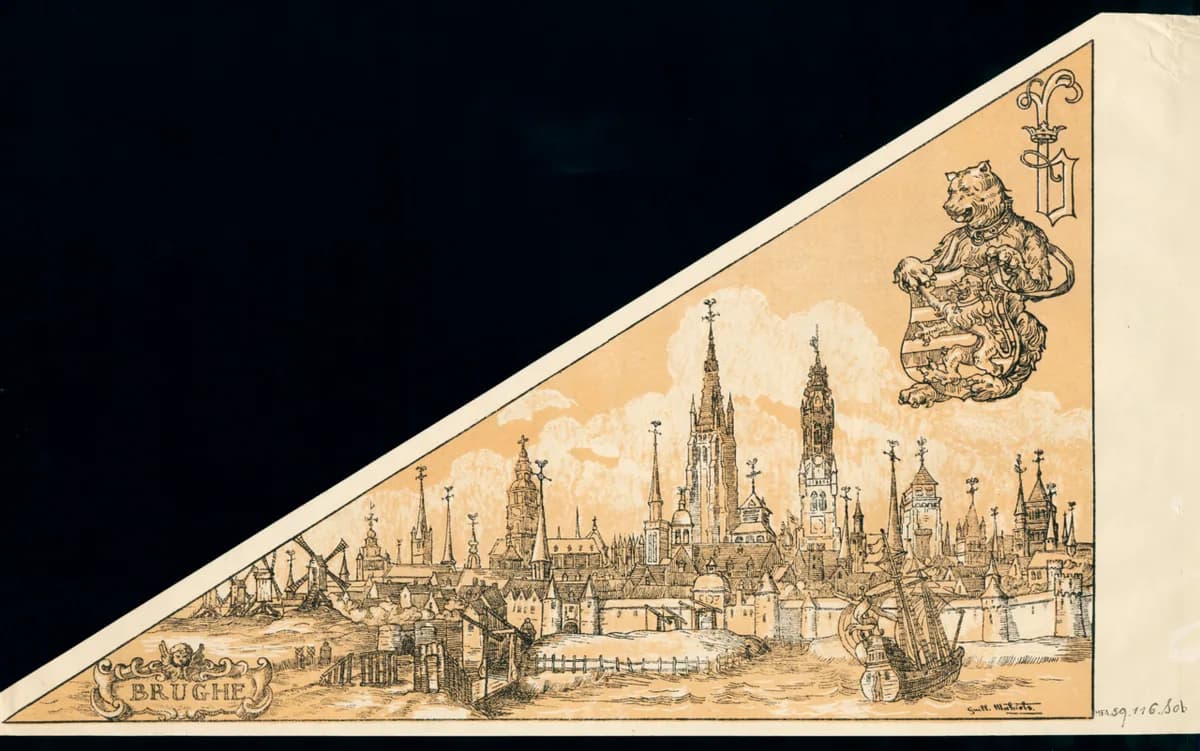
Bruges rewards visitors who plan around a specific event, because the city's festival culture grows directly out of its history rather than being bolted onto it for tourism. This was one of the great trading capitals of medieval Europe, a member of the Hanseatic network where Italian bankers, Portuguese spice merchants, and Flemish cloth weavers all did business within a few hundred metres of the Burg square. When the harbour silted up in the fifteenth and sixteenth centuries, the money left — and the city was more or less frozen in time, which is precisely why the old town survives so completely today. That preserved medieval fabric is the stage on which every Bruges festival plays out.
Practically, the city could hardly be easier to navigate. Bruges railway station sits just south of the historic centre, a flat fifteen-minute walk from the Markt, and once you are inside the ring canal almost everything worth seeing is within twenty minutes on foot. There is no metro because the city does not need one; the medieval core is genuinely compact, and cars are actively discouraged in the centre. The main event spaces — the Markt, the Burg, the Beurshalle exhibition hall near the station, and the Minnewaterpark at the southern edge of the centre — form a rough north-to-south corridor that you can walk end to end in half an hour. Bring comfortable shoes and a rain layer, because Flanders weather is changeable in every season.
Procession of the Holy Blood: Bruges' UNESCO Spring Event
The Procession of the Holy Blood (Heilig Bloedprocessie) is the single event most worth building a 2026 trip around, and it is the reason Bruges appears on any serious list of Europe's living heritage festivals. It takes place each year on Ascension Day, which in 2026 falls on Thursday 14 May. The procession was inscribed on UNESCO's Representative List of the Intangible Cultural Heritage of Humanity in 2009, recognition of a tradition that the city has maintained without interruption for centuries.
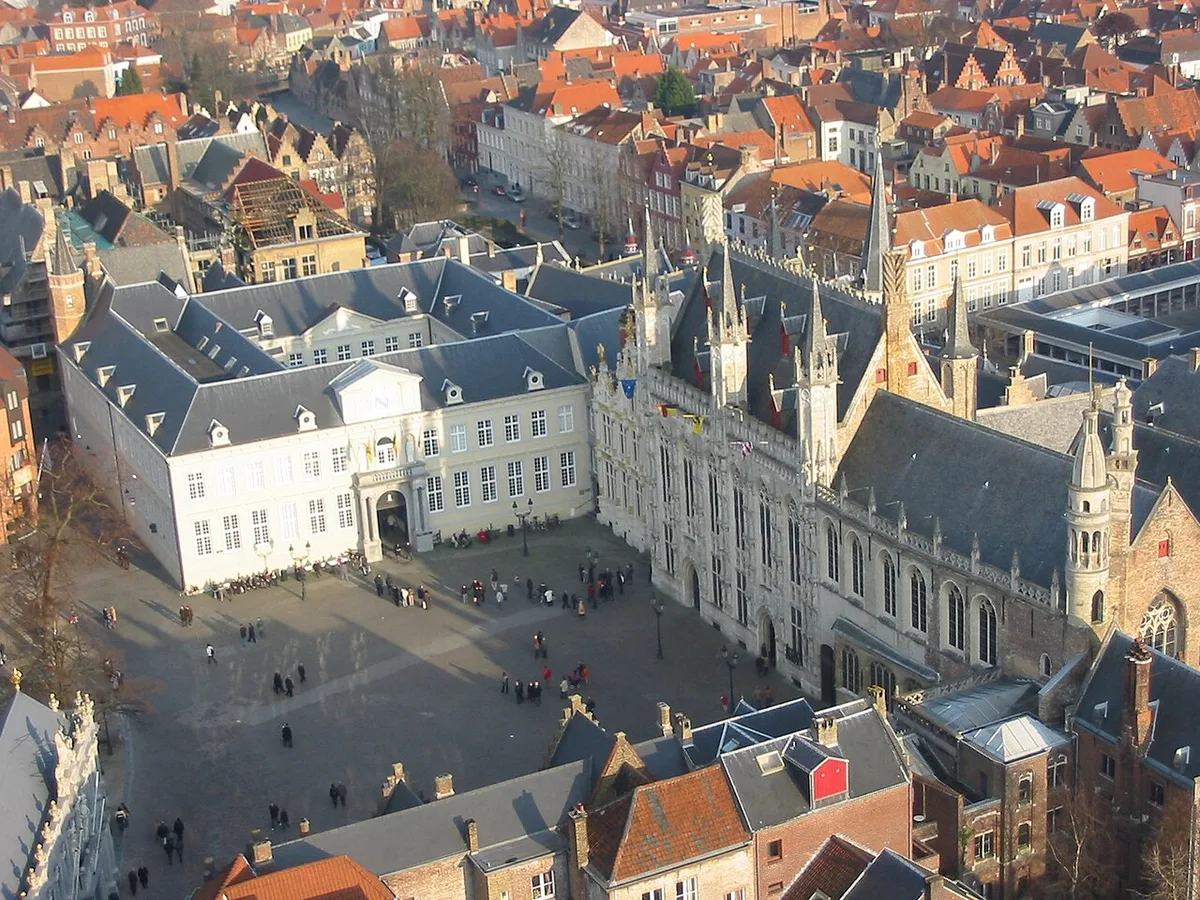
At the heart of it is the relic itself: a phial believed to contain drops of the blood of Christ, brought back to Flanders — according to tradition, in the twelfth century — and kept ever since in the Basilica of the Holy Blood, the double-level chapel that stands on the Burg square beside the town hall. On Ascension Day the Bishop of Bruges carries the relic out through the streets in a procession of around 1,700 costumed participants. The first half stages scenes from the Bible — the Nativity, the Passion, the Resurrection — and the second half tells the history of Bruges and the arrival of the relic, with mounted knights, medieval banners, live animals, and full period dress. It is part religious ceremony, part open-air theatre, and it moves through the Markt and along the main streets over the course of the morning.
Because Ascension Day is a public holiday in Belgium, expect the city to be busy and accommodation to fill early — the Wednesday and Thursday nights around 14 May 2026 are among the most in-demand of the year. For the full running order, the meaning behind each tableau, the best places to stand, transport advice, and how to visit the relic in the Basilica on ordinary days, see the dedicated Procession of the Holy Blood in Bruges guide.
Bruges Beer Festival: February in the Beurshalle
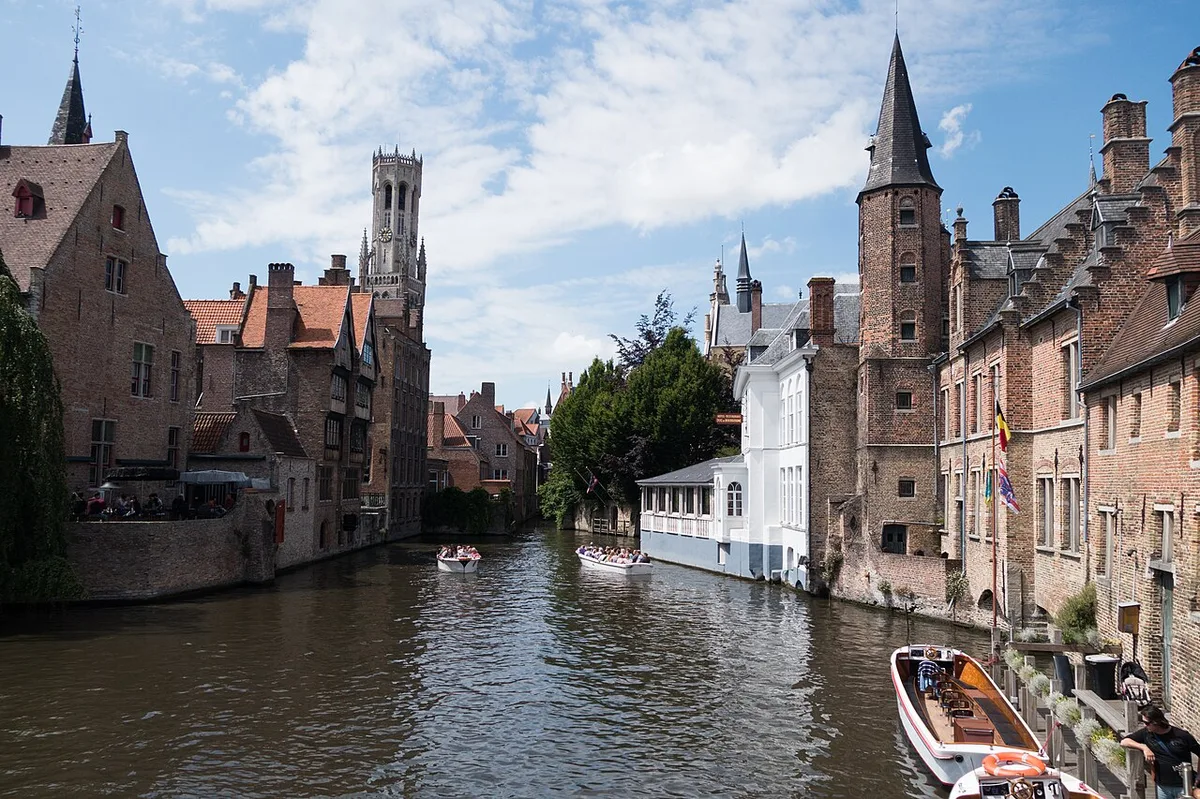
If the Holy Blood is Bruges at its most solemn, the Bruges Beer Festival (Brugs Bierfestival) is the city at its most sociable. It is held in early February at the Beurshalle, the exhibition hall a short walk from the railway station on the western edge of the centre. Over a single weekend, dozens of Belgian breweries — many of them small West Flanders operations you will not find outside the region — set up tasting stands under one roof, pouring everything from crisp blondes to the dark, complex quadrupels that Belgium does better than anywhere on earth.
The format is refreshingly straightforward: entry to the hall is generally free, and you buy a festival tasting glass and tokens to exchange for small pours, which lets you work through a wide range without committing to full glasses. It is an ideal event for the curious rather than the expert, and the timing — deep winter, when Bruges is at its quietest and cheapest — makes it a genuinely good reason to visit in a month most people overlook. Belgium's brewing culture is itself UNESCO-listed, and a weekend here is one of the most enjoyable ways to understand why.
Cactusfestival: Bruges' Intimate Summer Music Weekend
Cactusfestival is Bruges' beloved summer music festival, and its setting is a large part of the charm. It takes place across a weekend in early July — in 2026 expected around 10–12 July, though you should confirm the exact dates — in the Minnewaterpark, the green expanse beside the Lake of Love at the romantic southern edge of the old town. This is not a mega-festival with a hundred thousand people and a field of tents; it is a deliberately intimate, tree-shaded event of a scale that lets you actually see the stage, hear yourself think between sets, and walk back to a canal-side hotel at the end of the night.
The programming leans into indie, alternative, world, and electronic music, with a curatorial reputation for booking interesting international acts before they get expensive rather than chasing the obvious headliners. Because it sits inside a public park in a UNESCO city, the whole festival has an unusually civilised feel — food stalls skew toward good local produce, the crowd is mixed in age, and the medieval skyline provides a backdrop that no purpose-built festival site can match. Tickets are sold as day passes or weekend passes and the more popular days do sell out, so book ahead if a particular act is drawing you.
Cactusfestival is the flagship of a wider summer live-music season in Bruges. The organisers behind it also run the MOODS! summer programme, which brings concerts, DJ sets, and fireworks to venues around the city centre across July and August — a lower-key, spread-out complement to the festival weekend that is worth checking if your dates fall outside the main Cactus lineup.
December Dance and the Bruges Arts Calendar
Bruges takes its performing arts seriously, anchored by the Concertgebouw, the striking modern concert hall on 't Zand that opened in 2002 and hosts a year-round programme of classical, contemporary, and experimental work. The standout arts event is December Dance, the city's international contemporary dance festival, staged in early December across the Concertgebouw and the Stadsschouwburg theatre. Each edition is built around a guest curator and brings choreographers and companies from across the world to a city not otherwise associated with cutting-edge dance — a genuinely surprising thing to stumble into on a winter weekend.
Looking further ahead, the Triennial Bruges is the event to keep on your radar: a city-wide contemporary art and architecture trail that installs temporary works in courtyards, along canals, and in unexpected corners of the medieval centre. It runs, as the name suggests, every three years, and the next edition is expected to return in 2027 rather than 2026 — but if your travels are flexible, it turns the whole old town into an open-air gallery and is well worth planning around when it comes back. Between these anchors, the Concertgebouw and the city's museums run a steady programme of exhibitions and concerts throughout the year, so there is almost always something on.
Winterglow: The Bruges Christmas Market
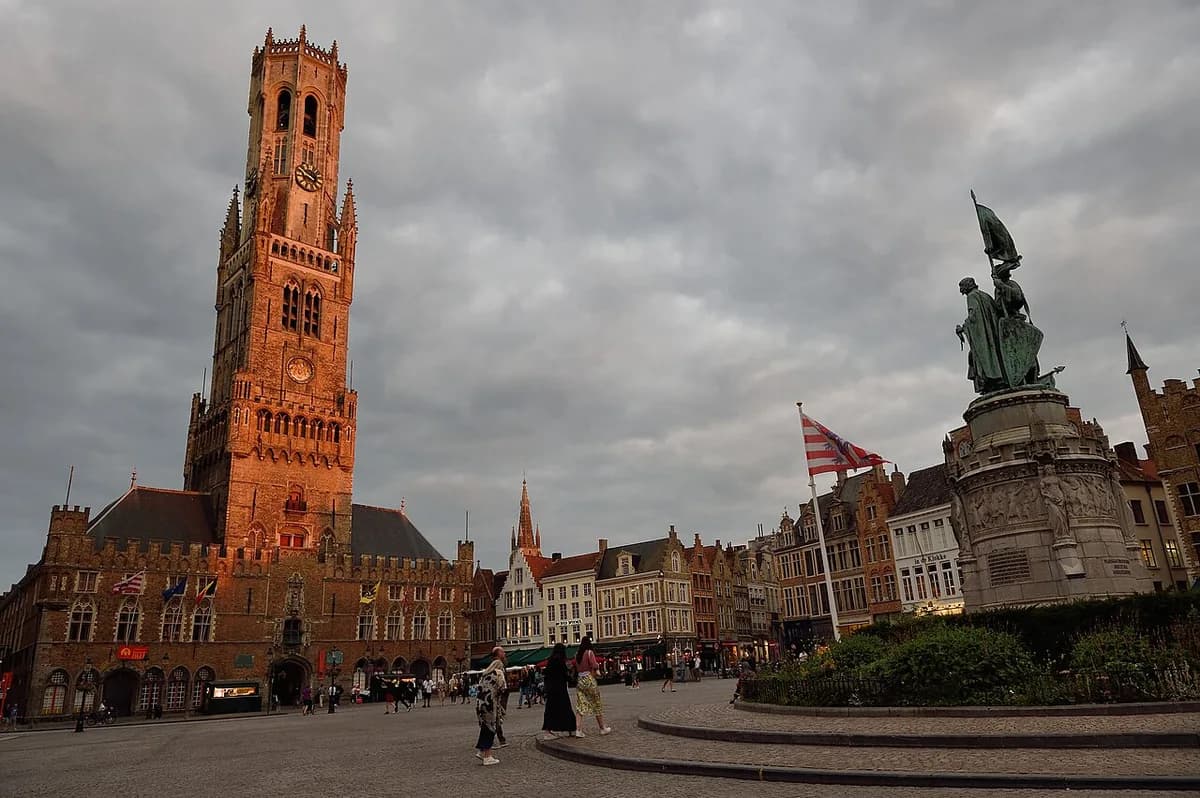
Bruges in winter is the version of the city most people picture without realising it, and the seasonal festival that pulls it together is Winterglow (Wintergloed), the umbrella name for the city's Christmas market and light programme. It runs from roughly mid-November through early January, with the main Christmas market concentrated on the Markt — beneath the great medieval Belfry — and a second, more intimate cluster of stalls on Simon Stevinplein. There is an ice rink, chalets selling glühwein and Flemish stew and hot chocolate, and a trail of light installations that threads the market squares together after dark, when the medieval facades look their theatrical best.
What sets the Bruges market apart from the bigger German-style ones is scale and setting: it is compact, the stalls sit inside a genuinely medieval square rather than a modern plaza, and you can walk the whole thing in an evening and still have time for a proper dinner. It gets busy at weekends in December, so a weekday visit or an early-evening arrival makes for a calmer experience. For everything in one place — stall maps, the ice rink, opening hours, and how the light trail works — see the dedicated Bruges Christmas market guide, and check the year's confirmed run in the Bruges Christmas market dates rundown before you book.
Getting Around Bruges and Day Trips
Bruges is one of the most walkable festival cities in Europe. From the railway station it is a flat fifteen-minute walk to the Markt, and the historic core inside the ring canal is small enough that you rarely need transport at all — the main event venues sit within a corridor you can cover on foot in half an hour. City buses (De Lijn) fill in the longer hops and run from the station, but for a festival visit you will spend almost all your time walking. Cycling is the local default, and rental bikes are easy to find if you want to explore the green belt of former ramparts or the canals beyond the centre.
The city's position in Flanders makes it a strong base for day trips, and the train network does the heavy lifting. Ghent is around 25 minutes away by regional train and pairs beautifully with a Bruges stay — the festivals and events in Ghent hub maps its calendar the same way this guide maps Bruges; Brussels is roughly an hour; and the coast at Ostend and Zeebrugge is a short hop for a change of pace. If you are combining festivals across Belgian cities, Antwerp — the country's fashion and diamond capital, and a serious cultural destination in its own right — is around 90 minutes away by train, and the festivals and events in Antwerp hub maps its calendar the same way this guide maps Bruges. For the bigger picture across the continent, the festivals and events in Europe by city master hub links every city calendar we cover.
- Bruges station to the Markt — flat 15-minute walk; no metro, and none needed
- Ghent — 25 minutes by regional train, an easy half-day pairing
- Brussels — around 1 hour by train, direct services throughout the day
- Antwerp — around 90 minutes by train for a second Belgian festival city
Frequently Asked Questions
When is the best time to visit Bruges for festivals?
The three peak windows are May, July, and December. Ascension Day — Thursday 14 May 2026 — brings the UNESCO Procession of the Holy Blood, the city's single most distinctive event. Early July centres on Cactusfestival in the Minnewaterpark and the wider MOODS! summer music programme. From mid-November through early January, Winterglow lights the Markt with the Christmas market, an ice rink, and a light trail. February is the quiet-season pick for the Bruges Beer Festival.
What is the Procession of the Holy Blood and when is it in 2026?
The Procession of the Holy Blood (Heilig Bloedprocessie) is a UNESCO Intangible Cultural Heritage event, inscribed in 2009, held each year on Ascension Day — Thursday 14 May in 2026. The Bishop of Bruges carries a relic of the Holy Blood, kept in the Basilica of the Holy Blood on the Burg square, through the streets, accompanied by around 1,700 costumed participants staging biblical scenes and the history of Bruges. Watching from the street is free; paid grandstand seating along the route can be booked in advance.
Is Bruges worth visiting as a city break?
Yes. Bruges is a remarkably complete medieval UNESCO World Heritage old town, compact enough to explore entirely on foot, laced with canals, and home to world-class Belgian beer culture. It is about an hour from Brussels and 25 minutes from Ghent by train, which makes it an easy base. Festivals aside, it rewards two to three days at any time of year, and it pairs naturally with day trips across Flanders.
When is the Bruges Christmas market in 2026?
The Bruges Christmas market, part of the Winterglow (Wintergloed) programme, typically runs from mid-November through early January, with the main market on the Markt beneath the Belfry and a second cluster on Simon Stevinplein, plus an ice rink and a light trail. Exact opening and closing dates shift slightly each year, so confirm the 2026–27 run on the official site or in our dedicated dates guide before booking.
What day trips can I do from Bruges?
Ghent is the easiest and best day trip, around 25 minutes by regional train, followed by Brussels at roughly an hour. The Belgian coast at Ostend and Zeebrugge is a short hop for beaches and seafood. For a second festival city, Antwerp is around 90 minutes away by train. All of these run frequently from Bruges station, so you can build a multi-city Flanders itinerary without a car.
Related: Procession of the Holy Blood in Bruges — Full Guide.
Bruges has one of the most coherent festival calendars in Belgium precisely because none of it feels manufactured. The Procession of the Holy Blood is a living tradition six centuries deep; the Beer Festival grows out of a brewing culture that is itself UNESCO-listed; Cactusfestival and December Dance reflect a small city that genuinely cares about music and dance; and Winterglow simply lets the medieval old town do what it does best in the dark of winter. Whenever I recommend Bruges to travellers unsure whether it can fill more than a day, the calendar is what I point to first.
If you can align a trip with only one event in 2026, make it Ascension Day on 14 May for the Procession of the Holy Blood — there is nothing else quite like watching that column of costumed townspeople move through the Markt at dawn. But the July music weekends and the December market are their own strong reasons to come, and because Bruges sits an hour from Brussels and minutes from Ghent, any of these events slots easily into a wider Flanders trip. Come with comfortable shoes, book your bed early around the peak dates, and let the compact old town do the rest.
Free guide: Europe's Festival Calendar
A month-by-month map of Europe's unmissable festivals — with the best dates to visit each and a local tip you won't find in the guidebooks.
You might also like

Continue reading
More guides you'll find useful