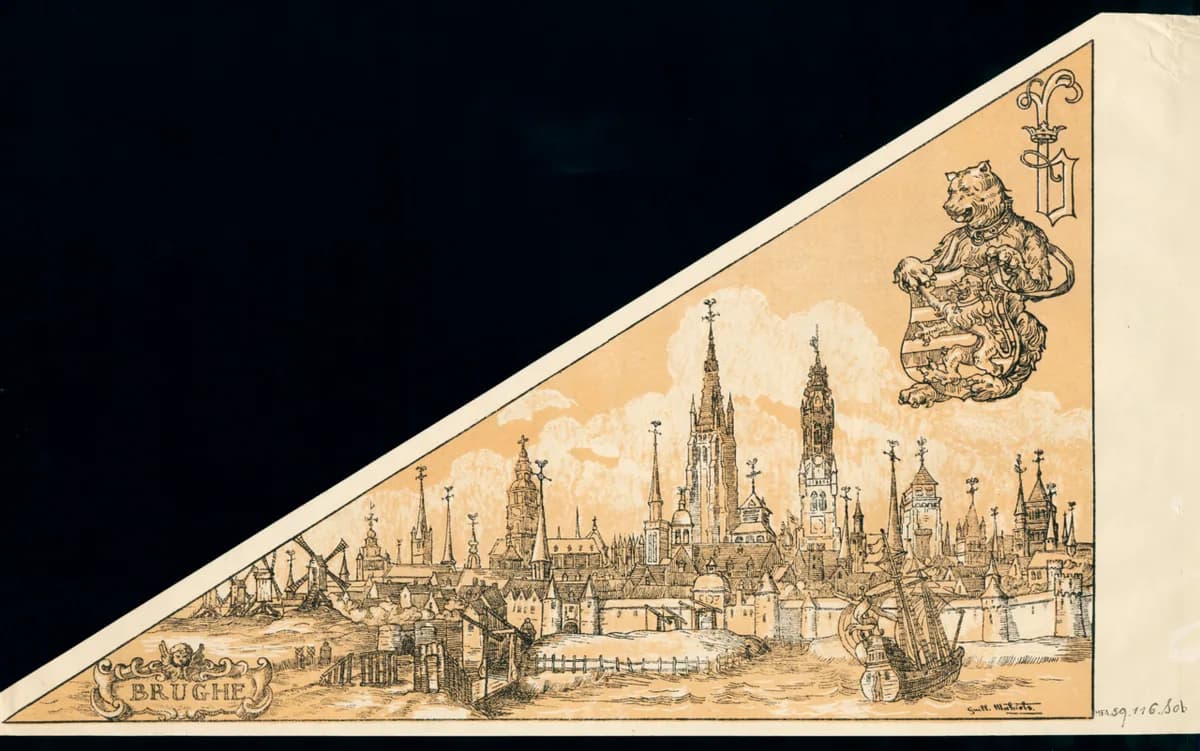
Procession of the Holy Blood Bruges 2026: Complete Guide
Procession of the Holy Blood Bruges 2026: the UNESCO-listed Heilig Bloedprocessie on Ascension Day, 14 May. Route, tickets, seating, timings, and how to visit.
On this page
Procession of the Holy Blood Bruges 2026: Complete Guide
There are festivals you attend and festivals you happen to walk into, and then there is the Procession of the Holy Blood — the Heilig Bloedprocessie — which does not so much take place in Bruges as briefly take the city over. On Ascension Day, Thursday 14 May 2026, some seventeen hundred costumed participants and the Bishop of Bruges carrying a rock-crystal relic will wind through the medieval streets while tens of thousands of people line the pavements, lean from windows, and fill the ticketed grandstands. I first saw it by accident on a spring morning years ago, expecting a quiet canal-side coffee, and instead found myself pressed against a shopfront on the Steenstraat as Roman soldiers, Old Testament prophets, and a live camel passed within arm's reach. For the wider picture of what happens across the city through the year, the festivals and events in Bruges guide covers the full calendar.
The procession is old — it has been staged in some form for roughly seven hundred years — and in 2009 UNESCO inscribed it on the Representative List of the Intangible Cultural Heritage of Humanity, recognising it as a living tradition rather than a museum piece. That is exactly how it feels on the day: this is not a re-enactment put on for tourists but a devotional and civic event that the people of Bruges have carried, without interruption in spirit, across centuries. Visitors are welcome, warmly so, but you are a guest at something the city does for itself.
This guide covers the 2026 date and what "Ascension Day" means for your travel planning, the story of the relic and why it matters, what actually happens along the route and in what order, how to choose between standing for free and booking a grandstand seat, when to arrive, how to reach Bruges and get around, and how to fold the procession into a longer visit to one of Europe's most complete medieval towns. Exact start times and seating details shift slightly year to year, so I flag throughout where you should confirm against the official site before you travel.
Free guide: Europe's Festival Calendar
A month-by-month map of Europe's unmissable festivals — with the best dates to visit each and a local tip you won't find in the guidebooks.
What the Procession of the Holy Blood Is
The Procession of the Holy Blood is Bruges's most important annual event and one of the oldest continuous processions in Europe. At its heart is a single object: a small rock-crystal vial said to hold a cloth stained with the blood of Christ. Tradition holds that the relic was brought to Bruges in the twelfth century by Thierry of Alsace, Count of Flanders, on his return from the Second Crusade, though historians place its documented arrival somewhat later. Whatever the precise route it travelled, the relic has been venerated in the city for the better part of a thousand years, and the procession grew up around it as the public, once-a-year expression of a devotion that continues quietly every other day.
The event is really two things at once, and holding both in mind helps you understand what you are watching. It is a religious procession — a solemn act of veneration in which the Bishop of Bruges carries the relic through the streets under a canopy, accompanied by clergy, the confraternity that guards the relic, and the faithful. And it is a civic pageant — an enormous piece of open-air theatre in which the city stages the biblical story and its own history in a rolling sequence of tableaux. The costumes are elaborate, the cast enormous, and animals, carts, and music move the whole thing forward at a stately walking pace over several hours.
That dual nature is exactly what UNESCO recognised in 2009. The listing honours the procession as intangible cultural heritage: a tradition transmitted from generation to generation, involving the whole community, and re-created each year with living meaning rather than frozen ceremony. Many of the participants are Bruges residents whose families have taken part for decades; roles are handed down, and the confraternity of the Holy Blood — the Edele Confrérie van het Heilig Bloed — has stewarded the relic since the fifteenth century.
Procession of the Holy Blood 2026: Date and Timing
The procession is always held on Ascension Day, the Christian feast marking Christ's ascension into heaven, which falls forty days after Easter and therefore moves each year. In 2026 that date is Thursday 14 May. Because Ascension Day is a public holiday in Belgium, the surrounding period tends to become a long weekend for many locals, so the city is busy not only with procession visitors but with holidaymakers generally.
On the day itself the procession typically begins in the late morning — commonly cited as around 10:30 to 11:00 — and moves through the historic centre until mid-afternoon, taking several hours to complete its full circuit at walking pace. Start times, the order of the morning's religious services, and the exact assembly schedule can vary slightly between editions, so treat these as a planning guide and check the official site for the confirmed 2026 timetable before you commit to a train or a seat.
A practical note on the weather: mid-May in Bruges is usually mild but genuinely changeable, with daytime temperatures often in the region of 12°C to 18°C and a real chance of both bright sun and passing rain in the same afternoon. You will be outdoors and largely stationary for a long stretch, so plan for both — more on that below.
The Relic and the Basilica of the Holy Blood
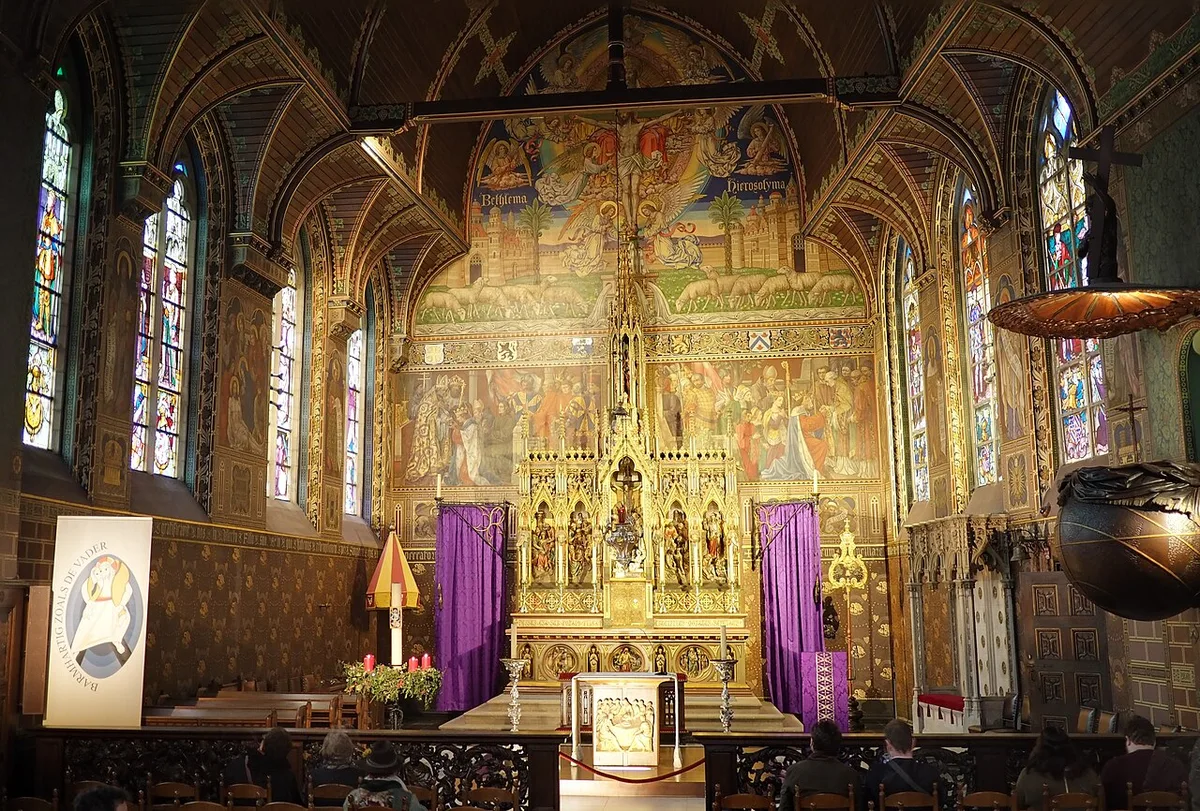
The relic lives, the rest of the year, in the Basilica of the Holy Blood — the Heilig-Bloedbasiliek — a small but remarkable church tucked into a corner of the Burg square, the civic heart of medieval Bruges. The basilica is really two chapels stacked on top of one another. The lower chapel, dedicated to Saint Basil, is austere twelfth-century Romanesque — thick walls, low light, and a heavy calm. Climb the staircase and you emerge into the upper chapel, rebuilt over the centuries into something entirely different: richly painted walls, stained glass, and, on most days, the relic itself presented for veneration.
The rock-crystal phial is set within a cylinder and, on the days it is shown, the faithful and the curious alike file past to see it and, if they wish, to touch it briefly. It is a quiet, moving thing to witness even outside procession season — a small object that has drawn people to this exact spot for the better part of a millennium. The basilica is open to visit year-round, so even if your trip does not coincide with Ascension Day you can still see where the whole tradition is anchored. There is usually a modest charge to enter the small treasury museum, while the chapels themselves can be visited more freely; opening hours are seasonal, so confirm before you go.
On the morning of 14 May 2026, the relic is carried out of the basilica to begin its journey through the city. That moment — the shrine emerging from the small chapel on the Burg into the light and the crowd — is the emotional pivot of the whole day, and if you can position yourself near the Burg for the start you will see the procession at its most concentrated and reverent, before it stretches out along the wider route.
What Happens Along the Route
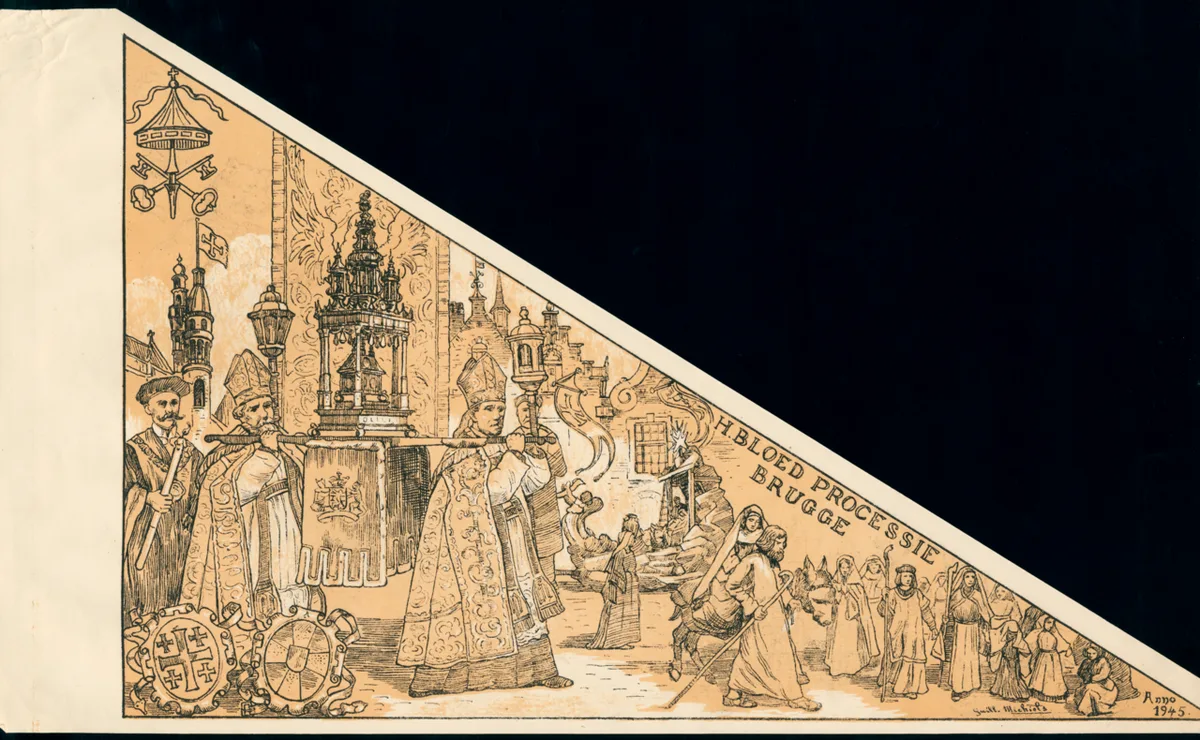
Roughly seventeen hundred participants take part, and the procession is structured as a sequence of acts that unfold as the cast walks past your fixed vantage point. Rather than moving between scenes, you stand still and the story comes to you — which is part of what makes the experience so distinctive. The narrative arc runs, broadly, in three parts, though the precise staging is refined each year.
The first part dramatises the Old Testament: Adam and Eve, Abraham, Moses, and the prophets, in costume and often accompanied by animals — I have seen sheep, donkeys, and, memorably, a camel making its unhurried way down a narrow Bruges lane. The second part turns to the New Testament and the life of Christ: the Nativity, the ministry, and the Passion, staged with a seriousness that quietens the crowd noticeably as it passes. The third part tells the history of Bruges and of the relic itself — the return of Thierry of Alsace from the Crusade, medieval counts and knights, guild members and townsfolk in period dress, connecting the biblical story to the specific soil you are standing on.
The climax is the relic. After the historical tableaux comes the religious procession proper: the confraternity, the clergy, and finally the Bishop of Bruges carrying the shrine of the Holy Blood, often under a canopy, with the crowd frequently falling silent or crossing themselves as it passes. This is the devotional heart of the day and the reason for everything that precedes it. If you watch only one segment, watch this one.
Watching: Free Street Spots vs Grandstand Seats
You have two ways to watch, and the right choice depends on how you like to experience a crowd. Standing along the streets is free. You simply find a place on the route, claim it early, and watch the procession pass. This is how the majority of people experience the day, and it is how I would recommend seeing it at least once — being at street level, close enough to catch the detail of the costumes and the expressions of the participants, is the more immediate and atmospheric option.
The alternative is a ticketed grandstand seat — a tribune erected along parts of the route, giving you a numbered, reserved place to sit for the duration. Seats are sold in advance through the official site and, in recent editions, have typically run in the region of €15 to €30 depending on the location and the standing of the seat; confirm current prices and availability when booking opens. A seat is worth the money if you are travelling with anyone who cannot stand for two or three hours, if you want a guaranteed sightline without arriving at dawn, or simply if the idea of the crowd is more stress than pleasure. The trade-off is that you are committed to one fixed elevated spot and slightly removed from the street-level intimacy.
My honest recommendation: if it is your first time and you are able-bodied and don't mind crowds, stand — arrive early, pick a spot near the Burg or on the Markt, and take the whole thing in for free. If you are returning, travelling with family or older companions, or simply want a calmer day, book a seat as soon as tickets are released, because the good positions sell out ahead of Ascension Day.
The Route and Where to Stand
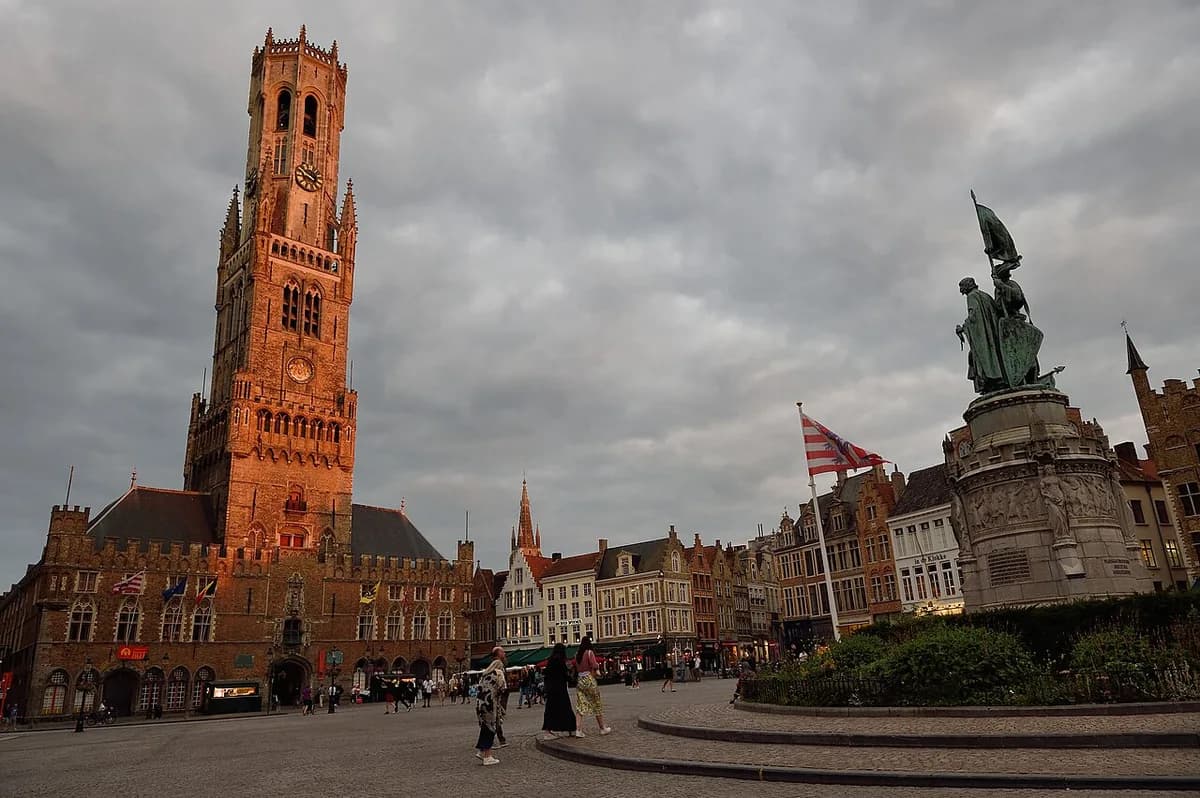
The procession winds through the historic centre of Bruges, and because the medieval old town is compact and almost entirely pedestrian-friendly, most of the route is within a short walk of itself. The key landmarks to orient yourself by are the Burg — the square where the basilica stands and where the relic emerges — the adjacent Markt with its towering Belfry, and the larger open square of 't Zand toward the western side of the centre. The procession threads between these, using the atmospheric narrow streets that make Bruges what it is.
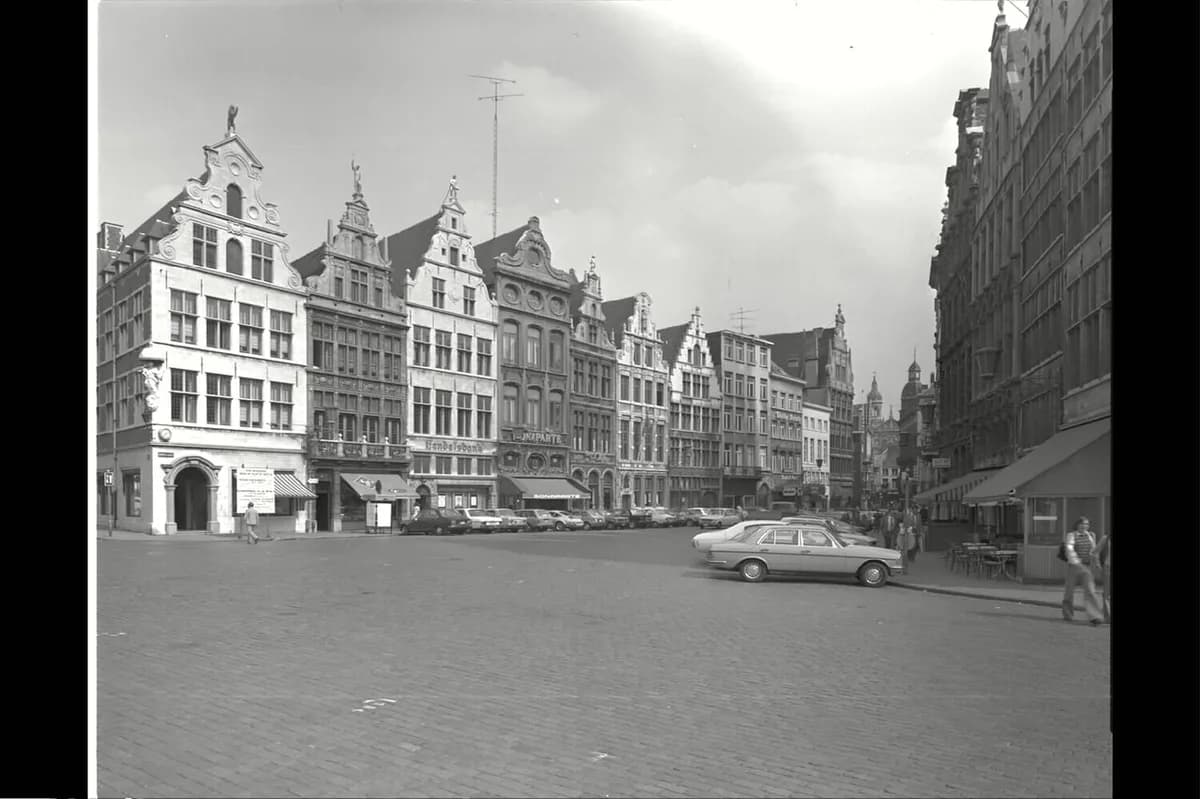
For choosing a spot, a few principles hold. Near the Burg you get the start and the most concentrated, reverent moments as the relic sets off. On the Markt you get the grandest backdrop — the Belfry and the ranked gabled facades — which is the postcard setting and therefore also the most crowded. Along the narrower connecting streets you get the greatest intimacy, with the procession passing close enough to touch, though sightlines are shorter and you see the cast for less time. Wherever you choose, the golden rule is the same: arrive early. On a busy Ascension Day the best free positions are taken well before the procession begins, and the old town becomes genuinely packed.
Because the route and any road-closure details are finalised each year, check the official site's route map for 2026 before the day so you can pick your spot with confidence and know which streets will be closed to traffic. If you are staying inside the centre, factor in that many streets will be closed and movement will be slow once the crowds build.
Getting to Bruges and Getting Around
Bruges is one of the easiest cities in Europe to reach by train, which is by far the best way to arrive for the procession. From Brussels the journey takes around one hour by direct train, with frequent departures throughout the day; from Ghent it is roughly half that. If you are coming from further afield, Brussels connects to London by Eurostar and to Paris, Amsterdam, and Cologne by high-speed rail, so Bruges is realistically a day trip or an easy overnight from much of northwestern Europe.
Bruges railway station sits just south of the historic centre. From the station it is about a 15-to-20-minute walk into the heart of the old town — a pleasant approach that takes you past the Minnewater and into the medieval streets — or a short bus ride if you prefer. On Ascension Day, with the streets closing and the crowds arriving, arriving by train and walking in is far simpler than driving. If you must drive, use one of the park-and-ride or peripheral car parks and walk or bus in; the historic centre is not a place you want to be looking for parking on the busiest day of the year.
Once you are in the old town, everything is walkable. Bruges's centre is small, flat, and almost entirely pedestrianised in its core, and the whole procession route can be reached on foot. There is no need for public transport within the centre on the day — indeed, with road closures in place, walking is the only reliable way to move between the Burg, the Markt, and 't Zand.
Best Time to Arrive, Crowd Tips, and What to Bring
The single most useful piece of advice I can give is to arrive early — earlier than feels necessary. The procession may not begin until around 10:30 or 11:00, but the good free positions along the route are being claimed a couple of hours beforehand, and by the time the relic emerges the old town is dense with people. If you want a front-row street spot, treat the morning like a commitment: get in, choose your place, and hold it.
A few practical tips from standing in that crowd:
- Layer your clothing. May in Bruges swings between sun and rain within an hour. A light waterproof and a warmer layer you can carry are both worth having.
- Bring water and a snack. Once you have a good position you will not want to leave it, and the procession lasts several hours. Cafés and shops near the route are overwhelmed on the day.
- Mind the timing of the relic. The historical and biblical tableaux come first; the Bishop and the shrine of the Holy Blood come toward the end. If your patience is limited, know that the most solemn moment is late in the sequence.
- Respect the devotional character. This is an act of faith for many present. Photography is fine and expected, but stepping into the route, obstructing participants, or treating the relic segment as a photo opportunity to push through the crowd for is not.
- Travel light. The crowds are tight and the streets narrow; a small bag is far easier to manage than a large one.
If you would rather not manage the crowd at all, this is where a grandstand seat earns its price — a reserved place, a guaranteed view, and no need to arrive at dawn to secure it.
Pairing the Procession with a Visit to Bruges
The procession is a superb anchor for a longer stay, because Bruges rewards slow exploration and the old town is small enough to see thoroughly in a day or two. Beyond the Basilica of the Holy Blood on the Burg, the Belfry on the Markt is the obvious climb — its 366 steps deliver a panorama over the terracotta roofs and canals, and it is one of the defining silhouettes of Flanders. The Markt and Burg squares themselves are open-air museums of Gothic and Renaissance civic architecture, and the canals — best seen from a short boat trip or simply on foot at dusk — earn Bruges its "Venice of the North" cliché honestly.
Time your other sightseeing around the procession, not against it. On Ascension Day itself the centre is given over to the event, so plan museum visits and the Belfry climb for the day before or after. If you are building a wider Belgian itinerary, Ghent is thirty minutes away and Brussels an hour, both easy day trips by the same rail line that brings you in.
And do not write Bruges off as a one-season city. It is at its most magical in December, when the Bruges Christmas market fills the Markt and the smaller squares with wooden chalets, an ice rink, and lights strung across the medieval facades. If a spring procession trip leaves you wanting to return, a winter one is an entirely different — and equally worthwhile — experience of the same beautiful town. For planning a first festive trip anywhere in the region, our guide to Christmas markets in Europe for first-timers is a useful companion, and Bruges in winter is one of its natural stops.
Frequently Asked Questions
When is the Procession of the Holy Blood in 2026?
The Procession of the Holy Blood (Heilig Bloedprocessie) is always held on Ascension Day, which falls on Thursday 14 May 2026. The procession typically begins in the late morning, around 10:30–11:00, and moves through the old town until mid-afternoon. Because Ascension Day is a movable feast, the date changes each year — confirm the exact start time on the official site before you travel.
Do I have to pay to watch the procession?
No. Standing along the streets to watch the procession is free, and it is how most people experience the day. If you prefer a guaranteed reserved place, ticketed grandstand (tribune) seating is sold in advance through the official site, typically in the region of €15–30 depending on location. Confirm current prices and book early, as the best seats sell out before Ascension Day.
What actually happens during the Procession of the Holy Blood?
Around 1,700 costumed participants stage a rolling sequence of scenes — Old Testament stories, the life of Christ, and episodes from the history of Bruges and the relic — as they walk through the medieval centre. The climax is the religious procession itself, in which the Bishop of Bruges carries the rock-crystal shrine of the Holy Blood through the streets. The full procession takes several hours to pass a single point.
Why is the procession recognised by UNESCO?
The Procession of the Holy Blood has been staged in Bruges for roughly 700 years and was inscribed on the UNESCO Representative List of the Intangible Cultural Heritage of Humanity in 2009. UNESCO recognised it as a living tradition — transmitted across generations, involving the whole community, and re-created each year with genuine devotional and civic meaning rather than as a staged re-enactment for tourists.
Can I see the Holy Blood relic outside the procession?
Yes. The relic is kept in the Basilica of the Holy Blood (Heilig-Bloedbasiliek) on the Burg square, where it is venerated and can be seen on most days throughout the year. The basilica — a twelfth-century lower chapel and a richly decorated upper chapel — is open to visitors year-round, with a small charge for the treasury museum and seasonal opening hours, so you can see where the tradition is anchored even if your trip does not coincide with Ascension Day.
Related: Festivals and Events in Bruges and the master festivals and events in Europe by city hub — for planning the rest of your Flanders calendar.
The Procession of the Holy Blood is one of those rare events that works on every level at once — as a piece of extraordinary living heritage, as a spectacle of costume and craft, and as a genuine act of devotion carried through a town that has been doing it for seven centuries. Whether you stand for free on the Markt or book a grandstand seat near the Burg, the essential experience is the same: the whole story of a faith and a city walking slowly past you, ending with the relic that started it all. Arrive early, dress for changeable May weather, come by train, and give yourself the whole day.
Ascension Day 2026 is Thursday 14 May, so build your trip around that fixed point and confirm the finer details — start times, the route map, and seating — on the official site closer to the date. And if the medieval streets of Bruges leave you wanting more, come back in December for the Bruges Christmas market; the same beautiful town wears winter every bit as well as spring. However you time it, the procession is a reminder of why Bruges remains one of the most rewarding places in Europe to plan a festival trip around.
Free guide: Europe's Festival Calendar
A month-by-month map of Europe's unmissable festivals — with the best dates to visit each and a local tip you won't find in the guidebooks.
You might also like

Continue reading
More guides you'll find useful


