
What Is a Christmas Market? A Travel Guide
Learn what a Christmas market is, where the tradition started, and how to pick the best one for your trip. A practical guide to Europe's favourite winter event.
On this page
What Is a Christmas Market?
A Christmas market is an open-air market held during the weeks leading up to Christmas, typically from late November through December 24. Stalls sell handmade gifts, seasonal food, and hot drinks in a setting decorated with lights, garlands, and festive displays. The tradition traces its roots to medieval German-speaking Europe, and today it has spread to dozens of countries across the globe. Whether you are planning your first market visit or choosing between several options, this guide explains what to expect and where the tradition comes from.
Free guide: Europe's Festival Calendar
A month-by-month map of Europe's unmissable festivals — with the best dates to visit each and a local tip you won't find in the guidebooks.
What Is a Christmas Market, Exactly?
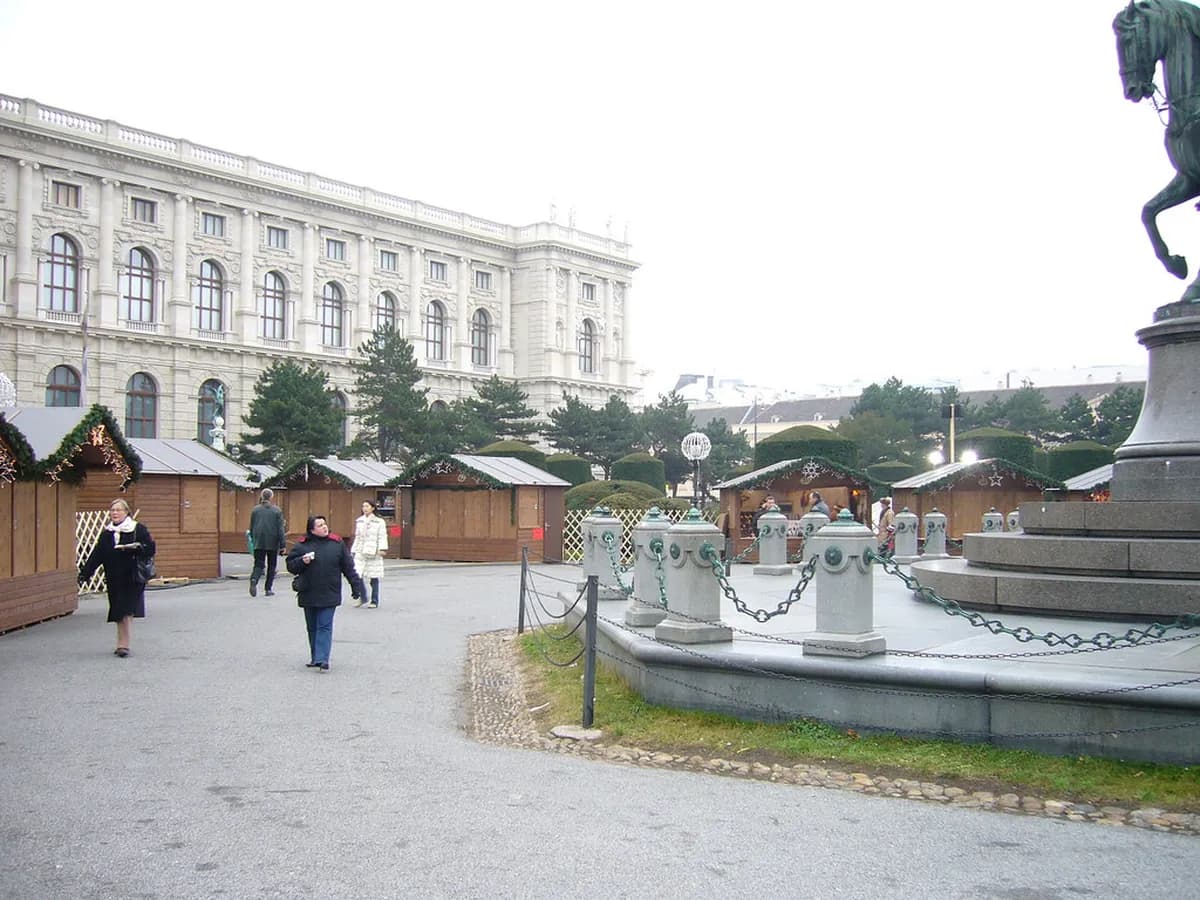
A Christmas market is a street market held in the open air during the Advent season, usually from late November through Christmas Eve. Vendors set up wooden stalls or booths in a town square or pedestrian zone, selling gifts, seasonal treats, and warm beverages. Light displays, decorated trees, and live performances create a festive atmosphere that draws visitors of all ages. The German term Weihnachtsmarkt (Christmas market) or Christkindlesmarkt (Christ-child market) is still widely used across central Europe today.
Most markets open around the last weekend in November and close on December 24, giving shoppers roughly four weeks of trading. Entry is typically free, though individual stalls charge for food, drinks, and goods. Glühwein (hot spiced wine) is the signature drink you will find at almost every European market, served in a small ceramic mug you can keep as a souvenir — or return for a deposit refund. Food stalls commonly offer bratwurst, roasted chestnuts, gingerbread, and local pastries that vary by country.
The selection of goods depends heavily on how traditional the market is — the best ones prioritize local artisans and handmade crafts over mass-produced imports. Ornaments, wooden toys, candles, and embroidered textiles are common finds at markets with a strong craft focus. You can read more about the food and drink traditions at European Christmas market food and drink to plan what to try first. Understanding the basics of what a Christmas market offers helps you set realistic expectations before you arrive.
The Origins of Christmas Markets
The earliest documented forerunner of a Christmas market appeared in Vienna in 1296, when Duke Albrecht I authorized a 14-day December fair. That fair was not explicitly religious in nature, and historians note it was not directly linked to the Christmas holiday itself. A similar December market appeared in Bautzen, Germany, in 1384, when King Wenceslas IV granted the town the right to hold a meat market until Christmas. Whether these early fairs count as true Christmas markets is a question scholars still debate — the line between a winter market and a Christmas market took centuries to solidify.
The Dresden Striezelmarkt, which began in 1434, is widely considered one of the oldest continuously operating Christmas markets in Germany. The Nuremberg Christkindlesmarkt followed no later than 1628 and remains one of the most visited markets in Europe today, drawing around two million visitors each year. Christmas markets spread gradually from German-speaking regions into parts of Switzerland, France, and Italy as trade routes and cultural influence expanded. Strasbourg in Alsace, a region that changed between French and German rule many times, developed its own Christmas market tradition as far back as the 16th century.
The deeper history of how Christmas markets developed across Europe reveals just how much the tradition evolved over five centuries. What started as a practical winter trading event gradually absorbed religious symbolism, gift-giving customs, and eventually the visual aesthetic we recognize today. The transformation from simple market to festive spectacle happened slowly and unevenly across different cities and regions. That layered history is part of what makes visiting a centuries-old market feel genuinely different from attending a modern pop-up version.
Redefining Christmas Traditions
In medieval Europe, gift-giving was more closely tied to December 6, the feast of Saint Nicholas, than to Christmas Day itself. Saint Nicholas was the patron saint of children, believed to reward good behavior with small presents left in shoes or stockings. Christmas Day marked the end of Advent — a period of fasting and religious reflection — and the start of twelve days of feasting and celebration. The shift toward giving gifts on December 25 is generally credited to Martin Luther and the Protestant Reformation of the 16th century.
Luther and his followers objected to the veneration of saints, viewing it as a distraction from direct worship of God. By moving gift-giving from Saint Nicholas Day to Christmas Day, reformers reframed generosity as a divine act aligned with what Luther described as God as a "good, giving parent." This change accelerated the commercial dimension of the Christmas season, because December markets now served a more direct gift-buying purpose. As gift-giving on December 25 spread across Europe, Christmas markets grew in both size and cultural importance.
The transformation was not entirely smooth. In the 17th century, English Puritans argued that Christmas had become an excuse for excess, and British Parliament passed an ordinance in 1643 noting that Christians had turned the feast into "an extreme forgetfulness of him, by giving liberty to carnal and sensual delights." The tension between celebration and restraint that shaped Christmas in the early modern period is the same tension that would later drive the commercialization — and then the reaction against commercialization — of the markets themselves.
The Commercialization of Christmas Markets
By the 17th and 18th centuries, Christmas markets had become fixtures in many European cities, standing near churches and drawing visitors from all social classes. The Berlin market grew from roughly 50 stalls in 1650 to around 600 stalls by 1840, reflecting just how rapidly the tradition scaled. Local governments began stepping in to regulate the markets — setting opening dates, permitted goods, and closing hours. A Frankfurt police order from 1869 restricted sales to genuine Christmas objects such as toys, nativity scenes, gingerbread, and Christmas trees.
By the late 19th century, Christmas markets were losing ground to department stores, which offered cheaper mass-produced goods under one roof. Markets were pushed to peripheral locations in many cities, and attendance fell sharply in the early 20th century. In the 1920s, journalist Hans Ostwald wrote of Berlin that "only the meager remnants of the Christmas market in the east of the capital city still tempt the desires and the hopes of children." The tradition that had thrived for four centuries appeared to be dying out.
The linked rise of consumer culture eventually drove a second, more lasting revival — but only after the markets passed through a difficult chapter in the 1930s. Understanding this history helps visitors see modern markets clearly: they are curated experiences built on historical memory, not unbroken medieval customs.
The "Golden Age" and the Market We Know Today
The Nazi regime revived Christmas markets in the 1930s, reappropriating them as a symbol of German cultural greatness. The Berlin market was moved back to the city centre, where it attracted a record 1.5 million visitors in 1934 and two million two years later. The Nazis mandated in 1933 that markets sell only items tied to the holiday — Christmas tree decorations, toys, gingerbread, advent wreath binders — deliberately downplaying religious roots in favour of presenting Christmas as an Aryan nationalist tradition. Food stalls selling bratwurst, herring, and German treats became standard in the late 1930s, cementing the aesthetic template that most people now associate with a "traditional" Christmas market.
Germany's markets wound down during World War II, then experienced a strong resurgence in the postwar decades, driven largely by the rise of consumerism and the recovering economy of the 1950s and 1960s. By the late 1960s, markets were opening as early as the last weekend of November, extending the season significantly. Today, Germany alone hosts around 3,000 Christmas markets each year — the vast majority of which are less than 60 years old. That fact directly challenges the idea that most markets are ancient traditions; the aesthetic is old, but many individual markets are genuinely recent creations.
In recent decades, Christmas markets have proliferated worldwide, attracting visitors in Europe, North America, Asia, and beyond. Cities like Zagreb, Croatia, have been ranked among the best in Europe for their scale, atmosphere, and value. The desire to evoke nostalgia for a warmly lit past unites markets from Dresden to Chicago — even though the nostalgia itself is partly a constructed feeling, not a memory of something that ever existed quite as imagined.
How to Tell a Good Market from a Bad One
Not every market lives up to the promise of its fairy lights. The clearest signal of quality is stall composition: a good market has a majority of stalls selling handmade or regionally produced goods, not catalogue imports packaged to look artisan. Look for stalls with a single maker selling their own work — carved wood, hand-blown glass, embroidered linens — rather than generic ornament racks that could have come from any wholesale catalogue. Markets that accept only local artisans or apply a craft-quality filter tend to advertise this fact; the Nuremberg Christkindlesmarkt and the Dresden Striezelmarkt both enforce strict product standards that keep mass-produced goods off the main site.
The Glühwein mug system is another useful quality indicator. At the better central European markets, your hot wine arrives in a market-specific ceramic mug with a painted design — you pay a deposit (typically €2–3, the Pfand) on top of the drink price, and get it back if you return the mug before leaving. The ceramic deposit mug is standard at high-quality German and Austrian markets. Plastic cups or generic styrofoam are a warning sign at any market claiming to be traditional. Souvenir mug designs change year to year at many markets, which makes collecting them a minor tradition for repeat visitors.
The entry fee question also matters. European Christmas markets are almost universally free to enter; if a market charges admission, that cost usually signals a heavily curated or event-style experience (like Hyde Park Winter Wonderland in London, which leans more toward carnival than craft market). Free entry combined with a mix of independent food stalls and artisan vendors is the clearest indicator that a market prioritizes atmosphere and quality over throughput. Weekday visits, particularly weekday afternoons before 17:00, give you the stalls and the atmosphere without the weekend crush that makes browsing difficult at the most popular sites.
How to Choose the Right Christmas Market
Not all Christmas markets are created equal, and choosing the right one depends on what you value most as a traveler. If authentic handmade crafts and regional food matter to you, prioritize markets in smaller German or Austrian cities over the giant tourist-facing events in major capitals. Nuremberg and Munich remain strong choices for first-timers who want a classic experience without navigating a sprawling multi-market city. Vienna offers variety — several distinct markets within walking distance of each other — which suits visitors who want to compare styles and atmospheres in a single trip.
Budget matters too: entry is almost always free, but food, drinks, and gifts add up quickly at the more touristy markets. A Glühwein at a small-town German market costs noticeably less than the same drink at a premium market in a major European capital. Smaller regional markets in rural Germany, Austria, and the Czech Republic typically offer the most affordable prices alongside the least crowded atmosphere. Reading about how to plan a European festival trip before you book helps set realistic expectations for timing, costs, and logistics.
If you are visiting Europe specifically for a Christmas market, plan to arrive on a weekday afternoon rather than a weekend evening, when crowds peak significantly. The first weekend of December and the weekend closest to Christmas Eve are the busiest at almost every major market. For visitors who cannot travel to Europe, markets in North American cities like Chicago's Christkindlmarket or those modeled on central European formats offer a reasonable approximation — though the depth of artisan quality rarely matches what you find in Germany or Austria at the same price point.
Frequently Asked Questions
What is the purpose of a Christmas market?
A Christmas market serves as an open-air shopping and social gathering point during the Advent season. Originally, markets let people buy seasonal goods and gifts before Christmas. Today they also function as festive community events, offering food, music, and atmosphere alongside the trading of crafts and seasonal products.
Are Christmas markets a thing in the US?
Yes, Christmas markets exist across the United States, though they vary in style. Events like the Christkindlmarket in Chicago draw heavily on German traditions, while others blend craft fairs with carnival attractions. Quality differs significantly — the most authentic US markets invest in imported goods and traditional recipes.
What do you do at a Christmas market?
At a Christmas market, visitors browse stalls for handmade gifts and decorations, eat seasonal street food like bratwurst and gingerbread, and drink Glühwein or hot chocolate. Many markets also feature live music, nativity displays, children's rides, and ice-skating rinks nearby. You can learn more at European festival etiquette and customs.
What is a Christmas market like at its best?
At its best, a Christmas market feels like stepping into a warmly lit outdoor living room shared by an entire city. The smell of cinnamon and roasted nuts fills the air, stalls glow with handcrafted ornaments, and vendors pour hot spiced wine into keepsake mugs. The combination is simple, but difficult to replicate indoors.
Where did Christmas markets originate?
Christmas markets originated in German-speaking central Europe, with early December fairs documented in Vienna (1296) and Bautzen (1384). The Dresden Striezelmarkt, established in 1434, is one of the oldest still running. The tradition spread through the Germanic-speaking world before eventually reaching the rest of Europe and beyond.
Visiting Europe for more than one festival? See our complete guide to festivals and events in Europe.
A Christmas market is much more than a seasonal shopping event — it is a centuries-old tradition that connects modern visitors to a layered history of commerce, religious change, and cultural revival. Understanding where the tradition came from helps you appreciate what you are walking into, whether that is a 590-year-old German market or a newer event modeled on the same blueprint. The best markets reward visitors who slow down, try the local food and drink, and look past the fairy lights to the crafts and people behind each stall.
If you are planning your first Christmas market visit, start with a city that has a strong artisan tradition and visit on a weekday to avoid the largest crowds. For deeper planning, our guide to planning a European festival trip covers booking timing, city pairing, and budgeting across a multi-market itinerary. Wherever you go, the core appeal of a Christmas market remains exactly what a German Romantic writer described in the 1830s: warm lights, sweet aromas, and the pleasure of being outside in the cold with a reason to celebrate.
Free guide: Europe's Festival Calendar
A month-by-month map of Europe's unmissable festivals — with the best dates to visit each and a local tip you won't find in the guidebooks.
You might also like


Continue reading
More guides you'll find useful


