Rothenburg Ob Der Tauber Christmas Market: 10 Things to Know
Plan your visit to the Rothenburg ob der Tauber Christmas market with our guide to the Reiterlesmarkt, including dates, parking tips, and the Night Watchman tour.
On this page
Rothenburg Ob Der Tauber Christmas Market: 10 Things to Know
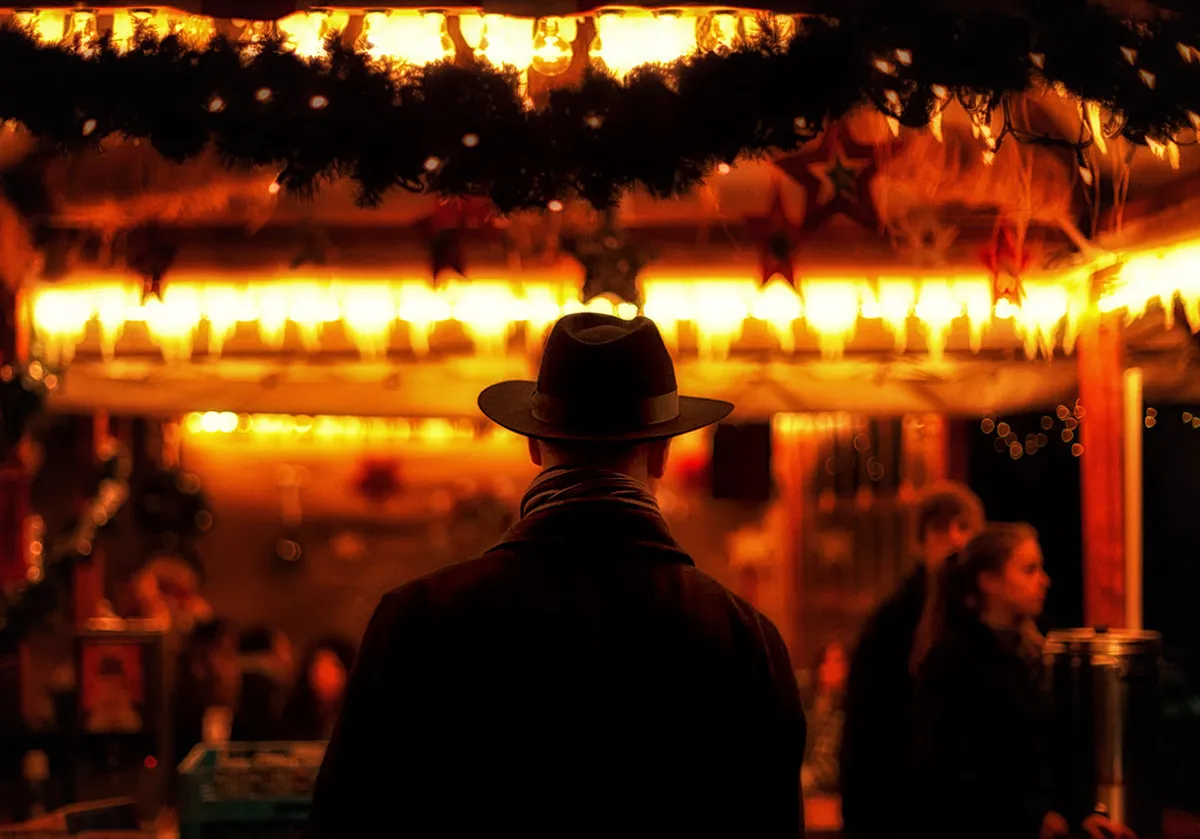
Rothenburg ob der Tauber transforms into a real-life fairy tale during the Advent season. The town hosts the famous Reiterlesmarkt, which remains one of the most authentic festive events in Europe. Cobblestone streets and half-timbered houses provide a stunning backdrop for this medieval celebration.
Visitors from around the world travel here to experience the unique atmosphere of the best Christmas markets in Germany. The scent of roasted chestnuts and spiced wine fills the crisp winter air. Every corner of the walled city glows with soft lights and traditional decorations.
Planning a trip to this historic destination requires some careful preparation and local knowledge. This guide covers everything from the legendary 'Reiterle' figure to the best spots for local treats. You will find practical tips on parking, transportation, and timing your visit perfectly.
Free guide: Europe's Festival Calendar
A month-by-month map of Europe's unmissable festivals — with the best dates to visit each and a local tip you won't find in the guidebooks.
The 500-Year History of the Reiterlesmarkt
The Rothenburg ob der Tauber Christmas market has a long and storied history dating back to the 15th century. Local records show that residents have celebrated this seasonal event for over 500 years. Very little has changed regarding the market's traditional layout and medieval charm over the centuries.
Traditional crafts and local foods have always been the primary focus of the stalls. Artisans gather in the Marktplatz to sell handmade wooden toys and intricate ornaments. This commitment to heritage makes the event feel much more intimate than larger city markets.
The Reiterlesmarkt runs approximately 61 stalls — a deliberately small footprint that keeps it from feeling overwhelming. Prices at the market stalls are often better than those in the permanent shops lining the nearby streets. Many vendors accept cash only, so withdraw euros before you arrive, as ATMs can have queues on busy weekends.
Preserving the historic atmosphere is a point of pride for the local community. The town council ensures that modern commercialism does not overshadow the ancient roots of the celebration. You can feel the weight of history as you walk through the narrow alleys near the Town Hall.
The Legend of the 'Reiterle' Messenger
The market takes its name from a mysterious figure known as the 'Reiterle' or the Little Horseman. In ancient Germanic folklore, this character was a terrifying soul-collector who rode through the winter sky. Families once feared his arrival during the cold and dark months of the year.
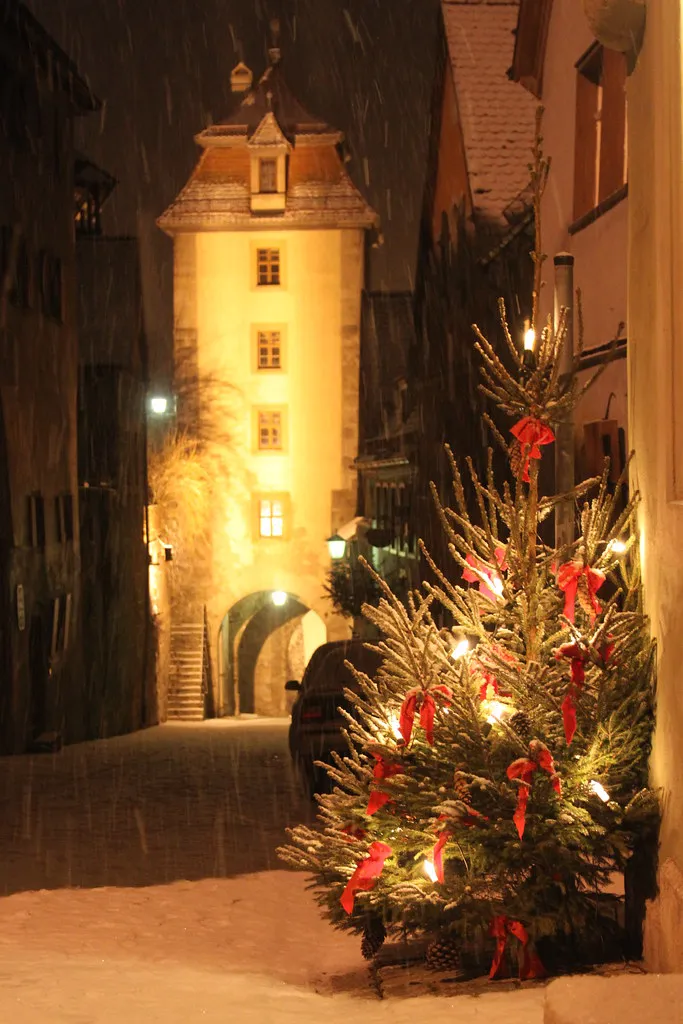
Public perception of this mythical rider shifted significantly during the Middle Ages. He transformed from a figure of dread into a friendly messenger of the Christmas season. The metamorphosis mirrors a broader cultural shift in which pre-Christian midwinter spirits were gradually recast as benevolent gift-bringers — a process unique to this corner of Franconia and not replicated at any other German market.
The modern Reiterle makes a grand appearance during the market's opening ceremony each year. He wears traditional garb and rides a horse through the cheering crowds in the Marktplatz. If you can time your arrival for opening day in late November 2026, the mayor's welcome speech and the lighting of the market's central Christmas tree make the ceremony worth attending in its own right.
Top Things to Do at the Market
Exploring the German Christmas Museum is a top priority for most visitors. This museum offers a deep dive into the history of holiday decorations and customs. You can see rare vintage ornaments and learn how Christmas trees became a global tradition.
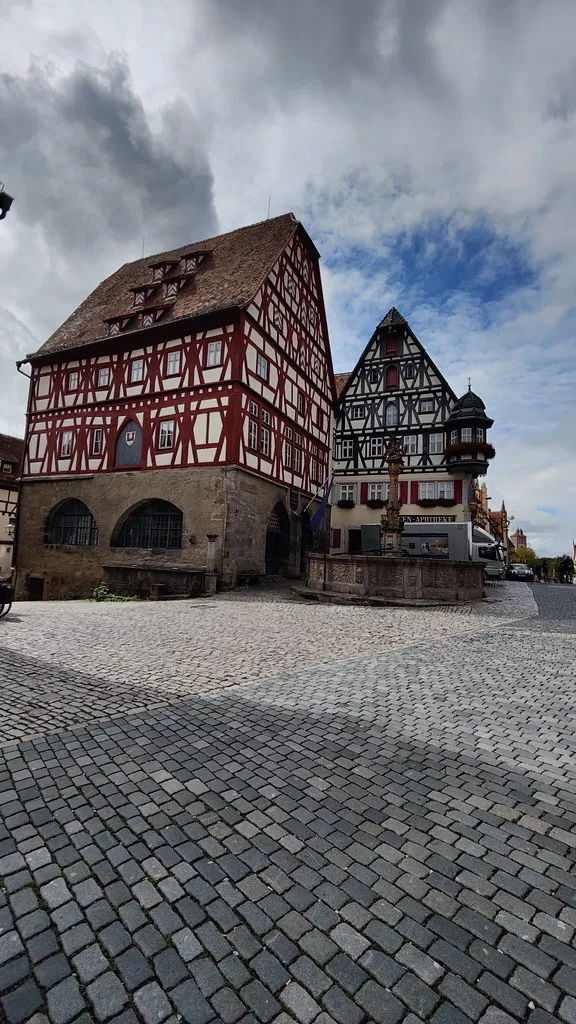
Climbing the Town Hall tower provides the best panoramic views of the entire market from a height of 52 metres. The ascent is narrow and steep, but the sight of the glowing stalls from above is worth the effort. Expect to pay a small fee of approximately €2.50 for access to the observation deck. Every hour between 11:00 and 15:00, and again from 20:00 to 22:00, the clock on the Town Hall facade animates with a mechanical display retelling Rothenburg's history — worth timing your tower climb around.
Do not miss Plönlein, the iconic fork in the road framed by two gate towers and a half-timbered house. This is the most-photographed street in Rothenburg and the image that inspired the village in Disney's Pinocchio. It is a short walk south from the Marktplatz and looks especially striking after dark when the stone towers are lit up.
Stopping by St. Jakobskirche allows you to see the famous Holy Blood Altar by Tilman Riemenschneider. The church provides a quiet refuge from the busy market stalls outside. Many visitors enjoy the organ concerts that take place throughout the Advent season. A smaller, more family-oriented market also operates in the square directly in front of the church, with a merry-go-round for children and illuminated stars for sale.
The Reiterlesmarkt vs. Käthe Wohlfahrt: What Is the Difference?
First-time visitors often confuse the outdoor Reiterlesmarkt with Rothenburg's famous permanent Christmas shops. Käthe Wohlfahrt, located on Herrngasse just a few minutes from the Marktplatz, is a year-round shop and not part of the seasonal market at all. It is open daily except Sundays from 11:00 to 17:00, with extended hours during the Advent period.
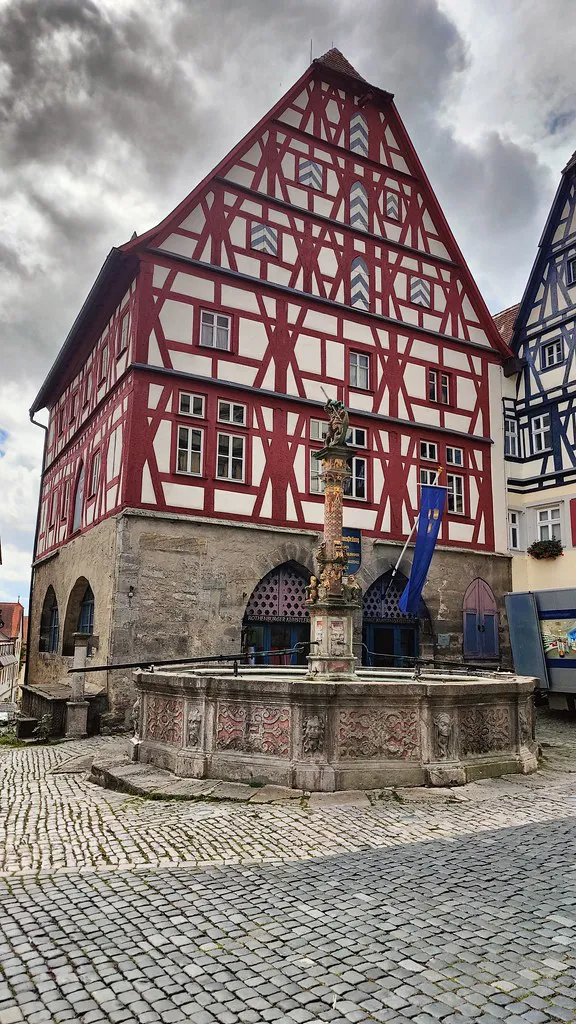
Inside, you will find one of the largest collections of handmade glass ornaments and nativity figures in Europe. The store has a towering decorated Christmas tree at its centre and elaborate displays throughout. It is worth browsing even if you do not plan to buy, though the quality of the hand-blown glass medallions is genuinely hard to match elsewhere.
The outdoor Reiterlesmarkt operates only during the Advent season and focuses on food, mulled wine, and artisan crafts. Think of Käthe Wohlfahrt as the permanent backdrop and the Reiterlesmarkt as the seasonal centrepiece that brings the whole town to life. Spending time at both is how you get the full Rothenburg Christmas experience.
Walking the Medieval City Walls
Rothenburg is famous for its remarkably preserved medieval wall that encircles the entire old town. The wall walk covers a total distance of about 2.5 kilometres. It offers a unique perspective on the town's rooftops and the festive lights below.
Walking the ramparts is free and accessible through several historic gate towers. The path is covered, which provides some protection if it starts to snow or rain. You should wear sturdy shoes, as the stone steps can become slippery in freezing temperatures.
Taking this walk at dusk is particularly magical as the town begins to light up. You can see into the cozy courtyards of private homes decorated for the holidays. It is a peaceful way to escape the main crowds for a short while and one of the few attractions in Rothenburg that costs nothing at all.
Essential Dates and Parking Information
The market typically opens in late November and runs until 23 December. In 2026 you can expect it to open on the Friday before the first Sunday of Advent, roughly around 27 November. Check the Official Rothenburg Tourism Service for confirmed dates. Stalls operate from 11:00 to 19:00 Monday to Thursday and from 11:00 to 20:00 Friday to Sunday.
Parking inside the city walls is extremely restricted and generally discouraged for day visitors. Many hotels provide a special parking pass for guests that costs around €10 per day. This pass grants access to a small number of spaces inside the walls — confirm when booking whether your hotel includes this, as it saves a significant walk. If you are visiting for the day, use the large parking lots located just outside the walls.
Lots P1, P2, and P3 offer easy access to the historic centre via a short walk. Electronic signs at the town entrances display real-time availability for each parking zone. These lots are well-marked and usually have enough space even during busy weekends, though arriving before 10:00 on a Saturday is advisable to avoid the tour bus crowds.
Determining How Much Time You Need
Deciding whether to visit for a day or stay overnight depends on your interest in the evening atmosphere. A day trip allows you to see the main market and the major museums in four to six hours. However, staying overnight lets you experience the town after the large tour groups have departed, and the difference in atmosphere after 18:00 is dramatic.
Booking a dinner table for 17:30 is essential if you want to join the Night Watchman tour. The famous tour starts at 20:00 sharp in the Marktplatz and costs about €8 per person with no advance reservation required. A 19:30 dinner seating is often too tight to finish, pay, and walk to the Marktplatz before the guide departs. Restaurant Alter Keller on Alter Keller Gasse is a reliable choice, with both seatings available and staff accustomed to explaining the timing trade-off.
- Day trip: 4–6 hours, best for budget travellers focusing on the market and Plönlein; skip the Night Watchman tour.
- One night: gives you full access to the evening market, the 20:00 Night Watchman tour, and early-morning streets before the day-trip crowds arrive.
- Two nights: allows a relaxed pace through the Christmas Museum, Käthe Wohlfahrt, the wall walk, and day trips toward Dinkelsbühl or Würzburg.
Staying at least one night ensures you can enjoy the market at your own pace. The early morning hours are perfect for photography before the crowds arrive. You will also have more time to explore the German Christmas markets road trip route.
Best Historic Hotels in the Old Town
Finding the right place to stay can greatly enhance your festive experience. Historic inns within the walls often feature traditional Bavarian decor and cozy fireplaces, and their parking arrangements are often included in the room rate. Prices during Advent range from roughly €50 to €170 per night depending on the property and how far in advance you book.
Reservations for the Advent season fill up several months in advance. Many travellers book their rooms as early as the previous spring to secure a spot. Staying within the walls means you are never more than a few minutes from the market and you avoid the P1–P3 parking routine entirely.
Hotel Eisenhut is one of the best-known choices for its central location and views over the old town. Hotel Klosterstuble, built in the 1500s, balances period character with modern amenities and sits within easy walking distance of the market. BurgHotel is a smaller, family-run option with a quieter atmosphere. All three are located inside the walls, which is the single most important factor for a winter visit.
Where to Find the Best Schneeballen and Wine
No visit to Rothenburg is complete without trying a local Schneeball, or Snowball. This pastry consists of strips of shortcrust dough fried and covered in powdered sugar, chocolate, cinnamon, or even champagne glaze. Bakeries throughout the old town sell them, but Diller Schneeballenträume on Hofbronnengasse is widely regarded as offering the freshest variety and widest range of flavours.
Glühwein is the standard drink at the market, but Rothenburg offers unique regional varieties made from Franconian grapes. Many stalls serve white wine versions, which are a lighter alternative to the traditional spiced red. The Glocke wine shop near the Marktplatz also offers tasting flights of Franconian rieslings if you want to explore the local wines more seriously.
Mug deposits are a standard part of the German market experience and typically cost under €2 in Rothenburg. You can return your mug to get your money back or keep it as a souvenir — the simple, classic designs printed with the Reiterle figure are popular with collectors. Roasted chestnuts and gingerbread are also staples at almost every stall and make good snacks between stops.
Transportation Tips: Trains and the Romantic Road
The train station in Rothenburg is located about one kilometre from the historic city centre. Walking from the station to the Marktplatz takes approximately 15 to 20 minutes. There are no reliable shuttle buses connecting the station to the old town, so factor in the walk when planning arrival times, especially if you are carrying luggage.
One detail most guides skip: reaching Rothenburg by train almost always requires a change at Steinach bei Rothenburg, a tiny rural halt on the branch line. The connection window can be as short as two to four minutes, and trains on this branch run only once per hour. Missing the connection means a one-hour wait in a station with minimal shelter. Check your exact connection at bahn.de before you travel and do not book a timetable that leaves less than five minutes at Steinach. Trains from Nuremberg typically take around 1.5 hours with two changes; from Frankfurt around 2.5 to 3 hours with one or two changes.
Driving along the Romantic Road is a popular way to reach the town from Frankfurt or Munich. This scenic route passes through several other picturesque villages and rolling hills. Winter tyres are mandatory in Germany during snowy months, and all major rental companies in the region supply them as standard. Regional buses also connect Rothenburg to nearby cities like Würzburg and Ansbach for those without a car.
Nearby Christmas Markets to Visit
Rothenburg is perfectly situated for visiting other world-class markets in the region. The Nuremberg Christmas market is only about an hour away by train or car. It is one of the largest and most famous markets in the world and a natural pairing with Rothenburg on a longer Romantic Road itinerary.
Heading south toward the Alps will bring you to the Garmisch-Partenkirchen Christmas market. This area offers a different vibe with stunning mountain views and Alpine traditions. It is a great addition to a longer winter itinerary through Bavaria.
Other smaller towns like Dinkelsbühl and Feuchtwangen are within easy driving distance along the Romantic Road itself. These markets are much smaller but offer an even more local and quiet experience. Combining several towns creates a comprehensive look at German holiday culture without the intensity of the major city markets.
Frequently Asked Questions
When does the Rothenburg Christmas market start in 2026?
The market typically begins on the Friday before the first Sunday of Advent. In 2026, you can expect the festivities to start in late November. Always verify the exact dates on the official tourism website before you travel. Check out the best Christmas markets in Germany for more timing tips.
Is the Night Watchman tour available during the Christmas market?
Yes, the Night Watchman tour runs daily at 8:00 PM during the Christmas market season. It starts in the Marktplatz and lasts about an hour. The cost is approximately €8 per person, and you do not need to make a reservation in advance.
Can I park my car inside the old town walls?
Parking inside the walls is very limited and usually requires a hotel permit. Most day visitors should use the P1 to P5 parking lots located just outside the gates. These lots are affordable and only a short walk from the market stalls.
What is a Schneeball and where can I buy one?
A Schneeball is a traditional fried pastry that is a specialty of Rothenburg ob der Tauber. It is made of shortcrust pastry and comes in various flavors like cinnamon or chocolate. You can buy them at bakeries throughout the town and at market stalls.
Rothenburg ob der Tauber offers a Christmas experience that feels truly timeless and authentic. From the legend of the Reiterle to the glow of the medieval walls, every detail adds to the magic. It remains a must-visit destination for anyone seeking the heart of German holiday traditions.
Planning your logistics in advance will ensure a stress-free and enjoyable visit to the market. Remember to book your hotel early, bring cash for the stalls, and time your dinner for the Night Watchman tour. Whether you stay for a day or a week, the memories of this town will last a lifetime.
Explore more of the region by visiting the Munich Christmas market or other stops on the Romantic Road. Germany's festive season is full of wonder and discovery for every traveller. Enjoy the warmth of the Glühwein and the beauty of the Bavarian winter.
Free guide: Europe's Festival Calendar
A month-by-month map of Europe's unmissable festivals — with the best dates to visit each and a local tip you won't find in the guidebooks.
You might also like


Continue reading
More guides you'll find useful